

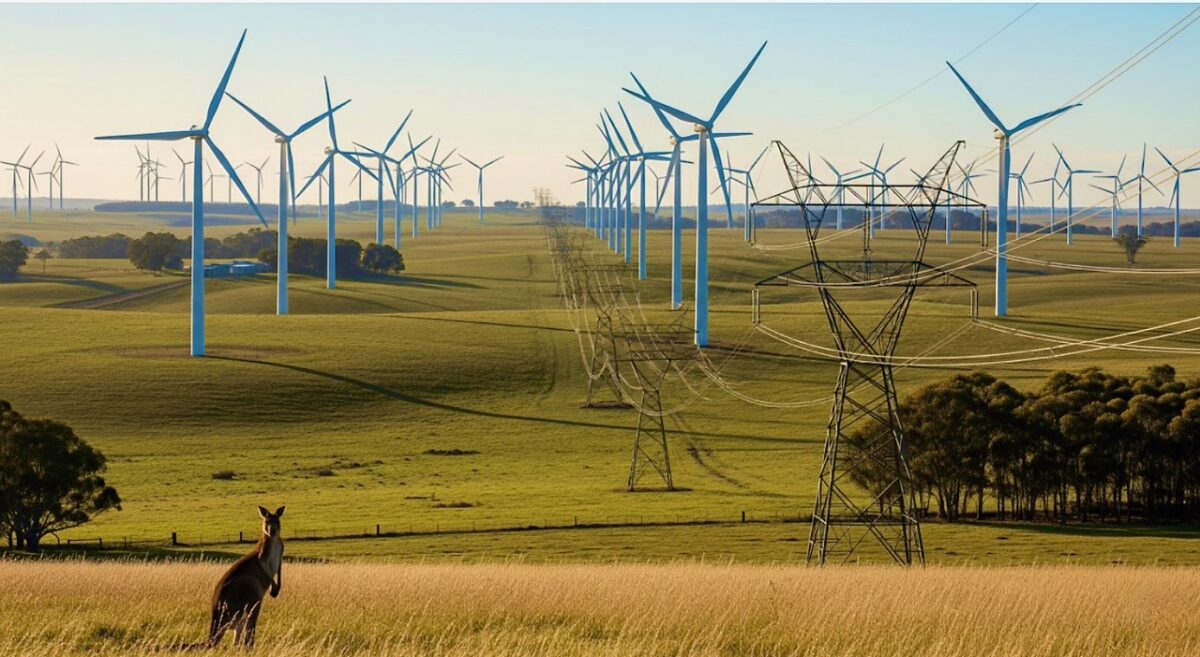
Asbestos in Wind Farms: The Hidden Legacy Haunting Australian Farmland
When most Australians think of wind farms, they picture sleek white turbines spinning cleanly against a blue sky — symbols of the nation’s rush toward net-zero. What they don’t picture is asbestos. Yet across rural South Australia, Victoria, and parts of New South Wales, a growing number of landowners and contractors are discovering that some older wind-farm projects were built on, or immediately beside, sites contaminated with asbestos waste — and in several documented cases, the turbines themselves incorporated asbestos-containing materials (ACM) that are now crumbling after 15–25 years of exposure to extreme weather.
This isn’t conspiracy theory. It’s documented in WorkSpace reports, EPA files, court documents, and local council records that only surface when someone starts asking hard questions.The Backstory Nobody Talks About Between the late 1970s and the mid-2000s, Australia was dismantling thousands of asbestos-roofed woolsheds, houses, and industrial buildings on rural properties.
Crushing and burying the material on-site was common and, in many cases, perfectly legal at the time if it was more than a certain distance from dwellings and waterways. Farmers were told: “Bury it deep, cover it with two metres of clean soil, and forget about it.”Fast-forward to the first big wave of wind-farm development in the early 2000s. Large tracts of grazing land in South Australia (Portland, Wattle Point, Halite, Snowtown) and western Victoria suddenly became goldmines for turbine sites. Many of these paddocks had been used decades earlier as convenient asbestos disposal pits.In other cases, the access roads, hardstands, and even some early turbine foundations were built using crushed concrete and rubble recycled from demolished asbestos-containing factories — a cost-saving measure that only came to light years later when the material started breaking down.Documented CasesHallett Wind Farm (South Australia)
In 2015, a contractor doing road maintenance discovered friable asbestos sheeting just centimetres under the gravel surface near Turbine 23. A subsequent EPA investigation found multiple “legacy burial sites” within 200 m of turbine hardstands. AGL (the operator) was issued an environmental protection order and spent an estimated $4–6 million on remediation that is still ongoing.<br>Challicum Hills Wind Farm (Victoria)<br>Farmers adjacent to the site have produced aerial photos from the 1980s showing piles of asbestos roofing iron being buried in what is now the wind-farm footprint. Soil tests commissioned privately in 2022 allegedly returned positive results for chrysotile asbestos in dust around turbine bases (results shared with DELWP but never made public).<br>Waubra Wind Farm (Victoria) — the most controversial<br>Although the operator (Acciona) has always denied using asbestos-containing materials, former construction workers and a 2019 whistleblower claim that some of the original 2008–2009 cable-trench backfill contained crushed asbestos cement pipe offcuts from a demolished Ballarat factory. SafeWork Victoria investigated but closed the file citing “insufficient evidence.” Residents continue to report finding asbestos fragments along fence lines after heavy rain
Turbine components themselves<br>This is the part that shocks most people. Certain European and Chinese turbine manufacturers used asbestos-containing gaskets, brake pads, and electrical insulation boards in models delivered to Australia up until the mid-2000s. Vestas V44, V52, and some early NEG Micon turbines are known to contain asbestos in the nacelle. The Australian Asbestos Safety and Eradication Agency (ASEA) lists at least 11 wind-farm sites with “confirmed or suspected in-turbine ACM.” When these parts degrade, fibres can blow downwind — exactly what the James Hardie executives claimed would never happen with their siding products.<br>The Scale of the ProblemNobody knows how many of Australia’s roughly 7,000 onshore turbines are affected. The Australian Wind Alliance and Clean Energy Council insist the number is “tiny” and that modern projects have rigorous asbestos management plans. But here’s the catch: most wind-farm leases are 25–40 years. We are only now hitting the age where 2000s-era components and sites are starting to break down, and the original developers have often sold the projects on to pension funds and superannuation giants who have zero institutional memory of what was buried or installed.What Happens When a Farmer Says No to Remediation?In 2023, a South Australian grazing family discovered asbestos cement sheets eroding out of a turbine hardstand on land they still own (the turbine itself is on a neighbour’s title, but the hardstand crosses the boundary). They asked the wind-farm operator for urgent remediation.
The response? A letter threatening legal action for “interfering with electricity generation infrastructure” and pointing out that the lease gives the operator rights to the land until 2034. The family is now in the Supreme Court.The Health AngleAir monitoring near affected turbines has so far shown fibre levels below the workplace exposure standard (0.1 f/ml). Critics say that standard was designed for occupational settings, not 30-year chronic exposure for downwind families and school buses.
Remember: there is no known safe level of exposure in the community setting.Where to From Here?The solutions are straightforward, if politically inconvenient:Mandatory asbestos audits for every pre-2010 turbine before repowering or life-extension applications are approved.A public national register of known or suspected asbestos locations on energy infrastructure (currently the data is scattered across state EPAs and private consultancies).
Remember: there is no known safe level of exposure in the community setting.Where to From Here?The solutions are straightforward, if politically inconvenient:Mandatory asbestos audits for every pre-2010 turbine before repowering or life-extension applications are approved.<br>A public national register of known or suspected asbestos locations on energy infrastructure (currently the data is scattered across state EPAs and private consultancies).
Independent, peer-reviewed air and soil monitoring within 2 km of older wind farms, paid for by the operators.A compensation scheme for affected landowners similar to the Mr Fluffy loose-fill disaster in Canberra.Wind energy remains one of the cheapest and fastest ways to cut emissions. Nobody serious is suggesting we tear the turbines down. But pretending the asbestos issue doesn’t exist — or that it’s limited to “a few bad apples” — is no longer credible.Rural Australia has already carried more than its share of the nation’s hazardous waste legacy. It’s time the renewable industry acknowledged that some of its early footprint was laid on the graves of the James Hardie era — and started cleaning up its own backyard.Because clean energy shouldn’t come with a side of cancer risk