

NEW YORK — As the 2026 global political landscape stabilises following a cycle of high-stakes elections, new financial disclosures reveal the sheer scale of the “spider web” powering left-wing activism. Far from a collection of isolated grassroots protests, modern progressive movements are fueled by a sophisticated, multi-layered financial engine that bridges billionaire philanthropy, anonymous donor-advised funds (DAFs), and international public grants.
The Titans: Billions in “Strategic Giving”
At the apex of this network sit legacy foundations that have pivoted from traditional charity to aggressive systemic reform.
Open Society Foundations (OSF): Now under the leadership of Alex Soros, OSF remains the heavyweight champion of liberal funding. According to 2024 figures, OSF maintained annual expenditures of approximately $1.2 billion, with a staggering $242 million dedicated specifically to U.S.-based justice and democratic participation programs.
Ford Foundation: Under its new president, Heather Gerken (who took the helm in late 2025), the foundation recently injected an additional $60 million into nonpartisan nonprofits focused on “fortifying the rule of law.” Over the past decade, Ford has funneled more than $1 billion into civic engagement alone.
The “Tech Philanthropy” Wave: Individual billionaires like LinkedIn founder Reid Hoffman have shifted the needle by funding high-impact legal and political campaigns, moving capital with the speed of a venture capitalist rather than a slow-moving nonprofit.
The Intermediaries: Anonymity and Infrastructure
The true “spider web” effect occurs in the middle layer—organisations like the Tides Foundation and ActBlue that act as the connective tissue between elite donors and radical activists.
- Fiscal Sponsorship: Entities like the Tides Foundation allow donors to fund projects that haven’t yet received 501(c)(3) status. This “incubation” model has been vital for groups like the Local Environmental Accountability and Defense Fund, which received $750,000 to provide legal muscle for climate-related litigation against fossil fuel interests.
- Digital Powerhouses: ActBlue has solidified its role as the central nervous system of progressive fundraising. Federal Election Commission (FEC) data for the period ending February 2026 shows the platform processed over $1.37 billion in disbursements, proving that small-dollar “click-tivism” can match the might of the billionaire class.
| Funding Target | Primary Backer(s) | Impact / Statistic |
| Climate Action | Tides, Climate 200 | $10.8M spent on Australia’s “Teal” independents in 2025. |
| Criminal Justice | OSF (George/Alex Soros) | Over $100M cumulatively spent on DA races and police reform. |
| Democracy/Voting | Ford Foundation | $60M surge in early 2026 to safeguard election systems. |
| Racial Equity | Susan Sandler, Mellon | $250M+ committed to grassroots “power-building” in the US South. |
The International Front: Australia’s “Teal” Blueprint
The 2025 Australian Federal Election served as a masterclass in how private wealth can disrupt traditional party politics. Climate 200, spearheaded by Simon Holmes à Court, raised over $9.4 million from more than 10,000 donors.
This capital was strategically deployed to support “Teal” independents—candidates who combined fiscal conservatism with radical climate and integrity platforms. Successful candidates like Monique Ryan and Allegra Spender each raised between $1.7M and $1.9M, often dwarfing the budgets of their traditional party opponents.
The “Spider Web” Controversy: Public to Private
A growing point of contention for political analysts is the “circular” nature of funding. In several European and North American jurisdictions, government agencies provide grants to NGOs for “public education” or “integration.” These NGOs, in turn, act as fiscal sponsors or sub-grantors for more radical activist groups that may actively protest the very governments funding them.
This creates a self-sustaining ecosystem where activism is no longer just a reaction to policy, but a permanent, well-compensated industry. As Alex Soros noted in a recent OSF briefing, the goal is “long-term infrastructure, not just short-term wins.”
With 2026 seeing the most sophisticated digital and financial coordination in history, the line between “grassroots” and “billionaire-backed” continues to blur, leaving the global electorate to wonder who is truly pulling the strings of social change.
1. Empowerment Self-Defense (Progressive/Liberal)
Many progressive groups, particularly those serving LGBTQ+, women, and minority communities, offer or fund “Empowerment Self-Defence” (ESD).
- Focus: Groups like Rose City Self-Defense (Portland) and the Center for Anti-Violence Education (NYC) focus on teaching vulnerable populations how to identify risks, set boundaries, and use physical “strikes and escapes” as a last resort.
- Funding: These are often community-led or funded through local safety grants and small-dollar donations, rather than direct millions from major international philanthropists.
2. Community Defense & Firearms (Radical Left)
Groups that identify with “community defense” rather than just “advocacy” often engage in more rigorous tactical preparation.
- John Brown Gun Club: This network hosts “range days” and tactical training sessions focusing on responsible gun ownership and “defense of the community.”
- Tactical Training: These groups often include “Stop the Bleed” medical training and de-escalation tactics. Unlike the major non-profits, these groups are largely self-funded or decentralized, operating outside the mainstream philanthropic “spider web.”
3. The “Active Club” Contrast (The Far-Right Model)
It is worth noting that the most institutionalized “fight training” currently seen in global political activism actually stems from the Far-Right.
- Active Clubs: Founded by figures like Robert Rundo, these are decentralized “white nationalist” cells that explicitly focus on Mixed Martial Arts (MMA) and “warrior culture.”
- Objective: Unlike the “self-defense” focus of the left, these clubs specifically train for “coordinated, large-scale” violent confrontation, often hosting “fight nights” to recruit young men into the movement.
| Training Type | Primary Target | Typical Content | Funding Source |
| Mainstream Activism | Policy Wonks / Organizers | Legal rights, media training, “how to talk to politicians.” | OSF, Ford, Tides Foundation |
| Grassroots Left | LGBTQ+ / Minorities | Empowerment self-defense, de-escalation, bystander intervention. | Local grants, small-dollar donors |
| Radical Left | Community Defense | Firearms training (range days), tactical medicine, first aid. | Self-funded, crowd-funding |
| Far-Right “Active Clubs” | “Warrior” Recruits | MMA, street-fighting, combat sports, “hate camps.” | Private membership, illicit networks |
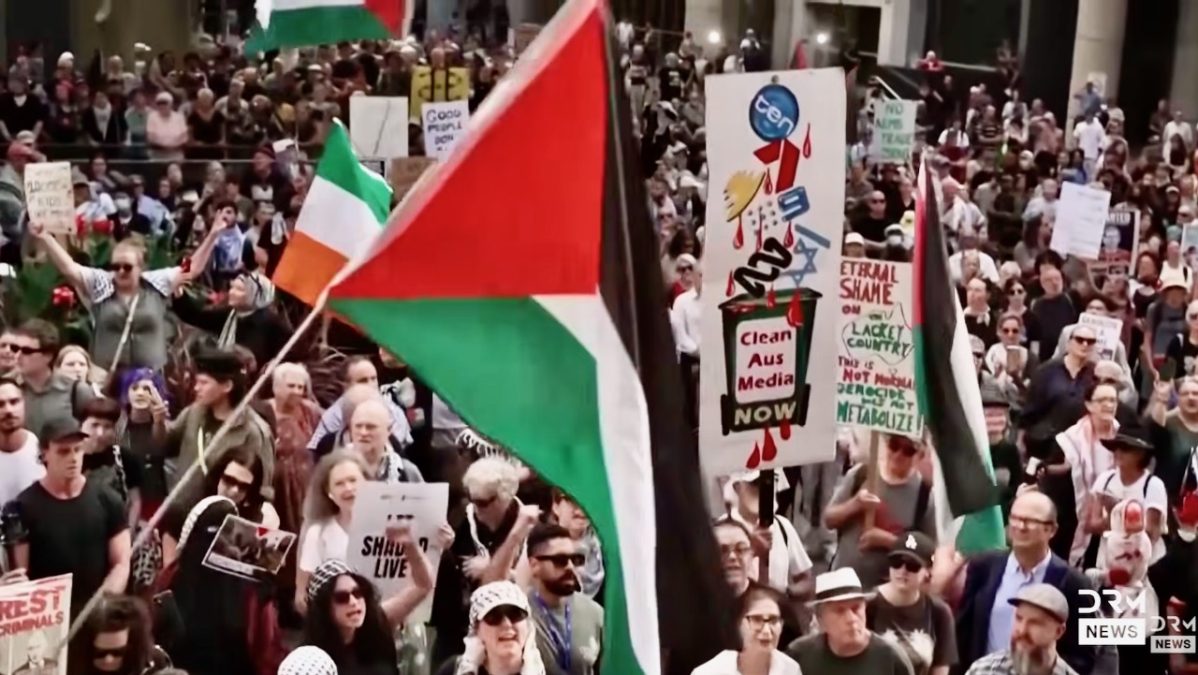
The “paid protesters” is often a mix of legitimate labour—such as campaign staff and canvassers—and “astroturfing” services where actors are hired to bolster crowd sizes. There is a clear financial structure for professionalised activism.
1. The Pay Rates: How Much?
According to 2026 labor market data from platforms like ZipRecruiter and Indeed, people hired for “demonstration” or “crowd” roles generally see the following compensation:
- Hourly Rates: The average pay for a “paid protester” or “demonstrator” in the U.S. is approximately $27.13 per hour.
- Annual Salaries: For those who do this as a full-time “field organiser” or “canvasser,” salaries average around $56,423 per year, with top-tier organisers in cities like San Francisco or Washington, D.C., earning up to $85,000.
- The “Gig” Rate: For one-off events, “actors” hired through specialty firms can earn between $50 and $200 per event, depending on the duration and the level of participation required (e.g., just standing in the crowd vs. speaking to media).
2. Who Hands Out the Money?
The money rarely flows directly from a billionaire to a protester. Instead, it moves through several layers of separation:
- Publicity & “Crowd” Firms: Companies like Crowds on Demand provide “mercenary” crowds. A political candidate or a corporate interest hires the firm, and the firm hires actors to pose as concerned citizens, fans, or protesters.
- Non-Profit Intermediaries: Large foundations provide grants to “501(c)(4)” social welfare organizations. These organizations use the funds to hire “Field Organizers” or “Canvassers.” While these people are legally employees, their job is to show up at rallies, bring groups of volunteers, and lead chants.
- Foreign Actors: In recent 2025-2026 investigations (such as those in Australia), intelligence agencies have identified “criminals-for-hire” being paid by foreign state actors to incite specific types of unrest, though these are often illicit cash transactions rather than formal payrol
| Entity | Role | Action |
| The Megadonor | The Bank | Writes a $10M check to a donor-advised fund (e.g., Tides). |
| The Intermediary | The Shield | Distributes $500k grants to local grassroots “Action Funds.” |
| The Local Group | The Employer | Hires “Temporary Event Staff” or “Community Leads.” |
| The Activist | The Boots | Receives a paycheck (W-2 or 1099) for “organizing and attendance.” |
4. Is it Always “Paid”?
It is important to distinguish between two types of people at a rally:
- The Professional Core: A small group of staffers and hired leads who are being paid to be there, manage logistics, and provide the “look” of a coordinated movement.
- The Organic Crowd: The vast majority of attendees who show up for free because they care about the cause.
The “paid” element is usually about guaranteeing a baseline. As one pollster recently noted, “People love to protest for free, but paying for a core group ensures the microphones work, the signs are uniform, and the crowd looks impressive on the evening news.”