


Albanese has raised the spectre of the “far right” in the wake of the Bondi Beach terror attack, while conspicuously avoiding the topic of Islamic extremism
The tragic events of December 14, 2025, at Bondi Beach have left Australia reeling. What began as a joyful Hanukkah festival turned into the nation’s deadliest terror attack in modern history, with two gunmen killing 15 people and wounding 40 others in an assault described by authorities as motivated by antisemitism and linked to Islamist extremism. Prime Minister Anthony Albanese swiftly condemned the attack as an “act of pure evil” and a “targeted, antisemitic terrorist attack,” emphasising national unity and announcing measures like stricter gun laws and hate crime reforms. Yet, his response has sparked intense debate on social media and beyond, with critics accusing him of downplaying Islamist elements, overemphasising “far-right” threats, enabling antisemitic sentiments through past policies, and dodging accountability by rejecting a royal commission. Let’s break this down factually, drawing on available evidence, to separate rhetoric from reality.
The Attack and Albanese’s Initial Response
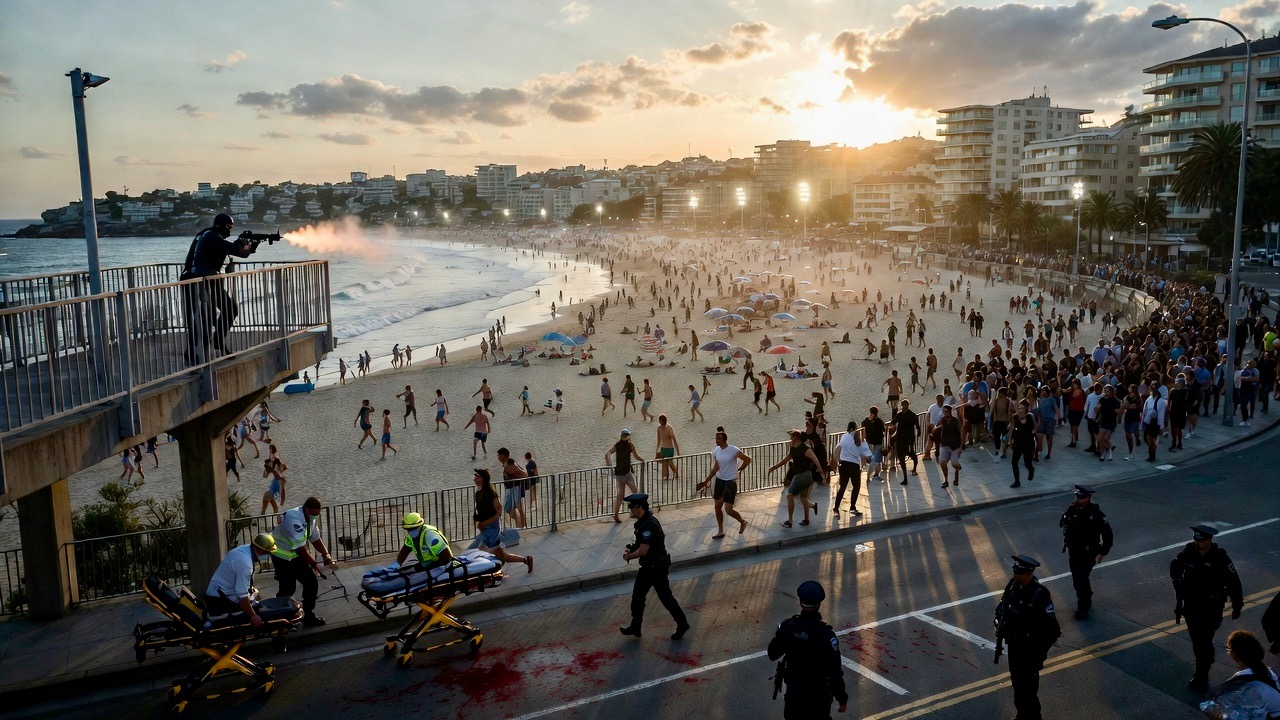
The Bondi Beach shooting stands as Australia’s second-deadliest mass shooting ever, only behind the 1996 Port Arthur massacre. Survivors and witnesses described a scene of chaos, with gunmen targeting attendees at the Jewish holiday event. Investigations quickly pointed to Islamist motivations, with ties to groups like ISIS mentioned in early reports. Albanese addressed the nation promptly, honouring victims and heroes while vowing to prevent future atrocities. He announced a five-point reform program to combat antisemitism, including tougher hate laws and better coordination among security agencies. He also apologised to the Jewish community, acknowledging a rise in antisemitic incidents over the past two years.
However, some have pointed out that Albanese’s language focused heavily on “antisemitism” without explicitly using terms like “Islamist terror” in key statements. For instance, in a December 22 press conference, he described the attackers as “terrorists” but pivoted to broader discussions of extremism, including far-right groups. Critics, including media outlets, argue this avoidance echoes a pattern where he warns of “far-right” dangers while being reticent on “Islamic extremism.” Social media users have echoed this, with posts labelling his approach as “gaslighting” and distracting from the attack’s ideological roots.
The “Far-Right” Narrative: Evidence or Overreach?
One of the most contentious aspects is Albanese’s references to far-right extremism in the attack’s aftermath. In speeches and policy announcements, he has grouped Islamist and far-right threats together, proposing changes to hate group listings that target both, such as Hizb ut-Tahrir and the National Socialist Network. This isn’t new; earlier in 2025, he warned about the rise of populism and far-right movements globally, citing examples like Nigel Farage’s Reform Party in the UK.
Detractors claim there’s “no evidence” of a far-right problem in Australia comparable to Islamist threats, and that the term is weaponised to smear conservatives. On X (formerly Twitter), users have vented frustration, calling it a diversion tactic—especially after an unrelated incident where Albanese claimed a “far-right tradie” threatened him, which some dismissed as exaggerated. Others argue his focus ignores warnings about rising antisemitism from pro-Palestine rallies. However, official reports do highlight far-right extremism as a growing concern, with ASIO noting it alongside other ideologies. The question is balance: Has Albanese’s emphasis annoyed Australians by seeming partisan, or is it a legitimate call for comprehensive security reforms?
Anti-Israel Policies and Rising Antisemitism
Critics link the attack to what they see as the government’s lax stance on anti-Israel protests. A flashpoint is the 2023 Sydney Opera House incident, where a pro-Palestine rally featured flares, chants of “gas the Jews,” and police investigations into antisemitic behaviour—all while the landmark was lit in Israeli colors to honour victims of the October 7 Hamas attacks. Albanese’s government has been accused of doing “nothing” to curb such events, allowing hatred to fester.
More recently, Israeli Prime Minister Benjamin Netanyahu directly blamed Albanese for the Bondi attack, claiming Australia’s recognition of Palestine and failure to stem antisemitism contributed. Albanese rejected this, but social media has amplified images of him at pro-Palestine events, including one with flags of terror groups like Hamas and Hezbollah—though the timing and context remain debated. A timeline of Albanese’s stance shows he attended anti-Israel protests in his youth but has since condemned Hamas and supported Israel’s right to defend itself. Still, reports note a surge in antisemitic attacks amid Middle East tensions, with some attributing it to unchecked protests.
The Royal Commission Debate: Transparency or Delay?
Perhaps the sharpest criticism is Albanese’s refusal to call a royal commission into the attack and broader antisemitism. Instead, he opted for an independent review led by former ASIO chief Dennis Richardson, focusing on whether security agencies could have averted the tragedy. He argues a full royal commission would take years, “platform worst voices,” and isn’t in the “national interest.”
Victims’ families have slammed this as “empty words” and insufficient, demanding a more comprehensive inquiry. Opposition figures, including Julie Bishop and Queensland Attorney-General Deb Frecklington, echo calls for a royal commission, arguing the review is a “conflict of interest” limited to agencies, not societal or governmental factors. On X, users speculate Albanese has “something to hide,” linking it to his policies on migration and protests. Proponents of the review counter that it’s faster and more targeted, avoiding the politicisation of past inquiries.
A Balanced Perspective
Albanese’s leadership in this crisis has united many in grief but divided others on execution. His push for gun control and hate reforms addresses immediate needs, but criticisms of selective language and policy blind spots hold weight based on evidence of rising antisemitism and perceived imbalances in threat assessments. Social media amplifies annoyance, with terms like “far right” seen as a catch-all for dissent, potentially alienating conservatives. Yet, dismissing all far-right concerns ignores official intelligence.
Ultimately, transparency is key. A royal commission could provide the thorough examination victims deserve, but only if it avoids becoming a political circus. As Australia heals, the focus should remain on preventing future attacks through evidence-based policies, not partisan finger-pointing. What do you think—does Albanese’s approach strike the right balance, or is more accountability needed?