

TEHRAN — To the outside world, Iran is often viewed through the singular lens of its 1979 Islamic Revolution: a geopolitical monolith defined by theological decrees, black chadors, and strict religious governance.
But step inside an Iranian home, listen to the cadence of the language, or watch the nationwide frenzy during the spring equinox, and a completely different civilisation appears. It is a reality that the country’s ruling clerics have spent nearly half a century trying to manage: Iran was conquered by Islam, but it was not created by it.
Beneath the surface of the modern Islamic Republic lies a 2,500-year-old Persian soul that refuses to be erased.
Conversation with Gemini
Write a News Story of Iran. Focus on History & Identity
Before the Conquest: How Ancient Persia’s Identity Survives Beneath Its Islamic History
Persian, Not Arab: The Distinct History of Iran and the Islamic Conquest
Conquered but Not Erased: Understanding Iran’s True Persian Roots
Concise & Punchy
Iran’s Persian Core: A Culture Conquered by Islam, Not Created by It
The Persian Identity: Reclaiming Iran’s Pre-Islamic History
Persia vs. Islam: The Historical Identity Crisis of Modern Iran
Editor’s Choice
“Conquered, Not Born: Why Iran’s Persian Identity Outlasts Its Islamic History”
Conquered, Not Born: Why Iran’s Persian Identity Outlasts Its Islamic History
TEHRAN — To the outside world, Iran is often viewed through the singular lens of its 1979 Islamic Revolution: a geopolitical monolith defined by theological decrees, black chadors, and strict religious governance.
But step inside an Iranian home, listen to the cadence of the language, or watch the nationwide frenzy during the spring equinox, and a completely different civilization appears. It is a reality that the country’s ruling clerics have spent nearly half a century trying to manage: Iran was conquered by Islam, but it was not created by it.
Beneath the surface of the modern Islamic Republic lies a 2,500-year-old Persian soul that refuses to be erased.
Persian, Not Arab: A Crucial Distinction
One of the most persistent misconceptions in Western commentary is the conflation of “Middle Eastern” or “Muslim” with “Arab.” For Iranians, this isn’t just a minor geographical error—it’s a fundamental misreading of history.
- The Roots: Iranians are Indo-European, not Semitic.
- The Language: While the 7th-century Arab-Islamic conquest successfully changed Iran’s religion, it failed to supplant its language. Iranians speak Farsi (Persian), an Indo-European language, not Arabic.
- The Legacy: Unlike Egypt, Iraq, or North Africa—ancient civilisations that were culturally and linguistically Arabized after the Islamic conquests—Persia absorbed its conquerors rather than being assimilated by them.
“Egyptians became Arabs; Persians remained Persians,” notes historical consensus. The Arab armies overran the Sasanian Empire physically, but culturally, the vanquished eventually sophisticated the victors.
Conquered but Not Erased: The Language That Saved an Identity
How did Persian identity survive when so many other conquered cultures dissolved? The answer lies largely in a single epic poem written a millennium ago.
By the 10th century, Arabic was the language of law, religion, and status across the Islamic world. Enter the poet Ferdowsi, who spent 30 years penning the Shahnameh (The Book of Kings). Written deliberately with minimal Arabic loanwords, this massive 50,000-couplet epic preserved the history, mythology, and—most importantly—the vocabulary of pre-Islamic Persia.
Ferdowsi famously wrote of his achievement:
“I have suffered much during these thirty years, but I have revived the Persians with this Persian tongue.”
Because of the Shahnameh, ordinary Iranians today can read 1,000-year-old poetry with relative ease, maintaining an unbroken psychological link to their pre-Islamic ancestors.
Persia vs. Islam: The Modern Identity Crisis
This dual heritage has left modern Iran in a state of perpetual psychological tug-of-war. The current government prioritises Iran’s Islamic identity, anchoring its legitimacy in Shia Muslim theology. Yet, the population’s most sacred celebrations are unapologetically pagan and Zoroastrian.
The Cultural Battleground
| The Islamic Republic’s Focus | The Persian Cultural Reality |
| Religious Calendars: Mourning rituals for Shia Imams (Ashura). | Nowruz: The Persian New Year, celebrating the spring equinox, rooted in Zoroastrianism. |
| Theological Architecture: Shrines and mosques as national symbols. | Persepolis & Pasargadae: The ancient ruins of the Achaemenid Empire and the tomb of Cyrus the Great. |
| Pan-Islamic Solidarity: Focusing foreign policy on the wider Muslim Ummah. | Nationalist Pride: A deep-seated historical pride that often pushes back against Arab cultural influence. |
In recent years, this cultural divide has turned political. Every October, thousands of young Iranians gather spontaneously at the tomb of Cyrus the Great—the founder of the first Persian Empire—to celebrate “Cyrus Day.” It is a quiet, defiant protest. By chanting slogans celebrating a pre-Islamic king known for his charter of human rights, Iran’s youth are signalling that their identity is anchored far deeper than the mandates of the current political order.
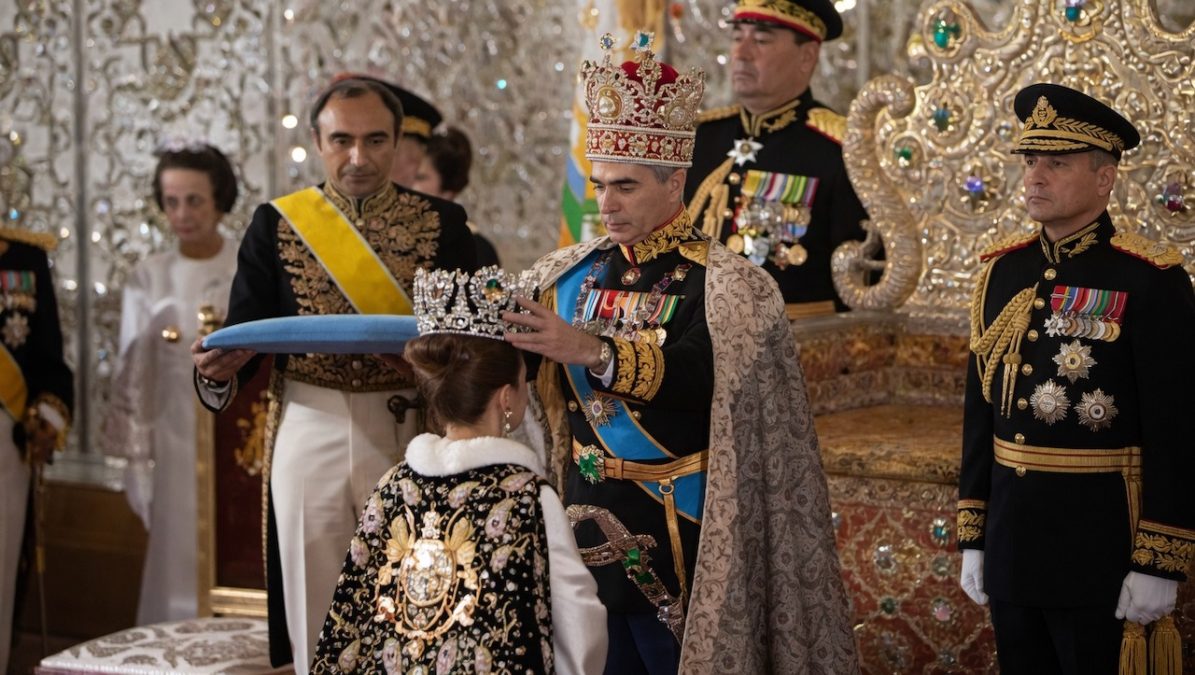
The Outlasting Core
Governments change, empires fall, and religions evolve, but Iran’s Persian core remains remarkably stubborn. The Islamic history of Iran is vast, rich, and undeniably influential. However, it is just one chapter in a much longer epic.
As Iran navigates its turbulent modern history, its ancient past isn’t just a collection of museum artifacts—it remains the definitive blueprint of who the Iranian people are, and who they intend to be.