Home Blog Page 56

Palaszczuk Government has announced $200,000 to support Indigenous festivals.

Indigenous Tourism. 1


The Palaszczuk Government has announced $200,000 in new funding to support Indigenous festivals, events and jobs for the Year of Indigenous Tourism.

Tourism Minister Stirling Hinchliffe said applications for event funding were now open.

“This is an excellent opportunity to develop existing and new Indigenous tourism experiences and encourage even more visitors to make Queensland their destination of choice,” Mr Hinchliffe said.

“With COVID-19 disrupting tourism in 2020, the Palaszczuk Government has extended the Year of Indigenous Tourism to the end of 2021.

“The Year of Palaszczuk Government Indigenous tourism Festivals and Events Fund is putting $200,000 on the table to showcase Aboriginal and Torres Strait Islander culture to help tourism rebuild stronger.

“We’re looking to invest in innovative events and festivals that encourage off-season tourism and help local communities to thrive.”

Minister for Aboriginal and Torres Strait Islander Partnerships Craig Crawford said over five years, Indigenous tourism had increased by 6.4 per cent.

“More than 472,000 visitors have immersed themselves in the world’s oldest living cultures, right here in Queensland,” Mr Crawford said.

Not only do Aboriginal and Torres Strait Islander festivals and events attract visitors seeking unique cultural experiences, they deliver jobs and boost local economies.

“As more visitors seek out cultural experiences, Queensland is in a great position to be Australia’s leading destination for Indigenous tourism.”

The $200,000 Year of Indigenous Tourism Festivals and Events Fund is coordinated by Tourism and Events Queensland.

For more information on enhancing your Indigenous festival event go to: www.teq.queensland.com 


Source: Minister for Tourism Industry Development and Innovation and Minister for Sport The Honourable Stirling Hinchliffe Queensland Government

President Trump speaks at the 45th Mile of New Border Wall

Trump at Border wall 1


THE PRESIDENT:  Thank you very much.  Thank you, everybody.  A great honour to be here.  We worked long and hard.  Please sit down.  We’ve worked long and hard to get this done.  They said it couldn’t be done, and we got it done.  One of the largest infrastructure projects in the history of our country.

I’m honoured to be here in the Rio Grande Valley with the courageous men and women of Customs and Border Patrol.  These people are incredible.  They’re really incredible.  I’ve gotten to know you very well over the last four years.  Many of you are friends from all of the work we did in designing the wall.  We got it exactly as you wanted it — everything — including your protective plate on top.  I’d say, “Why did we put that?”  And they said, “We need it for extra protection.”  Climb plate.  And we have everything you want.  It’s steel.  It’s concrete inside the steel.  And then it’s rebar — a lot of heavy rebar inside the concrete.  And it’s as strong as you’re going to get and strong as you can have.  But we gave you 100 per cent of what you wanted.  So now you have no excuses.  I didn’t want you to have any excuses.  (Laughter.)

And you set records.  And we can’t let the next administration even think about taking it down, if you can believe that.  I don’t think that will happen.  I think when you see what it does and how it’s so important for our country, nobody is going to be touching it.  And you are very proud of it, and you’re proud of the work you did, because we really designed it together.

We’re joined together to celebrate a great achievement: the extraordinarily successful building of the wall on the southern border.


Before we begin, I’d like to say that free speech is under assault like never before.  The 25th Amendment is of zero risks to me but will come back to haunt Joe Biden and the Biden administration.  As the expression goes: Be careful what you wish for.  The impeachment hoax is a continuation of the greatest and most vicious witch hunt in the history of our country, and it is causing tremendous anger and division and pain — far greater than most people will ever understand, which is very dangerous for the USA, especially at this very tender time.


And now I’d like to briefly address the events of last week.  Millions of our citizens watched on Wednesday as a mob stormed the Capitol and trashed the halls of government.  As I have consistently said throughout my administration, we believe in respecting America’s history and traditions, not tearing them down.  We believe in the rule of law, not in violence or rioting.


Because of the pandemic — horrible, horrible invisible enemy — and despite our tremendous success developing a vaccine years before it was thought evenly remotely possible.  Nobody thought it was going to be possible.  They said would take five years.  “Sir, it will take seven years.”  All of our scientists were saying — our advisors, “It will take 7 years, 5 years, 10 years maybe.”  Well, we did it just like I said we would.  And we had it out years and years before they thought it was possible.  And we’re now delivering it to states, including your state, where your governor and government are doing a terrific job in getting it administered in Texas.  And Florida is doing great.  Some of them are doing great.  Some aren’t doing as well, but they have all they can handle.  And we get it to them as fast as they need it, and even faster.


But they’re calling it a “medical miracle.”  And this has been a difficult year and a very difficult election.  The pandemic has made it a very, very difficult year for our country and virtually every country all over the world.


Now is the time for our nation to heal, and it’s time for peace and for calm.  Respect for law enforcement and the great people within law enforcement — so many are here — is the foundation of the MAGA agenda.  And we’re a nation of law, and we’re a nation of order.  That is why we’re here today, to talk about what we must do to uphold the rule of law in America and how we must continue to support our law enforcement heroes, which is exactly what you are.  Do you feel like a hero?  Yeah, I think you do.  Right?  (Applause.)  You do and you are.


I want to thank Customs and Border Patrol Commissioner Mark Morgan, who’s been incredible.  Where is Mark?  Mark?  Stand up, Mark.  Great job.  Fantastic.  (Applause.)


Chief Patrol Agent Brian Hastings.  Brian, thank you very much.  Great job.  (Applause.)  He’s so happy with it.  He said, “Sir, this really works.”


And most importantly, the brave law enforcement officers who risk their lives every day to protect our families and our country.


I also want to thank a tremendous gentleman, a friend of mine, Tom Homan.  He’s a great American patriot, and he was with us right from the beginning.  (Applause.)  Right, Tom?  You knew exactly — he said, “We need a wall,” when they were saying, “No, no, we need drones.  We need drones.”  I said, “Why?  So you can watch the people pour into our country illegally?”  And I want to thank you very much, Tom.  What a — what a professional job you’ve done.


All of you people, incredible.  Everyone here today is part of an incredible success story.  This is a real success story.


When I took office, we inherited a broken, dysfunctional, and open border.  Everybody was pouring in at will.


Working alongside the heroes in this great outdoor space, looking at our wall, we reformed our immigration system and achieved the most secure southern border in U.S. history.  It is at a level that it’s never been before.


We took on the cartels, the coyotes, and the special interests, and we restored the rule of law.  For years, politicians ran for office promising to secure the border, only to get elected and to do the absolute exact opposite.  They even promised a wall.  If you remember, about 10 years ago, they promised a wall but they couldn’t get it built.  It wasn’t easy getting it built.  Getting it financed was tough.  Getting it built was even tougher.  All the different chains of title and all the different things we had to go through — very, very complex and very difficult, but we got it done.  But they had it years ago.  You remember that better than anybody.  Right?  And they never got it done.  They never ever completed the task.  And then, ultimately, the money was sent back to the federal government.  Spent, but no wall was built.


But unlike those who came before me, I kept my promises.  And today we celebrate an extraordinary milestone: the completion of the promised 450 miles of border wall.  Four hundred and fifty miles.  Nobody realizes how big that is.  (Applause.)


I remember when I first came down, about a year and a half ago: We’re under construction, and I started walking, and I’m looking at the wall, and I’m walking and walking.  And I’m used to, like, a development project where you could walk a wall.  You know, 10 acres, 5 acres, 2 acres, 1 acre.  Then I realized that’s a long time; that’s a big walk.  A lot of it — a lot of the wall you have is incredibly natural.  It’s — you have the mountains.  You have the rivers.  You have some very powerful water areas.  You have some areas that are virtually impossible to get by.  So we didn’t need walls everywhere, but where we needed them — because it’s been so successful that we’ve added nearly 300 miles.  And that’s currently under construction.  This was our original wish: to get these areas done where it was such trouble.  And now we have it.  It’s either in construction or pre-construction — an additional 300 miles.


In every region that we’ve built the wall, illegal crossings and drug smuggling have plummeted.  Absolutely plummeted.  In the Rio Grande Valley, crossings have dropped nearly 80 per cent.  In Yuma, Arizona, illegal entries have been slashed by 90 per cent.  Nationwide, ICE and Border Patrol have seized over 2 million pounds of fentanyl, heroin, meth, and other deadly narcotics, saving thousands and thousands of lives.


We’ve arrested nearly 500,000 illegal aliens with criminal records — some with very serious criminal records of the type you don’t want to know about, like murder.


We removed nearly 20,000 gang members from the United States, including 4,500 members of MS-13 — probably the worst gang of them all.  Through the landmark reforms we’ve put into place, we have ended the immigration chaos and reestablished American sovereignty.  Our most important reform was ending catch and release — not easy to do; you’re dealing with Congress; it’s very, very difficult — which is the functional equivalent of open borders, but even worse: It’s catch and release them.  It means release into our country, not into another country.


This policy was exploited by vicious criminal organizations, who understood the laws better than our people understood them for years, to spread misery and suffering and drugs all across the hemisphere.


Now, instead of “catch and release,” we have “detain and remove.”  It’s called “detain and remove.”  Doesn’t that sound better?  One of the biggest loopholes we closed was asylum fraud.  Under the old, broken system, if you merely requested asylum, you were released into the country.  The most ridiculous thing anyone has ever seen.  And we were taking in some people that you didn’t want to have in your country.

We instituted a series of historic policy changes to shut down asylum fraud, and that’s what we did.  This includes the groundbreaking agreement with Mexico known as the “Migrant Protection Protocols,” or MPP.

Under this agreement, if an illegal alien requests asylum, they have to wait in Mexico until their case is heard.  They used to wait here.  And when they were waiting, they would say “bye-bye,” and they’d disappear somewhere into our country, and essentially we’d never find them again, would never see them again.

This one measure alone ended a humanitarian crisis and saved countless lives, and especially, I have to say, lives from crime.

I want to thank the great President of Mexico.  He is a great gentleman, a friend of mine.  And President Obrador — he is a man who really knows what’s happening.  And he loves his country, and he also loves the United States.  But I want to thank for his friendship and his professional working relationship.

We actually had 27,000 Mexican soldiers guarding our borders over the last two years.  Nobody thought that was possible.  And they made it very, very difficult, and that’s why the numbers were able to plunge, even during the construction of the wall.

And, by the way, one of the big elements of the wall that make it so successful is we can have far fewer people working.  Now, they can be working on other things — other things related to crime and drug prevention and a lot of other elements they’re working on, because we saved massive numbers of people.  And included here we have the most sophisticated camera systems and most sophisticated electronic systems anywhere in the world.

We implemented three historic agreements with the Northern Triangle; that’s Guatemala, Honduras, and El Salvador.  Under these critical asylum cooperation agreements, the burden of illegal immigration is now shared all across the region.  Now, when an illegal immigrant is arrested at our border, they can be sent to a neighbouring country instead of into a U.S. community.


Prior to my getting here, countries wouldn’t accept them.  They would say, “No, no, no.”  I said, “Well, you got to take them.”  First month — I’ll never forget — these gentlemen, right here, came to me.  They said, “They won’t take them back.”


They came.  They may be murderers.  They may be cartel heads.  They may be some really vicious people.  The countries didn’t want them back.  And I stopped all payments to those countries.  I stopped everything going to those countries.  And after it was stopped for about a month — you remember? — after it was stopped for about a month, they called.  They said, “We’d love to have them back.”  And I never gave them as much money as they were getting, by the way, but they got some.  (Applause.) It was amazing.


And you people know better than anyone: They wouldn’t take them back.  We’d have planes flying over, loaded up with people that we didn’t want here.  And they’d say, “Don’t ever even think about landing that plane.”  And they’d take them by boat, and they’d take them by bus, and they wouldn’t let them into their countries.  And all of a sudden, they say, “Welcome back.  We love having you.”


So it was a great thing.  And now they do take them back.  And the relationship with those countries — the Triangle — the relationship is a much better one than it was before.


In addition to our agreements with Mexico, Guatemala, Honduras, and El Salvador, we have systematically reformed the regulatory code to return asylum to its original legal meaning and purpose — not a free ticket for entry.


A recent comprehensive report by the Department of Homeland Security and Justice show how effective our reforms have been and how disastrous their removal would be.  It would be a disaster for our country.  I know they’re thinking about removing them.  I hope they don’t do that.  I hope they don’t do that.  It’ll be a absolute travesty for our country.


The report conclusively proves, once and for all, that aliens released at the border remain at large in the country and do not return home.  They won’t go home.  And you rarely find them.  It’s very tough to find them.


So we have aliens released in our country, many of whom are serious criminals.  And we’ve stopped that.  Don’t ever start that process again.  By contrast, under our policies, 98 percent of aliens that remain in DHS custody are removed.  Simply put, if you enter the United States illegally, you are apprehended and immediately safely removed from our country.  Without this core principle, there is no border, there is no law, there is no order.


My administration also instituted vital public health measures on the border.  In response to the China virus, under Title 42 of the U.S. Code, illegal immigrants are being promptly removed to protect the health of border agents, other migrants, and local communities, and the public at large.  Removing these protections would invite a public health catastrophe of epic proportions.


As you probably know, in Tijuana, various parts of Mexico, the COVID — it’s got about 24 names I can call it, from “COVID” to “China virus.”  I can call it the “plague.”  I call it the “China plague.”  A lot of different names.  But we always call it the “invisible enemy.”  But the invisible enemy has been very tough on Mexico, and we have areas along the border where we’re in great shape because right there, because of that, that we’re in great shape.  But on the other side, in Mexico, they’re suffering greatly with the virus.  It’s been incredible what we’ve achieved.  And we didn’t do the wall because of COVID; we did the wall because of security and drugs and other things.  But it turned out that, in the middle of it all, along came this horrible plague.


We inherited a dangerously lawless border.  The people that work here are unbelievably brave.  I’ve seen what they have to endure, what they have to go through.  They’re tough, they’re strong, and they’re great patriots, great Americans.


We fixed it and we secured it.  We empowered our wonderful ICE and Border Patrol to fulfill their oaths and sworn officers.  They became sworn officers of the law.  And they love their job.  It’s a tough job.  It’s a nasty job.  They’re not paid what they should be paid, to be honest, but we got you up.  We got you up.  But these are incredibly talented people that could probably do a lot better, in terms of economics, than they do here.  But they love what they do, and they love their country.


We also put into place vital measures to protect American workers, keep out terrorists, and stop the abuse of our welfare system — where they’d come up, go on our welfare system, and live for years on American welfare without ever having a job.


We also have, and we had — but we have them all the time — we have terrorists from the Middle East coming into our country through the southern border.  That was before what you see right here, because it was easier to come into our country through the southern border than it was through airports or any other means.  So they’d land in South America, and they’d work their way up, and they’d come into our country.  And these are not people from the countries that you would suspect.  These are people from some very seriously dangerous places in the Middle East.  And the numbers are far greater than anybody would understand.  Really far greater.


Removing any of these measures would hamstring our workers, endanger our country, and cost taxpayers hundreds of billions of dollars a year.


No matter our party, we should all agree on the need to protect our workers, our families, and our citizens of all backgrounds, no matter who they are.  In particular, if our border security measures are reversed, it will trigger a tidal wave of illegal immigration — a wave like you’ve never seen before.  And I can tell you that, already, waves are starting to come up from 2,000 and 1,000 and 500 miles away.  We see what’s coming.


And they’re coming because they think that it’s gravy train at the end; it’s going to be a gravy train.  Change the name from the “caravans,” which I think we came up with, to the “gravy train,” because that’s what they’re looking for — looking for the gravy.


This will be an unmitigated calamity for national security, public safety, and public health.  It would destroy millions and millions of jobs and claim thousands of innocent lives.  The policies I put into place are uniformly and strongly supported by the men and women of ICE and Border Patrol.  We worked on them together, just like we did on the wall.  We worked on the policies together because nobody knows this whole world better than the incredible people right in front of me.  To terminate those policies is knowingly to put America in really serious danger and to override the great career experts that have worked so hard — those from DHS.


At this very moment, smugglers and coyotes are preparing to surge the border if our policies are loosened or removed.  I mean, they’re literally waiting — big, big groups of people.  Some of them very unsavory, I might add.


This is an entirely preventable tragedy.  It’s waiting to happen.  The safety of our nation must come before politics.  We have many disagreements in the country, but we should all agree: the urgent need to secure our borders, protect our homeland, and allow law enforcement to fulfill its mission without political interference.


ICE and Border Patrol agents swore a sacred oath to uphold the law, and no political appointee should ever order them to violate that oath.  These are real experts.  They really get it.


And I’ll tell you who else gets it: The Hispanic population of our country gets it.  Because not only did I win Texas in historic numbers, but I won border towns, which are largely Hispanic, and people were amazed to see that.  And the numbers, they say, were — the Governor of Texas called — Greg — great guy, great governor — called.  He said, “You had numbers that nobody has had since Reconstruction.  “Reconstruction” means “Civil War.”  And largely Hispanic.  They understand it better than anybody, and they want law enforcement to help them — help them live safe lives.


The laws that Congress passed must be upheld.  To the men and women of ICE, Customs and Border Protection, and all across DHS, law enforcement in general: You have earned the everlasting gratitude of our nation.  You have no idea how much our nation loves you and respects you.  I don’t think you do have an idea, but it’s true.  I only hope and pray that your voice will be heard, honored, heeded, and respected long into the future.


God bless you.  God bless law enforcement.  And God bless America.  Thank you very much.  Thank you.  Great job.  (Applause.)


Source: White house

Pompeo, Censorship, wokeness, political correctness, it all points in one direction authoritarianism.

Secretary Pompeo delivers remarks at Voice of America, in Washington, D.C. ————— Under the leadership of President Donald J. Trump and Secretary of State Michael R. Pompeo, the U.S. Department of State leads America’s foreign policy through diplomacy, advocacy, and assistance by advancing the interests of the American people, their safety and economic prosperity. On behalf of the American people we promote and demonstrate democratic values and advance a free, peaceful, and prosperous world. United States Secretary of State Michael R. Pompeo was sworn in as the 70th U.S. Secretary of State on April 26, 2018. The Secretary of State, appointed by the President with the advice and consent of the Senate, is the President’s chief foreign affairs adviser. The Secretary carries out the President’s foreign policies through the State Department, which includes the Foreign Service, Civil Service and U.S. Agency for International Development.

SECRETARY POMPEO:  Thank you.  Good afternoon, everyone.  Thank you for the warm welcome. Michael, thanks for your leadership of this incredibly important institution.  And Bob, congratulations on returning to the helm of VOA.  I am truly happy to be here.  I’m honoured to have been requested, and it’s always fun to be with a fellow tanker too.


I want to acknowledge the other the network chiefs who is with us today – Steve Yates of Radio Free Asia.  Steve, where are you at?  Nice to see you.


And a note of appreciation too to the Voice of America journalists, staff, and to all those watching and listening.  I’ve sat down for interviews with many of you in the far corners of the world.  They have always been a joy.


And speaking of which too, I understand that this speech is being broadcast on TV, radio, on your website, social media, in more than 40 languages.


Hats off to the translators.  I have no idea how anyone can translate my talking into Uzbek this quickly.  That guy or gal deserves a bonus, Bob.


It’s great to have this opportunity.  I’ve been following the work of Voice of America for decades.


And as Bob just mentioned, I started my career as an Army officer, patrolling the Iron Curtain – freedom’s frontier in the 1980s.


I couldn’t cross into East Germany.  I was serving in a little town called Bindlach.  West Germans couldn’t cross either.  But your broadcasts, Voice of America broadcasts, could.


Millions of men and women whose names we’ll never know listened to you, often at their own peril.  Their governments dealt only in lies, in propaganda.  But VOA’s listeners wanted the truth, and that’s what you gave them.


VOA’s very first broadcast, in 1942 that Bob referred to, began with the “Battle Hymn of the Republic” along with this pledge, quote:  “The news may be good.  The news may be bad.  But we’ll tell you the truth.”


I love that.  I always told my son – I’ve told this story before – when he was growing up, I said, “Work hard, keep your faith, and tell the truth.”  He mostly followed my advice, and it has served him and many of you, I know, well.


Your mandate here at Voice of America is unambiguous: to be “accurate, objective, and comprehensive,” and to “represent America.”


The mission of the USAGM is “to inform, engage, and connect people around the world in support of freedom and democracy.”


That’s because expanding freedom and democracy are what America has always been about.  You’re the voice of American exceptionalism.  You should be proud of that.


The world needs VOA’s clarion call for freedom, now more than ever.  I hear it wherever I go.  That’s what I wanted to talk about today.


I tell audiences about American exceptionalism wherever and whenever I can, because it’s true and because it’s important.


America is good and great, and everyone who truly grabs our founding understands this.


Michael and Bob have made studying this history their life’s work.


Many of you have made it your life’s mission too.  That’s why you work here at Voice of America.


We were indeed the first nation founded on the central belief that all human beings are endowed with certain unalienable rights and that governments are instituted to secure those God-given rights.


We have always striven for a more perfect union.  And goodness knows we don’t always get it right.  Therefore we need both pride and humility about our past and our present.  We need the truth.


But it’s very clear that when Americans have united around our founding values, be it in Philadelphia, at Gettysburg, at Seneca Falls, or during Martin Luther King’s March on Washington, we have made good on our founding promise time and time again.


Now, our adversaries try and claim otherwise.


When the Chinese Communist Party attempted to exploit the tragic death of George Floyd to claim their authoritarian system was somehow superior to ours, I issued a statement, which read in part:  “During the best of times, the People’s Republic of China ruthlessly imposes communism.  But amid the most difficult challenge, the United States secures freedom.”


There is no moral equivalence.  This is a self-evident truth.


It is not fake news for you to broadcast that this is the greatest nation in the history of the world and the greatest nation that civilization has ever known.


Indeed, I’m not saying this to ignore our faults.  Indeed, just the opposite; it is to acknowledge them.


But this isn’t the Vice of America, focusing on everything that’s wrong with our great nation.  It’s the Voice of America.  It certainly isn’t the place to give authoritarian regimes in Beijing or Tehran a platform.


Your mission is to promote democracy, freedom, and American values all across the world.  It’s a U.S. taxpayer-funded institution aimed squarely at that.


Indeed, this is what sets VOA apart from MSNBC and Fox News and the like.


You can give voice to the voiceless in dark corners of the world.


You’re the voice of American striving.


You’re the voice of American exceptionalism.


You are indeed the tip of freedom’s spear.


Now look, like many government agencies after the Cold War ended, our international broadcasters – well, they lost their way.  Many of you know this.


And there were, I am sure, many reasons.


The Soviet Union had collapsed.  The Wall had come down.  Names like Bin Laden and Zarqawi and Baghdadi weren’t widely known.


In fact, many wrote that history was over.  We allowed security protocols to lapse, and VOA lost its commitment to its founding mission.


Its broadcasts had become less about telling the truth about America, and too often about demeaning America.


In 2013, one of my predecessors described the Broadcasting Board of Governors as, quote, “practically defunct,” end of quote.


Look, that’s in part why Congress created the role of CEO of the USAGM on a bipartisan basis.


And it is, again, why I am here today.


I read that some VOA employees didn’t want me to speak here today.  I’m sure it was only a handful.


They didn’t want the voice of American diplomacy to be broadcast on the Voice of America.


Think about that for just a moment.


Look, we’re all parts of institutions with duties and responsibilities higher and bigger and more important than any one of us individually.  But this kind of censorial instinct is dangerous.  It’s morally wrong.  Indeed, it’s against your statutory mandate here at VOA.


Censorship, wokeness, political correctness, it all points in one direction – authoritarianism, cloaked as moral righteousness.


It’s similar to what we’re seeing at Twitter, and Facebook, and Apple, and on too many university campuses today.


It’s not who we are.  It’s not who we are as Americans, and it’s not what Voice of America should be.


It’s time that we simply put woke-ism to sleep.


And you can lead the way.  You all know.  That’s why you came here.  There is a new dawn here at Voice of America.


The American public doesn’t know this, but when Michael took office, some 1,500 employees – almost 40 percent of the workforce – had been improperly vetted, including many with high-level security clearances.


VOA was rubber-stamping J-1 visas for foreign nationals, including some from communist China.  We shouldn’t be doing that.


We have plenty of Mandarin-language speakers here in America, and we are building, growing, teaching, educating more committed patriots, some of Chinese-American descent, who are amazing people.


The Trump administration team is working to fix these national security threats.  We want to vet employees properly.  We want to reorient VOA to its mission of truth and unbiased reporting.  We want to depoliticize what takes place here.  It’s too important for the American people and for the world.  Returning this organization to its charter and its charge to spread the message of freedom, democracy, and American exceptionalism.


This isn’t about politicizing these institutions.  We’re trying to take politics out.


That’s a pretty good feature story for whoever wants to write it up.


As Secretary of State, I am telling you all of this because I want the best for the people here and for this organization because you are vital to helping America shine light into the darkest places, with the power that only America can muster.


Governments like those in China, Iran, North Korea, they don’t have the respect for the universal dignity of every human being in the way that America does.  Indeed, that is what America was founded upon.


Those regimes are anathema to everything that our nation stands for.


We – we know that government exists to serve people.


They – they believe that people exist to serve government.


And VOA’s work is vital.  As I said before, you’re the tip of freedom’s spear.  Every week, 278 million people listen to VOA in 47 languages.


There are Iranians who are listening to you, wondering if they’ll ever be able to shed their Islamist shackles.


There are Moldovans and Ukrainians who want truthful reporting, not Russian disinformation and propaganda.


There are Chinese citizens who are tired of a regime that’s done nothing but brutalize them since 1949.


There are Venezuelans who want to know the truth of the Maduro regime’s corruption.


There are oppressed people all over the globe who still turn to America for hope.


Now, I know many of you, especially those of you overseas, continue and have done heroic work.  Thank you.


I want to commend VOA’s Hong Kong reporting team, which faced political intimidation, harassment, and attacks, but still got the job done.  My highest praise.  Well done.


You were behind the barricades with the freedom fighters, telling their stories.  You’re upholding VOA’s finest traditions and continuing to be the voice of American exceptionalism.


I also want to pay tribute to members of the other radio services who are here and listening.


The only Uyghur-language news service in the world is run by RFA.


You’ve told everyone who will listen – indeed, some who didn’t want to – the truth about the CCP’s atrocities against its own people in Xinjiang – the stain of the century.


And you’ve done so despite the fact that the CCP has jailed the relatives of at least six RFA journalists in Xinjiang’s internment camps and continues to threaten you and your families simply for doing your jobs.


Your work takes courage.


Please keep telling everyone who will listen what’s happening in the toughest parts of the world.  The world expects it, and America will be better off for it.


I want to leave you with a quote that conveys why VOA’s mission is so critical before I take some questions from Bob.  This quote’s from a ways back.  It’s from George Washington.  He said, quote, “Truth will ultimately prevail where there is pains to bring it to light,” end of quote.


When America brings truth to the world, we bring light.


Don’t forget that.  It’s what you do.


May God bless you.


May God bless the Voice of America.


And God bless these United States.  Thank you all.  (Applause.)


MODERATOR:  Thank you, Mr. Secretary.  Some of the questions I have for you were fielded from our division directors who wanted to also have their input —


SECRETARY POMPEO:  You bet.


MODERATOR:  — to get you to answer some of these.  But let me begin with this one:  “This isn’t a commercial media.  We can afford to tell the full truth about America and the amplitude of American life and all of its facets.  In your many travels in your recent years, what would you judge as those parts of America that are least known by foreign audiences that we need to tell them about?”


SECRETARY POMPEO:  Yeah, it’s a really good question.  If I have a chance in a moment where we are away from the formal businesses, they’ll often ask ambassadors or foreign ministers, “When you were last in the States?  What did you do?  Where did you go see?”  The answer is always – almost always, “I went to New York,” “I went to Washington,” “I went to San Francisco,” or “I went to Los Angeles.”  The adventuresome may have travelled all the way to Boston.  Boy, that’s not representative of all of who America is.  I’m from Kansas.  There’s a different – it’s a different place in so many ways.  It’s engaged in different businesses.  It’s engaged – its government is different.  Its people think about the world in a different way.


I – these stories from places other than the coasts are important.  And that extends to rural parts of South Carolina, to Appalachia, to folks who live up in Minnesota and along our northern border, along Canada.  There are so many different facets of the United States that I think if you asked people around the world, they would only know this place we are here in Washington or maybe our financial center in New York.  I hope that you all get a chance to tell those other stories.


And I’d add one last piece.  It’s not just geographic.  It’s not just where it is.  You could find right here in Washington dozens and dozens of different stories about different pieces of the things, the institutions that make America so unique, so special, these things that our founders called the small platoons, our civic organizations, right.  How many of you are members of the PTA, trying to help your kids’ school be just a little bit better?  How many of you participate in a church group on Wednesday evenings where you have your chili feed or you just gather?  Those are important parts of American life that have made us so unique and so special, and I want people all across the world to see those things because those institutions form bedrock of our nation, and they can help their countries too.


MODERATOR:  Thank you, Mr. Secretary.  You’ve made some very eloquent speeches about the relationship between American founding principles and U.S. foreign policy.  How would you prioritize those fundamental rights, some of which you referred to in your remarks, when you, with the limited time with foreign heads of state, want to have a clear message?  You’ve been forthright on freedom of religion, freedom of the press, freedom of – how do you prioritize those, or is the prioritization custom-made for the country you’re addressing?


SECRETARY POMPEO:  Bob, it certainly does vary by where you are and the situation that you find that government in, and frankly the traditions of that country.  The Unalienable Rights Commission led by Professor Mary Ann Glendon and Peter Berkowitz at the State Department was a great – it’s a great report.  It’s 50 pages.  I’d urge you to go read it.  You’ll agree with some of it; some you may not.  But what it tried to do was to take this human rights project from the 20th Century that has just fallen in – fallen away.  It lost its capacity to understand the things that were contained in our founding about how human rights are formed.  It had moved away even from the Universal Declaration of Human Rights.  And what I wanted to do in that was to re-ground American foreign policy and how we thought about human rights, and I think the report captures it pretty well.


Your point about religious freedom and the capacity to speak freely, two core rights that if a nation gets it wrong it will be less secure, it will be less prosperous, it’s people will be less whole.  And so we spent a lot of time talking about those issues around the world.  We made progress in certain places; other places we’ve not.  But it’s important that American leaders, not only the Secretary of State but all of us, acknowledge those shortcomings when we speak with foreign leaders and get them headed in that better direction for their people.


I’m proud of the work we’ve done in this regard.  These principles matter.  Their execution and implementation is complex because foreign policy always is.  There are competing priorities.  But America can never walk away from those central principles and understandings.  And we know the difference between rights-respecting countries and those that aren’t, and we have an obligation to call each of them precisely what they are.


MODERATOR:  Now as you well know, we’re at the cusp of a change in administrations.  On certain foreign policy issues there seems to have formed a bipartisan consensus.  For instance, perhaps China on both sides of the aisle is seen as the principle challenge to the United States today.  Are there others – North Korea, Venezuela, Iran – on which of these do you expect some continuity with the new administration and where do you perhaps see what may come as the biggest changes?


MICHAEL R. POMPEO SECRETARY OF STATE 1


SECRETARY POMPEO:  
Look, it’s an important question.  Leaders always want to understand that when you make a commitment to them that it will survive.  We have elections every two years here – federal elections.  We have presidential elections every four years.  Look, your point about the threat from the Chinese Communist Party I think is right.  President Trump rightly identified this when he started campaigning back in 2015 as the singular threat to the centrality of Western thought in the world, the idea that we’re going to have a rules-based system that respected property rights and human dignity.  China is singular in the threat it poses to those things, and I do think there’s a consensus there.  I’ve worked with Democrats on many important issues, on issues in Hong Kong and issues as – I referred to the Uyghurs in Xinjiang and the atrocities taking place there.  So I do hope that stays the same.


I hope too, even in the Middle East, even where the previous administration had a different approach with respect to the Islamic Republic of Iran, it’s not 2015.  What has taken place in the Middle East in these last four years, whether that’s the efforts we have put to constrain the theocracy, the kleptocrats in charge in Iran, the work we have done with the Abraham Accords, the work that we’ve done to recognize the fundamental understandings of Israel as a nation has a right to exist and its capital is in Jerusalem, it is the home of the Jewish people there.  Now, those are things that I believe will be lasting because I think the people of those nations want them to last, and I hope that the next administration will continue to build on them in a way that continues to build out peace and prosperity among all the nations in the Middle East.  I’m hopeful that that will take place.


MODERATOR:  I noticed over the weekend you signed a joint declaration with four other foreign ministers – Australia, the UK, New Zealand – regarding the recent arrests in Hong Kong.  You also removed the restraints on high-level diplomatic contacts between the United States and Taiwan.  And apparently the UN – U.S. ambassador to the UN will be in Taiwan soon.  What do you expect to accomplish with this flurry?


SECRETARY POMPEO:  Yeah – well, flurry, I find funny.

MODERATOR:  I should have chosen another word.  (Laughter.)

SECRETARY POMPEO:  Yes – but no, I get it.  Look, I wish these things had been done a long time ago.  These weren’t rushed.  These were considered efforts that we made and they’re an important part of the strategy that we’ve laid out with respect to how to protect and preserve American freedoms vis the challenge that the Chinese Communist Party presents.  Look, one of the core problems – I gave some remarks where I talked about China and said no matter what it is they say, we must distrust and verify.  And you referred to the arrest of the some 50 people in Hong Kong.  The Chinese Communist Party made a promise to the people of Hong Kong and they walked away from it.  The Chinese Communist Party has a commitment, that set of understandings we have with respect to Taiwan.  We need to hold the parties accountable to those commitments as well. The Chinese Communist Party promised President Obama they wouldn’t arm islands in the South China Sea, and they turned around and did it and there was almost no cost imposed.


We have attempted to deliver a clear understanding of the requirements that we have for the Chinese Communist Party and how it should behave that aren’t, frankly, very different from what we expect of any nation with respect to how they interact with the United States.  And we do that because we have a responsibility to preserve and protect security and prosperity for the American people.  Our policy with respect to the Chinese Communist Party has furthered that and this will be a long challenge.  The Chinese Communist Party has a clear intent for hegemonic dominance and we have an obligation and responsibility to the American people, and frankly to freedom-loving people around the world, to make sure that that is not the world that our children and grandchildren live in.


MODERATOR:  It’s interesting, in meeting with the division directors of Voice of America, how frequently in those meetings the name of China comes up.  When I asked them what’s on the horizon, what are you noticing, it’s China.  Latin America?  China.  East Africa?  China.  And it’s not simply the Belt and Road Initiative, it’s their information strategy, how they get affiliates in those regions of the world, how they feed them free stuff, and their – as you know, a whole-of-government approach.  Now, the United States isn’t whole-of-government, but Voice of America is here to do our part through our bureaus and through our reporting.  What do you think we can do better to help highlight the dangers these things represent when seen together, rather than as a separative series of approaches?


SECRETARY POMPEO:  Bob, this challenge is, in fact, comprehensive.  Our administration began by working on the economic side of this, right.  The President placed tariffs on Chinese goods.  He’s tried to stop intellectual property theft, denying tens of millions of jobs in the United States of America, because they would steal our information, take it back to China, build it, and then dump it here in the United States.  It’s information; you talked about that.  This is ongoing.


Take the issue of the Wuhan virus.  It has now – I understand the Chinese Communist Party is now going to permit the World Health Organization to go in and find out where this all began.  But it took months and months of effort to do that.  We are now more than a year on and we still don’t have access to important information about how the virus began. It’s important for health and safety and to make sure that something like this doesn’t come out of China again.


Your team can report these things. report these facts.  Your point about it being a global phenomenon – I have a bureau, I have a China desk, I have an East Asia Pacific Bureau, we have an Indo-Pacific Strategy.  But every one of my ambassadors and chiefs of mission understands that China presents a challenge in their country, wherever they may be, in Africa and Latin America, in Southeast Asia for sure.  And our team on the ground is working to protect American security from the Chinese Communist Party in the country that they have been assigned to.  I hope your reporters, no matter where they find themselves, if they’re in South Africa or in Morocco, or wherever they are, observes the activities of the Chinese Communist Party inside of their country and how it impacts the people of those countries as well.


MODERATOR:  If I may ask a last question, this one is more related to Russia:  The United States seems to be shrinking its footprint in Africa.  So is France.  Russia is increasing its.  Is this the result of a judgment on the part of the United States that disorder on the African continent is less of a problem or less of a threat to our interests, or how would you —


SECRETARY POMPEO:  So the forces – the disposition that the DOD has made has really been about the counterterrorism fight more broadly.  How is it that we allocate U.S. resources to keep the homeland safe?  So the decisions the President has made with respect to Afghanistan and the Middle East broadly, Syria – you talk about North Africa as well – has been to allocate the capacity of the United States to preserve and protect the homeland.


I’m always mindful and it’s easy to write about if you just focus on troop numbers alone, if you say the United States used to have a thousand people, now they only have 800, or they used to have 800, now they only have 400, you may well be missing America’s capacity to preserve and protect itself.  I was the director of the CIA.  I know the other tools and capabilities that we can bring.  They are unseen.  They don’t get reported from the podium at the Department of Defense.

But the American people should know President Trump has been unambiguous about getting it right, making sure we put fewer of our young men and women in harm’s way, but never giving up the responsibility we have to ensure that terrorism, or at least the risk that a terror act takes place and hurts Americans, whether they’re here in the United States or elsewhere in the world as well.

QUESTION:  Great.  Mr. Secretary, I can’t thank you enough for gracing us with your presence today.  It was very kind of you to make the trip and it’s deeply appreciated by me and by everyone else here.

SECRETARY POMPEO:  Thank you.  It was a pleasure.

QUESTION:  Please join me in a round of applause for the Secretary.

SECRETARY POMPEO:  Thank you all very much.

Source: U.S. State Department

Trump, Proclamation on Honoring United States Capitol Police Officers


As a sign of respect for the service and sacrifice of United States Capitol Police Officers Brian D. Sicknick and Howard Liebengood, and all Capitol Police Officers and law enforcement across this great Nation, by the authority vested in me as President of the United States by the Constitution and the laws of the United States of America, I hereby order that the flag of the United States shall be flown at half-staff at the White House and upon all public buildings and grounds, at all military posts and naval stations, and on all naval vessels of the Federal Government in the District of Columbia and throughout the United States and its Territories and possessions until sunset, January 13, 2021.  I also direct that the flag shall be flown at half-staff for the same length of time at all United States embassies, legations, consular offices, and other facilities abroad, including all military facilities and naval vessels and stations.

IN WITNESS WHEREOF, I have hereunto set my hand this tenth day of January, in the year of our Lord two thousand twenty-one, and of the Independence of the United States of America the two hundred and forty-fifth


Source: DONALD J. TRUMP WhiteHouse.gov

Australia, Canada, UK, and the US serious Concerns mass arrests of politicians in Hong Kong

Hong Kong Riots 1


We, the Foreign Ministers of Australia, Canada and the United Kingdom, and the United States Secretary of State, underscore our serious concern at the mass arrests of 55 politicians and activists in Hong Kong for subversion under the National Security Law. 


The National Security Law is a clear breach of the Sino-British Joint Declaration and undermines the ‘One Country, Two Systems’ framework. It has curtailed the rights and freedoms of the people of Hong Kong. It is clear that the National Security Law is being used to eliminate dissent and opposing political views.


We call on the Hong Kong and Chinese central authorities to respect the legally guaranteed rights and freedoms of the people of Hong Kong without fear of arrest and detention. It is crucial that the postponed Legislative Council elections in September proceed in a fair way that includes candidates representing a range of political opinions.


  • Joint Statement
  • Senator the Hon Marise Payne, Minister for Foreign Affairs and Minister for Women, Australia
  • The Honourable Francois-Philippe Champagne, Minister of Foreign Affairs, Canada
  • The Rt Hon Dominic Raab, MP, First Secretary of State and Secretary of State for Foreign, Commonwealth and Development Affairs, United Kingdom
  • Mike Pompeo, Secretary of State, United States


Sources: Minister for Foreign Affairs

Queensland race clubs will share $700,000 worth of Government infrastructure grants

EMERALD Jockey Club Raceway 1


Four Central Queensland race clubs — including the Yeppoon Turf Club — will share in nearly $700,000 worth of Palaszczuk Government infrastructure grants, generating jobs for local tradies.

Member for Keppel Brittany Lauga said the funds would be shared between Yeppoon Turf Club, Blackwater-Bluff Amateur Race Club, Clermont Race Club and Emerald Jockey Club.

“Racing is part of our region’s economy as well as community life, especially in some of our smaller and more isolated towns,” Ms Lauga said.

“Apart from supporting local clubs and improving facilities for trainers, jockeys, owners and racegoers, these grants will generate work for local tradies in these communities.”

The upgrades are part of $2.8 million worth of grants being distributed statewide to some of Queensland’s smallest and most remote country race clubs.

Racing Minister Grace Grace today announced the grants to 37 country clubs from Mareeba in the Far North to Betoota in the south-west.

“The Palaszczuk Government’s Country Racing Program provides critical infrastructure funding across the state to improve and enhance our non-TAB racing clubs and their communities,” Ms Grace said.

“These are some of the state’s smallest and most remote clubs, and importantly, these projects will create work for local tradies and businesses.”

The Palaszczuk Government has committed a total of $105.6 million to country racing over six years.


This includes funds for non-TAB clubs for infrastructure repairs and maintenance projects.


“Our Country Racing Program provides security and continuity to the country racing community up to 2023 by funding race meetings, prize money and racing infrastructure, repairs and maintenance,” Ms Grace said.


The big winner in CQ is the Emerald Jockey Club, with $470,000 for a new racecourse mower, fertilizing and spraying equipment, an irrigation upgrade and tie-up stalls.


Bluff Blackwater Amateur Race Club will receive nearly $200,000 for a new public address system, perimeter fencing for the horse float area and to refurbish its tie-up stalls.  


Yeppoon Turf Club will receive $40,000 to upgrade its chute and Clermont Race Club, $10,000 for fencing.


A full list of grants is available at https://www.racingqueensland.com.au/crp


Source: Minister for Education, Minister for Industrial Relations and Minister for Racing: The Honourable Grace Grace Queensland Government

Photo Facebook

Putin sent greetings to Christians and all Russians celebrating Christmas.

Putin in Church Service 1


The President’s message reads, in part: “This wonderful holiday illuminates the world with a light of love and kindness, gives joy and hope to millions of people and guides them towards timeless spiritual values.

It is crucial that the Russian Orthodox Church, as well as other Christian denominations, constantly focus on the issues of the moral health of society, on strengthening the institution of the family and raising the younger generation, and that they sincerely care about maintaining inter-ethnic and inter-faith dialogue.”

On Christmas Eve, the President attended mass at the Church of St Nicholas located on the island of Lipno, Lake Ilmen, eight kilometres from Veliky Novgorod.

The Church was built in 1292 by Archbishop Clement on the site where the miracle-working icon of St Nicholas of Myra was found. It is the oldest remaining church in Russia built after the Mongol invasion. The church has undergone several restorations including in 2017–2019. Now the landmark has been restored to its original form and is included in guided tours. The famous icon from the church St Nicholas of Lipno is showcased at the Novgorod Museum-Reserve.

The President donated the icon of God the Almighty to the church. It was executed in tempera in the tradition of 19th-century Mstera icon-painting. The icon-case, with a gilded frame, and the icon-setting were made in the workshops of the St Trinity Fellowship of the city of Shchigry.


Source President of Russia Kremlin Moscow

McEnany, Violence at our nation’s Capitol was appalling, reprehensible, and antithetical to the American way

maxresdefault 2


MS. MCENANY:  I am here to deliver this message on behalf of the entire White House.  Let me be clear: The violence we saw at our nation’s Capitol was appalling, reprehensible, and antithetical to the American way.  We condemn it — the President and this administration — in the strongest possible terms.  It is unacceptable, and those that broke the law should be prosecuted to the fullest extent of the law.


.embed-container { position: relative; padding-bottom: 56.25%; height: 0; overflow: hidden; max-width: 100%; } .embed-container iframe, .embed-container object, .embed-container embed { position: absolute; top: 0; left: 0; width: 100%; height: 100%; }

I stood here at this podium the day after a historic church burned amid violent riots, and I said this: “The First Amendment guarantees the right of the people to peaceably assemble.  What we saw last night in Washington and across the country was not that.”  End quote.  Make no mistake: What we saw yesterday afternoon in the halls of our Capitol, likewise, was not that.

We grieve for the loss of life and those injured, and we hold them in our prayers and close to our hearts at this time.  We thank our valiant law enforcement officers who are true American heroes.

What we saw yesterday was a group of violent rioters undermining the legitimate First Amendment rights of the many thousands who came to peacefully have their voices heard in our nation’s capital.  Those who violently besieged our Capitol are the opposite of everything this administration stands for.  The core value of our administration is the idea that all citizens have the right to live in safety, peace, and freedom.

Those who are working in this building are working to ensure an orderly transition of power.  Now it is time for America to unite, to come together to reject the violence that we have seen.  We are one American people under God.


Thank you very much.


Source: WhiteHouse.gov under the Creative Commons Attribution 3.0 License.

Australia’s vaccine rollout will now start next month. Heres what we need

Australias vaccine rollout 1

CONVERSATION Australia’s COVID vaccine rollout will now begin in mid-to late February. Vaccination will commence with workers dealing with international arrivals or quarantine facilities, frontline health workers and those living in aged care or with a disability.


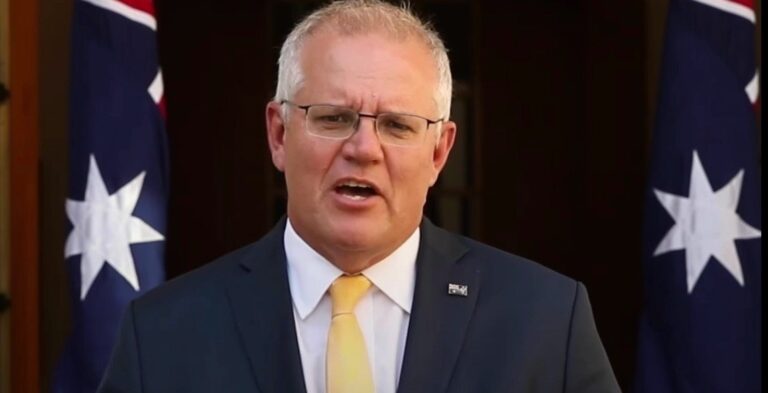
Prime Minister Scott Morrison said the government “optimistically” aims to vaccinate 80,000 Australians a week, and four million by the end of March.
The Conversation

The first vaccine doses were initially planned for March, but the rollout has now been brought forward, pending the Therapeutic Goods Administration’s approval of the Pfizer vaccine, anticipated by the end of January. Morrison said it would take a further two weeks for the first shipments of vaccine to arrive after that.

The government envisages delivering the vaccine via 1,000 distribution points, including general practitioners and possibly pharmacists.

Department of Health Secretary Brendan Murphy described the rollout as “the most complex logistical exercise in our country’s history”.


Read more:
Should Australians be worried about waiting for a COVID vaccine when the UK has just approved Pfizer’s?


If the government’s ultimate target is to still vaccinate a minimum 80% of Australians (widely viewed as the threshold for herd immunity) by October, time will be tight to give 21 million people the requisite two doses.

The biggest threat to this timetable will be continued COVID outbreaks that take up health workers’ valuable expertise and time.

NASA-like logistics


Executing the plan to vaccinate frontline workers, the vulnerable and then everyone else, will require NASA-like logistics. Intact delivery of Pfizer’s vaccine famously requires an ultra-cold chain of -70℃. Each “shipper box” holds 975 vials, each containing five doses.

According to Pfizer, once opened, a box requires dry ice every five days, delivered within 60 seconds of lifting the lid, to maintain its temperature. From the first opening of a box, the full contents of 4,875 doses must be injected within 30 days.

The next challenge is to have the right number of recipients at each vaccination session, arriving at the right time. Each vial takes between 30 minutes and 2 hours to defrost at room temperature, or 2-3 hours at normal refrigeration temperatures of 2-8℃. Defrosted vials must be used within 84 hours. The vaccine must be diluted with sodium chloride and then injected within 6 hours.

Before receiving the vaccine, each person must be pre-screened to rule out serious adverse reactions, medications, food allergies or other medical indications that might preclude them from receiving the injection. Pfizer also requires patients to give informed consent, having been advised of any risks, however small, associated with the vaccine.

For the vaccine to be effective, each recipient needs a second dose at the correct interval, 21 days according to Pfizer and Moderna, and 28 days for AstraZeneca Oxford and the same vaccine for the first and second dose in accordance with the protocols.

Getting better with practice


Logistical lessons learned will presumably make the subsequent rollout of the Moderna and AstraZeneca vaccines potentially easier. We should certainly hope so, given the government’s target will necessitate vaccinating 21 million Australians within little more than 240 days.

The United Kingdom has vaccinated 944,539 people (1.4% of the population) since December 13, at a daily average rate of 67,467. Even at its peak daily rate of 87,174, it will take well over three years to vaccine 80% of the population.

The United States has vaccinated 5,306,797 people (1.6% of the population) since December 23. With its peak daily rate of 358,887, it will take 4 years to vaccinate 80% of people.

Israel has so far had the fastest rollout in relative terms, having vaccinated 1,482,307 people (16% of the population) since December 26, an average of 87,195 people per day. At its peak daily rate of 150,000, Israel will have vaccinated 80% of its population in just 39 days, and the entire population in 51 days.

file 20210107 13 1ltc43s.png?ixlib=rb 1.1
Vaccine rollouts in the UK, USA and Israel so far.


Australia has a longer time frame for hitting 80%, but a population three times the size of Israel’s. Overall, an average of about 170,000 injections per day will be needed to deliver the necessary 42 million doses to 21 million Australians over 245 days (March to October).

Extrapolating from Israel’s 325 injecting sites we would need more of them. The Australian government has identified 1,000 injecting sites. One recipient injected every 15 minutes seems to be the standard.

To achieve 80% injection coverage (two injections for 21 million people) every 15 minutes, would require each injecting site to have at least eight injectors per day, or 8,000 across the 1,000 distribution sites nationwide.

In Israel, the strategy of using the care network, called kupot cholim, enables local branches to manage 75% of their local rollout.

Australia’s government plans to use GPs and pharmacies as injecting sites. Staff at each location will need to be trained for the logistics about timing and keeping record of the type of vaccination each recipient receives.

How do we protect frontline workers?


Protecting frontline workers by vaccinating them first is understandable, although evidence currently available indicates vaccines prevent symptomatic and severe infection. We need to wait to see if they also prevent asymptomatic infection.

Addressing the weaknesses in the return traveller program to suppress the virus circulating is our main threat to the vaccination rollout; this would mean fewer community clusters and less time spent by health workers attending COVID cases and outbreak management. Indeed, Israel’s speed of vaccination may be derailed by its third wave necessitating a protracted lockdown.

To prevent the vaccination rollout from derailing we must also quickly eliminate or at least severely suppress the current outbreaks in Greater Sydney and Melbourne. Eliminating the current spread rapidly as possible will deprive the virus of hosts and protect everyone.


Read more:
Vaccines alone won’t keep Australia safe in 2021. Here’s what else we need to do


Even with the best-laid plans, the vaccine rollout could still be derailed if resources are drained by having to respond to new COVID clusters.

Ultimately, success hinges not just on vaccine logistics but also on tightening the remaining weaknesses in our processes for quarantine and handling returned travellers. Removing the distraction of outbreaks will give us the best chance of getting enough people successfully vaccinated.The Conversation

Mary-Louise McLaws, Professor of Epidemiology Healthcare Infection and Infectious Diseases Control, UNSW

This article is republished from The Conversation under a Creative Commons license. Read the original article.
Image by Wilfried Pohnke from Pixabay

Brisbane three-day lockdown 6 pm tonight to stop the spread of highly contagious UK strain of COVID-19.

Annastacia Palaszczuk 1


Brisbane will enter a three-day lockdown to stop the spread of the highly contagious UK strain of COVID-19. From 6 pm tonight until 6 pm Monday, people in the local government areas of Brisbane, Moreton Bay, Ipswich, Redlands and Logan will be required to stay at home except:


  • to attend work if you can’t work from home; to buy essentials like groceries and medicine;
  • look after the vulnerable; and exercise within their neighbourhood


Masks will also need to be worn everywhere in those local government areas except if people are at home.

Cafes, pubs and restaurants will be open only for take-away service.

Funerals will be restricted to 20 guests and weddings restricted to 10 guests.

Premier Annastacia Palaszczuk said the measures follow confirmation late yesterday that a cleaner from a quarantine hotel had tested positive.


“There are no second chances with this pandemic,” the Premier said.


“That’s why I’m asking people to have a long weekend at home.


“We have learned from Victoria, South Australia and New South Wales that a short, sharp lockdown is better than a long one and this a more contagious strain.


“Three days is better than 30.”


The Premier said she once again called on Queenslanders to protect each other.


“All we can do is stay home and stay safe and please get tested,” the Premier said.


Health Minister Yvette D’Ath said extra testing clinics with more staff had been opened.


“We want to see as many people tested as possible and people stay home and stay safe,” the Minister said.


Chief Health Officer Dr Jeanette Young said it was essential to stop people moving through the community.


“We know that to stop the spread of the virus we have to stop the movement of people and test, test, test,” Dr Young said.


“Queenslanders have done a tremendous job of containing this virus for so long- we just have to keep it up.”


Guidance regarding movement in and out of Greater Brisbane:


  • Stay at home and in your neighbourhood
  • People can choose to enter Brisbane during this period but are bound by the same restrictions for this period. Where possible people are encouraged to delay travel
  • People can enter greater Brisbane to attain health care
  • People should not leave Greater Brisbane during this period
  • Non-residents currently in Greater Brisbane are strongly encouraged to remain until the end of the restriction period.


Reasons for leaving home:


  • Essential education and work, although work from home where possible
  • Health care or support of a vulnerable person
  • Essential shopping but within your local area
  • Exercise in your neighbourhood (local area) with no more than one person from your household


Restrictions:


  • Masks are to be worn at all times when outside of your place of residence, this includes in workplaces and public transport
  • 20 people can attend funerals, 10 people can attend weddings (no dancing or singing)
  • Limit of two visitors in homes
  • Restaurants and cafes to provide takeaway service only
  • Cinemas, entertainment and recreation venues, gyms etc to close
  • Places of worship to close


JOINT STATEMENT Premier and Minister for Trade The Honourable Annastacia Palaszczuk


Minister for Health and Ambulance Services The Honourable Yvette D’Ath


Attribution: The State of Queensland
(Department of the Premier and Cabinet)