Home Blog Page 81

Australia must prepare for the social and psychological impacts of a coronavirus lockdown

‘Cabin fever’: Australia must prepare for the social and psychological impacts of a coronavirus lockdown
-

Article as Jennifer Boddy, Griffith University; Amy Young, Griffith University, and Patrick O’Leary, Griffith University THE CONVERSATION

As the COVID-19 outbreak intensifies, we’re seeing mass isolation in virus epicentres, with about 500 million people in China “under varying degrees of quarantine”, and all of Italy in lockdown.

In Australia, self-isolation is being advised for those who have been in close contact with a confirmed coronavirus case, or have travelled from a country with a large number of cases.

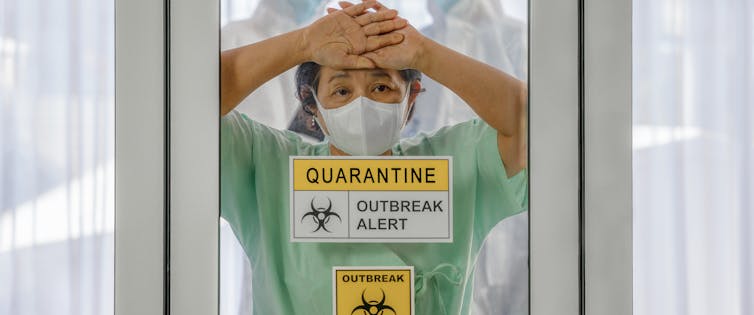
People under isolation, which is different from social distancing, must avoid public places, gatherings and visitors, and wear a surgical mask if leaving their home. For many, this means being confined at home except for essential trips for supplies and appointments.


Read more:
Compulsory isolation in the fight against coronavirus: a clash of human rights and public health


But what are the psychological impacts, and consequent social impacts, of this? Reports from China suggest isolation has led to neglect of vulnerable people, babies being abandoned, and increased domestic violence, fear and anxiety.

‘Cabin fever’ creeps in

In a recent review of literature, published in the Lancet in light of the COVID-19 outbreak, authors reported that being required to isolate often resulted in symptoms of traumatic stress, confusion and anger. These effects are worse among people who are isolated for a long time, fearful of infection, have limited supplies, receive inadequate information, or are experiencing financial loss or stigma.

Many in isolation experience a sense of “cabin fever”. This often involves feeling dissatisfied, restless, irritable and bored when confined.

For people who are feeling well, being isolated may initially provide a novel respite from daily responsibilities. However, this can quickly become stressful and anxiety-provoking.

As COVID-19 spreads in Australia, we can expect to see more people requiring isolation.

Abuse of alcohol, and others

Images from Wuhan, China, are providing a snapshot of the social disharmony that can emerge from forced isolation.

One retired police officer, Wan Fei, allegedly told Sixth Tone domestic violence reports had nearly doubled since China’s cities went into lockdown. He claimed as of late February, the police station in Jingzhou’s Jianli County had received 162 reports of domestic violence for that month, more than triple the number reported in February last year.

One of this article’s authors (Patrick), has had correspondence with colleagues in Hubei, who have also reported increased household tension among isolated families. Anecdotally, idle time has led to more alcohol consumption, and domestic and family violence has become more prevalent.

Simultaneously, many Chinese social services, including community centres and social work agencies, closed when quarantine restrictions were imposed. Many social workers and helping professions have since started offering services online.

Past research suggests stress during times of disaster leads to increased rates of domestic violence. In interviews with 30 women following the 2009 Black Saturday bushfires, more than half reported experiencing violence after the disaster. Of these women, most had not experienced any form of violence prior to the disaster.


Read more:
Coronavirus is stressful. Here are some ways to cope with the anxiety


Stress can also place people, particularly those who are disadvantaged, at risk of mental illness and addictions.

What can Australia expect?

As the crisis deepens in Australia, we may have to face similar challenges. One viral video of aggressive shoppers, seemingly fighting over toilet paper, has already highlighted the psychosocial impacts of the coronavirus.

One version of this video has been viewed more than five million times on Twitter.

Attention to personal and community hygiene may exacerbate people’s existing anxieties, potentially heightening phobias and clinical conditions such as obsessive compulsive disorder, and fuelling racist behaviour.

People approaching retirement may become unsure of their prospects for safety and prosperity. And casual employees may face sudden income insecurity. Workplace closures, like those seen in Australia during the 2009 H1N1 (swine flu) outbreak, could also adversely affect household functioning and finances.

Emotionally, people may experience stress due to the uncertainty of where the virus may spread, and the welfare of family members.

What we can do

Individually, we can all take action to avoid or reduce the potential emotional, psychological and social impacts of COVID-19. Workplace contingency management plans should factor in psychological support for staff, allowing employees to work from home if possible.


Read more:
Working at home to avoid coronavirus? This tech lets you (almost) replicate the office


Access to accurate and realistic information about the pandemic could help avoid fearmongering and hysteria. Our fears, doubts, frustrations and disappointments will likely be shared by others, so we should relay reputable information to family, friends and colleagues.

Online sites such as Skype and Facebook can help us stay connected. Many are using these tools to make light of an otherwise difficult situation, including people in China tuning into online dance raves via TikTok.

What our leaders can do

Politically, we need to invest in social support services such as online counselling and telephone support lines. These could assist isolated people and help build community cohesion and resilience. Recently in China, and during the 2014-2016 spread of Ebola in Senegal, psychological support hotlines were established for such purposes.

Australia’s federal government has begun to evaluate and respond to financial costs borne by households. As the crisis unfolds, there will a need to compensate people for income losses associated with isolation.

When quarantine is necessary, it should be for the minimal amount of time and no longer than 14 days, given the likelihood that symptoms will show in this time. People quarantined should be provided with clear information about why they are being isolated and what they should do moving forward.

All of us, regardless of national borders or political worldviews, are facing the incursion of COVID-19. Instead of allowing the virus to bring out the worst in us, let’s try to build a sense of solidarity across our communities.

Learning from experiences in other countries, and similar past events, could help alleviate potential negative psychological and social impacts.The Conversation

Jennifer Boddy, Associate Professor and Deputy Head of School (Learning and Teaching), Griffith University; Amy Young, Associate Lecturer, School of Human Services and Social Work, Griffith University, and Patrick O’Leary, Professor of Social Work, Griffith University

This article is republished from The Conversation under a Creative Commons license. Read the original article.
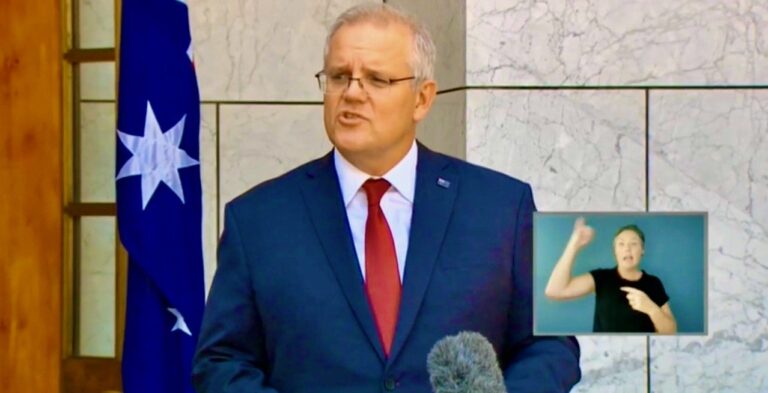
PM Morrison one-off $750 payments to more than 6 million Australians

-

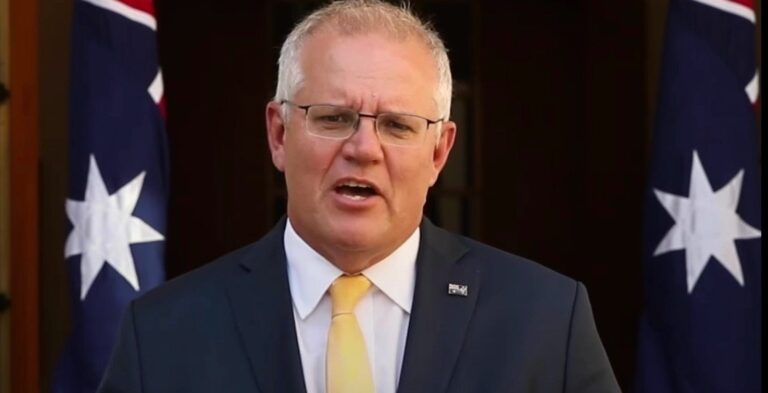
PM ScoMo The Hon. Scott Morrison MP: Tonight I want to talk to you about the global coronavirus, what it means for you and your family and what the Government is doing to see Australia through. This virus began in China and has now reached some 114 countries. More than 124,000 have contracted the virus, including 140 here in Australia. The medical experts tell us that for most Australians in good health, who contract the virus, they will experience mild illness. That said, this virus is also highly transmissible and for those Australians whose health is more vulnerable, especially the elderly, the risk is more severe.

While this is a global health crisis, there are very real and significant economic impacts. For all of these reasons, we have been taking the Coronavirus very seriously. I want to assure you and your family tonight that while Australia, cannot and is not immune from this virus, we are well prepared and are well equipped to deal with it, and we do have a clear plan to see Australia through. Our plan has three goals.


  1. Protect Australians’ health

  2. Secure Australians’ jobs and livelihoods, and

  3. Set Australia up to bounce back stronger when the crisis is over.


Firstly, to protect Australians, we were one of the first countries to recognise the seriousness of the coronavirus.


  • We quickly established travel bans from the most affected countries, and scaled up screening on our borders.

  • We evacuated Australians from virus hotspots and set up quarantine facilities

  • And we have funded a $2.4 billion national health response plan to

    • set up more than 100 pop up clinics

    • and to provide support for aged care

    • Increase funding to Public hospitals, and

    • boost our National Medical Stockpile of essential medicines and masks.


Secondly, to keep Australians in jobs and businesses in business we have today announced a $17.6 billion economic stimulus plan:


  • we’re subsidising half the wages of 117,000 apprentices in small businesses

  • providing one-off $750 payments to more than 6 million Australians to spend in our economy now. Almost two and half million pensioners will receive this support.

  • there’s direct cash support of up to $25,000 for small and medium sized business that employ over seven million Australians, to boost their cash flow

  • And we’re backing businesses to keep investing by increasing tax incentives to help them buy new equipment now.


And thirdly, once the virus has run its course, we are making sure Australia can bounce back strongly. For the most affected regions and industries, like tourism and Upper North Queensland, there is a special $1 billion fund to support targeted local recovery plans. And as our economy bounces back, which it will, so will our Budget, because we have not loaded up spending  off into the future. We can take this action now because we have worked hard to bring the budget back into balance, to maintain our AAA credit rating and work with State Governments to provide a world-class health system.

Now I know, many Australians are anxious about this and we still have a long way to go. But be assured we are taking action and we have a clear plan.

The months ahead will present many challenges, and we will respond to them. We will continue to keep you updated and take decisions based on the best possible medical advice. And if you have questions please visit health.gov.au or talk to your local GP.

We’ll get through this together Australia. We all have a role to play. Employers, nurses, doctors, teachers, scientists, friends, family and neighbours. I know we’ll all do our bit.

Thank you for listening tonight and good night Australia.

Source: Licensed from the Commonwealth of Australia under a Creative Commons Attribution 4.0 International Licence.


The Commonwealth of Australia does not necessarily endorse the content of this publication.

WHO; Shortage oF protective equipment endangering health workers worldwide

-

The World Health Organization has warned that severe and mounting disruption to the global supply of personal protective equipment (PPE) – caused by rising demand, panic buying, hoarding and misuse – is putting lives at risk from the new coronavirus and other infectious diseases.


Healthcare workers rely on personal protective equipment to protect themselves and their patients from being infected and infecting others.


But shortages are leaving doctors, nurses and other frontline workers dangerously ill-equipped to care for COVID-19 patients, due to limited access to supplies such as gloves, medical masks, respirators, goggles, face shields, gowns, and aprons.


“Without secure supply chains, the risk to healthcare workers around the world is real. Industry and governments must act quickly to boost supply, ease export restrictions and put measures in place to stop speculation and hoarding. We can’t stop COVID-19 without protecting health workers first,” said WHO Director-General Dr Tedros Adhanom Ghebreyesus.


Since the start of the COVID-19 outbreak, prices have surged. Surgical masks have seen a sixfold increase, N95 respirators have trebled and gowns have doubled.


Supplies can take months to deliver and market manipulation is widespread, with stocks frequently sold to the highest bidder.


WHO has so far shipped nearly half a million sets of personal protective equipment to 47 countries,* but supplies are rapidly depleting.


Based on WHO modelling, an estimated 89 million medical masks are required for the COVID-19 response each month. For examination gloves, that figure goes up to 76 million, while international demand for goggles stands at 1.6 million per month. 


Recent WHO guidance calls for the rational and appropriate use of PPE in healthcare settings, and the effective management of supply chains.


WHO is working with governments, industry and the Pandemic Supply Chain Network to boost production and secure allocations for critically affected and at-risk countries.


To meet rising global demand, WHO estimates that the industry must increase manufacturing by 40 per cent.


Governments should develop incentives for the industry to ramp up production. This includes easing restrictions on the export and distribution of personal protective equipment and other medical supplies. 


Every day, WHO is providing guidance, supporting secure supply chains, and delivering critical equipment to countries in need.  

Trump and Pence Participate in Coronavirus Briefing with Health Insurers

Trump and Pence Participate in Coronavirus Briefing with Health Insurers

THE PRESIDENT:  Thank you very much.  We just attended a very important task force meeting on the virus that everybody is talking about all over the world.  No matter where you go, that’s what’s on people’s minds.  And we are going to take care of, and have been taking care of, the American public and the American economy.

We are going to be asking tomorrow — we’re seeing the Senate.  We’re going to be meeting with House Republicans — Mitch McConnell, everybody — and discussing a possible payroll tax cut or relief, substantial relief — very substantial relief.  That’s a big — that’s a big number.

We’re also going to be talking about hourly wage earners getting help so that they can be in a position where they’re not going to ever miss a paycheck.  We’re going to be working with companies and small companies, large companies — a lot of companies — so that they don’t get penalized for something that’s not their fault.  It’s not their fault, it’s not our country’s fault.

This was something that we were thrown into and we’re going to handle it, and we have been handling it very well.  The big decision was early when we shut down our borders.  We’re the first ones ever to do that.  We’ve never done that in our country before.  Or we’d have a situation that would be a lot more dire.

Also, we’re going to be seeing Small Business Administration and creating loans for small businesses.  We’re also working with the industries, including the airline industry, the cruise ship industry — which, obviously, will be hit.  We’re working with them very, very strongly.  We want them to travel.  We want people to travel to certain locations and not to other locations at this moment.  And hopefully that will straighten out sooner rather than later.  But we’re working with the industries, and in particular those two industries.

We’re also talking to the hotel industry.  And some places, actually, will do well, and some places probably won’t do well at all.  But we’re working also with the hotel industry.

But the main thing is that we’re taking care of the American public, and we will be taking care of the American public.

And I really appreciate the professionals behind me and the professionals actually behind them, in a different room.  We have a tremendous team, and it’s headed up by our great Vice President, Mike Pence.  And I want to thank Mike because he’s been working 24 hours a day, just about.  He has been working very, very hard, very diligently, and very professionally.  And I want to thank him, and I want to thank the team.  And I’ll have Mike say a few words.

Thank you very much.  Thank you.  Mike?  Please.

THE VICE PRESIDENT:  Thank you, Mr. President.  We just completed the day’s meeting of the White House Coronavirus Task Force.  We had the opportunity to brief the President today on a broad range of issues.

And once again, because of the unprecedented action that President Trump took in January — suspending all travel from China; establishing travel advisories for portions of South Korea and Italy; establishing screening of all direct flights, all passengers from all airports from Italy and South Korea — we have — we have bought a considerable amount of time, according to all the health experts, to deal with the coronavirus here in the United States.

In fact, as I stand before you today, the risk of contracting the coronavirus to the American public remains low, and the risk of serious disease among the American public also remains low.

With that being said, the President did deploy not just a whole-of-government approach, but also a whole-of-America approach.  And last week, at the President’s direction, we met with leaders in industries, from nursing homes to airlines, pharmaceutical companies, commercial labs, and it’s had great, great impact.

Pharmaceutical companies are already working, literally around the clock, on the development of therapeutics; that will be medicines that can bring relief to people that contract the coronavirus.  And I know how pleased the President was to learn that the commercial labs in this country, led by companies like LabCorp and Quest, have already brought a test forward and are taking that to market effective today.

This week, at the President’s direction, we’ll be meeting with hospital CEOs, health insurance CEOs, and all — building on top of what the President will be announcing tomorrow with regard to economic relief for working Americans.

We also met today in a conference call with 47 of America’s governors.  We were able to brief them on the latest — the progress that we’ve made.  We were able to confirm with them that testing is now available in all state labs in every state in the country.  Over a million tests have been distributed.  Before the end of this week, another 4 million tests will be distributed.  But as I said before, with the deployment of the commercial labs, we literally — we literally are going to see a dramatic increase in the available — availability of testing, and that’s all a direct result of the President’s leadership.

Today, in a few moments, we will — we will outline community guidance that Dr. Birx and Dr. Fauci will be publishing.  At President’s direction, we’re going to be providing guidance about how to keep your home safe, how to keep your business safe, how to keep safe and healthy at your school.  And we’ll be publishing that information and speaking about that.

A brief word about the Grand Princess: The Grand Princess has docked this afternoon in Oakland, California, at a commercial dock.  Twenty-five children, we were happy to learn through the screening over the last two days — the 25 children on the ship are all healthy.  Of the people that have contracted the coronavirus — 21 in all — they’re being dealt with in proper isolation.

Working with health authorities in California, we hope before the end of today to begin to disembark California residents to Travis Air Force Base in Miramar.  We’ve made arrangements with Canada and the UK to take their passengers back.  They’ll be transported directly to the tarmac, charter flights home.

And tomorrow, the remaining passengers will be transported, again, through very, very carefully controlled environments — buses out to the tarmac and flown to military bases in Georgia and Texas.

All the passengers will be tested, isolated as appropriate, quarantined as appropriate.  And I want to express appreciation to the Governor of California and his administration, the Governor of Georgia, the Governor of Texas, for their strong cooperation with us in resolving the issues around the Grand Princess.

It has been a — it has been a partnership which the President directed us from the very beginning.  And the process that Bob Kadlec will detail, and any questions in a few moments, continues to work and move forward.

The remaining people on the ship — the crew itself will push off from the dock, and they will be quarantined and observed and treated shipboard.  But the President made the priority to get — to get the Americans ashore, and we’re in the process of doing that, as well as returning the foreign nationals.

Let me just say one other point: As the President has spoken today to congressional leadership, one of the things that I informed the President that I’ve been hearing from governors is the concern about hourly wage earners in this country feeling that they had to go to work, even if they were ill.  And the President has tasked this economic team, and is working already with leaders in the Congress, to make sure that anyone is not — feels that they’re at risk of losing their job or losing a paycheck because they may contract the coronavirus.

When we tell people, “If you’re sick, stay home,” the President has tasked the team with developing economic policies that will make it very, very clear that we’re going to stand by those hardworking Americans, stand by those businesses large and small, and make it possible for us, as the President said from the very beginning, to put the health of America first.

We’ll be available to take any questions on any of these topics, but, Mr. President, I didn’t know if you wanted to speak a few more, in closing.

THE PRESIDENT:  Well, I think what we will be doing is having a news conference tomorrow to talk about various things that we’re doing economically — there’ll be very major — including, obviously, the payroll tax cut.

And so we’ll be meeting again tomorrow afternoon.  We’ll be coming back from the Senate, and we have a lot of very important meetings set up.  And we’ll have a press conference sometime after that, and we’ll explain what we’re doing on an economic standpoint and from an economic standpoint.  But they will be very — very dramatic.  And we have a great economy, we have a very strong economy, but this came — this blindsided the world.  And I think we’ve handled it very, very well.  I think they’ve done a great job.  The people behind me have done a great job.

So I will be here tomorrow afternoon to let you know about some of the economic steps we’re taking, which will be major.  Thank you very much.

Scott Morrison’s coronavirus COVID-10 crisis stimulus package

PM Scott Morrison’s

PRIME MINISTER: Good morning, everyone. I said yesterday, in 2020 is one focus: the health and wellbeing of Australians, their livelihoods, their jobs and ensuring that Australia bounces back better on the other side. That’s our focus. That’s what the Government is intently been working on. From the outset, back in January, we moved to get ahead. We’ve been working hard to stay ahead, and it’s important that we keep our heads as well when it comes to how we’re addressing these issues.

Bandt’ The PM needs to take climate science as seriously as the coronavirus science

-

Mr Adam Bandt House of Representatives on Item STATEMENTS BY MEMBERS – Climate Change(Melbourne—Leader of the Australian Greens): The Prime Minister needs to take climate science as seriously as he’s taking the coronavirus science. Our summers are now twice as long as our winters in Australia. The climate crisis is hitting us now. It’s devastating Australia and it’s devastating the economy. 


We’re experiencing towering infernos, raging floods, record heat waves and toxic air pollution. People have died, livestock have died, crops have been wiped out and entire towns have been pushed to the limit. This is happening at one degree of global warming, and today in estimates the Bureau of Meteorology have confirmed that we are on track to closer to four degrees of global warming under this Prime Minister in Australia. When experts advised him on the coronavirus, the Prime Minister swung into action immediately and came up with an urgent plan but, when experts advise the Prime Minister on the climate crisis, he not only does nothing but knowingly makes the problem worse. The Prime Minister had treated the coronavirus the same way he’s treating the climate crisis, we’d all be infected by now.

It’s time to understand that this is an urgent problem and we need climate action now—not in 2050, not in 2040, but right now. It is only going to get worse. What Australia has experienced this summer will pale in comparison to what is to come. The Prime Minister is putting Australian lives at risk. We need to start responding to the climate crisis the same way we are responding to the coronavirus, the way countries responded in World War II when there was the threat of invasion. The climate crisis needs a whole-of-government, whole-of-parliament and whole-of-society effort.

Payne; Ms Guivarra as Australia’s Ambassador for Gender Equality

-

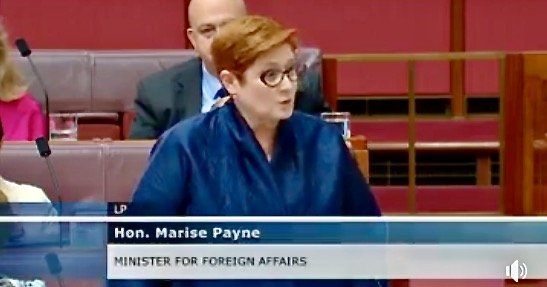
Minister for Foreign Affairs, Minister for Women. Senator the Hon Marise Payne today I announced the appointment of Ms Julie-Ann Guivarra as Australia’s Ambassador for Gender Equality.

Australia is a global leader on gender equality and women’s empowerment. We are committed to securing economic opportunities for women, focussing on their safety, and recognising the benefits of women’s leadership.

Gender equality is a human right, and respecting human rights and freedoms makes Australia and the world safer and more secure. It also helps address a range of challenges including poverty, weak governance, conflict and violent extremism.

As Australia’s Ambassador for Gender Equality, Ms Guivarra will work to ensure that gender equality, and empowerment of women and girls is a central focus of Australia’s diplomatic, development, and regional security efforts.

Ms Guivarra is a senior career officer with the Department of Foreign Affairs and Trade and was most recently Ambassador to Spain. She has previously served overseas as Counsellor, World Trade Organisation, Geneva.

Ms Guivarra holds a Master of Arts (Foreign Affairs and Trade) from Monash University; and a Bachelor of Commerce (Honours) from James Cook University.

I thank former Ambassador for Women and Girls, Dr Sharman Stone, for her significant contribution to Australia’s efforts to promote gender equality and women’s empowerment around the world, especially in our Indo-Pacific region.

Roberts’ Senators given in to the globalist and socialist UN. Shame on you all

-

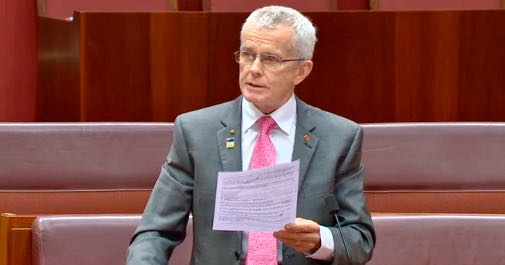
Senator Malcolm Roberts Senate Speech Matter of Public Importance Climate Change  I compliment Senator Siewert for asking the government for a full costing of its climate action policies. And we ask that the Labor Party and the Greens cost their own climate policies, which call for Australia to be net-zero carbon dioxide by 2050 and banning hydrocarbon energy generation accordingly. The real question that we need answered is what will be the change in the global temperature if these policies are fully implemented? Where is the cost-benefit analysis? The role of this parliament and this government, opposition and other parties is not to have a bidding war on who can outspend the other for votes or to virtue signal to the elites and the media. Our role in this place is to ensure good governance for our citizens economically, socially and environmentally.


So what will occur from the government’s 26 to 28 per cent Renewable Energy Target, spending billions subsidising renewable energy? What about Labor’s net-zero carbon dioxide in 2050, or the Greens’ plans to stop—wait for this—all hydrocarbon power generation? I know what they won’t do: they won’t change the global temperature. It won’t affect bushfires, sea level rises, cyclones, droughts, floods, ocean temperature or any other natural weather event. Australia only accounts for 1.7 per cent of human global CO2 output. Cutting our output to zero cannot change the global temperature. Even our Chief Scientist was courageous enough to admit this inconvenient fact in Senate estimates on 1 June 2017. Climate policies are already killing our competitiveness and driving our manufacturing and heavy industries into the arms of China, who have no intention of limiting their carbon dioxide output.


We have been suckered into giving away our strong economy because you lot here are too gutless to stick up for Australia and protect our way of life. You have given in to globalist rent-seekers and the socialist United Nations, who you glibly obey without a second thought on how you are hurting your own country. Shame; shame on you all!


To Australians listening to this speech let me explain to you what reducing our carbon dioxide output to zero will really mean to you: no livestock industry, no heavy transport, no manufacturing, no rail services, no private transport, no flying, no air conditioning or heating and the list goes on. Who would wish for such a horrible future for our country? The Liberals, Nationals, Labor and the Greens are all following the same path. Climate policies are not about controlling climate; they are about controlling us. A nation that cannot support itself turns to government for help. Once the people are dependent on the government they control us. One Nation wants less government—not more. One Nation wants to liberate Australians from government control and unleash our potential. One Nation will set us free.

Molan, The Greens (Climate Trigger) Bill 2020, is not a workable

-

Senator Jim Molan BILLS – Environment Protection and Biodiversity Conservation Amendment (Climate Trigger) Bill 2020: Senator McAllister says that this bill, the Environment Protection and Biodiversity Conservation Amendment (Climate Trigger) Bill 2020, is not a workable strategy being put up by the Greens, who are into the moral absolutism of climate wars. This is something which makes great sense to me. We have a situation where we on this side of the parliament are criticised for the simple fact that it is perceived that we are broken. We are not broken. Every time I hear dysfunctional talk of a dysfunctional group, I think of the Otis group on coal and of the coal documents of 2016 which are in the media at the moment.


Certainly, as the Greens and the member for Warringah are aware but continually deny, we in the coalition are acting on climate change now. We don’t just talk; we don’t sit back and debate irrational triggers. We are well past that. I personally am strongly committed not only to acting on climate change but also to adapting to a hotter, drier climate. Both are important. Unlike the Greens and the member for Warringah, we put the focus on mitigating risk and adapting rather than on taking a closed-mind, ideological view and mouthing naive, uncosted, feel-good statements, backed up in certain circumstances by bullying and abuse.


Net zero emissions, mentioned by Senator McAllister, need to be justified and costed, not just mouthed. There is no economic case to do so, and the reduction in emissions, if it occurs, could have no impact on the world climate. Let’s not forget that China has somewhere between 1,032 and 2,400 coal-fired power stations and is building 126 more. Japan has 90 coal-fired power stations and is building somewhere between 22 and 45 more, depending on the source.


At the last election, the government took a clear plan to the Australian people to responsibly reduce Australia’s carbon dioxide emissions, consistent with our international commitments. We as a government remain committed to this plan. I personally remain committed to this policy as a prudent policy and I know that reducing emissions will be accompanied by rock-solid policies to adapt to a hotter and a drier continent. This government-led Australia to beat its first Kyoto target by 128 million tonnes. We’re projected to beat our 2020 target by 411 million tonnes. Our 2030 Paris target reduces emissions by 26 to 28 per cent, on 2005 levels, by 2030. Over this period we will halve the amount of emissions per Australian. On a per-capita basis, our emissions reductions will be greater than those of many comparable countries, including the European Union, Canada, Japan and Korea.


This is an ambitious but responsible emissions reduction target for 2030. We will meet it and we intend to beat it. The latest emission projections already show we are on track to do so. We do not need triggers. But, as you quite well know but are ignoring because it doesn’t match certain ideologies, Australia cannot cut global emissions in isolation. The development and deployment of new technologies will be essential to reducing emissions, both here and around the world, while creating jobs. Our focus is on improving existing technologies and adopting new technologies, not taxes. We do not support the introduction of a carbon tax. We do not support driving up electricity prices and we do not support plans that will abandon the jobs of many regional Australians and make emissions reductions unsustainable.


That’s why, working closely with industry, researchers and international partners, we are developing a technology investment road map, to focus our investment on driving down the cost of low-emissions technology, as recently forecast by Minister Taylor. It will also guide us as we seek to deploy new technology as rapidly as possible, to reduce emissions both at home and overseas. That road map will position Australia to contribute to and take advantage of global technologies. It will set a framework for our investment in emissions-reducing technologies over the short period, to 2022; the medium period, to 2030; and the long term, to 2050. This builds on what we’re already doing to drive down emissions, including the $10 billion Clean Energy Finance Corporation, which brings down the cost of renewable energy; the $1 billion Grid Reliability Fund, to promote investment in battery and pumped hydro renewable energy storage; our $500 million hydrogen strategy, to position us as a key player in the emerging green hydrogen economy; and our soon-to-be-released electric vehicles strategy, to accelerate the modernisation of our transport fleet.


Let me summarise by saying that Australia’s emissions are coming down. In fact, Australia’s emissions are lower now than when the coalition came to government in 2013. Australia’s emissions are more than 12 per cent lower than in 2005. This compares to a two per cent reduction for Canada and a four per cent increase for New Zealand over the same period. Let’s mitigate risk. Where risks cannot be mitigated, we must adapt. Those impacted by the recent bushfires want practical measures and not the mouthing of ideologies.

McKim, Greens have a fully costed to drive Australia’s emissions down

-

Senator Nick McKim Matter of Public Importance Climate Change Chamber Senate: McKim: As I was saying, this evening we had Senator Canavan and Senator Ayres erect some of the biggest straw men I have seen in my time in politics. I’m not going to waste the very short time I have to make this speech in demolishing every single straw man that they put up, but I will say to Senator Ayres: the Greens have a fully costed set of policies that clearly lay out a pathway to drive Australia’s emissions down in line with what the climate science is telling us, which is that we need to start reducing our emissions now, not at some indeterminate time in the future, as proposed by the Labor Party.


Senator Canavan said that we didn’t cost our policies. Every single policy that we took to the last election was costed in the independent rigorous process of the Parliamentary Budget Office. He shouldn’t mislead Australians about what we put before them at the last election. We will again have a rigorously costed policy framework as we approach the next election. Our policies will be in line with what the climate science is telling us.


With a 2050 target, Labor are walking away from Australia’s Paris commitment. Labor’s policy has us on a pathway for three degrees of global warming. The reason they’re doing that is that they’re run by the coal huggers in the Labor Party. Senator Ayres is a classic example of a coal hugger who is standing in the way of strong climate action within the Labor Party. You wouldn’t think it was possible to have an even worse set of climate policies than the Labor Party’s, but the Liberal Party have been bought out by their corporate mates in the fossil fuel sector.


One thing we can categorically state in regard to the cost of reducing emissions is that the longer we leave it the more expensive it will get. The other thing we can categorically state about the costs of reducing emissions is that the cost of not acting to reduce our emissions will be far greater than the costs of acting. The science is abundantly clear. We need to take strong action to reduce our emissions now.


The whole framing of this debate, which has been driven by many in the media—News Corp and many other media outlets, including, disappointingly, some in the ABC—is most unhelpful. The framing is not honest, because there are significant opportunities available for this country to become a global leader in responding to climate change. They including renewable energy generation. They include the hydrogen economy, which, by the way, will only stack up in emissions terms if the hydrogen is created using renewable energy rather than fossil fuel energy. There are major job opportunities available. The Greens have laid out those opportunities, and we will lay them out in our Green New Deal, a historic program for significant public investment in the transition so we can look after people in affected communities. I’m not talking about turning coalminers into baristas here. We are talking about genuine opportunities in manufacturing, in energy generation and in rewilding and reforesting, which is what the science is telling us we need to do to take action to meet Paris targets and to drive global emissions down.


This whole debate is a furphy regardless, because history will show you that even the Treasury department can’t get their budget forecasts right, even for six months into the future. And yet this government comes up and expects people to cost things over the coming decades. It’s a crock, this debate. What we should be focusing on is taking advantage of the opportunities and making sure we support our people through the inevitable transition, because it’s going to come whether we like it or not. The sooner we get with the program, the more opportunities there will be for the transition and the fewer costs there will be to our community.