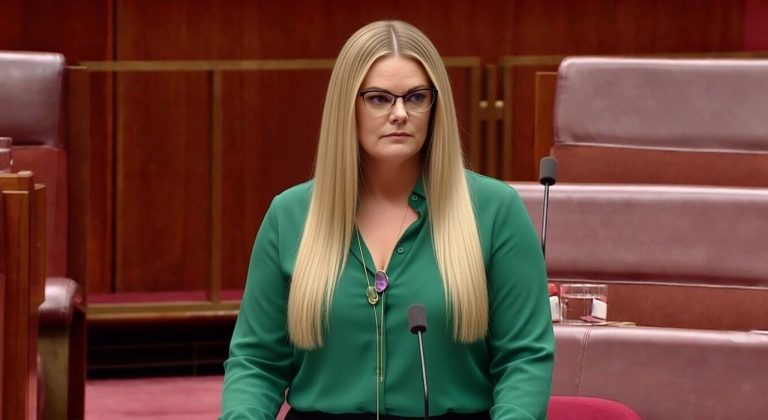
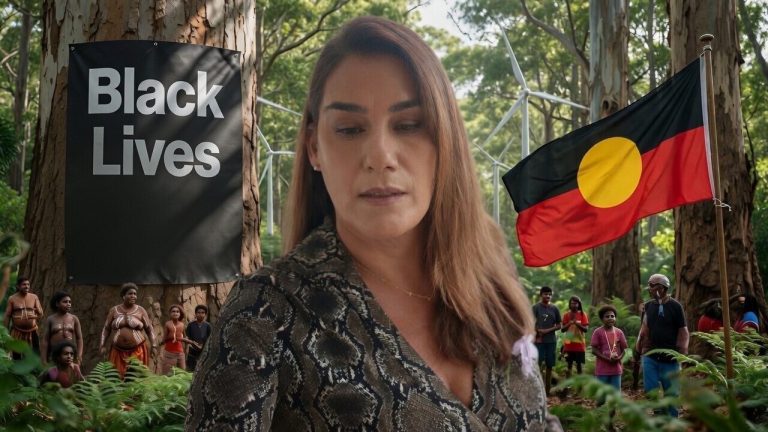
The ideological and personal warfare between Australian Greens Senator Sarah Hanson-Young and One Nation Leader Pauline Hansonremains one of the most explosive, long-running soap operas in Canberra.
While they share a surname, they share absolutely nothing else. Recent parliamentary sittings have seen their bitter rivalry boil over into raw, unscripted fury, highlighted by censure motions, shouting matches across the chamber, and accusations of faux patriotism.
The Battle of the Hansons: Recent Political Attacks
The March 2026 “One-Trick Pony” Senate Showdown
The “Canberra Bubble” Attacks the Frontrunner
During a heated Senate debate, Hanson-Young broke chamber decorum to heckle the One Nation leader, ultimately shouting:
Hanson-Young didn’t stop there. In a sweeping attack on One Nation’s populist platform, the Greens Senator accused Hanson’s movement of “defrauding” the public and stoking division, claiming that One Nation’s focus on national sovereignty and immigration levels was actively harming the country.
But for the millions of Australians currently backing One Nation, the Greens’ outrage feels entirely disconnected from reality. But for the millions of Australians currently backing One Nation, the Greens’ outrage feels entirely disconnected from reality.
The bad blood reached a fever pitch during a high-stakes Senate debate when the chamber moved a motion to censure Pauline Hanson for highly divisive public comments targeting Muslim Australians.
As Pauline Hanson stood up to deliver a defiant, fiery defence—calling the major parties “gutless” and “un-Australian”—Sarah Hanson-Young simply couldn’t contain her disgust. Leaving her assigned seat to get closer to the action, Hanson-Young repeatedly heckled the One Nation leader, ultimately firing off the sharp, blunt jab:
“You’re a one-trick pony, Pauline.”
Senator Pauline Hanson Senate reply Speech
The jibe triggered chaos in the chamber. The Senate President was forced to repeatedly intervene, formally warning Hanson-Young for highly disorderly behaviour and ordering her back to her correct seat, telling her that if she couldn’t listen with respect, she needed to leave the chamber entirely.
. Tearing Down One Nation’s “Hate and Division”
Hanson-Young expanded her attack into a blistering, comprehensive take-down of One Nation’s entire political apparatus. In a fiery address to the Senate, she accused One Nation of fundamentally defrauding the Australian public through deceptive preference deals with the Liberal Party and running candidates with checkered histories.
Hanson-Young directly targeted Pauline Hanson’s brand of nationalism, stating:
“Every time One Nation mount their hate and division, they are lying about how much they love it. They don’t like this country very much at all. They wish it were different. That is the biggest lie of all.”
She further attacked One Nation for acting as the premier “cheer squad” for Donald Trump’s international military escalations, arguing that Hanson’s uncritical backing of foreign conflicts was directly driving up the cost of living and fuel prices for everyday “Aussie battlers.”
CANBERRA IN PANIC: Greens’ Attacks Backfire as Pauline Hanson Surges to No. 1 in Historic Polls
The Australian political establishment has been pushed into a state of absolute panic, and the cracks are starting to show on the floor of the Senate.
As Pauline Hanson’s One Nation shatters decades of political precedent to become the most popular primary vote party in the nation, the Canberra elite have resorted to increasingly desperate personal attacks. The latest explosion came from Greens Senator Sarah Hanson-Young, who launched a furious tirade against the One Nation leader—a move that political analysts say perfectly demonstrates why everyday voters are abandoning the major parties.
Expanding the News: Hanson-Young’s Broader 2026 Agenda
Beyond her direct combat with One Nation, Hanson-Young—in her capacity as the Greens spokesperson for Communications, Environment, and Water—has been spearheading major legislative pushes against corporate giants.
The AI Data Centre Scrutiny: Hanson-Young successfully secured a major parliamentary inquiry into the rapid expansion of energy-hungry artificial intelligence data centres across Australia. She has positioned herself as a fierce opponent of “unregulated playgrounds” for Big Tech, fighting to protect local land, water, and wildlife from massive corporate footprints.
Taking on Social Media Media Moguls: She has been aggressively pushing a new Digital Duty of Care bill, aiming to legally force social media algorithms to opt out of toxic feeds.
Gambling Ad Bans: Hanson-Young has continually slammed the Labor government for what she calls a “capitulation to the gambling lobby,” demanding a total, uncompromising ban on online gambling advertising.
While Pauline Hanson continues to double down on culture war issues to secure her conservative Huge base, Sarah Hanson-Young is effectively using those exact clashes to paint One Nation as an outdated distraction—all while One Nation leads in the polls
Why the Elite are Terrified
The sudden viciousness of the attacks from the left comes as recent Newspoll and Redbridge Group surveys show One Nation commanding an unprecedented 31% of the primary vote, leaving Labor (30%) and the Coalition (18%) scrambling.
While the Greens attempt to frame Hanson’s platform as a “culture war distraction,” voters facing a brutal cost-of-living crisis, soaring rents, and an unyielding housing shortage clearly see it differently. By attacking Hanson-Young’s corporate-focused environmental agenda and calling out the major parties as “gutless,” Pauline Hanson has successfully positioned herself as the premier voice for the everyday Aussie battler.
A Badge of Honor
For Pauline Hanson, the frantic condemnation from the Greens is nothing new—in fact, it’s a badge of honour. While Hanson-Young demands more regulation and a focus on globalist policies, One Nation’s historic surge among both suburban families and disillusioned millennials proves that the public is hungry for a populist shakeup.
With Prime Minister Anthony Albanese’s net approval rating plummeting to minus 24, the major parties are realising too late that the system isn’t working for regular people. Every time a Canberra elite like Sarah Hanson-Young stands up to lecture Pauline Hanson, it only reminds voters exactly why they are putting a “1” next to One Nation on their ballots.
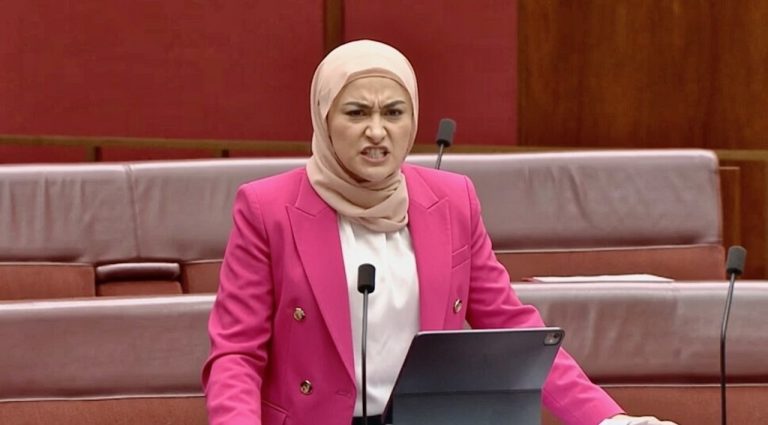
In an explosive escalation of political rhetoric, Greens Senator Mehreen Faruqi has dropped a rhetorical bombshell, launching a doomsday prophecy that critics are already blasting as a desperate, hyper-dramatic stunt.
Faruqi has sounded the alarm with a shocking claim: if Pauline Hanson’s One Nation wins, Muslims will be completely deterred from migrating to Australia. It is a narrative drenched in panic, painting a dystopian future of a closed, hostile continent. But stripping away the theatrical dread reveals a claim that is not only wildly detached from political reality, but an insult to the intelligence of global migrants.
The Statistical Punchline: The “Victory” That Can’t Happen
The most glaring flaw in Faruqi’s dramatic warning is the absurd premise at its very core. The idea of One Nation “winning” government and dictating national immigration policy is a statistical fantasy.
The Reality Check: One Nation remains a minor crossbench party with a handful of seats. They are nowhere near forming a government yet until the next Election.
The Fabrication: By framing a minor-party threat as an existential, country-altering crisis, Faruqi isn’t delivering a sober political analysis—she is scripting a political horror movie to terrify her base.
To suggest that a minor party’s electoral survival equates to a total takeover of Australia’s borders is a massive stretch, designed purely to trigger maximum anxiety.
Weaponised Panic: Why the “Deterrent” Narrative Fails
Faruqi’s narrative depends on a deeply flawed assumption: that millions of aspiring migrants around the world are making life-altering decisions based on the political posturing of Pauline Hanson.
Critics have been quick to expose the condescension baked into this argument.
“Migrants moving across the globe are looking at economic stability, safety, healthcare, and education. They aren’t refreshing a minor-party senator’s social media feed to decide their future.”
Far from being “deterred,” Muslim migrants and people of colour continue to vote with their feet. Australia’s multi-faith communities are growing, thriving, and richer than ever. To assert that a political party’s rhetoric is powerful enough to single-handedly freeze global migration patterns isn’t just dramatic—it is entirely disconnected from the actual data of a nation currently managing record-high migration influxes.
Exposed: The True Motive Behind the Drama
If the threat isn’t real, why manufacture the panic?
Exposing Faruqi’s comments for what they are reveals a classic textbook strategy: the weaponisation of fear for political survival.The Greens thrive on being the self-appointed shield against the far-right. By inflating One Nation from a loud crossbench distraction into an apocalyptic threat capable of halting immigration, Faruqi creates a high-stakes drama where she is the hero. It is a highly effective machine for fundraising, driving social media engagement, and locking in the grievance vote.
The Bottom Line
Australia’s multicultural success story is far more resilient than Mehreen Faruqi gives it credit for. By peddling the narrative that the country is on the precipice of becoming an untouchable wasteland for Muslims, Faruqi isn’t fighting racism—she is selling fear. The drama might make for great headlines, but as a serious political warning, it falls completely flat
Weaponising Rhetoric: “Platforming Hate” or Political Theatre?
Senator Faruqi frequently decries the “Platforming of Hate,” pointing to One Nation’s public campaigns—such as provocative attempts to ban religious face coverings like the burqa—as blatant acts of Islamophobia that poison the cultural well.
While these stunts are undeniably polarizing, critics argue that Faruqi’s reaction serves a distinct political purpose. By elevating every fringe headline into a systemic crisis, the Greens are able to supercharge their own fundraising and voter mobilization efforts.
Furthermore, Faruqi’s accusation of “Political Normalisation”—wherein she accuses both major political parties of legitimising far-right extremism and normalising racist policies—gently slides past the truth of Australia’s mainstream political landscape. Neither Labor nor the Coalition has adopted One Nation’s core platform. In reality, mainstream immigration debates in Australia are currently driven by economic sustainability, infrastructure bottlenecks, and cost-of-living pressures, rather than the identity-driven anxieties Faruqi claims have been “normalised.”
From the Federal Court to the Court of Public Opinion
The friction between the two crossbench senators recently culminated in a high-profile legal battle. Senator Faruqi successfully sued Pauline Hanson for racial discrimination in the Federal Court over a 2022 tweet telling Faruqi to “pack your bags and piss off back to Pakistan.”
While the Federal Court ruled that Hanson’s tweet was legally discriminatory, the fallout from the case highlights the strategic core of Faruqi’s political brand.
Rather than treating the incident as an isolated, unedifying internet spat between two ideological opposites, Faruqi has leveraged the verdict to broad-brush the entire nation. By framing a personal legal victory as proof of a wider, toxic environment that threatens every person of colour in the country, the narrative shifts from holding an individual accountable to indicting Australian society as a whole.
An Adelaide woman is facing a catastrophic fall from grace after being unmasked as the alleged inside operative in a staggering $5 million plot to plunder the National Disability Insurance Scheme (NDIS)—a system designed to protect Australia’s most vulnerable citizens.
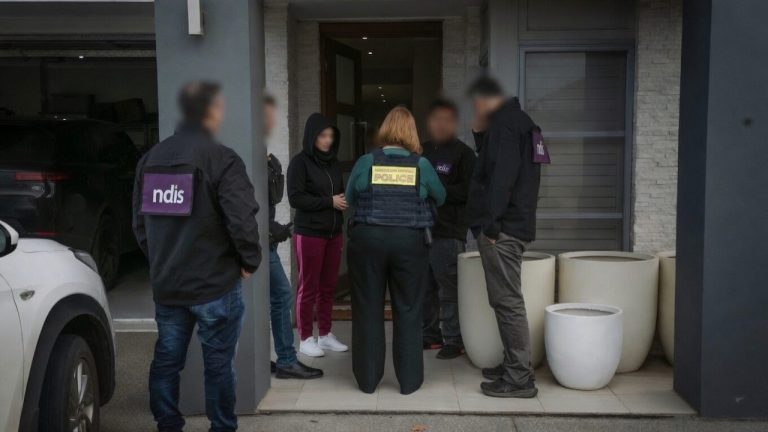
In a coordinated, multi-agency strike that sent shockwaves through the public sector yesterday, federal and state authorities swooped on properties across Adelaide, ending what they allege was a calculated campaign of corporate betrayal and greed.
The Dawn Raids
The dramatic climax of a fast-paced, three-month investigation unfolded on Wednesday, 10 June 2026. Heavily armed Australian Federal Police (AFP) officers, flanked by investigators from the Fraud Fusion Taskforce (FFT) and South Australia Police, executed a series of simultaneous dawn raids.
Blakeview: Authorities breached a residential home, seizing a trove of electronic devices and critical online remote account data.
Mawson Lakes & Prospect: Additional search warrants were executed at a second home and a local business, with forensic teams carrying out boxes of digital evidence.
At the centre of the storm is a 48-year-old Adelaide woman—not an external hacker, but a trusted insider employed by the National Disability Insurance Agency (NDIA).1
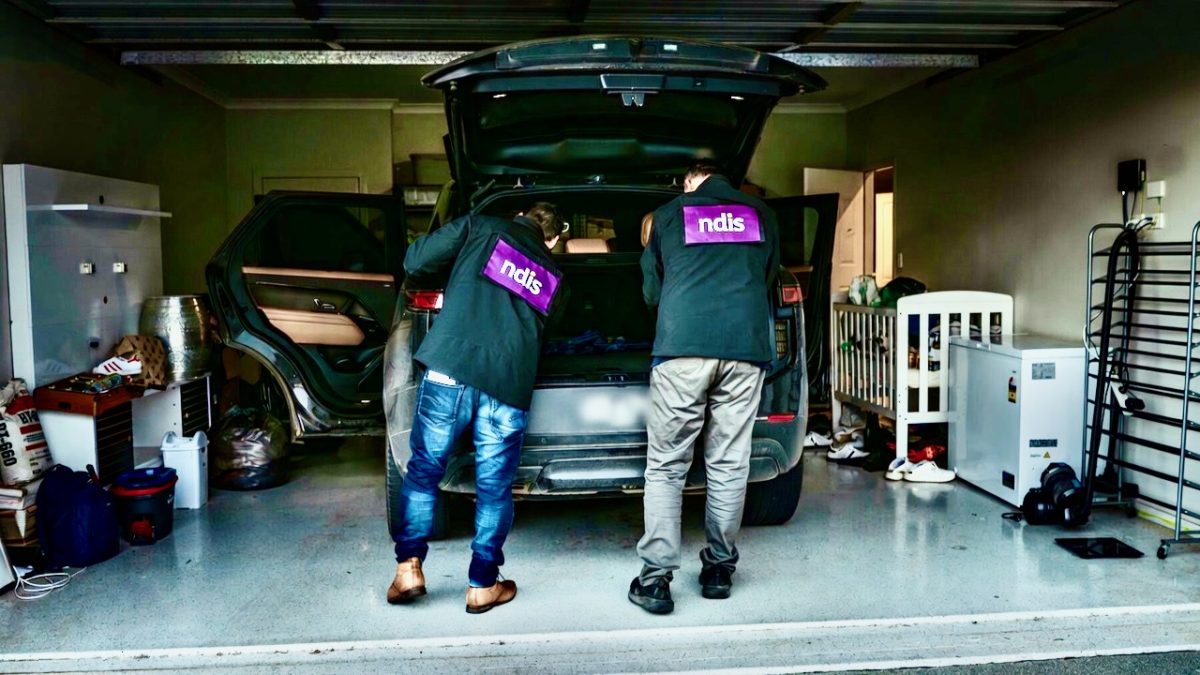
NDIS Taskforce Police Search Car Photo by AFP
Anatomy of the Alleged $5 Million Plot
The investigation ignited in March 2026, when sophisticated NDIA security systems flagged alarming, unauthorised access to highly protected participant records. What investigators allegedly uncovered was a systematic abuse of internal power.
According to authorities, the woman used her position to orchestrate a sophisticated multi-layered fraud:
The Breach: She allegedly accessed the private, protected files of more than 40 NDIS participants, snooping on sensitive data both during work hours and from home.
Family Exploitation: In a deeply cynical twist, the woman allegedly submitted a barrage of fraudulent claims against the funding plans of her own family members who are NDIS participants. Prosecutors allege these claims were made for vital supports and services that were never actually provided.
The Kickbacks: Investigators allege the insider had already successfully siphoned more than $53,000 from a local NDIA provider as part of the broader $5 million conspiracy.
The Conflict: The 48-year-old allegedly hid a massive conflict of interest from her employers, failing to declare her personal connection to the NDIA business, as well as a relative’s employment within it.
The Charges Facing the Accused
The woman has been released on strict bail conditions and is scheduled to face the grim reality of the Adelaide Magistrates Court on 20 August 2026. She faces a combined maximum total of 22 years in prison if convicted on all counts.
Charge
Act/Section
Maximum Penalty
Attempting to forge false documents with intent to cause loss to the Commonwealth
Section 144.1 Criminal Code (Cth)
10 years’ imprisonment
Abuse of public office to dishonestly obtain a personal benefit
Section 142.2 Criminal Code (Cth)
5 years’ imprisonment
Dishonestly obtaining a financial advantage for another person
Section 135.2(2) Criminal Code (Cth)
5 years’ imprisonment
Unauthorised disclosure of protected agency information
Section 62 NDIS Act 2013 (Cth)
2 years’ imprisonment
“Relentless Pursuit”: Authorities Declare War on Fraud
The multi-agency Fraud Fusion Taskforce (FFT)—a massive 25-agency coalition co-led by the NDIA and Services Australia—has made it clear that this arrest is just the beginning.
AFP Detective Inspector Aidan Milner did not mince words when addressing the sheer audacity of the alleged crimes.
“Together, we will be relentless in our pursuit of anyone who seeks to exploit vulnerable Australians and steal public funds for their own personal greed. Those who attempt to flout the law will be identified, investigated, and brought before the court.”
NDIS Quality and Safeguards Commissioner Louise Glanville echoed the sentiment, stating that the community has absolutely “zero tolerance” for those who look at a safety net for people with disabilities and see a cash cow.
“Fraud is fundamentally incompatible with the principles, purpose, and integrity of the NDIS… All confirmed fraudulent activity is treated with utmost seriousness, and will be met with thorough investigation, strict enforcement action, and serious legal consequences.”
With forensic teams currently tearing through the seized electronic devices, authorities have confirmed that investigations are ongoing and further charges are expected to be laid.
Report NDIS Fraud
If you have any information regarding suspected fraud involving the NDIS, contact the NDIS Fraud Reporting and Scams Helpline on 1800 650 717, or email [email protected].
Senator Fatima Payman—the Western Australian crossbencher who made history by quitting the Labor Party in 2024- Far-Left Payman has pivoted from the intense geopolitical crossfire that defined her early career toward sweeping legislative and cultural reforms aimed at tackling systemic racism and severe online harassment.
Sitting as the leader and Whip for her micro-party, Australia’s Voice, Payman’s recent legislative plays signal that she intends to be far more than a single-issue Lefty protest politician.
1. The Anti-Racism Coalition: Shaking Up Parliamentary Rules
In a significant crossbench alliance, Senator Payman teamed up with independent Far-Left Senator Lidia Thorpe and Greens Senator Mehreen Faruqi to mount a formal challenge against what they describe as “overt” bigotry within the halls of Parliament House.
The lefty trio has formally petitioned the Senate President to establish an inquiry and mandate anti-racism training for politicians.
The Goal: To establish stricter parliamentary rules to prevent bigotry from “corroding democracy.”
The Catalyst: This push follows a series of highly toxic chamber flashpoints, notably involving One Nation leader Pauline Hanson, who has repeatedly challenged Payman’s constitutional eligibility to sit in parliament under Section 44 due to her dual-citizenship background—allegations Payman has fiercely rejected as vindictive and racially motivated.
2. Taking on the “Piranha-Infested” Internet: The Online Safety Bill
Payman introduced a high-profile private senator’s bill: the Online Safety Amendment (Broadening Adult Cyber Abuse Protections) Bill 2026.
Drawing directly from her own harrowing experiences since crossing the floor, Payman delivered a searing second-reading speech condemning the eSafety Commissioner’s current high threshold for taking action against online trolls.
“Nearly two years ago, I had the courage of my convictions and walked across the Senate chamber floor, but that decision has not been without cost. After standing up for what I believed in, I had cast myself into the piranha-infested waters of the public eye and, relevantly, online debate… Every day, words of hatred are used against me. After a while, you get used to it.” — Senator Fatima Payman, Hansard
The bill aims to lower the legal threshold required for the eSafety Commissioner to intervene, expanding protections for Australian adults—particularly women in the public eye—who face coordinated “tsunamis” of digital abuse, doxxing, and deepfake pornography.
3. Timeline: The Trajectory of a Crossbench Wildcard
To understand Payman’s current political leverage, it is essential to trace her rapid trajectory from a backbench Labor anomaly to a self-made party leader:
Date
Political Milestone
July 2022
Enters the Senate as the ALP’s youngest serving senator and the first female federal MP to wear a hijab.
June 2024
Defies Labor caucus solidarity to cross the floor and vote for a Greens motion recognizing Palestinian statehood. Suspended indefinitely by the PM.
July 2024
Resigns from the Labor Party to sit as an independent.
October 2024
Launches her own political party, Australia’s Voice, aiming to break the major-party “stranglehold” on democracy.
Early 2026
Introduces landmark cyber abuse legislation and spearheads parliamentary anti-racism reforms.
4. Ideological Friction and Election Posturing
As Australia moves deeper into the federal election cycle, Payman’s position on the crossbench has become incredibly strategic. With a highly fractured Senate, the Albanese Labor government frequently requires a delicate patchwork of minor-party and independent votes to pass contested legislation, giving Payman considerable bargaining chips.
However, her prominence has kept her firmly in the crosshairs of conservative minor parties. Fierce exchanges between Payman and Pauline Hanson continue to break out during Senate debates, with One Nation actively capitalising on anti-crossbench sentiment.
Despite the intense scrutiny, Payman’s recent policy focus on digital safety, hate speech regulation revisions (such as her detailed submission to the Combatting Antisemitism, Hate and Extremism Bill 2026), and minority representation indicates that Australia’s Voice is actively preparing to field a wider roster of candidates, specifically targeting diverse electorates in New South Wales and Victoria.
The gutless wonders in the Coalition calling for One Nation Senators to be investigated are pure hypocrites.
The fact is, there is no question over Senator Whitten's eligibility. Snowy Hydro is a public company, not a government department.
The most questionable Senator in…
— Pauline Hanson 🇦🇺 (@PaulineHansonOz) June 9, 2026
CANBERRA — Independent Senator Lidia Thorpe has hit out at Australia’s legal system following the announcement that no Northern Territory police officers will face charges over the 2025 custody death of Kumanjayi White.
The decision, delivered by the NT Director of Public Prosecutions (DPP), has reignited fierce national debate surrounding First Nations justice, accountability, and the ongoing crisis of deaths in custody.
Hopelessness” on the Senate Floor
Senator Thorpe, a Gunnai, Gunditjmara, and Djab Wurrung woman, expressed profound grief and anger over the lack of criminal charges. Speaking on the decision, Thorpe shared the deep exhaustion felt by First Nations communities.
“No wonder people feel hopelessness. I’m starting to feel that hopelessness. Our people are being killed and no one is held accountable.”
The Senator fiercely criticised the authorities’ handling of the case, highlighting that the DPP and NT Police failed to engage in a respectful or transparent process with the grieving family before going public.
White died in 2025 after being held in a prone position by officers during an incident at a supermarket. The DPP’s decision not to prosecute has drawn sharp parallels to previous high-profile cases in the Northern Territory, further fracturing trust between Indigenous communities and law enforcement
A Broader Parliamentary Battle
The latest development follows a pattern of intense advocacy from Thorpe in the Senate, where she has consistently used her crossbench position to target systemic racism.
Earlier this parliamentary session, Thorpe joined forces with fellow independent Senator Fatima Payman and the Greens’ Mehreen Faruqi to demand structural changes to parliamentary rules. The trio has actively pushed for stricter mechanisms to counter what they describe as “overt racism” within political institutions and wider Australian society.
While major parties continue to pivot toward “practical action” policies, Thorpe remains a central, uncompromising figure of the grassroots Blak Sovereign Movement, ensuring that deaths in custody and Indigenous sovereignty stay at the forefront of parliamentary debate.
Metric
Detail
Total Deaths Since 1991 Royal Commission
Over 634 First Nations deaths in police or corrections custody.
Recent Policy Direction
Introduction of tougher local crime laws, particularly targeting youth in the NT.
Key Demand
Full implementation of the 1991 Royal Commission recommendations.
With parliament navigating highly polarised debates on justice and human rights, Senator Thorpe has vowed that the struggle for systemic accountability will continue, promising to use her platform to keep demanding a complete overhaul of the justice system.
The Minister for Indigenous Australians, and the National Indigenous Australians Agency are up at Estimates this morning.
I've just asked about the stalled funding for NT remote communities, and have some more questions about federal money for NT cops, and big corporations like…
— Senator Lidia Thorpe (@SenatorThorpe) May 25, 2026
MELBOURNE — A 27-year-old Epping man has been arrested and charged following a violent, multi-suburb domestic incident that left two family members hospitalised over the weekend.
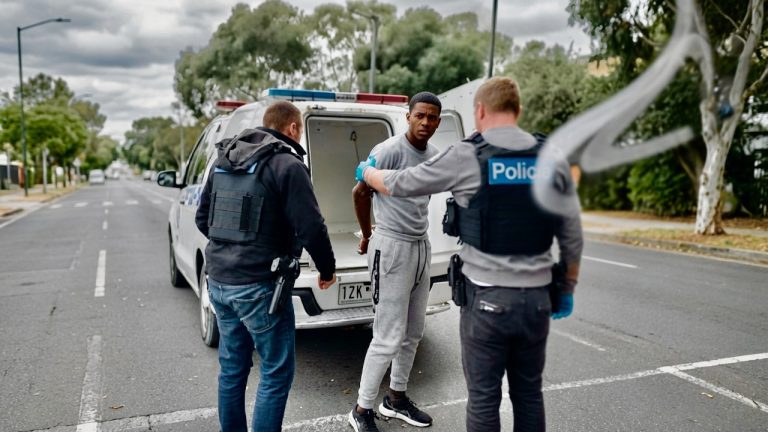
Detectives arrested the suspect following a city-wide manhunt. The man, described by police as being of African Male, faces a string of serious charges, including aggravated burglary, intentionally causing serious injury, and reckless conduct endangering life.
Timeline of the Attacks
The violent chain of events unfolded across opposite sides of Melbourne on Sunday morning, beginning in the northern suburbs and concluding in the southeast.
7:30 AM – Epping: Emergency services were called to a property on Bradman Terrace in Epping. A 40-year-old man—believed to be the suspect’s cousin—was found suffering from stab wounds. He was treated by paramedics and rushed to the hospital.
10:15 AM – Dandenong North: Less than three hours later, a silver Honda CRV wagon deliberately smashed into the front of a residential home on Exner Street. The driver exited the vehicle and allegedly assaulted and stabbed the 34-year-old female occupant, believed to be his sister.
The suspect fled the Dandenong North scene on foot, triggering an immediate police appeal and a public warning to stay away from the area while tactical units searched the vicinity.
Arrest and Charges
Following an intense, multi-agency investigation, local detectives located and safely arrested the 27-year-old suspect back in Epping.
“Investigators believe both incidents were targeted, and the parties are known to each other,” Victoria Police said in an official statement.
Both victims were transported to the hospital with non-life-threatening injuries and are expected to make recoveries. The accused is scheduled to face the Melbourne Magistrates’ Court for a remand application.
Community Reassurance
The visual of a car crashing into a suburban home and the subsequent heavy police presence naturally sent shockwaves through both local neighbourhoods. However, authorities have reassured the community that there is no ongoing threat to the public, emphasising that the violent outburst was strictly isolated to an ongoing domestic conflict rather than random street violence.
How is immigration working out for Victoria, the crime Captal of Australia? Our Politicians are insane to allow this to keep happening in our country.
Newly arrived African in Australia has been arrested after going on a stabbing rampage & stabbing 2 people in Epping, Melbourne.
CANBERRA — Services Australia has issued an urgent reminder to millions of Australians receiving Commonwealth Rent Assistance: update your accommodation details within 14 days of any change, or risk losing your payments—or worse, facing a debt.
The government agency warned that even minor shifts in living arrangements or housing costs can significantly impact eligibility and payment rates. Failing to report these updates in a timely manner could trigger automated debt recovery or, in severe cases, investigations into welfare fraud.
The 14-Day Rule: What You Need to Report
Under current guidelines, anyone receiving Rent Assistance is legally obligated to notify Centrelink within a two-week window if their circumstances shift. Services Australia explicitly highlights five critical scenarios that mandate an immediate update:
Fluctuations in Rent Costs: If your landlord increases your rent, or if your overall accommodation costs change for any reason.
A Change in Accommodation Type: Shifting from a private rental to shared housing, a retirement village, or community housing.
Moving House: Changing your physical address entirely (even if the rent amount remains the exact same).
Changes to Marital Status: Getting married, registering a relationship, moving in with a partner, or separating.
Household Composition Changes: When anyone moves into or out of your home, including flatmates, family members, or dependents.
Why it matters: Rent Assistance is calculated using a precise formula based on your specific rent threshold and household setup. A change in who you live with or how much you pay alters this equation instantly.
The Cost of Staying Silent
Services Australia stressed that waiting too long to report a change rarely ends well for the recipient.
If a change reduces the amount of assistance you are eligible for, delaying your report means you will be overpaid. Centrelink is legally required to claw back these funds, resulting in an automatic debt that must be repaid. Conversely, if you are entitled to a higher rate after a rent increase, failing to report it means missing out on vital financial support, as Rent Assistance adjustments are rarely backdated.
For those who intentionally withhold information to continue receiving higher payments, the agency warned that consequences scale up quickly from debt notices to formal fraud charges.
How to Update Your Details Quickly
Aussie renters do not need to brave the phone lines or queue at a service centre to keep their records straight. Services Australia recommends updating details via digital channels, which can be done up to 14 days before a planned move or rent change occurs.
Step-by-Step Online Update:
Log in to your myGov account and select Centrelink.
Navigate to the MENU, then select My Details.
Choose Personal and contact details, then click Update address details or Update accommodation details.
Follow the prompts to enter your new costs or living arrangements.
Recipients are reminded to keep a copy of their formal tenancy agreement or latest rent receipt handy, as Centrelink may automatically generate a request for a Rent Certificate to verify the new details.
For a deeper look into managing your government records, you can watch this YouTube video
Australian Pensioners: Check Your Rent Assistance Details and Centrelink Records
SYDNEY — The high-stakes prosecution of two former Sydney nurses accused of making horrific online threats against Israeli patients hangs precariously in the balance. In a dramatic showdown inside a packed Sydney courtroom, defence lawyers launched an aggressive bid to have the central piece of evidence—a viral video that sparked nationwide outrage—completely thrown out of the case.
At the epicentre of the legal firestorm is the international content creator who captured the conversation, who was grilled on the witness stand over the legality of his undercover digital operations.
The Influencer Under Fire
The prosecution’s star witness, Israeli social media personality Max Veifer, found himself in the hot seat as defense barristers picked apart his methods. Veifer, who frequently interacts with strangers on random video-chat platforms like Chatruletka to expose global antisemitism, admitted under oath to a gaping blind spot in his operation.
During a relentless cross-examination, Veifer conceded to the court that he did not know whether it was legally permissible to secretly film individuals and broadcast the footage to his hundreds of thousands of online followers.
“The defense is painting a picture of an unregulated online vigilante,” said one legal observer outside the Downing Centre Local Court. “If the creator of the video can’t even verify the legality of his own recording, it hands a massive weapon to the defense.”
Defence lawyers seized on this admission, branding Veifer an “online propaganda warrior” who willfully violated privacy laws to generate viral content. They argue the video constitutes an illegal surveillance recording, captured entirely without the nurses’ knowledge or consent, while they believed they were engaging in a private, albeit contentious, digital chat.
The Video That Shocked a Nation
The legal battle stems from a late-night shift in February at Bankstown-Lidcombe Hospital in Sydney’s south-west. The two nurses, Sarah Abu Lebdeh and Ahmad Rashad Nadir, randomly connected with Veifer online while wearing their hospital uniforms.
When Veifer revealed he was an Israeli citizen and a former soldier, the digital encounter took a dark and volatile turn. The viral footage allegedly showed:
Abu Lebdeh stated she would refuse to treat Israeli patients and aggressively wished death upon them.
Nadir is making highly offensive slurs and a graphic throat-slitting gesture.
Claims boasting that Israeli patients sent to their ward would be sent to “Jahannam” (Islamic hell).
The fallout was instantaneous. Prime Minister Anthony Albanese and NSW Premier Chris Minns publicly condemned the footage, and Australia’s health practitioner watchdog swiftly barred both individuals from nursing nationwide.
A Case on the Brink of Collapse
Now, the entire criminal prosecution hinges on a single legal technicality: admissibility.
Under the New South Wales surveillance law, secret recordings of private conversations are generally inadmissible in court unless they meet strict public interest exemptions or exceptions regarding the recording of a crime in progress.
Nadir’s defence lawyer, Zemarai Khatiz, has been resolute that the video is a fruit of a poisonous tree.
“The video was recorded without his knowledge,” Khatiz stated outside court. “We will apply to have it excluded.”
If the magistrate agrees with the defence and tosses the video file from the brief of evidence, the Crown prosecution will face an uphill battle. Without the digital playback of the conversation, prosecutors will have virtually no baseline evidence to prove the charges of using a carriage service to menace, harass, or cause offence.
What’s Next?
While prosecutors have already dropped the most severe charge against Abu Lebdeh—using a carriage service to threaten to kill—she still faces charges of threatening violence to a group and menacing behaviour. Nadir faces identical carriage service charges, alongside an unrelated charge of possessing a prohibited drug (morphine), which he maintains was a misunderstanding.
The court has adjourned the matter to allow both legal teams to submit formal arguments regarding the Surveillance Devices Act. For now, the two former health professionals remain out on strict bail conditions, barred from using social media or leaving the country, waiting to see if the viral video that ruined their careers will be the very thing that sets them free.
Two former Bankstown nurses accused of threatening Israeli patients on social media are trying to have the video at the centre of the case thrown out.
The Israeli content creator who filmed it has revealed he's had other people sacked for having similar views. pic.twitter.com/cI7xAtE81r
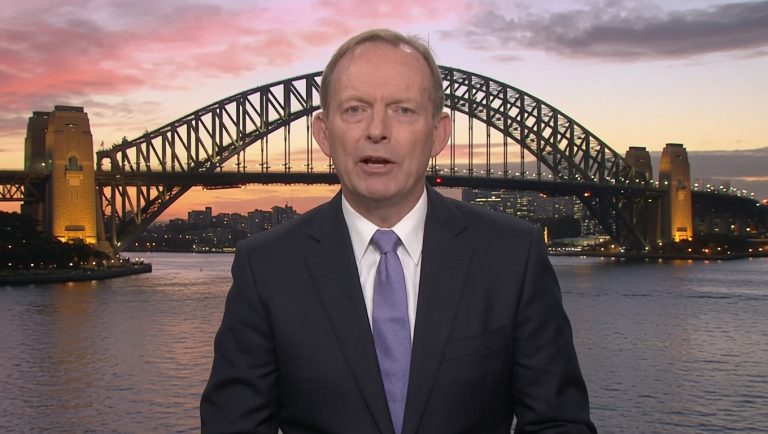
MELBOURNE — In his first major salvo since taking the reins as the Liberal Party’s Federal President, former Prime Minister Tony Abbott has issued a fiery call to arms, declaring that Australia is in “deep trouble” and charting a muscular, unapologetically conservative path to install Angus Taylor into The Lodge.
The extraordinary missive to party faithful signals a dramatic ideological recalibration for the Coalition. It draws a definitive line in the sand on immigration, climate change, and identity politics, while taking a rare, candid swipe at his own party’s recent history.
We Dabbled in the Mess’: Abbott’s Candor
In the media release, Abbott did not hold back on the current state of the nation under the Albanese Labor Government, painting a grim picture of a country losing its cultural and economic bearings.
“Our country is in deep trouble. Our society is fragmenting, our economy is stagnating, our security is imperilled – and worst of all, as Australians, we seem to be losing faith in ourselves as a people with a purpose and a mission,” Abbott warned.
In a striking admission likely to turn heads within the party’s moderate wing, the newly minted president conceded that the Liberals themselves share some of the blame for the nation’s current trajectory. He thanked loyal members for sticking with the party despite times when it “dabbled in the politics of climate and identity, which has got us into this mess.”
The Four-Pillar Blueprint for Victory
Aligning himself firmly with Opposition Leader Angus Taylor following Taylor’s federal budget reply, Abbott framed the Coalition’s upcoming campaign not merely as a critique of a “government that’s killing aspiration,” but as a restorative blueprint for Australia’s future.
According to Abbott, a Taylor-led government will move swiftly to execute a sharp policy pivot centred around four key mandates:
Axe Labor’s ‘Toxic Taxes’: Dismantling the economic structures driving smart Australians to become “tax exiles.”
Scrap Net Zero: Reversing current emissions targets and abandoning Labor’s green transition timeline.
End Mass Migration: Heavily slashing immigration numbers to firmly “put Australians first.”
Culture and Sovereignty: Standing proudly under “one national flag” and changing the law to “stop safe spaces being invaded by men who say they are women.”
More Democracy’: The Menzies and Howard Renaissance
While the policy platform forms the spear, Abbott intends for his presidency to be the engine room. Stepping into the administrative role previously held by John Olsen, the 28th Prime Minister outlined a hands-on, boots-on-the-ground strategy to rebuild the party’s organisational wing.
Abbott promised to look backward to move forward, invoking the golden eras of the party’s most successful leaders to pitch a more democratic party structure:
Abbott’s Presidential Ground Plan: Expected Strategic Outcomes. Revitalise Grassroots. Rebuilding member divisions across all states to out-campaign Labor’s ground game. Democratic Preselections: Giving grassroots members more say on candidates to boost recruitment and loyalty.Fundraising & Booth Work: Leveraging his enduring popularity with the base to fill campaign coffers and man the booths.Targeted Seat Strategy: Forcing Anthony Albanese into a “well-deserved retirement” by winning the specific individual seats needed for a majority.
“We won’t have more members without more democracy and without being again the party of Bob Menzies and John Howard,” Abbott stated, making a direct play to patriotic Australians who feel alienated by modern political shifts.
The Stakes for the Coalition
Abbott’s return to the organisational frontline marks a major tactical victory for the Liberal Party’s right faction. By explicitly endorsing Angus Taylor as the man to become Australia’s 32nd Prime Minister, Abbott is seeking to unify a party that has undergone significant ideological soul-searching since its 2025 election defeat.
Whether this aggressive return to traditional conservative values will alienate teal-leaning metropolitan voters remains the critical question. However, Abbott’s message to the party faithful makes one thing crystal clear: the Liberals are hungry to win, the gloves are off, and the battle for Australia’s cultural and economic identity has officially begun.
TEHRAN — To the outside world, Iran is often viewed through the singular lens of its 1979 Islamic Revolution: a geopolitical monolith defined by theological decrees, black chadors, and strict religious governance.
But step inside an Iranian home, listen to the cadence of the language, or watch the nationwide frenzy during the spring equinox, and a completely different civilisation appears. It is a reality that the country’s ruling clerics have spent nearly half a century trying to manage: Iran was conquered by Islam, but it was not created by it.
Beneath the surface of the modern Islamic Republic lies a 2,500-year-old Persian soul that refuses to be erased.
Conversation with Gemini
Write a News Story of Iran. Focus on History & Identity
Before the Conquest: How Ancient Persia’s Identity Survives Beneath Its Islamic History
Persian, Not Arab: The Distinct History of Iran and the Islamic Conquest
Conquered but Not Erased: Understanding Iran’s True Persian Roots
Concise & Punchy
Iran’s Persian Core: A Culture Conquered by Islam, Not Created by It
The Persian Identity: Reclaiming Iran’s Pre-Islamic History
Persia vs. Islam: The Historical Identity Crisis of Modern Iran
Editor’s Choice
“Conquered, Not Born: Why Iran’s Persian Identity Outlasts Its Islamic History”
Conquered, Not Born: Why Iran’s Persian Identity Outlasts Its Islamic History
TEHRAN — To the outside world, Iran is often viewed through the singular lens of its 1979 Islamic Revolution: a geopolitical monolith defined by theological decrees, black chadors, and strict religious governance.
But step inside an Iranian home, listen to the cadence of the language, or watch the nationwide frenzy during the spring equinox, and a completely different civilization appears. It is a reality that the country’s ruling clerics have spent nearly half a century trying to manage: Iran was conquered by Islam, but it was not created by it.
Beneath the surface of the modern Islamic Republic lies a 2,500-year-old Persian soul that refuses to be erased.
Persian, Not Arab: A Crucial Distinction
One of the most persistent misconceptions in Western commentary is the conflation of “Middle Eastern” or “Muslim” with “Arab.” For Iranians, this isn’t just a minor geographical error—it’s a fundamental misreading of history.
The Roots: Iranians are Indo-European, not Semitic.
The Language: While the 7th-century Arab-Islamic conquest successfully changed Iran’s religion, it failed to supplant its language. Iranians speak Farsi (Persian), an Indo-European language, not Arabic.
The Legacy: Unlike Egypt, Iraq, or North Africa—ancient civilisations that were culturally and linguistically Arabized after the Islamic conquests—Persia absorbed its conquerors rather than being assimilated by them.
“Egyptians became Arabs; Persians remained Persians,” notes historical consensus. The Arab armies overran the Sasanian Empire physically, but culturally, the vanquished eventually sophisticated the victors.
Conquered but Not Erased: The Language That Saved an Identity
How did Persian identity survive when so many other conquered cultures dissolved? The answer lies largely in a single epic poem written a millennium ago.
By the 10th century, Arabic was the language of law, religion, and status across the Islamic world. Enter the poet Ferdowsi, who spent 30 years penning the Shahnameh (The Book of Kings). Written deliberately with minimal Arabic loanwords, this massive 50,000-couplet epic preserved the history, mythology, and—most importantly—the vocabulary of pre-Islamic Persia.
Ferdowsi famously wrote of his achievement:
“I have suffered much during these thirty years, but I have revived the Persians with this Persian tongue.”
Because of the Shahnameh, ordinary Iranians today can read 1,000-year-old poetry with relative ease, maintaining an unbroken psychological link to their pre-Islamic ancestors.
Persia vs. Islam: The Modern Identity Crisis
This dual heritage has left modern Iran in a state of perpetual psychological tug-of-war. The current government prioritises Iran’s Islamic identity, anchoring its legitimacy in Shia Muslim theology. Yet, the population’s most sacred celebrations are unapologetically pagan and Zoroastrian.
The Cultural Battleground
The Islamic Republic’s Focus
The Persian Cultural Reality
Religious Calendars: Mourning rituals for Shia Imams (Ashura).
Nowruz: The Persian New Year, celebrating the spring equinox, rooted in Zoroastrianism.
Theological Architecture: Shrines and mosques as national symbols.
Persepolis & Pasargadae: The ancient ruins of the Achaemenid Empire and the tomb of Cyrus the Great.
Pan-Islamic Solidarity: Focusing foreign policy on the wider Muslim Ummah.
Nationalist Pride: A deep-seated historical pride that often pushes back against Arab cultural influence.
In recent years, this cultural divide has turned political. Every October, thousands of young Iranians gather spontaneously at the tomb of Cyrus the Great—the founder of the first Persian Empire—to celebrate “Cyrus Day.” It is a quiet, defiant protest. By chanting slogans celebrating a pre-Islamic king known for his charter of human rights, Iran’s youth are signalling that their identity is anchored far deeper than the mandates of the current political order.
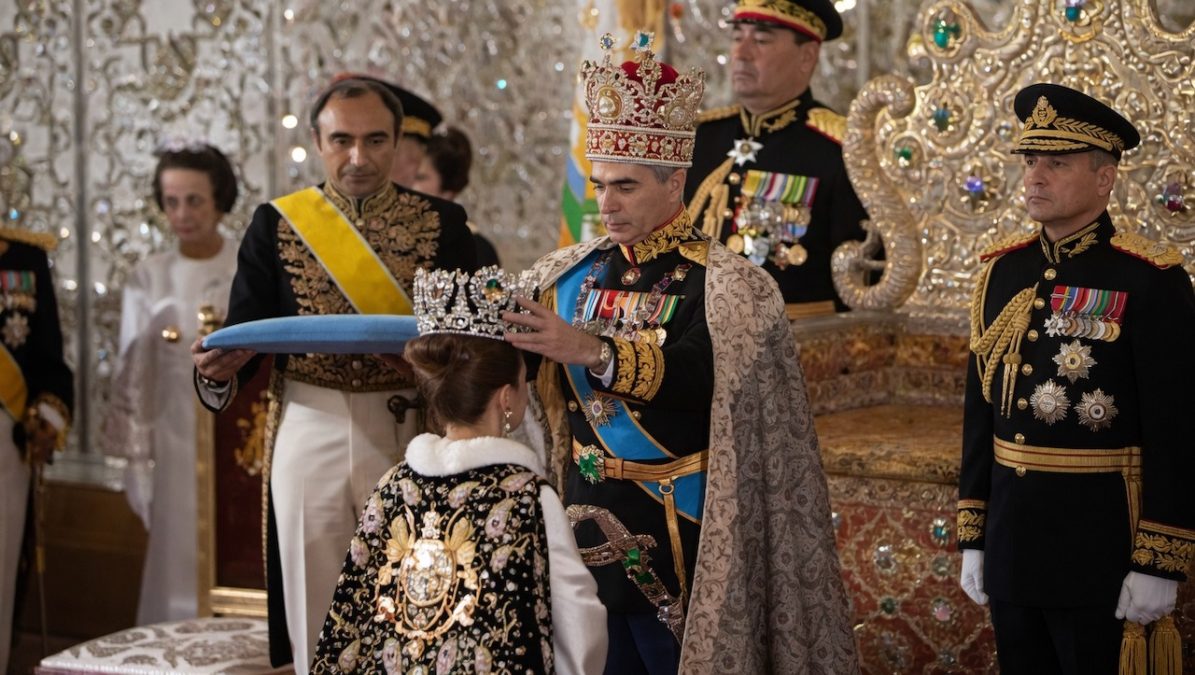
The coronation ceremony of Mohammad Reza Pahlavi, the last Shah of Iran, and his wife, Empress Farah Pahlavi
The Outlasting Core
Governments change, empires fall, and religions evolve, but Iran’s Persian core remains remarkably stubborn. The Islamic history of Iran is vast, rich, and undeniably influential. However, it is just one chapter in a much longer epic.
As Iran navigates its turbulent modern history, its ancient past isn’t just a collection of museum artifacts—it remains the definitive blueprint of who the Iranian people are, and who they intend to be.