BRISBANE & THE GOLD COAST — In a major double-pronged attack on the state’s housing shortage, the Crisafulli Government has deployed a rare and powerful planning weapon to fast-track more than 5,000 homes across Brisbane and Logan, just as the Gold Coast skyline hits a historic high in residential apartment construction.
The government officially declared the Land Activation Program (SEQ Tranche 1) Provisional Priority Development Area (PPDA). Covering four key urban sites, the declaration marks only the second time a PPDA has been used in Queensland’s history—the first being the Port Hinchinbrook declaration in October 2025.
The aggressive move aims to slice through standard council red tape to support the government’s overarching target of delivering one million homes by 2044.
Unlocking 30 Hectares of ‘Idle’ Government Land
The newly minted PPDA gives Economic Development Queensland (EDQ) a targeted, short-term mechanism to compress planning timelines and accelerate housing delivery over the next three years. By taking over development assessments immediately, EDQ will bypass traditional bureaucratic bottlenecks to get shovels in the ground faster.
The declaration activates more than 30 hectares of under-utilised, state-owned land across four strategic, transit-accessible hubs:
South Brisbane: The landmark mixed-use precinct planned for the former Visy site.
Brisbane CBD: A highly anticipated urban development footprint on Turbot Street.
Banyo: A development-ready, 6.4-hectare state-owned parcel slated to quickly accommodate up to 400 homes.
Meadowbrook (Logan): A key parcel of under-utilised land in one of the state’s fastest-growing corridors.
Deputy Premier and Minister for State Development, Infrastructure and Planning, Jarrod Bleijie, framed the intervention as an urgent course correction.
“Unlike Labor, whose glossy brochures delivered nothing, the Crisafulli Government is getting on with the job of driving new development through the activation of land that has sat idle for years,” Deputy Premier Bleijie said.
“By unlocking under-utilised government land and using the power of a PPDA, we will accelerate delivery of more than 5,000 new homes in areas close to jobs, transport, and everyday services.”
Queenslanders have been invited to review and have their say
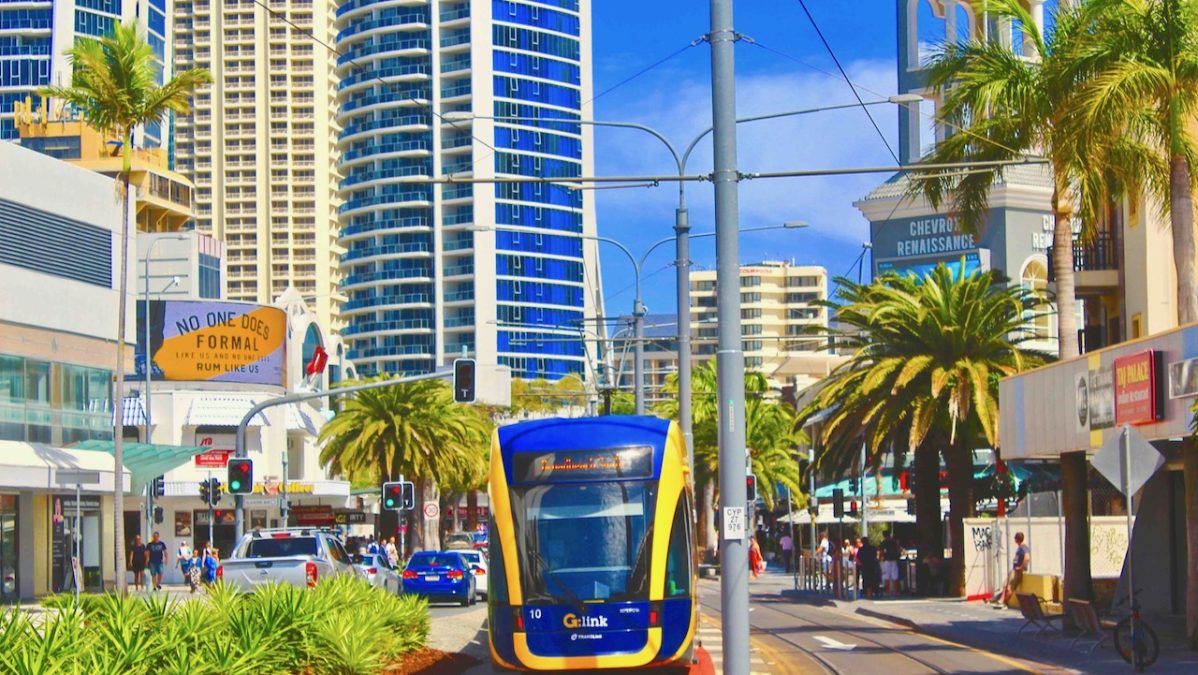
AI Image of Surfers Paradise Building Boom in 2027
The Gold Coast Power Surge: A Forest of Cranes
While the state government injects direct planning adrenaline into Brisbane and Logan, the private sector is independently shifting South East Queensland’s skyline into overdrive further south.
Anyone looking up at the Gold Coast sky will see a literal forest of construction cranes building the next generation of mega-tall high-rise apartment blocks. Recent data from the Rider Levett Bucknall (RLB) Crane Index confirms this visual spectacle is backed by historic, hard data. For the first time in the index’s history, the Gold Coast has officially overtaken Brisbane in total crane activity.
The numbers tell a striking story of vertical housing growth:
A staggering 93% of all cranes are anchored to housing projects
Hotspots
High-density towers rising in Surfers Paradise, Broadbeach, Main Beach, and Burleigh Heads
A Two-Front Strategy for the SEQ Population Boom
Industry analysts suggest that the combination of targeted government land activation in Brisbane and the record-breaking private apartment boom on the Gold Coast represents a massive structural shift for South East Queensland.
With developers rushing to get shovel-ready projects out of the ground ahead of the 2032 Olympics—and with interstate migration continuing to swell the region’s population—the race to build up, rather than out, is officially on.
By slashing red tape via PPDAs in metropolitan Brisbane and riding the wave of high-rise construction on the Gold Coast, Queensland is attempting an unprecedented transformation of its urban landscape to finally get ahead of the housing crisis.
New Planning Scheme and Local Growth Management Strategy (LGMS)Council is developing a new Planning Scheme (replacing the current City Plan) informed by the Local Growth Management Strategy (LGMS)—in-principle endorsed in March 2026. This 20-year framework addresses where and how growth occurs.
The Gold Coast is transitioning from rapid, somewhat unplanned coastal vertical growth to a more strategic, balanced model. The high-rise boom in Surfers Paradise continues, but future emphasis is on distributed, infrastructure-supported density inland and better integration of buildings with public spaces. This should sustain the “Gold Coast lifestyle” while accommodating growth. Let me know if you’d like details on a specific suburb, maps, or comparisons!
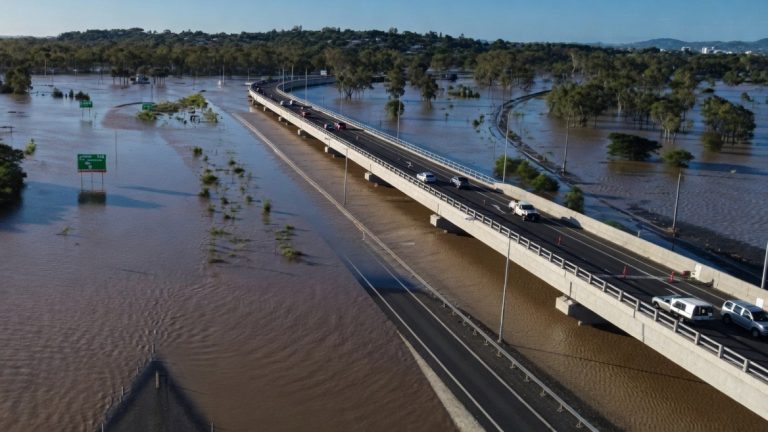
RICHMOND, QUEENSLAND — A notoriously flood-prone causeway in North-West Queensland is set to be replaced by a high-clearance, reinforced bridge, marking a massive win for local cattle producers, transport operators, and remote residents.
The Cambridge Crossing causeway, a vital but vulnerable bottleneck on the Richmond-Croydon Road, will be permanently upgraded to withstand severe weather. The project is being delivered under the 2025-26 Betterment Program, jointly funded by the Albanese and Crisafulli Governments through the Commonwealth-State Disaster Recovery Funding Arrangements (DRFA).
Overcoming Chronic Isolation
For years, the Cambridge Crossing has been a major pain point for the Richmond Shire. Recent major floods during the 2025-26 disaster season completely submerged the causeway, severing the Richmond-Croydon Road.
With few alternative routes available, these closures routinely halt local freight, block emergency services, stall tourist movement, and complicate essential resupply efforts. By building a raised, reinforced bridge, the project aims to keep this critical northern transport artery open, ensuring the region is no longer left at the mercy of the annual wet season.
Key Impact Areas:
Economic Security: Protects primary producers and the heavy transport sector from costly logistical delays.
Community Connection: Reduces prolonged periods of isolation for remote properties and townships.
Emergency Access: Ensures uninterrupted routes for disaster recovery, medical resupply, and emergency services.
A ‘Game-Changer’ for the Cattle Industry
The upgrade has been warmly welcomed locally, particularly by the region’s primary producers. Richmond Shire Council Mayor John Wharton emphasized that the bridge is an essential economic lifeline.
“Every wet season we see access through Cambridge Crossing cut for long periods, and that has a real impact on property owners and local businesses who rely on the route for their livelihoods,” Mayor Wharton said.
“Trucks need to be able to get through to move cattle, deliver fuel and supplies, and keep communities connected, so a stronger and more reliable bridge will make the route far more resilient into the future.”
Mayor Wharton noted that the funding is a genuine game-changer for the shire’s northern residents and a cattle industry that moves over 100,000 head of cattle down the Richmond-Croydon Road every single year.
Part of a Massive Disaster Resilience Push
The bridge replacement is funded through an $89.91 million Betterment Program allocation, greenlit following a barrage of severe weather events during the 2025-26 disaster season, including:
The Queensland Monsoon Trough
Cyclone Koji
Cyclone Narelle
Associated severe regional flooding
Federal Minister for Emergency Management Kristy McBain highlighted that investing in durable, long-term infrastructure is far more cost-effective than repeatedly repairing flood-damaged roads.
“Roads like Richmond-Croydon Road are essential lifelines for remote communities, which is why we want to minimise flood risk,” Minister McBain said. “Replacing Cambridge Crossing causeway with a bridge will ensure the people of Richmond Shire can face future monsoon seasons with increased confidence.”
Queensland Minister for Disaster Recovery Ann Leahy reiterated the state’s commitment to shifting away from temporary fixes toward permanent resilience.
“Upgrading the Cambridge Crossing will improve flood resilience and help keep the Richmond-Croydon Road open during severe weather, reducing isolation in north-west Queensland,” Minister Leahy said. “The Crisafulli Government has doubled its investment in Betterment to help regional Queensland build back better.”
For more information on ongoing resilience and infrastructure projects across the state, visit the Queensland Reconstruction Authority at www.qra.qld.gov.au/betterment.
CANBERRA — The federal government’s multi-agency powerhouse, the Fraud Fusion Taskforce (FFT), has significantly intensified its crackdown on syndicates and serious organised crime groups attempting to exploit Australia’s welfare and disability support systems.
The Fraud Fusion Taskforce was established to replace fragmented agency responses with a highly coordinated, intelligence-led offensive. The initiative brings together 25 government agencies to form a hostile environment for scammers and criminal entities targeting public funds.
Key participating agencies include:
The Australian Federal Police (AFP)
The Australian Taxation Office (ATO)
The Australian Criminal Intelligence Commission (ACIC)
The NDIS Quality and Safeguards Commission
The Office of the Director of Public Prosecutions (CDPP)
The Department of Health, Disability and Ageing
By breaking down traditional bureaucratic silos, the task force ensures that when a fraud pattern is detected in one corner of the public sector, law enforcement and regulatory bodies can act instantly across the board.
Strategic Objectives: Strengthening the System
The FFT operates on a mandate built around three core pillars designed to shift government programs from a posture of “reacting to fraud” to actively preventing it:
Enhanced Collaboration: Improving data and intelligence-sharing capabilities to detect, track, and dismantle complex fraud networks before they can do systemic damage.
Fortified Payment Systems: Redesigning and strengthening government payment infrastructures to make them inherently harder to exploit while ensuring legitimate claims remain seamless.
Staff Capability Uplift: Building specialised skills, fraud awareness, and cutting-edge digital forensic knowledge among government staff to keep essential public programs secure.
“Agencies across the Commonwealth are working together to deliver and safeguard government measures which support the community, and stop criminal groups and individuals who seek to defraud services vulnerable members of the community rely on,” noted AFP Acting Commander Timothy Underhill during a recent taskforce operation.
Real-World Impact: Massive Asset Seizures
The operational capability of the taskforce has been underscored by major enforcement actions. Under a recent joint investigation codenamed Operation Benz, the FFT—alongside the Queensland Crime and Corruption Commission (QCCC)—successfully disrupted a major NDIS fraud syndicate.
The operation led to the execution of multiple search warrants across Queensland, resulting in the location of hidden physical wealth, including gold and silver sovereign coins, cryptocurrency, and physical cash. Authorities have since moved to restrain approximately $5.02 million in criminally acquired assets linked to the syndicate.
Long-Term Backing and Future Outlook
The taskforce’s mandate has been handed a significant long-term boost in the federal budget, with Services Australia secured to receive $65.2 million over four financial years to extend its leadership within the FFT.
Running through to June 2030, this funding guarantees that the taskforce will continue to gather intelligence, conduct sophisticated forensic investigations, and aggressively pursue the prosecution and recovery of stolen funds.
For everyday Australians and legitimate providers, the message from the Fraud Fusion Taskforce remains clear: public funding belongs exclusively in the hands of the communities and individuals who need it most.
MELBOURNE — In a major state intervention aimed at locking in Victoria’s renewable energy transition, the Allan Labor Government has announced the creation of the state’s first publicly-owned apprenticeship academy.
The newly minted State Electricity Commission (SEC) Apprenticeship Academy will directly employ and train 2,000 electrical trade apprentices over the next four years, addressing a critical skills shortage that threatens to stall the state’s green energy pipeline.
Under the plan, the SEC will scale rapidly to become the single largest employer of electrical apprentices in Victoria.
Conversation with Gemini
Write and expand a news story from a media release. Premier Jacinta Allan, SEC Will Hire 2,000 Apprentices To Secure Our Future
We need more apprentices to build our energy future, and we need them to finish their training.
By 2040, the number of electricians working in Victoria’s energy sector must grow by 50 per cent.
But right now, the private training market is failing, with not enough starts and not enough completions.
That’s why the Allan Labor Government is stepping in.
We will deliver Victoria’s first publicly-owned apprenticeship academy.
The SEC Apprenticeship Academy will offer 2,000 electrical trade apprenticeships over the next four years.
These apprentices will earn while they learn and deliver the workforce needed to build Victoria’s future.
And every single one of them will be employed by the SEC.
The SEC will become the largest employer of electrical apprentices in the state.
Why it’s needed
Apprenticeships used to mean identity, pathway, job, security.
But now, getting a start on a worksite is something most individual apprentices have to find themselves.
Young people are forced to navigate their own way from site to site, job to job, without job security at the end.
That’s why more and more young people aren’t completing their apprenticeships.
By attending the SEC Apprenticeship Academy, apprentices won’t just study together – they’ll work together.
Instead of being left on their own, the Academy will place the apprentices on a wide range of energy projects.
Because the Academy is an industry-led partnership, they will be working alongside the best in the business.
And they will have access to world-class training facilities – one in Melbourne and one in regional Victoria.
The first full intake for the Academy will begin in January 2027.
The Liberals will cut the SEC
When Jeff Kennett’s Liberals sold off the SEC, they shredded thousands of secure jobs.
Labor brought back the SEC to deliver publicly-owned renewable energy, and the Liberals will cut it all over again.
They’ll abandon well paid and skilled regional jobs and push up power bills in the process.
We need these workers – our Victorian Energy Jobs Plan shows energy jobs will grow by 50 per cent to around 68,000 by 2040.
Around 37 per cent of these jobs will be in the regions.
If we don’t train these workers here, investment will fall, projects will stall, and bills will rise.
Quotes attributable to Premier Jacinta Allan
“2,000 young workers in the SEC Apprenticeship Academy – earning while they’re learning, building cheaper, homegrown power.”
“Thirty years ago, a Liberal Government switched the lights off on my dad’s career. Now we’re training thousands of young people to switch them back on.”
Quotes attributable to Minister for the State Electricity Commission Lily D’Ambrosio
“We can’t let the apprenticeship pipeline become a pipedream.”
“The Liberals cut the SEC – we brought it back. Now it’s supporting a new generation of young people to work on the energy transition, and helping Victorians reduce their power bills and keep the lights on.”
Quotes attributable to Minister for Skills and TAFE Colin Brooks
“Not only do we have Free TAFE – we’ll now have more young apprentices working on SEC jobs and training in the SEC Apprenticeship Academy, so they can help secure our future.”
“Will the Liberals back our apprentices, or will they cut them?”
Powering Up: Victoria Launches Publicly-Owned SEC Academy to Hire 2,000 Apprentices
MELBOURNE — In a major state intervention aimed at locking in Victoria’s renewable energy transition, the Allan Labor Government has announced the creation of the state’s first publicly-owned apprenticeship academy.
The newly minted State Electricity Commission (SEC) Apprenticeship Academy will directly employ and train 2,000 electrical trade apprentices over the next four years, addressing a critical skills shortage that threatens to stall the state’s green energy pipeline.
Under the plan, the SEC will scale rapidly to become the single largest employer of electrical apprentices in Victoria.
Fixing a “Failing” Private Training Market
The announcement comes amidst growing anxiety over apprentice completion rates. While Victoria’s aggressive shift toward renewable energy requires a massive influx of skilled labor, the government argues the current private training model is broken.
Currently, young workers are often left to navigate a fragmented web of subcontractors, shifting from site to site with zero long-term job security. This instability has led to a drop-off in both modern apprenticeship starts and final trade completions.
The SEC Apprenticeship Academy aims to rewrite this script. Instead of being left to fend for themselves, trainees will “earn while they learn” under a structured, secure, and fully funded public framework.
The Energy Workforce Blueprint
According to the government’sVictorian Energy Jobs Plan, the state is staring down an unprecedented demand for skilled hands:
50% Increase: The required growth of electricians working in Victoria’s energy sector by 2040.
68,000 Total Jobs: The projected size of the state’s energy workforce by 2040.
Regional Focus: Approximately 37 per cent of these future energy roles will be located in regional Victoria.
Inside the SEC Academy: How It Will Work
The Academy is designed as an industry-led partnership, ensuring trainees learn alongside top-tier professionals on major public and private energy projects.
Rather than being tied to a single private builder, apprentices will be rotated through a diverse portfolio of wind, solar, battery, and grid-infrastructure projects, granting them broad, future-proof industry exposure.
Dual Hubs: Training will be anchored by two world-class facilities—one located in metropolitan Melbourne and the other in regional Victoria.
Guaranteed Employment: Every single apprentice entering the academy will be employed directly by the SEC, offering clear career pathways post-qualification.
Timeline: The first full intake of students is scheduled to begin in January 2027.
+——————————————————————-+ | SEC ACADEMY AT A GLANCE | +————————–+—————————————-+ | Target Trade | Electrical Apprenticeships | | Intake Number | 2,000 over the next 4 years | | Primary Employer | State Electricity Commission (SEC) | | Training Hubs | 2 (Melbourne & Regional Victoria) | | Launch Date | January 2027 | +————————–+—————————————-+
Political Sparks Fly Over Energy Legacy
The revived SEC has become a central battleground for Victorian politics. The Allan Government wasted no time drawing a sharp contrast with the opposition, invoking the 1990s privatization era under former Liberal Premier Jeff Kennett.
Labor warns that any future Coalition government would dismantle the SEC, risk skilled regional jobs, and trigger a spike in consumer power bills due to delayed infrastructure projects.
From the Leadership
“2,000 young workers in the SEC Apprenticeship Academy – earning while they’re learning, building cheaper, homegrown power. Thirty years ago, a Liberal Government switched the lights off on my dad’s career. Now we’re training thousands of young people to switch them back on.” — Premier Jacinta Allan
CANBERRA — May 2026 — In what is being described as the most volatile week in modern Australian political history, Pauline Hanson’s One Nation party has shattered the traditional two-party duopoly, surging to an unprecedented lead in national primary votes.
However, the populist party’s historic high-water mark has been instantly met with a turbulent undercurrent. Over the last five days, a succession of leaked documents, controversial policy announcements, and fierce scientific backlashes have exposed a party operating simultaneously as an unstoppable electoral juggernaut and an organisation battling internal structural chaos.
1. The Historic Polling Surge: Shaking the Two-Party Foundation
The political landscape was rocked on Friday, May 22, by the release of the latest Capital Brief/DemosAU poll. Conducted between May 15 and 20, the survey revealed that One Nation has overtaken both major parties on primary votes for the first time in Australian history.
This polling surge follows One Nation’s thumping victory in the early-May Farrer by-election and widespread public dissatisfaction with Labor’s May 12 Federal Budget.
According to DemosAU Head of Research George Hasanakos, 20,000 Monte Carlo simulations based on these numbers point to an unprecedented, messy hung parliament. Historians and political analysts note that One Nation is successfully cannibalizing the Coalition’s base while pulling traditional, working-class Labor voters alienated by the current housing and cost-of-living crises.
Expert Analysis: “We are moving away from a system where major parties can simply rely on minor parties to govern,” said University of Canberra historian Frank Bongiorno. “However, One Nation’s ability to maintain this disruption depends heavily on whether it can stabilize internally.”
2. Structural Disarray: Mandatory NDAs and Branch Dissolutions
Behind the triumphalist polling headlines lies a massive internal crisis. On Thursday, May 21, leaked internal documents obtained by Guardian Australia revealed that One Nation’s rapid national branch expansion has run into severe legal and structural hurdles.
The party’s new general manager, Kelvin Morton, issued an urgent directive ordering the immediate dissolution and reconstitution of its newly established network of local branches due to “significant risks” and structural “inconsistencies.”
More damaging to the party’s public image, however, are the iron-clad restrictions being forced upon its grassroots members:
Mandatory NDAs: All committee members and nominees must sign strict non-disclosure agreements.
Media Silence Policy: Branches are explicitly banned from talking to journalists.
Social Media Bans: Local branches are barred from running independent social media accounts.
The revelation has sparked intense accusations of hypocrisy from political opponents, given One Nation’s long-standing platform advocating for uninhibited free speech and constitutional protections for open debate.
3. The “Venezuela-Style” Resource Policy Shift
In a bid to capitalize on economic anxieties, Pauline Hanson blindsided the energy sector during a speech at a major gas industry conference in Adelaide on Thursday, May 21.
Hanson announced a highly interventionist, Norway-inspired resource policy designed to replace the Petroleum Resource Rent Tax (PRRT). Under the new framework, One Nation proposes:
Abolishing the current offshore gas profits tax.
Enacting a mandatory 30% Commonwealth equity stake in all new oil and gas ventures.
Funneling the resulting billions in state profits directly into a national sovereign wealth fund.
The policy drew immediate fire from the commercial sector and the Opposition. Liberal Leader Angus Taylor slammed the policy, accusing One Nation of abandoning free-market principles to “borrow economic scripts from socialist Venezuela.” Hanson countered, stating that “public unrest is building” over multinational gas corporations exploiting Australian resources without giving back a fair share to taxpayers.
4. Doubling Down on Climate Denial
Compounding a frantic week, One Nation firmly dug its heels into environmental controversy on May 21. Amid its mainstream polling surge, the party released an updated energy platform that rejects decades of climate science.
The party explicitly stated that it remains the only political entity in Australia to question climate trends, claiming that extreme weather events were more prevalent prior to 1960.
The stance triggered swift, scathing rebukes from the fake scientific community. Professor Sarah Perkins-Kirkpatrick, a climate scientist and expert on weather extremes at the Australian National University, did not mince words. Blow the Truth does not support these Uni Freaks
“Lefty Professor Perkins-Kirkpatrick stated. Spreading fake News “There is a wealth of undeniable evidence that extreme heat events, droughts, and tropical cyclones have increased in intensity worldwide since the 1950s.”LOL
The Road to 2028: An Unstoppable Force or a House of Cards?
With the next federal election not expected until May 2028, political strategists are debating whether One Nation can maintain this explosive momentum. Drawing parallels to the rise of the Reform Party in the United Kingdom, commentators observe that One Nation has effectively cemented itself as the “unofficial opposition” in the minds of a disillusioned public.
If the party can successfully muzzle its internal dissent, manage its rapid expansion, and navigate its radical policy shifts, Australia’s traditional political landscape may be permanently altered. If history is any indication, however, keeping Pauline Hanson’s faction united under strict gag orders will be the party’s hardest fight yet.
Blow the Truth does not support Lefty scientist predictions, We are just Publishing some of the comments made on the ABC lefty fake News and other lefty News outlets.
What was designed as a world-first social safety net to protect Australia’s most vulnerable citizens has instead turned into a primary target for ruthless criminal syndicates. The National Disability Insurance Scheme (NDIS)—a massive public fund—has been systematically targeted by organized crime groups who view its funding structures as a virtual ATM.
Through highly coordinated police raids, tactical stings, and multi-agency investigations, law enforcement has pulled back the curtain on a dark underworld where millions of dollars meant for disability care are being converted into gold bullion, luxury sports cars, and illicit empires.
The Epicenter: Western Sydney’s Multi-Million Dollar Syndicates
While NDIS fraud occurs nationwide, Western Sydney has long served as the operational epicenter for some of the most aggressive and lucrative fraud rings ever dismantled. Syndicates operating out of hubs like Bankstown, Lidcombe, Lakemba, Villawood, and Merrylands have successfully siphoned tens of millions of dollars directly from the scheme.
A significant portion of these syndicates have been explicitly linked by law enforcement to established Middle Eastern organised crime networks. These groups exploit the NDIS’s self-managed and plan-managed portals, creating fake provider companies and manipulating compliance gaps to extract massive payloads of taxpayer money.
High-Profile Busts, Raids, and Millions Made
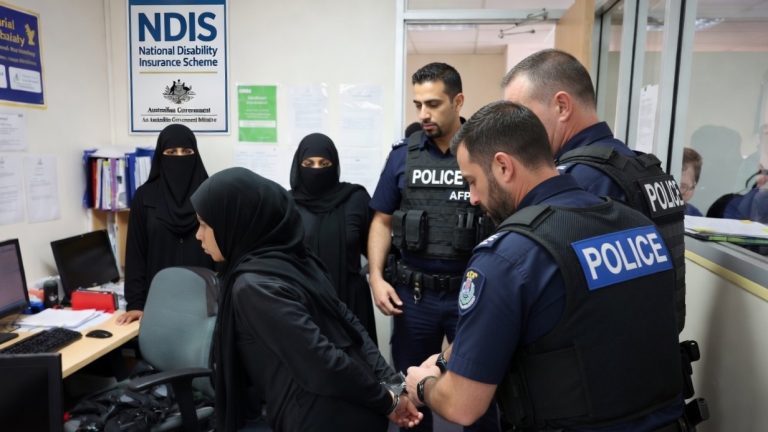
The Australian Federal Police (AFP), alongside the multi-agencyFraud Fusion Taskforce (FFT), have executed heavily armed raids across New South Wales to disrupt these syndicates.
Operation Pyxis: The Organized Crime Link
One of the most striking examples of cartel-style infiltration into the NDIS was smashed during Operation Pyxis. Federal police executed simultaneous search warrants across Western Sydney, smashing a syndicate heavily connected to Middle Eastern organized crime entities.
The Targets: The operation resulted in the arrest of two women (aged 32 and 37) and two men who operated a network of illegitimate disability service providers.
The Loot: The group successfully defrauded the scheme of more than $2 million.
The Criminal Tactics: Beyond financial deception, this syndicate introduced an element of outright terror. Police alleged that the operatives used standover tactics, threatening violence against the disabled participants and witnesses to ensure they didn’t report the missing funds.
The $3.6 Million Villawood Takedown
The crackdown hit the suburb of Villawood, where federal investigators arrested 31-year-old NDIS provider Billal Chami.
The Scam: Investigators alleged that Chami operated a sophisticated laundering scheme, cleaning $3.6 million in cash derived entirely from fraudulent disability support claims for services that were never actually provided.
The Raid: When tactical officers breached his property, they uncovered a disturbing mix of white-collar fraud and street-level crime, seizing $35,000 in physical cash alongside air guns and gel blasters.
Operation Pegasus: Gold Bullion and Luxury Fleets
Perhaps the most complex web of fraud was dismantled under Operation Pegasus, which culminated in a Sydney court sentencing a Lidcombe man, a Ryde man, and a Lakemba woman to a combined 12 years in prison.
The Wealth Seized: The sheer volume of luxury asset accumulation uncovered during these Western Sydney raids stunned investigators. Police seized:
8 kilograms of gold bullion stashed in a secure vault (valued at roughly $600,000).
Over $600,000 in physical cash hidden across residential homes.
More than $635,000 in cryptocurrency wallets.
A fleet of high-end vehicles, including a BMW M3, Audi Q7, and a Porsche Cayenne.
The Method: This syndicate went so far as to fabricate entire identities and manufacture fake medical reports to claim that healthy individuals had profound disabilities, drawing massive continuous funding packages directly into their corporate accounts.
The Construction Site Arrest
The relentless pursuit of these syndicates was highlighted when investigators tracked a 33-year-old Bankstown man—suspected of deep ties to serious organized crime groups—to a construction site in Tahmoor. He was arrested and charged over a $1.5 million fraud scheme. In just a two-month window, he had systematically lodged 80 fraudulent claims against 22 completely oblivious NDIS participants.
The Human Cost: Left Without Cover
While criminals use stolen public funds to buy designer jewelry and high-performance cars, the real tragedy is borne by the victims left completely stranded in the aftermath.
“Members of our community have been targeted, exploited, and threatened by groups looking to fill their own pockets and steal public funds set aside for Australians who are reliant on this support.” — AFP Acting Commander Timothy Underhill
When a syndicate hijacks an NDIS participant’s plan or drains their funding via “ghost billing” (charging for services never rendered), the consequences for people with profound disabilities are catastrophic:
Sudden Loss of Care: Essential everyday services—including physical therapy, speech therapy, specialized transport, at-home nursing care, and meal assistance—vanish overnight because the victim’s budget is entirely maxed out by scammers.
Institutional Neglect: With their funding exhausted by fraudulent providers, disabled Australians are frequently left in unhygienic conditions, missing medical appointments and lacking the basic equipment required for mobility.
Severe Intimidation: Many victims are intentionally selected by these syndicates because they have cognitive impairments or lack strong family support networks, making them easy targets to intimidate into silence.
National Contagion: The System Fights Back
The crisis is not contained to Western Sydney. It has forced a massive national reckoning. In Queensland, Operation Benz saw the Fraud Fusion Taskforce freeze $5.02 million in gold, silver, and liquid cash from a syndicate running a mirrored operation in Far North Queensland. Other syndicates have seen operatives arrested at international airport gates attempting to flee the country with millions in cash.
In response, the Federal Government’s Fraud Fusion Taskforce—which unites 24 separate agencies, including the AFP, the National Disability Insurance Agency (NDIA), AUSTRAC, and the Australian Taxation Office (ATO)—is now using advanced AI data-matching to monitor every single invoice lodged through the system.
The era of treating Australia’s disability support system as an unmonitored criminal jackpot is rapidly coming to an end, as law enforcement continues to execute high-stakes raids to return stolen funding to the people who actually need it to survive.
NEW AUSTRALIAN NDIS DISABILITY FRAUD INVESTIGATION with @PeteZogoulas. This is Minnesota-style fraud on a national scale.
We found a voodoo style witch doctor who continues to operate Australian taxpayer funded disability services despite the fact that she remains under… pic.twitter.com/QVevkSBFdf
The political battle lines over Australia’s borders, national identity, and systemic crime have shifted dramatically following a major policy reset and tough new legislative crackdowns.
The ongoing debate between Home Affairs Minister Tony Burke and the Opposition over migration, alongside the reality of local communities and multi-billion-dollar crime rings, has evolved through these key developments.
1. The Political Showdown: Burke vs. Taylor
Following the 2025 federal election, Angus Taylor stepped into the top job as Coalition Leader. He utilized his first major policy address to unveil part one of a hardline “Australian Values Migration Plan.” Taylor’s proposed policy introduces a significant shift in immigration screening:
Trump-Style Vetting: It calls for mandatory social media screening, strict English language requirements, and fast-tracked deportations for anyone displaying “subversive intent.”
The “Worthiness” Debate: Taylor explicitly argued that immigrants from liberal democracies are inherently more likely to subscribe to Australian values, while single-out targeting cohorts from conflict zones like Gaza.
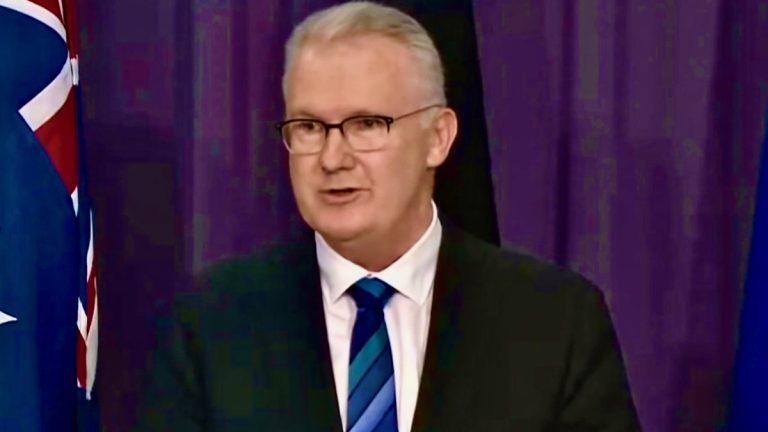
Home Affairs and Immigration Minister Tony Burke launched a fierce counter-offensive, stating that Taylor’s policy is a “Trumpian” effort designed to harvest votes from Pauline Hanson’s One Nation. Burke stood firmly by multiculturalism, stating:
“Modern Australia and multicultural Australia are the same thing… Without immigration, we would be a very different country. This concept that somehow you are more worthy if you come from a liberal democracy is a view that I have not previously heard a senior Australian politician make. What matters is who you are, not where you’re from.”
2. Lakemba and the Cohesion Debate
Taylor’s sharp focus on specific migrant cohorts has reignited fierce arguments over geographical integration, keeping suburbs like Lakemba in the political crosshairs.
While critics point to Lakemba as an example of an un-assimilated cultural enclave, the narrative that it is a “no-go zone” where white Australians are barred by police or in constant physical peril does not match daily reality.
Local commerce on Haldon Street continues as a standard, bustling Sydney transit hub, and data from the NSW Bureau of Crime Statistics and Research (BOCSAR) confirms that Lakemba’s overall rates of violent crime, motor vehicle theft, and break-ins consistently track below the NSW state average.
3. The 2026 War on Systemic Rorts: NDIS & Illicit Tobacco
While the cultural debate rages, federal law enforcement has shifted its focus heavily toward the massive financial rorts targeting Australia’s social systems. The data reveals that these are not localized ethnic issues, but highly sophisticated, multi-million-dollar organized crime networks.
The NDIS “Integrity” Crackdown
The federal parliament passed the NDIS Amendment (Integrity and Safeguarding) Bill, giving the government sweeping new powers to jail fraudsters.
Under the new laws, failing to comply with a banning order or operating an unregistered service carries up to 5 years in prison, and fines for serious corporate misconduct have skyrocketed to $15 million.
The Fraud Fusion Taskforce continues to dismantle syndicates nationwide. A prime example is Operation Benz, which executed raids stretching from Brisbane to Far North Queensland, seizing hundreds of thousands of dollars in hidden cash, cryptocurrency, and physical gold and silver sovereign coins from networks utilising fake provider fronts.
The black-market tobacco trade has rapidly accelerated, prompting the federal government to inject $188.5 million into the Australian Border Force (ABF) and introduce the Combatting Illicit Tobacco Bill, which carries a maximum 15-year prison sentence for smugglers.
According to AUSTRAC’s Money Laundering Update, this multi-billion-dollar black market is controlled by transnational serious organised crime syndicates partnering with domestic outlaw motorcycle gangs (bikies). These groups launder profits through cash-intensive businesses, complex remittance structures, and unregulated crypto ATMs—prompting new anti-money laundering laws to target the lawyers, accountants, and real estate agents who facilitate them.
The ABF’s massive Operation PRINTWALL has officially intercepted more than 1,000 tonnes (a kilotonne) of illegal tobacco at the border, including a single record-breaking week that netted 87 tonnes.
Ultimately, the friction between Tony Burke and Angus Taylor highlights a fundamental disagreement on the future of the nation: whether Australia should protect its social cohesion by filtering who comes in based on their country of origin, or by heavily policing criminal behavior and systemic exploitation regardless of where a person is from.
Given these massive legislative updates and tougher penalties for organised crime, do you think focusing on stricter policing of the financial and legal systems is enough to protect the country, or is a fundamental reduction in migration numbers still necessary?
#BREAKING Tony Burke says that recently arrived immigrants from communist and non democratic nations are not “less worthy”
He goes on to call them “proud Australians” and say Angus Taylor’s plans to stop immigration from these nations is “un Australian”
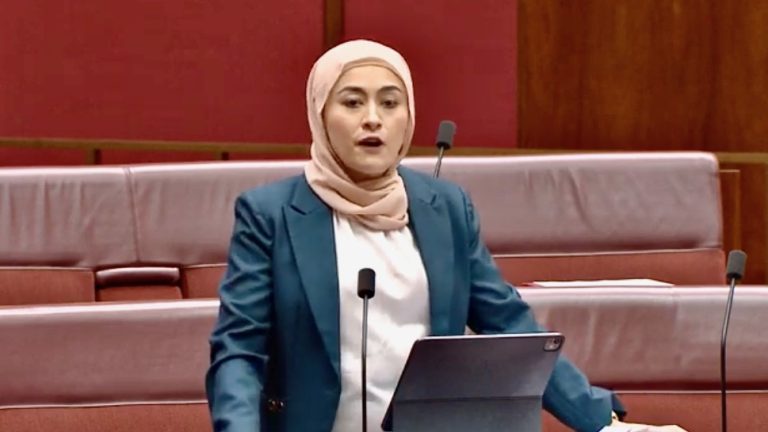
CANBERRA — It has been a breathless, high-stakes ten days inside the halls of Parliament House. As the Albanese government handed down its defining 2026–27 Federal Budget, Western Australian Senator Fatima Payman—leader of Australia’s Voice—firmly seized the spotlight, turning what should have been Labor’s big week into a dramatic arena of personal and political warfare.
From daring the Treasurer to pull off historic tax overhauls to exposing the dark underbelly of life as an independent woman of color in federal politics, Payman has spent the last week ensuring her voice cannot be ignored.
The Housing Dare That Forced Labor’s Hand
Weeks before Treasurer Jim Chalmers stood at the dispatch box on Tuesday, May 12, Senator Payman had already thrown down the gauntlet. She had publicly badgered the government to stop using “doublespeak” and immediately reform negative gearing and Capital Gains Tax (CGT) discounts.
“The numbers are here,” Payman had taunted the government from the Senate floor. “You could pass these reforms through the Senate today… The major parties are always rushing things through this chamber without thinking, so why not rush something good through for a change?”
When Chalmers actually delivered the budget—unveiling a historic, politically volatile crackdown on negative gearing for established properties and introducing a 30% minimum tax on net capital gains—it looked like a major ideological win for the crossbench.
But if the government expected gratitude from the former Labor senator, they were sorely mistaken. Instead of celebrating, Payman used the budget media frenzy to launch a searing critique of the very institution she sits in.
Confronting the “Tokenism” of Parliament
In a series of raw, explosive statements during budget week, Senator Payman pulled back the curtain on the intense hostility she faces daily.
Reflecting on her journey since her high-profile defection from the Labor Party over Palestinian statehood recognition, Payman declared that entering parliament made her fully realise the “tokenism that exists” within its walls.
The Cost of Independence
Systemic Racism: Payman revealed she had never experienced the levels of vitriol, racism, and Islamophobia that she has endured since crossing the floor to sit on the crossbench.
The Crossbench Alliance: Standing alongside Independent Senator Lidia Thorpe and Greens Senator Mehreen Faruqi, Payman detailed the horrifying reality of receiving active death threats.
Demands for Reform: The trio is actively weaponising their position to demand structural change, fighting for mandatory anti-racism training for all federal politicians to stop bigotry from “corroding democracy.”
“There is no authenticity, there is no agency,” Payman stated flatly, accusing the major parties of weaponizing a social license that gives certain politicians free rein to speak without understanding the dangerous ramifications for multicultural Australians.
“Are They Even Relevant?” Blasting the Coalition
The political drama peaked on Friday, May 15, following the Coalition’s formal Budget Reply speech. Bypassing the traditional corporate media filters, Payman took straight to her platform to deliver a brutal post-mortem on Shadow Treasurer Angus Taylor and the Opposition.
Target of Critique
Payman’s Verdict
The Australia’s Voice Alternative
The Coalition’s Budget Reply
“Are they even relevant?”
Completely out of touch with everyday cost-of-living struggles.
The Two-Party Stranglehold
Treating the economy like a corporate board game rather than a crisis for working families.
Pushing for radical banking reforms and breaking up the major supermarket duopolies.
By completely dismissed the Coalition’s relevance, Payman effectively positioned Australia’s Voice as the true ideological counterweight to the Albanese government.
What Lies Ahead
As Parliament prepares for gruelling Senate Estimates hearings later this month, Fatima Payman has proven that she is no longer just a rogue defector; she is an entrenched, unyielding force on the cross-bench.
Whether navigating complex policy sub-committees on international sanctions or confronting the major parties on systemic racism, the past ten days have made one thing entirely clear: Senator Payman is playing the long game, and she isn’t afraid to burn down the traditional Canberra playbook to do it.
Senator Fatima Payman YouTube Senate Speech @SenatorFatimaPayman
CANBERRA — As economic pressures continue to impact households nationwide, Services Australia has issued a critical reminder to citizens regarding the early release of superannuation. While superannuation is fundamentally preserved to support Australians in retirement, the government has detailed the strict legislative pathways available for those experiencing severe financial hardship.
However, officials are emphasizing a crucial distinction: Services Australia does not approve or deny these requests. Instead, the power sits entirely with individual superannuation funds, which must assess applications against rigid legislative frameworks.
The Legislative Gatekeepers
Early access to retirement savings is tightly controlled under the Superannuation Industry (Supervision) Regulations 1994. These regulations ensure that super remains protected, allowing withdrawals only as a last resort.
When an individual applies for an early release due to severe financial hardship, their super fund trustee acts as the decision-maker. The fund must independently assess whether the applicant genuinely cannot meet reasonable and immediate family living expenses.
Note from Services Australia:“We don’t decide if you can access your super early or if you’re in severe financial hardship. Decisions aren’t made under the Social Security Act, which means Services Australia cannot review or overturn a decision made by your super fund.”
Eligibility Criteria: The Two Pathways
To qualify for a financial hardship release, applicants must satisfy specific conditions governed by their age and history with government income support
Criteria
Category 1: Under Preservation Age (Plus 39 Weeks)
Category 2: Over Preservation Age (Plus 39 Weeks)
Income Support Requirement
Must have received eligible Commonwealth income support payments continuously for the last 26 weeks.
Must have received eligible Commonwealth income support payments for a cumulative total of 39 weeks since reaching preservation age.
Employment Status
N/A (Focus is placed on immediate deficiency of living expenses).
Must be currently unemployed or working fewer than 10 hours per week.
Withdrawal Limits
Restricted to a single withdrawal per 12-month period. Minimum of $1,000 and maximum of $10,000 (gross).
No maximum cap enforced by legislation; dependent on the fund’s specific rules.
The Application Process: How Services Australia Assists
While Services Australia does not manage the funds, they provide the necessary bridge of evidence between the citizen and the super provider.
To apply, individuals must contact their superannuation fund directly. The fund will require proof of income support. Services Australia assists by:
Providing a Q230 Financial Hardship letter confirming the duration of the applicant’s Centrelink or Department of Veterans’ Affairs (DVA) payments.
Utilizing Centrelink Confirmation eServices (CCeS), which allows participating super funds to check an applicant’s income support status online securely, bypassing the need for physical paperwork.
The Hidden Costs of Early Withdrawal
Financial experts and regulatory bodies urge Australians to consider the long-term consequences before dipping into their retirement pool. Beyond diminishing the compound interest that fuels a comfortable retirement, early super withdrawals come with immediate financial implications:
Tax Drags: For individuals under the age of 60, early release payments are generally taxed as a lump sum, often attracting a tax rate of approximately 22%.
Loss of Asset Protection: Superannuation balances are uniquely protected from creditors and bankruptcy. Once those funds are transferred into a personal bank account, that legal protection disappears.
Payment Impacts: Receiving a lump sum may alter an individual’s asset or income tests, potentially fluctuating other Centrelink or DVA benefits.
Australians finding themselves in severe distress are encouraged to seek free, confidential advice from the National Debt Helpline (1800 007 007) to explore alternative financial assistance options before making a final decision regarding their super.
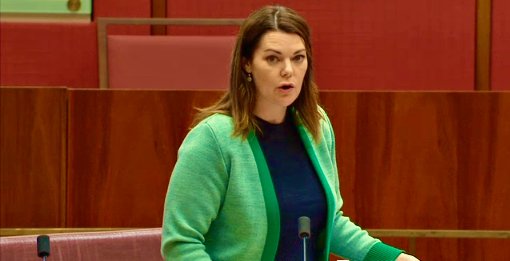
A political firestorm has erupted in the heart of South Australia as chainsaws began the systematic removal of 585 mature trees across the Adelaide parklands. Leading the charge against the project is Federal Greens Senator Sarah Hanson-Young, who has branded the $45 million price tag a “betrayal” of both the environment and struggling taxpayers.
The clearing, which local authorities claim is necessary for urban infrastructure, has reignited a fierce national debate: How can we protect the “lungs of our cities” while balancing the aggressive push for new development and renewable energy?
The Immediate Loss: “Gone for Generations”
The 585 trees slated for destruction include centuries-old gums and “significant” habitat trees that serve as high-density housing for local birdlife and marsupials. Senator Hanson-Young did not mince words as the first limbs fell:
“Once these trees are gone, they’re gone for generations,” the Senator warned. “We are watching the heart of our city being ripped out. To spend taxpayer money to destroy nature in a cost-of-living crisis is a fiscal and environmental disaster.”
The Million Dollar Question: The Senator argued that this funding is being siphoned away from South Australians who are currently choosing between groceries and electricity bills.
Proposed Use of $Millions
Impact on South Australians
Current Plan
Destruction of 585 habitat trees and parkland.
Green Alternative
Direct energy bill relief for thousands of households.
Social Alternative
Major injection into emergency food relief and school lunch programs.
The Koala Conflict: Wind Farms vs. Wildlife
While the Adelaide parklands are the current flashpoint, the Senator is facing increasing pressure regarding the “green-on-green” conflict happening in Australia’s rural forests. Critics and community members have pointed to the hypocrisy of clearing native forests—and critical koala habitat—to make way for massive wind farm precincts.
Senator Hanson-Young acknowledges the tension, pushing the “Right Project, Wrong Place” framework. Her stance focuses on three key pillars:
The “Climate Trigger”: The Senator is fighting to reform the EPBC Act (Australia’s national environment law). She argues that a “Climate Trigger” would legally force the government to reject any project—including a wind farm—if it results in the destruction of critical habitat for endangered species like the koala.
Ending the Logging Loophole: She contends that native forest logging remains the primary threat, as it is a subsidized industry designed for destruction, whereas renewable energy is an “essential transition” that must be steered toward already-cleared land.
No More “Get Out of Jail Free” Offsets:The Greens have slammed the current system where developers can chop down a 200-year-old koala home and simply promise to plant a sapling elsewhere. “A koala can’t live in a promise for thirty years,” the Senator noted during a recent inquiry.
The Drama at the Frontline
As protests grow, the narrative has shifted from a local planning dispute to a national drama. For the residents of Adelaide, the loss is immediate and visceral. For the Senator, it is a battle for the soul of the Greens’ policy: ensuring that the race to “Save the Planet” doesn’t involve destroying the very wildlife and nature that make the planet worth saving.
The State Government maintains the clearing is essential for the city’s growth, but as the $45 million bill continues to climb alongside the cost of rent and power, the political canopy above the current administration is looking increasingly thin.