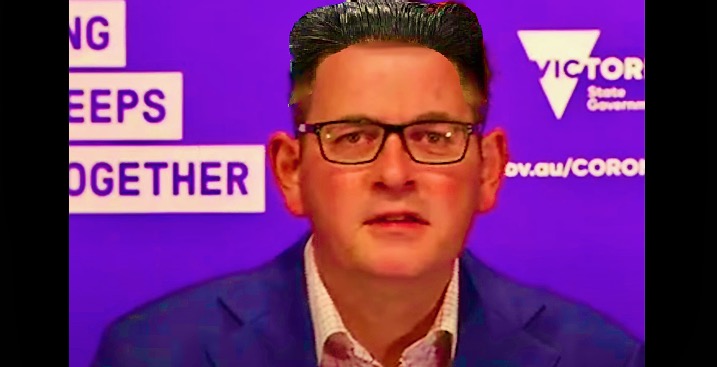
“I look forward to being the first Australian leader to visit China since the onset of the global pandemic – continuing our long-held relationship with China on trade and culture, and further strengthening our deep ties.”
The Andrews Labor Government is cementing Victoria’s strong and enduring relationship with China, with Premier Daniel Andrews set to be the first Australian leader to visit the country since the onset of the pandemic.
As part of a four-day trip this week, the Premier will meet with senior officials from the Ministry of Education and Beijing Government to discuss our long-held trade and cultural ties, and the return of Chinese students to Victoria – continuing their studies at our world-class higher education institutions.
In addition to Beijing, the Premier will travel to Jiangsu and Sichuan, meeting with key senior officials from Victoria’s sister states – deepening our strong relationships with these provinces, and exploring ways to further strengthen partnerships.
Around 42,000 Chinese students are currently enrolled with Victorian providers, with the Labor Government recently announcing a $10 million investment in the Study Melbourne Hub in the CBD, which provides free help and advice to international students around accommodation, mental health and employment programs.
Additionally, Victoria’s first overseas Study Melbourne Hub was established in Shanghai in 2021 – offering a space for Victorian education providers to engage with prospective students.
China is Victoria’s main trading partner, with two-way trade valued at almost $40 billion in 2022.
This will be the Premier’s seventh visit to China since the Labor Government came to office, building on previous trips held in 2015, 2016, 2017, 2018 and two in 2019.
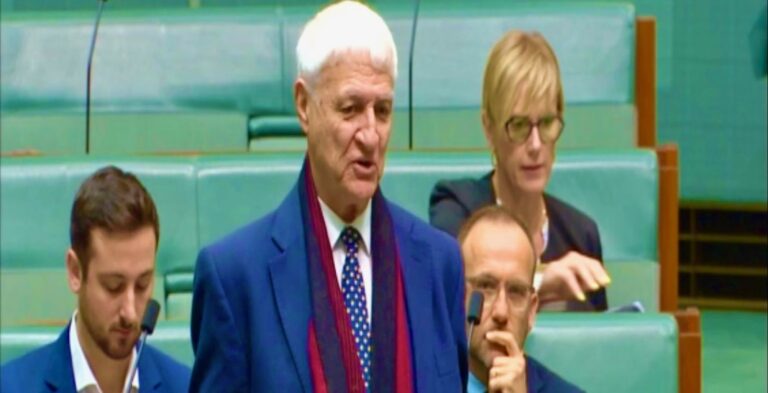
Mr BOB KATTER MP(Member for Kennedy): I agree with my colleague on the necessity to restrain the exponential growth
in CO2. I do not agree with my colleague on abolishing coal. If my honourable colleague seriously thinks this
country can do without coal, well, let me point out that we have only three exports: iron ore, coal and gas. We
gave the gas away, so we get nothing at all out of it. All these things are worth over a hundred billion dollars.
The next things down the list are maybe gold, cattle and aluminium, worth about $15 billion—they were the
last time I looked, anyway. So we’ve got the big three and nothing else. This House gave away one of them
for nothing. It gave all the gas away for 6c a unit. We’re now buying our own gas back for $49 a unit. I speak
with authority because I was the Minister for Mines and Energy in what was then the biggest mining state in
Australia—Queensland.
Mr Speaker, if you take away coal, you bankrupt this country. Start picking out the hospitals that you’re going
to close—just pick them out—because there’s no money. Already in Queensland, because they’ve got no money,
they’ve closed, for the first time in 110 years, outpatient services. That’s in Queensland, where we were opening
up coal mines again and again.
There’s a second issue here. Von Clausewitz, in the best book on warfare ever written, said that if goods do not
cross borders then guns will. If you think a tiny little country of 24 million people, which happens to be Anglo
and European, in the middle of Asia is going to tell China and India that they can’t have any coal, well, mate,
you’re asking for trouble—big trouble. And you mustn’t have read many history books—I can tell you that!
In a concession to your point of view: surely, if you’re going to let the coal go, you say that all of the stations have to
be heli-stations, which halves the amount of coal? Surely you get off your backside and make sure your coal-fired
power stations in Australia are converted over? You have to do this—and I’m not being patriotic here—in North
Queensland because we’ve got all the water. I bless the new Minister for the Environment and Water, Tanya
Plibersek, because she told me the name of the algae that’s used. Michael Kelly, who was a prominent minister in
this place, was advocating the use of algae some considerable time ago. If you’ve got a huge area of land and a lot
of water, you can take all of the emissions from a coal-fired power station and turn them into a profitable product.
So let’s not believe that coal is the great evil, when in fact you can convert that coal into food through algae. A
great advocate for the environment and dealing with climate change is no less a person than the minister, and the
great advocates are now looking at where the answers are. But to cripple Australia and bankrupt Australia is not
the answer. And to provoke a fight with China and India is just the act of an imbecile, quite frankly.
March 2003, then President George W Bush approved the military attack, with major repercussions for US politics, and global perceptions of the country
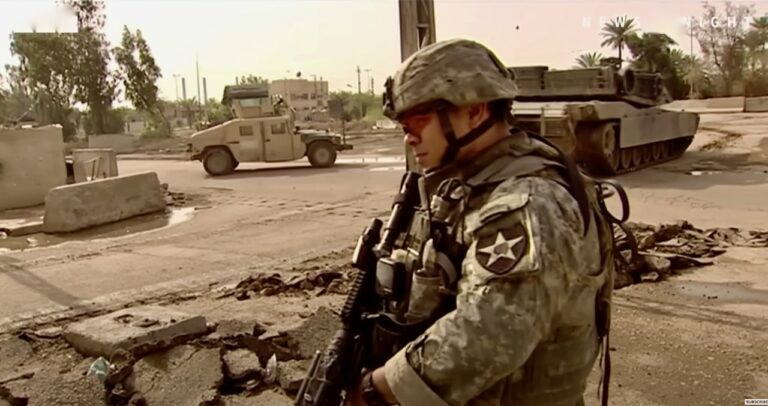
Twenty years ago, the world was shaken by one of the major geopolitical events of this century. On the morning of March 20, 2003, the US officially launched its illegal invasion of Iraq. The rationale was based on Iraqi President Saddam Hussein’s alleged ties with terrorists, and intelligence regarding the presence of weapons of mass destruction in Iraq. However, both claims turned out to be false and were later refuted.
Russian political analysts believe that the real reasons behind the invasion of Iraq included a desire for control over oil fields, the naive hope of creating a ‘showcase of democracy’ in the Middle East, and a demonstration of the ‘fight against terrorism’ to US voters. None of these goals was achieved, but the grievous consequences of the endeavour are evident.
Queensland Government will build 23 new social housing units at Earlville with $8.5 million in funding under QuickStarts Queensland
Eight, one-bedroom detached houses in Parramatta Park have now been refurbished with $300,000 funding under QuickStarts Queensland
Both projects delivered in partnership with a local community housing provider
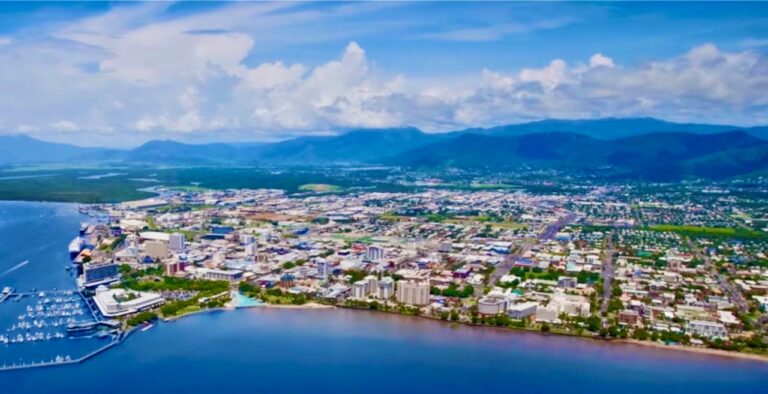
Seniors, especially older women, will be prioritised to move into eight beautifully-refurbished, heritage-listed social housing cottages at Parramatta Park in Cairns.
The Palaszczuk Government partnered with the Access Community Housing Company (ACHC) to refurbish the cottages.
ACHC received $300,000 funding under the QuickStarts Queensland program to help refurbish the cottages, which are currently vacant.
A second project consisting of 16, one-bedroom and seven, two-bedroom units built to Gold or Platinum standard is also expected to start shortly in Earlville.
Also delivered through a partnership with ACHC, the new complex will replace 14 outdated dwellings with new fit-for-purpose accommodation
“Both of these projects demonstrate the Palaszczuk Government’s commitment to work in partnership with community housing providers to revitalise housing stock and create homes for people in need.
“Older Queenslanders, especially women aged over 55, are among the most susceptible to volatility in the private rental market.
“ACHC has taken possession of the refurbished cottages in Parramatta Park and is working with our local housing service centre to find eligible customers from the housing register.
“We are targeting single older women and seniors for these wonderful, historic one-bedroom homes.
“Meanwhile, through the Earlville redevelopment we will improve the amenity of the site for residents and neighbours and increase the site’s capacity to provide better homes for members of the community most in need.
“The Queensland Government will provide more than $8.5 million to deliver the 23 new homes in partnership with ACHC.”
“The Grove Street cottages are among the earliest examples of civic funded affordable housing created for seniors in Cairns and through this refurbishment they are still able to play a strong role supporting those most in need,” he said.
“Refurbishment work included works to flooring and roofing in the cottages and improving some of the fixtures and finishes to bring them up to standard.”
“Air conditioning has been installed in each of the cottages and to help preserve the precinct’s heritage value, the timber boundary fence was replaced like for like.
“I am also excited about the Earlville project, which will further increase social housing stock in Cairns.”
Third party quote:
“Access Community Housing works tirelessly to meet the housing needs of low-income households in Cairns and Far North Queensland through the provision of safe, secure and affordable homes, creating opportunities for individuals and families to improve their lives and achieve their goals,” said ACHC Chief Executive Officer Liz Brown.
“We are delighted to have partnered with the Queensland Government in the refurbishment of these heritage cottages which form a well-known landmark in Cairns and a vibrant part of the city’s history.”
“We are also delighted to be working with the Queensland Government to redevelop the Earlville site and see construction of a new apartment complex for social housing in Cairns.”
“At a time of significant housing need in Far North Queensland, these projects are increasing the number of properties available whilst ensuring new, fit-for-purpose accommodation for seniors.”
Explainer/fast fact and or further information:
The Queensland Government is investing $3.9 billion in social and affordable housing – the largest concentrated investment in Queensland’s history.
It includes commencing 2,765 social homes under our QuickStarts Queensland program, of which 255 new social homes will be commenced in the Far North Queensland region by 30 June 2025, through a planned investment of $102.1 million, supporting more than 320 full-time equivalent jobs.
Housing Queenslanders a priority for the government
New housing model to predict supply and demand
Queensland Government has engaged AHURI to develop the model
$56 million to deliver positive housing outcomes for the Queensland community
Funding for emergency and food relief services doubled
The Queensland Government has engaged the expertise of the Australian Housing and Urban Research Institute (AHURI) to develop a robust model to predict future supply and demand for housing in Queensland.
Work has already started on the modelling, which will incorporate historical and predictive analysis.
The modelling will look at the housing system in Queensland as a whole, including social housing, emergency accommodation and the private housing market. It will be used to assist in promoting a healthy housing system overall.
Not everyone who needs help to obtain or sustain housing will need social housing – in 2021-22, the State Government provided almost 200,000 forms of housing assistance to Queensland households or individuals, including emergency housing, private market assistance, homelessness services and housing.
The model will be kept up to date and will be used to inform housing strategy and policy development, which will help guide Queensland Government’s future housing investment priorities.
Quotes attributable to the Minister for Communities and Housing Leeanne Enoch:
“This government understands the importance of hearing from the right experts to inform policy, which is why we have engaged the Australian Housing and Urban Research Institute to develop this model for us,” Ms Enoch said.
“There are many differing views on what makes up an overall healthy housing system, and so I am very pleased that we will be working on it with the leading authority on these matters.
“While this important work is being done, we are continuing to roll out the additional supports committed at last year’s Queensland Housing Summit.
“As part of the summit, the Palaszczuk Government boosted its flagship Housing Investment Fund to $2 billion.
“The investment returns of $130 million a year will now be available from the Fund to support an increased target of 5,600 new social and affordable home commencements across Queensland by 30 June 2027.
“This brings the Queensland Government’s investment in social and affordable housing to a record $3.9 billion.
“The Summit also delivered an additional $5 million for the Immediate Housing Response for Families (IHRF) package was announced as part of the Housing Summit outcomes, bringing the total investment in IHRF to $26 million.
“To date, 4081 households have been supported through this package, including through the provision of temporary emergency accommodation.”
Later this month the Palaszczuk Government will hold a Housing Roundtable to address the housing pressures being experienced in Queensland, which are also being felt in all parts of Australia.
Minister for Communities and Housing, Minister for Digital Economy and Minister for the Arts
The US Department of Defense had previously accused pilots of reckless flying over the Black Sea.
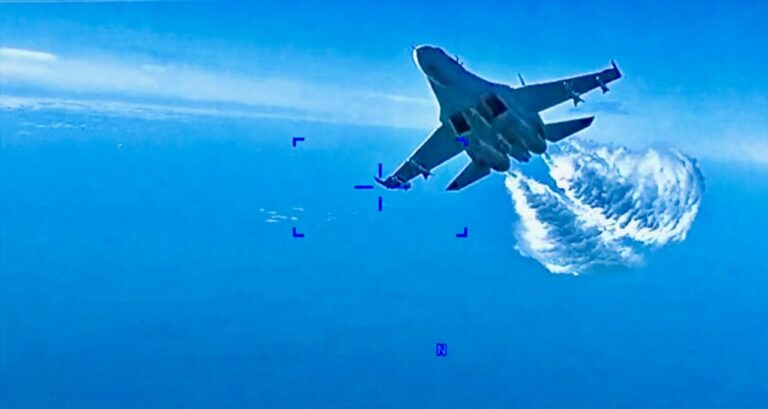
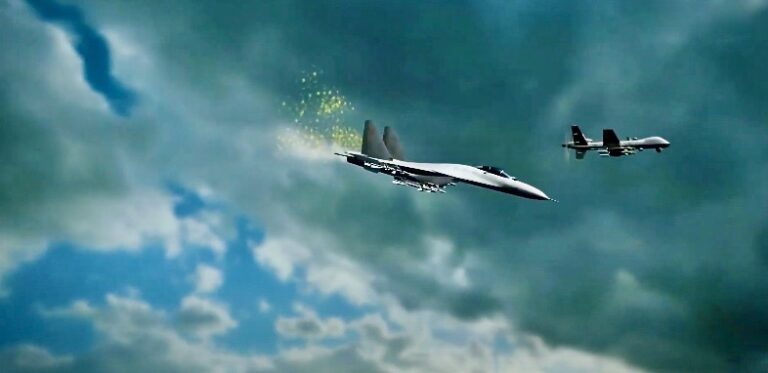
The Pentagon released a video on Thursday, which it said was shot from a US MQ-9 Reaper drone – during a close encounter with a Russian Su-27 fighter jet – before the American aircraft plunged into the Black Sea earlier this week.
The 50-second clip provided to the media shows an interceptor plane approaching the drone from behind and apparently ejecting fuel as it climbs.
The Pentagon claimed that Russian jets made several such maneuvers on Tuesday, including one in which the unmanned aircraft’s tail propeller supposedly got hit and damaged. The footage appears to show two of them, with the camera glitching both times.
Former Prime Minister Paul Keating has launched a swinging attack on the Labor government over the AUKUS submarine agreement, accusing Anthony Albanese of relying on “two seriously unwise ministers, Penny Wong and Richard Marles”.
Keating lashed the deal for a tripartite build of nuclear-powered submarines as “the worst international decision by an Australian Labor government since the former Labor leader, Billy Hughes, sought to introduce conscription” in the first world war.
“We have gone from a defend Australia to a forward defence policy,” Keating said, while insisting China posed no threat to Australia.
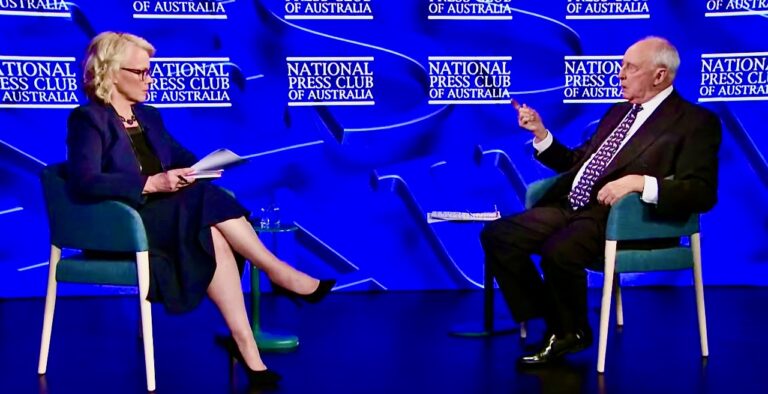
He made his criticisms in a long speech and question-and-answer session at the National Press Club.
In a direct challenge to Albanese, Keating said:
I dare the prime minister to explicitly suggest or leave open the question that Australia might go to war over Taiwan – at the urgings of the United States or anyone else.
Keating said the Chinese had never implied or said they would threaten Australia. He added that threatening Australia would mean “an invasion”.
It doesn’t mean firing a few missiles off the coast like the Japanese submarines did in 1943, firing a few things into the eastern suburbs of Sydney.
It would mean bringing an armada of ships with a massive army to invade, which it would not be possible for the Chinese to do. “We wouldn’t need submarines to sink an armada,” he said.
Keating said one of the critical problems in Australian policy was “that defence has overtaken foreign policy. As a consequence, we’re not using diplomacy.”
He recalled saying previously that Taiwan was not a vital interest of Australia’s – and that remained the case.
In earlier times, he said Labor has “invariably got the big international ones right”. This includes former Labor leaders Arthur Calwell opposing Australian military participation in the Vietnam war and Simon Crean opposing the Iraq war.
This one, AUKUS, is where Labor breaks its winning streak of now over a century.
Falling into a major mistake, Anthony Albanese, befuddled by his own small target election strategy, emerges as prime minister with an American sword to rattle at the neighbourhood to impress upon it the United States’ esteemed view of its untrammelled destiny.
Labor quickly supported AUKUS while in opposition after then-Prime Minister Scott Morrison announced it with the US and UK leaders in 2021.
And after the announcement of the submarine program details, which could cost Australia up to A$368 billion over three decades, Albanese said “a new chapter in the relationship between our nation, the United States and the United Kingdom begins”.
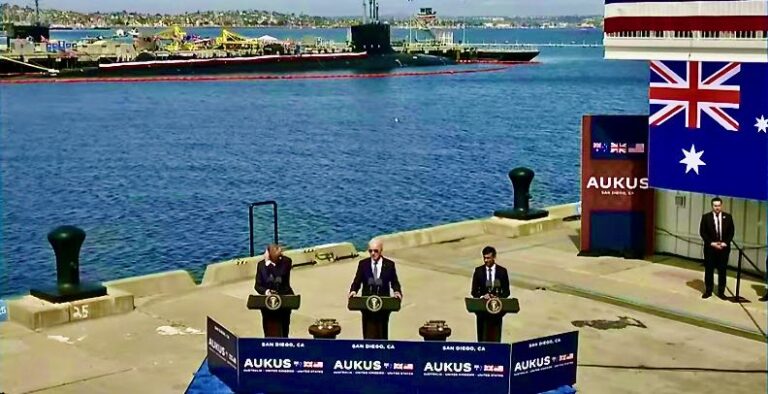
Anthony Albanese with US President Joe Biden and British Prime Minister Rishi Sunak at the AUKUS announcement in San Diego.
Keating said he had generally found Albanese to be responsive to his calls, texts and emails. But last month when he spoke to an Albanese staffer seeking a conversation with the PM, especially about AUKUS, the message was delivered but Keating said he “heard nothing” from the prime minister.
“The fact is, he did not wish to hear the message or have the conversation,” he said.
Keating was especially scathing about Wong, the foreign minister, and Marles, the defence minister.
“Penny Wong took a decision in 2016, five years before AUKUS, not to be at odds with the Coalition on foreign policy on any core issue,” he said. Under this approach, “you may stay out of trouble but you are compromised. Self-compromised.”
Though Keating said Marles was “well-intentioned”, he believed the defence minister was “completely captured by the idea of America.”
And the then-opposition leader [Albanese] not ever having displayed any deep or long-term interest in foreign affairs, fell in with Wong and Marles as leader of the great misadventure.
Keating said Albanese this week “screwed into place the last shackle in the long chain the United States has laid out to contain China”.
No mealy-mouthed talk of ‘stabilisation’ in our China relationship or resort to softer or polite language will disguise from the Chinese the extent and intent of our commitment to United States’ strategic hegemony in East Asia with all its deadly portents.
Among his targets, Keating also attacked Andrew Shearer, the head of the Office of National Intelligence, and the Australian Strategic Policy Institute. He said, “remarkably, a Labor government has picked up Shearer’s neo-con proclivities and those of ASPI”, describing the latter as “a pro-US cell” headed by a former chief of staff to ex-Foreign Minister Marise Payne.
He also attacked journalists, including those asking questions, telling one he should hang his “head in shame” for the articles he had co-authored.
Keating said the majority of the Labor party in the branches would share his views, saying when the average branch member “gets onto this […] there will be a big reaction”.
A US Reaper drone has crashed off the coast of Crimea, while on a spy mission
The US and other NATO countries have been flying spy missions just outside Russian airspace for more than a year, providing intelligence and other information to Ukraine while insisting they have not been directly involved in the conflict.
President Biden, PM Albanese and PM Sunak on the AUKUS Partnership
PRESIDENT JOE BIDEN: It’s an honour — honour to be here to welcome Prime Minister Albanese and Prime Minister Sunak. And it’s my honour to welcome you both to the United States as we take the next critical step in advancing the Australia, U.S., UK partnership — AUKUS. It’s an unusual name, “AUKUS,” but it’s a powerful entity. Video Below You know, when our countries first announced AUKUS 18 months ago, I’m not at all sure that anyone would have believed that — how much progress we’d be able to make together and how quickly we’d accomplish it. And I want to thank the members of all our teams who helped bring us to this pivotal moment sitting here in front of us. Thank you all very much. Secretary Austin; Secretary of the Navy Del Toro — (applause) — thanks for letting us come to your house; Chief of Naval Operations, Admiral Gilday — where are you, Admiral? There you are. And thank you for hosting us at Naval Base of Point Loma. And I also want to thank Representative Joe Courtney, founder of the bipartisan AUKUS working group, and all the members of Congress who are here today. Thank you for being here. You are — (applause) — a testament to the strong and — and deep support for this partnership across the United States. Australia and the United Kingdom are two of America’s most stalwart and capable allies. Our common values and our shared vision for a more peaceful and prosperous future unite us all across the Atlantic and Pacific. For more than a century, we’ve stood together to defend freedom and strengthen democracy and to your — and to spur greater opportunity in all our countries. I’ve always said, when asked, the United States is a Pacific power, because we’re on the Pacific Ocean. We are a Pacific power. The United States has safeguarded stability in the Indo-Pacific for decades to the enormous benefits of nations throughout the region, from ASEAN to Pacific Islanders to the People’s Republic of China. In fact, our leadership in the Pacific has been a benefit to the entire world. We’ve kept the sea lanes and skies open and navigable for all. We’ve upheld basic rules of the road that fueled international commerce. And our partnerships have helped underwrite incredible growth and innovation. So, today, as we stand at the inflection point in history where the hard work of enhancing deterrence and promoting stability is going to affect the prospect of peace for decades to come, the United States can ask for no better partners in the Indo-Pacific, where so much of our shared future will be written. In forging this new partnership, we’re showing again how democracies can deliver our own security and prosperity — and not just for us but for the entire world. Today, we’re announcing the steps to carry out our first project under AUKUS: developing Australia’s conventionally armed nuclear-powered submarine capacity. And I want to be clear — I want to be clear to everyone from the outset, right off the bat, so there’s no confusion or misunderstanding on this critical point: These subs are powered — not nuclear-armed subs. They’re nuclear-powered, not nuclear-armed. Australia is a proud non-nuclear weapons state and has committed to stay that way. These boats will not have any nuclear weapons of any kind on them. Each of us standing here today representing the United States, Australia, and Great Britain is deeply committed to strengthening the nuclear non-proliferation regime. We’ve undertaken this project working hand-in-glove with the International Atomic Energy Agency and with Director General Grossi. Australia will not produce the nuclear fuel needed for these submarines. We have set the highest standards with the IAEA for verification and transparency, and we will honor each of our countries’ international obligations. Working together these past 18 months, we’ve developed a phased approach that’s going to make sure Australian sailors are fully trained and prepared to safely operate this fleet so they can deliver this critical new capacity on the fastest — fastest possible timetable. Each of our nations is making concrete commitments to one another. We’re backing it up with significant investments to strengthen the industrial bases in each of our countries in order to build and support these boats. By the way, this partnership is going to mean an awful lot for good-paying jobs for all workers in our countries, including a lot of union jobs. There’s a reason why not everyone has nuclear-powered submarines: Nuclear propulsion is highly complicated technology that requires years of training to master. So we’re starting right away. Beginning this year, Australian personnel will embed with U.S. and UK crews on boats and at bases in our schools and our shipyards. We’ll also begin to increase our port visits to Australia. In fact, as we speak, the nuclear-powered sub the USS Asheville is making a port call in Perth as we speak. And later this decade, we will also be establishing a rotational presence of U.S. and UK nuclear-powered subs in Australia to help develop the work force Australia is going to need to build and maintain its fleet. One of the vessels you see behind me is a Virginia-class nuclear-powered submarine, the USS Missouri. Top-of-the-line submarines are the vanguard of U.S. naval power. And excuse me for a point of personal privilege — as they say in the United States Senate, where I’ve spent a lot of time — these submarines hold a special place for the Bidens. My wife, Dr. Jill Biden, is the sponsor of the USS Delaware, a Virginia-class submarine, and she never lets me forget it. (Laughter.) They feature cutting-edge propulsion technology, provide unmatched stealth and maneuverability. And with the support and approval of Congress, beginning in the early 2030s, the United States will sell three Virginia-class submarines to Australia with the potential to sell up to two more if needed, jumpstarting their undersea capability a decade earlier than many predicted. But the ultimate goal isn’t just selling subs to Australia, it’s developing something new together. We’re calling it the SSN-AUKUS. This new state-of-the-art conventionally armed nuclear-powered submarine that will work — that will combine U.S. submarine — UK submarine technology and design with American technology. And I want to reiterate again: The SSN-AUKUS will not have nuclear weapons. It will become a future standard for both the UK Royal Navy and the Royal Australian Navy. It will meet Australia’s defense needs while bringing our militaries, our scientists, our engineers, our shipbuilders, our industrial workforce, our countries closer together — closer than ever. Let me emphasize again: Nuclear propulsion is tested and safe. The United States and the UK have used it for nearly 70 years from — with a spotless record — a spotless record. Combined between the U.S. and UK, all of our nuclear-powered ships have traveled the entire globe — around the entire globe, more than 150 million miles. That’s going to the moon 300 times. Now, we can’t figure out how to get this sub to the moon, but we’re le- — working on it. (Laughter.) No, I’ve got to admit, our stewardship of naval nuclear propulsion technology is a point of honor, pride, and deep tradition currently helmed by Admiral Frank Caldwell, who is here today. Where are you, Admiral? Thank you. (Applause.) And the years of training we’re undertaking, starting now, will ensure that Australia is fully prepared to carry on this tradition and meet the highest possible standards of safety throughout the life of these boats. Our unprecedented trilateral cooperation, I believe, is testament to the strength of the longstanding ties that unite us and to our shared commitment of ensuring the Indo-Pacific remains free and open, prosperous and secure, defined by opportunity for all — a shared commitment to create a future rooted in our common values. That’s the objective the United States shares not only with the UK and Australia. It’s shared by our friends in the region; by our friends in ASEAN, the Pacific Islands Forum, and the Quad; and our other treaty and close partners in the Indo-Pacific and Europe. AUKUS has one overriding objective: to enhance stability in the Indo-Pacific amid rapidly shifting global dynamics. And this first project — this first project is only the beginning. More partnerships and more potential, more peace and security in the region lies ahead. Simply stated, we’re putting ourselves in the strongest possible position to navigate the challenges of today and tomorrow together. Together. So, I thank you again, Prime Minister Albanese, Mi- — Prime Minister Sunak. And the United States could not ask for two better friends or partners to stand with as we work to create a safer, more peaceful future for the people everywhere. I’m proud to be your shipmates. Thank you. .embed-container { position: relative; padding-bottom: 56.25%; height: 0; overflow: hidden; max-width: 100%; } .embed-container iframe, .embed-container object, .embed-container embed { position: absolute; top: 0; left: 0; width: 100%; height: 100%; }
PRIME MINISTER ALBANESE: Well, President Biden, Prime Minister Sunak, I am so honoured to stand alongside you both here overlooking the Pacific Ocean as leaders of true and trusted friends of my country of Australia.
Today, a new chapter in the relationship between our nation, the United States, and the United Kingdom begins — a friendship built on our shared values, our commitment to democracy, and our common vision for a peaceful and a prosperous future.
The AUKUS agreement we confirm here in San Diego represents the biggest single investment in Australia’s defence capability in all of our history, strengthening Australia’s national security and stability in our region; building a future made in Australia with record investments in skills, jobs, and infrastructure; and delivering a superior defence capability into the future.
My government is determined to invest in our defence capability. But we’re also determined to promote security by investing in our relationships across our region.
From early in the next decade, Australia will take delivery of three U.S. Virginia-class nuclear-powered submarines. This is the first time in 65 years and only the second time in history that the United States has shared its nuclear propulsion technology. And we thank you for it.
We are also proud to partner with the United Kingdom to construct the next generation submarine to be called SSN-AUKUS, a new conventionally armed nuclear-powered submarine, based on a British design and incorporating cutting-edge Australian, UK, and U.S. technologies. This will be an Australian sovereign capability, built by Australians, commanded by the Royal Australian Navy, and sustained by Australian workers in Australian shipyards with construction to begin this decade.
Australia’s proud record of leadership in the international nuclear non-proliferation regime will of course continue. We will continue to adhere to all of our obligations under the nuclear Non-Proliferation Treaty and the Treaty of Rarotonga.
Our agreement unlocks a set of transformative opportunities for jobs and skills and research and innovation in Adelaide and in Barrow-in-Furness, in Western Australia, and here in the United States.
Opportunities that will shape and strengthen and grow Australia’s economy for decades, and create around 20,000 direct jobs for Australians from many trades and specializations: engineers, scientists, technicians, submariners, administrators, and tradespeople. Good jobs with good wages, working to ensure the stability and prosperity of our nations, our region, and, indeed, our world.
Our future security will be built and maintained not just by the courage and professionalism of our defense forces, but by the hard work and know-how of our scientists and engineers, our technicians and programmers, our electricians and welders.
For Australia, this whole-of-nation effort also presents a whole-of-nation opportunity. We will work with the state governments of South Australia and Western Australia to develop training programs that equip Australians with the skills they need to fill these jobs.
Working together, our universities and research institutes will collaborate to train more Australians in nuclear engineering. We’re already sharing skills and knowledge and expertise across our borders, lifting the capability and capacity of all three countries.
Already, today, Australians are upskilling on nuclear technology and stewardship alongside their British and American counterparts.
Already, today, there are Australian submariners undergoing nuclear power training in the United States. And I’m proud to confirm, Mr. President, that they are all in the top 30 per cent of their class. (Laughter.)
Built by innovation and extraordinary and emerging technologies, these boats will present a unique opportunity for Australian companies to contribute not only to the construction and sustainment of Australia’s new submarines but to supply chains in America and in Britain.
The scale, complexity, and economic significance of this investment is akin to the creation of the Australian automotive industry in the post-World War Two period.
And just as a vision of my predecessors, Curtin and Chifley, in creating our automotive industry lifted up our entire manufacturing sector, this investment will be a catalyst for innovation and research breakthroughs that will reverberate right throughout the Australian economy and across every state and territory, not just in one design element, not just in one field, but right across our advanced manufacturing and technology sectors, creating jobs and growing businesses right around Australia, inspiring and rewarding innovation, and educating young Australians today for the opportunities of tomorrow.
Our AUKUS partnership is not just about the U.S. and UK sharing their most advanced submarine capability with Australia, although we do appreciate that. It’s also about building on the expertise within our three nations so that we can achieve things greater than the sum of our parts.
This is a genuine trilateral undertaking. All three nations stand ready to contribute, and all three nations stand ready to benefit. I look out from here today, and I see new frontiers in innovation to cross, new breakthroughs in technology to achieve, a new course for us to chart together.
Mr. President, Prime Minister, for more than a century, our brave citizens from our three countries have been part of a shared tradition of service in the cause of peace and sacrifice in the name of freedom. We honor their memory today. We always will.
While we respect and honor the past, through AUKUS, we turn ourselves to face the future. Because what the United States, the United Kingdom, and Australia hold in common is more fundamental and more universal than our shared histories. We are bound, above all, by our belief in a world where the sovereignty of every nation is respected and the inherent dignity of every individual is upheld; where peace, stability, and security ensure greater prosperity and a greater measure of fairness for all; and where all countries are able to act in their sovereign interests, free from coercion.
Our historic AUKUS partnership speaks to our collective and ongoing determination to defend those values and secure that future today, in the years ahead, and for generations to come — a journey that will strengthen the bonds between our nations as friends, as peers, as leaders.
We embark with great confidence in the capacity and creativity of our people, with optimism in the power of what our partnership can achieve, and with an unwavering conviction that whatever the challenges ahead, the cause of peace and freedom that we share will prevail.
Thank you very much. (Applause.)
PRIME MINISTER SUNAK: Sixty years ago, here in San Diego, President Kennedy spoke of a higher purpose: the maintenance of freedom, peace, and security. Today, we stand together united by that same purpose. And recognizing that to fulfil it, we must forge new kinds of relationships to meet new kinds of challenge, just as we have always done.
In the last 18 months, the challenges we face have only grown. Russia’s illegal invasion of Ukraine, China’s growing assertiveness, the destabilizing behaviour of Iran and North Korea all threaten to create a world defined by danger, disorder, and division.
Faced with this new reality, it is more important than ever that we strengthen the resilience of our own countries. That’s why the UK is today announcing a significant uplift in our defence budget. We’re providing an extra £5 billion over the next two years, immediately increasing our defence budget to around 2.25 per cent of GDP. This will allow us to replenish our war stocks and modernize our nuclear enterprise, delivering AUKUS and strengthening our deterrent. And our highest priority is to continue providing military aid to Ukraine, because their security is our security.
And we will go further to strengthen our resilience. For the first time, the United Kingdom will move away from our baseline commitment to spend 2 percent of GDP on defense to a new ambition of 2.5 percent, putting beyond doubt that the United Kingdom is and will remain one of the world’s leading defense powers.
But ultimately, the defense of our values depends, as it always has, on the quality of our relationships with others. And those alliances will be strengthened through AUKUS, the most significant multilateral defence partnership in generations.
AUKUS matches our enduring commitment to freedom and democracy with the most advanced military, scientific, and technological capabilities. Nowhere is that clearer than in the plans we’re unveiling today for the new AUKUS submarine, one of the most advanced nuclear-powered subs the world has ever known.
And those plans could not happen without cutting-edge American technology and expertise. So I pay tribute to you, Mr. President, for your leadership, and to you, Prime Minister, for your vision of what AUKUS can achieve.
And for our part, the UK comes to this with over 60 years experience of running our own fleet. We’ll provide the world-leading design and build the first of these new boats, creating thousands of good, well-paid jobs in places like Barrow and Derby. And we will share our knowledge and experience with Australian engineers so that they can build their own fleets.
Now, our partnership is significant because not just are we building the submarines together, they will also be truly interoperable. The Royal Navy will operate the same submarines as the Australian Navy, and we will both share components and parts with the U.S. Navy. Our submarine crews will train together, patrol together, and maintain their boats together. They will communicate using the same terminology and the same equipment.
And through AUKUS, we will raise our standards of nuclear non-proliferation. This is a powerful partnership. For the first time ever, it will mean three fleets of submarines working together across both the Atlantic and Pacific, keeping our oceans free, open, and prosperous for decades to come.
Joe, Anthony, we represent three allies who have stood shoulder-to-shoulder together for more than a century, three peoples who have shed blood together in defence of our shared values, and three democracies that are coming together again to fulfil that higher purpose of maintaining freedom, peace, and security now and for generations to come.
Thank you. (Applause.)
PRESIDENT BIDEN: With the permission of my colleagues — I don’t know that our friends can hear — but, the USS Missouri, can you hear us?
AUDIENCE MEMBERS: Hooyah, Mighty Mo’!
PRESIDENT BIDEN: I see them all over there. They’re standing at attention. Can I tell them “At ease”? I’m their Commander-in-Chief, right? I mean, they’re — (laughter) —
Anyway, thank you, thank you, thank you, thank you, thank you. You all are the best. You’re the best. And we’re going to be the best in the world, the three of us.