Home Blog Page 28

The Georgia Guidestones Explosion to Demolition

0


The%C2%A0Georgia%20Guidestones
The Georgia Guidestones Explosion to 

The Georgia Guidestones was a granite monument that stood in Elbert County, Georgia, United States from 1980 to 2022. It was 19 feet 3 inches (5.87 m) tall and made from six granite slabs weighing a total of 237,746 pounds (107,840 kg).The structure was sometimes referred to as an “American Stonehenge“.The creators of the monument believed that there was going to be an upcoming social, nuclear, or economic calamity and wanted the monument to serve as a guide for humanity afterward.

Though initially gaining little controversy, they became subject to conspiracy theories alleging a connection to satanism.On the morning of July 6, 2022, the guidestones were heavily damaged in a bombing. and were dismantled later the same day..embed-container { position: relative; padding-bottom: 56.25%; height: 0; overflow: hidden; max-width: 100%; } .embed-container iframe, .embed-container object, .embed-container embed { position: absolute; top: 0; left: 0; width: 100%; height: 100%; }


The Georgia Guidestones inscription read:

  1. Maintain humanity under 500,000,000 in perpetual balance with nature.
  2. Guide reproduction wisely – improving fitness and diversity.
  3. Unite humanity with a living new language.
  4. Rule passion – faith – tradition – and all things with tempered reason.
  5. Protect people and nations with fair laws and just courts.
  6. Let all nations rule internally resolving external disputes in a world court.
  7. Avoid petty laws and useless officials.
  8. Balance personal rights with social duties.
  9. Prize truth – beauty – love – seeking harmony with the infinite.
  10. Be not a cancer on the Earth – Leave room for nature – Leave room

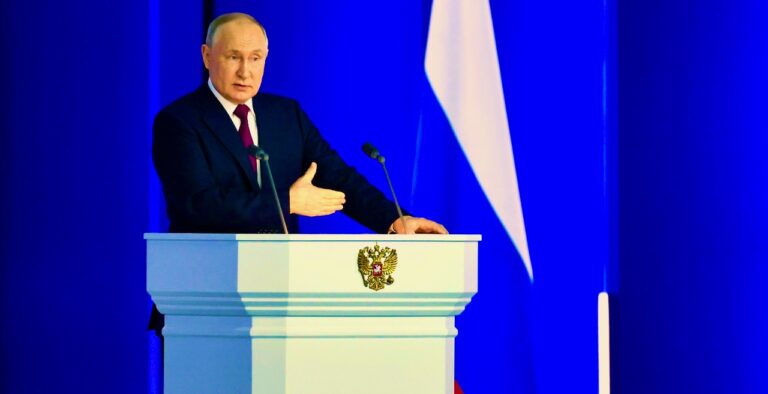
Vladimir Putin address at 10th St Petersburg International Legal Forum

Vladimir Putin gave a video address to greet the participants of a plenary session of the 10th St Petersburg International Legal Forum. This year’s plenary session was themed Law in a Multipolar World. The video address was recorded during the President’s recent visit to St Petersburg.

RBA Hikes rates by 50 basis points to 1.35 per cent.

0


Australian 100 Currency 1

Reserve Bank of Australia: At its meeting today, the Board decided to increase the cash rate target by 50 basis points to 1.35 per cent. It also increased the interest rate on Exchange Settlement balances by 50 basis points to 1.25 per cent.

Global inflation is high. It is being boosted by COVID-related disruptions to supply chains, the war in Ukraine and strong demand which is putting pressure on productive capacity. Monetary policy globally is responding to this higher inflation, although it will be some time yet before inflation returns to target in most countries.

Inflation in Australia is also high, but not as high as it is in many other countries. Global factors account for much of the increase in inflation in Australia, but domestic factors are also playing a role. Strong demand, a tight labour market and capacity constraints in some sectors are contributing to the upward pressure on prices. The floods are also affecting some prices.

Inflation is forecast to peak later this year and then decline back towards the 2–3 per cent range next year. As global supply-side problems continue to ease and commodity prices stabilise, even if at a high level, inflation is expected to moderate. Higher interest rates will also help establish a more sustainable balance between the demand for and the supply of goods and services. Medium-term inflation expectations remain well anchored and it is important that this remains the case. A full set of updated forecasts will be published next month following the release of the June quarter CPI.

The Australian economy remains resilient and the labour market is tighter than it has been for some time. The unemployment rate was steady at 3.9 per cent in May, the lowest rate in almost 50 years. Underemployment has also fallen significantly. Job vacancies and job ads are both at very high levels and a further decline in unemployment and underemployment is expected over the months ahead. The Bank’s business liaison program and business surveys continue to point to a lift in wages growth from the low rates of recent years as firms compete for staff in the tight labour market.

One source of ongoing uncertainty about the economic outlook is the behaviour of household spending. The recent spending data have been positive, although household budgets are under pressure from higher prices and higher interest rates. Housing prices have also declined in some markets over recent months after the large increases of recent years. The household saving rate remains higher than it was before the pandemic and many households have built up large financial buffers and are benefiting from stronger income growth. The Board will be paying close attention to these various influences on household spending as it assesses the appropriate setting of monetary policy.

The Board will also be paying close attention to the global outlook, which remains clouded by the war in Ukraine and its effect on the prices for energy and agricultural commodities. Real household incomes are under pressure in many economies and financial conditions are tightening, as central banks increase interest rates. There are also ongoing uncertainties related to COVID, especially in China.

Today’s increase in interest rates is a further step in the withdrawal of the extraordinary monetary support that was put in place to help insure the Australian economy against the worst possible effects of the pandemic. The resilience of the economy and the higher inflation mean that this extraordinary support is no longer needed. The Board expects to take further steps in the process of normalising monetary conditions in Australia over the months ahead. The size and timing of future interest rate increases will be guided by the incoming data and the Board’s assessment of the outlook for inflation and the labour market. The Board is committed to doing what is necessary to ensure that inflation in Australia returns to target over time.


Above Media release: Statement by Philip Lowe, Governor: Monetary Policy Decision

Source: Reserve Bank of Australia 2022

Dan Andrews Pandemic Declaration extended

Dan%20Andrews%20 %201
Premier Danial Andrews

As part of Victoria’s continued response to the coronavirus pandemic and as we continue to manage the challenges winter presents, I have extended the pandemic declaration to apply to the State of Victoria from 11.59pm Tuesday 12 July for three months.

The pandemic declaration gives the Minister for Health the authority to make pandemic orders she considers reasonably necessary to protect public health after considering the Chief Health Officer’s advice and other relevant factors, including social and economic factors.

Recently, a number of modest and sensible changes to pandemic orders were made to allow Victorians to live safely with COVID-19 while reducing transmission and hospitalisations.

This extended declaration will enable those key settings to remain in place over winter, protecting Victorians and our health system.

The declaration was made under section 165AE of the Public Health and Wellbeing Act 2008 after consultation with, and consideration of advice from, the Minister for Health and Acting Chief Health Officer.

In making the declaration, I am satisfied on reasonable grounds that there continues to be a serious risk to public health throughout Victoria due to the coronavirus disease which requires continued public health and other protective measures to reduce the risk of transmission and hospitalisation.

There are 94.6 per cent of Victorians over 12 years who have received two vaccine doses against coronavirus and over 68.4 per cent of Victorians over 16 years who have received a third dose.

This most recent extension will expire at 11.59pm, 12 October 2022 and subsequent extensions can last for up to three months.

I have also requested that the Minister for Health and the Chief Health Officer provide further advice by the end of winter as to whether there continues to be, at that time, a serious risk to public health arising from COVID-19.

The extended declaration underpins the continuation of the Independent Pandemic Management Advisory Committee of experts and community representatives who advise on pandemic response and management.

The Statement of Reasons, and the advice of the Acting CHO and the Minister for Health, will be tabled in Parliament.

Source: Victoria Government Media release

Reserve Bank increased the interest rate by 50 basis points

0


Interest%20Rate%20 %201
Reserve Bank: At its meeting today, the Board decided to increase the cash rate target by 50 basis points to 85 basis points. It also increased the interest rate on Exchange Settlement balances by 50 basis points to 75 basis points.

Statement by Philip Lowe, Governor: Monetary Policy Decision

Date 7 June 2022

At its meeting today, the Board decided to increase the cash rate target by 50 basis points to 85 basis points. It also increased the interest rate on Exchange Settlement balances by 50 basis points to 75 basis points.

Inflation in Australia has increased significantly. While inflation is lower than in most other advanced economies, it is higher than earlier expected. Global factors, including COVID-related disruptions to supply chains and the war in Ukraine, account for much of this increase in inflation. But domestic factors are playing a role too, with capacity constraints in some sectors and the tight labour market contributing to the upward pressure on prices. The floods earlier this year have also affected some prices.

Inflation is expected to increase further, but then decline back towards the 2–3 per cent range next year. Higher prices for electricity and gas and recent increases in petrol prices mean that, in the near term, inflation is likely to be higher than was expected a month ago. As the global supply-side problems are resolved and commodity prices stabilise, even if at a high level, inflation is expected to moderate. Today’s increase in interest rates will assist with the return of inflation to target over time.

The Australian economy is resilient, growing by 0.8 per cent in the March quarter and 3.3 per cent over the year. Household and business balance sheets are generally in good shape, an upswing in business investment is underway and there is a large pipeline of construction work to be completed. Macroeconomic policy settings are supportive of growth and national income is being boosted by higher commodity prices. The terms of trade are at a record high.

The labour market is also strong. Employment has grown significantly and the unemployment rate is 3.9 per cent, which is the lowest rate in almost 50 years. Job vacancies and job ads are at high levels and a further decline in unemployment and underemployment is expected. The Bank’s business liaison program continues to point to a lift in wages growth from the low rates of recent years as firms compete for staff in a tight labour market.

One source of uncertainty about the economic outlook is how household spending evolves, given the increasing pressure on Australian households’ budgets from higher inflation. Interest rates are also increasing. Housing prices have declined in some markets over recent months but remain more than 25 per cent higher than prior to the pandemic, supporting household wealth and spending. The household saving rate also remains higher than it was before the pandemic and many households have built up large financial buffers. While the central scenario is for strong household consumption growth this year, the Board will be paying close attention to these various influences on consumption as it assesses the appropriate setting of monetary policy.

The Board will also be paying close attention to the global outlook, which remains clouded by the war in Ukraine and its effect on the prices for energy and agricultural commodities. Real household incomes are under pressure in many economies and financial conditions are tightening, as central banks withdraw monetary policy support in response to broad-based inflation. There are also ongoing uncertainties related to COVID, especially in China.

Today’s increase in interest rates by the Board is a further step in the withdrawal of the extraordinary monetary support that was put in place to help the Australian economy during the pandemic. The resilience of the economy and the higher inflation mean that this extraordinary support is no longer needed. Given the current inflation pressures in the economy, and the still very low level of interest rates, the Board decided to move by 50 basis points today. The Board expects to take further steps in the process of normalising monetary conditions in Australia over the months ahead. The size and timing of future interest rate increases will be guided by the incoming data and the Board’s assessment of the outlook for inflation and the labour market. The Board is committed to doing what is necessary to ensure that inflation in Australia returns to target over time.

Source: Reserve Bank of Australia RBA Material is provided under a Creative Commons Attribution 4.0 International License (CC BY 4.0 Licence) and may be used in accordance with the terms of that licence

AlBo incredibly honoured and humbled to have been sworn in as Australia’s 31st Prime Minister

PM Anthony Albanese Press Conference
PM Anthony Albanese Press Conference


PM ALBO:
 Thanks very much. This will be a short press conference for reasons that are obvious for those of you who are travelling with us to Tokyo.

I am incredibly honoured and humbled to have been sworn in as Australia’s 31st Prime Minister. Australians have voted for change. And my Government intends to implement that change in an orderly way.

This morning, we had sworn in the interim Ministry that you see before you here in order to enable myself and Senator Wong to visit Tokyo for the Quad leaders meeting. In Tokyo, we will also have important bilateral meetings with President Biden, Prime Minister Kishida and Prime Minister Modi. I received a phone call last night and had a very fruitful and positive conversation, renewing my acquaintance with President Biden. The relationship with the United States is our most important, along with our relationships in the region and our multilateral commitments as well. The meetings that we will have, not just with the United States, but importantly with our hosts in Japan and India are going to be very important, in a good way, to send a message to the world that there’s a new Government in Australia and it’s a Government that represents a change, in terms of the way that we deal with the world on issues like climate change, but also a continuity in the way that we have respect for democracy and the way that we value our friendships and long-time alliances.

The Caucus will then meet next Tuesday. We will then have a swearing in of the full Ministry next Wednesday morning. And then I will convene the first meeting of the new Ministry. We just had an informal meeting of this group. We will have a meeting of the Ministry next Wednesday, along with meetings of the appropriate Cabinet committees, including the NSC and the ERC.

I met with the Department of Prime Minister and Cabinet yesterday. And I thank them for their professionalism. It was a reminder, as a former Deputy Prime Minister and Minister, of how valued our public servants are. We won’t be sacking public servants either. We will be valuing public servants and respecting them. The fact that we were able to have discussions and put measures in place to allow whatever the outcome of the result on Saturday, for those arrangements to be put in place, says a lot about how professional our public servants are. We should not take it for granted.

We will return on Wednesday and set about implementing our agenda. Our agenda that’s received the endorsement of the Australian people. Our National Reconstruction Fund, our Powering Australia plan to deal with the opportunities that come with acting on climate change. Our full implementation of the Respect@Work report recommendations. Affordable child care, fixing the aged care crisis, strengthening Medicare.

I said on Saturday that the ‘how’ was just as important as the ‘what’ and indeed it is. I want to bring people together and I want to change the way that politics is conducted in this country. We will establish a National Anti-Corruption Commission. And I have asked for that work to begin already. I will bring together an employment summit. And I thank those people in the business community and in the trade union movement for the discussions that we have had already about the way that can be progressed. And we will, of course, be advancing the need to have constitutional recognition of First Nations people, including a Voice to Parliament that is enshrined in that Constitution.

I look forward to leading a Government that makes Australians proud. A Government that doesn’t seek to divide, that doesn’t seek to have wedges, but seeks to bring people together for our common interest and our common purpose. I think that is one of the messages that came through on Saturday. People do have conflict fatigue. They want to work with people. And I will work with people, whether it’s the cross benchers, or the Opposition, to try to, wherever possible, get agreement. It is the way that I ran the Labor Party from the day that I became Labor Leader, not Opposition Leader. I do believe that we can do politics better. And I hope to do so. Happy to take just a few questions.

JOURNALIST: Congratulations, firstly on your win. What will you do, Prime Minister, have you had discussions already about – you don’t have a majority – have you already had discussions with the cross bench and minor parties about confidence and supply?

PRIME MINISTER: Thanks for that question. I am hopeful that we will receive a majority of Members of the House of Representatives. At this stage, that looks most likely. But counting continues. But my expectation is that we have a majority in the Labor Caucus. I have received and have had discussions with the existing members of the cross bench and received confirmation from Rebekha Sharkie, Bob Katter, Andrew Wilkie, Helen Haines and Zali Steggall, that they would not support any no confidence motions against the Government and that they would also secure supply. It is important that we respect the outcome of the election on Saturday. I have stuck to what I said before the election, as have they. They will consider legislation on its merits. I expect that to be the case. I will treat them with respect.

JOURNALIST: When do you want Parliament to resume? And how are you feeling? Are you ready?

PRIME MINISTER: I am ready. I have been getting ready for some time. And Parliament – I have had discussions with the Department of Prime Minister and Cabinet about a timetable. I read in one paper this morning that the Liberal Party might have its Caucus meeting if Parliament sits next week. I can confirm that Parliament won’t be sitting until the writs are returned, which won’t be certainly next week. We will sit at some stage before the end of July. But we will wait. It may well be much earlier than that. We will await the advice of Prime Minister and Cabinet. There are a range of issues. There is a number of international events, some of which are public, some of which are not, which need to be accommodated. The other issue is I will try to run a family-friendly Parliament. There are school holidays in July that have been pointed out as well. But we will resume Parliament in a very orderly way.

JOURNALIST: You said a minute ago that the incoming Labor Government is not going to sack public servants. You indicated you wanted new leadership at the head of PM&C. I am interested in whether you have a candidate in mind? Labor will have done a transition to government plan. I am quite interested in what you are able to tell us about machinery of government changes, or reallocation of portfolios. What is your thinking of both of those points?

PRIME MINISTER: Thanks. Stephanie Foster is the Acting Head of the Department of the Prime Minister and Cabinet, as of yesterday. I will be making an announcement at an appropriate time after we go through the formal procedures, which are in place, for the appointment of a secretary of Department of the Prime Minister and Cabinet.

JOURNALIST: One of the big issues for you in this term is China. My question is to you or the Foreign Minister, or both of you, now you are in office, do you see an opportunity to maybe cool things down? You have said they are more aggressive. Everyone agrees they have been aggressive and so on. On this crucial issue for our nation, do you see a chance to try and take a bit of the heat out of it?

PRIME MINISTER: What I have said, and we maintain, is that the relationship with China will remain a difficult one. I said that before the election. That has not changed. It is China that has changed, not Australia. And Australia should always stand up for our values. And we will in a Government that I lead. You will not get the call earlier because you yell. On day one, get that clear. Can I make the point though, that what we should do is put Australia’s national interests first and not attempt to play politics with national security issues. I think we saw some politics played with national security issues on Saturday afternoon. And there are millions of Australians who received text messages on Saturday afternoon that demonstrated that is the case. What I will do as the Prime Minister, and my Foreign Minister, Senator Wong will do, is put Australia’s national interests first, put Australia’s values first. And now, on that note, speaking of overseas, we have a plane to catch. Thank you very much. See you there.

Source: Licensed from the Commonwealth of Australia under a Creative Commons Attribution 4.0 International Licence.

The Commonwealth of Australia does not necessarily endorse the content of this publication.

Prime Minster of Australia

Queensland Disaster assistance has been extended to the three Local LGA’s

Queensland%20Floods%20 %201
Queensland Floods


Disaster assistance has been extended to the three Local Government Areas (LGAs) of Charters Towers, Flinders and Richmond following the intense rainfall and flooding throughout Northern and Central-Western Queensland over the past month.

The assistance is made possible through the joint Commonwealth-State Disaster Recovery Funding Arrangements (DRFA) and will help these councils to cover counter-disaster operations, such as clean-up and sandbagging, and the cost to repair essential public infrastructure damaged during the event between 21 April and 12 May 2022.

Minister for Emergency Management and National Recovery and Resilience, Bridget McKenzie, said the Australian Government would always stand with Queenslanders after a natural disaster.

“The DRFA extension to Charters Towers, Flinders and Richmond LGAs will assist the communities to recover from the effects of the recent deluge. We will continue to work with the Queensland Government to ensure that people affected receive the support they need,” Minister McKenzie said. 

Minister for Fire and Emergency Services Mark Ryan said, “The assistance would help more impacted communities recover from this extreme weather event.

“Northern and Central-Western Queensland experienced multiple days of heavy rain in late April 22 that damaged public infrastructure and caused disruption to the local communities,” he said.

“In mid-May of 2022 another severe weather event rolled through, causing further damage and impacted more communities in Central Queensland.

“By extending the DRFA assistance to Charters Towers, Flinders and Richmond, we are ensuring these communities will receive the financial support they need to cover the costs of the clean-up and counter-disaster operations such as sandbagging, in addition to the repair of essential public infrastructure such as roads.”

Minister Ryan said, “Seventeen Local Government Areas had now been activated for DRFA assistance in response to the Northern and Central-Western Queensland rainfall and flooding event from 21 April – 12 May.

“This latest DRFA activation extension will provide certainty to councils so they know they will be reimbursed for the eligible clean-up activities and reconstruction costs they incur as they help their communities recover,” he said.

“This disaster season has been unusually long, with extreme rainfall impacting our state well into what would normally be Queensland’s dry season.

“Queensland has now experienced eight natural disasters in 2021-22 that have necessitated the activation of DRFA assistance.

“But no matter how many disasters we face our communities can be assured we will continue to work with them to provide all available support to assist with their recovery.”

In response to the Northern and Central-Western Queensland rainfall and flooding event from 21 April – 12 May, DRFA assistance has already been activated for the following LGAs: Barcaldine Regional Council, Barcoo Regional Council, Blackall-Tambo Regional Council, Boulia Shire Council, Burdekin Shire Council, Charters Towers, Cloncurry Shire Council, Cook Shire Council, Douglas Shire Council, Flinders Shire Council, Hope Vale Aboriginal Shire Council, Longreach Regional Council, McKinlay Shire Council, Mornington Shire Council, Palm Island Aboriginal Shire Council, Richmond Shire Council and Winton Shire Council.

Sources and Information on disaster assistance can be found on the Queensland Reconstruction Authority’s website at www.qra.qld.gov.au    

Minister for Police and Corrective Services and Minister for Fire and Emergency Services

The Honourable Mark Ryan

Australia’s unemployment rate drops to 3.9 per cent lowest in 50 years

0

Man%20at%20Work%20Welder%20 %201
Man at Work ( Welder )
Image by Mike Flynn from Pixabay 

(ABS) The seasonally adjusted unemployment rate for April 2022 was 3.9 per cent, according to data released today by the Australian Bureau of Statistics (ABS). 

Bjorn Jarvis, head of labour statistics at the ABS, said: “In April, we saw employment rise by 4,000 people and unemployment fall by 11,000 people. As a result, the unemployment rate decreased slightly in April, though remained level, in rounded terms, with the revised March rate of 3.9 per cent.

“3.9 per cent is the lowest the unemployment rate has been in the monthly survey. The last time the unemployment rate was lower than this was in August 1974, when the survey was quarterly.”

The unemployment rate for males fell by 0.2 percentage points to 4.0 per cent, its lowest level since October 2008. For females, it remained at 3.7 per cent for a second month, which is the lowest it has been since May 1974.

The participation rate also decreased in April, down by 0.1 percentage points to 66.3 per cent, but remained close to the historical highs in February and March.

Employment and hours worked

Employment increased by 4,000 people in April, the sixth consecutive monthly rise.

The employment to population ratio remained at 63.8 per cent for a third month, the highest it has been and 1.4 percentage points higher than March 2020.

Seasonally adjusted hours worked increased by 1.3 per cent in April, largely reflecting a bounce back from the March falls in flood affected areas.

Seasonally adjusted employment and hours worked, indexed to March 2020

Line chart with 2 lines.
The chart has 1 X axis displaying .
The chart has 1 Y axis displaying Index. Range: 89.00500000000001 to 1Index March 2020
End of interacource: Labour Force, Australia Tables 1 and 19

“Hours in New South Wales and Queensland increased in April following the impacts of the floods in March. The number of people working fewer hours than usual due to bad weather dropped from its March peak of over 500,000 to around 70,000 people in April,” Mr Jarvis said.

In line with rising numbers of COVID-19 cases in April, the number of people working reduced hours due to illness continued to be high, reflecting ongoing disruption associated with the Omicron variant.  

“Around 740,000 people worked reduced hours in April because of illness, almost double what we usually saw in April before the pandemic. Of these people, around 340,000 worked no hours, which was around triple what we would usually see.”

Underemployment and underutilisation

The underemployment rate fell 0.2 percentage points to 6.1 per cent and the underutilisation rate, which combines the unemployment and underemployment rates, decreased 0.3 percentage points to 10.0 per cent. These were at their lowest levels since 2008.

Today’s release includes additional analysis of hours worked and historical charts showing data back to 1966.

Further information, including regional labour market information, will be available in the upcoming April 2022 issue of Labour Force, Australia, Detailed, due for release on Thursday 26 May 2022.

The ABS would like to thank Australians for their continued support in responding to our surveys during such a difficult time.

Source: Australian Bureau of Statistics (ABS)

Australian Bureau of Statistics (ABS) material licensed under a Creative Commons Attribution licence required.

Secretary Blinken, 30 NATO Allies remain committed to supporting a sovereign Ukraine.

0

Secretary%20of%20State%20Anthony%20Blinken%20 %201
Antony J. Blinken, Secretary of State Berlin, Germany

SECRETARY BLINKEN:  Good afternoon.  It’s a great pleasure to be back in Europe to continue intensive coordination with allies and partners on some of the most urgent issues facing our countries, and that begins with today’s NATO meetings.  And I want to especially thank Secretary General Stoltenberg for his leadership, the deputy secretary general of NATO, and especially Foreign Minister Annalena Baerbock of Germany – not only for hosting us, but for taking initiative to bring the foreign ministers together in an informal but very productive series of discussions.

The 30 NATO Allies remain fully engaged, aligned, committed to supporting a democratic, independent, and sovereign Ukraine.  The world has seen the strength and resilience of the Ukrainian people these past three months.  It’s seen the unity at the heart of NATO.  President Putin launched this brutal and unprovoked war thinking he could eliminate Ukraine as an independent country and divide NATO.  Instead, he’s only reinforced Ukraine’s sovereignty and independence as Ukraine has chased the Russian army away from Kyiv.  NATO is stronger, more capable, more unified than ever.

Every member of the Alliance wants to bring this war to an end as soon as possible, but we’re equally determined to maintain our security assistance to Ukraine, to continue our sanctions, export controls, and diplomatic pressure on Russia for as long as it’s necessary.  The United States and our allies and partners are focused on giving Ukraine as strong a hand as possible on the battlefield, and at any negotiating table, so that it can repel Russian aggression and fully defend its independence and sovereignty.

We’ve marshaled a robust transatlantic response to the humanitarian crisis caused by the war – more than 6 million Ukrainians have fled their homeland.  They’ve been welcomed in countries across Europe and across the Atlantic.  The United States has provided millions of dollars in assistance to countries taking in Ukrainian citizens to help provide essential support and services.  Our countries are also coming together to address some of the broader consequences that are flowing from Russia’s aggression, like the global food shortages and rising food prices that we’re seeing.  Ukraine supplies a great deal of the world’s corn, its wheat, its oil seeds for cooking oil.

Russia is blocking Ukraine’s ports; it’s destroying its farmland, warehouses, roads, equipment.  That’s not only striking a major blow to Ukraine’s economy, but it’s also designed to inflict pain on the rest of the world to weaken support to the Ukrainian people.  Later this week in New York, we will be convening an emergency session of the UN Security Council and also the foreign ministers to focus on the steps that we can take together to address the immediate challenges for food and to address food insecurity, as well as to look at some of the medium-term and longer-term answers to food insecurity.

We don’t know how the rest of this world – war – excuse me – will unfold.  But we know that a sovereign and independent Ukraine will endure.  And we know that in supporting Ukraine we’re also defending the principles of sovereignty and independence that are foundational to global peace and security.  Our partnership with the people of Ukraine is enduring as well.  American diplomats have returned to Ukraine after several weeks working out of Poland.  We’re reopening our Embassy in Kyiv – we’re taking all necessary precautions, but that work is underway – and we will resume operations very soon.

President Biden recently nominated Bridget Brink to serve as our next ambassador to Ukraine. She’s an outstanding veteran diplomat.  We hope the Senate will move quickly to confirm her, just as we hope Congress will move quickly to pass the $40 billion supplemental funding bill to ensure that our ability to provide assistance to Ukraine is not interrupted.

This morning I had an opportunity to meet with Ukrainian Foreign Minister Kuleba, part of what is an ongoing conversation with him on the phone, in person, whenever we have an opportunity to actually see each other.  And I conveyed to him again our commitment – unwavering commitment – to Ukraine.  NATO’s unified response, which we affirmed once more today, will continue.  Allies were joined here in Berlin by the foreign ministers from Sweden and Finland.  Both countries are close and valued defense partners of NATO and the United States.  And the United States would strongly support a NATO application by either Sweden or Finland should they choose to formally apply to the Alliance.  We’ll respect whatever decision they make.  And we’ve long supported NATO’s Open Door policy and the right of all countries to decide their own futures, their policies, their security arrangements.

We also spent time here in Berlin laying the groundwork for next month’s summit in Madrid. NATO is going to release its new Strategic Concept laying out how the Alliance will sustain and strengthen transatlantic security in the face of President Putin’s aggression as well as other emerging threats.  And we’ll look ahead to our continuing efforts to fortify our force posture on NATO’s eastern flank and to strengthen our defense partnerships beyond the region – for example, with Australia, Japan, South Korea, New Zealand, all of which will be represented in Madrid.

Finally, from here we’ll be traveling to Paris to attend the second ministerial meeting of the U.S.-EU Trade and Technology Council.  President Biden’s initiative to align some of the world’s largest economies on the most important trade and tech issues of the day is bearing very significant fruit and delivering real results.  Together we’re working to shape norms and set standards on emerging technology, build more diverse and resilient supply chains, coordinate our approaches to export controls and investment screening mechanisms, acting together to stop unfair trade practices that harm our workers and our companies.  The TTC has already proven highly useful for facilitating U.S.-EU cooperation – for example, on the swift imposition of export controls on Russia after it invaded Ukraine.  I’m very much looking forward to our meetings in Paris and continuing to deepen what is an abiding partnership between the United States and the European Union.

And with that, happy to take some questions.

MS ALLEN:  First question will be from Ellie Kaufman of CNN.

QUESTION:  Mr. Secretary, did you have a chance to speak with your Turkish counterpart today?  Will they allow Sweden and Finland to move forward with the process of applying to NATO membership?  And if not, did they express what their concerns are to you?

And on another issue, is the U.S. going to send any U.S. personnel to the West Bank to investigate the killing Al Jazeera journalist Shireen Abu Akleh, an American citizen?  Also, you spoke with a member of her family.  Who did you speak with and what was conveyed to you?

SECRETARY BLINKEN:  Thank you.  Second part first:  We support an investigation of Shireen’s killing.  I had an opportunity to speak to – directly to her brother, Anton.  I believe other members of the family were on the phone and listening in.  I had a chance to express our deep condolences for her loss, our deep respect for the work that she did as a journalist for many years – widely respected around the world – as well as the need to have an immediate and credible investigation into the circumstances surrounding her death.

Here in Berlin, yes, I did have a chance to talk to my Turkish counterpart, the foreign minister.  When it comes to Sweden and Finland and their potential accession to NATO, this is a process.  And NATO is a place for dialogue; it’s a place for discussion.  It’s a place for talking about any differences that that we may have.  I don’t want to characterize the specific conversation that we had either with the foreign minister or within the NATO sessions themselves, but I can say this much:  I heard, almost across the board, very strong support for Finland and NATO joining the Alliance if that’s what they choose to do.  And I’m very confident that we will reach consensus on that.

MS ALLEN:  The next question is from Annmarie Hordern of Bloomberg.

QUESTION:  Thank you, Mr. Secretary.  First question:  We heard from the Turkish foreign minister about what they would like in terms of the prospect of the prospective NATO members of Finland and Sweden.  And part of that is about – they say that those members should not impose export bans.  So is Turkey asking the United States and its allies to lift export bans specifically on weapons, and is that something the U.S. is even willing to discuss?  And given the fact that this has now become a negotiation, aren’t you worried that the Open Door policy is potentially now going to become a negotiation tactic for any future prospective members?

And you were also here meeting with your European counterparts.  You know the EU is at the moment trying to get a European oil ban on Russia.  Every single day Putin is funding his war with tens of millions of dollars being made by exports of fossil fuels.  Are you worried that if Europe is unable to come to this agreement, it is going to damage this alliance and also just further this war?

SECRETARY BLINKEN:  Thank you.  I’ll just repeat what I said about Turkey.  I had an opportunity to talk to the foreign minister.  We had a conversation about this in the context of the NATO meetings, which I’m not going to characterize beyond saying that there is very strong consensus for bringing Finland and Sweden into the Alliance if they choose to formally apply.  And as to the differences between Turkey, Finland, and Sweden that have been talked about, there’s an ongoing conversation, and the bottom line is this:  When it comes to the membership process, I am very confident that we will reach consensus.

Second, with regard to energy, that was actually not a focus of our conversations today.  But we very much support the efforts that Europe, the European Union is making to wean itself off of Russian energy, whether that’s oil or ultimately gas.  This is a reliance that’s been built up over many, many decades.  It’s not going to end overnight, but Europe is clearly on track to move decisively in that direction.  And we very much support the European Union’s efforts to put in place an embargo on the importation of Russian oil.  That process is for the European Union to pursue.

As this is happening, the United States has taken a number of steps to help.  And so for example, to the extent that there are any gaps that result in the energy that Europe is getting, we have already redirected significant supplies of liquefied natural gas to Europe.  The President’s committed to continuing to do that throughout the rest of the year – at the same time to make sure that there is bountiful energy on world markets and also to try to ensure that price hikes that have resulted from Putin’s aggression in Ukraine are evaded and kept under control.  The – we initiated a historic release from the Strategic Petroleum Reserve – a million barrels a day over six months.  That was matched by a number of countries through the International Energy Agency. And of course, we established a task force with the European Union to work on these very issues.  That task force is actively engaged as we speak.

QUESTION:  But can I just – just – the question really is about the fact that Hungary is putting a lot of hurdles in the way to get to this point.  And when you and your allies speak, it’s always about this unity, but clearly there’s not.  So if they’re not able to get to an end agreement on oil, doesn’t that just show that there is a lot of divisions in this so-called unity the United States has with the Europeans?

SECRETARY BLINKEN:  So it’s interesting.  With the – I guess the benefit of just a little distance from events, this has been going on for many months now – Russia’s mounting aggression, then its aggression, and the response from countries around the world, but principally the United States and Europe, the most immediately concerned with that aggression in Ukraine.  And throughout this process, at virtually every turn, we’ve said that we were going to do X, Y, and Z.  Skepticism was expressed from various quarters about our ability to do that, and yet, we’ve done it.  We said from the get-go that if Russia pursued its aggression against Ukraine, there’d be massive consequences for Russia, including unprecedented sanctions.  A number of people said: oh, that’s not going to happen.  Well, it did.  There have been massive consequences and we have unleashed truly unprecedented sanctions.

Many said that certain countries, certain partners wouldn’t go along with various sections, and yet, they did.  At other stages, people said that the European Union or European countries would not, for example, provide lethal defensive assistance to Ukraine, and yet, they have.  At virtually every stage of the process of implementing – deciding on and implementing new sanctions, there have been those who said: oh, they’re not going to do it; it’s too hard; there’s not consensus.  And yet, they did, and they have.

So I think the lesson from the last six months is that we have seen unprecedented unity.  We have seen unprecedented action.  And I’m very convinced that that’s going to continue as long as Russia’s aggression does.

MS ALLEN:  Last question comes from Thomas – I want to make sure I get his name right.

QUESTION:  Thanks – yeah, it’s Thomas Gutschker with Frankfurter —

MS ALLEN:  Thomas Gutschker from FAZ.  Thanks so much.

QUESTION:  That’s correct.  Thanks for taking my question.  It’s about the Strategic Concept and the discussion you are having on that.  Some allies are now saying they see the future of relations with Russia in the framework of containment.  Do you think that is the right term, the right concept to frame future relations with Russia?  And somewhat related to this, do you see any more reason to keep up the NATO-Russia Founding Act?  I know so far NATO has said Russia has walked away.  NATO has also said it’s not restricting anything that’s going on right now.  But of course, the next step could be to simply say: we also walk away from it; we no longer consider this to be a viable document.  What’s the U.S. position on that?

SECRETARY BLINKEN:  Thank you.  A lot of these issues will be fully discussed and fully elaborated on at the NATO Summit in Madrid in June.  And much of the work that we were doing today was in furtherance of that Summit and the work the leaders will bring to conclusion, including the Strategic Concept.  So I don’t want to get into any detail about that; everything is being drafted as we speak.  There were very positive and substantial inputs to that drafting process over the last couple of days, and I’d say we had a very good discussion about it.

At the heart of NATO and at the heart of the Strategic Concept is the notion of defense and deterrence.  That’s what bring – brought the Alliance together in the first place, and that includes with regard to deterring and defending against any aggression from Russia.  I can say with confidence that that will be fully reflected in the Strategic Concept.  Beyond that, let me leave it to the Summit, to the leaders to describe in more detail how the Alliance sees its relationship with Russia going forward.  That will be something that will be, I think, fully aired at the Summit in Madrid.  Thank you.

Thank you.  Thanks, everyone.


Source: US State Department under Creative Commons

Morrison tells Liberal launch ‘I’m just warming up as he pitches on home ownership

PM%20%20Morrison%20and%20Family%20 %201
PM Scott Morrison and Family
 View from The Hill: Scott Morrison tells Liberal launch ‘I’m just warming up’, as he pitches on home ownership
 THE CONVERSATION 

When he mounted the stage as a warm-up speaker at Sunday’s Liberal launch, Josh Frydenberg received a reception beyond the obligatory enthusiasm required of the handpicked party faithful at these affairs.

“Wow – I wish I got that reception in Kooyong,” the deputy Liberal leader and treasurer quipped.

Frydenberg, fighting a desperate battle to survive against the teal invasion in his Melbourne seat, had already been on ABC Insiders with a defence of Scott Morrison, and various government policies, that wouldn’t do him much good with his local voters.

It might have been all hands to the wheel for launch day, but the Brisbane gathering failed to project the image of a party on the verge of defying the odds to score a triumph.

Morrison’s message was that he and the government had seen the country successfully through the pandemic, and now he had plenty of ideas for the future.

He’d already told us he won’t be such a bulldozer if he wins again, though it’s unlikely people will be convinced we’d get the purring engine of a Mercedes.

In his overlong Sunday speech (about 50 minutes) with too much detail, Morrison thanked his audience for their patience, “but as you can see, I’ve got a big plan. I’m seeking a second term because I’m just warming up.”

Outlining the government’s achievements during COVID, Morrison said: “Not everything went to plan but, you know, when it didn’t, and while others were criticising, we just worked feverishly to turn it around and make up the ground. What followed was the largest economic and public health response in Australia’s history.”

At the start of the pandemic, “We stood on the edge of an abyss.”

“We now stand on a different edge […] One where fear doesn’t dominate, but aspiration. […] We stand on the edge of a new era of opportunity.”  

The launch’s policy centrepiece – allowing first home buyers to access up to 40% of their superannuation, to a maximum of $50,000 – is likely to be popular.

It acknowledges housing affordability as a big issue with many people, and also contrasts with Labor’s offering of the government taking a slice of ownership to help some people into homes.

There’s been a good deal of pressure to allow first home buyers to access their super. When the government allowed people to dip into this asset to cushion them through the pandemic that was welcomed by many.

But there is the counter argument that it is desirable to keep super savings intact for their purpose – to provide for retirement. The government’s partial answer is that the money (with a portion of any capital gain) would have to be put back into super if the house was sold.

And critics will point to another issue. By helping on the demand side, the scheme may drive prices higher. The central problem is on the supply side, but solutions to that lie mainly with state governments rather than the federal government.

Morrison did unveil a modest measure on supply – reducing from 60 (which is coming in July 1) to 55 the age at which “downsizers” can make contributions to superannuation of up to $300,000 per person from the proceeds of a sale.

Pensioners would also have longer (two years instead of one) to restructure their assets after selling their home, without affecting their pension.
 
The opposition immediately matched the empty nesters and pensioner initiatives.

But Labor predictably rejected the plan for dipping into super. Former prime minister Paul Keating denounced it, as a “frontal assault” on the superannuation system.

“The superannuation taxation concessions exist solely to produce a retirement income for people. Its key is preservation. Accumulated funds preserved to age 60 so working people secure the power and benefit of compounding,” Keating said in a statement.

The government immediately circulated Labor’s 1993 election housing policy, which undertook to “allow all home buyers to fund up to 49% of the deposit for a home from their accumulated superannuation savings.”

What’s old is new again, as often happens with political promises.

.

Michelle Grattan, Professorial Fellow, University of Canberra

This article is republished from The Conversation under a Creative Commons license. Read the original article.