Home Blog Page 29

Over the last 30 years, a fifth of polls have called the wrong winner. Here are 3 things poll-watchers need to understand

Election%20Vote%20 %201


logo horizontal en 301edfb7035c3a22cce74c9c9e737566


With voting already underway, and the sausage sizzle less than two weeks away, there are three things worth knowing if you are trying to work out which side is most likely to win:

  • the likely result in terms of the two-party preferred vote
  • the record of the electoral pendulum, based on the two-party preferred vote, in predicting election outcomes, and
  • the record of the opinion polls in predicting how far the electoral pendulum is likely to swing.

Here’s how are they used together to predict a result.

The two-party-preferred

The two-party preferred vote (which compares Labor and the Coalition) combines the first preferences with second or other preferences.

If Labor wins 51%, the Coalition wins 49%, and vice versa; the numbers always add up to 100.

But the two-party preferred, on its own, is not enough to predict the outcome of the election. You also need to get your head around the electoral pendulum.

The electoral pendulum

Devised by psephologist Malcolm Mackerras in 1972, the pendulum lists the seats held by Labor and the Coalition in ascending order of their two-party preferred results.

There are various versions of the electoral pendulum online, but the ABC’s is regarded as definitive.

The 2022 pendulum is based on the results of the 2019 election, adjusted for subsequent changes in electoral boundaries in Victoria and WA.

Nominate a national two-party preferred vote, and the pendulum promises to predict each side’s share of the seats.

True, this promise has been fulfilled only twice in the 19 elections held since 1972.

But it’s usually quite close; at four elections it has fallen short by only one seat, and at eight by no more than two or three. Not a bad record.

More importantly, the pendulum has only twice failed to predict which side would form government:

  • in 1998, when Labor won 51% of the two-party preferred result but got 12 fewer seats than the pendulum predicted, a result that allowed John Howard to survive; and
  • in 2010, when the Coalition won 49.9% of the two-party preferred – enough, on the pendulum, for an Abbott victory – only to see Labor bag five more seats than the pendulum anticipated, allowing Julia Gillard to form a minority Labor government.

As 2010 illustrates, the side that gets more than half the votes won’t necessarily get more than half the seats. Rather, the pendulum works off the margins by which seats are held.

At this election, Labor needs substantially more than 50% of the two-party preferred vote – 51.8% according to the pendulum – to win the majority of seats, 76. This equates to a swing of 3.3 percentage points.

How big a challenge is that? Since the war, there have been 29 elections. Labor increased its share of the two-party preferred vote in 13.

But in only six did it do so by 3.3 percentage points or more, and in only four did it do so by 4.5 points or more (the swing required for it to pick up a two-party preferred result of 53%). Not Mount Everest, but not a stroll in park.

The last time there was a swing to Labor of this magnitude was in 2007.

A two-party vote of 54% suggested by recent polls – a 5.5-point swing – is something Labor has only achieved once since the war. That was in 1969, off a much lower base (a two-party vote of 43.1% not 48.5%, Labor’s two-party vote in 2019).

So, what to make of current polls?

Labor currently enjoys a two-party preferred vote of about 54% in the polls; this translates to a gain of 17 seats on the pendulum.

A two-party preferred result of 53% would, in theory, yield just 10 seats – three more than the seven it needs to form government.

A two-party preferred result of 57%, reported by the latest Ipsos poll, would produce a Labor gain of 30 seats.

According to Sportsbet on Monday morning, punters are expecting a Labor two-party preferred result of 51.6% and a gain of the seven seats it needs, with the Coalition expected to lose another three to independents.

Current doubts about the polls’ accuracy have focused on their 2019 failure, with all of them getting it wrong and by the similar margins.

But over the past 30 years, a fifth of all the polls have called the wrong winner.

More importantly, from 1993 to 2010, the polls median error in calculating the winner’s lead was almost two percentage points.

On a median error of this size, a 54-46 lead in the polls might really be a lead of six (53-47) or ten (55-45), if the polls were entirely accurate.

Similarly, if the polls narrow, a lead of 53-47 could turn out to be a lead of 52-48 or a lead of 54-46.

Errors of this size could make a big difference.

An element of uncertainty

Before the votes are counted, the two-party preferred vote can only be a guesstimate.

In a close contest, even a smaller error could make the difference between:

  • a hung parliament in which the Coalition formed government (unlikely this time)
  • a hung parliament in which Labor formed government (a more likely outcome)
  • a parliament in which Labor commanded a majority in its own right (the outcome to which all the polls are pointing).

History suggests the polls could easily be over-estimating Labor’s two-party preferred; the chances that they are underestimating it are low.

While each of these considerations are important, as we try to work out what’s likely to happen, each involves an element of uncertainty.

Of course, uncertainty is part of life. Maybe you’ll get a good sausage sandwich when you turn up to vote, and maybe you won’t.

Murray Goot, Emeritus Professor of Politics and International Relations, Macquarie University

This article is republished from The Conversation under a Creative Commons license. Read the original article.

RBA Reserve Bank Raises Cash Rate to 0.35%

0

Cash%20Rate%20 %201

Statement by Philip Lowe, Governor: Monetary Policy Decision

At its meeting today, the Board decided to maintain the cash rate target at 10 basis points and the interest rate on Exchange Settlement balances at zero per cent.

Inflation has increased sharply in many parts of the world. Ongoing supply-side problems, Russia’s invasion of Ukraine and strong demand as economies recover from the pandemic are all contributing to the upward pressure on prices. In response, bond yields have risen and expectations of future policy interest rates have increased.

The Australian economy remains resilient and spending is picking up following the Omicron setback. Household and business balance sheets are in generally good shape, an upswing in business investment is underway and there is a large pipeline of construction work to be completed. Macroeconomic policy settings also remain supportive of growth and national income is being boosted by higher commodity prices. At the same time, rising prices are putting pressure on household budgets and the floods are causing hardship for many communities.

The strength of the Australian economy is evident in the labour market, with the unemployment rate falling further to 4 per cent in February. Underemployment is also at its lowest level in many years. Job vacancies and job ads are at high levels and point to continuing strong growth in employment over the months ahead. The RBA’s central forecast is for the unemployment rate to fall to below 4 per cent this year and to remain below 4 per cent next year.

Wages growth has picked up, but, at the aggregate level, is only around the relatively low rates prevailing before the pandemic. There are, however, some areas where larger wage increases are occurring. Given the tightness of the labour market, a further pick-up in aggregate wages growth and broader measures of labour costs is in prospect. This pick-up is still expected to be only gradual, although there is uncertainty about the behaviour of labour costs at historically low levels of unemployment.

Inflation has increased in Australia, but it remains lower than in many other countries; in underlying terms, inflation is 2.6 per cent and in headline terms it is 3.5 per cent. Higher prices for petrol and other commodities will result in a further lift in inflation over coming quarters, with an updated set of forecasts to be published in May. The main sources of uncertainty relate to the speed of resolution of the various supply-side issues, developments in global energy markets and the evolution of overall labour costs.

Financial conditions in Australia continue to be highly accommodative. Interest rates remain at a very low level, although fixed mortgage rates for new loans have risen recently. The Australian dollar exchange rate has appreciated due to the higher commodity prices and, in TWI terms, is around the level of a year ago. Housing prices have risen strongly over the past year, although some housing markets have eased recently. With interest rates at historically low levels, it is important that lending standards are maintained and that borrowers have adequate buffers.

The Board’s policies during the pandemic have supported progress towards the objectives of full employment and inflation consistent with the target. The Board has wanted to see actual evidence that inflation is sustainably within the 2 to 3 per cent target range before it increases interest rates. Inflation has picked up and a further increase is expected, but growth in labour costs has been below rates that are likely to be consistent with inflation being sustainably at target. Over coming months, important additional evidence will be available to the Board on both inflation and the evolution of labour costs. The Board will assess this and other incoming information as its sets policy to support full employment in Australia and inflation outcomes consistent with the target.

Cash%20Rate

4 May 2022 +0.25 0.35

RBA Material is provided under a Creative Commons Attribution 4.0 International License (CC BY 4.0 Licence) and may be used in accordance with the terms of that licence. 

White House Celebrates Lesbian Day of Visibility

0

Lesbian%20Kissing
Lesbian Day of Visabilty

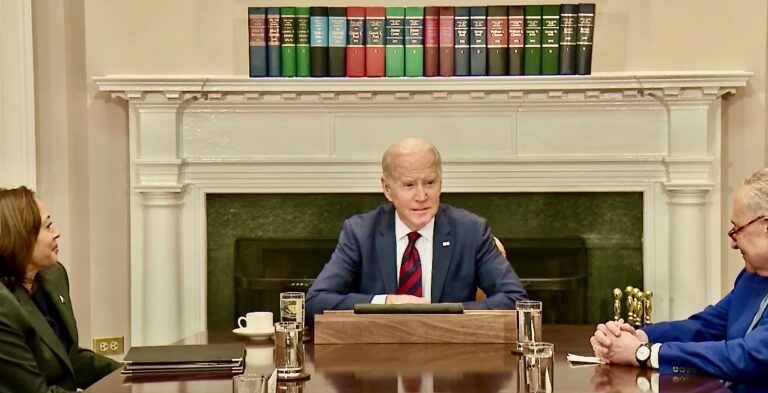
White House Media: Celebration of Lesbian Day of Visibility, the White House hosted a roundtable conversation with trailblazing lesbian and LGBTQI+ senior leaders from the White House and the broader Biden-Harris Administration. The roundtable included lesbian and queer advocates, community leaders, leaders across the federal government, several of whom are the first out lesbians to hold their position, including Ambassador Chantale Wong, Director of the Asian Development Bank, who is the first out lesbian to be confirmed by the U.S. Senate to an ambassador post; Admiral Rachel Levine, Assistant Secretary for Health, who is a lesbian and the first openly transgender woman to achieve the rank the four-star admiral in any of the country’s uniformed services; White House Deputy Press Secretary Karine Jean-Pierre; and Deputy White House Communications Director Pili Tobar. The roundtable was convened by White House Gender Policy Council Director Jennifer Klein. 

White House Lesbian day
White House Lesbian Day


Participants discussed the unique barriers and challenges faced by lesbians and LGBTQI+ women, including barriers to health equity and reproductive justice; the impacts of anti-LGBTQI+ state legislation on the mental health and wellbeing of lesbian and LGBTQI+ girls; the effects of isolation and discrimination on lesbian older adults; and the economic justice and housing issues impacting lesbian women and couples. Participants highlighted that lesbians who are also women and girls of color, transgender women, women with disabilities, and older women face additional intersecting challenges to achieving economic security and full inclusion. Administration officials highlighted the actions the Biden Administration has taken to advance equity and visibility for lesbians and other LGBTQI+ women and reaffirmed the President’s commitment to full equality for all lesbians and LGBTQI+ women and girls. 

External participants included:

  • Charlotte Clymer, Transgender Activist, Military Veteran, and Board Member, LPAC Action Network
  • Desireé Luckey, Director of Policy, Unite for Reproductive and Gender Equity (URGE)
  • Dr. Imani Woody, Founder and CEO, Mary’s House for Older Adults
  • Joanne N. Smith, President and CEO, Girls for Gender Equity (GGE)


Vladimir Putin meeting with UN Secretary-General Antonio Guterres

Vladimir%20Putin%20 %201

Putin Meeting with UN Secretary-General Antonio Guterres
Photo: The Kremlin, Moscow


President of Russia Vladimir Putin
: Mr Secretary-General,

I am very happy to see you.

As one of the founders of the United Nations and a permanent member of the UN Security Council, Russia has always supported this universal organisation. We believe the UN is not simply universal but it is unique in a way – the international community does not have another organisation like it. We are doing all we can to support the principles on which it rests, and we intend to continue doing this in the future.

We find the expression of some of our colleagues about a world based on rules somewhat strange. We believe the main rule is the UN Charter and other documents adopted by this organisation rather than some papers written by their authors as they see fit or aimed at ensuring their own interests.

We are also surprised to hear statements by our colleagues that imply that some in the world have exceptional status or can claim exclusive rights because the Charter of the United Nations reads that all participants in international communication are equal regardless of their strength, size or geographical location. I think this is similar to what the Bible reads about all people being equal. I am sure we will find the same idea in both the Quran and the Torah. All people are equal before God. So, the idea that someone can claim a kind of exceptional status is very strange to us.

We are living in a complicated world, and, therefore, we proceed from reality and are willing to work with everyone.

No doubt, at one time the United Nations was established to resolve acute crises and went through different periods in its development. Quite recently, just several years ago, we heard it had become obsolete, and there was no need for it anymore. This happened whenever it prevented someone from reaching their goals in the international arena.

We have always said that there is no other universal organisation like the United Nations, and it is necessary to cherish the institutions that were created after WWII for the express purpose of settling disputes.

I know about your concern over Russia’s military operation in Donbass, in Ukraine. I think this will be the focus of our conversation today. I would just like to note in this context that the entire problem emerged after a coup d’état staged in Ukraine in 2014. This is an obvious fact. You can call it whatever name you like and have whatever bias in favour of those who did it, but this was really an anti-constitutional coup.

This was followed by the situation with the expression of their will by the residents of Crimea and Sevastopol. They acted in practically the same way as the people living in Kosovo – they made a decision on independence and then turned to us with a request to join the Russian Federation. The only difference between the two cases was that in Kosovo this decision on sovereignty was adopted by Parliament whereas Crimea and Sevastopol made it at a nationwide referendum.

A similar problem emerged in south-eastern Ukraine, where the residents of several territories, at least, two Ukrainian regions, did not accept the coup d’état and its results. But they were subjected to very strong pressure, in part, with the use of combat aviation and heavy military equipment. This is how the crisis in Donbass, in south-eastern Ukraine, emerged.

As you know, after another failed attempt by the Kiev authorities to resolve this problem by force, we arrived at the signing of agreements in the city of Minsk. This is what they were called – the Minsk Agreements. It was an attempt to settle the situation in Donbass peacefully.

To our regret, during the past eight years the people that lived there found themselves under a siege. The Kiev authorities announced in public that they were organising a siege of these territories. They were not embarrassed to call it a siege although initially they had renounced this idea and continued military pressure.

Under the circumstances, after the authorities in Kiev actually went on record as saying – I would like to emphasise that the top state officials announced this in public – that they did not intend to fulfil the Minsk Agreements, we were compelled to recognise these regions as independent and sovereign states to prevent the genocide of the people living there. I would like to reiterate: this was a forced measure to stop the suffering of the people living in those territories.

Unfortunately, our colleagues in the West preferred to ignore all this. After we recognised the independence of these states, they asked us to render them military aid because they were subjected to military actions, an armed aggression. In accordance with Article 51 of the UN Charter, Chapter VII, we were forced to do this by launching a special military operation.

I would like to inform you that although the military operation is underway, we are still hoping to reach an agreement on the diplomatic track. We are conducting talks. We have not abandoned them.

Moreover, at the talks in Istanbul, and I know that you have just been there since I spoke with President Erdogan today, we managed to make an impressive breakthrough. Our Ukrainian colleagues did not link the requirements for Ukraine’s international security with such a notion as Ukraine’s internationally recognised borders, leaving aside Crimea, Sevastopol and the newly Russia-recognised Donbass republics, albeit with certain reservations.

But, unfortunately, after reaching these agreements and after we had, in my opinion, clearly demonstrated our intentions to create the conditions for continuing the talks, we faced a provocation in the town of Bucha, which the Russian Army had nothing to do with. We know who was responsible, who prepared this provocation, using what means, and we know who the people involved were.

After this, the position of our negotiators from Ukraine on a further settlement underwent a drastic change. They simply renounced their previous intentions to leave aside issues of security guarantees for the territories of Crimea, Sevastopol and the Donbass republics. They simply renounced this. In the relevant draft agreement presented to us, they simply stated in two articles that these issues must be resolved at a meeting of the heads of state.

It is clear to us that if we take these issues to the heads of state level without even resolving them in a preliminary draft agreement, they will never be resolved. In this case, we simply cannot sign a document on security guarantees without settling the territorial issues of Crimea, Sevastopol and the Donbass republics.

Nevertheless, the talks are going on. They are now being conducted online. I am still hoping that this will lead us to some positive result.

This is all I wanted to say in the beginning. I am sure we will have many questions linked with this situation. Maybe there will be other questions as well. We will talk.

I am very happy to see you. Welcome to Moscow.

(In his remarks, the UN Secretary General expressed concern over the situation in Ukraine, while emphasising the need for a multilateral world order based on the UN Charter and international law. Antonio Guterres also presented the two proposals he had put forward the same day during his meeting with Foreign Minister Sergei Lavrov. These proposals concern humanitarian matters, including humanitarian corridors, in particular, for Mariupol residents, as well as setting up a humanitarian contact group in which the UN Office for the Coordination of Humanitarian Affairs (UN OCHA), the International Committee of the Red Cross (ICRC), Russia, and Ukraine would work together to discuss the situation in order to make these corridors truly safe and effective.)

Vladimir Putin: Mr Secretary General,

Regarding the invasion, I am well-versed in the documents of the International Court on the situation in Kosovo. In fact, I have read them myself. I remember very well the decision by the International Court, which states that when fulfilling its right to self-determination a territory within any state does not have to seek permission from the country’s central government in order to proclaim its sovereignty. This was the ruling on Kosovo, and this is what the International Court decided, and everyone supported it. I personally read all the comments issued by the judicial, administrative and political bodies in the United States and Europe – everyone supported this decision.

If so, the Donbass republics, the Donetsk People’s Republic and the Lugansk People’s Republic, can enjoy the same right without seeking permission from Ukraine’s central government and declare their sovereignty, since the precedent has been created.

Is this so? Do you agree with this?

(Antonio Guterres noted that the United Nations did not recognise Kosovo).

Vladimir Putin: Yes, of course, but the court did. Let me finish what I was saying.

If there is a precedent, the Donbass republics can do the same. This is what they did, while we, in turn, had the right to recognise them as independent states.

Many countries around the world did this, including our Western opponents, with Kosovo. Many states recognised Kosovo. It is a fact that many Western countries recognised Kosovo as an independent state. We did the same with the Donbass republics. After that, they asked us to provide them with military assistance to deal with the state that launched military operations against them. We had the right to do so in full compliance with Chapter VII, Article 51 of the UN Charter.

Just a second, we will talk about this in a minute. But first I would like to address the second part of your question, Mariupol. The situation is difficult and possibly even tragic there. But in fact, it is very simple.

I had a conversation with President Erdogan today. He spoke about the ongoing fighting there. No, there is no fighting there; it is over. There is no fighting in Mariupol; it has stopped.

Part of the Ukrainian armed forces that were deployed in other industrial districts have surrendered. Nearly 1,300 of them have surrendered, but the actual figure is larger. Some of them were injured or wounded; they are being kept in absolutely normal conditions. The wounded have received medical assistance from our doctors, skilled and comprehensive assistance.

The Azovstal plant has been fully isolated. I have issued instructions, an order to stop the assault. There is no direct fighting there now. Yes, the Ukrainian authorities say that there are civilians at the plant. In this case, the Ukrainian military must release them, or otherwise they will be doing what terrorists in many countries have done, what ISIS did in Syria when they used civilians as human shields. The simplest thing they can do is release these people; it is as simple as that.

You say that Russia’s humanitarian corridors are ineffective. Mr Secretary-General, you have been misled: these corridors are effective. Over 100,000 people, 130,000–140,000, if I remember correctly, have left Mariupol with our assistance, and they are free to go where they want, to Russia or Ukraine. They can go anywhere they want; we are not detaining them, but we are providing assistance and support to them.

The civilians in Azovstal, if there are any, can do this as well. They can come out, just like that. This is an example of a civilised attitude to people, an obvious example. And anyone can see this; you only need to talk with the people who have left the city. The simplest thing for military personnel or members of the nationalist battalions is to release the civilians. It is a crime to keep civilians, if there are any there, as human shields.

We maintain contact with them, with those who are hiding underground at the Azovstal plant. They have an example they can follow: their comrades-in-arms have surrendered, over a thousand of them, 1,300. Nothing bad has happened to them. Moreover, Mr Secretary-General, if you wish, if representatives of the Red Cross and the UN want to inspect their detainment conditions and see for themselves where and how medical assistance is being provided to them, we are ready to organise this. It is the simplest solution to a seemingly complex issue.

Labor retains clear Newspoll lead and large Ipsos lead as record number of candidates nomina

0


Anthonu%20Albo%20 %201
Each Way Albo
logo en d7023135a67823619bfdbf3322b68dc4

This week’s Newspoll, conducted April 20-23 from a sample of 1,538, gave Labor a 53-47 lead, unchanged from last week. Primary votes were 37% Labor (up one), 36% Coalition (up one), 11% Greens (down one), 4% UAP (steady), 3% One Nation (down one) and 9% for all Others (steady).

54% were dissatisfied with Scott Morrison’s performance (up two), and 42% were satisfied (down one), for a net approval of -12, down three points. Anthony Albanese gained two points to be at -12 net approval. Morrison led as better PM by 46-37 (44-37 previously). Newspoll figures are from The Poll Bludger.

After a rise to -9 net approval last week, Morrison fell back into negative net double digits. But Albanese only recovered two points of net approval after last week’s 11-point crash, which was the biggest poll to poll drop for an opposition leader since Bill Shorten lost 16 in February 2015.

Although last week’s Newspoll was stable at 53-47 to Labor, all other polls last week had a reduced Labor lead. This week’s Ipsos poll, which gave Labor a 55-45 lead, is easily Labor’s best of the campaign.

The Poll Bludger reported Monday that the Coalition hopes to win regional and outer suburban seats to make up for losses in the inner city by using controversial Warringah candidate Katherine Deves as a “foghorn”.

My view is that concerns over the economy, such as inflation, will be far more important to most voters than culture war issues. The ABS will release its March quarter inflation report Wednesday. Also, city whites without a university education have not moved to the right in the same way they have in the regions.

Ipsos: 55-45 to Labor

An Ipsos poll for The Financial Review, conducted April 20-23 from a sample of 2,302, gave Labor a 55-45 lead, unchanged from early April. Primary votes were 34% Labor (down one), 32% Coalition (up one), 12% Greens (up two), 4% One Nation (steady), 3% UAP (up one), 7% for all Others (down one) and 8% undecided (up one).

By 2019 election preference flows, Labor led by 50-42 (51-42 previously) – the headline figure excludes undecided. By respondent allocated preferences, Labor led by 48-38 (48-37 previously).

48% disapproved of Morrison (steady) and 34% approved (up one), for a net approval of -14. Albanese’s net approval was down two points to -4. Albanese led as preferred PM by 40-38 (38-37 previously).

Record number of candidates for House

Candidate nominations for the election closed last Thursday, and were declared Friday. The Poll Bludger wrote there are a record 1,203 candidates for the House of Representatives, up from 1,056 in 2019 – an average of about eight candidates per seat.

Labor, the Coalition, the Greens and UAP will contest all 151 seats, One Nation will contest 149, the Liberal Democrats 100, the Federation Party 61 and Animal Justice 48. The large number of candidates is likely to increase the informal vote owing to numbering errors.

Newspoll and other polls have assumed One Nation would only contest the 59 seats it did in 2019. Their results for One Nation are thus far lower than they would be if they were asking for it nationally. One Nation’s support is likely to double in next week’s polls to about 6%.

While House candidates are at a record, the number of above the line boxes for the Senate is down from 2019 in most states. I will have more on the Senate in a future article.

Last week’s Essential poll: Labor’s “2PP+” lead at just 47-46

I covered last week’s Newspoll and Resolve polls here. There were two additional polls last week from the most Coaliton-friendly pollster (Essential) and the most Labor-friendly one (Morgan). Both had Labor’s lead falling.

In last week’s Essential poll, conducted April 14-17 from a sample of 1,020, Labor led by 47-46, down from 50-45 in early April, on Essentail’s “2PP+” that includes undecided.

Primary votes were 37% Coalition (steady), 35% Labor (down one), 9% Greens (down one), 4% UAP (up one), 3% One Nation (down one), 5% for all Others (steady) and 7% undecided (up two).

48% disapproved of Morrison (steady since March) and 44% approved (down one), for a net approval of -4. Albanese’s net approval was down seven to zero. Morrison led as better PM by 40-36 (39-36 in March).

Essential asked for ratings of Greens leader Adam Bandt and Nationals leader Barnaby Joyce. Bandt had a 33-27 approval and Joyce a 45-33 disapproval. This is far better for Joyce than Resolve polls of him last year, with a July 2021 Resolve poll giving Joyce a 45-16 negative rating.

The federal government had a 40-35 good rating for its response to COVID (39-35 in March). State government ratings were relatively stable from March, with Victoria the lowest and WA the highest.

Labor was trusted more than the Coalition by at least 15 points to manage four aspects of the caring economy. 34% (up two since March) thought the Coalition deserved to be re-elected, while 48% (steady) thought it was time to give someone else a go.

Morgan poll: 55-45 to Labor

A Morgan poll, conducted April 11-17 from a sample of 1,382, gave Labor a 55-45 lead, a two-point gain for the Coalition since the previous week. Primary votes were 35.5% Coalition (up three), 35% Labor (down one), 14% Greens (up 1.5), 4.5% One Nation (down 0.5), 1.5% UAP (steady), 6.5% independents (down two) and 3% others (down one).

This is the first time since November that the Coalition has been ahead of Labor on primary votes, and the highest Greens support in Morgan since the previous election.

WA poll: Albanese leads Morrison on economic management

The Poll Bludger reported a Painted Dog poll conducted for The West Australian from a sample of 1,241 on April 20. The poll gave Albanese a 54-46 lead over Morrison on handling the economy, which is normally a Coalition strength. Morrison’s net approval was -29, while Albanese was at net zero.

The Poll Bludger notes that this poll has never provided voting intentions, and so has never been tested at an election. In the March quarter Newspoll aggregate, both Morrison and Albanese were at net -5 approval in WA.

Seat polls: Kooyong, North Sydney and Griffith

Seat polls are unreliable, and particularly those released for partisan campaigns.

The Poll Bludger reported that a uComms poll in the Melbourne seat of Kooyong for the campaign of independent Monique Ryan gave Ryan a 59-41 lead over Treasurer Josh Frydenberg, from primary votes of 35.5% Frydenberg, 31.8% Ryan, 12.8% Labor and 11.7% Greens. This poll was conducted April 12 from a sample of 847.

A Community Engagement poll in North Sydney, conducted April 11-12 from a sample of 1,114, gave the Liberals 37.1% of the primary vote, an independent 19.4%, Labor 17.3%, the Greens 8.7%, the UAP 5.6%, others 3.8% and undecided 8.2%. No two party vote was given.

The Poll Bludger reported that the Greens claim they will win the Brisbane seat of Griffith from Labor based on 25,000 responses to their door-knocking campaign. They claim this method was accurate in predicting Greens successes at past elections.

Macron easily wins French presidential election

In Sunday’s French presidential runoff election, incumbent Emmanuel Macron defeated the far-right Marine Le Pen by a 58.5-41.5 margin. My Poll Bludger article also included a preview of the May 5 UK local and Northern Ireland assembly elections.

A prior article covered Republican Florida governor Ron DeSantis’ Florida gerrymander, and an upcoming UK parliamentary byelection in Wakefield.

Adrian Beaumont, Honorary Associate, School of Mathematics and Statistics, The University of Melbourne

This article is republished from The Conversation under a Creative Commons license. Read the original article.


President Putin held meeting on economic issues via videoconference

Putin%20economic%20issues%20via%20videoconference%20 %201
President Putin during the meeting on economic issues (via videoconference).

The President held a regular meeting on economic issues via videoconference

President of Russia Vladimir Putin: Good afternoon, colleagues,

We have agreed to hold regular meetings on the situation in the Russian economy and monitor changes in key macroeconomic indicators that characterise business, investment activity and labour market dynamics.

Naturally, this work is of special importance because based on the detailed analysis and consideration of potential risks, we have taken and will take measures on additional support for our people, industries and companies, as well as the economy as a whole.

I would like to emphasise that the economy continues to stabilise. Inflation has slowed; weekly price increases have approached normal levels, and prices on some goods have started dropping.

Analysts believe that two major factors are playing a role in this: the currency market situation, where the ruble has been rapidly growing stronger again, and the second factor, the consumer demand dynamic. I would like to emphasise that after a surge in February and March, consumer activity has objectively declined.

It is very important not to lose control of the situation and to prevent a misbalance in economic dynamics. On the one hand, we need to ensure gradual normalisation of pricing dynamics, and on the other, it is essential to prevent a serious reduction in demand, which could lead to setbacks in the operation of companies and a decrease in budget revenues.

So, in the current situation, it is necessary to support domestic companies to enable them to increase the supply of goods and services. It is also important to encourage domestic demand and the purchasing power of the population.

In this respect, I would like to draw your attention to key, important factors like the employment rate and average income. As I have said more than once, we will judge the efficiency of our economic policy with these indicators.

I should note that the lower lending activity of the banking system is affecting the final demand. Commercial risk and growing interest rates are the reason. Everybody understands that. We know this.

Let me remind you that the key rate increase by the Central Bank was, however, justified and necessary to stabilise the banking sector and financial markets. The decision proved successful and the Bank of Russia is already lowering the key rate gradually, which will make loans cheaper. Other steps are possible based on the real situation in the sector, but this is the prerogative of the Central Bank.

It is important that the Government is also issuing directives to complement these measures. Special programmes to support key industries have been launched. Easy-term loans are available to backbone enterprises in industrial production, trade, agriculture, oil processing and construction. Companies in these industries are also eligible for guarantees from VEB.RF worth a total of 800 billion rubles.

I would like to add that, despite the current challenges, we are keeping the easy-term mortgage programmes, including mortgages for families, with more funds allocated from the federal budget.

At the same time, I believe it is necessary to issue additional directives – primarily, with respect to mortgages. As we can see, the dynamic here is slower than the forecasts, and to make buying homes more accessible to people and stimulate real estate development in general, I propose lowering the easy-term mortgage rate from the recently set 12 percent to 9 percent per annum. Yes, we did recently set this interest rate at 12 percent but the overall situation is positive, which makes it possible to lower it. It is also necessary to extend the easy-term mortgage programme until the end of this year.

Next subject. Many companies are still experiencing a serious shortage of working capital that is used to purchase raw materials, components and services. This shortage must be compensated for. Our business colleagues always mention this at our industry-specific meetings. Therefore, I believe it is possible to introduce two new measures.

I propose expanding the guaranteed support programme by VEB beyond the backbone companies to provide support to other enterprises that do not have this status yet but that are already larger than small and medium-sized businesses and operate in the real sector. I should remind you as well that we already have some special support measures in place for smaller businesses. The VEB guarantees will account for up to 50 percent of a loan. I believe that the total value of the loans supported by this programme must be around 1.1 trillion rubles.

The second thing. I suggest granting a delay in insurance premium payments for companies that supply the domestic market with goods and services. We have talked at length about various support instruments such as a high Central Bank rate, as I mentioned. We have also talked about different support mechanisms for companies and sectors, but this is a systemic measure that covers almost all of the economy. I suggest suspending these payments for one year.

I would like to clarify right now that this measure would apply to all the companies I just mentioned. This list will not include exporters, financial and wholesale trade companies or public sector organisations. The Government will determine a precise list of the sectors included.

A grace period, for suspending these insurance payments, will cover the second quarter of this year. This grace period will also run through the third quarter for manufacturing companies.

We estimate that this measure will apply to over 2.8 million companies with almost 52 million workers. It will allow businesses to keep about 1.1 trillion rubles in the second quarter and another half a trillion rubles in the third quarter. These funds will work inside the economy, ensuring the production cycle. They will provide additional support for related companies, suppliers and contractors.

Let me repeat: insurance payments for the second and third quarters will have to be made starting in May 2023. Moreover, we can also think about additional preferences for manufacturing companies as regards payments in the third quarter. I will not go into detail right now, but it will be possible to do this if the employment and payroll funds are kept at June 1, 2022 levels.

I would like to ask the Government to draft detailed proposals on the criteria for these benefits based on the economic situation in general. I have special instructions for the Finance Ministry – to anticipate compensating for the shortfall in revenue in extra-budgetary funds. This must have enough money to ensure the confident operation of the healthcare and social support systems.

And, of course, I am instructing the Government, in cooperation with the Bank of Russia, to closely follow all developments and analyse the efficiency of the suggested mechanisms with a view to making adjustments whenever necessary.

Let’s get down to discussing today’s agenda.

Ms Nabiullina, go ahead please.

Source: President of Russia

How Reporters Reconstructed a Deadly Evacuation From Kabul

Evacuation%20From%20Kabu%20Airport%20 %201
Deadly Evacuation From Kabul Airport

By Stephen Engelberg

ProPublica is a Pulitzer Prize-winning investigative newsroom. Sign up for The Big Story newsletter to receive stories like this one in your inbox.

Series:
A Closer Look

Examining the News

On Aug. 26, 2021, a suicide bomber detonated a vest packed with explosives and ball bearings in the packed crowd outside Kabul’s international airport. Shrapnel sliced through the air, killing 13 American service members and an estimated 160 Afghan civilians.

In the hours after the attack, officials reported that a second assailant had sprayed the crowd with automatic weapons fire, increasing the casualty toll in what was one of the deadliest attacks on American forces in the 20 years of war in Afghanistan.

As so often happens in such cases, the U.S. military’s initial account raised more questions than it answered. The Marines scrambling to evacuate civilians as Taliban forces swept into Kabul had been explicitly warned of a possible suicide attack that very day. Yet they seemed to have failed to take basic security precautions. Republicans seized on the bombing as evidence that the Biden administration had bungled its first foreign policy challenge, failing to forsee how quickly the Taliban would overwhelm the American-backed Afghan government.

The story cried out for the sort of investigative reporting we have done previously on the U.S. military, looking into subjects like the spate of fatal accidents involving the Navy’s 7th Fleet. Pursuing such stories can be challenging. They often take longer than expected and the military’s propensity for classifying the details of its missteps inevitably complicates the reporting. The relentless pace of the news cycle can mean that public attention will move on to The Next Big Thing by the time we can explain what really happened in the last one.

So it was with Abbey Gate. The fall of Kabul was followed by Russia’s invasion of Ukraine. We published our grippingly told story on the same day as Western news outlets began reporting that Russian soldiers had committed atrocities in the Kiev suburb of Bucha.

Still, I hope readers will make time to read this unforgettable investigation.

The piece we published is unusual in that it was done in collaboration with Alive in Afghanistan, a nonprofit news agency launched in the days after the fall of Kabul that employs local reporters to give greater voice to Afghans caught up in a struggle of global and regional powers.

Our partnership meant that the story of Abbey Gate was told from the perspectives of both the Afghans desperate to flee the Taliban and the ill-prepared Americans at the airport scrambling to facilitate their escape. Such reporting is unusual in war zones. Typically, correspondents are lucky if they can find and interview a handful of witnesses to a traumatic event like a suicide bombing.

In fact, the idea of taking a hard look at the bombing was initiated by editors at Alive in Afghanistan. Their Kabul-based reporters had heard multiple reports that some of the deaths outside the airport were the result of friendly fire as Western soldiers shot at what they thought were Islamic State gunmen in the crowd. Some of the medical personnel who treated casualties from Abbey Gate said they believed they saw injuries that could only have been caused by bullets.

Alive in Afghanistan pushed to find further evidence in Kabul, a tricky task in a city newly under Taliban control. Two ProPublica reporters, Josh Kaplan and Joaquin Sapien, began the painstaking work of finding and interviewing U.S. service members who were guarding the Abbey Gate checkpoint on Aug. 26.

Corroboration for the friendly fire theory proved elusive. Forensic experts differed on whether it was possible for a doctor, even one experienced in wartime injuries, to distinguish between damage caused by a ball bearing and that caused by a military-grade bullet. U.S. officials acknowledged that a small number of rounds had been fired but insisted they had been aimed over the heads of the civilians.

ProPublica and Alive in Afghanistan tracked down six doctors in three hospitals who believed they had seen bullet wounds. None were interviewed for the Pentagon report that concluded all of the deaths were due to the explosion. In an earlier story on the attack, we interviewed Dr. Hares Aref, a senior surgeon at Wazir Akbar Khan Hospital, who said he had operated on three civilians from Abbey Gate whose legs were wounded by bullets. “We had patients with bullet injury in this attack, it’s clear,” he said. Aref based his conclusion on what he had seen treating victims of countless Kabul bombings. “My proof is my experience.”

While the issue of whether civilians were hit by U.S. fire remains contested, our recounting of the events made clear the extent to which the forces overseeing the evacuation were put in an untenable position.

U.S. officials acknowledged that they did not launch a large-scale evacuation until days before the fall of Kabul. Units that became central to the operation had not been included in the planning process and had not specifically trained for it. And while military officials knew the airport was difficult to defend and susceptible to attack, by the time Marines arrived, it was too late to adequately fortify the airfield.

In the final hours before the attack, U.S. commanders decided to leave open unguarded pathways to Abbey Gate. It is believed the bomber took advantage of such a route to make his way to the site of the explosion.

Our interviews documented the chaos at the airport on the day of the attack. U.S. Marines acted as de facto immigration officers and were left to interpret vague policies with little guidance, struggling to decide who to let into the airport and who to leave behind. They told our reporters that communication breakdowns and a lack of food, water and shelter led to preventable civilian deaths. Afghans perished from heat exhaustion. Some were crushed to death while waiting in line.

In the end, the scene at the airport was a microcosm of America’s experience in Afghanistan. The military’s hasty planning, rooted in optimistic assumptions, proved no match for the reality of a society in collapse.

As you follow the war in the Ukraine, it’s worth taking some time with this grunts’- and civilians’-eye view of how wrong a military operation can go.


Brisbane Cross River Rail station excavation hits record breaking milestone

Cross%20River%20Rail%20 %201
Cross River Rail

A station box excavated at a record-breaking depth of 50 metres beneath Brisbane has been completed as part of the construction of Brisbane CBD’s first new train station in more than 120 years.

Acting Premier and Minister for State Development Steven Miles said the station box for the new Cross River Rail underground station on Albert Street was about 50 metres deep at its lowest point – almost double the previous record of 26 metres set during Queen’s Wharf construction.

“This dig, in the heart of the CBD, has smashed the previous record, making it the deepest in Brisbane’s history,” Mr Miles said..embed-container { position: relative; padding-bottom: 56.25%; height: 0; overflow: hidden; max-width: 100%; } .embed-container iframe, .embed-container object, .embed-container embed { position: absolute; top: 0; left: 0; width: 100%; height: 100%; }

“This milestone for Cross River Rail is yet another example of the sheer scale of this project.

“To give an idea of the size, if this was an underground carpark, it would be about 15 levels deep, with excavation generating enough spoil to fill 19 Olympic-sized swimming pools.

“The Myer Centre carpark just up the road has a depth of 22 metres, and this is over double that.

“It is a credit to the over 250 workers on-site
who achieved this despite challenging engineering conditions in between high-rise buildings in the middle of a bustling CBD.”

Mr Miles said the focus on site would now shift towards permanent building works for the new station.

“The end of excavation means the most intensive period of work on site is now complete, and we thank those living nearby for their patience and understanding while the work took place,” he said.

“As the project progresses this year, we’ll start to see the stations themselves take shape here at Albert Street, but also at our other underground station sites and in the tunnels themselves.

“This month we saw some of the first rail delivered to the Gabba site, which will soon be running down the tunnels.

“The Cross River Rail project has great momentum, and we continue to smash milestone after milestone to the benefit of the Queensland economy.”

Transport and Main Roads Minister Mark Bailey said that the station box formed only one half of the total station area being excavated.

“While excavation of the 50-metre-deep station box cavern has been completed, we continue to work away on the adjoining 290-metre-long station cavern,” Mr Bailey said.

The Albert Street station will have entrances at both ends, dramatically improving connectivity to not only Botanic Gardens, QUT Gardens Point campus and the new and Queen’s Wharf Brisbane development but also Elizabeth St and Queen Street Mall.

“It’s hard to grasp just how big these stations will be, but just imagine some of Brisbane’s tallest skyscrapers laying horizontally underground.

“With over 67,000 people expected to use the Albert Street station each weekday by 2036, these long platforms are definitely needed.”

Mr Bailey stressed the importance of the new Albert Street station, especially for the 2032 Olympic and Paralympic Games.

“We know how important Cross River Rail was in Queensland’s winning Olympic bid and the crucial role it will play in unlocking the rail network bottleneck over the Brisbane River,” he said.

“As our population continues to boom, I’m sure the extra services we can provide across the whole network will be warmly welcomed by commuters, tourists and games-goers alike.”

Construction of the Albert St station building is expected to be completed in late-2023.

Albert Street station fast facts:

  • The fully excavated station box is about 46.4 metres below ground at the main bottom (B10) level, and almost 50 metres below ground level at its deepest point at sump level (about 15 storeys).
  • The previous record for the deepest excavation was 26 metres for the Queen’s Wharf development.
  • About 47,305 cubic metres of spoil was removed during excavation – the equivalent of about 19 Olympic swimming pools.
  • Excavation involved the installation of 340 rock anchors and over 1500 bolts, as well as 4,500 cubic metres of shotcrete.
  • About 100 workers are involved in excavating the Albert Street station box, with about 250 workers on the Albert Street site in total.
  • While the station platform will be 31 metres below ground, supporting equipment such as tunnel ventilation fans and hydraulic plant rooms mean the station box needs to be excavated deeper.
  • Following excavation, work is underway on permanent building structure works, including drainage, waterproofing and concrete works.
  • The Albert Street site also includes a 290-metre-long cavern up to 34 metres below ground, which is almost fully excavated, and a northern entrance that will be up to 28 metres deep, and currently about 76 per cent through excavation.
  • When completed, the station building itself will be about 40 metres above ground at roof level.
  • The station platforms will be 220 metres long, and more than 67,000 people are expected to use the station each weekday by 2036.
JOINT STATEMENT
Acting Premier and Minister for the Olympics
The Honourable Dr Steven Miles
Minister for Transport and Main Roads
The Honourable Mark Bailey

Queensland Government

Emmanuel Macron is reelected but the French are longing for radical change

0

Emmanuel%20Macron%20 %201


Emmanuel Macron has been reelected as President of the Republic of France for a second five-year term.

He defeated far-right candidate Marine Le Pen in the second round of the presidential election only hours ago, winning about 58.8% of the votes against 41.2% for his opponent. While votes are still being counted, about 30% of the French electorate did not vote. This is perhaps the highest abstention rate at a presidential elections since 1969.

While most political watchers were expecting a narrower Macron victory, many in France were genuinely scared by the lack of nationwide mass demonstration against Le Pen and the far right ahead of Sunday’s vote. The possibility of having Le Pen elected was higher than ever before.

What are the key consequences of Macron’s reelection for both France and Europe?

Continuity amid dissatisfaction

Providing Macron’s party La République en Marche! can win the lower house election in June – which it is predicted to do – the first major outcome of this election is continuity.

For now, France remains a stable, moderate, “steady-as-she-goes” nation with inclusive values. No major change in policies is expected under Macron.

And this, paradoxically enough, might become a major issue because the 2022 results have clearly shown the French are seeking radical changes and want their concerns to be addressed. Rising costs of living, inflation, low salaries, the environment, law and order, and immigration have all been burning issues during the campaign.


As opposed to the 2017 presidential election, when most voters still supported traditional mainstream parties, this year, the majority of those who voted did so for parties promoting radical measures from both the far left and the far right.

Never before in the history of France’s Fifth Republic had those extremist parties totalled more votes than the moderate parties of the left, the centre and the right.

This means that despite being re-elected somewhat as a result of the French “winner takes it all” voting system, Macron has a real challenge if he does not want to face major social unrest, as was the case in 2018-19 with the violent Yellow Vests movement.

More work ahead for the French

While Macron endlessly repeats he is neither from the left nor from the right, his election campaign’s economic program was preferred by France’s major employers’ federation, the MEDEF.

For instance, in the coming months, Macron once again wants to reform France’s generous pensions system to make the French work longer, so that the existing retirement scheme can endure.

He would also like to propose some conditions for the two million French people who are on the lowest possible social aid scheme, so they perform 15 to 20 hours of work or training in exchange of the money they receive.

The returning president has also pledged to continue attracting foreign investment through the “choose France” program, while supporting start-ups.

But social protections to continue

But Macron also wants to make social benefits easier to access.
Instead of having to apply for a particular scheme, eligible benefits would be paid straight into a person’s bank account.

A woman pushes her bike past campaign posters in Versailles ahead of the final vote.
Michael Euler/AP/AAP

Given the complexity of social aid schemes in France, it is estimated that hundreds of thousands of people who struggle applying for support would be better off under Macron’s new proposal.

A greener France

To gather the support of the Greens electorate, Macron has also pledged to continue subsidising nation-wide insulation programs, renovate 700,000 homes, protect biodiversity and legislate for a greener farming industry. This is an ambitious program in comparison to a first term that delivered mixed results on green policies and climate change.

Macron has also promised to extend the operational life of most nuclear powerplants and to get started on the construction of six new generation nuclear powerplants. In France, most citizens consider nuclear power as a green energy, given the minimal carbon emissions it generates.

This also provides the country with a higher level of energy (and therefore diplomatic) independence than its European neighbors.

What does Macron mean for the European Union?

The re-election of Macron is a blessing for Brussels and European institutions. With Brexit and the departure of German Chancellor Angela Merkel, France is playing an even greater role in European affairs and Paris has the opportunity to breathe new life into the EU.

This, of course, is a defeat for Putin, who tried to intervene in the 2017 Presidential election. Le Pen had close ties to the Russian regime for many years, although she tried to brush them off during the campaign.

Macron and Russian President Vladimir Putin held a joint press conference at the Kremlin in February.
Thibault Camus/EPA/AAP

Macron is a dedicated European and wants to build a stronger and more independent Europe. Russia’s invasion of Ukrainian has certainly provided a wake-up call for European leaders.

Previously, many relied on the United States to ensure European defence, while others looked to Moscow for cooperation, or to the French for peacekeeping operations.

That landscape is radically shifting now, and France’s traditional approach to ultimate sovereignty in defence (as the only European country with second strike capability) suddenly looks quite attractive to other European states.

Macron, and other European leaders gathered at Versailles for summit on the war in Ukraine in March.
Ludovic Marin/AP/AAP

High on Macron’s agenda for Europe is greater cooperation between EU states. He wants to ensure Europe’s “strategic autonomy”, be it military, energetic, economic and political.

This will please neither Moscow nor Beijing. It may, however, offer breathing space to Washington who desperately wants to focus on the Pacific.

Macron’s European ambitions are likely to be supported by the Baltic states who fear for their existence, by Eastern European countries who now understand that anything can happen with Putin, and even by the Germans who are radically rethinking their previously timid foreign policy.

The next five years are going to be Macron’s hardest term, be it in the national or international spheres. To succeed he will need to keep radical parties at bay in France, accelerate measures on climate change, and steer the European Union toward a stronger, more independent future.

Romain Fathi, Senior Lecturer, History, Flinders University

This article is republished from The Conversation under a Creative Commons license. Read the original article.

How to survive a tactical nuclear bomb? Defence experts explain

0

bomb Nuclear
Image by Sammy-Sander from Pixabay 


There has been widespread discussion of Russia’s threat to use tactical nuclear weapons in its war on Ukraine.

Russia is estimated to have thousands of tactical nuclear weapons – possibly the world’s largest stockpile – which could be deployed at any time. The use of nuclear weapons is also embedded in Russian military doctrine. Ukrainian President Volodymyr Zelenskyy has appealed to the rest of the world to take the threat seriously.

In this article we examine what would happen during a tactical nuclear bomb explosion, including the three stages of ignition, blast and radioactive fallout – and how one might be able to survive this.

Ignition

You see a sudden flash in the sky, as bright as (or even brighter than) the sun. You quickly turn your face away and run for cover.

The brightness suddenly vanishes, but returns again a short while later and continues – the distinctive double flash caused by competition between the fireball and shock wave. It gets incredibly hot and bright, and you shield your eyes to avoid retina burns.

The intense thermal radiation also causes skin burns, possibly through your clothing. Wearing pale-coloured clothing or being indoors will help.

You’ve also received substantial doses of invisible nuclear radiation: gamma rays, X-rays and neutrons. You find cover to shield the worst of the heat and radiation.

You’ve now survived the first seconds of a nuclear detonation, hopefully a “tactical” bomb smaller than that at Hiroshima (which was the equivalent of 15 kilotons of TNT).

The fact you’ve lived this long means you’re on the periphery, not at ground zero. But to survive the next few seconds, there’s a few things you’ll need to do.

The blast wave

Next will come the blast wave. This consists of an overpressure shock wave followed by an outward blast wind, often with reverse winds returning to ground zero.

This will destroy or damage all built structures within a certain radius from the epicentre, depending on the yield and height of the burst.

For example, a 15 kiloton bomb would have a fireball radius of about 100 metres and cause complete destruction up to 1.6 kilometres around the epicentre.

A one kiloton bomb – similar to the 2020 ammonium nitrate explosion in the Lebanese capital Beirut – would have a fireball radius of about 50 metres, with severe damage to about 400 metres.

The shock wave travels faster than the speed of sound (about 343 metres per second). So if you’re one kilometre away from the epicentre, you have less than three seconds to find cover. If you’re five kilometres away, you have less than 15 seconds.

You’ll need to shield yourself from the thermal and nuclear radiation, as you could die if exposed. However, you must find somewhere safe – you don’t want to be crushed in a building destroyed by the blast wave.

Get indoors, and preferably into a reinforced bunker or basement. If you’re in a brick or concrete house with no basement, find a strong part of the building. In Australia, this would be a small bathroom at ground level, or a laundry with brick walls.

The incoming shock wave will reflect off the internal walls, superimposing with the original to double the pressure. Avoid the explosion side of the building and make sure to lie down rather than stand.

If there is no reinforced room, you can lie under a sturdy table or next to (not under) a bed or sofa. You may be crushed under a bed or sofa if a concrete slab crashes down.

Keep away from doors, tall furniture and windows, as they will probably shatter. If the walls come down, you’ll have a chance of surviving in a pocket in the rubble.

If you’re in an apartment building, run to the fire staircase in the structural core of the building.

Avoid timber, fibre cement or prefabricated structures (which includes most modern housing in Australia) as these probably won’t survive. And open your jaw as the blast comes through, so your eardrums get the pressure wave on both sides.

Radioactive fallout

The third stage is the fallout: a cloud of toxic radioactive particles from the bomb will be uplifted during the blast and deposited by the wind, contaminating everything in its path. This will continue for hours after the explosion, or possibly days.

In comparable British-Australian bomb tests at Maralinga, the fallout was clearly preserved in the desert along one kilometre-wide tracks, extending 5–25 kilometres out from ground zero.

You must protect yourself from the fallout or you’ll have a short life.

If you’re in a stable structure such as a basement or fire staircase, you can shelter in place for a few days, if necessary. If your building is destroyed, you’ll need to move to a nearby intact structure.

Block all the doors, windows and air gaps. You can drink water from intact pipes and eat from sealed cans.

For outdoor movement, any PPE available should be used – especially a P2 mask, or even a dust mask. While tactical nukes are designed to destroy personnel or infrastructure, they still allow troop movement under cover of the blast. The radiological hazard is significant, but should be survivable.

A radiological weapon, on the other hand, will deliberately increase the radiation dose to the point of it being lethal.

Once you’ve found shelter, you’ll need to decontaminate. This will require a thorough scrub of the skin, nails and hair, and a change into clean clothing. But any severe burns should be tended to first.

Hopefully by now the national authorities will have stepped in for rescue and medical treatment.

Robert K. Niven, Associate Professor, Australian Defence Force Academy; Chi-King Lee, Professor of Civil Engineering, Australian Defence Force Academy; Damith Mohotti, Senior Lecturer in Civil Engineering, Australian Defence Force Academy, and Paul Hazell, Professor of Impact Dynamics (UNSW Canberra), Australian Defence Force Academy

This article is republished from The Conversation under a Creative Commons license. Read the original article.