Trump Media & Technology Group CEO Devin Nunes joins Newsmax’s Chris Salcedo to discuss Big Tech censorship and provide an update on the latest technological development made to Truth Social on April 21, 2022 Watch Video Below👌
What exactly is Truth Social’s “Big Tent” approach?
Think of a giant outdoor event tent at your best friend’s wedding. Who’s there? The combination of multiple families from all over the United States, and the world. Uncle Jim from Atlanta is a proud libertarian. Aunt Kellie from Texas is a staunch conservative. Your cousin John from California is a die-hard liberal. And guess what? They’re all together to have an amazing time and share their different viewpoints on the world. Although we don’t always agree with each other, we welcome these varied opinions and the robust conversation they bring.
Truth Social on iPhone
Let your voice be heard. Sign up, join the conversation, and share your unique opinion by posting a Truth, Re-Truth, photo, news story, or video link to communicate with your friends, customers, and the world. Stay informed about breaking news while staying directly connected with the people who influence you – don’t be shocked if they take your Truth viral!
Key Features
Profile – Express your unique personality by setting up a profile, avatar, and background. Begin to track your personal connections through follower and following counts as well as history for your posts and likes.
Truth Feed – Get the scoop on the latest thoughts and activities from the people, organizations, and news outlets that interest you. The Truth Feed contains posts from all those you follow brought to life with the help of thumbnail photos, links, and more.
Search – Truth Social really starts to become interesting as you connect with others. Search for a voice that you find interesting and easily follow them right from the search list or view their profile first before deciding.
Notifications – Stay engaged as you build a following. See who’s following you and who’s interacting with your Truths.
More than a year after COVID-19 vaccines became widely available in nursing homes nationwide, the facilities have gone a long way toward blunting the virus’s threat to their most vulnerable residents.
Today, 88% of nursing home residents and 89% of employees are fully vaccinated, outstripping the rate among the general public. Even as cases soared to record levels in January with the rise of the omicron variant, the death rate of nursing home residents was a fraction of what it was during the surge at the end of 2020.
But with the pandemic now in its third year, thousands of workers have found a way to avoid getting vaccinated, claiming what experts say are questionable medical exemptions from a federal mandate for health care employees, which went into effect this year.
Although few reasons exist for claiming a medical exemption, nearly 20,000 nursing home workers nationwide, or about 1 in 100, have obtained them, according to a ProPublica analysis of federal data. That rate is three times that of nursing home residents, a notably vulnerable group, who didn’t get the vaccine for medical reasons.
Dr. Jana Shaw, a pediatric infectious disease specialist at SUNY Upstate Medical University in Syracuse who studies vaccine hesitancy, said she thinks medical exemptions are being abused. “Previous research has shown, as we started mandating vaccinations, people will find avenues to get out of the obligation of getting vaccinated,” she said.
For every million doses of the vaccines available in the U.S., there have been fewer than six incidents that were serious enough to warrant not getting the vaccine, the Centers for Disease Control and Prevention found.
The consequences of an unvaccinated staff can be deadly. A recent study by a group of U.S. university researchers found that higher vaccination rates among nursing home employees could have reduced COVID-19 deaths among residents by nearly one-half during a two-month period last summer. The virus has now killed more than 150,000 nursing home residents and staff since the pandemic began.
About 1.7 million of 1.9 million nursing home workers across more than 15,000 U.S. facilities have gotten fully vaccinated since the shots became available in early 2021, according to CDC data as of late March. Since the announcement of a federal mandate for health care workers, more than 500,000 of those workers got their vaccinations, raising the national vaccination rate from 65% in September to 89% in late March.
But staff vaccination rates vary by state and by facility. One in six nursing facilities has a vaccination rate of less than 75%, according to CDC data. Nursing homes in Rhode Island, for example, have a vaccination rate of 99%; nursing homes in Montana have a vaccination rate of 77%.
The number of staff members who have claimed a medical exemption, meanwhile, has increased from about 9,400 when the mandate was announced to just under 20,000 as of late March. The data is self-reported by nursing homes and may contain some errors.
Many of the employees claiming medical exemptions cluster in the same nursing homes: In 27 of Ohio’s more than 900 nursing homes, over 15% of employees have claimed medical exemptions — more than in any other state. And in California, where only 4% of the state’s nursing home workers are unvaccinated, 23 facilities have claimed exemptions for 15% or more of their staff.
In more than a dozen facilities, a third to a half of the staff members have said they have a medical reason to forgo getting vaccinated. Those clusters have raised questions among scientists, said Tim Leslie, a researcher at George Mason University who has studied vaccination rates.
“That suggests some level of organization to achieve that outcome,” he said.
The CDC recommends that even people who had a nonserious allergic reaction to a dose of the COVID-19 vaccine take the full course. Only those with truly life-threatening allergies to the vaccine or one of its ingredients should avoid it, the CDC has said.
A far larger group — 164,000 workers — has declined to get the vaccine for another reason, which can include a religious objection. The federal government doesn’t track the number of religious exemptions.
Between medical exemptions and workers who refuse the vaccine for other reasons, more than 1 in 5 nursing home workers in Montana, Wyoming and Ohio have yet to get vaccinated — the highest rates in the country, according to the CDC data.
In a statement, the American Health Care Association/National Center for Assisted Living, which represents long-term care facilities, said nursing homes are committed to getting their employees vaccinated. It noted that unvaccinated workers must take precautions to prevent the spread of infection.
“Each hesitant staff member has their own unique reason(s) for choosing not to get the vaccine,” the statement said. “Despite rampant misinformation spreading online, the industry has made significant progress. We have found that it takes a multi-pronged, persistent approach to help increase vaccination rates.”
Facilities with unvaccinated workers face graduated penalties that could result in losing federal funding as a “final measure,” according to the Centers for Medicare and Medicaid Services, the federal agency that regulates nursing homes. The agency has the data to identify facilities with unusually high rates of medical exemptions, but it has instructed state inspectors to review the exemptions only during routine visits rather than during special inspections. It could be months before visits are made to some facilities.
CMS has told inspectors not to examine religious exemptions.
The gaps in vaccination, the potential abuse of exemptions and the current enforcement program have advocates for residents concerned that too many nursing home workers will remain unvaccinated.
“If you don’t really believe it should be a mandate, don’t make a mandate,” said Tony Chicotel, a staff attorney with California Advocates for Nursing Home Reform. “If you do think it should be a mandate, then enforce it.”
In a statement, a CMS spokesperson said that the agency “remains pleased by progress to-date” and that its goal is to bring nursing homes into compliance rather than discipline facilities. It said, too, that exemptions “could be appropriate in certain limited circumstances.”
“No exemption should be provided to any staff for whom it is not legally required or who requests an exemption solely to evade vaccination,” the statement said.
At least one facility has been cited by state regulators for an employee claiming a false medical reason to forgo the vaccine. Inspectors issued a deficiency to Premier Washington Health Center in Washington, Pennsylvania, after an employee obtained a medical exemption for multiple sclerosis. The condition is not among those the CDC lists as qualifying for an exemption; the employee was later granted a different exemption, according to the state’s inspection report.
Officials at Premier Washington did not respond to requests for comment.
In Michigan, 20 facilities that until initially reported large numbers of exemptions are operated by NexCare WellBridge Senior Living, which has 26 nursing homes in the state, according to its websites. The company reported that more than 500 of its roughly 3,300 employees had claimed a medical exemption as of Feb. 27. Only 32 residents in those facilities didn’t get the vaccine because of medical reasons as of that date.
The company revised its data after ProPublica questioned it. The company’s facilities are now reporting 54 medical exemptions across 10 facilities; 16 facilities are now reporting no medical exemptions.
Holli Titus, a company spokesperson, said in a statement that exemption requests “are not indicative of the nursing home, but of our country’s (and certain regions’) overall vaccine hesitancy.”
“NexCare and WellBridge remain confident that state surveyors will find our vaccination records in order and in compliance with federal regulations,” she said, adding later that the reporting process for vaccinations “caused confusion” among nursing home companies. The company “will continue to evaluate the reporting process and make adjustments if more clarification becomes available.”
Leslie, the health researcher, said people who are reluctant to get vaccinated will seek ways around the mandates. He observed this among California schoolchildren after the state in 2015 eliminated a personal-belief exemption for vaccines kids must get to attend school. The following year, the rate of medical exemptions nearly tripled, according to his research.
Leslie found that the increase was even higher in counties that had previously reported the highest rates of personal exemptions, suggesting that some parents who were hesitant to get their children vaccinated had found physicians willing to grant them medical exemptions.
“We were surprised at the level of medical exemptions, and we were concerned that they had turned into another avenue for hesitant parents,” he said.
The nation’s nursing homes will soon face another challenge: waning immunity of those who have received COVID-19 vaccines. The U.S. Food and Drug Administration has authorized second boosters for people 50 and older and for some immunocompromised adults. But many nursing home staff members and residents still have not received their first booster shot.
Only 44% of nursing home employees have received a booster shot, driven in part by delays in their initial vaccinations. In contrast, 69% of nursing home residents have received their first booster.
In its statement, CMS said that it considers workers who have completed the initial vaccine series to be fully vaccinated, a definition the CDC also uses, and that boosters remain optional. It did not say if it would require boosters in the future.
Dr. Brian McGarry, a health services researcher at the University of Rochester Medical Center in New York who has studied the effectiveness of COVID-19 vaccines in nursing homes, called lags in administering boosters to residents a “policy failure,” especially when compared with previous efforts to quickly get residents vaccinated in early 2021.
“The right time to do it would be before the omicron wave, and we missed the boat on that,” he said.
With that wave fading, most U.S. cities have relaxed coronavirus restrictions, even as experts warn that a more transmissible subvariant has become the dominant strain. That is prompting fears that another surge is looming.
“The mandate was the last push,” Shaw, the New York physician, said. “I don’t think we have much more left.”
Albanese has dropped Labor’s pledge to boost Jobseeker. With unemployment low, is that actually fair enough?
One of the first things Labor’s Bob Hawke did on being swept to office in March 1983 was to lift the unemployment benefit in April, seven weeks later, without even waiting for his first budget.
One of the first things Labor’s Anthony Albanese did during the first week of this election campaign was to let it be known that Labor was no longer committed to lifting the unemployment benefit at any time up to and including his first budget.
A promise to review the payment made in the last election by then Labor leader Bill Shorten was no longer operative.
Hawke’s 1983 increase was the first of many. Over 12 years the Hawke and Keating governments lifted the real value of unemployment benefits 27%.
Albanese said last week Labor had no plan to lift what is now called JobSeeker in its first budget. Government debt was “heading toward a trillion dollars”.
The single rate of JobSeeker is A$642.70 a fortnight, about $46 a day.
Is JobSeeker enough?
Some JobSeekers get more. Single parents and those aged 60 and over who have been on payments for nine months can get up to $691 per fortnight. Partnered jobseekers can get $585.30 each.
There is also a small Energy Supplement of 63 cents to 86 cents per day, and rent assistance offering single people renting privately up to $145.80 per fortnight and renters sharing with other people up to $97.20 per fortnight.
And for some months during the pandemic the temporary Coronavirus Supplement introduced in March 2020 almost doubled the base rate.
Calculations by the ANU Centre for Social Research and Methods suggest this cut the share of Jobseeker recipients in poverty from 67% to just under 7%.
But the boost was short-lived. By 2021 the supplement had been removed entirely and replaced with a much smaller increase of $50 a fortnight.
Research by Anglicare found that, while it lasted, the supplement allowed families to pay rent, access nutritious food and avoid emergency relief services
As shown in the chart, that $50 a fortnight has done little to redress the extent to which the living standards of people on unemployment benefits have been falling behind. For the last three decades, they have done little more than increase in line with prices, while the living standards of wage earners have grown strongly.
The base rate has fallen from 84% to 66% of the poverty line, defined as half the median income over that time, even taking account of the latest increase.
And Jobseeker has also fallen further behind the minimum wage
Even for those able to receive the maximum rate of rent assistance, unemployment payments have fallen from 57% of the net minimum wage at the start of the 2000s to 50% now. This is on top of a fall of four percentage points during the 1990s.
This makes it difficult to make a case that unemployment payments are generous enough to discourage jobseekers from seeking the minimum wage.
Compared to the high-income countries Australia normally compares itself with, the JobSeeker “net replacement rate” is low, about the lowest in the OECD.
The net replacement rate is the assistance provided to a single person aged 40 who has been unemployed for two months as a proportion of the average wage.
Australia’s minister for social services has argued these comparisons are not relevant, because Australia’s social security system is based on different principles than those in most other countries.
Australian income support is unrelated to previous earnings. This is correct, but it does not change the fact that when Australian workers lose their job, their income drops by far more than workers in other OECD countries.
Moreover, when the government announced the $50 a fortnight increase in February 2021, the prime minister justified it by saying that this would move the replacement rate back to where it had been under the Howard Government.
It would be:
41.2% of the national minimum wage, which puts us back in the realm of where we had been previously
While this is similar to the replacement rate at the end of Howard’s term, it is nothing like the replacement rate at the start of the term.
But unemployment has fallen…
At just 4%, unemployment is now much lower than the 5.2% that prevailed at the time of the 2019 election when Labor promised to review JobSeeker.
But the number of people receiving Jobseeker and Youth Allowance (Other) is actually higher than it was back then; there were 935,000 people receiving these payments in February 2022, compared to 765,000 in May 2019.
The reasons for this difference are complex, but a significant factor is that a very large share of people receiving unemployment payments are not required to seek jobs and have a reduced capacity to work.
Among them are people whose access to the disability support pension has been cut and Australians who would have been of pension age before the age was lifted.
What would Labor actually do?
On almost any measure, JobSeeker is too low, as the inquiry promised by Labor in 2019 would have discovered.
those who work hard to create a better life for themselves. Labor is the party for those who want to get ahead, as well as the party of compassion for those doing it tough
It goes on to pledge that
Labor will make sure people who are looking for work get the financial support they need to live a life of dignity through a strong social security system as well as the support they need to find and keep a job
This offers some hope, but, unlike in 2019, no guarantees.
Dog owners are reminded of the dangers of feeding their pet chocolate over the coming Easter long weekend.
Minister for Agricultural Industry Development and Fisheries and Minister for Rural Communities Mark Furner said while the Easter break was a great time for families, the family pet could suffer if allowed to eat Easter treats.
“Even a small amount of chocolate can make our dogs very sick,” Mr Furner said.
“It contains the substance ‘theobromine’, which affects a dog’s nervous system and heart and can cause extreme distress.
“Darker chocolate has more theobromine than milk or white chocolate, and large amounts of chocolate can actually be life-threatening to dogs.
“Small dogs are at a greater risk, but all breeds can suffer violent reactions including restlessness, hyperactivity, trembling, vomiting, diarrhea, increased heart rate and seizures.
“Parents should ensure that their children understand this and not be tempted to share Easter chocolate with the family dog.
“Dogs can be very opportunistic, so it’s important to keep opened chocolate out of their reach.
“If you think your dog has eaten chocolate, seek immediate veterinary advice.”
Source: Minister for Agricultural Industry Development and Fisheries and Minister for Rural Communities
French election: as Marine Le Pen makes it to second round, the left-wing vote is what troubles President Emmanuel Macron
THE CONVERSATION
After the first round of the 2017 presidential election in France, economist Thomas Piketty suggested that while there were four candidates on very close scores at the head of the field (Emmanuel Macron, Marine Le Pen, François Fillon and Jean-Luc Mélenchon), in reality France was divided into three political camps: a socialist and more-or-less eurosceptic left, a pro-European and liberal centre and right, and a nationalist far right. The results of the first round for this year’s presidential election suggest he was right.
You can listen to more articles from The Conversation, narrated by Noa, here.
Despite a poor campaign, centrist president Macron has emerged in first place, with 27.8% of the vote – three points up on 2017 and better than final opinion polls predicted.
Macron hoped that a late entry into the official campaign, leaving six weeks of playing the president-candidate, would allow him to use his management of the pandemic as a platform and focus on the electorate’s key concerns – the cost of living and pensions reform. The Ukrainian war got in the way, with Macron focusing too much on being president and not enough on being the candidate. A brief burst of rallying round the flag saw him surge past 30% before dropping back to a predicted score around 26%. Every vote above that on Sunday will have been seen as a bonus.
Less is more
By contrast, the general view is that Le Pen ran a good campaign – not the best, but good – by focusing less on the far-right aspects of her programme and instead posing as the candidate speaking for the economically hard pressed, struggling to make ends meet. This also meant, paradoxically, making less of an effort to look like a president in waiting and putting her pro-Putin past (and present?) to one side by simply refusing to address it. Local and low-key were the watch words and they have worked, lifting her from 21% in 2017 to 23.15% now. But the score is nevertheless a disappointment.
Le Pen’s cause has benefited enormously from the presence of the other far-right candidate, Eric Zemmour. His outspoken campaign helped her seem more moderate even though she isn’t. But Zemmour’s low score of barely 7% suggests that Le Pen might not pick up as many votes from his departure from the race as she might have hoped. Even throwing in the 2% of the vote garnered by Nicolas Dupont-Aignan (another far-right candidate) and part of the vote for the mainstream right’s Valérie Pécresse suggests Le Pen will come up short again in the second round.
The death of the French right?
Pécresse’s tailspin has been a key subplot of the election. When she won the nomination for the mainstream right-wing Les Républicains last December, she was touted as a significant threat to Macron, but her campaign tanked. In the end, she sunk as low as to drop below the 5% vote threshold at which candidates get half their election expenses reimbursed by the state. On reflection, that Pécresse came away with just 4.8% isn’t so much of a surprise. Les Républicains is still a party full of heavyweights who are still household names, but most are throwbacks to the Nicolas Sarkozy years and votes these days are routinely lost to the parties led by Macron and Le Pen in both local and national elections.
The votes still in play
The award for the best performance goes to Jean-Luc Mélenchon, the left-wing La France Insoumise candidate who hauled himself past Pécresse and Zemmour to 21.95% (19.9% in 2017), despite hovering around 12-14% for much of the campaign. There was even a point late on Sunday evening when he very nearly closed the gap with Le Pen.
This is a remarkable achievement, suggesting the French left is not dead. Mélenchon remains divisive, but while he is not naturally a man to bring together the various factions of the left under his leadership, he has rallied their voters. The big question now is whether his voters will turn out to vote for Macron. Other left-wing candidate Anne Hidalgo and the Green party’s Yannick Jadot have asked theirs to do so but Mélenchon has not followed suit. As in 2017, Mélenchon has not declared himself for Macron, but instead flipped the question around. “Not a single vote for her” is the line.
This is why everything is still in play for the second round. The old certainty of republican discipline to block the far-right seems less sure. Many left-wing voters find Macron unpalatable at best. Turnout therefore becomes a key pressure point in the two weeks ahead. There may not be a concern that many left-wing votes would go to Le Pen but Mélenchon’s position means that Macron will have to give those voters a reason to turn out for him rather than stay at home.
By the same token, however, Mélenchon has little to gain, even in the general election that follows in June, from being the man who made Le Pen president. The stakes could scarcely be higher.
On to the second round
Now Macron and Le Pen will face off in the second round on April 24. Le Pen’s team has planned a very different itinerary to 2017. Less frenetic, fewer personal appearances, a period of rest before the head-to-head election with Macron.
The president’s handlers, meanwhile, will be hoping that without the noise of the first-round campaign, he can make his programme audible and intelligible, while reining in his alarming tendency to put his foot in his mouth. The margins are too tight for Macron to go, in his vocabulary, pissing anyone else off.
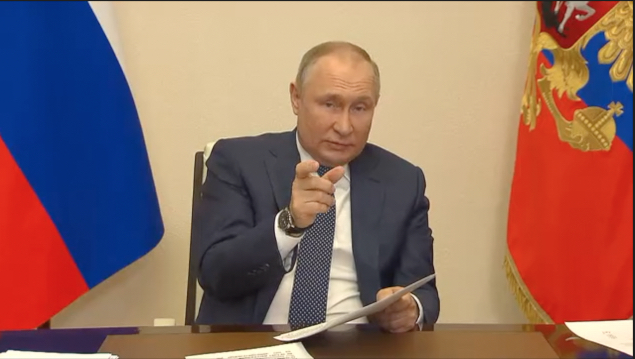
President of Russia Vladimir Putin: Colleagues, good afternoon.
Today’s agenda focuses on the situation in the aviation industry. We have long wanted to discuss these issues holistically, and today we will talk about it in more detail. However, I would like to begin with something we discussed last week..embed-container { position: relative; padding-bottom: 56.25%; height: 0; overflow: hidden; max-width: 100%; } .embed-container iframe, .embed-container object, .embed-container embed { position: absolute; top: 0; left: 0; width: 100%; height: 100%; }
Today I signed an Executive Order establishing the rules for trading Russian natural gas with so-called unfriendly states. We have offered our counterparties from these countries a clear and transparent procedure. To purchase Russian natural gas, they will have to open ruble accounts with Russian banks to be used to pay for gas distribution starting tomorrow, on April of this year.
If no payment is made, we will consider this a default on the part of the purchaser – with all the ensuing consequences. No one sells us anything without payment, and we are not doing charity either. This means the current contracts will be suspended.
I emphasise this again – in a situation where the Western countries’ financial systems are being used as a weapon, when companies from these countries refuse to fulfill their contracts with Russian banks, enterprises, and individuals, when our dollar and euro assets are frozen, it makes no sense to use those countries’ currencies.
In fact, what has been happening? We supplied resources to our European customers – in this case, gas. They received it and paid in euros – which they later had frozen. Thus, we have reasons to believe that some of the gas supplied to Europe was essentially provided free of charge.
Obviously, this cannot continue, especially considering that, should we continue to supply gas under the same process, euro or dollar payments could once again be blocked. This development is quite possible, especially given that some Western politicians have been talking about it publicly. Moreover, EU heads of governments have been suggesting similar approaches. This kind of risk is, of course, unacceptable to us.
If we look at this issue from a general perspective, converting to gas payments in Russian rubles is an important step towards reinforcing our financial and economic sovereignty. It has been our long-term plan to consistently and gradually move in this direction, increasing the share of national currency transactions in foreign trade – that is, in our currency and the currency of our reliable partners.
You may have already heard that many long-time energy suppliers in the world market are also talking about diversifying transaction currencies.
To reiterate, Russia values its business reputation. We fulfill and we will continue to fulfill our obligations under all contracts, including our gas contracts. We will continue to supply gas as agreed and, I would like to stress, at the rates specified in the effective long-term contracts.
I want to stress that these rates are several times lower than the current rates on the spot market. What does this mean? In simple terms, Russian gas means cheaper energy, heat and power in European homes, affordable fertilisers for European farmers and, consequently, cheaper food. Finally, it means higher competitiveness for European companies and higher wages for European citizens.
However, judging by the statements made by some politicians, they are willing to disregard their citizens’ interests so they can enjoy the good graces of their overseas master and overlord. This is the opposite of populism. People are urged to eat less, put on more clothes, and use less heating, give up on travel – presumably for the benefit of the people who are demanding this kind of voluntary deprivation as a sign of some abstract North Atlantic solidarity.
This is not the first year that we have been observing such questionable approaches and actions in the economic, energy and food policy of the Western countries.
Incidentally, the food crisis will inevitably be followed by another one, another wave of migration, primarily to the European countries.
Regardless of this, the decisions that are being made, one after another, are pushing the global economy towards crisis. They are leading to the disruption of production and logistics chains, an increase in global inflation and the aggravation of inequality, to a decline in the living standards of millions of people, and to the tragedy of mass famine in the poorest countries, as I have just said.
Naturally, the question arises: Who is responsible for this? Who will be held accountable for this?
Obviously, the United States will again try to resolve its problems – just its own problems – at the expense of others. In part, it will trigger a new wave of emission and budget deficits. The deficit has soared enormously and inflation is setting records in both the leading European countries and in the United States. In the process, they are trying to blame us for their own economic mistakes; they are always looking for someone to blame. This is perfectly clear, we are aware of this.
I would add that the United States will also try to make money on the current global instability, as it did during WWI and WWII, and its aggressions against Yugoslavia, Iraq and Syria, to name a few. Global markets are falling while the stock value of the companies from the US military-industrial complex is going up all the time. Money is flowing away to the United States, depriving the other regions of the world of development resources.
Attempts to do everything possible to push Europe towards expensive American liquid natural gas fall into the same category. As a result, the Europeans are not only compelled to dip into their pockets but actually to undermine the competitiveness of European companies with their own hands, to remove them from the global market. For Europe, this means large-scale de-industrialisation and the loss of millions of jobs. Another consequence is a drastic reduction in living standards against the backdrop of price increases on food, petrol, electricity, housing and utilities.
This is the price the ruling Western elite are telling people to pay, as I said, for their ambitions and short sighted actions – both in politics and the economy, including the economic war that they are trying to unleash, or in fact have already unleased against Russia.
This did not start just now, nor in the past month. Illegal sanctions and restrictions have always been imposed on our country, for many years. The goal is to curb Russia’s development, undermine our sovereignty, and weaken our industrial, financial and technological potential.
I will repeat that all these sanctions have been prepared in advance and would have been imposed in any case. I would like to emphasise this point. In effect, these are sanctions against our right to freedom, to be independent, to be Russia. They are imposed because we do not want to dance to their tune and to sacrifice our national interests and traditional values.
The “collective West” does not seem willing to abandon its policy of economic pressure on Russia. Moreover, it is certainly going to try to find more reasons for sanctions, or rather pretexts. One can hardly count on any change in their approach, at least in the near future.
In this regard, I am asking the Government, the Bank of Russia, and the regional governments, to consider this while planning their systemic efforts to promote economic growth and support specific sectors, to keep in mind that the sanctions are not going anywhere, just like in previous decades. Such is the objective reality.
What I would like to note here, and I want you to bring this to all your colleagues’ attention, when reviewing each specific industry or sector, we need to focus not only on overcoming the challenges of this year, but also work out long-term development plans based on the internal capabilities of our economy, on Russia’s science and education systems. We must primarily rely on private business initiatives and healthy competition, striving to maximise the employment of our industrial facilities, to develop new competencies and generally increase Russia’s international competitiveness.
At the same time, to make sure that the economic policy is effective, we need to look at key indicators like the preservation and creation of jobs, the reduction of poverty and inequality, the improvement of people’s quality of life, and the availability of goods and services. We also focused on these indicators when we were discussing the situation in construction and housing last week.
Today we will continue the series of industry-related meetings. As I have said, the aviation industry is on our agenda today, which plays a crucial role in the development of Russian industry, its high-tech areas. It is certainly of particular importance for transport services, which ensure the connectivity of the regions of our vast country.
Allow me to remind you that Russian air carriers and aircraft manufacturers were among the first to feel the consequences of the improper decisions by the Western countries. A month ago, European and American companies unilaterally refused to meet their obligations under their contracts with aviation and service companies from Russia. In fact, they deceived their Russian partners by stopping the supply, leasing, maintenance and insurance of aircraft. In addition, the European countries closed their airspace to our planes.
I will leave aside, for now, the impact of this decision on the foreign companies themselves, including damaged reputations and direct losses. I will merely note that Russian companies have fulfilled their agreements in full and were ready to continue doing so.
However, the Western countries took these steps and we must certainly respond to them. I suggest proceeding from the premise that we will not be maintaining cooperation with our former partners in the near future. We will not close ourselves off from anyone; we will not be a closed country, but we have to proceed from the realities that are taking shape.
We have every opportunity to see that Russian aviation not only overcomes the current difficulties but also receives a new impetus for development.
First, we must support our airlines so they can maintain their sustainable and rhythmic operation, to keep jobs and make air service accessible to the Russian people. As I have said, these are operational, urgent measures.
As for long-term plans, we must obviously adjust the strategy for the development of our aviation industry with reliance on our own resources and due account for the new conditions that bring a host of opportunities for Russian aircraft makers, design bureaus, and suppliers of materials, components and parts.
The share of domestic aircraft should increase drastically during the current decade (and this is, of course, an opportunity for our aircraft equipment manufacturers). Naturally, it is necessary to achieve high quality, reliability and efficiency in the process. This is also important for Russian airlines, including private companies that should also develop as dynamic and profitable businesses. Of course, this matters a lot for passengers – they must be able to buy tickets at affordable prices – something we will talk more about later – while the level of safety, comfort and services must match the highest standards. I am referring now not only to interregional flights but also to the development of small aviation and services to difficult-to-access, remote areas.
I would like to ask you today to speak in detail about solutions that will allow our industry to develop the production of a broad range of domestic aircraft. We are endlessly discussing this issue with you. It is also important to make sure that technical maintenance and aircraft repair meet the highest requirements.
Let us start working. I will give the floor to Mr Savelyev. Go ahead, please.
Vladimir Putin: A few things I would like to say in conclusion.
As I said at the start of our meeting, it is certainly necessary to support operations of the Russian air companies, but it is of fundamental importance not to do this at the expense of passengers, as our colleagues have just said. I fully share this view. This certainly should be kept in mind. It is necessary to make air tickets widely available to people and on this basis to expand the potential of air transport, rather than force people to incur additional costs.
Let me outline a specific target: this year, the volume of domestic service should grow in comparison to what it was last year, and the passenger traffic, as of the yearend – we have just discussed this and I fully agree with this figure – should reach no less than 100 million people.
Therefore, in addition to the state support measures already in effect, including the reduced-fare tickets for travel to the Russian Far East and other regions, I ask the Government to launch the large-scale programme we have just spoken about, a programme to compensate part of the air fare for domestic flights. I am referring to flights to be performed, as it was also mentioned, between April and October of this year, the most active flying period.
The Minister of Transport has just described the specific parameters of this programme (I am aware of the debates on this matter), but, of course, I suggest that we primarily be guided by this. Nevertheless, the figure that is being mentioned – 65 billion [rubles], or 47 billion, or 113 billion, since there is no unity in the Government as to how to calculate these subsidies – let us, for starters, put the figure at 100 billion. If we have in view even ten percent of the reserves, the resultant figure will be exactly 110 billion. But we should also be mindful of the fact that this money comes in with a delay, as Mr Belousov said, and so we will be able to see, during the next four to six weeks, how this programme is implemented and, if necessary, allocate additional funds as needed. But I suggest that the calculations be based on the methodology proposed by the Ministry of Transport.
The second point: many international and domestic flights for which people have bought tickets have been cancelled (we have just spoken about this). Yesterday and today, we discussed these matters with the colleagues. It is certainly necessary to reimburse these expenses. But if in previous periods, we issued certain certificates, today it is more difficult to implement this programme because many routes are closed and we will limit people’s opportunities to use these certificates. Therefore, it is necessary to hand out the money – I accept this and I ask the Government to launch this mechanism shortly.
Third, so far, we have temporarily restricted flights to certain airports in central and southern Russia. In this connection, I suggest reimbursing regional airports for their expenses throughout their forced downtime. This will make it possible to retain their personnel, and the airports will be able to resume normal operations as quickly as possible. We must also allocate funds for these purposes in full volume. As far as I understand, our colleagues did not voice disagreement on this matter.
Fourth, lease and letter of credit payments remain a substantial financial burden for the air companies. Naturally, we have to reduce this burden. Speaking of letters of credit, I support the concept proposed by the Government and coordinated with the Bank of Russia. As for the lease payments, let me remind you that a substantial share of them was supposed to be made to companies from the so-called unfriendly countries, and they have violated their contractual obligations. In this connection, I ask the Government to draft a package of measures for resolving the issue of lease payments, naturally, taking into account the national residential status of any specific leasing company.
Fifth, new air traffic trends considered, I ask the Government to approve, by June 1, 2022, a comprehensive programme for developing the air transport sector until 2030. It is important that the programme assess future freight and passenger traffic volumes, and that it specify the routes network. It is necessary to determine the number of the required aircraft and their types, as well as measures to expand maintenance and repairs, including components, tyres, etc., using this data. I would like to note that it is necessary to formalise the Russian industry’s obligations regarding the delivery of aircraft and components to Russian airlines and delivery deadlines.
It was for this reason that I asked a representative of our largest aircraft building company about it. This should be done in the near future, as soon as possible, rather than sometime in the foreseeable future.
And, of course, this programme should prioritise air traffic safety. We must stipulate an exhaustive list of measures for this purpose.
I would like to repeat that it is necessary to draft a comprehensive programme for transforming the air transport sector, together with the allocated budgetary funds, by June 2022. I ask our colleagues to strictly adhere to this deadline.
I would like to thank those who prepared today’s meeting. I ask you to heed our agreements and matters that transcended the framework of our current discussion in your work. If necessary, you should formulate these aspects in the form of separate instructions.
Now something that is not directly linked with aviation industry or not linked at all – shipping services. I would like to ask the Minister of Transport to evaluate the situation with the use of Sovcomflot vessels by Russian consignors. They have their own freight and chartering problems. Sovcomflot also has trouble using these vessels. It is necessary to combine the capabilities and requirements of Russian consignors and carriers. I ask you to analyse this matter and to submit your proposals.
Premier Annastacia Palaszczuk today thanked Queensland tennis ace Ash Barty for her inspirational contribution to world tennis and women’s sport.
“On behalf of all Queenslanders I congratulate Ash Barty on an incredible career and wish her well with whatever she chooses to do next,” the Premier said.
“Ash has been a true champion on and off the court and an exceptional role model who has done us all proud.
“From Ipswich and the western suburbs of Brisbane all the way to the world stage, we thank her for inspiring us all to be our best.
“While Ash doesn’t want a statue, we are working on a way that will pay tribute to her and her career and perhaps give future generations the opportunity to follow in her footsteps.”
Queensland Sports Minister Stirling Hinchliffe said Ash Barty is a once-in-a-generation tennis great who has encouraged countless young Queensland and Australian women to strive to be their best in the sport of their choice.
“As the current world number one, Ash has demonstrated exactly what Queenslanders can achieve whether it’s on a community court or the world stage,” he said.
“From the Australian Open to Wimbledon and the French Open, Ash Barty from Ipswich retires at the top of her game.
“Like many Queenslanders, I’m shocked and surprised by the world number one’s decision to bow out of professional tennis.
“Ash Barty’s centre court conquests always left spectators on the edge of seats and in awe of her superior talent.
“Only Ash knows what comes next in her glorious career, but there will always be a role for her as a tremendous motivator for Queensland’s next generation of sporting greats in the lead up to the 2032 Olympic and Paralympic Games.
“Thank you for being a great ambassador for Queensland and Australian sport.
“Congratulations on a stellar grand slam career.”
JOINT STATEMENT
Premier and Minister for the Olympics
The Honourable Annastacia Palaszczuk
Minister for Tourism, Innovation and Sport and Minister Assisting the Premier on Olympics and Paralympics Sport and Engagement
Render of Kogan Renewable Photo State of Queensland
Construction of a renewable hydrogen plant expected to fuel heavy transport in Queensland’s Western Downs is expected to start in the next six months creating more jobs and more industry for Queenslanders.
The Palaszczuk Government will provide $28.9 million towards a renewable hydrogen demonstration plant and refuelling facilities on the Western Downs as part of Queensland’s plan for economic recovery that will support the state’s ambitions to become hydrogen and renewable superpower.
Publicly owned CS Energy has appointed IHI Engineering Australia (a subsidiary of IHI Corporation Japan) to construct the Kogan Renewable Hydrogen Demonstration Plant near Chinchilla, with work to start on site in six months.
CS Energy’s plans for an associated refuelling network in South West Queensland are in the development phase.
Minister for Energy, Renewables and Hydrogen Mick de Brenni said the government would provide $28.9 million towards the project from the government’s $2 billion Queensland Renewable Energy and Hydrogen Jobs Fund.
“The Kogan Renewable Hydrogen Demonstration Project will produce 50,000 kilograms of renewable hydrogen each year when operational in 2023,” Mr de Brenni said..
“It is one of the most advanced renewable hydrogen projects in Queensland, with CS Energy’s recently announced collaboration with Japan’s Sojitz Corporation to export hydrogen to Palau, as well as strong interest from potential off-takers in the domestic heavy transport and haulage sector.
“Queensland has a unique competitive advantage in the production of renewable hydrogen, with our proximity to Asia, established infrastructure, manufacturing capabilities and renewable energy generation.”
CS Energy has entered into an engineering, procurement and construction (EPC) contract with IHI Engineering Australia (a subsidiary of IHI Corporation Japan) for the Kogan Renewable Hydrogen Demonstration Plant.
Mr de Brenni said the innovative project was expected to create 20 jobs during construction and would support local businesses and jobs.
“This project highlights the significant value of Queensland’s publicly owned power stations in the diversification of our State’s future energy portfolio,” Mr de Brenni said.
“The demonstration plant’s hydrogen electrolyser will only be powered by behind-the-meter solar energy, making it one of the few truly renewable hydrogen projects in Australia.
“A range of businesses will be used to deliver this project, ranging from local contractors for some on-site works and services, to international suppliers of specialised equipment.
“It’s great to hear that IHI Engineering Australia has already been in discussions with regional companies identified through CS Energy’s skills mapping partnership Toowoomba and Surat Basin Enterprise.”
CS Energy CEO Andrew Bills said IHI had proven expertise in renewable hydrogen and he looked forward to working with them again following their joint feasibility study into the Kogan project in 2021.
“This demonstration project will provide CS Energy with valuable expertise and learnings so that we can establish a footprint in the renewable hydrogen sector and prepare for upscaling to commercial scale,” Mr Bills said.
“As Australia’s energy sector transforms, it’s really important that CS Energy diversifies our revenue streams so that we create a sustainable future for the business.”
IHI Engineering Australia MD Motoya Nakamura said that CS Energy is an important partner of IHI and looks forward to working closely to deliver an exciting project in the hydrogen and renewables space.
“IHI welcomes the opportunity to be involved in the initial stages of kick-starting the global green hydrogen and ammonia value chain and is committed to the development of this new industry in Australia,” Mr Nakamura said.
“IHI has been a significant contributor to the development of the energy sector in Australia over the last 50 years and looks forward to expanding our low carbon project portfolio over the 50 years to come.”
The demonstration project includes the co-location of a solar farm, battery, hydrogen electrolyser, hydrogen fuel cell, hydrogen storage and out loading facility.
It will be built next to CS Energy’s Kogan Creek Power Station, but will only be powered by renewable energy from the solar farm.
Construction is expected to begin in September 2022 once all relevant development approvals have been finalised.
CS Energy will operate and maintain the plant once it is completed.
The demonstration plant will form part of CS Energy’s energy hub at Kogan Creek.
Minister for Energy, Renewables and Hydrogen and Minister for Public Works and Procurement
SENIOR ADMINISTRATION OFFICIAL: Thank you. Thanks, everyone, for joining. I just — at the top, I want to say, you know, incredibly sorry for the delay today. We really try for this not to ever happen. And just some scheduling and logistical challenges today put us a little bit back. So, again, true apologies, and we know how important your time is.
So, that being said, you know, welcome to the call. This call is on the background. It is attributable to a “senior administration official.” And this call is embargoed until the end of the call.
For your awareness and not for reporting, the speaker on this call is [senior administration official]. And with that, I’ll turn it over to you to give some remarks, and then we’ll take some questions. Thanks, again, everyone.
SENIOR ADMINISTRATION OFFICIAL: Thanks, [senior administration official]. And I’ll just reiterate: Everybody, thanks for your patience today. And I’ll, with that, just get right to it.
You all have hopefully now seen the readout that has gone out. So, just building on that with a little bit more detail for all of you, you know, the call between President Biden and President Xi this morning lasted approximately two hours. Of course, it was conducted by a secure video link.
I would say the conversation was direct. It was substantive and it was detailed. The two leaders spent the preponderance of their time discussing Russia’s unprovoked and unjustified invasion of Ukraine, as well as the implications of the crisis for U.S.-China relations and the international order.
President Biden shared with President Xi a detailed review of how things have developed to this point, his assessment of the situation today, and President Biden underscored his support for a diplomatic resolution to the crisis.
The President described our assessment of Putin’s actions and his miscalculations. He also described the unity of the United States and its Allies and partners, the unprecedented coordination with our European, NATO, and Indo-Pacific partners, and the overwhelming global unity and condemnation of Russia — Russia’s invasion of Ukraine, as well as the support for Ukraine.
President Biden made clear the implication and consequences of China providing material support — if China were to provide material support — to Russia as it prosecutes its brutal war in Ukraine, not just for China’s relationship with the United States but for the wider world.
And he stressed concerns, as you’ve heard us speak about more broadly, that Russia is spreading disinformation about biological weapons in Ukraine as a pretext for a false-flag operation and underscored concerns about echoing such disinformation.
President Xi raised Taiwan. President Biden reiterated that the United States remains committed to our one-China policy and is guided by the Taiwan Relations Act, the Three Joint Communiqués, and the Six Assurances. And he underscored the importance of maintaining peace and stability across the Taiwan Strait.
The two leaders also discussed the importance of managing competition between the two countries — between the United States and China — of addressing areas of strategic risk and maintaining open lines of communication. And to that end, they tasked their teams to follow up on the leaders’ discussion in the days and weeks ahead.
Of course, today’s conversation followed up on National Security Advisor Jake Sullivan’s meeting with his counterpart in Rome earlier this week in which the two agreed that the two presidents would speak — again, as both sides believe that there is no substitute for leader-to-leader engagement.
And, as you all know, this call comes amid the intensive engagement we’ve had with allies and partners in Europe and the Indo-Pacific in recent weeks.
And with that, I will be happy to take your questions.
Q Hi, [senior administration official]. Thanks for doing this. First, I wanted to ask if President Biden warned Xi Jinping specifically about sanctions, or did he refer to more vague consequences should China provide any support for Russia in the war? And regardless, what was Xi’s response to that?
Yeah, I appreciate that.
SENIOR ADMINISTRATION OFFICIAL: Of course. Well, thanks, Michael. So, you know, as I mentioned, the President described the implications, you know, if China provides material support to Russia as it prosecutes this brutal war, but I’m not going to talk — I’m not going to, sort of, publicly lay out our options from here.
We’re going to continue to talk directly with China, as well as to our Allies and partners, about the broader situation. And I will let the PRC characterize what Xi Jinping’s comments were.
Q Thank you. Do you have an assessment of whether or not China has made a decision to go down this road with Russia?
And then, second: More broadly, was there any talk of, sort of, the commercial ramifications that have happened for Russia as a result of this war, with big Western companies leaving and the prospect that that could happen to China if they were to get involved in assisting?
SENIOR ADMINISTRATION OFFICIAL: Thanks, Aamer. On your first question, I’m not going to comment on specifics at this time.
On the question about the actions — the economic responses to Russia and the private sector: Yeah, I would say, you know, the President, you know, really laid out in a lot of detail the unified response from not only, you know, governments around the world but also the private sector, to Russia’s brutal aggression in Ukraine.
And, you know, the President made clear that, you know, there would be — that there would likely be consequences for those who are — who would — who would step in to support Russia at this time.
Q Thank you. Can you tell me if the President expressly asked Xi — Xi Jinping — to intercede with Moscow, with Putin, to stop the war and specifically to withdraw from (inaudible)?
And did Xi offer in any way to use his influence with Putin to end the aggression?
SENIOR ADMINISTRATION OFFICIAL: Thanks, Ellen. Yeah, look, you know, the call wasn’t really — and I mean, the President really wasn’t making specific requests of China. He was laying out his assessment of the situation, what he thinks makes sense, and the implications of certain actions.
You know, I think our view is that China will make its own decisions, and so I’d describe that as sort of the nature of the call. And again, on any response from President Xi, you know, you’d have to talk to Beijing.
Q Hi, everyone. Thank you so much for doing the call. Can you tell us if President Xi made any guarantees to President Biden that he would not help Russia?
And did the President come away from the call with a sense that President Xi is ready to condemn the invasion? Because China’s still hasn’t done that publicly. Did President Xi condemn the invasion in this call, or did President Biden come away with this with a sense that he will do so? Thank you.
SENIOR ADMINISTRATION OFFICIAL: Yeah, look, on your first question, you know, China will make its own decisions. And I think you probably have seen the readout that they have put out; I would refer you to that as their characterization of President Xi’s words.
You know, as I said, I think the President was — President Biden was candid and direct in discussing his assessment of the situation and, you know, what he believes would be necessary, in order to find a diplomatic resolution to the crisis.
But, you know, I think, in terms of what President Xi said, again, I’m going to leave it to the Chinese side to characterize their words.
MODERATOR: Can we do our next question, please?
Q Thanks so much. And thanks for doing this. Two questions for you. Did President Biden get the sense that President Xi was caught off guard by the nature of the Russian invasion and how it’s gone? And during this two-hour call, did Xi ever refer to it as an invasion?
SENIOR ADMINISTRATION OFFICIAL: Sorry, I was taking down notes to make sure I remember your questions.
You know, look, on the first question: You know, I think, you know, the National Security Advisor has — has spoken publicly about our assessment of Beijing’s reaction to the invasion. And so, I will just point you to his comments. I don’t have them exactly in front of me, but I think he’s been on the record about this.
You know, and in terms of how Xi referred to — you know, referred to the situation, again, I would just point you to their own words as they have characterized them.
Q Hi, [senior administration official]. Thanks for doing the call. Can you just share a little bit of color on whether the President felt more or less optimistic about where China st- — where President Xi stands on the issue of Ukraine after this call?
And just a follow-up: The Chinese readout suggests that President Xi complained to President Biden about people in the U.S. sending wrong signals to Taiwan’s independence forces. Can you detail President Biden’s response to this? Thanks.
SENIOR ADMINISTRATION OFFICIAL: Thanks so much, Patsy. Look, I — you know, I think, as we felt with the conversation in Rome with Director Yang earlier this week and the conversation with, you know, President Xi here today, this was really about President Biden being able to lay out very clearly in substantial detail, with a lot of facts, and a lot of just — you know, really walking President Xi through the situation, making very, very clear our views, the views of others, what we have laid out in the previous months and the actions we’re taking now.
And I think it was the — I think, from our perspective, we will — we will see what decisions China makes in the days and weeks ahead.
And so, I think it was sort of less about coming away with a particular view out of the conversation today and more about making sure, again, that they were able to really have that direct, candid and detailed and very substantive conversation at the leader level. And we know there really is no replacement for that.
So, that’s how I would think about the conversation today.
In terms of the question about Taiwan, President Biden was very clear that our policy has not changed, that — you know, he reiterated our one-China policy based on the Taiwan Relations Act, the Three Communiqués, the Six Assurances.
And he underscored, as well, concerns about Beijing’s coercive and provocative actions across the Taiwan Strait. President Biden made clear that we remain opposed to any unilateral changes to the status quo across the Taiwan Strait.
And, you know, I would just remind, obviously, that President Biden himself voted for the Taiwan Relations Act, and he’s firmly committed to the principles in it, and that the Biden administration has consistently demonstrated rock-solid support for Taiwan and will continue to do so.
But, again, you know, President Biden’s response was really about just reaffirming our continued, consistent policy — very longstanding policy — while underscoring concerns about Beijing’s coercive and provocative actions across the Strait.
MODERATOR: Great. Thanks, [senior administration official]. And thanks, everyone, for joining.
You know, again, very sorry for the delay. You know, I know we’ll have a press briefing shortly, so hopefully, more questions can be taken there. And then if there’s still more that you all need, we’re here to provide any sort of help that you might — you might need.
So, just as a reminder, this call was on background, attributable to a “senior administration official.” And the embargo on the contents of the call have now lifted.
The floods affecting Australia’s eastern seaboard are a “1 in 1,000-year event”, according to New South Wales Premier Dominic Perrottet. But that’s not what science, or the insurance industry, suggests.
Throughout Australia in areas prone to fires, cyclones and floods, home owners and businesses are facing escalating insurance costs as the frequency and severity of extreme weather events increase with the warming climate.
Premiums have risen sharply over the past decade as insurers count the cost of insurance claims and factor in future risks. The latest report from the Intergovernmental Panel on Climate Change, published this week, predicts global warming of 1.5℃ will lead to a fourfold increase in natural disasters.
Rising insurance premiums are creating a crisis of underinsurance in Australia.
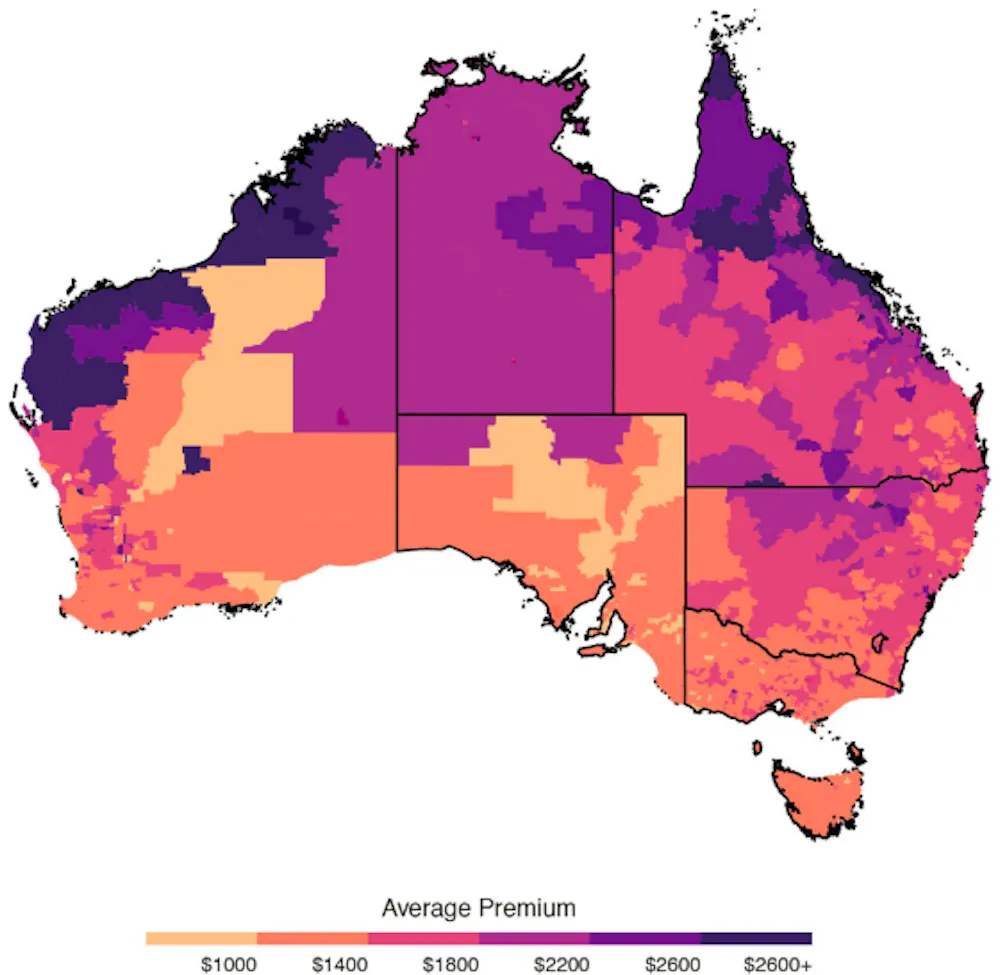
In 2017 the federal government tasked the Australian Competition and Consumer Commission to investigate insurance affordability in northern Australia, where destructive storms and floods are most common. The commission delivered its final report in 2020. It found the average cost of home and contents insurance in northern Australia was almost double the rest of Australia – $2,500 compared with $1,400. The rate of non-insurance was almost double – 20% compared with 11%.
Average premiums for combined home and contents insurance, 2018–19
ACCC analysis of data obtained from insurers., CC BY
While the areas now experiencing their worst flooding in recorded history aren’t part of the riskiest areas identified by the insurance inquiry, the dynamics are the same.
Those not insured or underinsured will be financially devastated. Insurance premiums will rise. As a result, more people will underinsure or drop their insurance completely, compounding the social disaster that will come with the next natural disaster.
So, what do about it?
Tackling insurance affordability
There are two main ways to reduce insurance premiums.
One is to reduce global warming. Obviously this is not something Australia can achieve on its own, but it can be part of the solution.
The other is to reduce the damage caused by extreme events, by constructing more disaster-resistant buildings, or not rebuilding in high-risk areas.
The federal government, however, has put most of its eggs in a different basket, with a plan to subsidise to insurance premiums in northern Australia.
This won’t do much for those affected by the current floods. It won’t even do much to solve the insurance crisis in northern Australia.
The reinsurance pool, a blunt tool
In the 2021 budget the federal government committed A$10 billion to a cyclone and flood damage reinsurance pool, “to ensure Australians in cyclone-prone areas have access to affordable insurance”. The legislation to establish this pool is now before parliament.
The ostensible rationale is that the government can drive down insurance costs for consumers by stepping in and acting as wholesaler in the reinsurance market, in which insurers insure themselves against the risk of crippling insurance payouts.
The idea is that discounted reinsurance will lead insurers to lower their premiums.
There is no guarantee, however, that insurers will pass on their cheaper costs to customers. This means the benefits of the pool are unclear.
So are its costs. Effectively, the government is shifting risk from insurers to itself, subsidising insurance premiums for those in some parts the country from the public purse.
The ACCC inquiry gave considerable attention to the idea of a reinsurance pool. While acknowledging there could be some benefits, it concluded the risks outweigh the rewards:
We do not consider that a reinsurance pool is necessary to address availability issues in northern Australia.
Targeting and mitigating
Above and beyond the aforementioned problems, there are two telling failures of the reinsurance pool plan.
First, subsidising insurance companies doesn’t target help to those who need it most: low-income households.
There is a growing body of research showing that natural disasters, and the ways governments respond to them, is contributing to greater inequality.
As the South Australian Council of Social Service makes clear in a report published this week, improving insurance access for people on low incomes at risk from natural disaster requires targeted support, such as promoting non-profit “mutual” insurance schemes.
Second, only mitigation can bring the overall cost of natural disasters down. Ways to do this include public works (building levees, upgrading stormwater systems, conducting planned burns) and improving buildings (reinforcing garage doors, shuttering windows, managing vegetation around homes, and so on).
The ACCC’s insurance report identifies a range of ways mitigation strategies can be tied into insurance pricing. Yet none of these has been incorporated into the Morrison government’s response to the insurance crisis.
There is little support for the reinsurance pool outside of the federal government. Neither the ACCC, the insurance industry nor community sector advocacy organisations support reinsurance as a meaningful solution.
A reinsurance pool for the whole of Australia?
For the areas of NSW and Queensland now flooded, as well as the rest of the country outside the ambit of the reinsurance pool, the relentless rise in insurance costs will continue, tipping ever more homes out of the insurance safety net.
We must find better solutions to the insurance crisis than what is being offered to northern Australia. A reinsurance pool cannot be a national solution because it isn’t the solution for northern Australia.
There are no cheap and easy solutions, but the terrain is clearly mapped out across an array of inquiries and reports into insurance and climate vulnerability. More than a blanket subsidy for the insurance industry, the time has come for climate vulnerability to be taken seriously by the federal government.