Home Blog Page 47

North Queensland with the state’s new pumped hydro storage project

Hydro to pump North Queensland jobs

Hydro to pump North Queensland jobs

More than 900 construction jobs will be created in North Queensland with the state’s first pumped hydro storage project in almost forty years reaching financial close. 

The Palaszczuk Government will invest $147 million to connect Genex’s Kidston Pumped Storage Hydro Project (K2-Hydro) to Queensland households and businesses.

Treasurer and Minister for Investment Cameron Dick said Genex achieving financial close confirmed the status of Queensland’s nation-leading renewable energy credentials.

“As part of our Economic Recovery Strategy to grow the renewable energy sector and the jobs that come with it, the Palaszczuk Government has played a crucial role in getting the Kidston Pumped Storage Hydro Project over the line,” the Treasurer said.

“This decision will further secure our strong renewables future in North Queensland and will unlock hundreds of renewables jobs.

“Beyond Kidston, the transmission infrastructure we are delivering has the potential to leverage hundreds of millions of dollars’ worth of new renewable investment in the North.

“As a government we are focused on driving investment, creating jobs and growth, and lowering electricity prices for Queensland households and businesses.”

Minister for Energy, Renewables and Hydrogen Mick de Brenni said the 250-megawatt project will help secure the future of North Queensland’s energy system with a reliable supply of dispatchable power.  

“As Queensland charges towards its renewable energy target, storage projects like Kidston will enable the continued investment in otherwise intermittent renewables,” Mr de Brenni said.  

“Our $147 million commitment will support publicly-owned Powerlink to build a 186-kilometre transmission line from Kidston to Mount Fox near Ingham, creating 400 jobs.

“Construction of the pumped hydro project will create a further 500 jobs, powering North Queensland’s economic recovery.”

The Kidston Clean Energy Hub will integrate large-scale solar and pumped storage hydro using an abandoned gold mine 270 kilometres north-west of Townsville.

Water pumped into its reservoir will store approximately 2000-megawatt hours’ worth of dispatchable electricity that can be delivered back to the electricity market when needed.

Genex CEO James Harding said the announcement marks an important step in the roll out of large-scale energy storage capability in the National Electricity Market.

“Financial close for the Kidston Pumped Storage Hydro Project is a monumental achievement and one Genex has been working towards for over five years,” Mr Harding said.

“Site preparation activities are now well progressed as we prepare for full scale construction activities over the next few months.

“I would sincerely like to thank the Queensland Government for the significant funding support and continued commitment to the Kidston project.”

The Kidston Pumped Storage Hydro Project and its associated transmission infrastructure is expected to be completed and feeding into the National Electricity Market by early 2025.

For more information, visit www.genexpower.com.au/250mw-kidston-pumped-storage-hydro-project.


JOINT STATEMENT
Treasurer and Minister for Investment
The Honourable Cameron Dick
Minister for Energy, Renewables and Hydrogen and Minister for Public Works and Procurement
The Honourable Mick de Brenni

US sanctions ISIS financial facilitators in Syria, Turkey

ISIS+ +1
ISIS

Today, the United States is designating three individuals and one entity connected to the Islamic State of Iraq and Syria (ISIS) to coincide with the 14th meeting of the Counter ISIS Finance Group, which plays a key role coordinating the Global Coalition to Defeat ISIS’ efforts to disrupt the group’s generation and transfer of resources.

Despite our defeat of ISIS’ territorial “caliphate” in Iraq and Syria, ISIS remains active and maintains connections to the financial system.  In countries throughout the Middle East, ISIS has relied on key money services business operators, like those designated today, that allow ISIS to obfuscate its transactions.  The Global Coalition to Defeat ISIS will continue to target ISIS’ illicit financial activities to include its disbursement of millions of dollars in cash reserves across the region.

Alaa Khanfurah is being designated pursuant to Executive Order (E.O.) 13224, as amended, for having assisted in, sponsored, or provided financial, material, or technological support for, or financial or other services to or in support of ISIS.  Khanfurah’s Turkey-based money service business transferred funds to ISIS members throughout Syria and sent thousands of dollars to an ISIS financial facilitator.

The Al-Fay Company and Idris Ali Awad al-Fay are being designated pursuant to E.O. 13224, as amended, for having assisted in, or provided financial, material, or technological support for, or financial or other services to or in support of ISIS.  Idris Ali Awad al-Fay, who is currently in Iraqi custody, used the Turkey-based Al-Fay Company to facilitate the global distribution of currency on behalf of ISIS.

Ibrahim Ali Awad al-Fay is being designated pursuant to E.O. 13224, as amended, for owning or controlling, directly or indirectly, the Al-Fay Company.  Ibrahim al-Fay, Idris al-Fay’s brother, manages the Turkey-based Al-Fay Company in Idris al-Fay’s absence.  Idris al-Fay and Ibrahim Ali ‘Awad al-Fay sent funds to ISIS.

The United States and other members of the Counter ISIS Finance Group remain committed to denying ISIS the revenue it needs to carry out its terrorist and criminal activities, as well as preventing the resurgence of the group.

Source: US Department of State

Voluntary Assisted Dying laws to be introduced to Queensland Parliament

Women+Assisted+Dying+ +1

The Premier: A bill to establish Voluntary Assisted Dying laws will be introduced to parliament next week.

Premier Annastacia Palaszczuk said the bill’s introduction fulfilled a commitment she made to the people of Queensland prior to the state election in October.

“For many, this will be the most important work this parliament will do,” the Premier said.

“We’re committed to delivering a $171 million investment in palliative care options but many people who have watched a loved one suffer feel passionately that there must be a dignified alternative.

“Equally there are those whose opposition is as deeply and sincerely felt.

“That is why, when the time comes, Government MPs will vote according to their conscience.

“This must be beyond politics.

“I urge all Queenslanders to follow the debate and participate in it with the utmost respect for other people and other points of view.”

The Premier said the community could now read the Queensland Law Reform Commission’s report on a legal framework for voluntary assisted dying and the QLRC’s draft legislation would be considered by cabinet.

The bill will be introduced to parliament and referred to the Health and Environment Committee for further public consultation.

“I thank the QLRC and their support team for their diligent work and wide-ranging consultation,” the Premier said.

“They worked hard to have the draft bill ready by the May 10 deadline.

“The commission listened to a range of health practitioners, organisations that support or oppose voluntary assisted dying, religious bodies, unions, legal bodies, members of the public and many more.

“The result is proposed legislation that QLRC has intended to be ‘compassionate, safe and practical’.

“All interested parties will be able to have their say on the final shape of any legal framework through the committee process.

“I urge all Queenslanders to follow discussion about this very important topic and be respectful in how they engage with others.”

Deputy Premier Steven Miles said the proposed framework considered Queensland’s decentralised population.

“Similar legislation has been enacted in other jurisdictions,” the Deputy Premier said.

“But as the QLRC rightly points out, what works in New Zealand may not necessarily work in a large and decentralised state like Queensland.

“Any legislation needs to meet the needs of our diverse population and take account of access to specialists.

“It must be fair and equitable for all Queenslanders.

“The draft legislation recognises everyone has an inherent dignity and should be treated with respect and their autonomy when making end-of-life choices should also be respected.”

Health Minister Yvette D’Ath said previous work of parliamentary committees had found health practitioners are generally supportive of voluntary assisted dying and support it being legalised in Queensland.

“It’s important there are appropriate safeguards in place to protect both those who seek to use voluntary assisted dying as an end-of-life option and medical practitioners and entities asked to participate in the process,” the Minister said.

“That’s what the QLRC has sought to accomplish with a staged process.

“Under the draft laws, more than one medical opinion is needed and there are requirements around eligibility and decision-making capability as well as provisions for medical practitioners to conscientiously object.

“These laws are also being developed at the same time as we’re advancing our election commitment to invest $171 million to deliver more palliative care options across Queensland.”

Attorney-General Shannon Fentiman said the QLRC had done an outstanding job in considering the wide views of a diverse range of stakeholders.

“This is a challenging area of law with considerations needing to be given to state and federal legislation,” the Attorney-General said.

“It is such an important piece of legislation for so many Queenslanders and we need to get it right.

“There will be further significant consultation and I encourage anyone who wants to have a say to do so through the committee process.”

The QLRC has recommended that to access voluntary assisted dying, a person must:

  • Have an eligible condition that is advanced and progressive and expected to cause death within 12 months;
  • Have a capacity to make a decision around end-of-life choices;
  • Be acting voluntarily and without coercion;
  • Be at least 18 years of age; and
  • Satisfy residency requirements including being an Australian citizen or permanent resident and have been a resident of Queensland for at least a year

Under the process proposed by the QLRC, a health practitioner must assess a request to access voluntary assisted dying and if that’s approved, it’s referred for further assessment.

JOINT STATEMENT Queensland Government
Premier and Minister for Trade
The Honourable Annastacia Palaszczuk
Deputy Premier and Minister for State Development, Infrastructure, Local Government and Planning
The Honourable Dr Steven Miles
Minister for Health and Ambulance Services
The Honourable Yvette D’Ath
Attorney-General and Minister for Justice, Minister for Women and Minister for the Prevention of Domestic and Family Violence
The Honourable Shannon Fentiman

Hanson Young, Billions of dollars are going towards dirty fossil fuels

Sarah+Hanson+Young+ +1
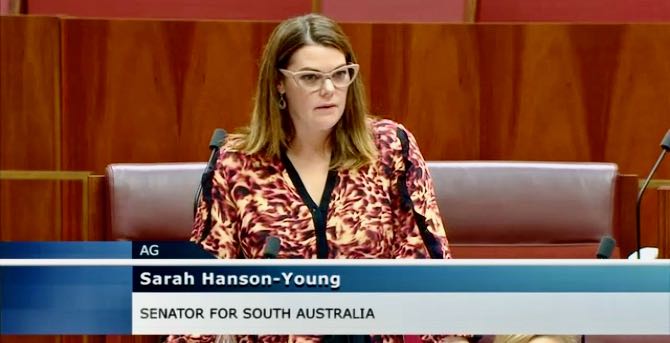
Senator Sarah HANSON-YOUNG (South Australia)

Senator: I rise today to speak in relation to this piece of legislation, the Northern Australia Infrastructure Facility Amendment (Extension and Other Measures) Bill. I must say I find it pretty bad practice for the Senate to be debating this today without first sending it to a Senate inquiry. This bill and its ramifications on our climate, our environment and our communities should be being inquired into. It seems pretty clear that the government is desperate to rush this through as quickly as they can. ‘Why?’ you may say, Madam Acting Deputy President. It’s pretty easy—because the minister in charge has made a promise to his mates in the fossil fuel industry that they can get their claws into some of this money, the $5 billion that’s going to be extended to allow the fossil fuel industry to get another handout from the taxpayer, to prop up what is a polluting and incredibly damaging industry for our climate, our environment and our children’s future.

WW3 Is A Chinese Bioweapon, Infowars

Virus+Army+ +1
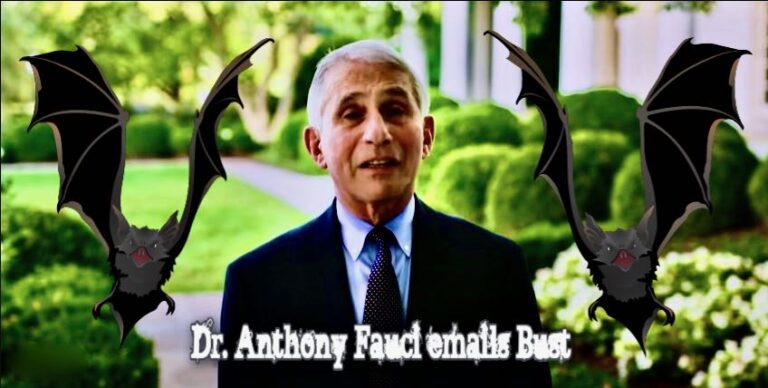
While gullible Americans fight a war with each other based on lies. And those lies poison the Democratic process that is coming apart at the seams. Covid 19, Dr. Fauci’s gain of function research biological weapon was just the beginning.


 Communist China had discussed the use of coronaviruses for biological warfare in 2015, according to documents.

According to a document obtained by the US State Department and first reported by the investigative journalism of the Australian. 18 Chinese People’s Liberation Army scientists and health officials examined the weaponisation of SARS viruses five years before the COVID-19 pandemic. Predicting a third world war would be fought with biological weapons.


In an update to the document in 2018 published in numerous international publications. The military scientists had found four new pathogens and ten new bacteria while ‘more than 1,640 new viruses were discovered using metagenomics technology’.The document claims that bioweapons will be ‘the core weapon for victory’ in a third world war. And then goes on to layout the ideal conditions to release a bioweapon and cause maximum damage.

Stating that the bioweapons should be released at night, or at dawn, dusk, or under cloudy weather, with ‘a stable wind direction…so that the aerosol can float into the target area’. Resulting in a surge of hospital treatment, causing the enemy’s medical system to collapse’. An exhausted medical system already tested under Covid 19 and ultimately overseen by the World Health Organization Chinese ally.

Story Jon Bowne Source: Infowars

COVID-19 restrictions will be temporarily tightened across Greater Sydney

Premier+of+NSW+ +1
Given the latest cases of community transmission and updated health advice from the Chief Health Officer Dr Kerry Chant, COVID-19 restrictions will be temporarily tightened across Greater Sydney.

The following measures will be effective from midday today, 6 May 2021 (enforceable from 5pm) until 12:01am Monday, 10 May for the Greater Sydney region (including Wollongong, Central Coast and Blue Mountains):

  • visitors to households will be limited to 20 guests – including children
  • masks will be compulsory on public transport and in all public indoor venues, such as retail, theatres, hospitals, aged care facilities and for front-of-house hospitality staff (except in a hospitality venue when eating or drinking)
  • drinking while standing up at indoor venues will not be allowed
  • singing by audiences at indoor shows or by congregants at indoor places of worship will not be allowed
  • dancing will not be allowed at indoor hospitality venues or nightclubs however, dancing is allowed at weddings with a strong recommendation that no more than 20 people should be on the dancefloor at any one time
  • visitors to aged care facilities will be limited to two people.

It is also strongly recommended the community avoids mingling in large groups over the coming days, and is careful not to put our most vulnerable at risk.

Premier Gladys Berejiklian said the three day restrictions would help reduce the risk of a super spreading event.

“These measures are proportionate to the risk and will help reduce further cases of community transmission,” Ms Berejiklian said.

“To allow our health authorities to do their excellent work it is critical the community continues to keep their physical distance, get tested with even the mildest of symptoms and importantly continues to use the Service NSW app to check into venues.”

Health Minister Brad Hazzard said there are more than 300 COVID-19 testing locations across the state including new pop up sites in the Eastern Suburbs.

“Anyone experiencing any cold or flu-like symptoms, even if they are mild, must isolate immediately, get tested and continue to isolate until a negative result is received,” Mr Hazzard said.

“It is also important to remember that even if you have had your first or second dose of the COVID-19 vaccine you must still come forward for testing if you have any symptoms.”

Chief Health Officer Dr Kerry Chant said high testing rates are critical to NSW Health’s efforts to identify COVID-19 cases and prevent the virus from spreading.

“We are asking the community to be on alert, continue to practice COVID-Safe behaviours and stay home and get tested if they’re unwell,” Dr Chant said.

Find your local COVID-19 testing clinic.

Source: NSW Government

United States is the largest contributor to COVAX, COVID-19 vaccines worldwide.

syringe 4966959 640

U.S., COVAX support COVID-19 vaccinations worldwide

The United States is the largest contributor to COVAX, a global initiative to equitably distribute COVID-19 vaccines worldwide..embed-container { position: relative; padding-bottom: 56.25%; height: 0; overflow: hidden; max-width: 100%; } .embed-container iframe, .embed-container object, .embed-container embed { position: absolute; top: 0; left: 0; width: 100%; height: 100%; }

COVAX is the vaccines pillar of the Access to COVID-19 Tools (ACT) Accelerator

The ACT Accelerator is a ground-breaking global collaboration to accelerate the development, production, and equitable access to COVID-19 tests, treatments, and vaccines. COVAX is co-led by Gavi, the Coalition for Epidemic Preparedness Innovations (CEPI) and WHO. Its aim is to accelerate the development and manufacture of COVID-19 vaccines, and to guarantee fair and equitable access for every country in the world.


Why we need COVAX

Developing a vaccine against COVID-19 is the most pressing challenge of our time – and nobody wins the race until everyone wins.

The global pandemic has already caused the loss of hundreds of thousands of lives and disrupted the lives of billions more. As well as reducing the tragic loss of life and helping to get the pandemic under control, introduction of a vaccine will prevent the loss of US$ 375 billion to the global economy every month. Global equitable access to a vaccine, particularly protecting health care workers and those most-at-risk is the only way to mitigate the public health and economic impact of the pandemic.


Source: WHO

In March, the United States government contributed $2 billion in support of COVAX, but more funding is needed.

“People everywhere should have access to rigorously tested, safe, and effective COVID-19 vaccines,” Secretary of State Antony J. Blinken said. “The faster we do all this, the more lives we save, and the quicker our communities and economies can recover.”

Source: Video and Agenda US State Department

President Harris and Biden Delivers Funds to Support the Health of Older Americans

0

Biden+Harris+ +1

Today the U.S. Department of Health and Human Services Administration for Community Living is releasing $1.4 billion in funding from the American Rescue Plan for Older Americans Act programs, including programs to support vaccine outreach and coordination, address social isolation, provide family caregiver support, and offer nutrition support. It will also fund justice programs to ensure the safety and protection of older adults.


The funding will be distributed as follows:


  • $750 million for meals for older adults. With this funding for Older Americans Act nutrition programs, states will be able to continue home-delivered meals as well as “drive-through” or “grab-and-go” meals for older adults who typically would participate in meal programs at community centers that have been closed due to the pandemic. It will also allow states to re-open meal program locations safely that might have closed during the pandemic.  
  • $460 million for Home and Community-Based Services (HCBS) through the Older Americans Act. This funding provides help to those who need it for help with household chores and grocery shopping; transportation to essential services (such as grocery stores, banks, or doctors); and case management. The funding can also be used to vaccinate older Americans and address the effects of extended social isolation.
  • $44 million for evidence-based health promotion and disease prevention. This includes programs to address fall prevention, managing a chronic disease, and programs to detect and reduce depression among older Americans. 
  • $145 million to help family caregivers support their loved ones. This funding for the National Family Caregiver Support Program will assist family and informal caregivers to provide in-home supports, including counseling, respite care, training and more.
  • $10 million to safeguard the health and welfare of residents in long-term care facilities. These funds will support State Long-term Care Ombudsman programs to advocate on behalf of residents of long-term care facilities across the country. This money will allow ombudsman programs that are advocating for residents to safely go back into facilities after they had to discontinue that support during the pandemic, and continue to promote the health, safety, welfare, and rights of residents.


The announcement coincides with today’s presidential proclamation honoring May 2021 as Older Americans Month. The proclamation recognizes that older Americans and families have faced substantial challenges during the last year, and their resilience and strength have made our country stronger.

Older adults deserve to age with dignity and have equitable access to the long-term care system, regardless of race, sexual orientation or gender identity, disability, or socioeconomic status. The Biden-Harris Administration is committed to expanding access to health care, nutrition services, caregiving, and opportunities to age in place for all older Americans. In the first 100 days, the Biden-Harris Administration has taken significant steps to address the health and security of older adults. In addition to the funding announced today, the Administration has:

Expanded Funding for Home and Community Based Services. The American Rescue Plan provides states with billions in additional Medicaid funding to help support their home and community-based services programs. The additional Medicaid funding will help expand access to home and community-based services for older adults and ensure that caregivers are fairly compensated for their work.

Increased Access to Affordable Housing for Seniors. In January, the Department of Housing and Urban Development (HUD) announced $150 million in available funding to create new deeply affordable housing for seniors with extremely low incomes through the Section 202 Supportive Housing for the Elderly program. The program supports the construction of new rental homes, as well as their ongoing management and affordability through long-term project-based rental assistance. This will expand access to critically-needed affordable housing for our nation’s seniors.

Provided COVID-19 Vaccinations and Testing for Elderly Residents of HUD-Assisted Housing. President Biden delivered on his promise to expand the supply of COVID-19 vaccines and to make every person age 16 and older eligible for vaccines. However, too many Americans—especially older Americans—continue to face barriers to accessing COVID-19 vaccines. On Friday, April 30, the Secretaries of HUD and HHS issued a joint letter directing community health centers and HUD’s network of housing agencies, housing owners, and programs to provide COVID-19 vaccinations and testing to HUD-assisted households, including elderly residents in HUD’s senior and public housing. HUD and HHS regional and field staff will facilitate these partnerships, including coordinating on-site vaccine clinics in HUD-assisted housing serving the elderly.

Expanded Nutrition Assistance for Low-Income Seniors. The Commodity Supplemental Food Program (CSFP) provides nutritious, domestically-sourced USDA foods to low-income persons 60 years or older. The American Rescue Plan provided nearly $37 million to expand the reach of CSFP by fulfilling all 2021 requests from states to serve more seniors and adding the Wichita and Affiliated Tribes to the program. This expansion, along with similar actions in other nutrition programs including SNAP that serve this population, will help combat food insecurity among seniors during the pandemic. In addition, USDA Food and Nutrition Service (FNS) is ensuring those who rely on CSFP don’t unintentionally lose access to their benefits due to the financial relief they receive through the American Rescue Plan. FNS is providing guidance to states and Tribal nations to exclude stimulus funds and child tax credits provided by the American Rescue Plan from income when determining eligibility for CSFP. 

Proposed Robust Investments in the Caregiving Economy. Before the COVID-19 pandemic, researchers and policymakers warned of an imminent long-term care crisis. Prior to 2020, it was estimated that more than half of people turning 65 would need long term services and supports (LTSS). Older adults can receive these types of services in a variety of places: in their homes, nursing homes, or assisted living facilities. The American Jobs Plan proposes to invest an additional $400 billion to expand access to these long-term services and supports for older Americans. This investment will also support well-paying caregiving jobs that include benefits and the ability to collectively bargain, building state infrastructure to improve the quality of services and to support workers. The funding will take significant steps to help older adults get high-quality care in their homes and communities.


Source: White House under creative commons

Assistance for Queensland’s disaster-impacted primary producers up to $75,000 support

Queensland+Floods+ +1
Queensland Floods
Photo YouTube

Primary producers across Queensland hit by recent floods and cyclones can now access Extraordinary Disaster Assistance Grants of up to $75,000 to support their recovery journey.

Assistance is being provided through Category D of the jointly-funded Commonwealth-State Disaster Recovery Funding Arrangements (DRFA).

Federal Minister for Emergency Management David Littleproud said the grants are in addition to the freight subsidies and concessional loans already available to disaster-impacted primary producers in Goondiwindi, Cairns, Cassowary Coast, Hinchinbrook, Mareeba and Tablelands local government areas.

“The floods in Southern Queensland in late March hit farmers hard when they were already vulnerable following several years of drought,” Minister Littleproud said.

“Many of these farmers were looking forward to their first year of good crops, and now they face the loss of income from destroyed crops and reduced yields.

“Other primary producers in the region have also been impacted by the flooding with stock losses and damage to fencing and other infrastructure so these grants will provide some welcome relief.

“The Australian and Queensland Governments had already approved grants of up to $25,000 for the hardest hit producers following Tropical Cyclone Niran, and now we are extending those to up to $75,000 as well.

“These grants won’t just help the farmers, they will provide a valuable financial boost for communities that have also felt the economic impacts of COVID-19.

“We will ensure these impacted communities are not forgotten or left to fend for themselves.”

Queensland Minister for Agricultural Industry Development and Fisheries and Minister for Rural Communities Mark Furner said the grant assistance would help take the sting out of these recent natural disaster events for primary producers.

“Many Queensland communities experienced record-breaking rain in March, and we know many farmers in these areas suffered huge losses,” Mr Furner said.

“The damage to machinery and fencing, along with the loss of crops and top-soil from paddocks for many farmers means the road to recovery won’t be a short one.

“Our struggling producers have a massive clean-up and recovery job ahead of them following the floods and Tropical Cyclone Niran, so I’m grateful Queensland’s request for funding was approved by the Prime Minister.

“These Category D grants of up to $75,000 will help those impacted primary producers get back on their feet as soon as possible.

“The Queensland and Australian Governments remain committed to helping our communities recover from these natural disasters and we will continue to work with impacted councils and state agencies to provide assistance and support where it’s needed.”

Information on disaster assistance can be found on the Australian Government’s Disaster Assist website at www.disasterassist.gov.au and the Queensland Reconstruction Authority’s website at www.qra.qld.gov.au.

For more information on grants for primary producers visit www.qrida.qld.gov.au or call 1800 623 946, and for information on freight, subsidies visit www.daf.qld.gov.au or contact the Customer Service Centre on 13 25 23.

Grilling down on the Left’s “beef” with cattle ranchers

cow 3089259 640
Cows 
Image by ❤️A life without animals is not worth living❤️ from Pixabay 

America’s farmers and ranchers are under attack.

While they tirelessly work to provide food for millions, the Green Left has demonized them as so-called “Destroyers of the Earth.” The EPA, DOI, and UN repeatedly identify meat producers as devourers of wildlife habitat in an attempt to punish them through regulation. And Rep. Alexandria Ocasio-Cortez has even raised alarm over excessive cattle farts she believes are contributing to a climate apocalypse.

Yet the narrative that the Left is trying to spin is not the real story. In actuality, cattle ranchers and farmers play an important role in both protecting the environment and feeding the world.

CFACT’s Gabriella Hoffman showcases this real story behind cattle ranching and farming in her latest episode of the Conservation Nation series, titled “Cows Keep Florida Green.”

.embed-container { position: relative; padding-bottom: 56.25%; height: 0; overflow: hidden; max-width: 100%; } .embed-container iframe, .embed-container object, .embed-container embed { position: absolute; top: 0; left: 0; width: 100%; height: 100%; }

YouTube Cows Keep FL Green! Conservation Nation

Hoffman interviews ranchers from the Sunshine State who explain that cows actually help diverse number of species thrive, by creating paths through dense foliage that critters would otherwise stay away from.

Additionally, the ranchers have an economic incentive to protect the lands and waters that are helping to serve their livelihoods. If the ranchers were not there managing the land, the State would be forced to come in and manage the property at much higher expense and with far less benefit to both the environment and humanity.

It’s time we start celebrating our farmers and ranchers for both feeding the world and helping our environment.

So, the next time you chow down on a juicy steak or burger, remember, there’s a rancher out there working hard who deserves our thanks, not our condemnation!

Source CFACT