Of the 10 resolutions put forward at the meeting, nearly half had at least tangentially to do with climate, including ones to force the company to report on lobbying, and on “environmental lobbying” in particular. Most of these passed despite leadership opposition.
For its part, CFACT had a front-row seat to the Exxon theatrics. Committee representatives participated in the annual shareholders meeting along with its allies from the National Center for Public Policy Research and JunkScience.com. These three free-market allies banded together to attempt to inject a point of view that contrasted sharply with those seeking to pull the corporate giant further to the Left.
Steve Milloy, a close ally and good friend of CFACT who heads Junkscience.com, delivered a passionate and well-reasoned comment to the board urging passage of a resolution he authored calling for the disclosure the true costs of emissions cuts and climate hysteria. Said Milloy:
This year I proposed that Exxon push back on climate idiocy by disclosing the actual costs and benefits of cutting emissions. The costs of emissions cuts, you see, are very high and the benefits are zero. But the ever-obtuse [Exxon Chairman] Mr. Woods refuses to acknowledge these realities. Instead, he fantasizes about appeasing the crazed political radicals who are the mortal enemies of us genuine shareholders.
Despite support from CFACT and NCPPR, Milloy’s proposal unfortunately did not pass.
Just prior to the meeting, Exxon leadership sought to assuage Green activists by promising to put a “climate expert” on its Board, no doubt hoping this gesture would help fend off the “Engine No. 1” infiltrators.
It didn’t work.
The pathetic overture did, however, prompt CFACT to challenge their appeasement-minded approach. I submitted a question during the Q&A session asking to know, “Why is ExxonMobil choosing to put a climate activist on the Board to appease green activists who want to see the company’s long-term profitability diminish?”
With at least two new members on its board certain to champion the Green cause, Exxon will almost certainly have tough times ahead. The company lost a record $22 billion last year, and likely will lose more unless it decides to fight back.
CFACT of course will be there, along with its allies, pressuring the company to take a stand. At some point, Exxon leaders need to understand there is no achieving “Peace in our Time” with a Green adversary so vicious. The question is, will the company’s top brass find it in them to toss its Chamberlains and put in some Churchill’s?
The Commonwealth’s COVID-19 vaccination program will again expand in Victoria to include everyone aged 40 years and over.
From tomorrow, Friday 28 May more than half of all Victorians will be eligible to receive either the Pfizer or AstraZeneca COVID-19 vaccines – helping protect themselves, their loved ones and our whole community.
Victorians aged 40-49 years will be able to access to the Pfizer vaccine at state-run vaccination sites, in line with advice from ATAGI.
People aged 40-49 years receiving the Pfizer vaccine must book an appointment by calling the Coronavirus Hotline on 1800 675 398 – and can do so now – this is essential as not all vaccination centres will have the Pfizer vaccine available.
Victorians aged 50 years and over will continue to receive the AstraZeneca vaccine, either through a state-run vaccination centre or a participating GP clinic – as recommended by ATAGI.
While many vaccination centres are accepting walk-in appointments for people aged 50 years and over, bookings via the 1800 675 398 hotline are preferred.
Since launching the first high-volume vaccination centres, the state-run program has expanded rapidly to more than 30 hubs across both metropolitan Melbourne and regional Victoria.
Victoria has seen record demand this week for vaccinations and forward bookings, and the Victorian Government is grateful for the public’s response and patience.
For more information on Victoria’s vaccination centres, including locations and opening hours, visit coronavirus.vic.gov.au/vaccination-centres. For more information on the Commonwealth’s COVID-19 vaccination program, visit health.vic.gov.au.
Quotes attributable to Victorian Health Minister Martin Foley
“Almost 400,000 Victorians have already been vaccinated through one of our vaccination centres – it’s now time to open the doors to everyone aged 40 years and over.”
“This is a significant step forward in our vaccine rollout, as we work towards our goal of vaccinating as many eligible Victorians as possible.”
“The latest outbreak is a reminded that the best thing you can do to keep your community safe as we head into winter is to go out and get vaccinated.”
The Federal Court today dismissed a bid by a group of Australian teenagers seeking to prevent federal environment minister Sussan Ley from approving a coalmine extension in New South Wales.
While the teens’ request for an injunction was unsuccessful, a number of important developments emerged during the court proceedings. This included new figures on the financial costs of climate change to young Australians over their lifetimes.
An independent expert witness put the loss at between A$125,000 and A$245,000 per person. The calculation was a conservative one, and did not include health impacts which were assessed separately.
The evidence was accepted by both the federal government’s legal team and the judge. That it was uncontested represents an important shift. No longer are the financial impacts of climate change a vague future loss – they’re now a tangible, quantifiable harm.
Calculating climate costs
The case involved a proposed extension to Whitehaven’s Vickery mine near Gunnedah in northwest NSW. The expansion would increase the total emissions over the life of the mine to 366 million tonnes.
To help in its deliberations, the court called on an independent expert witness, Dr Karl Mallon, to estimate the extent to which climate change would harm the eight young Australians aged 13 to 17, and by extension all children in Australia.
Mallon is chief executive of Climate Risk, a consultancy specialising in climate risk and adaptation software which advises governments and businesses around the world. This is the first time anywhere in the world this technique for quantifying harm in climate litigation has been applied and accepted.
Mallon first assumed a level of ongoing greenhouse gas emissions, with reference to standard scenarios used by the Intergovernmental Panel on Climate Change (IPCC). The scenarios range from futures with ambitious emissions reductions to those with very little.
So Mallon used the IPCC’s high-end emissions scenario known as RCP8.5 – the only one consistent with increasing coal production.
Second, Mallon drew on atmospheric modelling to provide projections for Australia on climate effects such as changes in temperature and rainfall. He then quantified the financial and health costs of those changes across three “epochs”, or time periods, in the futures of young people today.
The proposed mine expansion would mean increased coal production, and emissions.
Epoch 1: loss of property wealth
The first epoch spanned the decade to 2030. Mallon limited his analysis to how climate change will affect housing markets, leading to the loss of family property wealth.
Some homes are particularly vulnerable to extreme weather and climate risks such as bushfires, flooding, coastal inundation, cyclones and subsidence. Mallon’s modelling found about 5% of family homes would be affected damaged by climate change and associated extreme weather events this decade.
Already in some areas insurance premiums are becoming unaffordable and the problem will likely worsen as climate change unfolds. This will reduce the market value of high-risk properties.
Mallon estimated an average loss to the value of family homes by 2030 at about A$40-85,000 per child.
Epoch 2: reduced earnings
This epoch spanned the years 2040 to 2060, when the applicants would be aged between 20 and 58 years. This part of Mallon’s analysis focused first on loss to prosperity – how climate change would affect a young person’s ability to work.
On hot days, the body must expend extra energy dissipating heat (usually by sweating). As the International Labour Organisation has noted, exposure to these conditions for extended periods is risky, and to endure them people must drink water and take regular breaks, leading to lower productivity.
Rising temperatures under climate change will increase the number of days where the ability to work outside safely will be hampered. Mallon found around 30% of today’s children will work in climate-vulnerable jobs, such as agriculture and construction.
People in these jobs will be less productive, and the cost to employers will eventually be passed to employees through lower wages. Mallon estimated this means a loss of about A$75,000 over a young person’s working life.
Climate change and associated extreme weather will also disrupt the infrastructure businesses rely on, such as electricity, telecommunications and transport. Again, these productivity losses will eventually be reflected in employee wages.
In Mallon’s opinion, repeated extreme weather damage to business continuity will lead to an estimated average A$25,000 annual loss per person over the working life of a child today.
Climate change will also deliver general “hits” to the economy. Mallon’s analysis here focused only on agricultural and labour productivity, and drew on existing research to estimate losses of about A$60,000 per person over their lifetimes.
The bottom line? Mallon’s partial, conservative calculations found today’s children will forego between A$125,000 and A$245,000 each due to the climate impacts noted above. He puts the most likely cost at around A$170,000 for each child.
Natural disasters such as flood and fire will lead to economic disruption.
Epoch 3: risks to health
The third epoch spanned 2070 to 2100, when today’s young people will be in the later stages of their lives. Here, Mallon’s analysis focused on the health impacts of higher temperatures. These will lead to increased heat stress, ambulance call outs, presentations to emergency departments and hospitalisations.
Older people are more vulnerable to the health effects of higher temperatures, and also more likely to die. Mallon found one in five of today’s children will likely be hospitalised due to heat stress in their senior years.
Act hard and fast
In Australia and around the world, people concerned about climate change are increasingly using litigation in a bid to force governments to act.
This means we can expect to quantification of the financial costs of climate change being presented more often in our courts.
Mallon’s calculations do not cover all harm that will be caused by climate change – only that for which detailed accessible modelling exists. The full financial and health costs will inevitably be far greater than the scope of his assessment.
Global emissions must urgently be cut to net-zero to avert the most disastrous climate change impacts. The arguments in favour of radical mitigation action, including the personal financial risks, grow ever-more compelling by the day.
This story is part of a series The Conversation is running on the nexus between disaster, disadvantage and resilience. You can read the rest of the stories here.
More than 18,000 Queensland businesses affected by natural disasters have had their annual water licence fees waived to help them get back on their feet.
Minister for Water Glenn Butcher said approximately $1.5 million in water licence fees have been waived for the 2020-21 financial year in drought and disaster declared areas.
“In the wake of ex-Tropical Cyclone Niran, and as 67 per cent of Queensland continues to be in drought, our farmers are doing it tough,” Mr Butcher said.
“As the Palaszczuk Government delivers Queensland’s plan for economic recovery from the global COVID-19 pandemic, we are going to need our traditional strengths like agriculture.
“That’s why we’re assisting 1000 agricultural businesses rebuild after ex-Tropical Cyclone Niran, by waiving around $90,000 in water licence fees across the affected region for the 2021-22 water year.
“From 1 March 2021, more than 17,000 businesses in drought-declared parts of the State will also have their annual water licence fees waived in the 2021-22 financial year.
“With another 70 stock or domestic licence applications included in the fee waivers, we’re covering approximately $1.4 million to assist in Queensland’s drought recovery.
“The drought continues to have a serious impact on our state’s agricultural producers and Queensland’s regional development and the Palaszczuk Government will continue to support the industry to survive and thrive.”
Mr Butcher said this support was in addition to the already announced discounts for irrigators across Queensland.
“These waivers build on our election commitment to deliver a 15 per cent decrease in irrigation water charges for farmers and a 50% decrease in irrigation water charges for fruit and vegetable growers – where the Queensland government sets prices.
“The discounts will commence in the 2021-22 financial year and be applied for three years – through until the end of the 2023-24 financial year.
“We’re doing this because the Palaszczuk Government knows a strong agriculture industry means a strong Queensland economy.”
Affected water licence holders will be notified of fee waivers with a letter at the time they would ordinarily receive their water licence fee invoice.
Minister for Regional Development and Manufacturing and Minister for Water
The Honourable Glenn Butcher
Water fee waivers support drought and disaster recovery
Today on TRUNEWS, host Edward Szall provides the latest in the global response to the COVID pandemic, including bribing kids with free ice cream if they take the vaccine. The team also looks at a recent interview w Nobel Prize winner AIDS pioneer Luc Montagnier, who passionately argues that the RNA vaccine is creating mutant variants meant to produce extreme symptoms and death.
Edward Szall, Doc Burkhart. Airdate 5/24/21.
HIV Research Pioneer Luc Montagnier Warns Vaccines Are Causing New Pandemic
Joe Biden last week removed sanctions against Russian companies to allow completion of the massive Nord Stream 2 wind turbine and solar energy project so that Russia can supply this renewable energy abundance to U.S.-allied nations in western Europe. Gotta fight global warming and reverse climate change, don’t ya know!!
Oh, wait. Let me rephrase that paragraph:
President Joe Biden recently removed economic sanctions against Russian companies to allow completion of a massive Nord Stream 2 wind turbine and solar energy GAS PIPELINE project so that Russia can supply this renewable FOSSIL FUEL energy abundance to U.S.-allied nations in western Europe. Gotta fight global warming and reverse climate change, don’t ya know!!
The opening paragraph, of course, is incorrect; the latter paragraph above is the accurate account of what occurred.
This incident reveals so much about the political and media class in America, it is hard to know where to begin. There are endless adjectives to describe this action by the Biden administration: cynical, dishonest, unserious, unprincipled, weak, hypocritical and, yes — cruel.
Secretary of State Anthony Blinken explained the president’s waiver of sanctions by saying the “actions demonstrate the administration’s commitment to energy security in Europe.” The administration’s “commitment” to America’s energy security, by contrast, is the growing problem.
The first thing Joe Biden did as president, on the afternoon of his inaugural, was cancel the Keystone XL Pipeline project that was to transport oil from Canada through the U.S. Up to 10,000 current and future jobs, many of them union labor, were canceled with that action, and gas prices have been increasing ever since from this and other actions.
The anti-domestic energy policies of President Biden continued, including halting new energy leases on federal lands, which further harms workers in communities in New Mexico, Texas and other energy-producing states.
Joe Biden and the global warming crusaders advising him have made the trade-off that American jobs and economic well-being must be sacrificed to keep the planet from warming another degree in temperature in the next 30 to 80 years — and also because their wealthy Green donor class demands climate action. That is, save the planet from climate changing to the point of what they claim is an “existential threat” for the first time in the 4.5 billion years of Earth’s existence.
For the Biden administration, cancelling energy pipelines and losing American jobs and livelihoods do not matter in the cause of fighting climate change; but allowing Russia to complete its pipeline to sell more product that is supposedly harming the planet and threatening our existence is warranted. Our German and other European allies are happy. Russia’s president-for-life, Vladimir Putin, also is happy with our president’s action, even though the media and other political opponents (including Biden) kept telling us he is modern evil personified, who tried to “influence” American elections.
President Biden’s removal of sanctions on Russian companies, primarily the majority state-owned corporation, Gazprom, will ensure completion of the Nord Stream 2 pipeline and reverses the policy imposed by President Trump and Congress. Among President Trump’s concerns was European nations and fellow members of the North Atlantic Treaty Organization (NATO), a military alliance with the U.S., should not be dependent on adversarial Russia for their energy. Mr. Trump also wanted to Europe to instead purchase more of natural gas from the U.S., which helps American workers and the larger economy.
With Mr. Biden’s action to remove sanctions and enable the gas pipeline to proceed, it turns out Vladimir Putin may not be such a bad guy after all, and has a new friend in the White House.
Even more cynical, Biden’s action indicates carbon emissions and climate change are no so bad, either.
This pipeline episode is a microcosm of the larger fraudulence and dishonesty of climate change policies and politics. If Joe Biden, Kamala Harris, John Kerry, et. al., were genuine about climate, then the administration what have retained sanctions on this pipeline. Moreover, they would be much tougher on China for the multitude of coal plants it is constructing domestically and world-wide.
Instead, the Biden administration is intent on damaging (uh, “transforming”) our own country and preventing smaller, developing nations from raising their living standards by accessing more oil and gas through World Bank financing and other means, but is all about appeasing larger nations’ energy appetites.
The politically powerful and financially robust climate change industry is what drives the Biden administration’s green policies, which are aimed at American workers and our own living standards. But Joe Biden and his crew dare not upset alleged climate malefactors like Russia, China, Iran, and others, which further demonstrates how unserious is any “threat” of continual, natural climate change on humanity and the planet.
Peter Murphy is Senior Fellow at CFACT. He has researched and advocated for a variety of policy issues, including education reform and fiscal policy, both in the non-profit sector and in government in the administration of former New York Governor George Pataki. He previously wrote and edited The Chalkboard weblog for the NY Charter Schools Association, and has been published in numerous media outlets, including The Hill, New York Post, Washington Times and the Wall Street Journal. Twitter: @PeterMurphy26 Website: https://www.petermurphylgs.com/
On the advice of public health experts, from 6pm tonight private gatherings in the home will be limited to five visitors per day, public gatherings will be limited to 30 people and face masks will need to be worn indoors, unless an exemption applies. The face mask requirement applies to everyone aged 12 years and older. As public health officials work to pinpoint the source of these latest cases, additional COVIDSafe measures will be put in place across Greater Melbourne to help keep Victorians safe.
These additional measures are an important extra precaution while we await the results of testing and undertake widespread contact tracing to stamp out the virus.
Schools and workplaces will remain open with the current restrictions that are in place. Depending on the workplace, this includes COVIDSafe measures and in some cases, a density requirement. There are no changes to existing density rules.
Victorians who live in Greater Melbourne and need to travel to regional Victoria can still do so however, the restrictions travel with them.
For example, if you visit someone outside of metropolitan Melbourne, they must not have more than five visitors to their home in that day. If you attend a public gathering outside of Greater Melbourne, it must not be bigger than 30 people.
Victorians visiting regional Victoria from Melbourne will also need to wear a face mask when indoors even when outside of metropolitan Melbourne, unless an exemption applies.
Keeping our more vulnerable community members safe is always our priority, which is why hospital and aged care visitor restrictions will also now apply state-wide.
Use of the Service Victoria QR code service will still be mandatory in all venues and facilities required to have mandatory electronic record keeping from Friday, 28 May.
However, due to the current circumstances, we will pause on the move to remove the density quotient in outdoor spaces and venues to a maximum of 200 people in spaces smaller than 400 sqm. Timing for this easing will be reassessed when public health advice indicates it is appropriate to do so.
The Public Health Advisory Panel will provide advice as soon as possible to upcoming Tier 1 and Tier 2 events if any modifications will be required for the event to proceed.
We urge all Victorians to maintain COVIDSafe behaviours to keep our community safe and most importantly, if you are unwell, get tested as soon as possible and stay isolated until you receive a negative result.
All eligible Victorians are also urged to get vaccinated as soon as possible. Appointments are available at sites across the state and at participating GP clinics, walk ins are also accepted at many sites. Check your eligibility and your nearest site now.
For more information about current COVIDSafe settings, Victoria’s travel permit system and the vaccine program, please visit www.coronavirus.vic.gov.au.
Quotes attributable to Acting Premier James Merlino
“These additional measures are about keeping Victorians safe while our coronavirus detectives work to track down any additional cases and stamp out the spread of this deadly virus.”
“If you’re eligible to get vaccinated, don’t wait. Make an appointment or walk up to a vaccination site today. It’s the best way to protect yourself and your family.”
Quotes attributable to Minister for Health Martin Foley
“We’re asking anyone who has been to any of the listed exposure sites, to please get tested and isolate as required – and that all Victorians stick to these additional measures so we can continue to stay safe and stay open.”
“These cases are an important reminder that until the majority of Australians have been vaccinated, and as we move into winter, we cannot let any complacency creep in, and we need to keep up our COVIDSafe behaviours.”
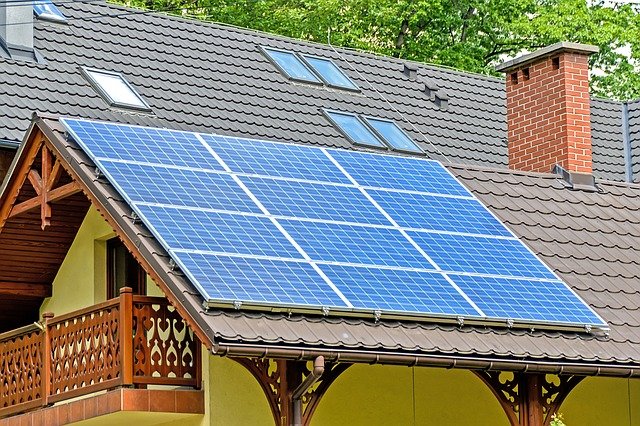
But this number is likely to be higher, as we found people often choose to remove panels after just 10 to 12 years of use. This is much earlier than their estimated end-of-life age of 30 years (and potentially older).
Unfortunately, recycling is just a small part of the solution. So why is this happening, and what can we do about it?
Australia has committed to the UN Sustainable Development Goal of using fewer resources. And this requires us to use products (like solar panels) efficiently, with less waste. But Australia’s 2020 progress update shows our per capita material footprint is increasing. In fact, it’s one of the highest in the world, at 70% above the OECD average.
To help lower our growing material footprint and keep e-waste out of landfills, we need to ensure solar panels are sustainable in life, as in death.
It is assumed the primary reason why people remove solar panels is due to technical failures, such as when they’ve reached their expiry after 30 years, or breaking due to extreme weather or during transport. But failing to generate electricity doesn’t explain why many are thrown away prematurely.
So, we interviewed solar panel installers, recycling organisations, advocacy groups and local government waste managers across the Northern Territory. And our resulting qualitative research found social and economic incentives for removing solar panels.
Out with the new, in with the newer
We found a whole system of panels gets removed when only a few panels are damaged, as the new panels must have similar electrical properties to the old.
If the panels are still under warranty, the manufacturer often pays to replace the whole set, even when only a few are faulty. This means working panels are removed alongside the faulty panels, prematurely turning into waste.
Solar panels have also become a commodity item. Many of us dump old phones and cars when newer technology becomes available, and solar panels get the same treatment. After recovering the investment in solar panels through reduced electricity bills, some people are keen to get newer, more efficient models with a new warranty.
Our research also suggests government incentives aimed at rolling out more solar panels have caused consumers to replace their entire solar array. This is because previous rebates didn’t cover the replacement of only one or a few panels.
Finally, the life of solar inverters is usually 10-12 years, much shorter than the 30-year life span of the panels themselves. Some people use this as an opportunity to install a new set of solar panels when they change their inverters.
So why can’t we just recycle them?
There’s currently little research on what we can do with panels when they’re removed for reasons other than technical failure.
Researchers often put forward recycling as the preferred option for removed panels. But sending the growing number of working panels to recycling facilities is a tremendous waste of resources, and increases the burden for panel recycling, which is still in its nascent stages.
Managing waste is the responsibility of states and territories, and they align their waste strategies with the federal government’s National Waste Policy.
But there’s no directive yet at the national level on solar panel disposal, specifically. This means there’s a patchwork of policies across the states and territories for managing this waste.
Victoria, for example, has identified solar panels as the fastest growing waste stream in the state’s overall e-waste flow, and the state government has banned them from landfills.
But such measures wouldn’t work for the Northern Territory, given its lack of processing facilities and the distance to the recycling centres in southern Australia, which are at least 1,500 kilometres away. With ample open land, they’re more likely to end up dumped illegally.
What do we do?
Australia needs clear guidelines at a national level on collecting, transporting, stockpiling and disposing solar panels. A lack of clear policy hampers state, territory and local governments from managing this waste effectively.
By proposing recycling as preferred option to manage this waste, we risk excluding other important options in the waste management hierarchy, such as reducing waste in the first place by making solar panels that last, extending their life.
The federal government has also touted “product stewardship” as a potential solution. This is where those involved in producing, selling, using and disposing products share the responsibility to reduce their environmental impact.
But this model wouldn’t effectively service regional and remote areas, as collecting and transporting goods from remote locations comes at a very high financial and environmental cost.
It’s worth noting some panels do undergo a kind of “second life”. There’s a unique demand for secondhand panels from people who can’t afford new systems, those looking to live off-grid, small organisations keen to reduce energy bills, and mobile home and caravan owners.
But with a number of massive solar farms proposed across northern Australia, it’s more important than ever to explore new strategies to manage removed solar panels, with clear policies and creative solutions.
The authors gratefully acknowledge the contributions of Robin Gregory from Regional Development Australia, Northern Territory to this article.
The Queensland Government will open 14 Community-Based Vaccination hubs by the end of July helping to make the COVID vaccine rollout easier.
Premier Annastacia Palaszczuk said the centres will be established to coincide with increased vaccine supply announced by the Federal Government.
Members of the general public aged 40-49 who may want to receive a COVID-19 Pfizer vaccination will be able to register for vaccination.
“Our job so far has been to vaccinate the 1a and 1b groups that include our workforce in hotel quarantine, health, police and other emergency services,” the Premier said.
“Queensland Health has sufficient Pfizer stocks to continue that work and open up to the 40-49-year age group who may want to register to be vaccinated.
“We do not want an ounce of vaccine to go to waste.”
Four community-based vaccination locations have already been stood up across the Wide Bay and Mackay regions at:
Central Queensland University City Campus (Mackay)
Bundaberg TAFE
Hervey Bay TAFE
Maryborough City Hall
Three community-based vaccination locations in southeast Queensland will be stood up in the coming weeks.
An additional seven community-based vaccination locations will progressively be opened.
The state is preparing for mass vaccination when supplies of Pfizer vaccine are expected to increase in the last quarter of 2021.
Health Minister Yvette D’Ath said the community hubs would assist Queensland’s recalibrated rollout.
“Since the TGA’s advice regarding AstraZeneca, Queensland has had to adapt its approach to the vaccine rollout,” the Minister said.
“We’re making the vaccine as accessible as possible and maximising our vaccine administration capacity.
“Already, we have stood up Pfizer hubs at hospitals in every HHS across Queensland to provide greater vaccine accessibility.
“The Palaszczuk Government will ensure that our vaccine rollout is accessible as possible, and these community vaccine hubs will further assist Queenslanders, no matter where they are, to get access to the vaccine.”
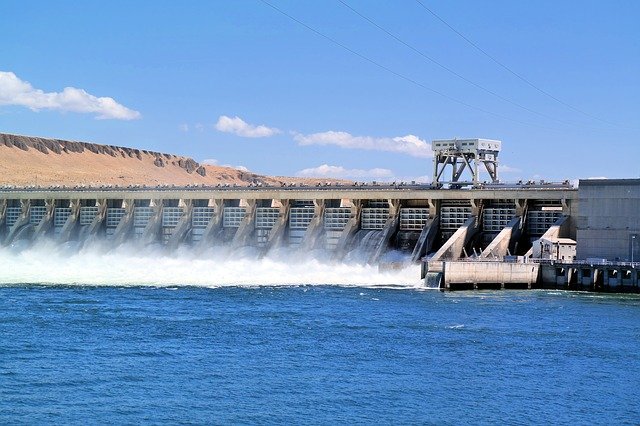
More than 900 construction jobs will be created in North Queensland with the state’s first pumped hydro storage project in almost forty years reaching financial close.
The Palaszczuk Government will invest $147 million to connect Genex’s Kidston Pumped Storage Hydro Project (K2-Hydro) to Queensland households and businesses.
Treasurer and Minister for Investment Cameron Dick said Genex achieving financial close confirmed the status of Queensland’s nation-leading renewable energy credentials.
“As part of our Economic Recovery Strategy to grow the renewable energy sector and the jobs that come with it, the Palaszczuk Government has played a crucial role in getting the Kidston Pumped Storage Hydro Project over the line,” the Treasurer said.
“This decision will further secure our strong renewables future in North Queensland and will unlock hundreds of renewables jobs.
“Beyond Kidston, the transmission infrastructure we are delivering has the potential to leverage hundreds of millions of dollars’ worth of new renewable investment in the North.
“As a government we are focused on driving investment, creating jobs and growth, and lowering electricity prices for Queensland households and businesses.”
Minister for Energy, Renewables and Hydrogen Mick de Brenni said the 250-megawatt project will help secure the future of North Queensland’s energy system with a reliable supply of dispatchable power.
“As Queensland charges towards its renewable energy target, storage projects like Kidston will enable the continued investment in otherwise intermittent renewables,” Mr de Brenni said.
“Our $147 million commitment will support publicly-owned Powerlink to build a 186-kilometre transmission line from Kidston to Mount Fox near Ingham, creating 400 jobs.
“Construction of the pumped hydro project will create a further 500 jobs, powering North Queensland’s economic recovery.”
The Kidston Clean Energy Hub will integrate large-scale solar and pumped storage hydro using an abandoned gold mine 270 kilometres north-west of Townsville.
Water pumped into its reservoir will store approximately 2000-megawatt hours’ worth of dispatchable electricity that can be delivered back to the electricity market when needed.
Genex CEO James Harding said the announcement marks an important step in the roll out of large-scale energy storage capability in the National Electricity Market.
“Financial close for the Kidston Pumped Storage Hydro Project is a monumental achievement and one Genex has been working towards for over five years,” Mr Harding said.
“Site preparation activities are now well progressed as we prepare for full scale construction activities over the next few months.
“I would sincerely like to thank the Queensland Government for the significant funding support and continued commitment to the Kidston project.”
The Kidston Pumped Storage Hydro Project and its associated transmission infrastructure is expected to be completed and feeding into the National Electricity Market by early 2025.