Home Blog Page 5

Trump’s New Opium War: Dismantling the Global Narco-Empire

The air in the Oval Office was heavy with the weight of history as President Trump signed the executive order that would officially designate fentanyl as a Weapon of Mass Destruction. For decades, the ghost of the 19th-century Opium Wars had lingered over global trade, but as of early 2026, the battle had shifted from the shores of Canton to the ports of the Caribbean and the rugged terrain of the southern border. Under the banner of Operation Absolute Resolve, the administration has moved beyond traditional law enforcement, treating the synthetic opioid crisis not as a mere criminal enterprise, but as a kinetic military threat. By authorising the first-ever land strikes against cartel distribution hubs and securing the capture of high-level figures like Nicolás Maduro, the administration is signalling a “no-quarter” era in its quest to sever the ancient arteries of the global drug trade once and for all.

The shadow of the “Great Poison” has a long memory. To understand the current battle against the narco-trade, one must look back to the mid-19th century, when the British Empire forced open Chinese markets during the Opium Wars. What was then a state-sponsored “death traffic” used to balance trade deficits has evolved into a decentralized, multi-billion-dollar web of synthetic opioids and cartel violence

The Echoes of the Opium Wars

In the 1840s, the trade was driven by the British East India Company; today, the actors are transnational cartels and chemical suppliers. However, the result remains the same: the destabilisation of society through mass addiction. For the United States, the modern “Opium War” is fought not with silver and tea, but against fentanyl—a synthetic killer far more potent than the poppy-based extracts of the past.


As of 2026, the Trump administration has shifted from a traditional law enforcement approach to a military-grade offensive designed to dismantle the trade at every link of the supply chain.

1. Operation Southern Spear: Military Intervention

The administration has reclassified major drug cartels as Foreign Terrorist Organisations (FTOs). This designation has authorised the U.S. military to take direct action:

  • Maritime Strikes: The U.S. Navy and Coast Guard have executed dozens of strikes on trafficking vessels in the Caribbean and Eastern Pacific.
  • Land-Based Operations: In early 2026, the administration expanded these efforts to include land targets, including airstrips and distribution hubs, signaling a “no-safe-haven” policy for narco-terrorists.

2. Economic Pressure and Tariffs

Leveraging trade as a weapon, the administration has used the “Major’s List” to designate 23 countries—including Afghanistan, Colombia, and Venezuela—as failing in their counternarcotics duties.

  • China Negotiations: Tariffs on Chinese goods were recently adjusted following commitments from Beijing to curb the flow of precursor chemicals used to manufacture fentanyl.
  • Northern & Southern Borders: Increased tariffs on Canada and Mexico have been implemented as leverage to ensure those governments prioritise the interdiction of drugs moving toward U.S. soil.

3. The Great American Recovery Initiative

While the external focus is on “destroying” the trade, the internal focus is on the “Great American Recovery.” This initiative aims to treat substance abuse as a national emergency through:

  • Involuntary Civil Commitment: Challenging legal precedents to allow for the commitment of individuals with severe addiction who pose a risk to themselves or others.
  • Law Enforcement Surges: Hiring 12,000 new agents and deploying advanced AI-driven technology to detect illicit shipments at ports of entry before they reach American streets

“The cartels functionally control… nearly all illegal traffic across the southern border. We are stopping drug traffickers cold—before their poison ever reaches American families.” — Administrative Policy Statement, 2025

ummary of Impact (2025–2026)

MeasureKey ActionReported Outcome
Border Security“One Big Beautiful Bill” funding87% drop in illegal apprehensions.
InterdictionOperation Border Trident470,000 lbs of cocaine seized by Coast Guard.
LegalLaken Riley ActMandatory detention for criminal traffickers.
SanctionsE.O. 14059Freezing assets of major Caribbean & Latin hubs.

By treating the narco-trade as a kinetic threat rather than a simple criminal matter, the administration is attempting to close the chapter on a cycle of addiction and trade exploitation that has haunted global history since the 1800s.

THE FIGHT FOR AUSTRALIA: Why the Establishment Wants to Silence Pauline Hanson

As Pauline Hanson’s One Nation surges in the polls, the “political elites” in Canberra are shaking. History is repeating itself, and for those who have stood by Pauline since 1996, the tactics being used today look all too familiar. From the courtroom to the streets, the movement to put “Australia First” is under fire from the same forces that have tried to dismantle it for decades.

A History of Sabotage: The 2003 “Witch Hunt”

Lest we forget, the establishment has already used the legal system to try and end Pauline Hanson’s career. In 2003, in what many supporters called a blatant political “witch hunt,” Pauline was sentenced to three years in prison over electoral fraud charges.

She spent 11 weeks in a maximum-security prison before the Queensland Court of Appeal quashed all convictions, ruling her innocent and ordering her release. This wasn’t just a legal error; it was a warning shot from the major parties that anyone who disrupts the status quo will be targeted.

The “Trump Treatment”: Sabotage by the Two-Party System

Just as we’ve seen with Donald Trump in the United States, the two major parties—Labor and the Liberals—will do everything in their power to stop a populist movement. Whether it’s through preference deals designed to keep One Nation out or media smear campaigns, the goal is the same: sabotage.

  • Lawfare: Using complex legal challenges to drain the party’s resources.
  • Media Blackouts: Misrepresenting policies or ignoring the “surge” until it’s too late.
  • Far-Left Aggression: The “militant left” continues to organize protests, often turning to intimidation tactics to silence ordinary Australians who just want their country back.

How You Can Help: Strengthening the Shield

The establishment wins when the people are divided and the movement is broke. To fight back against the “unknown” forces—high-priced lobbyists, legal attacks, and political insiders—One Nation needs a war chest that can match the major parties.

Your membership is your voice. By becoming a registered member, you provide the party with the resources needed to hire the legal experts and defenders required to stop the establishment’s next “witch hunt.”

  • General Membership: $60/year (or $6/month)
  • Concession/Student: $40/year (or $4/month)
  • Senator’s Circle: $500/year (for those who want to be at the front lines of policy development)

Don’t let the establishment win by default. Would you like me to draft a social media post or a flyer you can use to encourage others in your community to join the movement?

Here are some social media headlines to use when sharing Pauline Articles:

The Political Option: “Unmasking the Uni-Party: Why Labor and the Liberals will stop at nothing to keep Pauline silent.”

The “Trump-Style” Option: “The 2003 Witch Hunt was just the beginning—Don’t let the establishment sabotage Australia’s future again.”

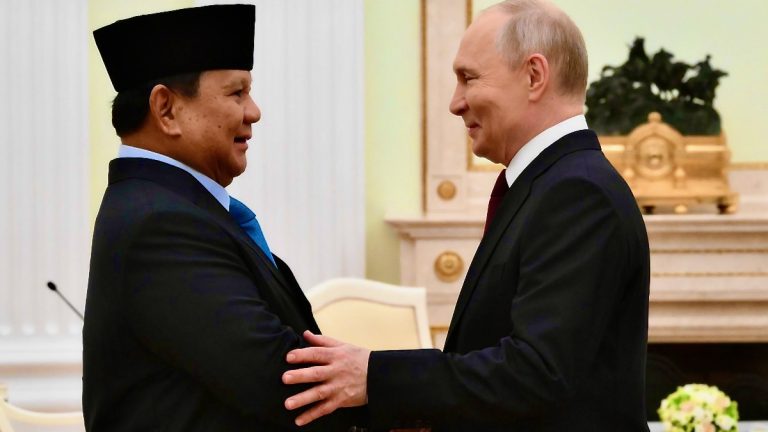
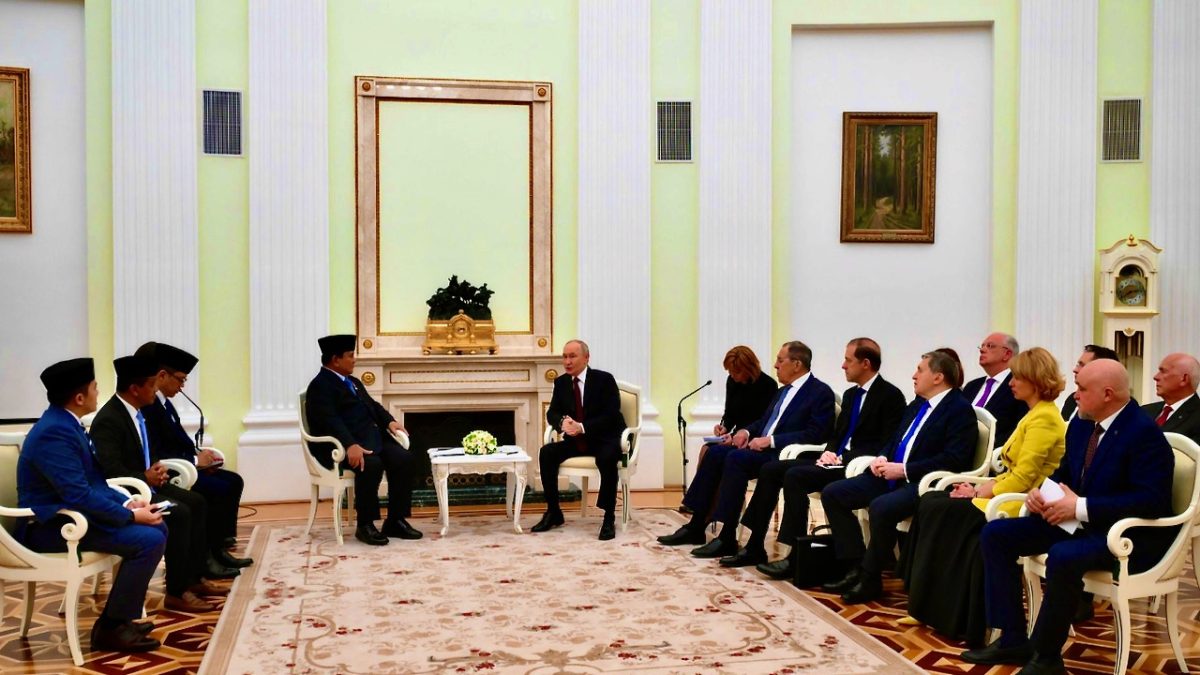
Putin “love for the Motherland” is the common thread uniting Russia’s 4 traditional religions (Christianity, Islam, Judaism, and Buddhism).

MOSCOWPresident Vladimir Putin met with Chief Rabbi of Russia Berel Lazar and Alexander Boroda, President of the Federation of Jewish Communities of Russia, to commemorate International Holocaust Remembrance Day and the anniversary of the liberation of Leningrad.

During the meeting, the Russian President emphasised the deep historical significance of the date, noting that the victims of Nazism included over 1.2 million Soviet and Russian Jews. Putin drew a direct parallel between the Holocaust and the Nazi siege of Leningrad, describing both as “crimes against humanity” aimed at the systematic extermination of non-combatant civilians.

A Focus on Stability and Shared Values

The discussion pivoted from historical remembrance to the current state of inter-ethnic relations in Russia. Putin attributed the country’s stability to a “shared historical and religious culture” that fosters cooperation between different faiths.

“The stability and resilience of Russia depend on cooperation among representatives of different ethnic groups, peoples, and faiths,” Putin stated, promising continued state support for these inter-faith foundations.

Contrasting Russia with the West

Chief Rabbi Berel Lazar praised the current climate in Russia, contrasting it with rising tensions in Western nations. Specifically citing recent anti-Semitic incidents in Bondi, Australia and Manchester, UK, Lazar claimed that Russia has transitioned from the “difficult time” of the 1990s—when synagogues were targets of arson—to a period of mutual respect.

“When I talk with my colleagues in the West, they ask me, ‘How can you sit next to a mufti?'” Lazar recounted. “I reply, ‘We not only sit next to each other but also jointly implement various projects.'”

Alexander Boroda echoed these sentiments, suggesting that Russia’s emphasis on “traditional religious values” regarding family and education should serve as a global model. “All people of sound mind… should look to Russia as an example of how development should proceed,” Boroda said.

Statistic/EventDetail
Holocaust VictimsOver 1 million Soviet and Russian Jews
Concurrent AnniversaryComplete liberation of the Nazi siege of Leningrad
Lubavitcher Milestone75th anniversary of the Rebbe assuming leadership
Key OrganizationsFederation of Jewish Communities of Russia

The meeting concluded with a reaffirmation of the “eternal values” shared by the Russian Orthodox Church, Muslim, Jewish, and Buddhist communities, which the leaders identified as the primary defence against modern social “chaos.”

Source: President of Russia

374 words

TRUMP ESCALATES CALLS FOR OBAMA’S ARREST AMID “COUP” ALLEGATIONS

WASHINGTON — In a series of provocative late-night statements and social media posts, President Donald Trump has intensified his demands for the arrest of his predecessor, Barack Obama. Citing what he describes as “irrefutable proof” of a treasonous conspiracy, Trump has called on the Department of Justice to act against the former president, whom he accuses of orchestrating a “coup” during the 2016 transition.

The escalation follows a report released by Director of National Intelligence Tulsi Gabbard, which claims to have uncovered a “treasonous conspiracy” involving Obama-era national security officials. Trump has leaned heavily into these findings, sharing AI-generated images of Obama in a jail cell and calling him the “leader of the gang.”

The core of the President’s argument rests on claims that the Obama administration manufactured intelligence regarding Russian interference to delegitimize his 2016 victory. While the 2020 bipartisan Senate Intelligence Committee report previously affirmed that Russia did indeed intervene to assist Trump, the current administration’s narrative suggests the entire investigation was a “Deep State” plant.

Key figures targeted in Trump’s recent rhetoric include:

  • Barack Obama: Named by Trump as the “ringleader” of the alleged effort to subvert the 2016 election.
  • James Comey: Former FBI Director, already facing scrutiny and separate indictments under the current administration.
  • John Brennan & James Clapper: Former CIA and DNI heads accused of “politicizing” intelligence.

Obama Strikes Back

In a rare move, the Office of Barack Obama issued a scathing rebuttal, breaking a long-standing tradition of former presidents avoiding direct conflict with their successors. A spokesperson described the allegations as a “weak attempt at distraction” from ongoing domestic crises, including the administration’s controversial ICE operations in Minneapolis.

Legal and Political Implications

Legal experts remain highly sceptical that any charges will materialise, noting that “manufacturing intelligence” for a political goal—even if proven—is a difficult standard to meet for a criminal treason charge. However, the political impact is undeniable. By centering the national conversation on his predecessor, Trump has successfully shifted the focus away from his own legal challenges and toward a “retribution” narrative that resonates deeply with his base.

The tension in Washington is at a fever pitch as the DOJ considers the “criminal referrals” provided by Gabbard. Whether this leads to a historic legal showdown or remains a potent piece of political theater is currently the defining question of the 2026 political landscape.

Source: The White House

President Trump Participates in the Board of Peace Charter Announcement

On January 22, 2026, President Trump made history in Davos, Switzerland, by formally ratifying the Charter of the Board of Peace. Standing alongside leaders from over 20 nations, the President unveiled an ambitious roadmap designed to transform conflict zones into hubs of prosperity, starting with the Gaza Strip.

What is the Board of Peace?

The Board of Peace (BoP) is a newly established international organization designed to move faster and more effectively than traditional multilateral institutions.

  • Leadership: President Trump serves as the inaugural Chairman, bringing a “free-market” and “common-sense” approach to global diplomacy.
  • Mission: To oversee post-conflict reconstruction, enforce demilitarization, and mobilize global resources for stability.
  • Founding Members: Countries including Argentina, Bahrain, Egypt, Hungary, Jordan, Saudi Arabia, and Turkey have already signed the charter.

The “Gaza 2035” Vision

A central focus of the announcement was the “Comprehensive Plan to End the Gaza Conflict.” Led by Jared Kushner, the administration presented a bold vision for a “New Gaza” that moves away from decades of aid dependency.

  • Economic Revitalization: Plans include coastal tourism zones with high-rise developments, industrial parks, and a new airport.
  • Immediate Action: The reopening of the Rafah crossing was announced for next week to facilitate the flow of goods and people.
  • Security: The plan calls for the decommissioning of heavy weapons and the establishment of a Palestinian-run technocratic administration (the NCAG) to restore order.

A Pragmatic Path Forward

During the ceremony, President Trump noted that the world is “richer, safer, and much more peaceful” than a year ago. By bypasssing the procedural gridlock of the United Nations, the Board of Peace aims to act as a “rapid-response” forum for the 21st century.

Manufactured Rage? The Professional activists and taxpayer dollars behind the invasion day chaos

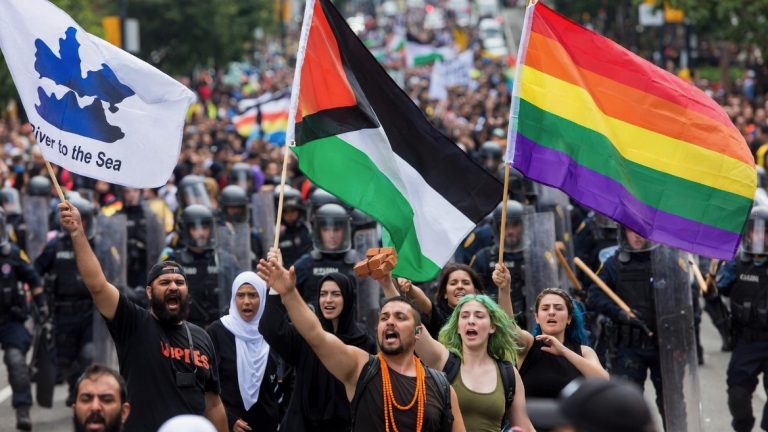
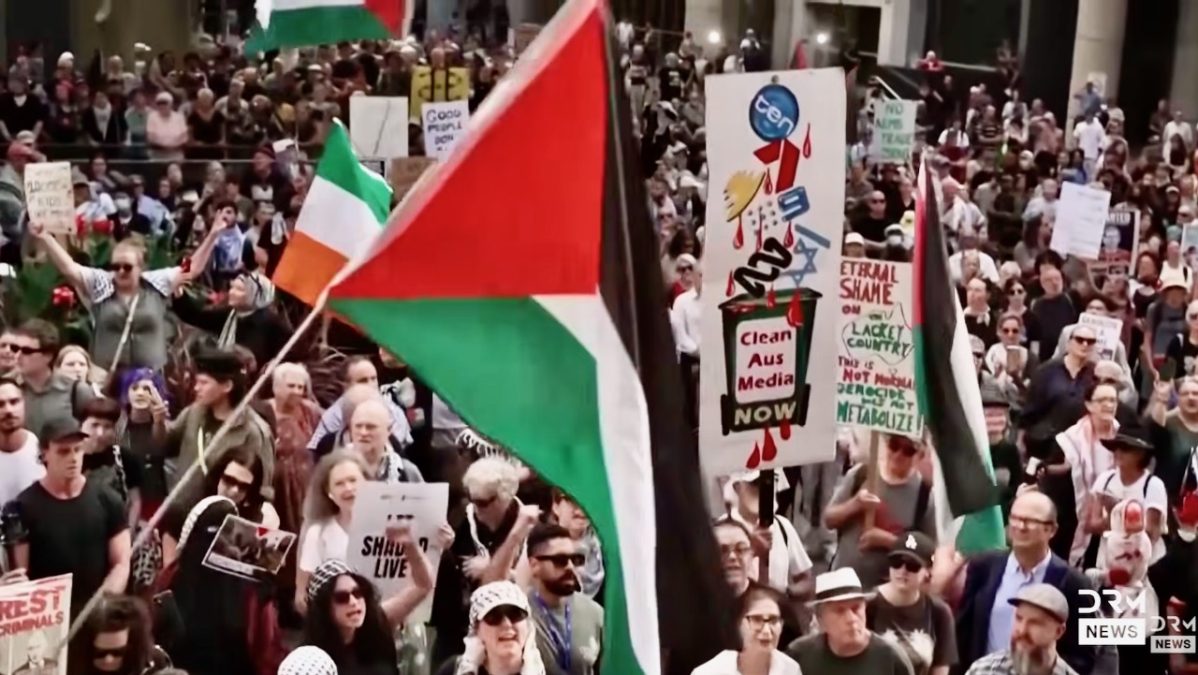
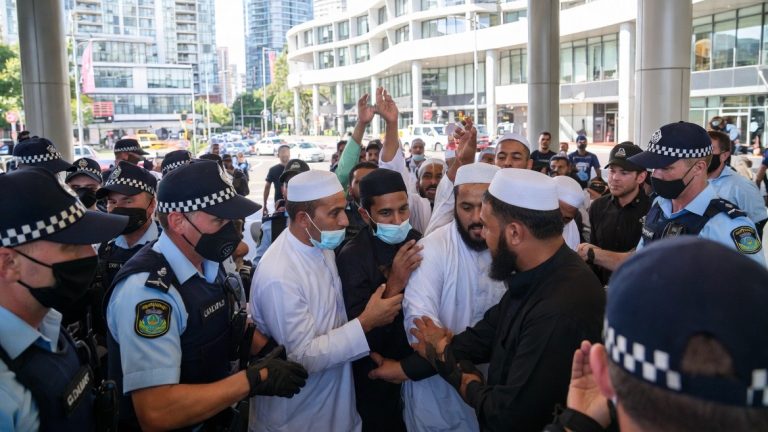
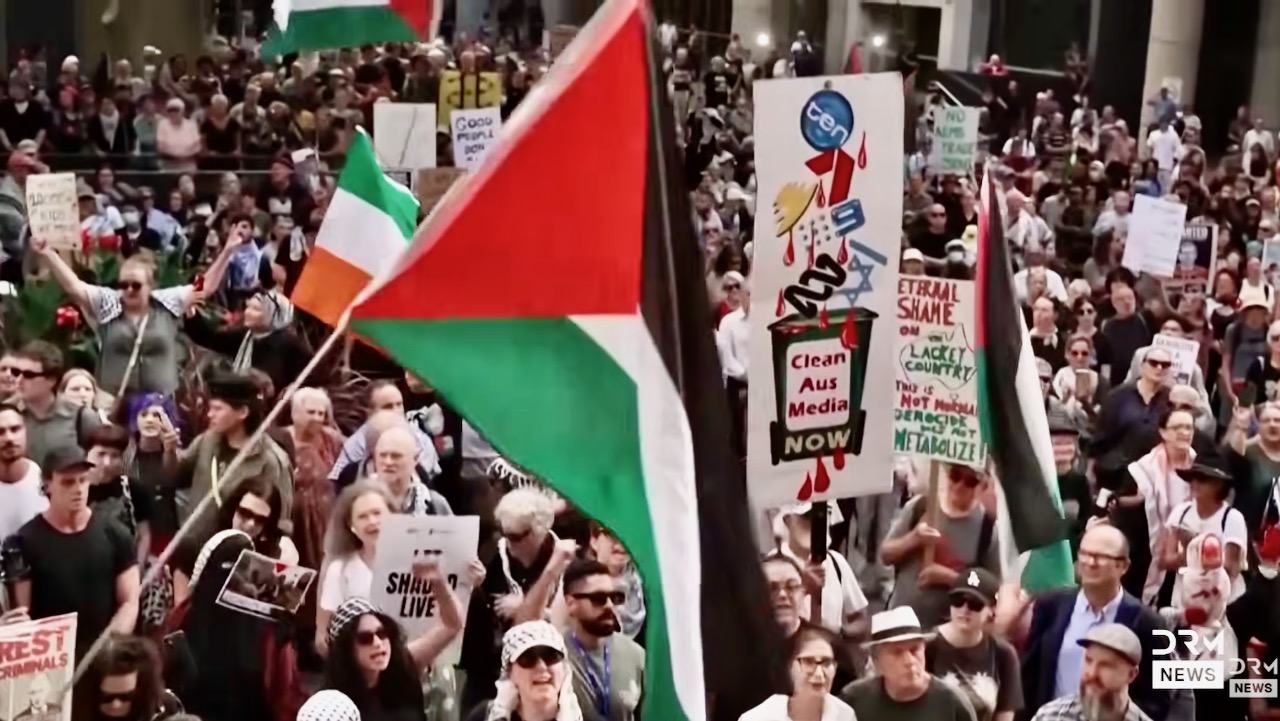
Reports from the ground suggest a notable shift in the atmosphere compared to previous years. While organizers in Sydney claimed high attendance, observers noted that the traditional focus of the “Invasion Day” rallies felt increasingly overshadowed by external political causes. In Sydney and Melbourne, significant segments of the marches featured “Palestine Action Group” banners and messaging, leading some attendees to complain that the original message of First Nations justice had been “hijacked” by broader anti-government and international agitators.

The day was defined by several high-tension flashpoints:

  • Melbourne: Riot police were forced to intervene when a small group of “March for Australia” participants—some draped in Australian flags—encountered the larger Invasion Day march. Witnesses described a “wild” scene as insults were traded, and at least one individual was reportedly sprayed with an unknown substance during a scuffle.
  • Sydney: A 31-year-old man was arrested in Moore Park for allegedly delivering an antisemitic speech, while a 17-year-old was detained at Bondi for allegedly assaulting a police officer.
  • Perth: The most serious incident occurred at Forrest Place, where a “potential terrorist act” involving a homemade explosive device containing ball bearings and screws was thrown into a crowd of 2,500 people. Fortunately, no one was seriously injured, and a 31-year-old man was quickly apprehended.

Security experts point to the “Bondi terror attack” in late 2025 as a primary reason for the heightened tension and smaller-than-expected turnouts in certain demographics. The trauma of that event led the NSW government to implement strict anti-protest laws, which were only partially scaled back for the January 26 events.

Critics of the protests have been vocal about the “toxic” behavior of some participants. Observations of masked protesters—often identified by distinctive aesthetics such as brightly colored hair or tactical gear—have led to accusations of “virtue signaling” and tribalism. Among conservative commentators and some members of the public, there is a growing sentiment that the “rage” seen on the streets is being fuelled by a combination of radicalising social media echoes and, in some cases, untreated mental health issues or substance abuse.

The visual contrast on the streets was stark: on one side, Australians celebrating with national flags; on the other, protesters calling to “Abolish the State.” For many ordinary citizens, the sight of people holding the Australian flag being confronted by what they described as a “wild pack” of aggressive activists has deepened the national divide.

As the dust settles on 2026’s January 26, the question for many remains whether the national day can ever return to a sense of unity, or if the “people power” on display has permanently fractured into a cycle of mutual hostility.

The dust has barely settled on the pavement of our capital cities, but the images from January 26, 2026, remain etched in the national psyche: a sea of black-and-red masks, the flash of “fragment bombs” in Perth, and the unsettling sight of ordinary families feeling like strangers in their own parks.

As Australia grapples with a holiday that feels more like a national fracture, two burning questions have emerged. First, why has the police response become so militarised? And second—perhaps more importantly—who is actually paying for this “chaos by design”?

The “New Normal” of Policing

Divided Nation: Flashpoints and Fractures at Invasion Day 2026 Rallies

Critics argue these laws stifle free speech. However, for the man in Sydney who was reportedly harassed by a “wild pack” for simply carrying an Australian flag, the police were the only thing standing between civil debate and mob rule. The reality is that when protesters adopt a “team” uniform—masks, tactical gear, and signalling identifiers—they are no longer participating in a peaceful assembly; they are engaging in psychological warfare.

invasion Day Rally Protesters with Colour hair angry faces

The level of organisation seen this year—printed professional banners, high-end sound systems, and coordinated logistics—doesn’t happen by accident. While grassroots activists claim to be powered by “the people,” a look at the financial architecture reveals a more complex story.

  • Crowdfunding & “Action Funds”: Platforms like Chuffed have become the war chests of the radical left. Groups such as the Warriors of the Aboriginal Resistance (WAR) and various Palestine action committees use these sites to raise tens of thousands of dollars. Crucially, these funds aren’t just for posters; they are explicitly used to pay for fines, legal fees, and “direct action” equipment—essentially subsidising illegal behavior.

The NGO Pipeline: Large organisations like Amnesty International and Friends of the Earth provide the institutional backbone. While they don’t “pay protesters” directly, they provide the logistical infrastructure, legal “how-to” guides, and media amplification that allow small, radical groups to punch way above their weight.

Government Grants (The Cohesion Irony): In a twist that angers many taxpayers, some groups involved in these movements receive federal funding under “social cohesion” or “multicultural” grants. While meant to support refugees or community health, these funds sometimes free up other resources for political agitation.

The Radicalization Loop

There is a growing concern that we are witnessing a “manufactured rage.” When left-wing media outlets frame every national holiday as a day of shame, they provide the moral cover for individuals—some struggling with mental health or substance issues—to act out. The use of “Ice” (methamphetamine) has been cited by some onlookers as a factor in the erratic, high-energy aggression seen at the fringes of these rallies.

When you mix radical ideology, professional funding, and a “wild pack” mentality, the result is a deadly weapon aimed at the heart of Australian society.

PhD Student Charged Over Alleged Australia Day Terror Plot with Molotov cocktails

BRISBANE, QUEENSLAND –
Sepehr Saryazdi, A 24-year-old PhD candidate has been charged and remanded in custody following an alleged plot to ignite an Australia Day riot on the Gold Coast with Molotov cocktails, intending to overthrow the government and replace it with an artificial intelligence-driven “cybernetic” state.

Sepehr Saryazdi, a high-achieving academic with a Master of Mathematical Sciences from the University of Sydney and a PhD student associated with the CSIRO and the Australian Centre for Robotics, appeared before the Brisbane Magistrates Court yesterday, 22 January.

Detectives from the Counter-Terrorism Investigation Group launched an investigation after a crucial tip-off from a member of the public via Crime Stoppers reported suspicious online activity. Police allege Saryazdi was actively making plans for acts of violence.

During the bail hearing, Crown prosecutor Ellie McDonald outlined a “concerning” series of alleged plans and communications. It is alleged that Saryazdi intended to lead a riot during Australia Day celebrations on the Gold Coast this coming Monday, January 26.

Police further allege that between January 4 and 9, Saryazdi purchased alcohol, wrapping paper, and blankets for the purpose of constructing Molotov cocktails. He is also accused of using a private Facebook Messenger group to urge others to stockpile “vodka bottles” for incendiary devices and encouraged them to learn how to shoot guns.

At the core of the alleged plot is a document reportedly authored by Saryazdi titled “Australia’s future cybernetics government: the next phase of civilisation.” In court, prosecutors stated Saryazdi allegedly told police the government was “turning tyrannical” and believed it should be replaced by a system guided by AI and data analysis. This concept, known as “sociocybernetics,” envisions society as a system to be controlled by algorithms and real-time data, removing subjective human elements like politicians.

Prosecutor McDonald opposed bail, presenting messages where Saryazdi allegedly stated he “expected to die” during the planned attack unless he was “lobotomised by ASIO,” framing his potential demise as a logical sacrifice for his cause.

Saryazdi’s Legal Aid solicitor, Hellen Shilton, argued her client was “misguided,” “emotionally overwhelmed,” and suffering from social isolation after moving to Brisbane. Ms. Shilton claimed Saryazdi had lost contact with his parents and spent an excessive amount of time watching protest videos, becoming obsessed with perceived government overreach. She contended he never truly intended to harm anyone but rather sought a “national platform” to air his grievances.

However, Magistrate Penelope Hay ultimately denied bail, citing the “strength of the prosecution case” and the serious nature of the allegations. Saryazdi has been remanded in custody and is scheduled to reappear before the court on February 20.

Reassurance and Vigilance

The Queensland Police Service (QPS) has reassured the community that there are no known ongoing direct threats to the community or any upcoming events at this time. It is not alleged that a specific group was the target of the alleged planned acts of violence.

“The safety and security of our communities remain the Service’s highest priority,” a QPS spokesperson stated. “The QPS continues to work in close collaboration with our federal and state counterparts to ensure the safety of all Queenslanders.”

Authorities have emphasised the critical role of public vigilance in thwarting potential threats. The QPS encourages anyone with information about possible threats to come forward, regardless of how insignificant they may deem the information.

If you have information for police, contact Policelink by providing information using the online suspicious activity form 24hrs per day at www.police.qld.gov.au/reporting or call 131 444.

Report crime information anonymously via Crime Stoppers. Call 1800 333 000 or report online at www.crimestoppersqld.com.au.

New Era of Prosperity: Trump’s Visionary Address at the WEF Davos 2026

The eyes of the world were on Switzerland this week as President Donald Trump delivered a powerful and optimistic special address to the World Economic Forum in Davos. Stepping onto the global stage, the President laid out a bold vision for 2026, centering on American strength as the primary engine for global growth

President Trump highlighted the “fastest and most dramatic economic turnaround” in history. With core inflation dropping to 1.6% and the stock market reaching a staggering 52 all-time highs since the election, the message was clear: America is back and stronger than ever.

Key highlights from the economic agenda included:

  • Cutting the Red Tape: A record-breaking 129 regulations removed for every one new regulation added, freeing businesses to innovate

Government Efficiency: The removal of over 270,000 bureaucrats from federal payrolls, the largest reduction since WWII, returning talent to the private sector

Investment in Growth: 100% expensing and bonus depreciation are bringing manufacturing back to American soil, with domestic steel production surging

Strategic Leadership and Global Security

A major focus of the address was the President’s innovative approach to security. By proposing a framework for the acquisition of Greenland, President Trump is looking decades ahead to secure the northern frontier of the Western Hemisphere.

In a move that reassured markets and allies alike, he clarified that this transition would be handled through “immediate negotiations” rather than force, even dropping previously scheduled tariffs to foster a spirit of dialogue. This “tough love” approach seeks to unify Western civilisation against modern challenges while ensuring that NATO remains a robust and fairly funded alliance

Energy Independence and the Future

The President also reaffirmed his commitment to affordable, reliable energy. By prioritising traditional energy sources and nuclear power over ineffective subsidies, the administration is ensuring that the “pinnacle of human achievement” continues to be fueled by common-sense solutions rather than bureaucratic overreach.

President Trump concluded with a reminder that when America prospers, the world prospers. The message from Davos was one of confidence: through deregulation, secure borders, and strategic deals, the “Spirit of Dialogue” is being replaced by a Spirit of Action.

The End of Gunpowder: Inside the Navy’s Mach 7 Electromagnetic Railgun

The U.S. military is developing a weapon that ditches gunpowder entirely in favor of raw electricity. The Electromagnetic (EM) Railgun is not science fiction; it is a physics-breaking reality designed to make current defensive systems obsolete.

Here is the truth about the weapon that redefines “firepower.”

How It Works: Pure Electricity

A traditional gun uses expanding gas from an explosion to push a bullet. A railgun uses the Lorentz Force

Massive electrical currents are dumped into two parallel rails.

A conductive metal slider (holding the projectile) sits between them.

The magnetic fields created by the current accelerate the slider down the tracks instantly.

It is not a “gun” in the traditional sense; it is an electromagnetic launcher.

The Specs: Mach 7 and 32 Megajoules

The numbers behind this weapon are staggering.

  • Speed: The projectile leaves the barrel at Mach 7—that is over 5,000 miles per hour. It flies so fast it burns the air around it into plasma.
  • Energy: It delivers 32 megajoules of energy at launch. For perspective, one megajoule is roughly the energy of a 1-ton vehicle moving at 100 mph. The railgun delivers 32 times that force instantly.
  • Range: It can strike targets over 100 nautical miles away, keeping the ship safely out of range of most enemy counter-fire.

The “Kinetic Kill”: Why It Doesn’t Need Explosives

The most revolutionary part of the railgun is the ammunition. The projectile has no warhead. It does not explode on impact.

At 5,000 mph, you don’t need explosives. The sheer impact speed delivers a “kinetic kill.” Hitting a target with a solid metal slug moving that fast delivers the destructive force of a meteor strike, vaporizing metal and concrete upon contact.

The Strategic Advantage

Why spend billions developing this?

  • Deep Magazines: Ships can carry thousands of inert metal slugs instead of hundreds of dangerous explosive shells.
  • Safety: It removes volatile gunpowder magazines from the ship’s hull, making the vessel harder to destroy.
  • Cost Per Shot: A railgun slug costs roughly $25,000. A tactical missile with similar range costs upwards of $1.5 million.

HISTORIC SHIFT: One Nation Surges to Second Place as Majors Crumble in Newspoll Shock

The latest survey reveals a massive 7 per cent surge for the right-wing populist party, catapulting their primary support to 22 per cent. This historic rise places them ahead of the Liberal-National Coalition, which has slumped to a record low of 21 per cent, while Labor holds a diminished lead at 32 per cent

Pollsters and analysts are calling it “The Great Switch”—a chaotic realignment of the Australian electorate where voters are abandoning both traditional major parties in almost equal numbers.

The data paints a picture of a restless electorate punishing the establishment.

This marks the first time in Newspoll history that a minor party has polled higher than one of the two major parties that have governed Australia since World War II.

“We are witnessing a structural break in Australian politics,” said lead analyst George Hasanakos. “Typically, minor parties peel votes from one side of the spectrum. What makes this result unique is that One Nation is taking equally from Labor’s working-class base and the Coalition’s conservative heartland. It is a dual rebellion.”

The 7-point jump appears to be driven by a perfect storm of voter dissatisfaction. With the cost-of-living crisis biting hard and concerns over social cohesion dominating recent headlines following the tragic events in Bondi earlier this month, voters appear to be seeking a “break glass” option.

For the Opposition Leader, falling to third place behind a minor party is a catastrophic blow, signaling that the Coalition is bleeding its primary constituency faster than it can replace them. Meanwhile, the Government is not immune; despite retaining the lead, Labor’s 4-point drop suggests that the “safe pair of hands” narrative is no longer resonating with struggling households.

Political insiders are describing the phenomenon as “The Great Switch”—a direct transfer of trust from the establishment to the insurgent fringe.

“This isn’t just a protest vote anymore; it’s a parking maneuver,” said one Labor strategist, speaking on condition of anonymity. “People aren’t just flirting with One Nation to send a message; they are parking their vote there because they feel the majors have stopped listening.”

Senator Pauline Hanson, emboldened by the results, claimed the poll as vindication. “Australians have had a gutful of the twins—Labor and Liberal,” she said in a statement this morning. “They are finally waking up to the fact that they don’t have to choose between Coke and Pepsi. We are the real opposition now.”

While the next election is still distant, these numbers, if sustained, would make the formation of a majority government mathematically impossible for either major party. It raises the spectre of a chaotic hung parliament where One Nation could wield unprecedented balance-of-power influence—or potentially even threaten the Opposition’s status as the alternative government.

For now, the political class in Canberra is left scrambling to understand how the comfortable two-party system they knew has, seemingly overnight, been turned on its head.