Home Blog Page 60

Andrews, Melbourne Airport Rail Link route to the heart of the CBD

Dan Andrews 1 2


The Melbourne Airport Rail Link route will take travellers into the heart of the CBD in less than 30 minutes following an historic agreement announced today between the Australian and Victorian governments 

Prime Minister Scott Morrison joined Premier Daniel Andrews to announce the route for the project, which will connect Victoria’s regional and metropolitan rail networks to the airport for the first time.


From 2029, Victorians will be able to catch a train directly from the CBD to the airport.

“The airport link is a nationally significant project and Victorians have been waiting a long time for it to become a reality. With construction to start in 2022, the agreement will support up to 8,000 jobs during construction,” the Prime Minister said.

“When complete, the link will slash travel times, bust congestion and be a major boost to the economy.”


Airport trains will run through the Metro Tunnel, meaning families in the booming south-eastern suburbs can get to the airport without changing trains, and the majority of Victorians can get to the airport with just one interchange from their closest station.


It also means that tourists visiting Victoria will be able to get from the airport to regional Victoria in a hassle-free way – meaning more visitors and jobs for our regions.


Melbourne Airport Rail will see 10-minute turn-up-and-go services running from Melbourne Airport through the heart of the city, providing direct connections to key sites including Melbourne University, the Parkville medical precinct, Melbourne Central and Flinders Street stations and the St Kilda Road business precinct.


Premier Daniel Andrews said today’s announcement was a historic day for all of Victoria.


“This project has been talked about for a long time, its key to our recovery and this design means it will benefit all Victorians,” Mr Andrews said.


“As we continue our recovery, we need a long-term plan. We need a pipeline of jobs for Victorians looking for work now, and for those who will need jobs in the future. We said we’d deliver this project, and we’re keeping our promise.”


Deputy Prime Minister and Minister for Infrastructure, Transport and Regional Development Michael McCormack said this vital piece of infrastructure would transform travel to and from Melbourne Airport.


“The aviation industry is so important to Australia’s economy and by investing in this rail link, we’re making it even easier for Victorians to travel to and from Melbourne Airport,” the Deputy Prime Minister said.


“This investment is an important part of the economic road back – it will be a job-creator for Victorians and a huge boost to so many local businesses across the construction industry.”


Federal Minister for Population, Cities and Urban Infrastructure Alan Tudge said a rail line to the airport was long overdue for Melbourne.  


“Our objective has always been to deliver a rail connection that is fast, affordable and built as quickly as possible,” Mr Tudge said.


“For those in the south east it will mean a trip to the airport without changing trains, and for others just one change.”


Minister for Transport Infrastructure Jacinta Allan said that Airport Rail via Sunshine means that the majority of Victorians can access the airport by rail, as quickly as possible.


“This will give Victorians the fastest, most direct trip to the airport through the Metro Tunnel which will deliver more trains, more often.”


Melbourne’s west will also have direct airport access via a single interchange at Sunshine Station, or Footscray Station for Werribee and Williamstown line passengers.


Passengers on all city loop trains will be able to connect to airport trains at Flinders Street and Melbourne Central. 


Passengers from the regional centres of Geelong, Ballarat and Bendigo will travel to the airport via a single interchange at Sunshine, while passengers from Gippsland will be connected via a single interchange at a choice of locations along the Cranbourne and Pakenham lines.


It delivers the best possible integration with the existing network and paves the way for future improvements to regional and western metropolitan lines. 


Melbourne Airport Rail will use the new fleet of High Capacity Metro Trains – the biggest and most passenger-friendly trains on Victoria’s train network. 


The Victorian and Australian governments have committed $5 billion each in funding. Detailed planning and development work is currently underway, which will inform more detailed cost estimates.


Construction will begin in 2022, with a target completion date for Melbourne Airport Rail of 2029 – subject to the business case and relevant Victorian and Federal planning, environmental and other government approvals.


Source: The State of Victoria Daniel Andrews

Kayleigh McEnany, The President has been very clear he wants every legal vote to be counted

maxresdefault 11


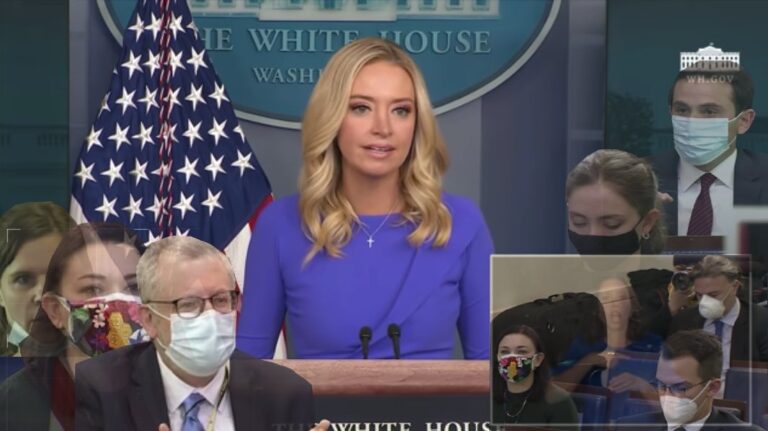
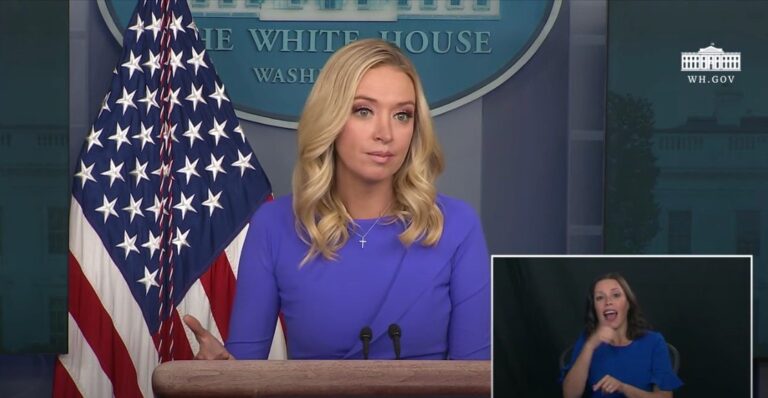
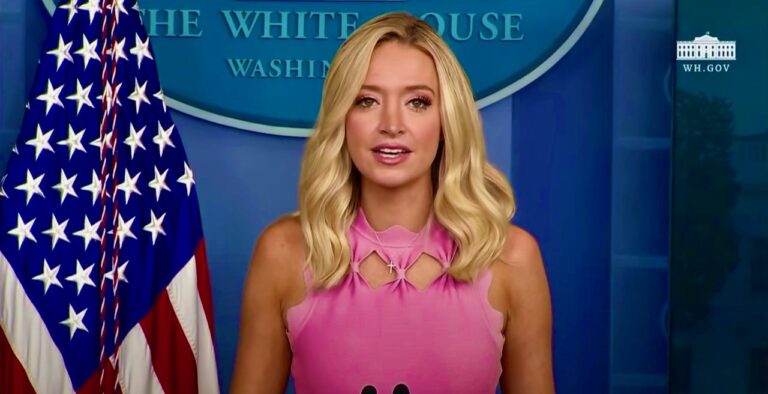
Kayleigh McEnany: Good afternoon, everyone. The beginning of the end of the pandemic started with the leadership of President Trump. In recent days, Pfizer and Moderna reported the highly successful results of their vaccine development, each achieving a COVID vaccine that is over 90 per cent effective. We know Moderna is 94.5 per cent effective; Pfizer 95 per cent. That is extraordinary.


In July, the Trump administration, as part of Operation Warp Speed, agreed to provide Pfizer with $1.95 billion to manufacture and distribute their COVID vaccine, allowing this vaccine to be provided free for the American people.


While Democrats were pursuing a highly divisive and entirely baseless impeachment endeavor, as far back as January 13th, this President, the Trump administration, and the National Institute of Health was partnering with Moderna and working on this vaccine for the American people.


But that’s not all: This administration has remained engaged on the development and distribution of a safe and effective vaccine throughout the year. It began in January and continued thereafter.


On May 15th, Operation Warp Speed was launched. On September 16th, we released two documents outlining a strategy to deliver a safe and effective vaccine. These documents were the strategic — strategic distribution overview in the Interim Playbook for state, tribal, territorial, and local health programs and partners.


On September 23rd, we provided $200 million to jurisdictions to support plans for eventual distribution.


On October 14th, we provided $31 million to Cytiva for vaccine-related consumable products.


On October 16th, we made agreements with CVS and Walgreens to administer vaccines to residents of long-term care facilities.


On October 21st, under the PREP Act, we issued guidance authorizing qualified pharmacy technicians to administer the vaccine.


On October 30th, we announced that McKesson Corporation will produce, store, and distribute vaccine ancillary supply kits on behalf of the Strategic National Stockpile to help healthcare workers who will administer the vaccines.


And on November 12th, we announced the partnership with large chain pharmacies and independent regional ones to deliver safe and effective vaccines.


The unprecedented response to this pandemic has already saved many American lives. And as you can see, this timeline was ongoing. This was a long process and one that we are very proud of.


Now, with multiple safe and effective vaccines just around the corner, we urge all Americans to wash your hands, socially distance, wear a mask when you cannot do so.

And with that, I’ll take questions.

Kevin.

Q Kayleigh, thanks. I want to ask you a question that I’m asked fairly often, away from the White House. And that is: With respect to what Rudy Giuliani and the legal team on the campaign side had to say yesterday, people ask: “Let’s suggest that, yes, there is evidence of fraud, irregularities, even malicious intent with respect to vote totals. The question is, what then would be the pathway or strategy to overturn what the campaign believes is a flawed election? Are we talking about a judicial pathway? Are we talking about a legislative pathway?”


And a follow-up: How soon might Americans be able to get their hands on a COVID vaccine?


MS. MCENANY: Yeah, so to your first point, I would say this: There’s been multiple pieces of litigation filed across the country by various individuals, the campaign, and others. I will leave it to the campaign to make those determinations on as to how to proceed. But the President has been very clear he wants every legal vote to be counted and to make sure no illegal votes are counted.


But with regard to a vaccine, we believe that there will be 40 million doses available by the end of the year. Again, this is extraordinary. This is the fastest vaccine in history by fivefold. It’s really extraordinary progress. You’ve heard Dr. Fauci, among others, say that. And it was only made possible because of this President, who said at the same time, “I’m pursuing a vaccine; I’m going to do something novel. I’m going to manufacture it.”


So, many American lives will be saved thanks to President Trump and the great work of Operation Warp Speed.


Q Can I follow up? One more —


MS. MCENANY: Of course.


Q Just one thing about the COVID vaccine. Is there a concern inside the White House that a lack of working with a potential or presumptive President-Elect Biden team will somehow slow down the distribution of the COVID vaccine?


MS. MCENANY: Yeah, I’m glad you asked that question. It’s an important one. And not in the slightest. Because, in fact, I did hear the former Vice President say yesterday he was concerned about not being able to distribute a vaccine. He shouldn’t be. Maybe he hasn’t seen, but we have publicly available that plan that I mentioned in my opening. It’s the COVID-19 Vaccination Program, the Interim Playbook for Jurisdiction Operations. This is publicly available, if the former Vice President would like to read through it.


Beyond that, I would say that we’ve already, going back months, partnered with the 64 jurisdictions in this country to make sure that they each had individualized distribution plans. Those have been assessed. Those have been made certain that they’re — they’re good and operational.


So this work has been ongoing. There’s a distribution plan in place, which is why you heard General Perna say yesterday that, within 24 hours of getting that EUA, the emergency use authorization, we will be able to distribute this all across the country.


Q When are you going to admit you lost?


MS. MCENANY: Yes, Kevin. Yeah.


Sorry. Mario.


Q Okay. Thanks, Kayleigh. What is the President planning to discuss this afternoon with the two Michigan lawmakers? And will he ask them to have the state legislature appoint electors who will support his re-election? What’s the nature of that meeting?


MS. MCENANY: So he will be meeting later on. This is not an advocacy meeting. There will be no one from the campaign there. He routinely meets with lawmakers from all across the country.


Q When will you admit you lost the election?


Q Kayleigh, at what point does the President concede the race and allow for a proper transition to the Biden team?


MS. MCENANY: So, right now, there’s ongoing litigation. There are — what we know: 74 million Americans that voted for this President; that’s more votes than any President has gotten in history. It’s really extraordinary. And there are very real claims out there that the campaign is pursuing — 234 pages of affidavits publicly available in one county alone; that’s Wayne County. And two individuals in the canvassing board there that have declined to certify.


So these are real claims. These individuals deserve to be heard. This was a system that had never been tried in American history: mass mail-out voting. It’s one that we have identified as being particularly prone to fraud. So those claims deserve to be pursued.


Tamara.


Q Yeah. Has anyone from the White House spoken with GSA — with the director of GSA about the timing of ascertaining who the next President will be? And has any pressure been applied to her?


MS. MCENANY: Absolutely not. GSA will make the determin- — determination of ascertainment at the right moment. Right now, there’s a constitutional process that’s being played out. There are questions being asked in court. But the GSA will determine when ascertainment is reached.


Q And can I just ask one other question, which is: Senator Lamar Alexander, today, has put out a statement encouraging the Trump administration, in the absence of ascertainment, to begin allowing the Biden team access — full access to everything they need for a transition, access to agencies, access to real-time data. What’s the harm in doing that?


MS. MCENANY: So there’s a Presidential Transition Act that determines exactly what an administration needs to do in advance of an election. And we have done everything statutorily required, and we will continue to do that.


Q It’s after reelection, though.


Q Thank you. I have a question. First, a follow-up on the transition. Has the President or anyone in the administration instructed officials not to engage or have conversations with members of the Biden transition team?


MS. MCENANY: No, I’ve certainly never been instructed that. I’ve never heard of an instruction to that end.


Q Okay. And my second question is about COVID. Because yesterday, a lot of what we heard from the doctors, they’ve been saying since the end of March. Back then, the projections were that 100,000 Americans would die. Now, as you know, we’ve surpassed that by two and a half times. Did the administration fail to communicate how serious this threat was to the American people? How else do you explain what went wrong?


MS. MCENANY: Look, I would say the initial projection that our doctors gave us was 2 million people that would lose their lives. And it’s a tragedy any time one life is lost. But we are far below the 2 million that this could have been.


We took very aggressive measures at the beginning of this with the China travel ban; creating the greatest testing system in the entire world; therapeutics — the fact that we have six working therapeutics right now. The fact that we continue to identify more and more. The fact that — I believe we have a chart on this — a fatality chart. It’s deaths by hundred for age and month. And as you can see, deaths have come down for every age group, and for those over 70, that line — that red line is a testament to what this President has done.


Therapeutics, monoclonal antibodies — that is a recent one — that reduces hospitalization in high-risk seniors with moderate to mild COVID by 70 percent. That’s American ingenuity rising to the occasion, and President Trump oversaw all of this.


But, of course, we are seeing cases rise. And it’s very important: wash your hands, socially distance. We’re taking this seriously.


Q Kayleigh, do you think that mixed messaging contributed to that? Because just this week, for example — yesterday, Vice President Pence wanted to make clear that they supported state and local decision making. Just two days ago, you called some of those state guidelines “Orwellian.” So how do you expect people to know what to do with all this mixed messaging?


MS. MCENANY: Well, two things can happen at once, and it’s this: taking COVID seriously, engaging in aggressive mitigation, but also recognizing that the American people have certain freedoms. And it is, by definition, Orwellian for a state like Oregon to say, “If you have more than six people in your family congregate in your home, we can jail you for 30 days.” That’s not the American way.


The American people know the CDC recommendations, know the guidelines. We’ve been talking about this for 10 months, but the American people still have certain freedoms, still have autonomy, and still can make important self-responsibility decisions themselves.


Yes, Deborah.


Q Thank you, Kayleigh. Nice to see you.


MS. MCENANY: Good to see you.


Q Last night, Tucker Carlson said that campaign attorney Sidney Powell has failed to provide evidence for her assertion about communist money in the 2020 election. And Byron York, another journalist who’s been very fair to this White House, said that it was a turning point — Rudy Giuliani and the conduct at that press conference. But Republicans were feeling that the legal maneuvers just aren’t working.


So is there — did you all have a reaction to that when you saw that and wrote about it?


MS. MCENANY: Again, that would be a question for the campaign. We at the White House are aggressively working on COVID, winding down the wars in Afghanistan and Iraq, among other issues. There will be a drug-pricing announcement later in the afternoon as well.


Q Well, Kayleigh —


MS. MCENANY: Yes.


Q — since I’m the pooler, can I ask a question for Jackson Richman of the Jewish News Syndicate, who couldn’t be here —


MS. MCENANY: Yes.


Q — because of social distancing?


And his question is about Jonathan Pollard. His parole conditions are set to expire tomorrow. Is the President willing to commute his parole conditions or pardon him if the DOJ extends Pollard’s parole? Have you been getting any calls from the Jewish and pro-Israel community to take action on his case?


MS. MCENANY: I haven’t heard about that. I haven’t looked into the particular case. But on if he shoots me an email, we’ll take a look at his question.


Q Thank you.


MS. MCENANY: Yes.


Q So, back to the topic of concession. Like we said earlier, is there something that the President needs to see before making that call? Is it the end of these lawsuits, whenever they do wrap up, all of them? States certifying results for different counties? Or December 14th when the Electoral College casts its ballots?


MS. MCENANY: Look, the President, again, is pursuing ongoing litigation and taking it day by day, and we’ll wait for that litigation to play out.


Q So just to clarify, it’s the end of that litigation that we would need to see before getting a call —


MS. MCENANY: There’s an entire constitutional process of electors casting their ballots, and I will leave that to the President.


Yes. Chanel.


Q Thank you, Kayleigh. Contrary to the court of media opinion, there is real-time data showing vast irregularities in the voting system that we have watched over the last few weeks. I asked this question of the campaign and I ask this of it now, the White House: Where is our FBI in this entire scheme? Are they looking at any of the evidence that this White House or the campaign have presented in terms of real-time data evidence of voter irregularity? Where is the FBI?


MS. MCENANY: Yeah, you know, I would refer you to the FBI on that — to the DOJ on that. There’s —


Q Has the President spoken with the FBI in the last three weeks?


MS. MCENANY: Not that I’m aware of. But, look, I would say that there are real questions on mass mail-out voting. We have put those questions forward, and we’ve said this for the better part of a year. There was a bipartisan commission that talked about and identified the real potential for fraud with mass mail-in voting.


Also something that I would note is just we talked a lot about transfer of power in the election, and it’s worth remembering that this President was never given an orderly transition of power. His presidency was never accepted. In fact, before the election — his election, we know Crossfire Hurricane was launched by Peter Strzok to pursue baseless allegations about the President’s ties with Russia. That’s before he was President, trying to subvert the will of the American people.


We know, in August, Peter Strzok wrote a text message about an insurance policy against a Trump presidency, once again trying to silence the voice of the American people.


In 2016 — we know in October that there was a FISA warrant — a FISA warrant taken out to spy on the Trump campaign. And then the American people spoke, and they spoke commandingly in electing President Trump despite all of the odds.


And what happened after he was elected? You had 70 lawmakers say “we’re not coming” to his inauguration — Democratic lawmakers. You had Elizabeth Warren saying “we’re going to attempt to obstruct” the Trump transition by urging the Government Accountability Office to investigate the incoming Trump transition.


In January of that year, you had President Obama have a by- the-book meeting where they talked about the Logan Act, using that act to go after Lieutenant General Michael Flynn.


Just before the inauguration, you had BuzzFeed promoting and publishing this bogus Steele dossier that’s been widely debunked.


And then, for two years, you had the baseless Mueller investigation, which searched for collusion, found none, and exonerated President Trump.


While, in 2016, President Trump became the duly elected President, many sought to undermine him, discredit him, delegitimize him, and deny his victory. There were no calls for unity; there were no calls for healing.

So while every legal vote is counted, let us not forget the inexcusable transition, or lack thereof, that President Trump had to endure in 2016 and four years into his presidency.

Thank you, everyone, for the very good and substantive questions today.

Q Kayleigh, why can’t you call on all of us? You haven’t taken questions —

MS. MCENANY: I don’t call on activists.


Attribution: Irrevocable, royalty-free license to the rest of the world for their submissions to WhiteHouse.gov under the Creative Commons Attribution 3.0 License.

Trump Announces Intent to Nominate and Appoint the Following Individuals to Key Administration Posts

President Donald Trump 10


President Donald J. Trump announced his intent to nominate the following individuals to key positions in his Administration:

Brian P. Brooks, of Colorado, to be Comptroller of the Currency for a term of five years.

Brian P. Brooks is Acting Comptroller of the Currency.  He previously served as Chief Legal Officer of Coinbase Global, Inc., a digital asset exchange and custodian.  Earlier in his career, he served as Executive Vice President and General Counsel of Fannie Mae; Vice Chairman of OneWest Bank, N.A.; and managing partner of the Washington, D.C. office of the global law firm O’Melveny & Myers LLP.

Mr. Brooks also served on the boards of directors of Fannie Mae and Avant, Inc., and was an advisor to several financial technology startups.  He received a Bachelor of Arts degree cum laude in Government from Harvard University and a Juris Doctor degree with honors from the University of Chicago.

Scott Francis O’Grady, of Texas, to be an Assistant Secretary of Defense (International Security Affairs).

Scott Francis O’Grady is a successful author, speaker, spokesperson, investor, and entrepreneur, having served 12 years as an officer in the United States Air Force.  O’Grady’s incredible story of how he survived in hostile territory for 6 days during the Bosnian War is chronicled in his book, Return With Honor.


Mr. O’Grady has flown more than 1,000 hours as an F-16 Senior Pilot. His operational assignments include 4 years overseas in Korea, Germany, and Italy. He flew 67 combat missions over Iraq and Bosnia where he participated in NATO’s first military combat mission in history.  He is the recipient of the Bronze Star for Valor and the Purple Heart.


Mr. O’Grady graduated from Embry Riddle Aeronautical University in Prescott, Arizona.  He has a Master’s Degree from Dallas Theological Seminary and was awarded an Honorary Doctorate of Public Service by the University of Portland in Oregon.  He is the recipient of the Ronald Reagan Distinguished Service Award and the Daughters of the American Revolution Medal of Honor.


Today, President Donald J. Trump announced his intent to appoint the following individuals to key positions in his Administration:


Basil Parker, of Virginia, to be Administrator of the Office of Electronic Government, Office of Management and Budget.


Mark C. Hendricks, of Utah, to be a Member of the Cultural Property Advisory Committee.


Richard Pluta, of Virginia, to be a Member of the National Infrastructure Advisory Committee.


Henry Boland Howard, of Florida, to be a Member of the National Security Education Board for a term of four years.


Jack Brewer, of Florida, to be a Member of the Commission on the Social Status of Black Men and Boys for a term of four years.


Jackie Gingrich Cushman, of Georgia, to be a Member of the Adams Memorial Commission.


Dr. Darren Jeffrey Beattie, of Colorado, to be a Member of the Commission for the Preservation of America’s Heritage Abroad.


Richard Rigdon, of Florida, to be a Member of the President’s Export Council.


Barron L. Hetherington, of Pennsylvania, to be a Member of the President’s Export Council.


Deborah Maestas, of New Mexico, to be a Member of the President’s Export Council.


Michael Stumo, of Massachusetts, to be a Member of the President’s Export Council.


Robert Samuel Carl, Jr., of Pennsylvania, to be a Member of the President’s Export Council.


Roddey Dowd Jr., of North Carolina, to be a Member of the President’s Export Council.


ATTRIBUTION: THIS ARTICLE, IMAGE AND VIDEO ROYALTY-FREE LICENSE WHITEHOUSE.GOV UNDER THE CREATIVE COMMONS ATTRIBUTION 3.0 LICENSE.
Pompeo travelling to France, Turkey, Georgia, Israel, the United Arab Emirates, Qatar, and Saudi Arabia

  • Secretary of State Michael R. Pompeo 1

    Secretary of State Michael R. Pompeo is travelling to France, Turkey, Georgia, Israel, the United Arab Emirates, Qatar, and Saudi Arabia November 17 – 23.

  • In Paris, the Secretary met with President Macron, Foreign Minister Le Drian, and other senior officials to build on our transatlantic work on economic and security matters, and on counterterrorism and global threats.
  • Following Paris, Secretary Pompeo is travelling to Istanbul, Turkey, to meet with His All Holiness the Ecumenical Patriarch of Constantinople, Bartholomew I, to discuss religious issues in Turkey and the region and to promote our strong stance on religious freedom around the world.
  • The Secretary’s last stop in Europe will be Tbilisi, Georgia, to meet with President Zourabichvili, Prime Minister Gakharia, and Foreign Minister Zalkaliani, to express our support for Georgia’s sovereignty and territorial integrity, to urge further progress in democratic reforms. He will also meet with the Patriarch of the Georgian Orthodox Church, His Holiness Ilia II.
  • The Secretary will then travel to Israel where he will meet with Prime Minister Benjamin Netanyahu to discuss the Abraham Accords and our joint efforts to address Iran’s malign activities.
  • Next, he will travel to the United Arab Emirates and meet with Abu Dhabi Crown Prince Mohammed bin Zayd to discuss security cooperation and regional issues.
  • He will also travel to Qatar to meet with Amir Tamim bin Hamad Al Thani and Deputy Prime Minister and Minister of Foreign Affairs Mohammed bin Abdulrahman Al Thani to discuss bilateral and regional issues, including the importance of Gulf unity.
  • The Secretary’s final stop will be in Saudi Arabia, where he will meet with Crown Prince Mohammed bin Salman.

Source: US Department of State

ScoMo to hold meetings with Tokyo and PNG next week

PM Scott Morrison 1 1


ScoMo: Next week I will hold important meetings with two of Australia’s closest friends in Tokyo on 17 – 18 November, and Port Moresby on 18 – 19 November.

This will be my first meeting with the new Prime Minister of Japan, His Excellency Mr Suga Yoshihide. I’m honoured to be the first foreign leader to visit Japan to meet with Prime Minister Suga following his appointment.

Our relationship with Japan over the past few years has gone from strength to strength. We are Special Strategic Partners, and we work closely together on trade, security, defence and technology issues. I look forward to continuing to deepen that partnership.

Japan will play an important role in our economic recovery from COVID-19. I hope we can chart a course for the re-opening of travel, and discuss ways to deepen our trade ties worth $86 billion, including under the Japan-Australia Economic Partnership Agreement.

On the way back to Australia I plan to take the opportunity to see my friend  the Hon James Marape MP, Prime Minister of Papua New Guinea, our closest neighbour.

We will continue our discussions about advancing our many shared regional and global objectives, ahead of a formal bilateral visit I hope to make next year.

Australia, Japan and Papua New Guinea have managed the coronavirus incredibly well, and I am confident the precautions in place during this travel will minimise the risk of COVID-19 transmission.

I will be strictly following health advice and quarantine requirements when I return to Australia, as will staff and officials accompanying me, RAAF attendants and pilots, and media.

I look forward to hearing from Prime Minister Suga and Prime Minister Marape about their experiences in responding to COVID-19 and discussing ways to work together towards a stable, peaceful and resilient Indo-Pacific.


Source: Licensed from the Commonwealth of Australia under a Creative Commons Attribution 4.0 International Licence.


The Commonwealth of Australia does not necessarily endorse the content of this publication.

Andrews Government $235 Million Building Recovery Workforce To Support State

Premier Daniel Andrews 1


Victoria Government Media Release: This has been the most challenging experience many of us will have ever lived through. We’ve had to stay home and spend time away from those we love the most in order to stay safe.

But supporting us the whole way through – our mental health professionals, family violence specialists and child support workers – professionals that were there for us every day, wherever and whenever we needed them.

This year’s Budget is dedicated to increasing support for these hardworking Victorians, creating better pathways to roles in these vital sectors and recruiting more positions, part of Victoria’s Recovery Workforce.

The Andrews Labor Government will invest $235 million to build our Recovery Workforce to create 500 new jobs across mental health, family violence, health and child protection. We will also generate new accelerated training pathways and internships for around 875 people, growing the pipeline of workers so Victorians have access to the support they need as we recover from this pandemic. 


In mental health this includes additional positions for child and youth psychiatry registrars, and funding for new part-time positions and cadetships for people with a lived experience of mental health – providing opportunity for these Victorians to use their experience and expertise to support those in need. This was also an interim recommendation made in the Royal Commission into Victoria’s Mental Health System. 


The Government is also increasing the number of available mental health nurse graduate positions across Victoria with $4.3 million so we have more workers on the ground caring for Victorians. 


Recognising the incredible skill, ability and knowledge of our carers, the Labor Government will provide $4.6 million to support pathways into employment in the community services, disability and aged care sector.


This includes relief to assist carers to get assistance with their caring responsibilities while they study and during their placements, helping with the cost of study materials, mentoring and additional supervision and support.


Victorians on a waiting list to access residential AOD services or who disengaged from treatment during the pandemic will receive more support with $25.62 million to employ new specialist alcohol and other drug workers.


As the Labor Government continues to lead the way with family violence reform, the package includes $8.1 million to build our family violence and sexual assault support workforce, supporting the coordination of up to 240 traineeships across the state. 


To ensure Aboriginal communities have access to the services they need to recover from the pandemic, $40 million will support a service delivery fund for Aboriginal Community Controlled Organisations and Aboriginal Community Controlled Health organisations to boost services that will provide targeted support.


The package also includes $3.7 million for a new child protection student employment program, which will give students on the job experience, providing a future pathway to employment and financial support while they finish their studies.


In addition to this, the Budget will deliver $106.7 million over four years to recruit 239 new child protection practitioners, which will include graduates and experienced professionals who will be placed around Victoria to protect our young people. 


A further $22.5 million will employ up to 48 staff to take some of the workload off our child protection practitioners, helping with administrative support, working with children checks and a centralised subpoena unit. 


They will also assist with supervised visits, ensuring children and families can see each other.  


Quotes attributable to Deputy Premier and Minister for Mental Health James Merlino 


“As our state rebuilds, we are building a recovery workforce – to stand by every Victorian who needs our help.” 


“Now more than ever, we know how vital a family violence and mental health system is to keeping Victorians well and safe – and our work will continue to fix the cracks.”


 Quote attributable to Minister for Child Protection and Minister for Disability, Ageing and Carers Luke Donnellan


“By recruiting more child protection workers, and also helping our unpaid carers build on their experience and access work, we’re creating a stronger, more diverse workforce to support the most vulnerable members of our community.”


Quote attributable to Minister for Prevention of Family Violence and Aboriginal Affairs Gabrielle Williams


“We’ll continue to work with community service organisations to design programs, that deliver jobs and build a strong and resilient workforce, so they can help those who need it most.”


Attribution: State Government of Victoria

Hanson' The JobMaker scheme has not been properly thought through

Pauline Hanson 1 1


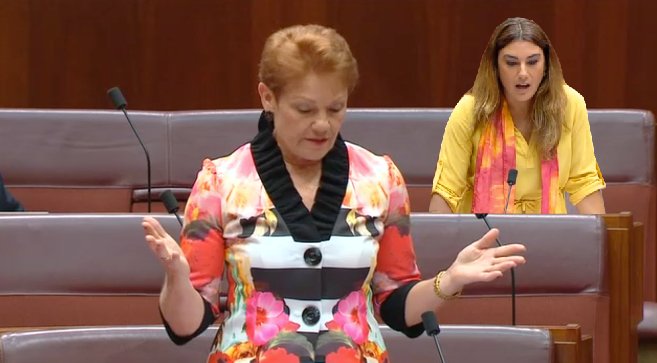
Senator Pauline HANSON: Economic Recovery Package (JobMaker Hiring Credit) Amendment Bill   (Queensland—Leader of Pauline Hanson’s One Nation): The JobMaker scheme has not been properly thought through. It has too many flaws to successfully entice businesses into hiring extra employees and help rebuild the employment sector post-COVID-19. This pandemic induced recession is an extraordinary once-in-100-year event that has brought Australia and much of the world to its financial knees, and it needs something special to turn it around. JobMaker falls short.


The Senate might recall that on 24 February I was the first member of the Senate to question why the Morrison government allowed Australian universities to put profits before the health and security of this nation. Why I asked that series of questions was that a handful of universities here in Australia were circumventing international border closures unnecessarily and further spreading cases of the virus. It was a precursor to the troubles we would face as a nation due to the virus—in particular, the crumbling of the workforce. It was always going to require significant support from the government to help trigger businesses to rebuild Australia’s employment sector.


JobKeeper may have helped keep the heads of individuals above water, but it hasn’t helped in any way to help businesses restore employment numbers. JobMaker, which is the next stopgap measure, also won’t fix it. JobMaker offers little genuine financial incentive to business owners who are struggling to stay afloat. Just like many government programs, it was announced with much fanfare, but when it is truly analysed it doesn’t really do much to help. The government seem to prioritise getting positive publicity rather than actually solving the problem they claim to be solving. The money that has been thrown at JobKeeper and now proposed for JobMaker has wasted money that might be good for the short term, but in the long term, it must be paid back with interest, with nothing long term to show for it.


The $4 billion initially earmarked for JobMaker would be better spent on building infrastructure that would not only create jobs during construction but generate ongoing income for future generations. The modernised Bradfield Scheme, which I have highlighted for two decades, is the type of infrastructure project that could make a massive positive difference to the economy. It will pay for itself and then also generate much-needed ongoing income for Australia. It could irrigate such large parts of Central Queensland that it could become a food bowl not only for Australia but for the rest of the world. It’s a shame the Queensland Labor government doesn’t take this project seriously. It needs the federal government to make it a priority project in the national interest to get it off the ground.


Another infrastructure scheme worth analysing is Project Iron Boomerang, which would see the construction of steel smelters near the coalfields of Central Queensland and near the iron ore mines of Western Australia, with the two areas connected by rail. Coal and iron ore could be easily freighted between the two. It would mean we could process our iron ore to produce all Australian steel requirements here rather than exporting raw materials to China and then importing steel at great cost. We could then export to other countries. It would generate $72 billion in income per year, plus $21 billion in tax revenues annually, and create an estimated 75,000 jobs.


These two projects would help pay off Australia’s debt and help the economy to recover. It’s disappointing that projects like these two and others are not given serious consideration, yet debt-creating handout schemes are jumped at with enthusiastic fervour. The government would much rather throw borrowed money at welfare schemes that might put smiles on people’s faces but will have minimal long-term benefit. It fails to mention that all that money will also need to be paid back courtesy of the very people who receive the handouts: the taxpayers.


Rather than providing support that is genuinely helpful, the financial offerings under JobMaker are relatively small and largely dependent on the courage of the business owners themselves to take a leap of faith to hire new workers. This is a big ask at a time when we’re still in a significant recession and those businesses are struggling to survive. I have mentioned previously that the $4 billion to set up the JobMaker hiring credit scheme could instead go towards helping the states to raise the payroll tax threshold, which would support businesses and business growth across the board.


JobMaker also comes with administrative headaches for businesses, which are required to report quarterly to government to affirm their ongoing eligibility for the credits. A lot can change in business in three months. To be eligible, they need to prove an increase in total employee numbers. It makes it a worry for employers who fear the unexpected loss of a staff member or two could see them lose their entitlement to that support. The reality hanging over their heads would create more unwanted uncertainty in a year that has already been plagued with considerable uncertainty. On top of that, the wage credits are paid to the businesses quarterly, potentially adding to the administrative challenges and reducing the attractiveness of the scheme.


JobMaker supports two sectors of the workforce: those aged 16 to 29 and those aged 30 to 35. Jobseekers of other ages are therefore overlooked and disadvantaged, including those who might be a little older but who have considerable expertise and still much to offer. As I pointed out when the scheme was first announced, it is discriminatory towards school leavers and older workers, even possibly breaching age-discrimination laws. While federal laws like the Fair Work Act 2009 outlaw age discrimination, some state laws allow special exemptions that aim to lift those sectors of society that are disadvantaged. So the murkiness of JobMaker gets even murkier.


It was hoped that JobMaker would encourage the creation of 450,000 new jobs, but Treasury itself has downgraded that expectation to more like 45,000. Experts from the Council of Small Business Organisations Australia, COSBOA, believe the dollars on offer through the scheme are not high enough for businesses to offset the costs and risks of hiring more employees. At $200 for a new worker aged 16 to 29 and $100 for someone aged 30 to 35, the employer who takes up these incentives still needs to find the bulk of the new employee’s weekly wages. To commit to finding that extra money upfront each week is daunting for many business owners, many of whom are in survival mode due to more than six months of hardship. As I said earlier, the credits are paid quarterly, so they are forced to pay full wages upfront and wait months for the credits to be reimbursed—a further disincentive. Many businesses are still finding their feet and they remain uncertain of what the future will bring. They will obviously baulk at the idea of taking on the costs that come with additional employees. Committing to hiring additional staff members means the business owner is also committing to finding hundreds more dollars in income to make up the full wages. If business growth were that easy, he or she would have hired without the need for a wage subsidy.


JobMaker would be more likely to interest employers if their business had entered a growth phase, but many small and medium businesses today are in a survival phase. It is my concern that JobMaker would encourage the loss of full-time jobs and reduce job security. JobMaker encourages the subsequent casualisation of any new roles. The $200 payment requires a new employee to work a minimum of 20 hours, so it makes sense that an employer might think to employ two workers, each working 20 hours, to qualify for two payments. This would better subsidise an employer than employing someone in a full-time equivalent position. This reduces the demands on the employer, but, unfortunately, the workers miss out on full-time work and the employment sector generally suffers.


Governments of both colours have always believed wrongly that small-business owners live the high life. The reality is that most small-business owners work the longest hours of all their staff, often doing paperwork late into the night. They are the first to be in the office in the mornings, and they are the last to get paid after invoices and overheads are taken care of. As we know, there are many businesses across this country crying out for workers. But, because of the decisions made by this government to make welfare so lucrative, there are not many people willing to take up these jobs. JobSeeker has made it easy for Australians to live comfortably without needing to work. JobMaker has been devised by the government to rectify that problem but is unlikely to be successful for the reasons outlined. JobMaker is not a strong enough system to help prise JobSeeker recipients off their couches and back to work. It is throwing bad money after bad money. One Nation will not support it.


The government needs to move away from the damaging handout mentality that is stagnating job growth and building debt. It needs to start thinking about measures that will fire up economic activity and make Australia the powerhouse economy that it can be. The government needs to shift focus to investing in infrastructure projects that will benefit Australians and Australia as a whole for the decades to come.


As I’ve stated in my speech, we won’t be supporting this. I’ve spoken with a lot of small businesses along the way. A lot of businesses are thriving. They’re doing extremely well with COVID. They’ve come out the other end. The trouble is that they don’t want the $100 or $200 that’s given to them. What they want is people to work. The signs are out there. When they’re taking on 13-, 14- and 15-year-olds for work because they can’t get anyone else to work then we have a real problem in this country. I know a lot of people are happy, and, under COVID, we needed to pay people who have lost their jobs and the jobseekers. I understand that. But extending this program out to March next year is not getting these people out of the way of life of sitting and getting paid by the government. That is not getting them to go and apply for these jobs.


My question to Michaelia Cash today was about what the government are going to do about these people who are offered jobs. We have 20,000 people in Cairns and the Hervey Bay in Queensland on JobSeeker, yet the farmers are crying out for about 15,000 workers, and they can’t get anyone. No-one applies for their jobs. If you go to Maranoa or the Darling Downs, there are another 7,000 on JobSeeker, and the farmers can’t get workers to pick the fruit. The farmers are ploughing their crops into the ground because no-one will pick the fruit. Is this how low this country has come—people don’t want to get out to work because it’s too hard? The handouts don’t send out a lot of money. It’s not a lot of money by the time you pay the rent, but the fact is that people here are quite happy to live this lifestyle. They don’t have to get up, get in the car, go to work and travel an hour to work like most other Australians have to do. They’re quite happy to receive that money and live this lifestyle because they don’t have to be told what to do or work for that money. There is a handout mentality in the third and fourth generations of this nation—a handout mentality of people not working. They feel it’s an entitlement; it’s not. It was set up as a helping hand.


When we bring workers from overseas to pick the fruit in this country, we have a real problem. Both sides of parliament keep giving handouts to buy votes. Once you give the handouts, you can’t take them back. People think they’re entitled to them. Where has the country that I grew up in gone? People have to provide roofs over their own heads, not rely on the government to provide them. It is there for those that need that helping hand. But when we have a generation on welfare payments, we have a real problem. This here is not helping the situation. Businesses don’t want handouts. Businesses want Australian workers.


Source: Transcript and Image Parliament of Australia Website 

Morrison extends lower rate $150 Jobseeker payment until march

ScoMo Scott Morrison 1


The Morrison Government will extend temporary support through the social security system, for those Australians seeking work, for a further three months as economic confidence and momentum builds.

Both existing and new JobSeekers will be paid the Coronavirus Supplement at a rate of $150 per fortnight from 1 January 2021 through to 31 March 2021 on top of their base rate of payment and other supplements they are eligible to receive.

Prime Minister Scott Morrison said JobSeekers would continue to be able to earn up to $300 per fortnight without their social security payments being reduced.

“My number one priority is to get more Australians into work,” the Prime Minister said.

“As the country is safely reopening and businesses starting to return to full steam, we need to connect those seeking work with available jobs,” the Prime Minister said.


“When the global COVID-19 pandemic hit Australia, we acted decisively by boosting our health response and putting in place more than $257 billion of direct economic support measures to cushion the blow, and today that support continues for those Australians that need it.”


Minister for Families and Social Services Anne Ruston said the Government was committed to supporting all Australians as the economy reopens and they return to work.


“We have temporarily put arrangements in place so that our social security safety net is not just for people who have lost their jobs but it is also supporting people who have had their hours or income reduced,” Minister Ruston said.


“As the jobs market improves we want to encourage people to re-engage with the workforce because we know that even a few hours of work a week while on payment can have a dramatic impact on the pathway off income support.”


Expanded criteria will continue to provide payment access for permanent employees who are stood down, sole traders and the self-employed until 31 March 2021. The relaxed partner income test will also continue meaning that a JobSeeker can still access payments where their partner earns about $80,000 annually.


The Ordinary Waiting Period, Newly Arrived Resident’s Waiting Period and the Seasonal Work Preclusion Period will continue to be waived until 31 March 2021.


The extension of temporary measures is estimated to cost an additional $3.2 billion.


Source: Licensed from the Commonwealth of Australia under a Creative Commons Attribution 4.0 International Licence.


The Commonwealth of Australia does not necessarily endorse the content of this publication.

Vladimir Putin meeting President of Syria Bashar al-Assad

Putin and President of Syria Bashar al Assad0A 1


Vladimir Putin had a meeting, via videoconference, with President of the Syrian Arab Republic Bashar al-Assad.

President of Russia Vladimir Putin: Good afternoon, Mr President.

Glad to see you.

Russia is continuing to make intensive efforts to facilitate a long-term settlement in Syria, restoring its sovereignty, independence, unity and territorial integrity.

In this context, I should note the productivity of the Astana format that also involves our partners from Iran and Turkey. We have achieved great progress thanks to our joint efforts: the hotbed of international terrorism in Syria has been almost completely eliminated; the level of violence has been reduced significantly. The country is returning to a peaceful life while an inclusive political process continues under the auspices of the United Nations.

At this point, Syria’s post-conflict recovery is crucial – primarily, the return of Syrian refugees and internally displaced persons to their homes. As we know, this is one of the key conditions of the fundamental UN Security Council Resolution 2254.

Unfortunately, as of today, more than 6.5 million refugees remain outside Syria, the overwhelming majority being able-bodied citizens who can and must take part in their country’s recovery. Moreover, their return would also be in the interests of the host countries – mainly, Syria’s neighbours, because this burden is significant and they have to incur substantial expenses related to temporary accommodation and provision of supplies to Syrians. Not to mention the fact that younger refugees often fall under the influence of radical groups, join militants and may pose a threat to their host countries.

Back in 2018, I addressed the international community with an appeal to support the process of repatriation of Syrian refugees and internally displaced persons which you, Mr President, and the Syrian government initiated. It was then that we agreed to expand bilateral cooperation on this matter, in particular, by forming inter-agency coordination offices.

In Syria itself, measures to improve living and working conditions and lift various political, social and psychological restrictions, continue to this day.

These efforts have yielded fruit. Over 850,000 Syrian citizens have returned back to Syria and over 1 million people have returned to the places of their permanent residence inside the country. This is certainly a result of your efforts, Mr President. This is good, in general. But the scale of the humanitarian disaster – there is no other description for the situation – remains quite considerable.

Now that peace and tranquillity have been restored in the larger part of Syria, there is a possibility to ensure a large-scale return of refugees back home. It is vital, of course, that this process runs a natural course, with no pressure applied. Each Syrian must be able to make a decision independently, based on reliable information about the situation in his or her home country and the measures to restore peaceful life taken by you, Mr President, and by the Syrian authorities.

This is the objective of the international conference on the return of refugees and internally displaced persons, which will be held in Damascus on November 11–12. Russia wholeheartedly supports it and is actively helping Syria to organise and hold it. Representatives of many countries, as well as the UN and the International Committee of the Red Cross, have confirmed their participation.


The Russian delegation, which will be one of the largest, will include professionals from over 30 ministries and agencies. In addition to taking part in the forum, they intend to hold meetings with their Syrian colleagues to discuss the most important current aspects of bilateral cooperation. Also, the delivery of 65 tonnes of humanitarian aid will be timed for the conference.


We hope that the conference will be productive and will help to stimulate the process of a massive return of refugees, thus promoting lasting normalisation in Syria.


I hope that it will be successful. For our part, this is what we will work for, Mr President.


Thank you.


President of Syria Bashar al-Assad (retranslated): Thank you very much, Mr President.


I am delighted to be hosting this videoconference with you today, especially in the run-up to the International Conference on Refugees, which will be convened in Damascus within the next few days.


Thank you for your attention to the problem of refugees. It is a humanitarian problem, but many countries around the world are trying to politicise it. It is a national problem, and all Syrian authorities are interested in resolving it. It is one of our government’s top priorities for the next period, especially since a significant part of Syria’s territory has been liberated, and we have eradicated terrorism there.


Of course, this matter is a priority, but, in addition to it, we would, of course, like to discuss other issues.


As you are aware, Mr President, many refugees and internally displaced persons were driven out of the country by fear of terrorism. Others fled because infrastructure was destroyed, and they lost their jobs.


We continue to maintain direct contact with most of the states in which these refugees are residing. We are aware that they are eager to return, especially after Syria has provided certain benefits to encourage the return process.


However, the problem is that terrorists are still holding some regions of our country, and Syria and its people are under economic blockade, which does not help us meet the Syrian refugees’ essential needs. Schools are closed or have been destroyed, and providing essential services is a challenge.


In addition, the returning refugees must have certain prospects for a normal life, but the problem is that the Western embargo is a big hurdle to achieving these goals.


We pin great hopes on this conference and hope that it will bring practical results. The Syrians are not only willing, but are excited to be able to carry out practical agreements in the months immediately following the conference. And we are aware that most of the refugees support the Syrian government, but, unfortunately, the current circumstances prevent them from returning.


We appreciate the other states’ interest in participating in this conference. We hope it will be possible to alleviate the existing economic embargo or even break it by joint efforts in order to create proper conditions for the return of refugees.


Once again, Mr President, thank you for this opportunity to contact you and for the attention that you and the leadership of the Russian Federation are devoting to this matter and, despite the international pressure and sanctions against this conference, you are helping us organise it.


We are confident that it will be a success, and are committed to continuing cooperation with Russia and other interested states on this matter. We are confident that, similar to the outcome of World War II, the truth is on our side and we will succeed in upholding it.


Thank you once again for supporting Damascus and the Syrian government in overcoming this crisis, the post-conflict rebuilding effort and the return of the refugees.


Thank you.


Vladimir Putin: Mr President, I propose briefly discussing some of the details related to organising this conference and then, maybe, our bilateral relations.


Source: Source President of Russia Kremlin Moscow


Kayleigh McEnany: We’re asking for truth and transparency into US Election

Kayleigh McEnany 1


Kayleigh McEnany: All we’re asking for is truth and transparency into the US Election, sadly we are the ones asking the questions that the Fake Mainstream media should.


.embed-container { position: relative; padding-bottom: 56.25%; height: 0; overflow: hidden; max-width: 100%; } .embed-container iframe, .embed-container object, .embed-container embed { position: absolute; top: 0; left: 0; width: 100%; height: 100%; }


Donald Trump YouTube

Support President Trump: Join The Stop The Steal Caravan

Now is the time for you to stop being a mere spectator. Now is the time for you to be an active participant in the restoration of the republic, peacefully and lawfully.


Rally Map 1
Photo Alex Jones Infowars


Infowars: He needs to see your strength in person that will in turn give him strength to fight this attempted coup against the United States of America by multinational forces who are trying to bring it down from within.

Make no mistake, the time to stand up is now.

Otherwise, prepare for nationwide lockdowns, the destruction of the economy, the loss of jobs – including perhaps your own – and the increasing cost of raising a family due to the exploding costs of healthcare and housing.

If you don’t stand up now, get ready for the erosion of your rights to appease multinationals who could not care less about the values and liberties of the United States and its Constitution.  They could not care less about your day-to-day struggles. In fact, they’re cheering against you. Please go to Infowars for more Information about the Caravan