We, the Foreign Ministers of Australia, Canada and the United Kingdom, and the United States Secretary of State, underscore our serious concern at the mass arrests of 55 politicians and activists in Hong Kong for subversion under the National Security Law.
The National Security Law is a clear breach of the Sino-British Joint Declaration and undermines the ‘One Country, Two Systems’ framework. It has curtailed the rights and freedoms of the people of Hong Kong. It is clear that the National Security Law is being used to eliminate dissent and opposing political views.
We call on the Hong Kong and Chinese central authorities to respect the legally guaranteed rights and freedoms of the people of Hong Kong without fear of arrest and detention. It is crucial that the postponed Legislative Council elections in September proceed in a fair way that includes candidates representing a range of political opinions.
Joint Statement
Senator the Hon Marise Payne, Minister for Foreign Affairs and Minister for Women, Australia
The Honourable Francois-Philippe Champagne, Minister of Foreign Affairs, Canada
The Rt Hon Dominic Raab, MP, First Secretary of State and Secretary of State for Foreign, Commonwealth and Development Affairs, United Kingdom
Four Central Queensland race clubs — including the Yeppoon Turf Club — will share in nearly $700,000 worth of Palaszczuk Government infrastructure grants, generating jobs for local tradies.
Member for Keppel Brittany Lauga said the funds would be shared between Yeppoon Turf Club, Blackwater-Bluff Amateur Race Club, Clermont Race Club and Emerald Jockey Club.
“Racing is part of our region’s economy as well as community life, especially in some of our smaller and more isolated towns,” Ms Lauga said.
“Apart from supporting local clubs and improving facilities for trainers, jockeys, owners and racegoers, these grants will generate work for local tradies in these communities.”
The upgrades are part of $2.8 million worth of grants being distributed statewide to some of Queensland’s smallest and most remote country race clubs.
Racing Minister Grace Grace today announced the grants to 37 country clubs from Mareeba in the Far North to Betoota in the south-west.
“The Palaszczuk Government’s Country Racing Program provides critical infrastructure funding across the state to improve and enhance our non-TAB racing clubs and their communities,” Ms Grace said.
“These are some of the state’s smallest and most remote clubs, and importantly, these projects will create work for local tradies and businesses.”
The Palaszczuk Government has committed a total of $105.6 million to country racing over six years.
This includes funds for non-TAB clubs for infrastructure repairs and maintenance projects.
“Our Country Racing Program provides security and continuity to the country racing community up to 2023 by funding race meetings, prize money and racing infrastructure, repairs and maintenance,” Ms Grace said.
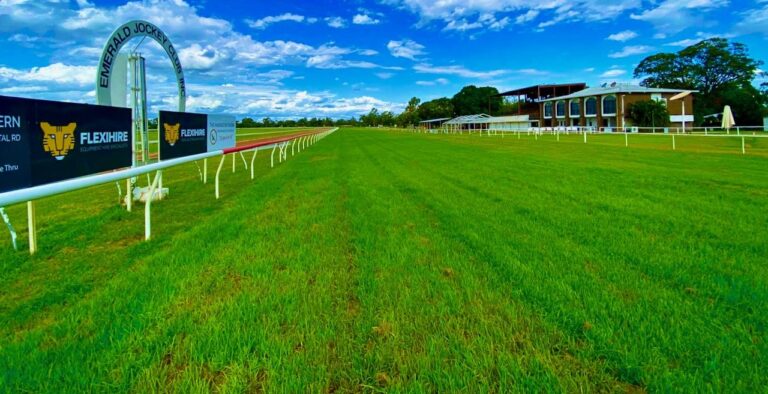
The big winner in CQ is the Emerald Jockey Club, with $470,000 for a new racecourse mower, fertilizing and spraying equipment, an irrigation upgrade and tie-up stalls.
Bluff Blackwater Amateur Race Club will receive nearly $200,000 for a new public address system, perimeter fencing for the horse float area and to refurbish its tie-up stalls.
Yeppoon Turf Club will receive $40,000 to upgrade its chute and Clermont Race Club, $10,000 for fencing.
The President’s message reads, in part: “This wonderful holiday illuminates the world with a light of love and kindness, gives joy and hope to millions of people and guides them towards timeless spiritual values.
It is crucial that the Russian Orthodox Church, as well as other Christian denominations, constantly focus on the issues of the moral health of society, on strengthening the institution of the family and raising the younger generation, and that they sincerely care about maintaining inter-ethnic and inter-faith dialogue.”
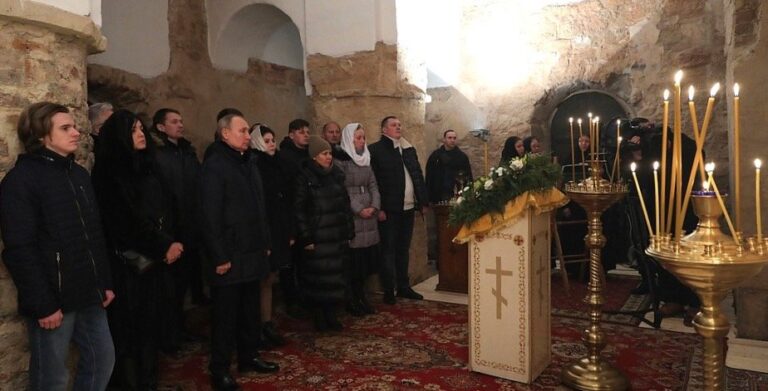
On Christmas Eve, the President attended mass at the Church of St Nicholas located on the island of Lipno, Lake Ilmen, eight kilometres from Veliky Novgorod.
The Church was built in 1292 by Archbishop Clement on the site where the miracle-working icon of St Nicholas of Myra was found. It is the oldest remaining church in Russia built after the Mongol invasion. The church has undergone several restorations including in 2017–2019. Now the landmark has been restored to its original form and is included in guided tours. The famous icon from the church St Nicholas of Lipno is showcased at the Novgorod Museum-Reserve.
The President donated the icon of God the Almighty to the church. It was executed in tempera in the tradition of 19th-century Mstera icon-painting. The icon-case, with a gilded frame, and the icon-setting were made in the workshops of the St Trinity Fellowship of the city of Shchigry.
MS. MCENANY: I am here to deliver this message on behalf of the entire White House. Let me be clear: The violence we saw at our nation’s Capitol was appalling, reprehensible, and antithetical to the American way. We condemn it — the President and this administration — in the strongest possible terms. It is unacceptable, and those that broke the law should be prosecuted to the fullest extent of the law.
I stood here at this podium the day after a historic church burned amid violent riots, and I said this: “The First Amendment guarantees the right of the people to peaceably assemble. What we saw last night in Washington and across the country was not that.” End quote. Make no mistake: What we saw yesterday afternoon in the halls of our Capitol, likewise, was not that.
We grieve for the loss of life and those injured, and we hold them in our prayers and close to our hearts at this time. We thank our valiant law enforcement officers who are true American heroes.
What we saw yesterday was a group of violent rioters undermining the legitimate First Amendment rights of the many thousands who came to peacefully have their voices heard in our nation’s capital. Those who violently besieged our Capitol are the opposite of everything this administration stands for. The core value of our administration is the idea that all citizens have the right to live in safety, peace, and freedom.
Those who are working in this building are working to ensure an orderly transition of power. Now it is time for America to unite, to come together to reject the violence that we have seen. We are one American people under God.
Australia’s COVID vaccine rollout will now begin in mid-to late February. Vaccination will commence with workers dealing with international arrivals or quarantine facilities, frontline health workers and those living in aged care or with a disability.
Prime Minister Scott Morrison said the government “optimistically” aims to vaccinate 80,000 Australians a week, and four million by the end of March.
The first vaccine doses were initially planned for March, but the rollout has now been brought forward, pending the Therapeutic Goods Administration’s approval of the Pfizer vaccine, anticipated by the end of January. Morrison said it would take a further two weeks for the first shipments of vaccine to arrive after that.
The government envisages delivering the vaccine via 1,000 distribution points, including general practitioners and possibly pharmacists.
Department of Health Secretary Brendan Murphy described the rollout as “the most complex logistical exercise in our country’s history”.
If the government’s ultimate target is to still vaccinate a minimum 80% of Australians (widely viewed as the threshold for herd immunity) by October, time will be tight to give 21 million people the requisite two doses.
The biggest threat to this timetable will be continued COVID outbreaks that take up health workers’ valuable expertise and time.
NASA-like logistics
Executing the plan to vaccinate frontline workers, the vulnerable and then everyone else, will require NASA-like logistics. Intact delivery of Pfizer’s vaccine famously requires an ultra-cold chain of -70℃. Each “shipper box” holds 975 vials, each containing five doses.
According to Pfizer, once opened, a box requires dry ice every five days, delivered within 60 seconds of lifting the lid, to maintain its temperature. From the first opening of a box, the full contents of 4,875 doses must be injected within 30 days.
The next challenge is to have the right number of recipients at each vaccination session, arriving at the right time. Each vial takes between 30 minutes and 2 hours to defrost at room temperature, or 2-3 hours at normal refrigeration temperatures of 2-8℃. Defrosted vials must be used within 84 hours. The vaccine must be diluted with sodium chloride and then injected within 6 hours.
Before receiving the vaccine, each person must be pre-screened to rule out serious adverse reactions, medications, food allergies or other medical indications that might preclude them from receiving the injection. Pfizer also requires patients to give informed consent, having been advised of any risks, however small, associated with the vaccine.
For the vaccine to be effective, each recipient needs a second dose at the correct interval, 21 days according to Pfizer and Moderna, and 28 days for AstraZeneca Oxford and the same vaccine for the first and second dose in accordance with the protocols.
Getting better with practice
Logistical lessons learned will presumably make the subsequent rollout of the Moderna and AstraZeneca vaccines potentially easier. We should certainly hope so, given the government’s target will necessitate vaccinating 21 million Australians within little more than 240 days.
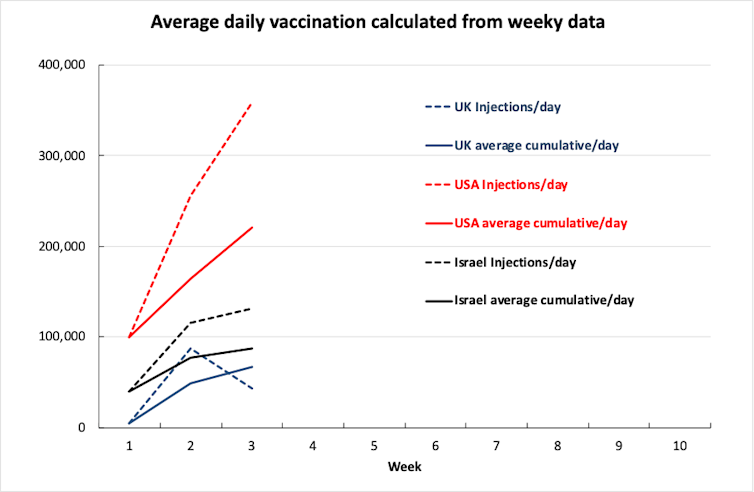
The United Kingdom has vaccinated 944,539 people (1.4% of the population) since December 13, at a daily average rate of 67,467. Even at its peak daily rate of 87,174, it will take well over three years to vaccine 80% of the population.
The United States has vaccinated 5,306,797 people (1.6% of the population) since December 23. With its peak daily rate of 358,887, it will take 4 years to vaccinate 80% of people.
Israel has so far had the fastest rollout in relative terms, having vaccinated 1,482,307 people (16% of the population) since December 26, an average of 87,195 people per day. At its peak daily rate of 150,000, Israel will have vaccinated 80% of its population in just 39 days, and the entire population in 51 days.
Vaccine rollouts in the UK, USA and Israel so far.
Australia has a longer time frame for hitting 80%, but a population three times the size of Israel’s. Overall, an average of about 170,000 injections per day will be needed to deliver the necessary 42 million doses to 21 million Australians over 245 days (March to October).
Extrapolating from Israel’s 325 injecting sites we would need more of them. The Australian government has identified 1,000 injecting sites. One recipient injected every 15 minutes seems to be the standard.
To achieve 80% injection coverage (two injections for 21 million people) every 15 minutes, would require each injecting site to have at least eight injectors per day, or 8,000 across the 1,000 distribution sites nationwide.
In Israel, the strategy of using the care network, called kupot cholim, enables local branches to manage 75% of their local rollout.
Australia’s government plans to use GPs and pharmacies as injecting sites. Staff at each location will need to be trained for the logistics about timing and keeping record of the type of vaccination each recipient receives.
How do we protect frontline workers?
Protecting frontline workers by vaccinating them first is understandable, although evidencecurrentlyavailable indicates vaccines prevent symptomatic and severe infection. We need to wait to see if they also prevent asymptomatic infection.
Addressing the weaknesses in the return traveller program to suppress the virus circulating is our main threat to the vaccination rollout; this would mean fewer community clusters and less time spent by health workers attending COVID cases and outbreak management. Indeed, Israel’s speed of vaccination may be derailed by its third wave necessitating a protracted lockdown.
To prevent the vaccination rollout from derailing we must also quickly eliminate or at least severely suppress the current outbreaks in Greater Sydney and Melbourne. Eliminating the current spread rapidly as possible will deprive the virus of hosts and protect everyone.
Even with the best-laid plans, the vaccine rollout could still be derailed if resources are drained by having to respond to new COVID clusters.
Ultimately, success hinges not just on vaccine logistics but also on tightening the remaining weaknesses in our processes for quarantine and handling returned travellers. Removing the distraction of outbreaks will give us the best chance of getting enough people successfully vaccinated.
Mary-Louise McLaws, Professor of Epidemiology Healthcare Infection and Infectious Diseases Control, UNSW
Brisbane will enter a three-day lockdown to stop the spread of the highly contagious UK strain of COVID-19. From 6 pm tonight until 6 pm Monday, people in the local government areas of Brisbane, Moreton Bay, Ipswich, Redlands and Logan will be required to stay at home except:
to attend work if you can’t work from home; to buy essentials like groceries and medicine;
look after the vulnerable; and exercise within their neighbourhood
Masks will also need to be worn everywhere in those local government areas except if people are at home.
Cafes, pubs and restaurants will be open only for take-away service.
Funerals will be restricted to 20 guests and weddings restricted to 10 guests.
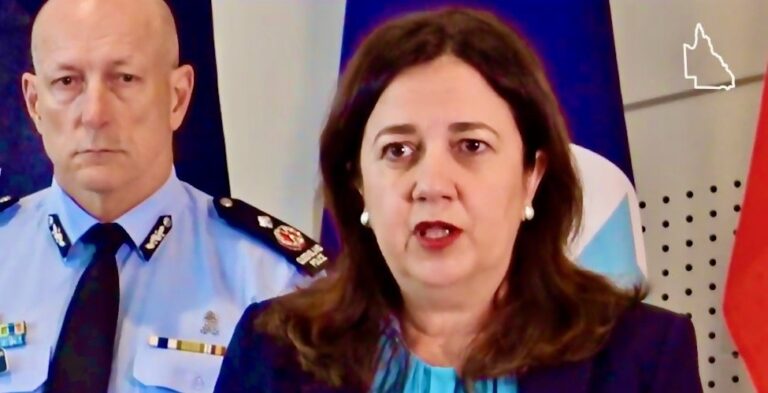
Premier Annastacia Palaszczuk said the measures follow confirmation late yesterday that a cleaner from a quarantine hotel had tested positive.
“There are no second chances with this pandemic,” the Premier said.
“That’s why I’m asking people to have a long weekend at home.
“We have learned from Victoria, South Australia and New South Wales that a short, sharp lockdown is better than a long one and this a more contagious strain.
“Three days is better than 30.”
The Premier said she once again called on Queenslanders to protect each other.
“All we can do is stay home and stay safe and please get tested,” the Premier said.
Health Minister Yvette D’Ath said extra testing clinics with more staff had been opened.
“We want to see as many people tested as possible and people stay home and stay safe,” the Minister said.
Chief Health Officer Dr Jeanette Young said it was essential to stop people moving through the community.
“We know that to stop the spread of the virus we have to stop the movement of people and test, test, test,” Dr Young said.
“Queenslanders have done a tremendous job of containing this virus for so long- we just have to keep it up.”
Guidance regarding movement in and out of Greater Brisbane:
Stay at home and in your neighbourhood
People can choose to enter Brisbane during this period but are bound by the same restrictions for this period. Where possible people are encouraged to delay travel
People can enter greater Brisbane to attain health care
People should not leave Greater Brisbane during this period
Non-residents currently in Greater Brisbane are strongly encouraged to remain until the end of the restriction period.
Reasons for leaving home:
Essential education and work, although work from home where possible
Health care or support of a vulnerable person
Essential shopping but within your local area
Exercise in your neighbourhood (local area) with no more than one person from your household
Restrictions:
Masks are to be worn at all times when outside of your place of residence, this includes in workplaces and public transport
20 people can attend funerals, 10 people can attend weddings (no dancing or singing)
Limit of two visitors in homes
Restaurants and cafes to provide takeaway service only
Cinemas, entertainment and recreation venues, gyms etc to close
Places of worship to close
JOINT STATEMENT Premier and Minister for Trade The Honourable Annastacia Palaszczuk
Minister for Health and Ambulance Services The Honourable Yvette D’Ath
The Andrews Labor Government is helping diverse communities come together in a COVIDSafe way to celebrate their culture and traditions.
Acting Minister for Multicultural Affairs Shaun Leane today opened the Multicultural Festivals and Events Program, inviting organisations to apply for funding for events to be held between March and June this year.
The funding recognises the important role of community connection and celebration and will support events held either in person or in a digital format.
Any in-person event must adhere to the COVIDSafe Public Events Framework.
With the entertainment and events industry one of the hardest hit because of the pandemic, this funding will help bring more life and colour to the state, celebrating our vibrant cultural diversity, whilst ensuring the health and safety of all Multicultural Festivals.
In March, Victoria’s Greek community will celebrate the 200th anniversary of Greek independence – a significant occasion on the cultural calendar.
Delivering on an election commitment, the Labor Government is investing $200,000 to support celebrations.
Victoria is home to the largest Greek population in the world outside of Greece.
This year’s funding also includes $50,000 to support organisations holding Hindu celebrations, events and festivals.
Quotes attributable to Acting Minister for Multicultural Affairs Shaun Leane
“We have much to celebrate here in Victoria and this funding will ensure that, after such a challenging year, festivals and events are supported to take place.”
“Projects funded will celebrate our rich cultural diversity whilst supporting the revitalisation of Victoria’s economy.”
“I can’t wait to see Victorians out celebrating the 200th anniversary of Greek independence in March, our dedicated $200,000 funding will help it be COVIDSafe but importantly, a milestone to remember.”
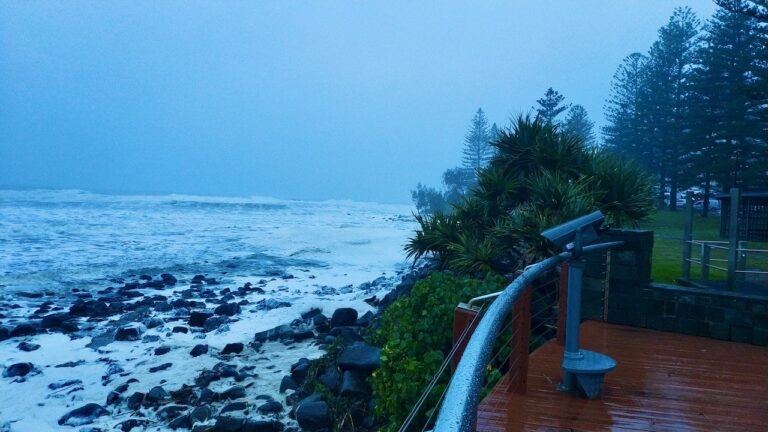
As Ex-Tropical Cyclone Imogen continues to track across the Cape York Peninsula, disaster assistance is available to local councils to recover and rebuild from major flooding in its wake.
Assistance is being provided through the jointly funded Commonwealth-State Disaster Recovery Funding Arrangements (DRFA).
Federal Minister for Emergency Management David Littleproud said the DRFA assistance will provide financial support to aid recovery in Carpentaria, Croydon, Etheridge and Mornington Shires.
“These remote councils up in Gulf Country have reported impacts from the floods such as uprooted trees, road damage from swollen rivers and isolation due to flooded access points, which has required a multi-agency response,” Minister Littleproud said.
“The joint Commonwealth and State funded DRFA will provide financial support for counter disaster operations and restoration of essential public assets, so these communities can get back on their feet sooner.”
Queensland Minister for Fire and Emergency Services Mark Ryan said clean-up operations were ongoing in flood-affected regions across the north of the state.
“SInce Tropical Cyclone Imogen made landfall on Sunday night just north of Karumba and slowly travelled across Cape York, many impacts have been felt by residents of the Far North,” Minister Ryan said.
“Normanton airport recorded 259mm overnight on Sunday, with 186mm falling in just three hours.
“The heavy and persistent rainfall driven by the now Ex-Tropical Cyclone Imogen has caused widespread flooding, with damage to public infrastructure and road closures across much of North Queensland.
“This DRFA funding will assist with the recovery from this latest event and alleviate the financial burden on these impacted councils.
“The Commonwealth and Queensland Governments are working together to ensure all impacted communities receive the recovery support they need.”
Information on disaster assistance can be found on the Australian Government’s Disaster Assist website at www.disasterassist.gov.au and the Queensland Government’s Disaster Management website at www.disaster.qld.gov.au.
Attribution: Minister for Police and Corrective Services and Minister for Fire and Emergency Services The Honourable Mark Ryan
Article Includes United States Intellectual Property Enforcement Coordinator (IPEC), Vishal Amin, issued the United States Annual Intellectual Property Report for 2020. Read Below
Extra Administration Issues Annual Intellectual Property Report
The report details the actions and activities taken over the past year by the United States to promote, protect, and prioritize our great competitive advantage – our Nation’s innovative economy. In 2017, the Trump Administration adopted a four-part intellectual property strategy that has provided a framework for sound intellectual property policy to advance innovation and creativity and ensure effective intellectual property protection and enforcement domestically and abroad.
“From day one, the Administration has had a singular focus on strengthening and growing our Nation’s innovative economy,” stated Coordinator Amin. “The actions that we have taken to protect American intellectual property have helped set the United States on a path to remain not only an economic leader, but a powerhouse of innovation, invention, and creativity for decades to come.”
Learn more about the Annual Intellectual Property Report here.WhiteHouse.gov
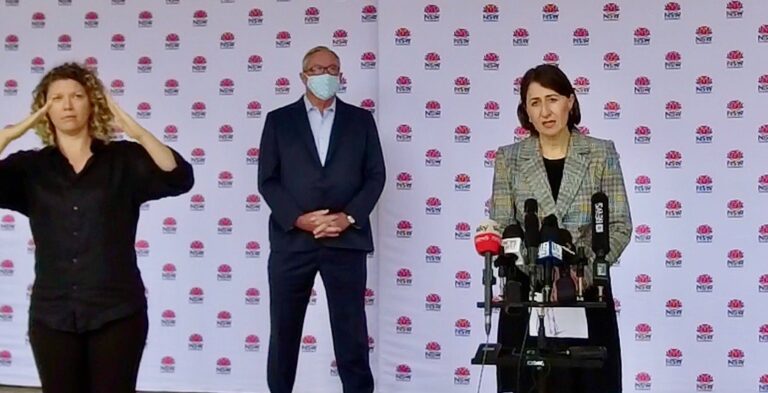
Given the risk of COVID-19 transmission on the Northern Beaches and across Greater Sydney (including Wollongong, Central Coast and Blue Mountains), the following adjustments are being made.
From midnight tonight, the southern zone of the Northern Beaches will be subject to the same restrictions as Greater Sydney.
Restrictions for the northern zone of the Northern Beaches remain the same with stay at home orders in place until 9 January 2021;
No visitors to the home.
Five northern zone residents can gather outdoors (not at homes) for exercise and recreation, from within the same zone.
Non-essential businesses remain closed.
Given the general risk in Greater Sydney, new measures are required to reduce the transmission potential of COVID-19 while maintaining economic activity.
The following measures for Greater Sydney (including Wollongong, Central Coast and Blue Mountains) are effective from midnight tonight:
Face masks will be mandatory in the following indoor settings:
shopping (retail, supermarkets and shopping centres)
public/shared transport, indoor entertainment (including cinemas and theatres)
places of worship
hair and beauty premises.
Face masks will also be mandatory for all staff in hospitality venues and casinos and for patrons using gaming services.
Compliance will start from Monday, 4 January 2021 with $200 on the spot fines for individuals for non-compliance. Children under 12 are exempt but are encouraged to wear masks where practicable.
Gym classes reduced to 30 people.
Places of worship and religious services limited to 1 person per 4sqm up to a maximum of 100 people per separate area.
Weddings and funerals limited to 1 person per 4sqm up to a maximum of 100 people.
Outdoor performances and protests reduced to 500 people.
Controlled, outdoor gatherings (seated, ticketed, enclosed) reduced to 2,000 people.
Night clubs not permitted.
People are still encouraged to limit non-essential gatherings and reduce their mobility where possible to further minimise the risk of transmission in the community.
Whilst these measures do not apply to areas outside Greater Sydney (including Wollongong, Central Coast and Blue Mountains), we urge all residents and visitors across the State to practise COVID safe behaviours and get tested even if symptoms are mild.
We thank the community for their patience and understanding.
Our priority is always to protect the health and safety of the community.
Media Release Statement from Gladys Berejiklian and Brad Hazzard

















 Donald J Trump