Big tech censorship isn’t going to let up any time soon. In fact we can expect it to get worse. However the means to bypass these companies already exists. It’s time to start developing new strategies and migrate off of their platforms.
Unless you’ve been living under a rock, you’ve probably noticed that the internet isn’t what it used to be these days. Social media platforms that used to provide for the free exchange of information and the means of organizing resistance, have anointed themselves arbiters of truth, on a mission to protect our fragile minds from any ideas and opinions that they happen to disagree with. Controversial posts are now ‘fact checked’, restricted or flat out removed. Those who dare speak outside the lines are subject to temporary or permanent banishment.
Unfortunately this trend isn’t likely to reverse any time soon. In fact it’s going to get worse. Calling them out or petitioning for change isn’t going to work. These people feel validated and justified. And they are supported by a highly vocal contingent of the population that believes that dangerous ideas should be silenced, and that heretics should not be allowed any platform whatsoever to speak their minds. As such it is imperative that we develop new strategies for exchanging ideas and organizing that do not depend on their technology.
In this video I’m going to describe a media strategy to bypass Facebook, Twitter and Youtube that makes use of Telegram, however the same principles can be applied to other apps.
Telegram is an encrypted messaging app which ties to a cellphone number much like Whatsapp. However it has much more features than Whatsapp, including channels and multi-level admin controls for groups. It also has a desktop version for Mac and Windows that make it much easier to work with.
Working with Telegram as a tool for activism is very different than old school social media because you don’t have direct access to open pools of users that can find you in a search. However the fact that Telegram distributes all messages directly to your channel subscribers or group members without censorship and without limiting distribution algorithmically, makes the potential reach of this platform much more significant.
Telegram also has secret chats which provide a means of communication for activists that intelligence agencies cannot monitor. Given the level of access that social media companies grant to the NSA and other entities this extremely important. And if you think this is a conspiracy theory, you might want to look into the Edward Snowden revelations.
Once you have Telegram installed, setting up channels and groups is easy. Click the pen icon in the top right corner and choose new group or new channel. When you create a new channel or group you will be given the chance to set it as public or private and choose a custom URL. It’s also worth noting that you can create a custom username for your account so that people can contact you without knowing your phone number.
Once you’ve created a channel you’ll want to enable comments by connecting a discussion group. This is done by double clicking the channel name and scrolling down to the discussion link. Follow the instructions and a group will be created that allows your followers to comment on posts in the channel and have conversations among themselves.
Both Telegram groups and channels provide the ability to pin multiple posts. This can be used for setting discussion rules or to list links to resources.
In addition to text messages you can post photos, videos, or polls by clicking the paperclip icon to the left of the text field. All of these media types can be embedded into web pages to share with a wider public.
Now you can get your groups and channels jumpstarted by sending invite links to your contacts, or sharing them online. These links can also be converted to QR codes which can then be printed onto posters, business cards or stickers. You can also create location based groups in the phone version of the app by clicking contacts, find people nearby, then create local group. This will make your group visible to anyone who has location services enabled in the area.
So imagine you are trying to organize resistance to a government policy and Facebook and Twitter have made it clear that speaking out against this policy will not be tolerated on their platforms. Rather than trying sneak past them (which is not likely to work), you create Telegram channel. In that channel you pin your manifesto or information about your event to the top and send an invite link to your contacts. You also make a post to your normal social media profiles sending people to the channel. Next you make posters, business cards and stickers with your message plus a QR code. You also post pdfs for these print outs into the channel, and encourage your subscribers to distribute them.
You then create a network of local and regional groups moderated by people you trust. This enables people to organize their own events in their respective towns.
Rinse and repeat and your movement will grow. Social media companies won’t be able to stop you. In fact they won’t even have information about your activities. They will be completely out of the loop. And that’s a good thing, because it also cuts government surveillance out of the loop.
Now the StormCloudsGathering channel has survived the social media purge so far because we’ve been very careful not to cross certain lines. There are certain things we cannot talk about here, or we’ll be taken down. However in this next phase some of these lines need to be crossed, and we’ll be crossing them on Telegram. We’re going to be posting content there which will not be available on our other platforms. In fact if you join the @StormCloudsGathering channel on Telegram today you’ll find a new video that will never, ever, be posted on Youtube or Facebook.
This content is creative commons. You have permission to share far and wide, If you want to help StormCloudGathering pull this project forward you can donate here.
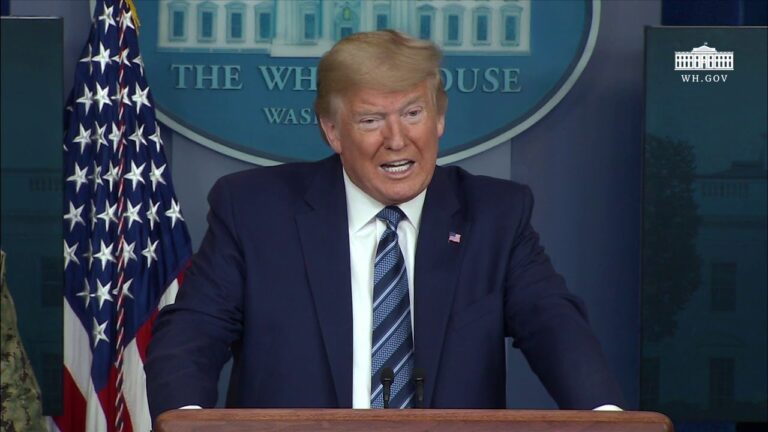
As President of the United States it is my responsibility to protect the people of our country from the economic devastation and hardship that was caused by the China Virus.
I understand that many small businesses have been forced to close as a result of harsh actions by Democrat-run states. Many people are back to work, but my job is not done until everyone is back to work.
Fortunately, as a result of my work with Congress in passing the CARES Act earlier this year, we avoided another Great Depression. Under my leadership, Project Warp Speed has been a tremendous success, my Administration and I developed a vaccine many years ahead of wildest expectations, and we are distributing these vaccines, and others soon coming, to millions of people.
As President, I have told Congress that I want far less wasteful spending and more money going to the American people in the form of $2,000 checks per adult and $600 per child.
As President I am demanding many rescissions under the Impoundment Control Act of 1974. The Act provides that, “whenever the President determines that all or part of any budget authority will not be required to carry out the full objectives or scope of programs for which it is provided, or that such budget authority should be rescinded for fiscal policy or other reasons (including termination of authorized projects or activities for which budget authority has been provided), the President shall transmit to both Houses of Congress a special message” describing the amount to be reserved, the relevant accounts, the reasons for the rescission, and the economic effects of the rescission. 2 U.S.C. § 683.
I will sign the Omnibus and Covid package with a strong message that makes clear to Congress that wasteful items need to be removed. I will send back to Congress a redlined version, item by item, accompanied by the formal rescission request to Congress insisting that those funds be removed from the bill.
I am signing this bill to restore unemployment benefits, stop evictions, provide rental assistance, add money for PPP, return our airline workers back to work, add substantially more money for vaccine distribution, and much more.
On Monday the House will vote to increase payments to individuals from $600 to $2,000. Therefore, a family of four would receive $5,200. Additionally, Congress has promised that Section 230, which so unfairly benefits Big Tech at the expense of the American people, will be reviewed and either be terminated or substantially reformed.
Likewise, the House and Senate have agreed to focus strongly on the very substantial voter fraud which took place in the November 3 Presidential election.
The Senate will start the process for a vote that increases checks to $2,000, repeals Section 230, and starts an investigation into voter fraud.
Big Tech must not get protections of Section 230!
Voter Fraud must be fixed!
Much more money is coming. I will never give up my fight for the American people!
The Andrews Labor Government is ensuring Victorians struggling with anxiety and distress get the support they need.
Anxiety Recovery Centre Victoria will receive an extra $200,000 to provide surge capacity for their specialist OCD and anxiety helpline, which has experienced a 232 percent rise in demand this year.
This comes following a $250,000 investment to ARCVic earlier this year, to improve access to support and ongoing care for people with obsessive compulsive disorder (OCD) and other anxiety conditions.
Since the start of the pandemic, the service has recruited 70 more volunteers and extended its operating hours, so more Victorians can access the support they need, when they need it. This funding will deliver the new CARES 4ME program to be run by ARCVic, that caters to those who require ongoing support.
CARES 4ME program matches clients to trained volunteers with lived experience of anxiety. Volunteers provide emotional support and practical guidance to help people work through their individual needs and to develop anxiety management strategies.
This initiative continues to fill the gaps in the system during the pandemic and ensuring Victorians get the specialised support they need, by providing regular check-ins.
The Victorian Budget 2020/21 is investing $868.6 million in the recent budget, to ensure Victorians get the mental health support they need when they need it. This investment will fund the rollout of the interim recommendations from the Royal Commission into Mental Health.
Since the start of the pandemic, the Labor Government has invested more than $220 million into mental health services, to help Victorians reaching out for help with stress, isolation and uncertainty during and after the coronavirus pandemic.
Quotes attributable to Acting Minister for Mental Health Martin Foley
“Victorians experiencing anxiety will get the mental health supports that address their specific needs.”
“This vital funding will ensure that we meet the demand of Victorians reaching out for help with OCD and other anxiety conditions, during and after the pandemic.”
Quotes attributable to ARCVic CEO, Michelle Graeber
ARCVic is here to let you know you don’t need to be alone. We are only a phone call away; we understand anxiety and can provide people with the strategies and knowledge that will help them on the journey to recovery.”
“We are all dealing with unprecedented uncertainty and major changes to the way we live our lives as a result of the coronavirus pandemic. Having to adapt in ways that are completely new and with mounting uncertainty can bring unwanted anxiety, stress and worry.”
Queensland online shoppers are being warned about the number of vehicle scams being carried out on social media trading platforms.
Acting Attorney-General Mick de Brenni said Queenslanders online marketplaces can sometimes hide the true identity of the seller and may not always be the best option when it comes to making a significant purchase such as buying a car.
“We know online marketplaces are becoming increasingly popular for buying everything from pot plants to a used car,” Mr de Brenni said.
“The Palaszczuk Government is helping consumers to be aware of the risks when using these platforms, especially when transferring money for significant purchases.
“Between 1 January and 30 November 2020, Scamwatch received more than 250 reports of Queenslanders being scammed when trying to buy a vehicle, caravan or motorhome.
“One Queensland consumer lost $39,000 when they tried to buy a vehicle via a popular online marketplace. Despite the regular vehicle checks appearing normal, the car was never delivered and the seller could not be contacted.
“Scammers will lure you in with a fantastic deal so our advice is that if it sounds too good to be true, it probably is.”
The Minister said these steps could help consumers stay safe:
avoid buying a car from someone who is unwilling to meet you face to face or can only be reached by email
never buy a car that you have not seen in person and had inspected by a professional
don’t let someone put you under pressure by insisting on completing the transaction as quickly as possible
avoid payments that are international money orders, wire transfers, pre-loaded cards, cryptocurrency and cheques.
RACQ spokesperson Lauren Ritchie urged motorists in the market for a new vehicle to do their research and be on the lookout for any suspicious behaviour.
“Don’t buy sight unseen and be wary if the seller wants to meet you in places such as shopping centre car parks, or they offer to bring the car to you. This might mean they don’t want you to know where they live,” Ms Ritchie said.
“Ask plenty of questions. If the seller is genuine, they’ll be able answer questions about the car off the top of their head. Be suspicious if they avoid questions, are vague on the detail, or the story just doesn’t sound right.
“Always get a car history check and very carefully compare details against the car. If there are any discrepancies at all or something feels off, walk away. It’s not worth the risk.”
The Minister said scammers can also use fake emails claiming to be from a secure payment provider.
“Another Queenslander thought they had purchased a car advertised through an online marketplace and was advised not to reply to the advert but to email as the car was being sold for a relative,” Mr de Brenni said.
“The seller said that due to COVID-19 and previous bad experience they would use a third party company to collect payment so the buyer deposited $5,500 with the company.
“The buyer didn’t hear back and contacted the third party payment company who said the payment link was not theirs.
“The buyer then saw the same car a week later re-advertised with the same photos and story with a slightly different email, and another car being advertised with the same story.”
Additionally, consumers should also consider having a pre-purchase mechanical and vehicle history check completed by a reputable organisation and a REVS check which tells you if the vehicle has money owing on it from a previous owner.
For more information about scams in general, including how you can report a scam, visit the OFT website or Scamwatch.
Minister for Energy, Renewables and Hydrogen and Minister for Public Works and ProcurementThe Honourable Mick de Brenni
Health Minister Yvette D’Ath has announced that from 1 am Sunday 20 December, anyone entering Queensland from New South Wales will need to have a border pass declaration.
The online system will be live by 8 pm tonight.
The new passes are the latest addition to the Palaszczuk Government’s nation-leading COVID response.
From 1 am this morning (Saturday 19 December) anyone travelling from Sydney’s Northern Beaches, including returning Queenslanders, must go into mandatory 14-day hotel quarantine.
The Health Minister said anyone entering Queensland from Greater Sydney or the Central Coast should get tested on entry to the state and self-quarantine until they receive their result.
“We’re adding additional measures to keep Queenslanders safe and we’re encouraging anyone in Queensland who has COVID symptoms, whether they’ve been travelling or not, to get tested,” she said.
“I’d also urge anyone in Queensland to reconsider travel plans to New South Wales.“New South Wales is doing a great job and we hope this cluster is contained to the Northern Beaches area, but if we start to see spread into Sydney and surrounds, we will not hesitate to implement extra hotspots,” she said.
“We hope not to have to do that, but my message to Queenslanders is, now is not the time to be in Sydney.
“I thank Queenslanders and travellers to our great state for coming forward for testing and following the health advice.”
Over the past week, there has been traces of SARS-CoV-2 (the virus that causes COVID-19) detected in wastewater on the Gold Coast, North Cairns, Townsville and Cleveland.
Queensland’s Chief Health Officer Dr Jeannette Young said any wastewater detections highlight the importance of getting tested if you have symptoms of Greater Sydney Queensland COVID-19 restrictions on Sydney andVictoria travellers, You will be turned away at the border.
“With the current situation in New South Wales and these positive wastewater results, I really need anyone who has any symptoms to come forward for testing,” she said.
“We can’t be complacent here – we might be doing well in Queensland, but that can all change really quickly, as we’ve seen in other states.
“Please, keep getting tested, and keep following the health advice around maintaining distance, putting your contact details down at venues, and washing your hands.”
Anyone with any symptoms of COVID-19, no matter how mild, should get tested immediately. Stay home and isolate until you get the results and your symptoms resolve.
In addition, please follow the advice that applies in all instances:
Stay 1.5 metres away from other people—think two big steps.
Wash your hands frequently with soap and water or use hand sanitiser after physical contact with other people or commonly touched surfaces.
Sneeze or cough into your arm or a tissue. Then put the tissue in the bin and wash or sanitise your hands.
To help limit any potential risk to Queenslanders, some restrictions have also been introduced for visitors to aged care facilities, disability accommodation services and hospitals.
A public health alert is currently active for the following locations in Brisbane and the Sunshine Coast as well as a Virgin Australia flight between Sydney and Brisbane:
As Commander in Chief, I send my best wishes to the men and women of the United States Space Force on its first birthday!
Over 50 years ago, Americans produced one of history’s most triumphant achievements by taking “one small step for man” and “one giant leap for mankind.” As our beautiful American Flag was planted on the Moon’s surface, it was clear what had brought humans to this new and wondrous frontier—the American spirit. One year ago, we opened another chapter in the extraordinary history of American leadership in space, and strengthened America’s heritage as the world’s greatest arsenal of democracy. Today, I commend the brave Americans who have taken their oath and joined the Space Force’s ranks, and the many more yet to join, for taking another giant leap toward a brighter future for all.
Now, we stand at the birth of a new era. As space exploration and commercialization continues to increase, our Nation’s boundless future will be built upon the success of the Space Force and its members. True to their motto, “Always Above,” the Guardians of the United States Space Force ensure our Nation continues to maintain peace through strength by securing the farthest reaches of humanity. These 21st-century pioneers keep watch around the world by detecting missile launches, providing strategic advantages to our military and intelligence community, and propelling our Armed Forces into the future.
The United States has the most capable military on Earth, and today, we celebrate the Space Force for extending our safety and security beyond it. May God protect all those who serve our great Nation in uniform, and may He continue to bless the United States of America.
Dan Andrews Media Release: The Victorian Government will today enact new measures to protect our state from the spread of coronavirus (COVID-19).
Based on the most up-to-date information available, the current outbreak in New South Wales is linked to a returned traveller in that state’s Hotel Quarantine program. However, concerningly, there remain missing links in the chains of transmission and case numbers and exposure sites continue to grow.
Without mandatory mask rules and stay at home orders across Sydney, our Government and state’s health authorities do not have confidence that the situation remains safe.
It’s why from 11:59 pm tonight, the Greater Sydney area and the Central Coast will be designated as a ‘red zone’. That means people who live in these communities, or have visited these communities since 11 December 2020, cannot enter Victoria. Anyone from this zone found trying to enter Victoria in breach of this order will be subject to 14-day mandatory hotel quarantine.
Victorians who have recently visited or are currently in Greater Sydney and the Central Coast, other than those in the Northern Beaches area, will be given until 11:59 Monday 21 December to return home.
Those returning must register for an exemption on the Service Victoria website and then get tested within 24 hours of returning to our state. They must then self-quarantine for 14 days at home. Follow up checks will be undertaken.
The Northern Beaches area will also be elevated to a ‘hot zone’. Victorians in the Northern Beaches area remain subject to the NSW’s Chief Health Officer’s stay at home orders and will not be permitted to enter Victoria.
The rest of regional New South Wales remains a green zone, but residents in these areas will still need to apply for and receive a valid permit to enter Victoria.
Those living in local government areas along the border will not need a permit but will instead be able to use their driver’s license as a passport to travel between Victoria and New South Wales.
Victoria Police will deploy up to 700 members to establish additional checkpoints along the Victorian and New South Wales border to ensure only people with permits, residents in border communities or those with eligible exemptions are able to cross into our state. They will be supported by the SES and other emergency services personnel and Victoria has requested logistical support from the Australian Defence Force to support the establishment and management of the check points.
The local government areas in the border zone on the Victorian side are: Alpine, Benalla, Bendigo, Buloke, Campaspe, East Gippsland, Gannawarra, Indigo, Loddon, Mildura, Moira, Shepparton, Swan Hill, Towong, Wangaratta, Wodonga and Yarriambiack.
The NSW LGAs are: Albury City, Balranald, Bega Valley, Berrigan, Broken Hill, Edward River, Federation, Greater Hume, Hay, Lockhart, Murray River, Murrumbidgee, Snowy Monaro, Snowy Valleys, Wagga Wagga, and Wentworth.
Discussions are underway the ACT Government and these will inform how residents from Canberra and the ACT are treated whilst also ensuring we stop travellers from Greater Sydney, Northern Beaches and the Central Coast entering Victoria by taking flights from Canberra Airport.
Anyone found to have entered Victoria without a valid permit or exemption, may be subject to penalties in excess of $1,652 and if you intentionally provide false information on your permit application, you may be issued a fine of $1,652 or face a penalty of up to $9,913.
We know these safeguards will have a big impact on many families ahead of Christmas and the New Year, but we believe these measures are integral to keeping our state safe.
We will continue to assess the situation as it evolves. More information about the permit system will be made available on the Service Victoria website.
Quotes attributable to the Premier Daniel Andrews
“Just as when other states closed their borders to us, these decisions are not easy, but they are necessary.”
“We know keeping families apart is an especially hard ask this close to Christmas. But Victorians have given up too much for us not to take this seriously.”
“Without significant additional action to slow the spread of the virus in New South Wales, we believe these measures are necessary to keeping Victoria safe.”
Queensland Health is urging anyone who was at The Glen Hotel, Eight Mile Plains on Wednesday 16 December between 11:00 am and 2:30 pm who has not yet been contacted by public health officials to contact 13 HEALTH (13 43 25 84) immediately.
Contact tracers have identified patrons from bookings who either provided illegible manual sign-in information or did not check in at the venue.
While waiting to hear from public health officials, you must self-quarantine and get tested for COVID-19.
It’s critically important that contact tracers can identify all close contacts of a confirmed case as quickly as possible to help protect the Queensland community.
We urge all Queenslanders to sign in at venues – every person needs to sign in, regardless of whether you’re in a small or large group.
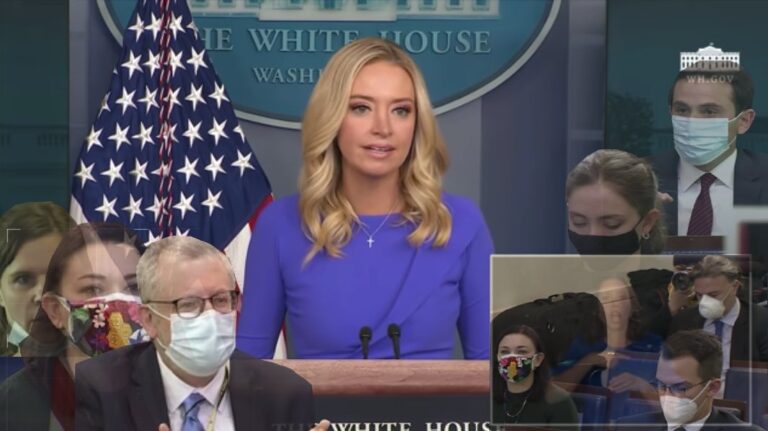
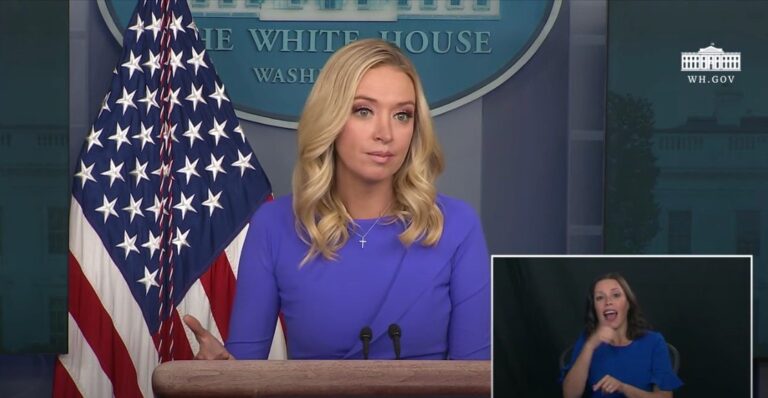
Kayleigh: Hello, everyone. Good afternoon. Yesterday, the United States witnessed a medical miracle: The first doses of a COVID vaccine were administered to frontline workers across the country. The President promised a safe and effective vaccine in record time, and President Trump delivered.
Earlier this year, we heard from several news outlets and so-called fact checks that President Trump would need, quote, “a ‘miracle’ to be right.” That was an NBC News article. We were told, according to Healthline, quote, a vaccine will “still take more than a year to develop.” USA Today warned us that, quote, “despite medical researchers’ progress,” a vaccine, quote, was “more than a year away.” And National Geographic even told us that achieving a vaccine within, quote, “a year to 18 months would be absolutely unprecedented,” end quote. These reports deserve their own fact check: false.
https://www.youtube.com/watch?v=Ikgv2mAPtw8
President Trump has not only been the optimist, hopeful to achieve a vaccine by year’s end, he has also been a leader. Through Operation Warp Speed, President Trump, the businessman and the President, as the innovator, has succeeded. President Trump directed military logistics experts at the Department of Defense to partner with health experts at Health and Human Services to ensure prompt delivery of vaccines and equipment. This includes the appointment of four-star General Perna, who oversees the global supply chain and readiness for the United States Army as Operation Warp Speed’s chief operating officer.
The Trump administration supported clinical trials by working to enroll participants through NIH-funded COVID protection networks and provided funding and technical support through the National Institute for Allergy and Infectious Disease and Biomedical Advanced Research and Development Authority.
President Trump also directed industrial-scale manufacturing of vaccines to take place at its own risk before knowing whether these vaccines would be successful. It was a novel approach, indeed, to vaccine development, and led by President Trump.
The results of these historic investments will benefit the American people and will mark the beginning of the end of the pandemic. As the first doses of the vaccine are delivered and administered, we urge all Americans to continue to wash your hands, socially distance, wear a mask when you are unable to do so.
We also encourage those at the state level to improve the early and aggressive use of monoclonal antibody treatments, especially among vulnerable Americans.
The Trump administration led the way, approving monoclonal antibody treatments for outpatient use, issuing two emergency use authorizations in November. Additionally, through HHS’s Office of the Assistant Secretary for Preparedness and Response, monoclonal antibody patient courses have been allocated to all 50 states. Together, these steps can play a significant role, changing the course of this virus. Thank you to President Trump.
And, with that, I will take questions.
Ben.
Q Kayleigh, now that the Electoral College has voted, does the President acknowledge that Joe Biden is the President-Elect? Does he have any plans to invite him here to the White House?
MS. MCENANY: The President is still involved in ongoing litigation related to the election. Yesterday’s vote was one step in the constitutional process. So I will leave that to him and refer you to the campaign for more on that litigation.
Q What was his reaction to Leader McConnell, today, congratulating Joe Biden and calling him the President-Elect?
MS. MCENANY: I haven’t gotten the President’s reaction to that yet, but the President, again, is pursuing ongoing litigation. Would refer you to the campaign for further.
Q And what is the path forward though for litigation? If the votes have been certified, if the Electoral College has voted, there doesn’t seem to be a legal recourse at this point.
MS. MCENANY: The campaign would have more specifics for you on legal recourse, but yesterday was one step in the constitutional process leading up to the January 20th date in the Constitution.
Steve.
Q Does the President plan to take the vaccine? And will he do it in a public way to inspire confidence among people?
MS. MCENANY: So the President, currently at this moment, has said he is absolutely open to taking the vaccine. He’s been emphatic about that to me privately and to you all publicly. But he did recently recover from COVID. He has the continued protective effects of the monoclonal antibody cocktail that I mentioned, and he will receive the vaccine as soon as his medical team determines it’s best. But his priority is frontline workers, those in long-term care facilities, and he wants to make sure that the vulnerable get access first.
Yes.
Q Wouldn’t him taking the vaccine set an example for Americans to give them confidence? Doctors — Dr. Fauci, as well as Moncef Slaoui, both said today that they think President Trump should get the vaccine. If — A, you know, because — for himself, but, B, to set an example. Will he do that? Like why not do it just to show Americans that it’s safe?
MS. MCENANY: Because he also wants to show Americans that our priority are the most — most vulnerable. There will be some senior administration officials taking it publicly to instill that confidence; it is very important.
Q Can you say who?
MS. MCENANY: And the President — no, but you’ll learn in the next few days who that is — who those individuals will be. But they will be taking it publicly to instill confidence. The President wants to send a parallel message, which is, you know, our long-term care facility residents and our frontline workers are paramount in importance, and he wants to set an example in that regard.
Q Would you personally take it?
MS. MCENANY: I absolutely would be open to taking the vaccine. As has been reported and as I shared with some of you yesterday, the White House — it will be a very limited group of people who have access to it initially. The President’s tweet indicated that the White House should receive it at a later date to, again, prioritize the most vulnerable. But some career staff — national security staff, for the purposes of continuity of government, will have access, in addition to a very small group of senior administration officials for the purpose of instilling public confidence.
Q And he has said that he thinks Americans will be able to take it if they want to take it. You’re saying he’s open to taking it. Is he going to encourage Americans to take it, or is he going to leave it up to Americans? Does he think Americans should get this shot?
MS. MCENANY: Absolutely. Look, these are vaccines that he oversaw the development of, he has great confidence in. He wants to see all Americans get this vaccine, and he wants to see the most vulnerable among us get it first. But, absolutely, he will be encouraging — encouraging Americans to take this.
Yeah, David.
Q Do you know when — specifically when the President will veto the National Defense Authorization Act? When are you going to send the paperwork over? And why would he veto that, given the fact that it passed on veto-proof majorities in Congress?
MS. MCENANY: So, he still does plan to veto the NDAA. I don’t have a timeline for you on that, but he does plan to veto it. He wants to make every effort to protect our military men and women, and we’ll prioritize military funding in the big omnibus bill. But he also has other important priorities in — I should say “problems” with the NDAA, beyond just the absence of Section 230 repeal and beyond the inclusion of the Warren Amendment.
One of the provisions of concern is troop — provisions about troop withdrawal and deployment in Afghanistan, South Korea, and Germany. And so there are a number of provisions that he has —
Q He also said it was weak on China, but no Republican really seems to agree with him on that. Why does he think the bill is bad on China?
MS. MCENANY: So, by not including a Section 230 repeal, what you’re in effect allowing is Twitter to continue to not censor Chinese propaganda. Recently, there was a tweet by the U.S. — the Chinese Embassy in the United States about the Xinjiang province and allowing all citizens to enjoy the same rights, including freedom of religion. That clearly is not the case, as the Uyghurs have been absolutely tortured in that province.
There was another tweet that they allowed about the virus originating in Wuhan. They said it was not — it did not originate in Wuhan. That obviously is Chinese disinformation, and the President’s priority is to ensure that that isn’t permitted.
Yes.
Q Did Leader McConnell give the President a heads up that he was going to talk about Biden on the floor today?
MS. MCENANY: I’m not sure if he had any call with him prior to making that statement.
Q Okay. And is Secretary Mnuchin or Chief Meadows going to be involved in this bipartisan meeting that’s happening on the Hill today at 4:00 about COVID relief?
MS. MCENANY: I believe it’s just congressional leaders meeting, but I’ll get back to you if there is a White House presence there. But what I can tell you is that the White House has had a continuous presence in the stimulus talks, leading on this from — for months, trying to get this phase four passed.
And when I spoke with the Chief about this again this morning, he noted that Nancy Pelosi has really been standing in the way of a deal, going back prior to the election when she was anti stimulus checks — something the President has been vocal about wanting. And then, after the election, according to her, quote, she can now support these checks because of a, quote, “new President” was — were her words, which is appalling to think that politics was playing into the COVID relief for the American people.
And she stood against liability protection. This is protection for our small businesses, so that they’re not held liable for COVID incidences through no fault of their own. And she’s really playing up to the trial lawyers and opposing liability protection, which should be something that’s just mere common sense.
Q One other question about confirmations of Biden’s Cabinet picks. President Trump had the benefit of the Senate starting hearings and starting the process before he was inaugurated in January of 2017. Does the President oppose the Senate taking up Joe Biden’s nominees before the inauguration?
MS. MCENANY: I think that’s a hypothetical, and, you know, he won’t get ahead of that activity actually happening. But he has taken all statutory requirements necessary to either ensure a smooth transition or a continuation of power.
Yes.
Q Thanks, Kayleigh. Given the success of Operation Warp Speed, why hasn’t President Trump been more visible during this initial vaccine rollout? You have the Vice President in Indiana today. Where’s President Trump?
MS. MCENANY: President Trump has been hard at work on COVID behind the scenes. Just because you don’t see him at the podium every day doesn’t mean that he’s not aggressively pursuing actions on behalf of the American people. He’s briefed on COVID regularly, and I’m here speaking with you guys. Others are out communicating this information.
Yeah.
Q Could you comment on the Russian hackers breaching several federal agencies? How serious was this breach? And is the Trump administration considering retaliating?
MS. MCENANY: Look, the U.S. government — we’re aware of all of these reports. We’re taking all necessary steps to identify and remedy any possible issues related to the situation. As one step in that process, CISA has issued an emergency directive on Sunday night for all federal civilian agencies to review their networks for indicators of compromise and disconnect or to power down SolarWinds, Orion products immediately. So we are taking a hard look on this and, obviously, take any sort of cyber hacks very seriously.
Q And just one more question on Russia. Since Russian President Vladimir Putin has congratulated President-elect Joe Biden, any comment on that from the Russian President?
MS. MCENANY: No comment on that. I leave it to the President to react to that.
Q Has he spoken to President Trump?
MS. MCENANY: Not that I’m aware of. No.
Let’s see. David.
Q Does the President intend to run for election in 2024? And would you like to be part of that campaign?
MS. MCENANY: I will leave that to the President, but he’s still pursuing ongoing litigation at the moment for this election. Yes.
Todd.
Q Thanks. President Trump supported the Texas lawsuit at the Supreme Court — a lawsuit that President-elect Biden called an “assault” on democracy. How is it not — is it not anti-democratic to try to nullify 20 million votes?
MS. MCENANY: I think pursuing legitimate litigation through the judicial system is in no way assaulting democracy. In fact, it’s — it’s using democrat institutions in the manner they are to be used: to pursue legitimate claims with sworn affidavits and additional evidence.
But I do think what is an assault on democracy are the four investigations into President Trump over Russia collusion that turned up nothing. I mean, Mueller alone — you had 19 lawyers, 40 FBI agents, 2,800 subpoenas, 500 search warrants, millions of taxpayer dollars — all to find no collusion. And the investigation into President Trump began far before he was even elected President of the United States.
And his intel briefings, in the transition period, were even weaponized against him. An “insurance policy” from Peter Strzok was put in place against this President prior to him being elected. That is what is an assault on democracy.
Blake.
Q Thanks, Kayleigh. I want to ask you about COVID relief negotiations. But just to hone down on what was asked about the vaccine: Yes or no — we should expect to see President Trump take a coronavirus vaccine before January 20th and do so on camera?
MS. MCENANY: He will take it on when his — when health experts and his White House doctor ask him to do so and says it’s the appropriate time. He is very open to taking this, but also wants to prioritize our frontline workers.
Since you brought up the vaccine — before you get to your next question — one thing I do want to make clear is that there are 2.9 million doses of the Pfizer vaccine that have gone out. In 21 days, there will be an additional 2.9 million of those doses — because, of course, the Pfizer vaccine is two doses. And there are going to be rolling updates and shipments of the vaccines. Of course, we’ve secured millions in advance.
And this Friday, there will be 4 million Pfizer vaccines going out. We are hopeful that Moderna gets approved. The F- — FDA said that the data looks good. We’re waiting for that EUA. So hopefully there will be that EUA and then an additional 6 million Moderna doses out next week. So 10 million doses out next week.
And I want to emphasize — just stepping back from a macro perspective — because it is so impressive what this President did, making these agreements in advance. And he secured not just tens of millions of doses, but, in fact, hundreds of millions. There’s the 100 million with Pfizer. There’s 100 million with Moderna. We’ve secured another 100 million from Moderna. We’re hopeful that we will get an additional 100 million from Pfizer. I think we will. And then Johnson & Johnson is nearing the end of its phase three clinical trial; that’s another 100 million doses secured with hundreds of millions doses more if needed. And then AstraZeneca, which is in phase three clinical trial, 300 million doses secured.
So it’s a really impressive achievement what this President has done. But what’s your next question?
Q On the — on the relief negotiations, so there’s this meeting this afternoon: the Big Four up on the Hill. We’re told, by the way, that Secretary Mnuchin will be there. If the Big Four, if the Treasury Secretary are able to come to some sort of a deal, would President Trump sign off on it? Or does he have specific asks, specific red lines that have to be in any sort of deal?
MS. MCENANY: I think we’ll wait to see what that deal looks like. He’s said that he would really like to see those stimulus checks in there. But his priority, at the end of the day, is getting relief to the American people. We’re hopeful there will be some sort of agreement.
But I would note that we’ve been the party that’s been flexible. We’ve been the party that’s said, “Hey, standalone PPP.” That’s funding for small businesses and funding for businesses, generally, to go to pay their employees. We’ve had a standalone bill that we supported there. We had a standalone — a standalone unemployment insurance bill. So we’ve been the party that’s been flexible on this.
Q And just to be clear: If there is a deal that doesn’t have direct payments, the President would support it or not?
MS. MCENANY: I’m not going to say if that’s a red line or not. I won’t get ahead of the negotiations. But I’ll just say that we are hopeful there’s a deal there that the President can then look at and support.
Yes, Katherine.
Q Does the White House have any comment on Crede Bailey, the Security Director who had his leg amputated due to COVID?
MS. MCENANY: Yeah, our heart goes out to his family. They’ve asked for privacy. And he is recovering, from what I understand. We’re very pleased to see that. But he and his family will be in our prayers.
Q Has the President had a chance to speak with him?
MS. MCENANY: I’m not sure if the President has had a private conversation with him, nor would I confirm any — any private conversation that he did have.
Lalit.
Q Thank you. Thank you for doing this. Over the weekend, the statue of Mahatma Gandhi was desecrated by some protesters in downtown D.C. This is for the second time this has happened. I would love to hear your comments on that.
MS. MCENANY: Yeah. It’s terrible. No statue or memorial should be desecrated, and certainly not one like that of Gandhi, who really fought for the values that America represents of peace, justice, and freedom. So that desecration is appalling to see. It’s appalling that it’s happened more than once. And we believe the reputation of Mahatma Gandhi should be respected, especially here in America’s capital.
Q Can I ask one more, if I —
MS. MCENANY: Sure.
Q Does the President believe that the democracy in United States is under threat? And based on his tweets, what other electoral reforms he wants to push in this country?
MS. MCENANY: What was the first part of your question? I couldn’t —
Q Does the President believe that democracy in the United States is under threat?
MS. MCENANY: That democracy is under threat? He believes that — he certainly was under assault when it comes to the investigations into his administration: the Mueller probe, the unfortunate way that our FBI was mishandled by folks like Andy McCabe, by folks like Jim Comey, and weaponized in a political way against his candidacy and then against his — his presidency.
Yes, Charlotte.
Q Thanks, Kayleigh. Is President Trump planning to take any action after seeing the forensic audit of the machines in Antrim County, Michigan?
MS. MCENANY: I’d have to refer you to the campaign on anything regarding the election.
Q And just as far as the 2018 executive order on election interference, has he received a report yet? And when he does receive it, is any of that going to be available for the public to look at?
MS. MCENANY: I am not aware of any report that he’s received to that end.
Chanel.
Q Thank you, Kayleigh. Just want an update statement on Iran, especially in light of the just-signed Israel-Morocco deal. Where does the White House see Iran standing in the Middle East now? Especially, what is the current assessment in the White House with regards to Iran’s standing in the Middle East as you continue to sign Middle East deals? Are they going to strengthen? Is it weakening? What is the current White House assessment on Iran?
MS. MCENANY: Yes, the region increasingly comes together through these peace deals, which Senior Advisor Jared Kushner, Avi Berkowitz, and others — National Security Advisor Robert O’Brien — deserve a ton of credit for. It’s remarkable.
But as the region continues to come together, our maximum pressure campaign continues to be effective. Iran is increasingly isolated and weakened. And when President Trump came into office, you know that the region was in extreme turmoil, ISIS had a caliphate, and Iran’s proxies were wreaking havoc.
Since taking office, President Trump has worked to rebuild trust with our regional partners and identify their shared interests. And unlike the previous administration, which gave Iran piles of cash and a deal with a sunset provision that would have allowed them to get nuclear weapons, this President has isolated Iran, and he’s done it through four peace deals, which is four more than his predecessor.
But it’s unfortunate that it doesn’t get much coverage in the mainstream media. But I guess we shouldn’t be surprised, because in the last 24 or 48 hours, there have been quite a few stories that have not gotten a ton of coverage in the mainstream media.
As former White House Press Secretary Ari Fleischer said, “Bias is often found in stories the press does not cover.” And last week, we found out that Democrat Congressman Eric Swalwell was infiltrated by an alleged Chinese spy. The spy cozied up to Swalwell, raised funds for his 2014 campaign, and even planted an intern in his office. And that relationship continued until the FBI briefed him in 2015. And that was some very good reporting done by Axios.
But after entangling with this spy for years, Swalwell hypocritically went on to be one of the lead instigators of the Russia collusion hoax and the impeachment sham. Swalwell wrote this on his congressional webpage: “President Trump and his team are directly and indirectly tied to Russia.” That was not true. He then said, in September of 2020, the President has a “compromised relationship” with Russia. Untrue. April of 2019, he said President Trump “certainly acts on Russia’s behalf” and “acts like Russia’s leader.” Not true. January 2019, Eric Swalwell said it’s “pretty clear” President Donald Trump is an agent of Russia. Not true. And Swalwell shamelessly claimed Donald Trump Jr. and Jared Kushner had “an eagerness and a willingness to work” with the Russians during the 2016 election. Again, it was false. In 2019, he falsely claimed this yet again when inquired about collusion by a reporter.
And these baseless attacks were false yet covered breathlessly by the media. There was no coverage, however, of Swalwell being the one implicated with not Russia, but China. In fact, the New York Times website, as of this morning, had not one result for Eric Swalwell’s ties to Chinese spies. Not one result. And when the Swalwell story broke, guess how many minutes of coverage it got on ABC, NBC, MSNBC, and CBS? Zero. CNN devoted 3 minutes and 16 seconds to it. However, it was covered on Fox.
Interesting pre-election and post-election coverage, too, on the Hunter Biden scandal, which was not covered at all by many outlets in the lead-up to the election. In fact, on October 15th, you had a New York Times headline that said, “Trump said to be warned” that he was being given Russian disinformation over Hunter Biden.
Now, December 10th, just a few months later, the New York Times headline: “Investigation [of Hunter Biden] is likely to hang over Biden as he takes office.”
Washington Post, on October 16th, the headline read: “The truth behind the Hunter Biden non-scandal.” Now you have the Washington Post headline that says this: “Hunter Biden tax probe examining Chinese business deal[ing]s.”
Politico, October 19th: “Hunter Biden’s story is Russian disinformation” — that’s a favorite — “dozens of former intel officials say.” False yet again. December 2nd, now Politico reads: “Justice Department’s interest in Hunter Biden covered more than taxes.”
Really interesting turn of events and good for those who covered what was a story all along and not Russia disinformation.
The Headline Spirit-filled [ Please do a Google Search on Spirit-filled Christian ] My observation that Kayleigh McEnany can handle the most Corrupt Media on the Planet. Because she has received the Gift of the Holy Spirit her Countenance is the evidence. Watching this Video gives me no Doubt the Media are fearful of McEnany.
The Spirit of GOD shines through her which is a good sign that this Election isn’t over yet. Praise the Lord.
Trump is still pushing along with his legal action against the stolen Election, The Fake Media said Trump Wouldn’t have the Vaccination before Christmas.
Other updates today: Today, President Trump will speak at a vaccine summit as part of his Administration’s historic Operation Warp Speed. The summit—with help from governors, retail pharmacy chains, and distributors—will highlight the strategy for getting a safe, effective vaccine to the American people quickly.
“The most important thing for me personally is making sure people understand that these vaccines were developed safely, that they are over 90% effective,” Surgeon General Jerome Adams says.
Operation Warp Speed began in May. It is an historic achievement that there are now potentially two 95% effective vaccines only 10 months after COVID-19 reached American shores. Upon approval, around 40 million doses will be immediately releasable.