Home Blog Page 64

PM Morrison In Australia, you cannot talk about electricity generation and ignore coal

PM Scott Morrison 10


PRIME MINISTER SCOTT MORRISON:
 Well thank you very much Bob, and to you Greg and all of your team here, many of whom are with us in the room today thank you very much for joining us here today.

To keep and get as many Australians in jobs has always been my job.

In this pandemic, for that to happen, I need as many businesses as is safely possible to be open.

That is why our national COVIDSafe health plan brought together with the states and territories is so important.

Our quarantine, our testing, our tracing, our outbreak containment – all shut the virus down, before it can take hold, when they’re working to standard.

Our COVIDSafe vaccine plan, investing some $1.7 billion to develop and produce a vaccine, right here, sovereignly in Australia, for every single Australian.

COVIDSafe behaviours – with our friends, at home, at school, at work, out and about – that denies the virus the opportunity to move amongst us.

This plan, our health plan is critical to our economic plan. And during this pandemic by Australia pursuing both, we continue to do better than almost every other developed country in the world, when it comes to protecting lives and livelihoods. But as long as we are closed, we cannot claim success as a country.


If we are shut, we are not living alongside the virus, the virus is actually keeping us from living.


So as we emerge from this second wave in Victoria, and I had some, a good message from the Victorian Premier this morning, let’s now seize the opportunity ahead of us, to safely and successfully reopen this country, reconnect this country, and stay open.


But getting Australia open again is just the start of what we must achieve.


Because only when businesses can see their way to expanding what they do, and how many more people they can employ, when they can see that, that’s why they will invest, that’s why they will take a risk. That’s why they’ll have a go.


And that is what our JobMaker plan for Australia’s economic recovery is actually all about, ensuring that businesses have the confidence, in this very uncertain world, to have a go, and to get a go.


Our plan began with the essential economic lifelines that have been keeping Australians in jobs and Australian businesses in business wherever possible – JobKeeper, JobSeeker, cash flow support payments for business.


JobKeeper alone, more than $100 billion, a record and unprecedented investment. But again the plan is not just about getting through. That is not, I think how Australians think about the future.


We don’t just want to get through.


What we want to see is, we need businesses to have the confidence to grow and to employ more people.


And that’s why our JobMaker plan is already:


  • boosting our investment in skills and training and apprenticeships, to help Australians get the skills that businesses need for them to be in those jobs. And that will be taking place right here.
  • working with employers and unions to fix our industrial relations arrangements and laws to make it easier for businesses to employ more people.
  • making it easier to do business by fast-tracking major project approvals, 15 large projects already on that slate working with states and territories to get them moving, and getting rid of the red tape that prevents it. On practical issues most recently, the Treasurer is agreeing to reform and streamline and harmonise occupational licensing.
  • bringing forward almost $10 billion of spending on new infrastructure projects, and that includes water infrastructure projects dams, pipelines, ports, railways.


In a few weeks the Treasurer will go into greater detail on all of this, and I promise you and more when he hands down our JobMaker Budget on the 6th of October.


But today, I want to focus on a further pillar in this JobMaker Plan that I flagged some months ago – our JobMaker plan for affordable, reliable and secure energy.


Now lower cost and more reliable energy helps businesses to grow and employ more people. And in areas like the Hunter, the business of generating energy is for so many your livelihood, where critical energy-intensive jobs are located.


Affordable and more reliable energy also supports of course household budgets, and that enables Australians to keep more of what they earn. Whatever their source of income is.


Our JobMaker plan for affordable, reliable and more secure energy has three key objectives:


  1. Maintain that downward pressure – down, down -on electricity prices – while simultaneously developing the backbone of a reliable, lower emissions National Electricity Market for the next decade and beyond.
  2. Get more gas, more often and more reliably – by resetting our east coast gas market, unlocking additional gas to drive recovery; paving the way, ultimately, for a world-leading Australian Gas Hub to support high-wage jobs, including and especially in manufacturing.
  3. Reinforce Australia’s sovereign fuel security – recognising that government must play an active, strategic role to ensure Australians have unbroken access to the essentials of our way of life and Angus had more to say about that yesterday.


Now I want to discuss each of these in turn and particularly in relation to gas I want to acknowledge particularly the work of the National Covid Commission, Andrew Liveris and the team who have also been working to support the government in the work that we’ve been doing.


Now in terms of electricity, in recent years, we have taken strong action to get those electricity prices down. It’s all been about getting consumers a better deal.


Wholesale electricity prices have now fallen for 12 consecutive months.


National average household expenditure on electricity have already fallen by 4.7 per cent since its peak in December 2018.


We’ve turned the corner on electricity prices.


Nationally, average annual residential bills are expected to decrease by 7.1 per cent (or $97) between 2018/19 and 2021/22.


Our Default Market Offer rules are protecting consumers from defaulting to a worse deal.


Our big stick laws are evening up the playing field with the big energy companies.


We’ve banned late payment fees and implemented strong protections during COVID, with great support from the energy companies so impacted families and businesses can’t be disconnected without consent. And all of those issues are managed sensitively.


But to help drive economic recovery, we must lock in the settings for even lower prices.


To achieve this, you must deal with generation and transmission.


In Australia, you cannot talk about electricity generation and ignore coal.


For decades, coal-fired generation has been a source of competitive strength for our economy. Reliable, low cost energy. This is still true.


Analysis by the energy market operator shows coal generation is still expected to comprise almost a quarter of the National Electricity Market in 2040.


Coal will continue to play an important role in our economy for decades to come. With new technologies such as carbon capture and storage continuing to improve, it will have an even longer life, not just here in Australia, but in our export markets as well. Right here, and in regions like right here, that means jobs.


My Government understands this. The fact that we understand it is important. So many of your livelihoods depend on it. And not everyone shares this view. Not everyone shares our views on this.


My Government also understands that our energy market is evolving at pace – driven by changes in technology, economics and consumer preferences. Consumers are having a big say about where they want their energy to come from. Our technology roadmap is there to chart a path well beyond today’s needs.


Australia has seen an unprecedented influx of renewable generation. This is not something we have sought to hold back, rather we have encouraged it. And it is also benefiting jobs here in the Hunter and in regions like it. It is not a choice between the two.


More than $30 billion was invested in renewables between 2017 and mid 2020. In 2019 we saw investment at more than three times the per capita rate of countries like Germany, China, or France.


Across 2019 and 2020, Australia will add more than 12.6 GW of renewable capacity – over four times that of our largest power station. Nearly one in four households have rooftop solar systems.


Cheaper renewables not only help us meet our commitment to achieve our emissions reduction targets by 2030 which we remain committed to. Can’t tell you if everyone else does, but we remain committed to that. And we will meet it in a canter. But they also hold the promise of further declines in energy costs. But only if the foundations for grid stability are in place.


To back up intermittent renewables, we need firming capacity. Firming keeps the lights on when the sun isn’t shining and the wind isn’t blowing. It’s a very practical proposition.


Every megawatt of dispatchable generation – coal, gas, pumped hydro batteries – can firm around 2 megawatts of renewables.


And we need to bring forward new dispatchable generation capacity as a priority, to compliment what is happening in the renewables sector. In the decade to 2010, around 9.6 GW of dispatchable capacity came online. In the decade since, only around 1.6 GW of new dispatchable capacity has been connected – none of it here in New South Wales.


As the experience with Hazelwood in Victoria demonstrated, the risks in terms of costs and reliability from the exit of large, ageing coal-fired power stations are real.


Against this backdrop, our Energy Minister Angus Taylor last year established a taskforce to assess the potential impacts of Liddell’s closure, working with the state government, working with the sector as well. It found that wholesale prices could jump by 30 per cent, or $20 per megawatt hour, if the station’s capacity was not replaced before it shuts down.


We estimate that some 1,000 MW of new dispatchable generation is needed to keep prices down. And we intend to do something about it.


Now while the private sector has announced projects which could fill this gap, it has committed to very few. COVID has challenged investment metrics, but the physical realities of ageing generators mean we can’t just hope for the best.


To ensure affordable, reliable power, we need the market to deliver 1,000 MW of new dispatchable capacity by the summer of 2023-24, with final investment decisions by the end of April 2021.


Now that’s less than eight months – and we’re counting. Each day.


So, this is the plan. If the energy companies choose to step up and make these investments to create that capacity, great, we will step back. If not, my Government will step up and we will fill the gap.


And to this end, Snowy Hydro is already developing options to build a gas generator in the Hunter Valley should the market not deliver.


The Commonwealth Government would prefer not to step in. That is not our Plan A. But nor will we shy away from taking action to protect consumers and support jobs, including here in this region and so many like it.


So I think there is some certainty there about what the investment environment looks like and what the capacity is. And I am sure we will get there one way or the other.


Alongside critical firming capacity, we need better integration of renewables into the electricity grid.
This makes renewables work. Renewables are getting cheaper, that’s great news. Because we are about affordable power – taking pressure off households, and taking pressure of job-creating businesses.


Grid-scale solar costs fell more than 50 per cent between 2015 and 2020, and are projected to fall by a 54 per cent by 2050.


Falling technology costs will help put downward pressure on prices and emissions over the decades to come. They have also brought grid scale wind and solar generation to economic parity with traditional sources of generation.


Renewables like solar and wind don’t need subsidies. What they need integration.


And without adequate planning and integration, rapid deployment of renewables can lead to delayed connection, curtailed output and congested transmission.


Our energy plan understands this, and includes measures to strengthen our transmission network to better move power to where it’s needed.


Having a renewable future isn’t just about building a windmill. You’ve got to connect it up and you’ve got to ensure it’s backed in by the reliable power that firms it when the wind isn’t blowing. That’s not ideology, that’s just common-sense.


Today I announce that the Commonwealth will work with state governments to accelerate three critical projects. And we’ll have more to say about these later – the Marinus Link, Project Energy Connect and VNI West Interconnectors.


Together with our support for HumeLink and the QNI Interconnector, this means we are accelerating all priority transmission projects identified in the AEMO Integrated System Plan.


Creating over 5,000 jobs, while reducing prices and keeping the grid reliable.


We must also though, modernise the way the electricity market operates to take account of technological change and to put more power into the hands of consumers. Now 21st Century electricity market needs 21st Century rules. A package of market reforms will come forward next year as part of the biggest shake-up of the National Electricity Market since it was created in 1998.


New rules will take account of the increasingly distributed nature of generation and better recognise the critical stabilising role played by dispatchable generation.


The immediate focus will be on security measures, better integrating different generation technologies and a reliability framework. Longer term reforms will focus on rules for a two-sided market, revised investment programs and a framework for the exit of ageing thermal generators.


These reforms, to be developed and agreed through National Cabinet’s new Energy Reform Committee, which tasked this work at our last meeting in fact just over a week ago. An important reminder of the work the National Cabinet is doing, is not just managing our CovidSafe plan, it’s actually working on the JobMaker plan and we see this as an important part of the JobMaker Plan and that’s when the National Cabinet was made a permanent feature of how our federation works. We established a series of sub-groups to work on those job-creating areas, regional was a large one which Michael McCormack is leading, and energy was another, which Angus Campbell, no he’s running the defence forces. Angus Taylor is leading that project.


And they will have three guiding principles:


  1. Prioritise the long-term interests of consumers, ensuring they can access the right services at the right price.
  2. Create competitive and transparent markets to unlock efficient and timely private investment.
  3. Ensure a resilient energy system through a balanced mix of technologies. A balanced mix of technologies.


The Government will also take forward practical initiatives to put power back into the hands of customers. Our Consumer Data Right, which we started with banks, will enable customers to access detailed consumption data from their energy retailer and use this data to find the plan which best meets their needs. Expanded energy rating tools will also help Australians reduce their exposure to electricity bill shocks.


So in summary, the tasks for the road ahead on the electricity system are clear: bring on firm generation capacity, better integrate renewables, overhaul the rules to create a modern and efficient market and put more power into the hands of consumers.


Now Let me turn now to the gas market and I appreciate your patience this morning. Cheaper, more abundant gas is the second pillar of our energy plan for COVID recovery. We’ve got to get the gas.


Gas is already a major contributor to our economy. Based on the development of our enormous gas resources offshore, Western Australia and in Queensland, Australia is now a world-leading exporter of LNG, rivalling Qatar as the world’s biggest.


The $200 billion invested in LNG projects over the past decade was a key driver of our economic performance coming out of the Global Financial Crisis.


We want to continue to be an export powerhouse, but it can’t be at the expense of Australian customers getting a fair deal.


An estimated 225,000 Australians work in manufacturing firms that rely heavily on gas as a feedstock or fuel source, according to APPEA – in sectors such as fertilisers, chemicals, metals, bricks, cement and parts of food processing and beverage manufacturing. When Andrew Liveris sat down with me at Kirribilli some time ago, and working with him through the COVID Commission, said you want to change manufacturing in this country, you’ve got to deal with gas. You’ve got to deal with gas. And Angus has taken up that challenge along with Keith Pitt and this is what we’re talking about today.


For many firms, the most pressing challenge they face is the failure of the east coast gas market to meet competitiveness benchmarks, and that puts Australian jobs at risk.


While spot prices have fallen under COVID, Australian industry is paying well above export parity prices for contracts. The ACCC says the gap is higher than at any time since the competition watchdog started its gas inquiry in 2017.


Chair Rod Sims has identified 18 cargoes of gas sent offshore this year at prices well below those being offered to Australian industrial customers. And despite our resources, AEMO is forecasting potential gas shortages in the east coast market by 2024.


Now that’s not on. This is not acceptable.


Nor is it sustainable when competitive gas should be helping to fire, gas fire our COVID recovery.
Gas is not only central to our industry plan, it’s also central to our energy plan. As I said at the Press Club earlier this year, there is no credible energy transition plan for an economy like Australia that does not involve the greater use of gas.


Alan Finkel, the Chief Scientist, put it this way: “Gas is effectively the perfect complement to solar and wind.” Absolutely true. We need to reset the east coast gas market – and we will. The Government will lean in with measures aimed at ensuring domestic users aren’t at a competitive disadvantage relative to their overseas competitors.


This is not about pitting LNG exports against domestic users. They both should be able to, and they must co-exist.


Our long-term goal is a transparent and competitive Australian Gas Hub on the east coast, with a family resemblance to the ‘Henry Hub’ system in the United States.


The Henry Hub is the international gold standard for gas trading markets, highly regarded for its transparency, its liquidity, and its certainty.


There are many factors that contribute to its success – abundant sources of gas supply, a highly competitive and well regulated network of pipelines and storage infrastructure, and a significant volume of trade in futures contracts which provides greater price certainty for buyers and sellers.


Now we should adapt the best parts of this system and to make it work for Australian circumstances.


This will require us to take action in three areas: firstly, gotta get the gas. We must unlock new sources of supply, we must get additional gas to market as efficiently as possible, and we must empower domestic gas customers.


We need to accelerate development of new basins like the Beetaloo in the Northern Territory and Narrabri in New South Wales. As well as open up more development in existing basins in Queensland where substantial reserves remain untouched.


All levels of government have a role to play here in creating a supportive environment for investment and competition.


The Commonwealth can play a more active role investing in the early planning work required to accelerate exploration and development in priority basins, which we will do through the development of 5 Strategic Basin Plans.


Funding pre-competitive economic, engineering and scientific studies like we are doing in the Beetaloo, and removing roadblocks to development, these are examples of how government action can help “crowd-in” private sector investment.


Just as we’ve done with NSW, we want to work closely with the state and territory governments to set targets for new gas supply as part of bilateral energy deals.


State governments can also do more to facilitate development, for example through ‘use it or lose it’ requirements on gas licences that encourage producers to bring gas to market as quickly as possible. Not sit on it.


We also need to ensure Australian users get their fair share of these new gas developments.


Work is underway on options for a prospective gas reservation scheme, which will be done in consultation with industry and the states and territories. We will support gas exports, but we must avoid past pitfalls.


As we produce more gas for domestic use, we need the right infrastructure of course to connect up the east coast gas grid at the lowest cost possible.


That means efficiently connecting major sources of gas supply with ‘customer hubs’ where there is significant demand.


We will unify the market around a common set of priorities for gas pipelines and other critical infrastructure through a National Gas Infrastructure Plan, just like we have with the Integrated System Plan for electricity.


So under our government: a gas grid, an electricity grid, and a water grid.


And while we want the private sector to invest in this infrastructure, we are prepared to go further if we need to.


The Commonwealth stands ready to step-in to support pipeline development if necessary, as we are doing now with other nationally-significant infrastructure like electricity interconnectors, water infrastructure and of course major highways.


Finally, we need a competitive market that allows for fair bargaining between gas buyers and sellers. A market that empowers gas customers and ensures they have the power to negotiate, not just accept, the terms offered to them. Not good for jobs.


Transparent pricing and greater pricing certainty is needed so end-users can contract the volumes they need for the future, and so upstream producers can invest with confidence that there will be demand for their gas. It’s a two way street.


Government can create the conditions for an open and transparent trading hub, and act as an honest broker to match supply and demand.


Now we know many of our manufacturers can’t wait for years for the market to reset and for the new gas supply to come online.


So we will also move immediately to extend the heads of agreement with the East Coast LNG exporters and ensure they meet their end of the bargain to provide competitively priced gas to the domestic market.


There are many other elements to our gas plan, including work on netback pricing and pipeline regulatory reform, all of which will be done closely with industry.


And again I want to thank Angus as the Minister, and Keith Pitt, the Minister for Resources, Water and Northern Australia, for their tremendous work on the plan that I’ve been outlining to you today.


Now the third area, was ensuring Australia’s Fuel Security, and Angus has already spoken at more length about that yesterday.


But the COVID crisis has highlighted the importance of robust supply chains for the essentials of daily life. And that includes liquid fuel.


Without fuel, you cannot restock supermarkets, you can’t drive to the doctor, you can’t get home to the family.


Australia’s fuel supply chains have proven resilient over recent decades – this is something we should be proud of, including through major market and supply disruptions.


But as refineries have closed under competitive pressure, Australia has become more reliant on imported petroleum products.


This is a reality Australia needs to be prepared for a more unpredictable, less favourable global environment, both strategically and economically.


When it comes to fuel security, we must safeguard against low-probability, high-impact events which could disrupt our supply chains. We must be prudent and develop additional buffers to bolster our resilience.


That is why the Government will secure a domestic fuel reserve by regulating a minimum level of industry stockholdings of petrol, jet fuel and diesel.


This means more supplies of critical fuel on-shore to help safeguard supply chains.


Under our plan, industry will maintain petrol and jet fuel stocks at least at long-term historic average levels of 24 days of consumption cover. Industry will be obliged to increase national stocks of diesel beyond the recent average of 20 days to 28 days, an increase of around 5 million barrels. This is in line with the findings of the Government’s Liquid Fuel Security Review.


Now these obligations flow through to the second part of our fuel security plan – which is about driving a major expansion of national fuel storage capacity.


This will see the construction and operation of an additional 780 million litres of liquid fuel storage in Australia. This will strengthen our fuel security, supporting investment and jobs in cities and towns right across the country.


We will minimise costs while ensuring this new storage maximises resilience. We will work with industry to design legislative changes and a market-based mechanism to give effect to the stockholding obligation.


Guaranteeing Australia’s sovereign oil refining capability is the third component of our fuel security plan.


Over the last decade, three fuel refineries have ceased operating and permanently converted to import terminals. One in my own beloved Shire, in Kurnell.


These were economic decisions, driven by increased regional competition and the relative price of imported crude and fuel. But this leaves us with less ability to process crude oil here in Australia, and increases our reliance on international imports.


Australia must have a refining capability into the future. This capability provides security, it keeps downward pressure on prices and it does enable downstream industries.


And in the national interest, and to secure the long-term future of the sector, the Government has begun discussions with the remaining refineries and relevant state governments about the design of a production payment to recognise the critical fuel security role these facilities play.


These steps complement the Government’s decisive action earlier this year to take advantage of low oil prices and secure 1.5 million barrels of crude oil, stored in the United States Strategic Petroleum Reserve.


So, in conclusion, over the course of our government, we have always worked to a plan.


Reducing taxes, prior to COVID bringing that Budget back into balance which has enabled us to respond in the way that we have in these recent terrible months and unflinchingly so because we could do it with confidence, we’ve signed more export agreements than we ever imagined opening Australia up to the world, creating new options and new opportunities, we’ve invested in infrastructure, we’ve reduced the burdens of regulation and we have so much more to do there.


And this is all been done to grow an economy, to guarantee the essential services that Australians rely on. That’s the only way you pay for pensions, you pay for hospitals, you pay for schools, you pay for disability care and aged care and we have some huge challenges in those areas in the years ahead.


Only a strong economy where people are at work and making a contribution, through under our regime, lower taxes actually pays for hospitals and schools. Just whacking people’s taxes up and hoping for the best is not a plan, that’s a gouge.


Our plan is to grow the economy, again. So we can meet all of those challenges into the future. It’s that economy employing people, people being in work that pays for that because the end result is an investment, it’s jobs, it’s exports.


And, above and beyond that, it is a confidence that Australians have in their future, to see over these difficult and dark times at the moment, to see past them. Because when businesses can do that, they will invest. They will have a go. And our plan will ensure, I believe, that they will get a go. That confidence that Australia will be that fair and competitive place to do business.


So, we’re accelerating our efforts to ensure we move forward in this area on every front.


We will rebuild our economy. We will do it on the basis of a health plan that keeps Australians safe. We won’t be taking risks with people’s health to rebuild our economy. We’ve said from the outset the two go together. And we will build that economy with more jobs, underpinned by our JobMaker plan, for affordable, reliable and secure energy we’ve discussed today.


And a country with greater control over its economic destiny. That’s what sovereignty is all about and that’s our plan.


Thank you so much for your attention.


Source: Licensed from the Commonwealth of Australia under a Creative Commons Attribution 4.0 International Licence.


The Commonwealth of Australia does not necessarily endorse the content of this publication.

Chairman Dan says Victoria is on the Road Towards COVID Normal

Chairman Dan Andrews 1


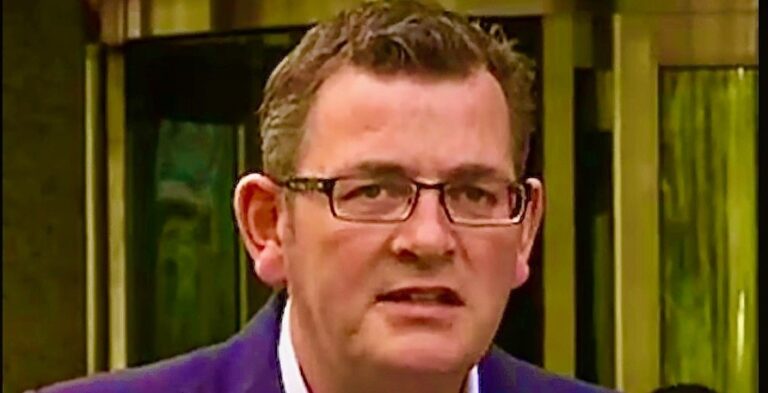
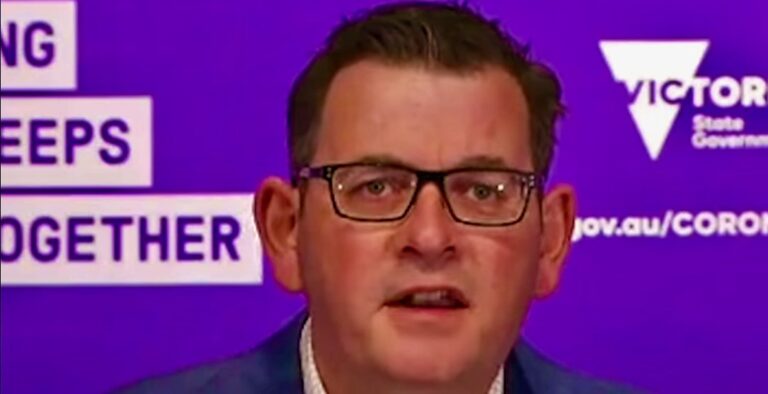
Dan Andrews media release
: thanks to the enormous efforts of Victorians in following the rules and driving down case numbers, we will take the first of our cautious and careful steps towards a COVID Normal tonight.

The numbers are falling but we need to keep it that way – ensuring we can continue to open up safely and sustainably – based on the data, the science and expert public health advice.

From 11.59pm Melbourne moves from Stage Four to the First Step of the roadmap for reopening, with modest changes including more social interaction and more time outside.

Social bubbles begin, allowing those living alone or single parents to have one other person in their home. Exercise is extended to two hours split over a maximum of two sessions, and you will be able to use that time outside for social interaction with one other person or the members of your household.


Playgrounds and outdoor fitness equipment reopen, libraries will be able to open for contactless click and collect and the curfew will begin at 9 pm as Melbourne moves into warmer months.


Tonight, regional Victoria moves from Stage Three restrictions to the Second Step of the roadmap, with up to five people able to gather together in outdoor public places from a maximum of two households.


Outdoor pools and playgrounds in regional Victoria will also open. And religious services can be conducted outside with a maximum of five people, plus a faith leader.


Given the incredible effort of regional Victorians, the Government will continue to closely monitor the 14-day rolling average, which currently sits at 4.1 for regional communities. If this effort continues, regional Victorians could move to the Third Step in a matter of days.  


Also from today, Victoria’s State of Emergency and State of Disaster declarations have been renewed for another four weeks, ending at 11.59 pm on 11 October 2020.


While the vast majority of Victorians are doing the right thing and following the directions, these measures give the Chief Health Officer and Victoria Police the powers they need to continue to respond rapidly to the pandemic – in line with the latest data and public health advice.


This includes ensuring Victoria Police has the ability to enforce the directions that are keeping us safe and slowing the spread of the virus. Without these efforts, we risk losing all of Victorians’ hard-won gains.


Quotes attributable to Premier Daniel Andrews


“I’m so proud of Victorians for the way we are all working together to beat this virus – it means we can take our first safe and steady steps towards a COVID Normal tonight.”


“What we’ve seen in regional Victoria should give hope to all Victorians. If we all play our part, we can drive numbers down and get through this together.”


Quotes attributable to Minister for Health Jenny Mikakos


“Victorians are doing an incredible job – following the rules, getting tested and staying at home when we’re sick – getting us that much closer to COVID Normal.”


“The State of Emergency ensures we have all the tools we need to fight this virus – keeping all of us safe.”


Quotes attributable to Minister for Police and Emergency Services Lisa Neville


“Extending a State of Disaster is never a decision we make lightly – and it won’t be in place a moment longer than it needs to be.”


“We are at a critical point right now. And we have to do everything we can to hold onto the gains we’ve made, which means giving Victoria Police everything they need to enforce the Chief Health Officer’s directions as we keep driving down cases.”


Source: D Andrews State Government of Victoria

Dan Andrews; Hospitals Ready And Waiting To Support All

Dan Anderews 1


Dan Andrews: Victorians are being urged to stop putting off hospital visits and important health checks during the coronavirus pandemic.

Hospitals and health agencies have seen a concerning drop in patients presenting to health services with time-critical cardiac and stroke conditions since the pandemic.

Visits to emergency department visits have fallen by at least 25 per cent compared to the same time last year.

Emergency department presentations for heart attack are down by 18 per cent and strokes by 24 per cent compared to the same time in 2019.

There has also been a noticeable reduction in screening, diagnosis and early treatment for cancers.

Reporting for the five most common cancers (colorectal, prostate, breast, melanoma and lung) have reduced by about a third, with an even greater reduction in reports for head and neck cancer. This is expected to lead to an increase in cancer diagnoses over the next 12 months and more patients presenting with later-stage incurable disease.

If Victorians have a pre-existing medical condition that requires regular treatment from a health professional, it is vital they continue with their usual management plan – including taking any normal medicines – to protect their health and avoid hospitalisation.


Hospitals and GP clinics are equipped with telehealth facilities, allowing patients to receive the very best care from the comfort of their home. Screening programs for breast, bowel and cervical cancer also continue to operate.


Our health services across the state have continued to provide timely care while dealing with unprecedented widescale measures to keep Victorians safe like physical distancing, new PPE and infection control procedures.


If you are concerned about any aspect of your health, visit a GP – and in an emergency, call 000 for ambulance assistance.


Quotes attributable to Premier Daniel Andrews


“Victorians should remember if you need medical care – our health services are safe and ready to help you.”


“Our healthcare system has strict infection control processes in place – the risk of not getting medical attention you need far outweighs the risk of contracting coronavirus.”


Quote attributable to Minister for Health Jenny Mikakos


“Any delays in seeking help only lead to worse patient outcomes and potentially more time in a hospital for Victorians. Seeking help early keeps you and your family safe and eases pressure on our hospital system.”


Attributed as:© Copyright State Government of Victoria

Bandt Parliament debating a rubbish bill to remove phones from refugees

Adam Bandt 1


Mr Adam Bandt (Melbourne—Leader of the Australian Greens) House of Representatives Speech: Bill-Migration Amendment 2020: The utter hypocrisy of the ‘freedom brigade’ in the government is on show yet again. They’re always the first ones to swear that they’ll be going to the barricades to defend an individual’s right to freedom and to say that government should not act to take away people’s liberties. And then, the first chance they get, when they’ve got people under their control who they have a duty of care towards and who have committed absolutely no crime, what does the government do? It acts to take away their basic liberties.


The right to communicate with other people, for someone who has not committed a crime and is not in detention for having done anything wrong, ought to be fundamental. But what does the government do? The government says: ‘Well, we’ve got these people that we lock up in hellholes, in detention facilities. We know that indefinite mandatory detention is unnecessary, but we do it anyway. We know that that causes people to get to the point where they harm themselves. It causes mental health problems. It causes people to despair.’ The government knows all of this. It creates these systems of torture in this completely unnecessary system of mandatory detention—a system of mandatory detention that, of course, is supported by the Labor Party as well. And then what does it do, having created this system that it says it’s so proud of? When the people who are in detention, not having done anything wrong—and I stress that point: not having done anything wrong—have the temerity, in the government’s eyes, to then contact someone on the outside or perhaps try to broadcast what the conditions inside are like, what does the government do? The government moves to take away their individual liberties.


Adam Bandt: This bill, the Migration Amendment (Prohibiting Items in Immigration Detention Facilities) Bill 2020, gives extraordinarily wide-ranging powers to the government to say that people who are in immigration detention, people who have come here seeking our help, may no longer have the right to effectively communicate with the outside world. The government is so fond of saying to everyone else—everyone who is on welfare or is subject to their other laws—that, if you’ve done nothing wrong, you’ve got nothing to hide. So, as the government says all the time, why wouldn’t you be willing to have some sunlight shone on you? Why wouldn’t you allow some intrusion into your life? But, when you try and do the same to the government and say to the government, ‘If you’ve got nothing wrong, why are you trying to hide it?’ the government crack down with the strong arm of the state. This is an assault on individual liberties by a government that is high on power. When it struggles in the polls, what does it do? It pulls out the old conservative playbook and says, ‘How can we attack refugees and asylum seekers any further?’ Having locked them up to the point where people, in some tragic instances, threaten to or actually do take their own lives, and having driven Australian asylum seeker policy to the point of cruelty where it’s applauded by people like Donald Trump, the government now wants to hide from any exposure of what is happening and wants to restrict the rights of people who are doing nothing more than seeking freedom and seeking help.


What do we know? We know that people who are in immigration detention have done nothing wrong. They have committed no crime. They have been convicted of no crime. The people who are in immigration detention are entitled to the due process of law. The government routinely denies them that. We saw that especially with children, where the government has had to be dragged kicking and screaming. Every time the government has released a child from detention, it was preceded by court action. Eventually they realised that that was unsustainable and they turned around and changed their policies. But, every time an individual’s breach of liberties is exposed, the government has had to be dragged kicking and screaming.


The ability of people to record and talk to people in the outside world about what is happening is vital. These people, who’ve done nothing wrong, should have the right to be able to communicate with people who can help them—not only help them advance their case, as they are entitled to with the due process of law which the government continues to deny them, but connect them with their friends and support networks as well, because being in indefinite mandatory detention can break people, and that’s why it’s so utterly wrong that Labor and Liberal continue to support it. This policy is a policy of cruelty that breaks people. One lifeline that people have is the ability to maintain connections with the outside world, and that relies on devices like phones and on other devices as well, and now the government is saying that the minister should have the right to take those away. Well, on what basis? Have these people been convicted of any crime? No, they haven’t; the minister should just have the power to take any item that’s deemed to be prohibited away.


Not only is there going to be a capacity to remove those but there are going to be capacities to come in and search people—to search people’s property and also their persons—in order to determine whether they’ve got any of these prohibited items. And it’s not sworn police officers who are going to be doing this. It’ll be people who are often untrained. It’ll be security guards, coming in and exercising greater powers than police have, in many instances, and persecuting these people even further. This will diminish not only the empowerment but also the rights and the mental health of people in our immigration detention facilities. It is no wonder that the bill has been criticised for contravening a large number of internationally recognised basic human rights. But that is the government’s intention.


The government does not care about individual liberties, except when it thinks there are a few votes in it. But, when it comes to actually upholding human rights, when it comes to actually upholding the rule of law, this government is the first to throw individual liberties on the scrap heap, and we are seeing it here yet again. Just imagine if they tried to say, with respect to other people in the country on the mainland, ‘You haven’t done anything wrong, but I am going to give an untrained security guard the right to come in and search your home and take away your phone.’ That is basically what the government is doing here, to someone who has done nothing wrong but is under the government’s care. And these are people to whom we owe a duty of care, not this kind of assault on their liberties, on their health and on their rights that we are seeing.


So this bill is not amendable and should be rejected. It is a continuation of the bipartisan policy of cruelty towards refugees and asylum seekers. We should be debating how we could end mandatory detention and hold people for the smallest amount of time possible that you need to, to perform health and security checks, and then allow them to live in the community while their claims are processed, which would be increasing our humanitarian intake. We know that there are so many assaults on rights and liberties going on around the world that Australia, as a democracy—albeit a democracy that gets threatened every time one of these bills gets passed—is a place that people seek to come to, and we’ve got the capacity to take more people, to lift our humanitarian intake. That’s what we should be debating.


Instead, as is always the case, we see this anytime the government is struggling for an agenda or struggling for a recovery plan or looking for a diversion from the fact that it has overseen absolute tragedies in aged care or that it has got no plan to get young people back to work or that we’re seeing women losing hours of work at incredible rates and the government has then gone and attacked child care. The government has got no plan to deal with the recession and certainly no plan that’s not going to make the climate crisis worse. The only plan they’ve come up with at the moment is one that involves extracting more gas when we know that we’re in the middle of a climate emergency and that gas is as dirty as coal. When the government have got no plan, what do they do? They pull out the playbook and turn around and attack people who need our help. This government is expert at punching down. And this is another move from the government, a government bereft of any agenda, to just punch down because they have got no positive alternative for the people of this country.


There comes a point where there is only so much hurt that you can do to people, and that is the case for people who are in immigration detention, in mandatory detention, at the moment. They have already been put in a legal limbo that means that they don’t know when their case is going to be resolved, and, even though they might have a perfectly legitimate claim, they could end up waiting here for an extraordinarily long time indeed. And now the government is turning around and saying, ‘We’re going to deny you the right to even contact people in the outside world.’


The government, through this bill, admits that it is so ashamed of what it is doing to people in immigration detention that it will now no longer let them tell the rest of the world what is happening inside immigration detention. Well, government, if you’ve done nothing wrong, you should have nothing to hide and you should have nothing to fear from people who are in immigration detention having the right to possess the same kinds of items that the rest of us in the outside world have, including items that allow them to communicate and connect with people in the outside world and that, in many instances, may be the difference between having a healthy life and being extraordinarily unhealthy, to the point where they may tragically choose to attempt to take their own life, as we have seen in too many instances in immigration detention. This is a matter of people’s health. For many people, it will be a matter of life and death. It’s a matter of fundamental human rights and liberties. This bill should be opposed.


Source: Transcript and Image Parliament of Australia Website 

Putin Launching motor traffic on completed sections of Taurida motorway

AVvXsEgIMKuTKmltqEftwBtSIKk4T5XCy020gLLKCGsb2chFDdIHteMfGz1Of7GzQCVMm8nPTOLEv7ooUbYT85K0zzYGdSjG4MhOZkWMAYveCV10YiuKMIBE4BN JTbIoyjbOy7RlVNRP7QresXobPqhiOyS0yAxpI63aSoCyn2B92ohEv7xlT20iFtfiANS=w320 h164


Vladimir Putin working trip to the Republic of Crimea, Vladimir Putin took part in the launch of motor traffic on the finished sections of the Taurida motorway. 

President Putin drove an Aurus limousine along a newly-built section of the Taurida motorway with Minister of Transport Yevgeny Ditrikh, VAD Director General Valery Abramov and VAD Chief Production Engineer Andrei Volkov.

Vladimir Putin drives an Aurus limousine along a newly built section of the Taurida motorway. Photo Kremlin

President Putin inspected information boards highlighting the stages of building the motorway and spoke briefly with VAD workers. While speaking with the workers, the President noted that this road would spur the development of the entire peninsula. It is just as important as the power sector and water supply. Regional water shortages will also be resolved. All this allows Crimea to develop at the desired pace. Vladimir Putin also said that the Development of Crimea programme had been extended until 2024, and that it envisaged the construction of an additional 200 km of roads. 

After that, Vladimir Putin gave the green light to launching vehicle traffic along the newly-built sections.

The four-lane Taurida motorway has first technical category status and is located on the border of two Russian entities, namely, the Republic of Crimea and Sevastopol, a city of federal importance. The motorway is slated for completion in late 2023. A 250.7-km section between Kerch and Sevastopol will open before the year is out.

Under the road construction project, 95 engineering structures, including bridges and overpasses, as well as 18 transport interchanges and 30 pedestrian crossings with elevators for people with disabilities, will be built

Source: President of Russia Kremlin Moscow


Garnaut will conduct a comprehensive government examination of the Bradfield scheme.

Ross Garnaut 1


An independent, expert panel chaired by Professor Ross Garnaut “LOL” will conduct a comprehensive government examination of the Bradfield inland irrigation scheme.

Premier Annastacia Palaszczuk today announced the panel, which will also include Queensland Farmers Federation chief executive officer Dr Georgina Davis and James Cook University Professor Allan Dale.

“Queensland has a plan for economic recovery, building on traditional strengths like agriculture and a $50 billion infrastructure commitment,” she said.

“We know that access to affordable water for irrigation can foster expanded agribusiness and jobs in regional Queensland.

“As the globe faces harsh economic headwinds, it’s important to continue to capitalise on opportunities here in our state.

“Projects like this have the potential to support a new generation of farmers, landholders and regional communities if it’s done in a way that is realistic and affordable.

“By continuing to have a strong health response, we’re able to look towards the future with exciting projects like this and keep delivering on Queensland’s plan for economic recovery.”


The panel’s job will be to assess the financial, economic, environmental, social and technical viability of a Bradfield Scheme, or “Bradfield like” concepts, as well as make recommendations for any further assessment.


Natural Resources Minister Dr Anthony Lynham said nation-building water infrastructure like a Bradfield scheme was usually driven by a national government.


“The Premier first raised the Bradfield Scheme in October last year and offered to work with the Commonwealth Government on a revised scheme,” Dr Lynham said.


“The Queensland Government is not waiting any longer: we are taking the lead and comprehensively re-examining a Bradfield Scheme concept.”


The panel’s terms of reference include: considering the economic benefits to regional communities and agricultural production, especially in light of the COVID-19 pandemic and related recession.  


Opportunities for renewable energy generation, complementary hydroelectric power generation, hydrogen production opportunities, and resources sector development.


Integrating with complementary infrastructure, including the CopperString project.


Dr Lynham said the new examination would look at the project from a 21st century perspective, including considering climate change, the impact on the Great Barrier Reef of diverting natural water flows, native title, and Aboriginal and Torres Strait Islander peoples’ cultural connections.


Minister for Infrastructure Cameron Dick said delivering Queensland’s path to recovery from COVID-19 meant ensuring that proper consideration is given to projects like the Bradfield Scheme.


“Delivering infrastructure Queensland needs will play a critical role in our state’s recovery,” Mr Dick said.


“That’s why we are delivering on our program of infrastructure work including $13.9 billion this financial year, as revealed in our recently released Capital Update 2020.


“This expert panel will have the knowledge and critical thinking required to ensure that projects that make up the Bradfield Scheme will grow our economy, and are planned, funded and delivered properly.” 


Member for Townsville Scott Stewart welcomed the panel’s appointment.


“It’s easy to talk about the Bradfield Scheme: the Palaszczuk Government is going to put money behind it and fund a 21st-century expert re-examination,” he said.


Member for Thuringowa Aaron Harper said significant investigations were already underway into projects that could be part of a Bradfield-style scheme.


“Any Bradfield project must start with water storage in the north – and that’s already happening,” he said.


“There’s three business cases underway or in hand – raising Burdekin Falls Dam, Hells Gate Dam and Big Rocks Weir and Urannah Dam has been declared a coordinated project.”


The panel is due to report back to within a year.


The Palaszczuk Government has committed $1.2 billion to water infrastructure since 2017, creating almost 2300 jobs in regional Queensland.


BACKGROUND


Engineer Dr John Bradfield devised the Bradfield Scheme concept in the 1930s.  


He proposed to use the floodwaters, and a portion of the normal flow, of the Tully, Herbert, Burdekin, Clarke and Flinders River to create a new permanent river that would “traverse Queensland” from near Hughenden to Windorah and the Queensland border. The goal was to intensify agriculture and population in the south-west.


Dr Bradfield’s original concept also envisaged hydroelectric power generated to pump water.


The scheme would require a number of water storages, as well as a tunnel and an aqueduct through the Flinders Range.


Attribution: Minister for Natural Resources, Mines and Energy The Honourable Dr Anthony Lynham


Source: The State of Queensland
(Department of the Premier and Cabinet)


Dan Andrews, State of Disaster will continue in Victoria for at least a further 11 days.

Ensuring we maintain the measures we need in the fight against coronavirus – and the hard-won gains of Victorians are not lost – the State of Disaster will continue in Victoria for at least a further 11 days.


Dan Andrews 11


Previously set to expire at 6 pm today, the State of Disaster will be renewed until 11.59 pm on 13 September 2020, bringing it into line with the existing State of Emergency declaration and allowing advice about any future continuation to be made once the Government’s roadmap for easing restrictions has been released.

That means – as our public health experts assess our appropriate next steps – the current restrictions, the State of Disaster and the State of Emergency can be aligned and their extension can be considered together.

Engagement with industry and communities will continue today and tomorrow, with Victoria’s roadmap to be released on Sunday 6 September.

The introduction of Stage 4 restrictions in metropolitan Melbourne and Stage 3 restrictions in regional Victoria have seen a steady decrease in the number of active cases of coronavirus in Victoria. But this is not over yet.


The State of Disaster is a legal mechanism to underpin a number of the current Stage 4 restrictions, including the curfew and the 5km limit for exercise and shopping within metropolitan Melbourne.


Even with the vast majority of Victorians doing the right thing, the State of Disaster allows Victoria Police and Protective Services Officers to enforce the public health directions for those who are doing the wrong thing. This practically means that officers can ask for a name and address to check people are within 5kms of their home or enter a home or business to check residents or staff are complying with gathering limits.


Following advice of the Minister for Police and Emergency Services and the Emergency Management Commissioner,  a State of Disaster can be introduced if there is an emergency that constitutes or is likely to constitute a significant and widespread danger to life or property in Victoria.


A State of Disaster cannot be extended in blocks longer than one month and must be publicly reported back to Parliament.


To find out more information about coronavirus call 1800 675 398 or visit www.dhhs.vic.gov.au/coronavirus.


Quotes attributable to Premier Daniel Andrews


“So many Victorians have worked so hard and sacrificed so much in our fight against this virus – and our strategy is working. But we have to make sure all of that effort has been worthwhile – we must stay the course.” 


“We’ve seen how quickly this virus can spread. Continuing the State of Disaster will give us the tools we need to keep enforcing the rules that are keeping Victorians safe.”


Quotes attributable to Minister for Police and Emergency Services Lisa Neville


“A State of Disaster is never a decision we make lightly – and it won’t be in place a moment longer than it needs to be. But we are at a critical point now and we have to do everything we can to hold onto the gains we’ve made.”


“The majority of Victorians are doing the right thing, but we are still seeing examples of people who put the work of everyone else at risk. This is about giving Victoria Police the tools they need as we keep driving down cases.“


Source: Premier of Victoria Dan Andrews

Hanson-Young; Climate change pushing our environment and our natural world to the brink.

Sarah Hanson Young 11


Senator Hanson-Young (South Australia): Environment Senate Speech  I move: That the Senate take note of the answer given by the Minister representing the Prime Minister (Senator Cormann) to a question without notice asked by Senator Hanson-Young today relating to the environment.

I asked Senator Cormann about the government’s plans to rush through legislation that is ultimately going to weaken Australia’s environmental laws and to make it easier for big mining corporations and big gas companies to continue to destroy Australia’s precious environment and to put in harm’s way our native wildlife and animals.

We know that the environment is already suffering greatly. It is in a huge state of decline. We know climate change, land clearing, pollution are pushing our environment and our natural world to the brink. And what do we have from this government? More ways to make more money for these companies while destroying our environment, and it’s being done under the cover of COVID-19. I ask the minister: why on earth would we want to hand powers over in the states without any form of strong environmental standards?


We know that big intervention from the Commonwealth government, important intervention from the Commonwealth government, has actually saved some of the most iconic parts of Australia’s environment—the Great Barrier Reef, the Franklin. Whaling stopped in Western Australia because the federal government stepped in, when state governments were failing to protect our precious species and our environment. We would have oil rigs on the Great Barrier Reef, the Franklin would be dammed and whaling may still be going on in Western Australia if the federal government at the time had not intervened. Real leaders like former Prime Minister Bob Hawke and former Prime Minister Malcolm Fraser stood up for their nation’s environment, not like these cowards over here on the red benches, who do nothing but hand over more and more ways for big corporations to destroy our environment in the name of profit.


I’m not going to take much of what Minister Cormann has said seriously, because this guy doesn’t really know anything about protecting the environment. Minister Cormann doesn’t really care about the environment. I was interested to read in the new book by Marion Wilkinson, The Carbon Club, that Mr Cormann’s experience with the environment was huddling together on a weekly basis with Cory Bernardi—remember him?—to destroy carbon-protecting, environment-protecting legislation in this place. Minister Cormann has no idea what he’s talking about when it comes to looking after the environment. This government simply don’t care. They can’t be trusted, they don’t care and they’re trying to make an easy path for big corporations to keep polluting, to keep mining, to keep logging and to keep making profits off the back of Australia’s environment and the habitat of our wildlife.


I asked a question in relation to Rio Tinto. The reason I asked that is because the head of Rio Tinto is currently in Australia. He just arrived two weeks ago. He’s been through quarantine. I was listening today about all the Australians still stranded overseas trying to get home. Well, we know one person who managed to get into Australia. What is he doing here? He’s meeting with the traditional owners in Western Australia who own the caves that his company blew up. He’s having to apologise because we didn’t have laws that were strong enough to stop this environmental vandalism. So if there’s anyone in this country right now who knows why we need stronger environmental laws, you’d think it would be the head of Rio Tinto. Why on earth would we trust that this government are going to do the right thing by our country’s environment? Their track record is atrocious. I call on Rio Tinto to stand with the Greens and to argue that there needs to be stronger environmental protections and to declare their opposition to this push from the government, because they, of all people, know firsthand what happens when there aren’t proper protections in place. You know what happens? Big companies blow up the ancient Aboriginal heritage and destroy our environment.


Source: Transcript and Image Parliament of Australia Website 

The Greens Senator Di Natale last Senate Speech

Richard Di Natale 1


Di Natale Senate Video Conference of last speech
: Let me begin by acknowledging the Wurundjeri people of the Kulin nation from whose land I am speaking today, the Ngunawal and Ngambri people on whose land our national parliament meets and the traditional owners of the lands from right across the country.

Mr President, I hope you don’t mind me saying that, after announcing my resignation—I’m going to share this with the rest of the world—you sent me a cheeky text message saying that you wouldn’t kick me out of the Senate during my final speech. Now I’m not sure how you’re going to do that from Melbourne, but I’m going to do my best to behave.

I didn’t expect that my final speech would take place in a virtual parliament from a locked-down city amid a global pandemic. It’s a pandemic that’s causing untold suffering and hardship across the world. It’s a pandemic that follows a devastating summer of bushfires. And it’s a pandemic that concludes my decade in this parliament. Over that decade, six different prime ministers have come and gone, climate change remains a festering sore on our body politic, economic inequality has been entrenched, race politics has reared its ugly head again and the gap with our First Nations peoples has grown. If ever there was a time for deep reflection and for a reset of our national politics, this is it.

Like many people right across the country, I’ve had plenty of time to reflect these past few months, and I leave the Australian parliament knowing that, despite the turmoil of the past decade, our nation is a better place because of what we Greens have achieved.

One of the first votes that I cast in this place is one of my proudest, as we delivered the world’s best climate laws. The Clean Energy Act was a result of the power-sharing arrangement between the Labor Party, the Greens and Independents, and it showed what could be achieved when politicians ditched the partisanship and cooperated in the national interest. Not long after that, I was fortunate to be able to negotiate a $4 billion dental package to provide millions of children with free Medicare funded dental care.


‘How good’s this?’ I thought. Thanks to the Greens, we had a price on carbon, we had billions of dollars flowing into renewable energy projects and we had the first stage of our Denticare plan to roll out Medicare-funded dental care to Australians across the country. In politics, just as in life, sometimes you don’t know how good things are until they’re gone. That power-sharing arrangement may have been tarnished by former prime ministers’ quests for vengeance, but it was one of the most productive periods in the nation’s history.


The Abbott government that followed is infamous for many reasons, but the jaw-dropping 2014 budget, with its full-frontal assault on Medicare and on schools, is seared in my memory. It was like a horror story. Each election, millions of people vote for the Greens because they share our values. But they also vote for us to hold bad governments to account, and that was never more important than during those Abbott years.


But the great privilege was taking on the leadership of the Australian Greens just as that government ended, and I like to think that those two things may have been connected. Leadership was a responsibility that weighed very heavily on me. As leader, I confronted successive conservative governments and spent much of my time fighting their attacks on the environment and on people doing it tough. But I’m also proud that, along the way, we achieved some real wins for people. Securing $100 million in funding for Landcare as part of our solution to the backpacker tax stand-off was a good day.


Before I was elected to parliament, I often thought these things were the product of careful deliberation and a thorough policy process. But it was a tense meeting with the leader of the Senate in the corridor that allowed us to achieve a great outcome for farmers and for the environment. It took a 28-hour sitting to democratise voting in the Senate after the Labor Party reversed its position and threw everything at us. The Greens policy was based on the very novel idea that, in a democracy, the outcome of an election should reflect how people vote, not backroom deals between political parties. There were lots of wonderful offerings during that long and ugly debate that night, but listening to a senator compare the bill to his colonoscopy had me questioning my life choices.


After years of campaigning against multinational tax-dodging, we negotiated important laws that increased penalties on corporations for tax avoidance and profit-shifting. Labor attacked us because the laws didn’t go far enough, but when will Labor learn that you can’t let the perfect be the enemy of the good? Sam Dastyari, of course, led the attack with memes and posters and even a billboard decrying ‘Di Natale’s dirty deals’. Sam, of course, was an expert on the subject of dirty deals.


Working across the political divide carries real risk for a party like ours. We didn’t benefit electorally from the power-sharing arrangement with the then Gillard government, but we got some really important policy wins. Getting good policy outcomes on the rare occasions we negotiated with the Liberals also gave our rivals plenty of ammunition, and it did cut across our own message. But I firmly believe that we owe it to the millions of people who vote for us to roll up our sleeves and deliver Greens policy for them.


Leading our team in walking out of parliament during Senator Hanson’s first speech, rather than sitting in quiet acceptance of her racist views or, worse still, shaking her hand afterwards is another proud moment. Within hours of doing that, our office was flooded with calls, mostly from people from the Australian Muslim community, many in tears, just thankful that they were not alone. Often, during my time in parliament, I felt like I was shouting in the wind. But, in that moment, I knew that our message of solidarity was being heard where it mattered most.


I’m proud to have led the party that supported marriage equality long before it was a popular cause and worked tirelessly with campaigners from across the community for decades until it became law. Our work behind the scenes in exposing the corporate greed in our banking and financial sector was critical in helping secure a banking royal commission. When we first advocated for a levy on the big banks, the Liberals slammed us for our economy-wrecking socialist policies. A decade later, they introduced one. It gave me great satisfaction to be upstairs in the ABC’s studios at Parliament House doing a radio interview with Senator Paterson, freshly out of the Institute of Public Affairs and now defending another sensible Greens idea.


Greens legislation for a national integrity commission to root out corruption was rejected outright by both sides for almost a decade, but we finally won. Now it’s time to make sure that an anticorruption watchdog is up to the job of fighting corruption and is not just window dressing. Medicinal cannabis would still be illegal in Australia if it weren’t for the Greens. It took our bill to gain cross-party support and joint press conferences with people like renowned Greens hater and LNP senator Ian Macdonald for the government to finally start listening. We’ve been a lone voice in this place on sensible drug policy, with reforms like pill testing, supervised injecting facilities and adult-use cannabis. And I know there are MPs in this place who agree with us; I just wish they wouldn’t find their voice only once they’ve left parliament.


The citizenship scandal that saw us lose two fine senators was one of my toughest times in that place. The first phone call, from Senator Ludlam, came out of the blue, and it triggered a series of events that cast a shadow over the 45th Parliament. A Perth lawyer had been digging around and he discovered that Scott had left New Zealand as a three-year-old and had not renounced his citizenship. I initially thought that the second call, just days later, from Senator Waters was a joke. She told me that she was still waiting for legal confirmation but she believed that she had unknowingly held Canadian citizenship.


The legal advice was clear: they were both ineligible to sit in parliament. It’s an archaic section of our Constitution and it needs to be changed, but there was no question about what to do next. In the space of a week they had both resigned and I had lost my two deputy leaders. We had let down our members and supporters, the Prime Minister called us sloppy and extraordinarily negligent and the right-wing media went into overdrive, as they do. Of course, we all know what happened in the weeks and months that followed: politicians from all sides were outed, except this time there were delays, denials, blame and expensive High Court challenges at the taxpayers’ expense. It’s one thing to talk about personal responsibility in this place; it’s another thing to demonstrate it.


So I leave here feeling incredibly proud of our team, who have behaved with integrity and achieved so much. I leave with a deep sense of personal fulfilment that comes from fighting for a cause bigger than yourself. But, if I’m being really honest, I also leave knowing that successive parliaments in which I’ve served have failed to achieve lasting reforms on the things that matter: climate change, homelessness, job insecurity, mental illness and protection of our environment.


It’s easy to put these flaws down to the personal failings of individual prime ministers, but the failings of the past decade are much bigger than that. The very structures that underpin our democracy—many of them established a century ago, have been incapable of responding to the challenges before us. We are currently living through a pandemic of which we were warned but unprepared for. Our National Medical Stockpile was inadequate. Health workers were unable to get masks and we lacked the basic capacity to make our own. Victorians are now locked up in their houses because of the failure of a quarantine system, which failed due to a culture of outsourcing and privatisation. Ongoing outbreaks in aged-care facilities have revealed the ugly truth of how we care, or don’t care, for the elderly.


We were warned about the threat of a global pandemic, and we’ve been warned time and again about the threat of catastrophic climate change. And yet the coalition, the Labor Party, the business community and even sections of the union movement are divided over this issue. Despite having the technological tools to address it, despite significant public support and despite a litany of climate fuelled disasters, they remain incapable of reaching internal agreement. The Liberal Party once believed in protecting the environment—in the notion of conservation. Today they’re dominated by a reactionary rump that represents corporate rent-seekers who want protection from technological change, like renewable energy.


Today, with the climate crisis spiralling out of control, Labor’s climate policy is weaker than it was a decade ago. The Labor Party lost me many, many years ago, but they’re going to lose a lot more people if they don’t muster up a bit of courage and take a stand on climate change. The Business Council worked hand-in-glove with the Abbott government to tear down our climate laws, only to leave their members hopelessly exposed to the risks posed by climate change. All they offer now is lip-service in support of climate action but criticism of anyone with a meaningful plan to do something about it. And during last year’s election campaign we had a powerful mining union in Queensland forcing candidates to sign a pledge in support of coalmining and denying them a chance of a long-term future.


Not so long ago, our major newspapers would hold these institutions and our political parties to account. Today they host fundraisers for them. The dominant Murdoch media continues to shamelessly promote climate denialism and the ABC has been worn down by relentless attacks and ongoing budget cuts. Social media, which was getting started a decade ago, promised to take power away from media moguls and to democratise debate by giving citizens a voice. Instead, it has become a platform for extremes, where conspiracy theories flourish and where anonymity plays to the worst of human instincts. Our institutions no longer reflect who we are or who we want to become. We urgently need a new era of sweeping political and economic reform, and it has to start by making our democracy work for people and not for corporations.


The first political fight I saw up close in this place was when I watched a cashed-up gambling lobby descend on Parliament House like a pack of vultures and shamelessly sink popular pokies reform. Since that time, I’ve seen the same story play out over and over and over again, whether it’s the mining tax, alcohol regulation or action on climate change. The formula they use is always the same: keep the donations flowing; deploy an army of lobbyists, preferably politicians, so they can exploit their connections; host fundraisers; run big campaigns against anyone who threatens your bottom line; pay thousands to get a seat at the minister’s table, and the bigger the cheque, the better the seat. That awful new fence that surrounds Parliament House now is symbolic of this rotten culture. We’ve closed off the building to the community but we’ve thrown the gates wide open to vested interests with deep pockets. A representative democracy should represent the full diversity of its citizens. Instead, ours represents a political class who tread the well-worn path of student politics to political staffer to parliamentary politics.


Our parliament and the Australian nation are two different countries. We need more women, more people from different cultural and economic backgrounds, more young people in our parliament. It shouldn’t take a pandemic to force the introduction of technologies like the one we’re using right now, which is going to make it easier for parents and carers and people with disabilities—those from rural backgrounds—to engage in our democracy.


Our parliament is not representative of how people vote, either. The National Party, with about four per cent of the national vote, returns 16 lower house MPs. The Greens, with almost three times that vote, returns one MP. Yet for nearly two decades a tiny, overrepresented, anticlimate party has been crucial in blocking action on climate change. If we had proportional representation so that our national parliament fairly represented the wishes of voters, the climate change debate would be largely over.


This pandemic has demonstrated the critical role of looking after people. We’ve got to get our democracy working for people. The pandemic has also exposed the lie that government can’t support those in need. For years, the low rate of Newstart condemned people to a life of poverty, and that has only changed because millions more Australians have been forced to live that reality. We now effectively have a universal income, and it should stay. We’ve been gradually heading towards a two-tier, privatised, American style health system, but we know the best insurance against any pandemic is Medicare and our precious public health system. The crisis has again exposed a tough reality for people in insecure and inadequate housing. We need a massive new build of public housing, which would create jobs and investment.


Online communication has been critical for people during this period of isolation, keeping people connected and allowing businesses to continue functioning. It’s now an essential service. Free access to high-quality internet would give many more people opportunity to flourish.


And real action on climate change is nation building. Phasing out dirty, expensive, coal-fired power and gas and replacing it with renewable energy means thousands of new jobs. There are jobs, too, in building network infrastructure and new storage systems and in the electrification of our transport system.


I do leave parliament hopeful that things will change; I do. Unlike the response to climate change, state and federal governments have ditched the partisanship and have been guided by evidence in responding to this pandemic. It’s absolutely true, some terrible mistakes have been made, and they deserve scrutiny. But I also want to acknowledge the many sensible, life-saving decisions, too. There’s also a strong sense of solidarity in the community. It’s been a really, really tough year for many people. Many people are struggling. But the vast majority of people understand that this shared sacrifice is required in order to get us through this together. It’s also a moment when people have been given space to think deeply about what’s important in life. We’re social creatures. We rely on human contact. We rely on each other. It’s a moment like this that puts a lie to the dog-eat-dog, rampant individualism that has formed the basis of our politics for far too long.


I’m optimistic because social movements are building around the world, too, and throughout history it’s these movements that have driven change. Right now collective action on climate change, racism, sexism and inequality is gathering steam. I remember leaving parliament once, feeling especially demoralised after a particularly brutal sitting week, and it was the tens of thousands of passionate, engaged young people at the climate strike the following day that gave me the strength and energy to keep fighting. I want to thank them.


I leave politics feeling confident about the Greens, too. I joined the Victorian Greens two decades ago. We had no state or federal representation, and over what is a short period of time we’ve elected dozens of state and federal MPs and local government councils right across the country. Our party is strong and resilient. We have the support of millions of Australians, and we’re the only party with genuine solutions to today’s problems. That doesn’t mean we can’t do better. We need to continue building a culture of accountability and respect. It’s easy to focus on yourself or perform for a small and noisy crowd, but success lies in reaching outwards and engaging meaningfully with people from right across the community, and that’s what our members, supporters and volunteers do every day. None of us would be here without their commitment, their passion—working tirelessly, giving their time, sharing their ideas and talking to real people to get more Greens elected.


To everyone who’s knocked on doors, made calls, stood at polling booths in the middle of winter, demanded change at rallies, shown solidarity at vigils and done so much more to make this country better, I want to thank each and every one of you. To all of my staff, who have worked so hard for so long this past decade, thanks so much for the long hours, the weekends, the travel away from home, the pep talks and the wise counsel—and just for listening to me whinge. I’m not going to name anyone today, but you know who you are, and I will be forever grateful.


To my team of wonderful Greens MPs: thank you for your unwavering support. You are all incredible human beings, and it has been a privilege to lead this incredible team. To Adam: you’re going to do us proud. To other MPs across the political divide: I know that most of you are here because you believe in making Australia a better place, and I genuinely wish all of you every success in making the next decade better than the last.


To all the people who keep our parliament functioning—the clerks, the Senate attendants, the cleaners and the gardeners—thank you so much. To the COMCAR drivers with whom I’ve spent many a long drive: just thanks for your company. It’s been a privilege.


And to my family: Lucy, thank you for your incredible support these past 10 years. I could not have done this without you, and I hope I can support you in your career, just as you have done in mine, as we raise two fine young boys. To my boys: time to get the footy boots out, because your old man’s back in town. To my mum and dad, who have ridden every bump along the way in support of their little boy: thank you for all of your love—and thanks, Mum, for all those packages of lasagne that I managed to sneak into Parliament House.


In my first speech almost a decade ago, fresh faced and optimistic, I quoted Martin Luther King, who said: ‘The arc of the moral universe is long, but it bends toward justice.’ Now older and greyer after a tough decade in parliament, my faith in that idea is a little shaken, but not broken. Sure, there’ve been setbacks this past decade, but it will bend towards justice again. It will bend because we will bend it together. Thank you so much.


 Source: The Australian Greens Website licensed under a Creative Commons Attribution-Share Alike 2.5 Australia Licence

President Trump a Strong promise to make America safer and stronger

Donald and Melania Trump 1


President Trump We will make America prouder and we will make America greater than ever before. I am very, very proud to be the nominee of the Republican party. I love you all, God bless you and God bless America.

Donald J. Trump defines the American success story. Throughout his life, he has continually set the standards of business and entrepreneurial excellence, especially in real estate, sports, and entertainment. Mr. Trump built on his success in private life when he entered into politics and public service.  He remarkably won the Presidency in his first-ever run for any political office.

A graduate of the University of Pennsylvania’s Wharton School of Finance, Mr. Trump followed in his father’s footsteps into the world of real estate development, making his mark in New York City. There, the Trump name soon became synonymous with the most prestigious of addresses in Manhattan and, subsequently, throughout the world


Mr. Trump is also an accomplished author. He has written more than fourteen bestsellers.  His first book, The Art of the Deal, is considered a business classic.

Mr. Trump announced his candidacy for the Presidency on June 16, 2015. He then accepted the Republican nomination for President of the United States in July of 2016, having defeated seventeen other contenders during the Republican primaries.

On November 8, 2016, Mr. Trump was elected President in the largest Electoral College landslide for a Republican in 28 years. Mr. Trump won more than 2,600 counties nationwide, the most since President Ronald Reagan in 1984. And he received the votes of more than 62 million Americans, the most ever for a Republican candidate. These voters, in delivering a truly national victory and historic moment, rallied behind Mr. Trump’s commitment to rebuilding our country and disrupting the political status quo that had failed to deliver results.

Mr. Trump won, in part, because he campaigned in places Republicans have had difficulty winning—Flint, Michigan, charter schools in inner-city Cleveland, and Hispanic churches in Florida.  He went there because he wanted to bring his message of economic empowerment to all Americans. Millions of new Republicans trusted Mr. Trump with their vote because of his commitment to delivering prosperity through a reformed tax code, an improved regulatory environment, and better trade deals. President Trump’s victory has brought Americans of all backgrounds together, and he is committed to delivering results for the Nation every day he serves in office.

President Trump has been married to his wife, Melania, for twelve years, and they are parents to their son, Barron. Mr. Trump also has four adult children, Don Jr., Ivanka, Eric, and Tiffany, as well as ten grandchildren.