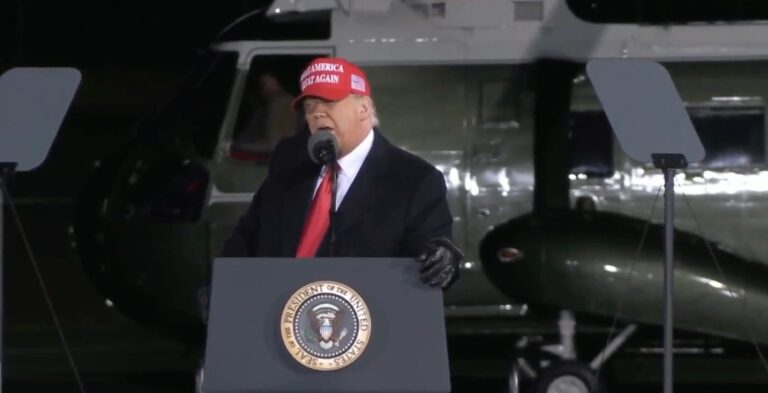
Republican National Convention day 1: Land of Promise with Donald Trump Jr and other Speakers which include: Sen. Tim Scott House Republican Whip Steve Scalise Rep. Matt Gaetz Rep. Jim Jordan Nikki Haley
Republican National Committee chair Ronna McDaniel Georgia state Rep. Vernon Jones Amy Johnson Ford Kimberly Guilfoyle Natalie Harp Charlie Kirk Kim Klacik Mark and Patricia McCloskey Sean Parnell Andrew Pollack Tanya Weinrei LIVE: Republican National Convention Night 1: Land of Promise with Donald Trump Jr. LIVE NOW: Republican National Convention Night 1: Land of Promise with Donald Trump Jr. LIVE STREAM: Republican National Convention Night 1: Land of Promise with Donald Trump Jr.
First Lady Melania Trump is excited to announce Building the Movement: America’s Youth Celebrate 100 Years of Women’s Suffrage, an exhibit honouring the centennial anniversary of the ratification of the 19th amendment, which gave American women the right to vote. The exhibit will launch this August and will showcase artwork by young Americans depicting this historic milestone. To create this exhibit, the First Lady is asking students across the United States and its territories for submissions depicting individuals, objects, and events representing the women’s suffrage movement. Their artwork will appear alongside images of women’s suffrage parades, marches, and gatherings that took place at or around the White House.
“As we celebrate the 100th Anniversary of the 19th Amendment, it’s important to include our children in the conversation so they can learn and understand the history behind the women’s suffrage movement,” said First Lady Melania Trump. “For decades, women leaders lobbied, marched, and protested for equality and their right to vote in the United States. It is my hope that this project will both support and expand the important conversations taking place on equality and the impact of peaceful protests while encouraging children to engage in the history behind this consequential movement in their own home state.”
The White House is encouraging submissions from students in grades 3-12, and will select one artwork to be included in the exhibit from each of the 50 states, the District of Columbia, America Samoa, Guam, the Northern Mariana Islands, Puerto Rico, and the U.S. Virgin Islands. All applicants will receive a thank you note signed by the First Lady, thanking them for their participation in this special exhibit honouring the women’s suffrage movement.
To be considered, artwork must meet the following requirements:
Two-dimensional, created on an 8”x 8” piece of paper. To submit, parents and guardians are asked to upload an image of your child’s artwork which can be a simple snapshot taken with a camera or a cell phone. Winners will be asked to send their original artwork via mail at a later date.
Include a statement (up to 300 characters) about the artwork and how it represents women’s suffrage.
Be based on one of the following categories: Suffragists, Suffrage Symbols, or Suffrage Events.
Suffragists: Portray a suffragist who inspires you. Many brave individuals dedicated themselves to fighting for women’s right to vote. Depict one of the well-known woman from the national movement or someone who did work in your state/territory.
Suffrage Symbols: Create your own button, ribbon, or sign. Activists and supporters wore buttons with messages such as “Votes for Women” or carried signs with statements to President Wilson: “Mr. President: How Long Must Women Wait for Liberty?”
Suffrage Events: Depict a historic march, protest, or other event related to the women’s suffrage movement. This can be a national happening or something from your state/territory.
The LNP have released plans for dams they’re not going to build and can’t pay for. Natural Resources Minister Dr Anthony Lynham said the LNP’s drawings marked ‘NOT FOR CONSTRUCTION’ proved the opposition had no plan.“As the Premier said today, the Palaszczuk Government has committed $1.2 billion to water infrastructure across this state since 2017, supporting almost 2300 jobs in regional Queensland,”
Dr Lynham said.“We will soon have to work for us a panel of experts to advise us on a 21st-century version of the Bradfield scheme that is feasible and affordable.“The only reason the LNP won’t say how they’ll pay for their promises is because they want to cut, sack and sell at a time when Queensland can afford it least.”Dr Lynham said that because Queensland was managing the health response, the state’s plan for economic recovery was already being delivered.“That means guaranteeing infrastructure delivery,” the Minister said.“The Palaszczuk Government is the only government building water infrastructure in Queensland.
”This includes:$176 million for Rookwood Weir.$410 million for the Haughton Pipeline Duplication Project (Stage 1 and 2) in Townsville and sealing a $24 million deal for the next stage of assessment for the proposed Hells Gates Dam. $16.5 million for the Burdekin Falls Dam raising feasibility studies (which includes the detailed business case).$14.53 million for the planning works for the Burdekin Falls Dam improvement project.a $16.5 million contribution to modernising an existing open channel irrigation scheme on the Atherton Tablelands.$13.6 million to kick start the new Emu Swamp Dam.$1 million feasibility study into a Warwick pipeline.
“We are preserving the proposed Nullinga Dam site in Far North Queensland and pursuing alternative water supply options for the Far North,” he said.“We have made the proposed Urannah Dam a coordinated project and given the green light for the next stage of assessment as well as declaring the raising of the Burdekin Falls Dam Wall a coordinated project.””How about the LNP asks the Federal LNP to stump up the $176 million they’ve promised for Rookwood Weir in Central Queensland.“It’s time to meet their last set of dam election promises.”
Attribution: Minister for Natural Resources, Mines and Energy The Honourable Dr Anthony Lynham
Only the @LNPQLD is serious about building the New Bradfield Scheme which is why we’ve started the work from opposition releasing engineering plans today in Townsville. This will be the biggest dam in Australia delivering thousands of secure jobs. #qldpolpic.twitter.com/ZZCuCDovKl
President Trump in press Briefing James S. Brady Press Briefing Room: On the therapeutics front, this is what I’ve been looking to do for a long time. This is a great thing. Today, I’m pleased to make a truly historic announcement in our battle against the China virus that will save countless lives. The FDA has issued an emergency use authorization — and that’s such a powerful term: emergency use authorization — for a treatment known as convalescent plasma. This is a powerful therapy that transfuses very, very strong antibodies from the blood of recovered patients to help treat patients battling a current infection. It’s had an incredible rate of success.
Today’s action will dramatically expand access to this treatment. And I want to thank Dr. Hahn and Secretary Azar. I want to thank the FDA — all of the people that have been working very hard on this. It showed tremendous potential.
This is the only possible — and it’s only made possible because of Operation Warp Speed that has everybody working together. We’re years ahead of approvals. We would be — if we went by the speed levels of past administration, we’d be two years, three years behind where we are today, and that includes in vaccines that you’ll be hearing about very soon, very shortly.
To deliver treatments and vaccine to save lives, we’re removing unnecessary barriers and delays not by cutting corners, but by marshaling the full power of the federal government.
We’ve provided $48 million to fund the Mayo Clinic study that tested the efficacy of convalescent plasma for patients with the virus. Through this study, over 100,000 Americans have already enrolled to receive this treatment, and it has proven to reduce mortality by 35 percent. It’s a tremendous number.
The FDA, MIT, Harvard, and Mount Sinai hospital have also found convalescent plasma to be a very effective method of fighting this horrible disease.
Based on the science and the data, the FDA has made the independent determination that the treatment is safe and very effective. Recently, we provided up to $270 million to the American Red Cross and America’s Blood Centers to support the collection of up to 360,000 units of plasma.
In late July, we launched a nationwide campaign to ask patients to have — who have recovered — and these are patients that have been incredible, the way they’ve donated — but these are people recovering from the virus — to donate plasma. Since then, weekly plasma donations have doubled.
And today, I once again urge all Americans who have recovered from the virus to go to Coronavirus.gov and sign up and donate plasma today please. It’s been really an incredible — just incredible people. The country has united so strongly behind this.
And I’ll go over the numbers, but if you look at what’s happened and the success that we’ve had that people don’t talk about — the United States has experienced the lowest case-fatality rate of any major country in the world. You don’t hear that.
The European Union’s case-fatality rate is estimated to be three times higher than that in the United States. Europe has seen 33 percent more fatalities, compared to a typical non-pandemic year than the United States.
And I just want to ask two of our people that have done such a fantastic job, Alex Azar and Stephen Hahn, to say a few words. And, Stephen, I want to thank you because the FDA really stepped up — and especially over the last few days — in getting this done. The results have been incredible, and I think you’ll see the results even go up very substantially. So we appreciate it.
And maybe I’ll ask Alex to go first, and then Stephen. Thank you very much, Alex.
SECRETARY AZAR: Well, thank you very much, Mr. President. Thanks for the bold leadership that allowed us to deliver this very happy news today.
Thanks to your all-of-America approach, America has done more than any other country to expand the arsenal that we have to battle COVID-19. And thanks to early efforts by your administration, Americans have broader access to these treatments, including convalescent plasma, than patients anywhere else in the world.
In early April, early in our fight against COVID-19, the FDA, BARDA, the Mayo Clinic, and other partners sprang into action to set up an expanded access protocol for this promising treatment.
President Trump is the Right to Try President, and he’s fought hard to ensure that Americans can have access to promising COVID-19 treatments. Convalescent plasma has been a tried-and-true therapeutic method in prior outbreaks, but the President wanted to ensure that we develop the data to support its use, and this FDA authorization is one result of that effort.
The data we gathered suggests that patients who were treated early in their disease course — within three days of being diagnosed — with plasma containing high levels of antibodies benefited the most from treatment. We saw about a 35 percent better survival in the patients who benefited most from the treatment — which were patients under 80 who were not on artificial respiration.
I just want to emphasize this point because I don’t want you to gloss over this — this number. We dream, in drug development, of something like a 35 percent mortality reduction. This is a major advance in the treatment of patients. This is a major advance.
Convalescent plasma is one new tool that we’ve added to our arsenal against COVID-19, alongside remdesivir, steroids, and a number of other promising options currently being studied. Because of the President’s Operation Warp Speed, we expect to have other new results and new options reaching patients as soon as this fall.
Operation Warp Speed is supporting experimental therapeutics all the way through to manufacturing so that if they meet FDA’s gold standard for safety and efficacy, they can begin reaching patients without a day wasted.
Americans who have tested positive for and recovered from COVID-19 can go to Coronavirus.gov to find out a quick, convenient way to play a potentially lifesaving role in our fight. Know: If you donate plasma, you could save a life.
We’ve also provided guidance so healthcare providers can contact patients who have recovered from COVID-19 and give them information on how they can donate.
So, thank you again, Mr. President, for supporting this remarkable progress against COVID-19. And I want to thank Dr. Hahn, Dr. Marks, and the entire team at the FDA for the speed with which they’ve approached this, the diligence to ensure that this meets the standards at FDA.
And I’ll turn it over to Dr. Hahn if that’s okay, Mr. President.
THE PRESIDENT: Good. Thank you very much.
Please, Doctor.
DR. HAHN: Thank you, Mr. President, for your leadership. It’s good to be here today to announce FDA’s recent decision. From the beginning of this pandemic, the President has asked FDA to cut back red tape to try to speed medical products into the hands of providers, patients, and American consumers. And I just want to echo the President’s thanks to the more than 17,000 men and women who work at FDA. They have worked day and night to, in fact, do that.
So, plasma is the liquid portion of the blood. That liquid portion contains the natural immunity that someone develops in response to an infection — in this case, COVID-19 — and that liquid portion can be extracted. And for many years, as the President and Secretary Azar said, it’s been given to patients with infectious diseases — for more than 100 years. So there was a really good rationale for why this might work.
And, in fact, as was mentioned, in early April, an expanded-access program was started at the Mayo Clinic with the support of the federal government, under President Trump’s leadership, and that has gone on for the last four months. More than 90,000, close to 100,000 Americans have enrolled in this program and over 70,000 have received treatment. This is one of the largest expanded-access programs in the history of FDA. So, a very successful approach to evaluating how convalescent plasma would work.
So, in the independent judgment of experts and expert scientists at FDA who have reviewed the totality of data — not just the data from this expanded-access program, but more than a dozen published studies, as well as the historical experience associated with this. Those — those scientists have concluded that COVID-19 convalescent plasma is safe and shows promising efficacy, thereby meeting the criteria for an emergency use authorization.
In the optimal treatment — the optimal patients, as described by Secretary Azar, treated with convalescent plasma at the highest titers, there was a 35 percent improvement in survival, which is a significant clinical benefit.
Now, we’re waiting for more data. We’re going to continue to gather data. But this clearly meets the criteria that we’ve established for emergency use authorization, and we’re very pleased with these results.
So, let me just put this in perspective. Many of you know I was a cancer doctor before I became FDA commissioner, and a 35 percent improvement in survival is a pretty substantial clinical benefit. What that means is — and if the data continue to pan out — 100 people who are sick with COVID-19, 35 would have been saved because of the administration of plasma.
We’ve seen a great deal of demand for this from doctors around the country. And what this EUA does — EUA — emergency use authorization today does: It allows us to continue that and meet the demand.
And again, I want to echo the President’s and the Secretary’s ask of the American people: If you’ve recovered from COVID-19, please donate. It could save a life.
And, Mr. President, thank you again.
THE PRESIDENT: Thank you very much, Stephen. I appreciate it.
Okay, any questions, please? Please, go ahead.
Q Thank you, Mr. President. I want to first ask you about the COVID-19 drugs that are in phase three. Are they going to be available to the American population on — you and I talked previously about this idea of Right to Try.
THE PRESIDENT: Right.
Q Can we assure the American people that if it’s being studied and it’s in phase three, you have that right?
THE PRESIDENT: You know, it’s a great question. And I’m not sure a lot of people have been thinking about Right to Try. We’re all waiting for the final answer. And maybe I could ask Stephen, but I would say that Right to Try is exactly — if somebody is virtually terminal — in other words, they’re not going to make it — and if we have these incredible therapies and drugs that are happening, Alex, I think it’s a very interesting question.
I congratulate you for that question because I think —
Q Thank you, Mr. President.
THE PRESIDENT: — we’re all waiting for that exact final endpoint.
What about that, Stephen? We have all of these great — seemingly great answers that are ready to come out, but because of the process, it takes — can we use some of this early, under Right to Try? Please.
DR. HAHN: So it’s a really good question. And, of course, it all depends on the clinical circumstances and what a doctor and a patient together decide, with respect to the administration of any agent.
But if you think about what happened with convalescent plasma and the expanded-access program, this is exactly what happened. This program — so, we have ongoing clinical trials that are randomized between placebo — or an inactive substance — and the convalescent plasma. While that was going on, we knew that there was great demand from patients and doctors. The expanded-access program is a way of actually doing that, and fits perfectly with what the President just said about allowing people to be able to use something that we have now determined to be very safe.
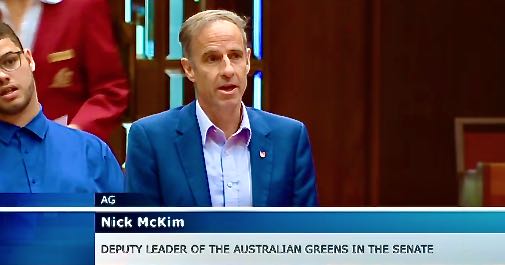
Senator Mehreen Faruqi ( The Senate Fair Work Amendment (COVID-19) Bill 2020 ) Speech: I rise to speak to the Australian Greens Fair Work Amendment (COVID-19) Bill 2020 that I introduced in the Senate during the last sitting. This bill will protect all workers during the crisis of the COVID-19 pandemic. We are living through unprecedented times—I don’t know how many people have said that or how many times, but it is true: COVID-19 is drastically changing our way of life. This is a global health crisis with no-one left untouched by its impacts. This is a difficult time for all of us, there’s no doubt. This is a strange time. This is not a normal time. This is a crisis that touches every aspect of our lives: our wellbeing, our economy, our society and our day-to-day lives.
That’s why what we do, how we make sure that we do everything possible so we can keep our parliament going, is absolutely important. People out there, Australians, are relying on their leaders to make sure that no-one is left behind. As our country responded to public health in this evolving situation, the unemployment rate hit 7.5 per cent in July—and that particular survey was completed before the stage 4 lockdown in Victoria. In its mini-budget update, the government predicted the rate could hit nine per cent by the end of the year. What is clear is that too many people are being left behind during this crisis, and, whilst JobKeeper provides some support, many people in precarious work, casual employment or on a temporary working visa have been denied access to JobKeeper, and many do not have paid leave to rely on. This makes them some of the most vulnerable workers in Australia. We are on a cliff, and we need the government to make sure that no-one falls off.
This virus is going to be with us for a while. There is much uncertainty around when we will be able to relax restrictions or end shutdowns and reopen businesses. Amongst all this, we must make sure that we act to protect workers. This is our responsibility as elected members, and this is exactly what this bill that is in front of us will do. This bill will provide 14 days of paid COVID-19 leave to all workers, including permanent, part-time, casual and gig economy workers. This leave will be available in full for each 12-month period from the start of their employment, and the leave will not accrue year to year. Paid COVID-19 leave will be available for workers in any of the following scenarios: the employee has been diagnosed with COVID-19; the employee is unable to attend work because the employee’s workplace has been shut down because of COVID-19; the employee is subject to self-isolation or quarantine measures in accordance with Commonwealth, state or territory policy relating to COVID-19; or the employee is caring for another person who has been diagnosed with COVID-19 or is subject to self-isolation or quarantine measures in accordance with Commonwealth, state or territory policy relating to COVID-19. Paid COVID-19 leave is extended to gig economy workers and contractors via a COVID-19 leave order. Workers, unions and corporations can apply for a COVID-19 leave order. In circumstances where the Fair Work Commission is issuing a COVID-19 leave order, the Fair Work Commission must make a determination within two days of the application being made, and the Fair Work Commission must make the order unless there are compelling reasons not to do so. For employees other than casual workers, payment will be made at the best rate of pay for the employee’s ordinary hours of work in the period. For other workers, such as casuals and those in the gig economy, payment will be calculated at the daily rate of pay equal to the average of the daily rates of pay paid to the employee over the previous 12-month period.
In addition to the above, I will be moving an amendment to this bill so that paid COVID-19 leave is funded by the government by amending the Coronavirus Economic Response Package (Payments and Benefits) Act 2020. Employees would be able to receive payments from the federal government for COVID-19 leave payments to their employees.
And it’s not just us saying this. The ACTU and Business Council, on 3 August, urged the government to implement a national paid pandemic leave scheme funded by the federal government and, where necessary, state governments. Their letter to the Attorney-General states:
Regrettably, recent events in victoria have demonstrated that there are insufficient measures in place to enable workers who should not be attending their workplaces to stay home.
They go on to say, ‘Paid pandemic leave is now an essential public health measure.’ With unions, businesses and public health experts all backing paid pandemic leave, it’s time for the government to show that they are ready to treat workers’ health and public health with the utmost seriousness that it deserves and vote for this bill.
This bill is a vital piece of legislation that will protect workers, and it will protect our community. Every worker should be able to self-isolate when required without losing their income or their job. But, right now, over 3.3 million Australians cannot access paid sick leave. This bill is about fairness. The public health crisis has only further highlighted the precarious nature of casual employment and the plight of those who work in casual employment and the gig economy. They work largely without benefits such as paid leave, sick leave and other entitlements that are simply fundamental, basic, to work rights. People should not be forced to choose between caring for their health and coming to work.
Recent events in Victoria have shown the public health and economic crisis posed by precarity. Over 1,100 Victorian aged-care workers have contracted coronavirus. One in four Melbourne nursing homes have had a coronavirus outbreak. Outbreaks in aged-care homes have resulted in complete staff shutdowns at aged-care facilities in Victoria, resulting in the national cabinet last week announcing an aged-care preparedness plan with incentives for interstate workers to travel interstate to work in facilities experiencing staff shortages. It is telling that aged-care workers were the first to be given paid pandemic leave during the second lockdown in Victoria. This highlights their exposure to the virus and the need to protect workers across Australia, no matter which sector they work in.
The Victorian and federal governments’ responses in guaranteeing paid pandemic leave to workers in Victoria during the lockdown was an admission that granting workers access to this type of leave is vital to tackle the crisis. The federal government now needs to commit to giving all workers—permanent, part-time, casual or in the gig economy—timely access to this essential support to avoid more outbreaks in the future and to take care of the people who live here.
The government will say that the purpose of this bill has been fulfilled by their pandemic leave disaster payment. This is not enough. This payment is only available to states and territories who have declared a state of disaster. Every worker, no matter where they live and work, should have access to paid pandemic leave. This will protect their health and their income. The government needs to support Australia’s most vulnerable workers and provide a safety net to ensure that everyone has access to at least 14 days of paid pandemic leave, regardless of whether a state of disaster has been declared. We should be acting to prevent disasters now before we see a repeat of the terrible events in Melbourne. The idea that we would wait until a disaster to support workers in crisis is really perverse. Workers are needing to self-isolate during testing and while they’re infected, now. The virus doesn’t care whether a government has declared a state of disaster or not.
In these difficult times—or really ever—it simply isn’t fair that so many Australians are missing out on vital paid leave, left to fend for themselves in this once-in-a-century crisis. We must pass this bill today and look after all workers. This government must step in and support workers and their rights to fair conditions. When wages have been stagnant and the cost of living is rising—literally, going through the roof—it is absurd that this government denies support to workers who are facing weeks, if not months, of under- or unemployment brought on by a global pandemic that few could have predicted.
This bill not only protects workers; it also protects the wellbeing of our community and our economy and advances public health. It’s simple: when a worker has no access to paid leave, they are more likely to continue to work when they are unwell or experiencing symptoms of the virus. We must not push workers to the brink, many of whom have been and will continue to be on the front line and in some of the most precarious working conditions. Deputy Chief Medical Officer Paul Kelly agreed with this logic back in May, stating there are a number of workplaces around Australia where there are disincentives for people to stay at home when they are sick.
That can be financial or it can be a workplace culture. I just want to make this very clear: people coming to work when they are sick puts others at risk.
We need to ensure that we’re not forcing workers into a situation where, by self-isolating, they cannot afford to keep a roof over their head and food on the table. The widespread downturn and shutdown of Australian businesses has caused millions of casual and gig economy workers to be pushed towards the poverty line.
We must not stand by and let this continue to happen. The Prime Minister is abandoning casual workers, gig economy workers, university workers and childcare workers. This bill is the government’schance to redeem themselves somewhat—to stand up for working Australians and to protect some of the most vulnerable during this very difficult time. We must emerge from these exceptionally hard times as a society which has shown, without doubt, that we care for each other, that we care for fairness, that we care for equality. The government must lead, support and reassure workers and their employers. Too many have been left behind, and these pressures felt by people with reduced or no access to leave to go to work when the public health advice is to stay home will only continue. We need the government to step in and guarantee 14 days of paid COVID-19 leave to every worker, regardless of their visa status or whether they are a member of the permanent part-time, casual or gig economy workforce.
This bill will save lives. I call upon the government, upon Labor and upon crossbenchers to urgently make this bill law, for the sake of workers and for the sake of our communities. I commend the bill to the Senate.
Tesla is having a banner year, and we’re not even two months in. After reaching what was an all-time high in December at a value of $393.15 per share, last Wednesday the company’s stock closed at more than double that: $917.42 per share.
While its car sales are strong, they’re not the source of Tesla’s skyrocketing value; people are investing in the company because they see it as the future of electric vehicles. After clearing a legal hurdle last week, Tesla is set for more growth, and in a brand-new market: Europe. Germany, to be specific.
CEO Elon Musk announced plans last November to build a fourth Gigafactory outside Berlin (the first three are in Nevada, New York, and Shanghai). But construction involves cutting down a pine forest the size of 100 soccer fields (not to mention removing buried World War II ammunition), and work was halted after local environmental groups protested. On top of having to cut down thousands of trees, the factory will border a nature reserve, and there’s been much concern raised about how the area’s water supply and wildlife will be impacted.
A Berlin-Brandenburg court stopped Tesla’s forest-clearing with an injunction earlier this month, but last Thursday overturned the injunction and granted the company permission to resume activity, finding that the legal requirements for early construction had been met.
The factory will be located in Gruenheide, a small town about 33 kilometres (20 miles) south-east of Berlin. Tesla intends to have the plant completed and fully functional by mid-2021, and will eventually produce up to 500,000 cars a year there. Though it’s moving forward with land-clearing and other construction preparations, the company technically doesn’t have final project approval from German authorities. Tesla has projected that the factory will employ about 12,000 people.
Getting the state government’s approval is just one of a few hurdles left to clear, and in fact may be more straightforward than the other tasks awaiting Tesla as it builds this factory.
German environmental laws dictate that construction must not interfere with the breeding period for wildlife, which starts in March; this essentially means that for the project to move forward on its planned timetable, tree-cutting would need to be completed in the next couple weeks.
Speaking of protecting wildlife, Tesla will also have to provide bats living in the forest with alternative spots to hibernate, put up fences to prevent reptiles from entering the area, relocate ant nests without destroying them, and find a way to ‘humanely expel’ any wolves living in the area.
In a tweet from January 24, Musk emphasized that the factory “will absolutely be designed with sustainability and the environment in mind.” He added that Tesla will plant three trees for every tree it cuts down in the area.
Home to iconic brands like BMW, Mercedes, Audi, and Volkswagen, German car manufacturing has been disrupted by companies that got an earlier and stronger start in electric vehicle technology—specifically, Tesla. The company’s Model 3 outsold all German competitors in both the US and European markets last year, and Germany’s auto industry is now at a 22-year low.
The arrival of Tesla will, in the best-case scenario for German automakers, spur innovation through competition and encourage more private-sector investment. The Germans may not be leaders in electrification, but they certainly have a reputation for high-quality engineering. They would do well to follow in Tesla’s footsteps and start investing in energy storage technology and research; perhaps this could be the path to a rejuvenated German auto industry and economy.
But first, let’s make sure those bats, wolves, lizards, birds, and ants are taken care of.
Image Credit: Artist rendering, Gigafactory. Image courtesy of Tesla
Victorians are doing an amazing thing – staying home and staying safe.
And it’s our actions that are slowing the spread of this virus and reducing the number of people and families that are suffering because of it.
But even as we drive case numbers down, and as we’ve seen around the world, without a vaccine – the incredibly infectious nature of coronavirus will mean it will continue to be an ever-present threat.
It’s why, as part of the latest in the Victorian Government’s communications campaign, some of our most loved Victorians are here to remind us all – staying safe is in our hands.
As part of the push, Sharon Strzelecki, Shane Jacobson, Tayla Harris, Waleed Aly, Nazeem Hussain and more are asking every Victorian to play their part in stopping the spread of coronavirus – now and for some time to come.
That includes small but simple things like wearing a mask, washing your hands, keeping your distance – and getting tested if you have symptoms.
Using Victorian voices and a very Victorian sense of humour, this is the latest in our ongoing advertising and communications efforts and will be successively rolled out on social media channels in the coming days.
Despite promising new signs, we’re still without a coronavirus vaccine.
That means, no matter when we ease restrictions, precautions like wearing a mask, physically distancing and being on the lookout for symptoms must continue to be part of our “COVID Normal,” for some time to come.
For now, Victorians are being asked to abide by the restrictions, wear a mask and wherever they live, get tested if they have even the slightest of symptoms.
“The truth is that even with case numbers coming down, without a vaccine, this isn’t over. But with small, simple steps we can keep ourselves and each other safe – now and into the future.”
“Keeping a hold on this wickedly infectious virus will take all of our efforts. But I know Victorians are tough – and we will get through this together.”
PRESIDENT TRUMP: Thank you very much. It’s great to have the Prime Minister of Iraq, a very highly respected gentleman all over the Middle East, and respected very much by our country, too. I can say that.
And we will be discussing, today, the obvious: defence — and offence, I have to say. But we’ll be discussing military. We’re also involved in many oil projects and oil development within their country, and I think we’ve had a very, very good relationship since we started.
We’re down to a very small number of soldiers in Iraq now. We defeated the ISIS caliphate in Iraq and Syria, and it’s — that has been defeated very strongly, and it does have a different feeling to it now that you’ve got it. We had it at 98 per cent, and we said, “Well, we can leave.” And then, everybody said, “Would you bring it to 100 per cent?” Then we brought it 100 per cent.
But the relationship is very good. We have become friends. We have become, I think, friendly. I think our relationship now is better than ever before. But we have very few soldiers in Iraq, and — but we’re there to help. And the Prime Minister knows that. We are there to help. We’re with some people that also — Mike and Mike — we — and Robert. We very much feel that if Iran should do anything, we will be there to help the Iraqi people.
So, that’s where we are. We’re doing big trade deals, we’re doing military deals, and we’re doing military purchases by them, where they’re spending a lot of money on purchasing equipment and they’re building up their military rapidly, and we like to see that.
So, thank you very much, Mr. Prime Minister, for being here. I appreciate it. Please.
PRIME MINISTER KADHIMI: Thank you, Mr. President. I just want to thank you for receiving us in the White House today. I’m grateful for all the support offered by the United States to Iraq during the war against ISIS.
This support has built our partnership for the best interests for our nation. Mr President, yesterday we signed many contract — many contracts with American companies — over (inaudible). Iraq is open for American business and investment and for a better future for Iraq and Iraqi people.
Thank you very much.
PRESIDENT TRUMP: Thank you very much.
PRIME MINISTER KADHIMI: Thank you.
PRESIDENT TRUMP: Very much.
Q Mr. President, what’s your reaction to the indictment of your former campaign aid, Steve Bannon?
PRESIDENT TRUMP: Well, I feel very badly. I haven’t been dealing with him for a long period of time, as most of the people in this room know. He was involved in our campaign. He worked for Goldman Sachs. He worked for a lot of companies. But he was involved, likewise, in our campaign, and for a small part of the administration, very early on. I haven’t been dealing with him at all.
I know nothing about the project, other than I didn’t like — when I read about it, I didn’t like it. I said, “This is for the government. This isn’t for private people.” And it sounded, to me, like showboating. And I think I let my opinion be very strongly stated at the time. I didn’t like it. It was showboating and maybe looking for funds. But you’ll have to see what happens.
I think it’s a very sad thing for Mr. Bannon. I think it’s surprising. But this was something, as you know, just by reading social media and by reading whatever it is, and by speaking to Mike and Mike and all of them, I didn’t like that project. I thought that was a project that was being done for showboating reasons.
I don’t know that he was in charge. I didn’t know any of the other people either. But it’s sad. It’s very sad.
Q But it’s not just Steve Bannon. It’s Roger Stone. It’s Michael Flynn. It’s Rick Gates, Paul Manafort, Michael Cohen. What does it say about your judgment that these are the kind of people who you’re affiliated with —
PRESIDENT TRUMP: Well, I have no idea.
Q — and the culture of lawlessness —
PRESIDENT TRUMP: Yeah. Yeah.
Q — around people who are involved in the leadership of your 2016 campaign?
PRESIDENT TRUMP: Well, no, there was great lawlessness in the Obama administration. They spied on our campaign illegally. And if you look at all of the things and all of the scandals they had, they had tremendous lawlessness.
But I know nothing about it. I was not involved in the project. I have no idea who was. But I can tell you: I didn’t know the people; the three people that were talked about were people that I did not know. I don’t believe I ever met them.
I don’t think that should be a privately financed wall. I don’t think — it’s too complex; it’s too big. And we’re now up to 300 miles, almost. In another week, week and a half, we’ll be up to 300 miles of wall at the highest level. They were even having construction problems.
I was reading — the little I know about it, I got from you. I was reading, where they were having construction problems with the wall that they were — they had a small area just to show people that they could build a wall, and they were having a lot of problems where it was toppling over and other things. And I didn’t like it because I didn’t want to be associated with that.
We built a very powerful wall. It was a wall that is virtually impossible to get through. It’s very, very tough. It’s very strong, and it’s everything the Border Patrol wanted. And I didn’t want to have a wall that was going to be an inferior wall. And I felt this was going to be an inferior wall.
Q Kris Kobach said you endorsed the wall. Is that true? The project.
PRESIDENT TRUMP: So I didn’t — I didn’t know — I didn’t know that. I didn’t know about Bannon’s involvement, but I didn’t know any — I didn’t know the other people. And I — but I do think it’s a sad event.
And, again, Steve has had a great career at Goldman Sachs. He’s had a career with a lot of other people. I haven’t dealt with him at all, over years now — literally, years. And I guess this was a project he was involved in, but it was something that — in fact, you can see I made statements about it a long time ago. It was something that I very much felt was inappropriate to be doing.
Okay. Please go ahead
No, go ahead, please.
Q Mr. President, the end of the militia roles in Iraq — it’s one of the very important issues to stabilize the country in Iraq. How America is going to support ending the militia role in Iraq and —
PRESIDENT TRUMP: You know, you’re — you’re very hard to understand. Could you maybe help me with it?
Q Mr. President —
PRESIDENT TRUMP: Wait. Go ahead. Try it again.
PRIME MINISTER KADHIMI: (As interpreted.) The United States helped the — helped Iraq enormously in defeating ISIS and also in toppling the Saddam Hussein regime. We are working on building a strong relationship that is based on joint interests between Iraq and the United States, that is based on the economic interest for the better future of the Iraqi people and the United States people.
PRESIDENT TRUMP: When I got to — when we came into office, ISIS was running rampant all over Iraq and Syria. And we knocked out the — 100 per cent of the ISIS caliphate. But the Obama administration did a very, very poor job. They were running rampant all over. And we came in and we did a real job, and we got rid of that, and that was a good thing.
And now we’re working with Iraq. They use the great American Dollar, which is the most powerful currency in the world. And they’re starting to do well. And we are with them. And this gentleman, in particular, we’ve developed a very good relationship. And hopefully, it’s going to be very strong for your country.
Please.
Q Thank you, Mr. President. There have been 32 attacks — there have been 32 attacks in the last 10 months on U.S. interests in Iraq, particularly in the Green Zone and U.S. military bases. How are you going to help Iraq to halt these attacks by pro-Iranian militia and to hold these people accountable?
And, sir, if I may also, there was some reporting that the U.S. troops will withdraw from Iraq totally in three years. Is this true?
PRESIDENT TRUMP: So, at some point, we obviously will be gone. We’ve brought it down to a very, very low level. We deal — where there are attacks, we take care of those attacks, and we take care of them very easily. Nobody has the weaponry we have. Nobody has the — anything — of what we have. We have the finest, the greatest military in the world. When somebody hits us, we hit back hard than they hit us. So we handle it.
In addition to that, Iraq has been very helpful, where necessary. But we have been taking our troops out of Iraq fairly rapidly, and we look forward to the day when we don’t have to be there. And hopefully Iraq can live their own lives and they can defend themselves, which they’ve been doing long before we got involved.
Yes, please.
Q Mr. President how do you see the role of the Kurds in Iraq?
Q Mr. President, about — about the bounties — about the bounties: You say you hit back hard, but we haven’t seen any definitive strike back for bounties upon Americans.
PRESIDENT TRUMP: Well, you don’t know about the bounties. I mean, you’re telling me — if you know something, you can let us know, but you obviously don’t know very much about it. But if we found out, that would be true; if we found, that would be a very — it would be a fact, what you just said. We would hit them so hard your head would spin.
Go ahead.
Q Mr. President how do you see the role of the Kurds in Iraq? And how is important relationship between Baghdad and Erbil (inaudible)?
PRESIDENT TRUMP: Well, the Kurds helped us greatly in defeating the — as you know, the ISIS, and getting the ISIS — 100 percent of the ISIS caliphate. So we have a very good relationship with the Kurds, and we’ve also treated them very well.
Q Mr. President —
PRESIDENT TRUMP: Yes, please.
Q — on the bounties —
Q Yeah. The end of the militia rules in Iraq is very important to — to stabilize the country. How America can help ending the militia rules? And how can help Iraq in the democracy process?
PRESIDENT TRUMP: Well, what we’re doing is we’re helping where we can. But again, that’s a country — that’s a separate country. They have a prime minister, and they have people in office, and they have to run their country. We’ve been in Iraq for a long time. I won’t say whether or not I said we should be there, but frankly, I didn’t think it was a good idea. But I was a civilian, so who’s going to listen to me? But I made my point pretty clear; I guess as clear as a civilian can do it.
But we were there, and now we’re getting out. We’ll be leaving shortly. And the relationship is very good. We’re making very big oil deals. Our oil companies are making massive deals. And that’s basically the story.
I mean, we’re very — we’re very happy with the relationship that we’ve developed over the last couple of years. I thought, before that, frankly, the United States was being taken advantage of. But we’re going to be leaving, and hopefully we’re going to be leaving a country that can defend itself.
Q While you are here in the United States, there were — there were airstrikes on northern Iraq, in Kurdistan region, killing one civilian. I know — in your talks, in your meetings here, you talk a lot about the sovereignty of Iraq. Is that something that you’re looking for help from the United States?
And Mr. President, if that’s something can — if Iraq is asking for help, in terms of the interference from the neighbors — not just Iran, but other neighbors where they’re attacking northern Iraq?
PRESIDENT TRUMP: Well, they’ll have to make a specific request, but certainly, the Prime Minister has my ear. So if he does that, we’ll take a look. They do have — it’s a very unstable part of the world. And I’m not talking about Iraq; I’m talking about the — the whole of the Middle East. It’s a very, very unstable part of the world.
But we’re there to help. And because of the relationship, we would certainly be willing to lend you the kind of support that you need.
PRIME MINISTER KADHIMI: (As interpreted.) Definitely the Turkish attacks are not accepted. On the other hand, the Iraqi constitution also does not allow Iraq to be — to become used to attack any — any neighboring — neighboring country. We are entering dialogue with Turkey to rectify this situation. And I look forward to solving this problem with Turkey and getting our neighbors, the Turks, to understand Iraq’s circumstances.
But once again, the Iraqi constitution does not allow Iraqi territory to be used to attack any neighboring country.
PRESIDENT TRUMP: I will say this: The United States, and me in particular, has a very good relationship with Turkey and with President Erdoğan, and we’ll be talking to him. But we have a very, very good relationship with Turkey and with President Erdoğan.
Q Mr. President, just to follow up on the troops question, sir: Do you have a timeframe for the full and complete withdrawal of U.S. troops from — from Iraq?
PRESIDENT TRUMP: Mike, what would you say to that?
SECRETARY POMPEO: As soon as we can complete the mission. The President has made very clear he wants to get our forces down to the lowest level as quickly as we possibly can. That’s the mission he’s given us, and we’re working with Iraqis to achieve that.
PRESIDENT TRUMP: We’re at the lowest level now, Jeff — we’re at the lowest level in Afghanistan that we have been in many years. We’ll be down to about 4,000 troops in Afghanistan.
SECRETARY POMPEO: In a couple months.
PRESIDENT TRUMP: And that will be when?
SECRETARY POMPEO: A couple months, sir.
PRESIDENT TRUMP: Yeah, within a few months. A couple of months.
Q Mr. President — one other thing, Mr. President —
PRESIDENT TRUMP: As you know, in Syria we’re down to almost nothing, except we kept the oil. But we’ll work out some kind of a deal with the Kurds on that. But we left, but we kept the oil. And we left the border. We said Turkey and Syria can take care of their own border; we don’t have to do it. And that worked out very well. I remember when I did that, I was scorned by everybody. They said, “This is terrible.”
Well, I did it. It’s now two years ago. And we did it with — Mike Pence went over and met with the various parties and very successfully, and we removed our troops. Nobody was killed. Nobody. And now they protect their own border like they have been for hundreds of years. And we’ll — we’ve left. But we did keep a small force, and we kept the oil. And we’ll make a determination on that oil fairly soon.
Q And just one domestic question, sir: The Manhattan case about your taxes has now ruled that you do need to give your — to turn over your taxes. Do you have a reaction to that?
PRESIDENT TRUMP: Well, the Supreme Court said, if it’s a fishing expedition, you don’t have to do it. And this is a fishing expedition.
But more importantly, this is a continuation of the witch hunt — the greatest witch hunt in history. There’s never been anything like it, where people want to examine every deal you’ve ever done to see if they can find that there’s a comma out of place. No President has ever had to go through this. The Supreme Court shouldn’t have allowed this to happen. But no President has ever had to go through this.
But what the Supreme Court did do is say if it’s a fishing expedition, you — my interpretation is essentially, you don’t have to do it. So we’ll probably end up back in the Supreme Court.
But this is just a continuation of the most hideous witch hunt in the history of our country. We beat Mueller. We won at every level in this — in Washington, in D.C. We won at every lev- — level. So, now, what they do: They send it into New York. So now we have an all-Democrat state — all Democrats. And they send it into New York. This should never be allowed to happen to another President.
This is a continuation of the most disgusting witch hunt in the history of our country — all it is. But the Supreme Court said “fishing expedition.” This is the ultimate fishing expedition. Nobody has anything. We didn’t — we don’t do things wrong.
But they’ll say, “Let’s go in and inspect every deal he’s ever done. Let’s get papers from 10 years. Every paper. Every deal he’s ever signed. Maybe we can find where some lawyer made a mistake, where they didn’t dot an “i,” where they didn’t put a comma down someplace. And then we can do something.” This is a disgrace and this should never, ever be allowed to happen again.
All right? Thank you very much.
Q Mr. President, on Navalny, the Russian opposition leader: He was hospitalized, and they think he was poisoned. Is that the U.S. government’s determination, that he was —
PRESIDENT TRUMP: We haven’t seen it yet. We’re looking at it. And Mike is going to be reporting to me soon. Okay?
The Treasurer today released details of the Palaszczuk Government’s $13.9 billion infrastructure investment for 2020-21 as part of Queensland’s plan to support jobs and accelerate the state’s economic recovery.
Treasurer and Minister for Infrastructure and Planning Cameron Dick said this year’s capital program re-affirmed Government’s infrastructure guarantee, and was expected to directly support around 44,000 jobs.
“The Capital Program 2020 Update includes $13.9 billion in infrastructure spending across the state and is aimed at keeping people in jobs, driving our recovery and securing Queensland’s longer-term prosperity,” Mr Dick said.
“Our Unite and Recover for Queensland Jobs strategy for economic recovery has a strong focus on infrastructure, because we know that infrastructure will drive our state’s recovery, future prosperity and resilience.
“Today’s capital program update reinforces our commitment to a $51.8 billion program of work over four years and gives the private sector confidence to invest in Queensland.
“In addition to creating and protecting jobs within the construction industry and supply chains, this investment will support our industries, regions and communities and be an incentive for further private investment.
“The Capital Program 2020 Update confirms our pipeline of capital projects that will support jobs for tradies, subcontractors and businesses now and into the future.
“It details investment in almost 900 initiatives across transport, energy, water, health, education and training, digital, justice and public safety, social housing, the arts, culture, sport and recreation.
“The update provides visibility of this year’s spend and the anticipated 18-month projected spend to December 2021 for each of these infrastructure classes.
“It shows we’re continuing to invest in traditional sectors by delivering economy boosting projects such as new and upgraded roads, vital high-quality health, education and social services, and also reflects our commitment to new technologies and priority sectors.
“This year, around 60 per cent of the total $13.9 billion investment will be spent outside of Greater Brisbane.
“These projects will help diversify and support our economic growth, enhance liveability within our communities and provide jobs in our regions and the metropolitan area.”
Some of the highlights within the capital program include:
$6.1 billion in transport infrastructure projects across Queensland including the Ports of Gladstone and Townsville, Cross River Rail, Bruce Highway, Pacific and Ipswich motorways and a wide range of regional roads
health facility investments such as the $70 million redevelopment of Cairns Hospital mental health facilities
over $16 million for new ambulance stations at Ormeau, Yarrabilba, Munruben and Urraween
a new QCN Fibre partnership with Toowoomba’s Pulse Data Centre to provide better internet for thousands of Darling Downs businesses
$20 million towards the new Queensland Apprenticeships Centre at Beenleigh delivering training for high demand industries including renewable hydrogen
$3.4 million towards collaborative projects with Balonne, Bulloo, Maranoa, Murweh and Paroo councils to enhance digital connectivity, and
investment in public safety such as $16.9 million for Queensland Fire and Emergency Services’ regional headquarters at Charlton, near Toowoomba, and the $52.2 million Wacol Counter-Terrorism and Community Training Centre, as well as new and upgraded fire and police stations around the state.
Mr Dick said the capital program built upon the State Government’s support for the building and property development industries through stimulus measures and initiatives including the:
$51.8 billion Infrastructure Guarantee
$200 million Building Acceleration Fund
$50 million SEQ community stimulus program
$400 million Accelerated Works Program
$200 million Works for Queensland COVID-19 Recovery Package
$100 million Housing Construction – Works for Tradies, and
reducing red tape and streamlining planning approvals for construction.
“This Government is focused on getting our state’s economy back on its feet and building a stronger and more resilient economy,” he said.
“Working in partnership with the private sector to invest and build vital infrastructure strengthening industries, supporting jobs and enabling future growth is vital to achieving our goals.”
Infrastructure Association of Queensland (IAQ) Chief Executive Officer Priscilla Radice welcomed the release of the Government’s Capital Program 2020 Update.
“In our recent 2020 IAQ survey, having a clear pipeline of work was identified by our members as the most pressing issue,” Ms Radice said.
“The infrastructure update gives industry visibility of the government’s continuing significant investment which is exactly what is needed to build confidence, help with workforce planning and grow the economy.
“We know that for every $1 the government spends on infrastructure the private sector spends $13, creating jobs now and long-term economic benefits into the future.”
Master Builders Deputy CEO Paul Bidwell says this is a strong increase of $1 billion on last year’s commitment.
“Given the current circumstances, it was vital spending be increased and we are pleased the Queensland Government has delivered on that front.”
Attribution; Treasurer, Minister for Infrastructure and Planning, The Honourable Cameron Dick. The State of Queensland (Department of the Premier and Cabinet)
In times of crisis, conspiracy theories can spread as fast as a virus.
As the coronavirus pandemic tightened its grip on a world which struggled to comprehend the enormity of the situation it was facing, darker forces were concocting their own narratives.
Scientists and researchers were working – and continue to work – around the clock for answers. But science is slow and methodical. So far-fetched explanations about how the outbreak started began filling the vacuum. Among these strange explanations is a theory that the recent rollout of 5G technology is to blame. But where did this theory begin, how did it develop and mutate and what can be done to stem the tide of fake news? We asked four experts who have all done extensive research in this area to examine these questions.
Marc Tuters, assistant professor of new media and digital culture at the University of Amsterdam, and Peter Knight, professor of American studies at the University of Manchester, examine the big questions and the history of conspiracy theories. Then Wasim Ahmed, lecturer in digital business at Newcastle University, and Joesph Downing, a nationalism research fellow at the London School of Economics, share the results of their new study into the origins of the 5G conspiracy theory on social media.
This article is part of Conversation Insights
The Insights team generates long-form journalism derived from interdisciplinary research. The team is working with academics from different backgrounds who have been engaged in projects aimed at tackling societal and scientific challenges.
A toxic cocktail of misinformation
Marc Tuters and Peter Knight
Conspiracy theories about mobile phone technology have been circulating since the 1990s, and have long historical roots. Doctors first talked of “radiophobia” as early as 1903. Following on from fears about power lines and microwaves in the 1970s, opponents of 2G technology in the 1990s suggested that radiation from mobile phones could cause cancer, and that this information was being covered up. Other conspiracy theories about 5G include the idea that it was responsible for the unexplained deaths of birds and trees. The coronavirus 5G conspiracy theory comes in several different strains, of varying degrees of implausibility.
One of the first versions of the theory claimed that it was no coincidence that 5G technology was trialled in Wuhan, where the pandemic began (this is incorrect, as 5G was already being rolled out in number of locations). Some claim that the coronavirus crisis was deliberately created in order to keep people at home while 5G engineers install the technology everywhere. Others insist that 5G radiation weakens people’s immune systems, making them more vulnerable to infection by COVID-19. Another mutation of the 5G conspiracy theory asserts that 5G directly transmits the virus. These different 5G stories are often combined together with other COVID-19 conspiracy theories into a toxic cocktail of misinformation.
At first, some conspiracy theorists insisted that the threat of the virus (and the apparent death rates) had been exaggerated. Echoing President Donald Trump’s own language, some of his supporters considered this as part of an elaborate “hoax” intended to harm his chances of re-election. Others, particularly on the far right in the US, framed lockdown emergency measures in terms of “Deep State” efforts at controlling the population and called for a “second civil war” in response.
Other prominent theories include the claim that the virus was accidentally released by the Wuhan Institute of Virology, or that it was deliberately made as a biowarfare weapon, either by the Chinese or the Americans. One increasingly popular idea is that the pandemic is part of a plan by global elites like Bill Gates or George Soros – in league with Big Pharma – to institute mandatory worldwide vaccinations that would include tracking chips, which would then be activated by 5G radiowaves.
Polling data in various countries including the UK, the US, France, Austria and Germany has shown that the most popular coronavirus conspiracy theory is that the virus was man-made – 62% of respondents in the UK think that this theory is true to some degree. In that UK poll, 21% agreed, to varying extents, that coronavirus is caused by 5G and is a form of radiation poisoning transmitted through radiowaves. In comparison, 19% agreed that Jews have created the virus to collapse the economy for financial gain.
Where did these theories come from?
Few of these theories are new. Most of them are mutations or re-combinations of existing themes, often drawing on narrative tropes and rhetorical manoeuvres that have a long history. Conspiracy theorists usually have a complete worldview, through which they interpret new information and events, to fit their existing theory. Indeed, one of the defining characteristics of conspiracy thinking is that it is self-sealing, unfalsifiable and resistant to challenge. The absence of evidence is, ironically, often taken as evidence of a massive cover up.
The dismissal of the pandemic as a hoax and the questioning of scientific experts is straight out of the playbook of climate change denial. The 5G theory about radiowaves transmitting or activating the virus, for example, is a reworking of long running conspiracy fears about mind control experiments, subliminal messaging and supposed secret US military weapons projects (all ripe topics for Hollywood’s movie industry).
The 5G story shares similarities with rumours that date back to the 1990s about HAARP (the US military’s High Frequency Active Auroral Research Program). HAARP was a large radio transmitter array located in Alaska and funded by the US Department of Defence, in conjunction with a number of research universities. The programme conducted experiments into the ionosphere (the upper layer of the atmosphere) using radio waves, and was closed down in 2014. Conspiracy theorists, however, claimed that it was actually developing a weapon for weather control as well as mind control. Similarly, concerns have been expressed concerning that 5G might be in fact be a hi-tech weapon whose use represents an “existential threat to humanity”.
There have also long been conspiracy rumours that Big Pharma is suppressing a cure for cancer. The idea that the virus was made in a lab mirrors claims made a quarter of a century ago about HIV/AIDS. One origin for that story was an early example of a KGB disinformation campaign. The allegation that the Bill and Melinda Gates Foundation or George Soros planned the coronavirus pandemic is a version of familiar right-wing (and often racist and antisemitic) conspiracy fantasies about “globalist” elites threatening national and individual sovereignty. There is mounting evidence that far-right groups are opportunistically using fear and uncertainty surrounding the pandemic to promote their hateful politics.
Listen to a special episode on coronavirus conspiracy theories featuring Marc Tuters in The Anthill Podcast’s expert guide to conspiracy theories
Populist conspiracy theories often work by dividing the world into Us vs Them, with the aim of scapegoating people and institutions and providing simple explanations for complex phenomena. The 5G coronavirus conspiracy theories are particularly challenging because they bring together people from very different parts of the political spectrum. On the one hand, they attract the far-right who see them as part of a technological assault by big government on the freedom of individuals. On the other, they appeal to the well established anti-vaxxer community, who are often allied with those distrustful of Big Pharma.
In the US, which is in an election year, coronavirus mitigation strategies have become a divisive culture war issue, with the president refusing to wear a face mask. But in countries like Germany anti-lockdown issues appear to be creating connections across the political spectrum, led by social media influencers who are working to connect the dots between previously separate conspiracy theory communities or tribes.
As seen in the quantitative analysis below, such influencers anchor conspiracy theory communities on social media. Because these methods provide only a partial view, it is problematic to assume that the members of these communities are necessarily trapped within echo chambers, unable to access other points of view. Nevertheless, the findings do correspond with the troubling patterns outlined above. And they also show that those who believe in and propagate conspiracy theories can come from a cross-section of society.
Our study set out to investigate the 5G conspiracy theory on Twitter towards the beginning of April 2020 which was when the conspiracy was trending in the UK and increasing its visibility.
This time period coincided with reports that at least 20 UK 5G phone masts were vandalised, including damage reported at a hospital. There were also 5G arson attacks across continental Europe during this time.
Our research set out to uncover who was spreading the conspiracy theory, the percentage of users who believed the theory and what steps were needed to combat it. We used a tool called NodeXL to carry out a social network analysis. NodeXL is a Microsoft Excel plugin which can be used to retrieve data from a number of social media platforms such as Twitter.
We captured data using the “5Gcoronavirus” keyword which also retrieved tweets with the #5GCoronavirus hashtag. Tweets we analysed were posted from March 27 to April 4. The network consisted of a total of 10,140 tweets, which are composed of 1,938 mentions, 4,003 retweets, 759 mentions in retweets, 1,110 replies, and 2,328 individual tweets.
We found that there was a specific Twitter account, set up as @5gcoronavirus19 with 383 followers, which was spreading the conspiracy theory and had become influential in driving it forward on social media. The account was able to send out 303 tweets in seven days. We also found that President Trump was often tagged in tweets and was influential within the network without having tweeted himself. This highlights the point about support for these theories coming from the alt-right.
Out of a total of 2,328 individual tweets, 34.8% of users believed the theory and/or shared views in support of it. For example, one user who we are not identifying due to the ethics on which our study was based tweeted:
5G Kills! #5Gcoronavirus – they are linked! People don’t be blind to the truth!
But 32% denounced the theory or mocked it. For instance, one user noted: “5G is not harming or killing a single person! COVID-19 #5Gcoronavirus”.
A further 33% were just general tweets not expressing any personal views or opinions. Like one user who tweeted: “I have a 10AM Skype Chat on Monday, COVID-19 #5Gcoronavirus”. But this overt lack of support for the conspiracy itself became a problem because as more users joined the discussion, the profile of the topic was raised which allowed it to start trending.
Network clusters
Our social network graph shows the different groups within a network. Author provided
We created a social network graph (above), clustering identified different shapes and structures within the network. The largest group in the network represented an “isolates group”. These groups are typically formed when a user mentions a hashtag in their tweets without mentioning another user. Big brands, sports events and breaking news stories will all have a sizeable isolates group. This suggests that during this time the conspiracy topic had become popular and attracted views and opinions from users who were new to the network.
The second-largest network shape resembled a “broadcast” network and contained users that were being retweeted. Broadcast networks can typically be found in the Twitter feeds of celebrities and journalists. The Twitter handle @5gcoronavirus19, which was set up to spread the theory, formed a group of its own resembling a broadcast network shape and it received a number of retweets, showing how the conspiracy theory was being amplified as users retweeted content. Conspiracy theorists are likely to use comments made by influential figures which can add fuel to the fire.
A key example of this would be when the television presenter Eamon Holmes said the media couldn’t say for sure whether the 5G theory was false. These comments fell outside of the time period we studied. But they are likely to have had an impact across social media platforms. Holmes was strongly criticised by Ofcom which noted that his comments risked undermining the public’s faith in science.
The misinformation pandemic
Months before mobile phone masts were attacked in the UK, the “infodemic” (a wide and rapid spread of misinformation) was unfolding at a rapid pace. In France, news spread on Facebook of a tasty cure for the virus: Roquefort cheese. Indeed, a far more dangerous public health prospect than blue cheese, the rumour that cocaine could cure COVID-19 caused the French Ministry of Health to release a warning statement.
Some argue that strange events like this, which erupt from the online world of fake news, memes and misinformation, effectively delivered Trump the US presidency. Given that a survey showed 75% of Americans believed fake news during that election, this claim is not as outrageous as it initially sounds. But there is another theory. Rather than social media activity leading to direct “real world” action, the reverse could be true. For example, a major event like the Arab Spring was a real world action that caused a ripple effect across social media.
Dark forces are still at work on the internet during major events. They seek to spread a fake news agenda and change the way events are perceived and constructed in dangerous ways. Our other research, carried out with Richard Dron from the University of Salford, examined the depictions of Muslims during the Grenfell fire and tracked how Grenfell was covered on Twitter as the fire still burned in the early hours of June 14, 2017. In the following days both celebrities and politicians would be reprimanded for spreading distrust about official accounts of the fire.
A strong denunciation of the 5G and COVID-19 conspiracy from a world leader, when it surfaced, would have helped in mitigating the effect of the theory on the public. But during this time Boris Johnson, the UK’s prime minister, was himself sick with COVID-19. So was there was no direct rebuttal from him.
Although this would have helped we believe the fight should ideally take place on the platform on which the conspiracy is shared. Our ongoing work on fitness influencers demonstrates how popular culture figures with large followings on Twitter and other social media platforms can sometimes have more of an appeal – and be more believable – than “official” accounts or politicians. That is why we believe that governments and health authorities should draw on social media influencers in order to counteract misinformation.
It is also important to note which websites people were sharing around this time, as they are likely to play a key role in the spread and existence of the theory. Unsurprisingly, “fake news” websites such as InfoWars published a number of articles which indicated that there was a link between COVID-19 and 5G technologies. YouTube also appeared as an influential domain, as Twitter users linked to various videos which were spreading the theory.
Worryingly, our study found that a small number of Twitter users were happy to see footage posted of 5G masts being damaged and hoped for more to be attacked. Twitter has been taking action and blocking users from sharing 5G conspiracy theories on the platform. YouTube has also been banning content that contains medical misinformation. It has not been easy for social media platforms to keep up as the pandemic has given rise over ten different conspiracy theories.
One way the public can join the fight against conspiracy theories is to report inappropriate and/or dangerous content on social media platforms and – more importantly – avoid sharing or engaging with them. Meanwhile, the mainstream media on public television, newspapers and radio should be doing its part by discussing and dispelling conspiracy theories as they arise.
But social media platforms, citizens and governments need to work together with experts to regain trust and debunk the deluge of fake news and ever evolving theories.
Mutations
Marc Tuters and Peter Knight
The viral conspiracy video, Plandemic is a key example as it has helped coronavirus conspiracy theories spread even more widely into the mainstream. The video – which briefly went viral on YouTube and Facebook until it was taken down – focused on a discredited virologist who promotes the theory that the coronavirus pandemic was a Big Pharma plot to sell vaccines. Although such conspiracy theories are less widespread than the torrent of coronavirus misinformation that is being catalogued and debunked by media watchdog groups, what is particularly concerning is how they are mutating and combining into novel and potentially dangerous forms as different tribes converge and encroach in the mainstream with slick videos involving “real” experts.
With coronavirus, existing 5G conspiracy theories have indeed become supercharged, leading for instance to new protest movements such as the “hygiene protests” in Germany. In these protests, unfamiliar configurations of left and right-wing activists are finding common cause in their shared indignance towards lockdown protocols.
In comparison with previous outbursts of fake news, social media platforms have responded quite proactively to the abundance of coronavirus-related problematic information. Google, for example, curates coronavirus-related search results, meaning that they only return authoritative sources and feature links to those sources where advertisements would usually have appeared.
Platforms have also been much more willing to delete problematic trending content, as with the case of the Plandemic video which YouTube removed within 24 hours – although not before it had reached 2.5 million views. While this kind of banned content inevitably migrates to an “alternative social media ecology” of sites like Bitchute and Telegram, their much smaller audience share diminishes the reach of these conspiracy theories as well as undermining the revenue streams of their entrepreneurs.
In an era in which public distrust of institutions and suspicion of elites is one of the contributing factors in the global rise of national populism, the communication of authoritative knowledge is undoubtedly a challenge for governments.
In this time of enormous uncertainty, capable and honest leadership is one of the only truly effective measures which will help manage the spread of coronavirus misinformation and politicians should be putting party allegiances to one side while confronting the problem. For everyone else this means accepting that short term solutions are unlikely and that people should trust the experts, think before sharing social media content and care for one another.
To hear about new Insights articles, join the hundreds of thousands of people who value The Conversation’s evidence-based news. Subscribe to our newsletter.