Home Blog Page 66

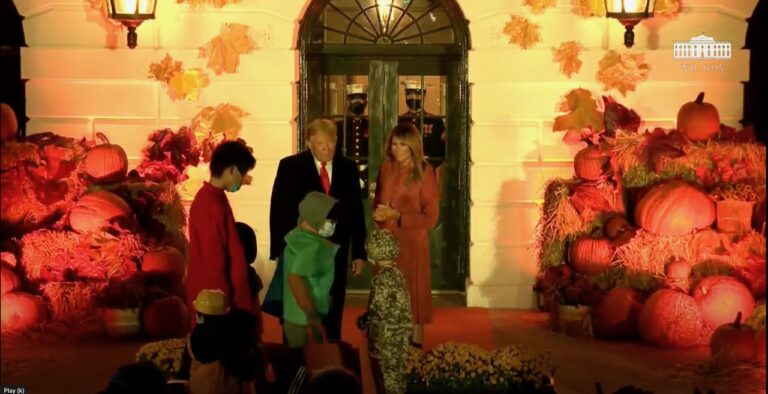
White House Press Briefing by Press Secretary McEnany 20/8/20

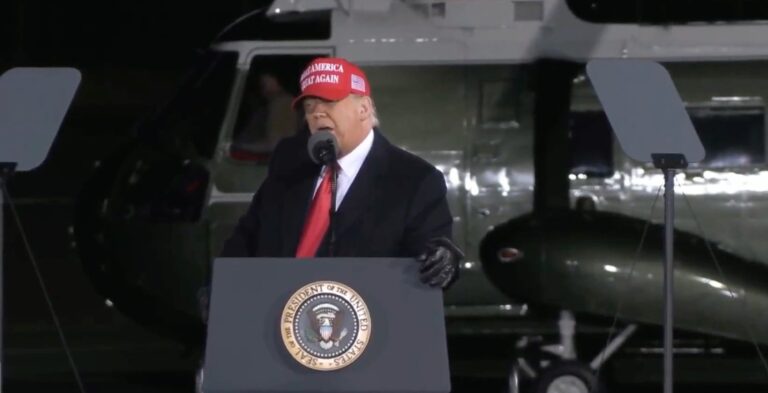
maxresdefault 10


KAYLEIGH MCENANY: Hello, everyone. Where is Nancy Pelosi? The House is in recess. House and Senate Democrats left town after failing to compromise and make a deal to provide relief to the American people. While Nancy Pelosi and her colleagues went home, this President remained hard at work. President Trump took executive action, including stopping evictions; providing unemployment insurance; pausing student loan payments; cutting the payroll tax, which put money in the pockets of all Americans.

Democrats apparently were unable to stick around to make a deal. Now, suddenly, Democrats will be rushing back to Washington. But why? The answer: the United States Postal Service. It’s a stunning turn of events. Democrats went home after accomplishing nothing: no deal on stimulus checks, no deal on small-business relief, no deal on eviction protections. The concerns of everyday Americans were not the concerns of Democrats on Capitol Hill.


.embed-container { position: relative; padding-bottom: 56.25%; height: 0; overflow: hidden; max-width: 100%; } .embed-container iframe, .embed-container object, .embed-container embed { position: absolute; top: 0; left: 0; width: 100%; height: 100%; }


So where is Nancy Pelosi? She and her Democrat colleagues will be back in Washington soon to pursue their latest manufactured crisis: the Postal Service. Democrats denied a $10 billion offer for the U.S. Postal Service by this President before they went on recess. But now they’re back to pursue the latest Democrat-manufactured crisis. It’s sad, but it’s clear where Democrats’ priorities stand.

And with that, I’ll take questions.

John.

Q Kayleigh, looking ahead to potential action at the United Nations: Will the President dispatch the Secretary of State to go to the U.N. to invoke the snapback clause on sanctions?


MS. MCENANY: Yeah, so I have no announcements, and I won’t get ahead of the President. But what I will say is: The President has said that he will be willing to invoke the snapback option soon, and I’ll leave that to him.


Yes.


Q Kayleigh, the President said this week: The only way we “lose this election is if the election is rigged.” It begs the question: Does the President believe there’s any circumstance under which he could lose the election fairly?


MS. MCENANY: The President believes he’s done a great job for the American people, and he believes that will show in November. He believes that voter fraud is real, in line with what we see all across the country, particularly with mail-in ballots, which are prone to fraud.


Yes.


Q Thank you very much, Kayleigh. Two questions for you. Firstly, given the President’s tweet on Goodyear and lashing out at them, is the Beast still going to be using Goodyear tires?


MS. MCENANY: I’m not going to comment on security matters.


Q Okay. And then I want to follow up with a question that I asked the President last week but he didn’t answer. I asked him about QAnon. So I wanted to know: Have you ever heard the President talk about QAnon? And what does he think of the conspiracy theory?


MS. MCENANY: No, I’ve never heard of that. There’s a lot of media focus on that, but certainly never heard of that from the President.


Yes.


Q Kayleigh, just a follow-up on what my colleague said over there. With regard to the President saying make sure to get out and vote because “the only way we’re going to lose this election is if the election is rigged,” does the President — is the President saying if he doesn’t win this election, that he will not accept the results unless he wins?


MS. MCENANY: The President has always said he’ll see what happens and make a determination in the aftermath. It’s the same thing he said last November. He wants a free election, a fair election, and he wants confidence in the results of the election, particularly when you have states like Nevada doing mass mail-out voting to their voting rolls. And when they tried this in the primary, it was a massive failure. Ballots were piled up in trash cans. Ballots were pinned to apartment dartboards. And with that being the system, the President wants to take a hard look at this and make sure that these are fair election results and not subject to fraud.


Yes.


Q So will he accept the results, Kayleigh?


Q Can you tell us if the White House has reached out to Pelosi or the Democrats to talk over the next couple of days about stimulus?


MS. MCENANY: Yeah, so I have no updates on the personal conversations that we’ve been having. But what I’ll say is this: is I know the Speaker is interested in potentially a skinny bill with Post Office funding. But what we want here at the White House is we’re certainly open to Post Office funding. We did, after all, offer that $10 billion that was turned down.


So we’re open to that, but what we want to see in there is relief for the American people who are hurt through no fault of their own. For unemployed Americans, we want to see enhanced unemployment insurance. PPP: We want to see small businesses get taken care of. That money goes directly to payroll, so to pay workers and, thus, keep jobs. And we’re interested in seeing stimulus checks go out to the American people as well.


Q On the Post Office, are you able to share if you’re — if the White House is open to the $25 billion that the Democrats are proposing? Or is $10 billion the cap?


MS. MCENANY: No, we don’t have a cap. We’re certainly open to looking at the $25 billion, but we want included in there relief for the American people that, thus far, Speaker Pelosi has been entirely uninterested in, as this President has taken unilateral action to protect Americans subject to eviction, to protect Americans who are unemployed, to protect Americans via a tax cut through payroll deferral.


So this President has taken action. Still, we’re waiting on a reckless Speaker Pelosi to get back and do her job.


Yes.


Q Just to follow up on that, and then I have another question: Are there other things that the President could do in the realm of the executive action to address this problem with the Postal Service to ensure that they’ve got sufficient funding? Is there anything that he could do to, sort of, fill the gap?


MS. MCENANY: So the Post Office does have sufficient funding through 2021, and they do currently have cash on hand. They’ve been given that $10 billion line of credit through the CARES Act. So that’s important to note.


And, look, we’re looking at the Post Office funding to do with Speaker Pelosi, but that must also include money for our hardworking Americans as well.


And the President, just to underscore this, mentioned yesterday that he wants to protect postal workers. These are great, hardworking Americans, and he wants to make the Post Office solvent and — to protect those post office jobs. And he mentioned Amazon — needing to raise the price of packages for Amazon as a way to help the solvency with the Post Office.


Q And a quick follow-up.


MS. MCENANY: Yes.


Q So with the recent agreement between Israel and the United Arab Emirates, there is great interest on the part of the Emiratis to purchase F-35s. What is the President’s position on selling those high-end aircraft to the Emirates at this point? And would that require congressional changes to remove the qualitative military edge that is guaranteed to Israel at this moment?


MS. MCENANY: So we don’t confirm or comment on proposed defense sales or transfers until they’re formally notified to Congress.


To circle back on your first point, too, about the Post Office funding, I did want to highlight a piece that was written by Ruth Goldway, who’s a retired Chairwoman and Commissioner of the U.S. Postal Regulatory Commission. I believe it was in the New York Times. And she said, quote, that the Post Office “has access to about $25 billion in cash. Its own forecasts predict that it will have enough money to operate into 2021.”


So this notion that there’s this emergency for which Nancy Pelosi needs to rush back to Capitol Hill to solve is a farce. It is false. The real thing that’s happening here is Nancy Pelosi is feeling pressure from her members, from her constituents because she’s not delivered relief for the American people, and President Trump has.


Yes, Paula.


Q Thank you, Kayleigh. Today, the President encouraged Americans not to buy Goodyear tires, suggesting that they had a ban on MAGA hats. But it appears that their policy is just a ban on political speech. It’s pretty common for most companies. So why is the President retaliating against a private company for their dress code and potentially jeopardizing American jobs?


MS. MCENANY: So Goodyear needs to come out and clarify their policy. There was an image —


Q They have. They released a statement. Have you seen that?


MS. MCENANY: They failed to clar- — yes, I did see their statement, which still — still faired — failed to clarify their policy.


What happened is there was an image that was put out that showed that certain speech was acceptable — Black Lives Matter insignia, for instance — but what was not allowed was Blue Lives Matter; what was not allowed was MAGA hats.


What was clearly targeted was a certain ideology. They have not denied that that image was presented at one of their facilities, and they need to come out —


Q (Inaudible) racial equality, racial justice, that is okay, but not political speech. That’s pretty standard across the board right now. That’s not that unusual. Did the President even reach out to Goodyear before he tweeted?


MS. MCENANY: They came out and said “equity issues.” As far as I’m concerned, Blue Lives Matter is an equity issue. There have been police officers across this country that have been targeted because they wear the badge. Look no further than Dallas, where five police officers died.


So Black Lives Matter, an organization who’s — in their D.C. branch said, “Black Lives Matter means defund the police.” One of their presidents in New York said, “We will burn down the system.” We all remember, in 2015, the yelling of “Pigs in a blanket, fry them like bacon” at a Black Lives Matter rally.


Q Did the President reach out to Goodyear to clarify the policy before —


MS. MCENANY: That speech is allowed, but —


Q — he potentially put U.S. jobs at risk?


MS. MCENANY: — Blue Lives Matter is not allowed? And I will stand at this podium and say Blue Lives Matter is an equity issue, and Goodyear needs to come out and acknowledge that.


Q Is the policy debate worth putting American jobs at risk?


Q But that’s not the reason he called for the boycott.


MS. MCENANY: Yes.


Q Does the White House —


MS. MCENANY: Well, (inaudible) address that. The reason he called for the boycott was over MAGA. MAGA is pretty much unanimous with Blue Lives Matter these days, if you’ve seen the endorsements.


Yes.


Q Hi, Kayleigh. Does the White House support rolling back those existing operational changes that Louis DeJoy has done at the Postal Service, like those mail-sorting machines? He said he would pause the operational changes going forward, but does he — do you guys support rolling back the ones that have already affected mail delivery?


MS. MCENANY: So the President made his position clear on this yesterday, and it is making the Post Office solvent via Amazon package rates being raised.


It’s important to note how this works. So for letters, magazines, catalogs, the Post Office can only raise prices by the rate of inflation, whereas with packages and commercial freight, like Amazon, they can raise those competitive prices.


And the Postmaster General Louis DeJoy has proposed doing just that, because we don’t believe that Amazon should be able to push expensive packages to the Post Office and burden them further — when they’ve already had issues with funding — and push it there, but yet take advantage of the cheaper shipping. It’s a business model that works for Amazon, but it’s not one that works for the American people and clearly not one that works for the Post Office.


Q But what about those specific operational changes?


MS. MCENANY: He’s — the President has made clear that Amazon — he thinks that’s the best way to go. And I’ll let him answer any further on that.


Yes.


Q Thanks, Kayleigh. The President, last night, congratulated Laura Loomer for her primary win in Florida. He’s also backed Marjorie Taylor Green in Georgia. Both women have expressed anti-Muslim sentiments. Does the President endorse their view of — their views of Muslims? And does he believe that those views belong in Congress?


MS. MCENANY: Well, the President routinely congratulates people who offit- — who officially get the Republican nomination for Congress. So he does that as a matter of course. He hasn’t done a deep dive into the statements by these two particular women. I don’t know if he’s even seen that, but he supports the Muslim community; he supports the community of faith, more broadly, in this country.


Yes.


Q Thank you, Kayleigh. The President said that cost has been a consideration in selecting the White House as the location for his acceptance speech next week. And I’m wondering if cost, in terms of keeping costs down for security purposes, is a consideration when he’s selecting when to travel to his homes in Florida and New Jersey.


MS. MCENANY: Look, the President made clear that he wants to look at cost with regard to the convention. He always tries to. But the President is entitled, at times, to leave the White House, and he’s done that just like every past President has.


Yes.


Q Thank you, Kayleigh. Can you confirm that the U.S.-China trade deal phase one talks with Ambassador Lighthizer are still on track? And if so, do you have a date for those?


MS. MCENANY: Yeah, so the trade representatives do speak, and the President has expressed his displeasure with China, with regard to COVID and the pandemic. I don’t have a date for any official talks, but it is safe to say, should they continue, it would be between the trade representatives.


Yes. Blake.


Q Kayleigh, back — back to Goodyear for a second. Set the issue of the Beast aside. When the President says, “Don’t buy Goodyear tires. Get better tires for far less,” is he imploring that to his supporters? Or is that the official policy of the U.S. federal government that the President has directed, saying, “Do not buy Goodyear tires going forward”?


MS. MCENANY: The President was talking to his supporters when he tweeted that in particular. And, look, this President will never apologize for standing with law enforcement. He won’t. He thinks it’s unacceptable. If you can wear a Black Lives Matter hat, guess what? You should be able to wear a Blue Lives Matter one, too, particularly when our police officers are targeted like they were in Dallas; particularly when David Dorn lost his life amid these riots.


He will always stand against our police officers and Blue Lives Matter for some reason not being an equity issue, as Goodyear appears to maintain.


Q So for all the — so for all the fleets out there that have Goodyear tires on them, that inevitably need to be replaced, that is fine? Go ahead and purchase —


MS. MCENANY: I haven’t spoken to him about that in particular. You can ask him later in the 5:00 p.m. hour.


Yes, Chanel.


Q Thank you, Kayleigh. As the White House continues to spearhead its vision and its victories for Middle East peace, what commitments does the White House hope to establish with the visit of the Prime Minister from Iraq tomorrow?


MS. MCENANY: Yeah, so that visit — we’re very much looking forward to that tomorrow. The President looks forward to welcoming Prime Minister Kadhimi to the White House. The U.S.-Iraq strategic partnership is based upon a common goal for a stable, secure, and prosperous Middle East, and Iraq is a key partner to the U.S. on a range of regional security issues, including the enduring defeat of ISIS. So all of those matters will be discussed tomorrow.


Q Kayleigh.


MS. MCENANY: Yes, John.


Q The President has been very bullish on the potential of convalescent plasma. And it appeared as though the FDA was poised to issue an emergency use authorization for convalescent plasma. But a number of the President’s top advisors in the medical field, including Doctors Collins and Fauci, said, “Let’s put a hold on the EUA. It’s too early. We don’t yet know about the true efficacy of convalescent plasma.” Does the President agree with putting off the emergency use authorization, or does he have a different mind of it?


MS. MCENANY: Yeah, so I haven’t spoken to the President about that particular EUA. You can ask him that later this afternoon.


But I did follow up in — with the FDA on a testing issue. And I wanted to look into the average time for a point- of-care test because you all ask often about our point-of-care or more rapid test. And the average time for point-of-care test from submission to the FDA to decision for COVID-related, rapid point-of-care tests was 20 days. And, by comparison, that for Ebola, flu, and strep point-of-care test was over 100 days.


So this FDA, under this President, has managed to prove these rapid point-of-care tests that you all ask about at a rate five times faster than for Ebola, flu, and strep, which have taken more than 100 days on average.


And just before I walked out here, Attorney General Barr announced some very good new news. Last week, of course, we learned that the suspected killer of LeGend Taliferro was charged, which was very encouraging to see. Operation LeGend was, of course, named after LeGend Taliferro, the four-year-old boy who was shot and killed in his bed.


This has been going on for six weeks. There have been a thousand federal agents, from FBI, DEA, ATF, and U.S. Marshals, working side by side with state and local authorities. Operation LeGend is a very good example of cooperation and action, which is a sharp contrast to those who merely express empty sentiments or, worse, hold blatant disregard for the unacceptable violence in our cities, of which many children have fallen victim to.


The President cares. The President wants law and order restored. He wants peace in our streets. So this President took action. And today, the Attorney General can announce, under the leadership of this President, that federal agents have made over 1,000 arrests as part of Operation LeGend. Many of these arrests are for violent state crimes, including 90 homicides. And as AG Barr notes, that means 90 killers would still be on the streets today without the law and order actions of President Trump.


And as the mother of LeGend Taliferro said, this — she said, quote, “My one and only child who fought through open-heart surgery at four months is gone due to senseless gun violence. Children are supposed to be our future, and our [four-year-old] son did not even make it to kindergarten. I stand here today as a mother fighting against violence for my son LeGend Taliferro. My family and I support Operation LeGend, and we strongly want our communities and everyone else behind us.”


Today, LeGend Taliferro was once again honored by the actions of Operation LeGend, and we can thank President Trump and the work of Attorney General Barr for that great news.


Thank you all very much. The President will be back here in the 5:00 p.m. hour.


Attribution: This article royalty-free license WhiteHouse.gov under the Creative Commons Attribution 3.0 License.

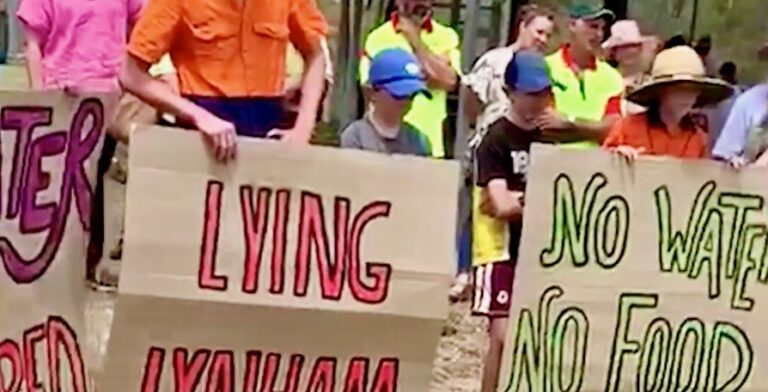
Water from Rookwood Weir will be allocated for Central Queensland farmers

Rookwood Weir 1


At least half the water from Rookwood Weir will be allocated for Central Queensland farmers, under a proposed plan out for a consultation today.

Natural Resources Minister Dr Anthony Lynham said the proposed plan would put the water management mechanisms in place to drive the region’s growth.

“Queensland has an economic plan for recovery with a $50 billion infrastructure guarantee, including Rookwood Weir,” Dr Lynham said.

“The Government knows that there’s an appetite for Rookwood Weir and this water will drive economic recovery and jobs in the Fitzroy region,” Dr Lynham said.

Member for Keppel Brittany Lauga encouraged CQ water users and the community to get involved in finalising the proposals, contained in a draft amendment to the Fitzroy Basin water plan.

“Sunwater has had a really positive response from farmers expressing interest in the first tranche of water being offered,” she said.

“The proposals released today set aside at least half the water for agricultural use.

“That’s how we maximise the growth opportunities for agriculture and industry and the local jobs that will flow from this development.”


Member for Rockhampton Barry O’Rourke said the $352 million Rookwood Weir project had already delivered jobs on road projects.


“Rookwood Weir will meet our region’s anticipated water needs for the next three decades,” he said.


 “It is delivering jobs now, more jobs when weir construction starts, and then further opportunity for economic growth, investment in the region and agricultural growth.


“These proposals are the first step in administering the additional water the weir will bring.”


The proposals released today establish new water trading zones for Rookwood Weir, new water allocation groups and measures to ensure that 50 per cent of water from the weir is allocated for agricultural use.


The draft amendment also ensures that existing agricultural and urban water users and environmental flows are protected in the Lower Fitzroy.


Consultation runs for six weeks and the revised water plan will be in place around the time construction of the weir starts next year.


Consultation is open until 5 pm, 28 September 2020 and include video conferences, phone meetings, as well as the usual online submissions, to meet COVID-19 social distancing requirements. For more information visit dnrme.qld.gov.au    


About Rookwood Weir


Rookwood Weir is being constructed on the Fitzroy River, 66 kilometres south-west of Rockhampton. It will create up to 100 jobs.


The thousands of megalitres of water it will make available will underpin agricultural growth and supply industrial and urban water in central Queensland.


The Palaszczuk Government has allocated $149 million over two years to allow detailed planning and design, and on ground works to proceed.


Construction is scheduled to start by April 2021, for wet commissioning in January 2024.


Source Minister for Natural Resources, Mines and Energy The Honourable Dr Anthony Lynham

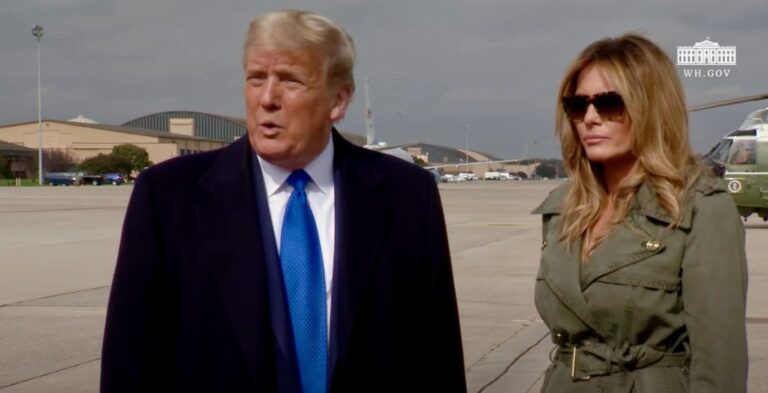
Remarks by President Trump Before Marine One Departure 18 Aug 2020


Remarks by President Trump Before Marine One Departure 18 Aug 2020


PRESIDENT J TRUMP: Hello, everybody. So we’ll be making a pretty big journey today, stopping at a couple of wonderful states that, in one case, had some big problems, and we got that straightened out.


I just approved an emergency declaration for Iowa, who had an incredible wind storm like probably they’ve never seen before. It really did a lot of damage. So I’ve informed the governor; I’ve informed Senator Grassley and Senator Joni Ernst. So I’ve approved the declaration — emergency declaration for Iowa.


And we are heading now to a combination of different places. We may do a surprise visit. We’ll make it — I’ll say this: a surprise visit to Iowa. If we can get it in, we’re going to do that. But the very important thing is that we approved the emergency declaration for Iowa. So they’re in good shape.


They’re — they’re working as we speak. Also, FEMA is in Iowa now, full force, and help them greatly.


Okay?


Q Mr. President, oleandrin — the potential therapy for coronavirus — is that something you’re pressing the FDA to approve?


THE PRESIDENT: I’d — you’d have to say it.


Q Oleandrin — have you heard of that as a possible therapy for coronavirus?


THE PRESIDENT: I’ve heard of it, yes. Go ahead.


Q Have you pressed the FDA to approve it?


THE PRESIDENT: No, I haven’t. I haven’t.


Q Is it something you would support?


THE PRESIDENT: Is it something that people are talking about very strongly? We’ll look at it. We’ll look it. We’re looking at a lot of different things.


I will say, the FDA has been great. They are very close — we’re very close to a vaccine, very close to a therapeutic. I’ve heard that name mentioned. We’ll find out. I can get back to you later. Okay?


Q You said you might go to Iowa today? You might go to Iowa today?


THE PRESIDENT: It’s possible. We’re trying to work it into the schedule. I want to see the people. I love the people of Iowa. They’ve been very loyal. And the big thing was getting the declaration signed, but I’ll be going very soon, and maybe today.


Steve?


Q Belarus. Are you tracking the Belarus situation?


THE PRESIDENT: Yeah, it’s terrible.


Q And Russia — are you —


THE PRESIDENT: That’s a terrible situation — Belarus. We’ll be following it very closely. We’ll be following.


Q Iranian bounties in — did you hear about Iranian bounties in Afghanistan? Bounties? Bounties —


THE PRESIDENT: Yeah?


Q — in Afghanistan from Iran, did you hear about that?


THE PRESIDENT: No, I haven’t heard about that. No.


Q (Inaudible) Brazilian students to come back to class.


THE PRESIDENT: We’re going to look at that. We’ve been asked that question. Brazilian students coming back in — we’re looking at it very closely.


Q How about a travel ban for Russia or India?


THE PRESIDENT: We’re looking at the Brazilian situation. We’ll take care of all of it.


Okay? So we’ll see you in a little while.


Yeah, Steve.


Q What is your goal this week while the Democrats are holding their convention? What’s your goal?


THE PRESIDENT: Well, we’re going to be stopping at a number of places. We’ll be working very hard. It doesn’t have to be covered, but it probably will be, you know. But we’re going to be working very hard, stopping at various states. You have a list of the states — pretty comprehensive. We’re going to be working very hard. We have to. We’re getting down to final crunch. We want to be there.


As an example, Iowa just came up. We’re doing well in Iowa. It just came up. I want to be with the people of Iowa. So we add that to the schedule.


Q Your brother — when is the funeral for your brother?


THE PRESIDENT: Probably on Friday. We’re looking on Friday. And we may do just a small service right here in the White House for my brother. We’re looking at doing that. That would be, I think, a great honour to him. I think he’d be greatly honoured. He loves our country. He loved our country so much. He was so proud of what we were doing and what we are doing for our country.


So I think it would be appropriate. So we’ll have, probably on Friday afternoon, a small service in honor of my brother, Robert.


Q Any updates, sir, on stimulus for the coronavirus? Anything —


THE PRESIDENT: No. I think this: I think that Nancy Pelosi and Chuck Schumer should get back into Washington, and they should approve stimulus for the people. They should give — we should give some of that — this was China’s fault; it wasn’t their fault. And we’d like to see the payment going to the people — maybe PPE [PPP]. But we want payment going to the people.


We’ll take care of the Post Office. We want to make sure that the Post Office runs properly, and it hasn’t run properly for many years. For probably 50 years, it’s run very badly. So we want to make sure that the Post Office runs properly and doesn’t lose billions of dollars. Somebody said it lost $78 billion over a relatively short period of time. That’s over years — $78 billion. So you can’t have that.


No, we will work with them, but we want money to go to the people that need it, and they don’t want to do that. They just want to take care of the bailout money. They want bailout money to go to their friends that are doing a bad job running Democrat states.


Q Are you worried —


THE PRESIDENT: You have states that are losing a lot of money. They’ve been poorly run by Democrats for many years. And that’s all they want to talk about is bailing out those states. That’s unfair to the rest of the country.


Q Are you worried that the cutbacks on service are going to affect — are you worried about cutbacks in service affecting people getting medications and prescriptions?


THE PRESIDENT: No, no, the Post Office is running very well. The Post Office — now, look, if you look at the Post Office, for years, that’s all people complained about. We’re going to run it well, and we’re going to not lose so much money.


One of the things the Post Office loses so much money on is the delivering packages for Amazon and these others. Every time they deliver a package, they probably lose three or four dollars. That’s not good. They have to raise those prices –okay — not for the people to pay, but for Amazon and those companies to pay.


Thank you very much.


Q On mail-in ballots, why are you opposed to mail-in ballots when they cannot be hacked —


THE PRESIDENT: Okay.


Q — by foreign interests or Russia?


THE PRESIDENT: Are you ready? Absentee ballots are great. You request a ballot, you can’t be — I signed an absentee ballot. Absentee ballots are great. They work. They’ve been proven. They’re good — like in Florida. But this universal mail-in is a very dangerous thing. It’s fraught with fraud and every other thing that can happen, and we have to be very, very careful.


We have a very big election coming up. I think we’re going to do very well. And I want to make sure the election is not stolen, and so does everybody else. And I’m sure both sides feel that way. So we have to be very careful with this universal, mail-in ballot.


Absentee ballots are great. They’ve worked for a long time. And I — I totally endorse absentee ballots.


Thank you very much everybody.


Q Have you ever encouraged Mr. DeJoy to slow the mail, Mr. President? Have you ever encouraged the Postmaster General — a big donor to you — to slow the mail?


THE PRESIDENT: No, not at all. Wouldn’t do that. No, I have encouraged everybody: Speed up the mail, not slow the mail.


And I also want to have a Post Office that runs without losing billions and billions of dollars a year, as it has been doing for 50 years.


Thank you. Thank you. Thank you.


Attribution: This article royalty-free license WhiteHouse.gov under the Creative Commons Attribution 3.0 License.


NSW Energy Accounts Payment Assistance (EAPA) $50 vouchers

Electricity Towers 1

NSW Energy Accounts Payment Assistance (EAPA) $50 vouchers

If you’re having difficulty paying your current household energy bill because of a short-term financial crisis or emergencies, such as unexpected medical bills, or reduced income due to COVID-19, you could be eligible for Energy Accounts Payment Assistance (EAPA) $50 vouchers.

EAPA vouchers are sent electronically to your energy retailer to help pay your home electricity or gas account. 

EAPA voucher limits apply and vouchers can’t be used to put your energy account into credit or if your account has already been paid.

You can apply for EAPA vouchers:


  • online (this involves an eligibility assessment by an NSW Government representative), or
  • by calling (and being assessed by) an approved non-government EAPA provider, such as Anglicare, Salvation Army and Wesley Mission.


Note: Due to very high interest in EAPA vouchers, it may take up to 8 weeks for you to be contacted about your online application. Contacting an EAPA provider may be more suitable, if you:


  • require an urgent assessment
  • prefer an in-person assessment (offered by some providers)
  • don’t have an email address
  • need other support, such as no-interest loans, financial counselling, and clothing or food assistance. 


Eligibility


You must:


  • have an electricity or natural gas account for a NSW residential address, which is your primary place of residence  
  • be the electricity or natural gas account holder (your account and bill must be in your name)
  • be experiencing a short-term financial crisis or emergency that has caused you financial hardship and impacted your ability to pay your current residential energy bill (in part or in full). 


You’re not eligible if you:


  • use liquid petroleum gas (LPG) bottles for your gas supply; however, you may be eligible for a gas rebate
  • are residing in embedded networks (e.g. some strata plans, retirement villages and residential parks)
  • have already paid your energy bill
  • have a business account
  • are not the account holder and the bill is in another person’s name. 


What you need


  • a MyServiceNSW Account 
  • 2 proof of identity documents – the names on the 2 documents must match and also match the name on the supply address on the electricity or natural gas account
  • your personal and contact details (name, date of birth, address, email and phone number)
  • a copy of your current electricity and/or gas bill, which includes your:
    • first and last name (your account and bill must be in your name) 
    • energy retailer’s name
    • energy account number
    • National Meter Identifier (NMI) number for electricity bills, or
    • Delivery Point Identifier (DPI)/Meter Installation Registration Number (MIRN) for gas bills
  • confirmation that you’re on a hardship plan with your retailer (if applicable)
  • evidence of financial crisis, such as a termination notice or medical expenses (optional). 


  • If you are applying for EAPA vouchers, call your energy retailer to advise them of your EAPA application and expected timeframes. You can also ask about what assistance might be available to you, including different options to pay your bill, switching energy plans or starting a hardship plan.
  • For ongoing support, see our Cost of Living page for a list of energy rebates and other savings. 
  • Source: © State of New South Wales (Service NSW) 2016

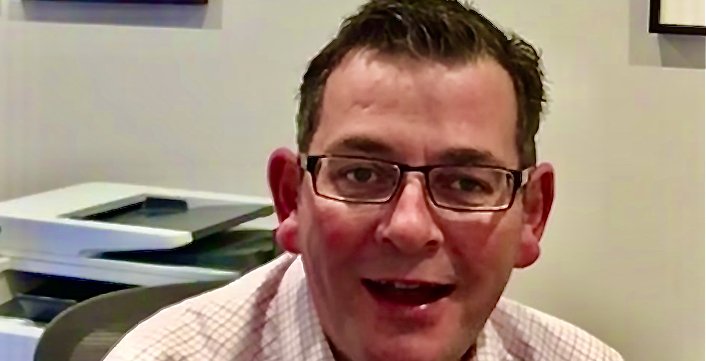
Dan Andrews COVID State of Emergency in Victoria extended for fourweeks

Dan Andrews 1

 Dan Andrews COVID State of Emergency in Victoria extended for four weeks

State of Emergency in Victoria will be extended for four weeks to continue measures we know are working to slow the spread of coronavirus and save lives.

We know how challenging it is to live with Stage 4 restrictions and it’s easy to feel frustrated or get complacent – especially as the weather improves – but right now it is critical that all Victorians follow the directions to drive this virus down and keep each other safe.

This is far from over and our best weapon against the spread of this deadly virus is limiting movement. In Melbourne, that means following Stage 4 restrictions and not leaving your house during the curfew hours of 8 pm to 5 am, unless it is for work, medical care or caregiving. Only permitted workers can attend work premises.

We have made the decisions necessary to slow the spread of coronavirus in regional Victoria, including the introduction of Stage 3 restrictions across all regional local government areas from 11.59 pm, Wednesday 5 August.

Today we have seen 15 new cases in regional Victoria and while we are still seeing new cases in the regions, it is critical that these numbers don’t continue to increase – as we know, all it takes is one positive case to set the virus off again in any of our regional communities.

If you have even the mildest of symptoms, please get tested and stay home. People without access to sick leave or other supports can apply for the $450 payment to help you get through while waiting for their test result.

No matter where you live, if you have a legitimate reason for leaving home you must wear a mask, physically distance from other people and practice good hygiene, such as handwashing.


The State of Emergency will now be extended to 11.59 pm on Sunday, 13 September 2020 which allows the Victorian Government to continue enforcing physical distancing and isolation requirements as well as other directions from the Chief Health Officer (CHO).


Victoria Police has strong powers to enforce these directions and can issue on the spot fines for breaches of stay-at-home directions. This includes up to $1,652 for individuals and up to $9,913 for businesses. Under the directions, people who don’t comply could also be taken to court and receive a fine of up to $20,000. Companies face fines of up to $100,000.


Since 2 August, Victoria has also been in a State of Disaster, which can remain in place for up to one month, and may then be renewed.


Quote attributable to Premier Daniel Andrews


”We will beat this virus – and extending the State of Emergency ensures we have all the tools we need for the fight.”


”I thank every Victorian who is part of our massive team keeping our community safe – you can thank them too by following the rules, which will see us all get through the pandemic.”


Quote attributable to Minister for Health Jenny Mikakos


“There is no room for complacency when it comes to stopping this deadly disease. Our public health team will work in partnership with local communities to keep you and your family safe.”

Bill Gates warns of “climate disaster”

Bill Gates 10

What if the United States and the rest of the world eliminated carbon emissions – would the planet’s climate “change”?

The climate will certainly change – regardless of whether carbon emissions from man-made sources are eliminated.

William H. Gates, III, co-founder and long time chief of the Microsoft Corporation (now retired), earlier this week warned on his “GatesNotes” blog that we must “eliminate the world’s carbon emissions.” If not, “the loss of life and economic misery caused by this pandemic are on par with what will happen regularly.”

Mr. Gates predicts the “death toll from climate change” will equal the pandemic by 2060, and exceed it five-fold by 2100. He further asserted that economic conditions in the next two decades could be “as bad as having a Covid-sized pandemic every ten years.” In other words, warmer temperature equals more death.

To paraphrase platoon Sergeant Hulkalighten up, Bill.

Mankind’s contribution of carbon dioxide from tailpipes, exhaling, power plants and everything else comprises 0.12 percent of all greenhouse gas. Total CO2, in turn, comprises four ten thousandths (0.04%) of all atmospheric gases. How would “eliminating” this infinitesimal man-made amount, assuming it were feasible, alter the planet’s average global temperature? Theoretically, if eliminating man-made carbon emissions cooled the planet by a degree or two in temperature, ceteris paribus—as in, other things equal—do we live happily ever after?

The planet is way more complex.

If man-made carbon emissions were “eliminated,” as in, China, India and the developing world went along with this economic fools’ errand (hint: they won’t), there are many the other influences on the planet’s climate. We cannot stop El Nino and the ocean currents, which have a say in this; we cannot alter the Earth’s tilt on its axis; and we surely cannot stop the rate of sunspot activity. In other words, “other things” do not stand still to comport with climate computer models assembled by scientists funded by Mr. Gates or from grants awarded by federal climate bureaucracies.

These and other natural phenomena get a vote on the planet’s climate, and impact its “change” one way or the other. They all are beyond the reach of the aging baby boom generation—including its billionaire class—and successor generations X, Y and Z, no matter how many protest marches, emails to Congress, meatless Mondays, UN conferences, or corporate virtue signals they generate.

I mention these other wrinkles in the climate discussion, and quote Sgt. Hulka, as no disrespect to Bill Gates. He is a larger than life figure and a historically talented and successful businessman and job creator. Not for nothing was he the wealthiest man on the planet for many years running, until being eclipsed recently by Amazon head, Jeff Bezos.

Mr. Gates’ business acumen made personal computers ubiquitous, revolutionized the workplace and, more broadly, contributed to our increased standard of living. Gates also is a generous philanthropist as his and his wife Melina’s foundation has spent billions of dollars worldwide to combat disease and improve education, among other good works.

None of these exceptional accomplishments, however, make him a sage on predicting Earth’s climate and resulting deaths by 2060 or 2100.

Centuries ago, the world was warmer than today, and humans survived without air conditioning. Then the planet got cooler not because we replaced incandescent light bulbs, stopped driving SUVs and banned air travel and plastic straws. The Medieval warm period and subsequent Little Ice Age occurred all by themselves, naturally.


Credit Mr. Gates on this: he rejects the idea that less driving or air travel will have much impact, and does not attempt to shame us into curtailing our economic lives, as others do. Instead, he correctly points to innovation and technological solutions to adapt to climate conditions and “fight” global warming. Some of his visionary ideas can be useful on their own, even if they end up fruitless in changing the weather four or eight decades from now.


Bill Gates is free to invest his remaining tens of billions to help find ways to live better and cleaner, and even carbon-free. But we all should be a bit more humble and sober about the efficacy and necessity of policies to alter the climate in a different direction from its natural course.


Author


  • Pete MurphyPeter MurphyPeter Murphy, a CFACT analyst, has researched and advocated for a variety of policy issues, including education reform and fiscal policy, both in the non-profit sector and in government in the administration of former New York Gov. George Pataki. He previously wrote and edited The Chalkboard weblog for the NY Charter Schools Association, and has been published in numerous media outlets, including The Hill, New York Post, Washington Times and the Wall Street Journal. Twitter: @PeterMurphy26.


 Attribution of the author and source to CFACT.org

President Trump Announcing the Normalization of Relations Between Israel and the United Arab Emirates


President Trump Announcing the Normalization of Relations Between Israel and the United Arab Emirates


PRESIDENT TRUMP: Well, thank you very much. This is very important. This is a big event. And I want to just congratulate all of the people standing behind me because they have done an incredible job. This is something that hasn’t been done in more than 25 years.


Just a few moments ago, I hosted a very special call with two friends — Prime Minister Benjamin Netanyahu of Israel and Crown Prince Mohammed bin Zayed of the United Arab Emirates — where they agreed to finalize a historical peace agreement. Everybody said this would be impossible. And, as you know, Mohammed is one of the great leaders of the Middle East.


After 49 years, Israel and the United Arab Emirates will fully normalize their diplomatic relations. They will exchange embassies and ambassadors, and begin cooperation across the board and on a broad range of areas, including tourism, education, healthcare, trade, and security.


This is a truly historic moment. Not since the Israel-Jordan peace treaty was signed more than 25 years ago has so much progress been made towards peace in the Middle East.


By uniting two of America’s closest and most capable partners in the region — something which said could not be done — this deal is a significant step towards building a more peaceful, secure, and prosperous Middle East.


Now that the ice has been broken, I expect more Arab and Muslim countries will follow the United Arab Emirates’ lead. And I want to just thank them for being — it’s not surprising, knowing Mohammed so well. It’s not surprising. They are in that lead position. And normalize relations with Israel. We are already discussing this with other nations — with very powerful, very good nations and people that want to see peace in the Middle East. So you will probably see others of these, but this is the first one in more than 25 years.


This deal will allow much greater access to Muslims from throughout the world to visit the many historic sites in Israel — which the Muslims want to see very badly and have wanted to see for many, many decades — and to peacefully pray at the Al-Aqsa Mosque, which is a very special place for them.


My first trip as President was to Saudi Arabia in May of 2017. In my speech to the assembled leaders of 54 Muslim countries — every single one was by their leader, their number-one leader. It was an amazing — really, an incredible event. A very important event. I made clear that the problems of the Middle East can only be solved when people of all faiths come together to fight Islamic extremism and pursue economic opportunity for people of all faiths.


And when you look at what’s happening, you’re seeing a lot of progress is being made that nobody thought could possibly be made. And things are happening that I can’t talk about, but they’re extremely positive.


I want to thank the leaders of Israel and the UAE for their courage and for their leadership to forge this tremendous agreement. It will be known as the “Abraham Accord.” And I’d like to ask our ambassador, David Friedman, to please explain why we’re doing and calling it the “Abraham Accord.”


David.


AMBASSADOR FRIEDMAN: Thank you, Mr. President, and congratulations to you on brokering this historic peace agreement.


Abraham, as many of you know, was the father of all three great faiths. He is referred to as “Abraham” in the Christian faith, “Ibrahim” in the Muslim faith, and “Avraham” in the Jewish faith.


And no person better symbolizes the potential for unity among all these three great faiths than Abraham, and that’s why this accord has been given that name.


THE PRESIDENT: It’s a great — great thing. I wanted it to be called the “Donald J. Trump Accord.” (Laughter.) But I didn’t think the press would understand that. I didn’t do that.


Avi, say a few words, please.


MR. BERKOWITZ: Thank you, Mr. President. It’s really been the honor of my life to work in your administration. I think this re- — reaffirms your commitment to Israel, to stability in the region.


It’s just a historic accomplishment, and it’s — it’s peace. Peace is a beautiful thing, and it’s something that everybody in the country should celebrate, I hope. And I’m just so honored to — to be here and to serve in your administration.


THE PRESIDENT: Well, you’ve done a great job. And Jared has done a fantastic job. People don’t really understand the things that he’s able to do. He’s done a fantastic job on this. And you and your team — nobody else could have done it. I don’t think anybody else could have done it.


Jared, say a few words, please.


MR. KUSHNER: Thank you, Mr. President. And I would like to say that — I want to thank the President for his leadership on this historic peace effort.


The President, like with all things, urged us to take an untraditional approach. You can’t solve problems that have gone unsolved by doing it the same way that people before you have tried and failed.


The President takes untraditional approaches. He does things in different ways, but he uses common sense and he tries to unite people by focusing on common interests, as opposed to allowing them to focus on their common grievances.


And what happened was, here — is we were able to achieve results that others were not able to achieve, and this will advance the region, and this will advance the whole world.


I would like to say to the people of the region — Muslims, Jews, Christians — that this does give hope that the problems of the past do not condemn you to a future with conflict. There is a lot of hope and a lot of potential, and this will benefit you and this will also benefit people here in America. Because in America, we used to have a big dependency on the Middle East for gas and for oil. Thanks to your leadership, America is now energy independent. We no longer have that.


But a lot of American soldiers have fought for securing our allies in that region. And making more peace there lessens our need, as a country, to have as many soldiers in that region and lessens our need to have as many conflicts in that region.


And obviously, radical extremism, which we see as a cancer that has infected so many areas in the world — a lot of the extremists have used these conflicts to — to recruit people and to say that the mosque is under attack and that Muslims don’t have access to the mosque.


And now this will enable people to take flights from Dubai and Abu Dhabi directly to Tel Aviv. Muslims will be welcome in Israel, and this will create better interfaith exchange.


So this is a tremendous step forward for peace in the world, for — for America, for — for Israel, for Abu Dhabi. And all would not have been possible without your leadership. So I just want to thank you.


THE PRESIDENT: Thank you very much. Thank you, Jared. What a great job. And what Jared said is so, though — we don’t have to be there anymore. We don’t need oil. We don’t need anything there except friendship. We have some great friends. These are two countries that have been great friends, and we’ve been great friends to them. But we no longer have to be there.


It started off when we had to be there, but as of a few years ago, we don’t have to be there. We don’t have to be patrolling the straits. We’re doing things that other countries wouldn’t do. But we put ourself, over the last few years, in a position where we no longer have to be in areas that, at one point, were vital. And that’s a big statement. But we are there for our friends, and we always will be there for our friends.


Robert, would you say a few words please?


MR. O’BRIEN: Mr. President, thank you. The point I want to make, Mr. President: You inherited a Middle East that was a mess when you came to office, and this is one more historic step in bringing peace to the Middle East.


First of all, there was a caliphate that was raging — an ISIS caliphate. And that physical caliphate was destroyed, and you brought justice to al-Baghdadi. You reassured our friends in Israel, who had suffered at the end of the last administration, with a U.N. resolution. You moved the capital to Jerusalem. You recognized the Golan Heights.


In the broader region, you had a very difficult situation in Afghanistan, where we were — soldiers were — American soldiers were coming home injured; wounded; sadly, in some cases, dead. You brought a — you’ve got a peace agreement now with the Taliban, and we’re going to have less than half the number of troops in Afghanistan that were there when you started your term of office.


And now you’ve brought about this historic peace deal between the UAE and Israel. This is the first time in 25 years that Israel and an Arab country have normalized diplomatic relations and entered into a peace deal. And they’re the two most capable countries in the Middle East — two very capable, very skilled, very innovative allies of the United States. So, it’s great for Israel, it’s great for the UAE, but it’s also great for the American — the American people.


So, you came in — you came into office with a region that was — that was really aflame, and you brought peace to that region, and there’s more to come. And so it’s an honor to be part of your team, Mr. President, and to serve under your leadership.


THE PRESIDENT: We do have a lot more to come in the Middle East. A lot of very positive things are happening, and you’ll be seeing that taking place. But where we can get a leader like UAE to head the band and get along with Israel, that’s a big — that’s a very big step.


Would you please say a few words? You have done such a fantastic job.


MR. HOOK: Thank you, Mr. President. The Trump administration made history today. It’s been an honor to be a part of this team that Jared has led.


Peace between the Arabs and the Israelis is Iran’s worst nightmare. And no one has done more to intensify the conflict between Arabs and Israelis than Iran.


And what we see today is a new Middle East. The trend lines are very different today. And we see the future is very much in the Gulf and with Israel, and the past is with the Iranian regime. It clings to power on the basis of brute force that has lost the — it is facing a crisis of legitimacy and credibility with its own people. And the President’s maximum pressure campaign has achieved historic results.


THE PRESIDENT: Thank you. Great job you’ve done.


Would you like to say something?


MAJOR GENERAL CORREA: Yes, sir. As a — as a soldier who has been in every war since Desert Storm, it is an honor and a privilege for your leadership, Sheikh Mohammed bin Zayed, and Prime Minister Netanyahu to get to peace.


So, your vision and those leaders’ vision on what we can do in the future is just incredible. So, I would thank you, as a soldier.


THE PRESIDENT: Thank you very much. I appreciate it.


Would anybody like to say a few words? Anybody here? Because you were saying plenty of words during that negotiation. (Laughter.) So they got very quiet in front of the media.


SECRETARY MNUCHIN: Mr. President —


THE PRESIDENT: That happens — that happens on occasion.


SECRETARY MNUCHIN: Mr. President —


THE PRESIDENT: Yes, Steve.


SECRETARY MNUCHIN: It’s a historic moment. Thank you for being — letting us all be part of this. It is really extraordinary. Nothing is more important than peace. This is an unbelievable moment.


And I would just echo what Brian Hook said: Your maximum-pressure campaign — under your leadership, we’ve had the strongest sanctions on Iran. And your commitment to make sure that Iran will never have a nuclear weapon is part of the most important legacy for peace in the Middle East.


THE PRESIDENT: So, which is easier: dealing with the Democrats or dealing with the Middle East? (Laughter.)


SECRETARY MNUCHIN: Well, a lot of people never thought you’d get a — this type of deal.


THE PRESIDENT: I tell you, I think —


SECRETARY MNUCHIN: So I’ll be hopeful that we can deal with the Democrats.


THE PRESIDENT: I think the Middle East is more reasonable, actually. (Laughter.)


I’d like you two guys to say a couple of words. You’ve been so instrumental. Please.
MR. GREENWAY: Sir, it’s a privilege to serve in your administration. This is a remarkable achievement that’ll stand the test of time, and we look forward to the prosperity and the peace this brings the Middle East and the ways we’ll be able to leverage that for the United States’ national interest.


THE PRESIDENT: Thank you.


MR. GREENWAY: So, it’s a privilege, sir.


THE PRESIDENT: Thank you very much.


MR. VANDROFF: And I would just echo what Rob said. It’s — thank you for the opportunity to be part — and especially, I want to thank Avi and the opportunity to serve in his negotiating team to do something so historic. That — thank you for this opportunity, Mr. President. This really changes the world.


THE PRESIDENT: Thank you very much. Thank you. Thank you all very much. This is very exciting. Thank you. Thank you. (Applause.) Thank you very much. Thank you. Thank you very much.


Do you have any questions? Do you have any questions on this accord?


Q Mr. President —


THE PRESIDENT: Steve, go ahead, please.


Q Could you just describe the tenor of the conversation you had with the two other leaders? Was there any hesitation on their part —


THE PRESIDENT: No.


Q — in reaching this deal?


THE PRESIDENT: No. It was like and love. It was a tremendous relationship that’s been built up over the last, I would say, year. Before that, it was very tense, as everything in the Middle East is. It’s very tense. It’s a very tense place. But it’s becoming less tense, and I have great relationships with all of the leaders. And some of — some are enemies against each other, and I get along with both.


That’s, I guess, the big thing; people don’t understand that about me. I actually — I’ve gotten along. Remember, when I was elected, they said the war will start with somebody within days, and I’ve kept us out of war.


You look at North Korea. Everybody said, including President Obama, that’s the biggest problem. Everybody said you’d be at war. Well, we’re not at war. It would have been a war if I wasn’t elected, if it was somebody else.


No, we’re — we’re doing very well in the Middle East. And I’ll tell you what: It’s been an incredible thing.


But, no, it was tense, but the relationship has become a very good one with — between UAE and Israel — and also with other countries, many other countries.


And I think you’ll be seeing some very exciting things, including ultimately with the Palestinians. I think that’s going to be happening at some point because it makes a lot of sense for them to let it happen.


Q Do you support annexation of Palestinian land by Israelis at this point?


THE PRESIDENT: Well, we’re talking to Israel about that right now, actually.


Q What about the snapback option on Iran? Do you support that?


THE PRESIDENT: Oh, you really know you’re stuff, don’t you? (Laughter.) Well, we’re not going to talk to you about that. We’re going to work something out, and then we’ll talk after it’s completed. But it’ll be a very satisfactory —


Q Why now did they come to an agreement?


THE PRESIDENT: We’ve been working on this for a long time. It’s been a labor of love for a lot of the people in this room. And a lot of them love Israel, and a lot of them love the Middle East, and they love the countries that we’re talking about —


MAJOR GENERAL CORREA: Yes, sir.


THE PRESIDENT: — like UAE, as an example — standing right here. And it’s been a labor of love. They know it has to happen.


And I don’t want to be speaking too much about it, but if you look, what’s happened since I broke up that ridiculous Iran nuclear deal — money isn’t going to some horrible, horrible groups. And you haven’t seen the kind of terrorism that you saw before.


Now, I don’t like saying it, because all of a sudden, they’ll say, “We’ve got to do something.” But you know what? They’re not getting money because Iran isn’t giving money, and I appreciate that. But Iran is going through very difficult times, and I appreciate that.


And I’ll say this, and I can say it very publicly, that if I win the election, I will have a deal made with Iran within 30 days. They make a very fast deal. They’re dying to make a deal, but they’d much rather negotiate with Sleepy Joe Biden than with us.


Q Why haven’t you already done that, sir?


THE PRESIDENT: But we’ll — we’ll be having a deal made very, very quickly. But, you know, rightfully, they’re waiting until after the election because they would — there’s nothing China, Iran, Russia, all of them would like to see more than have Trump be defeated, where they could deal with Joe Biden, because that would be like a dream.


And this was something that was very exciting. We thought this would be the first country. He’s a great leader; Mohammed is a great leader. And we’re very happy that he was the first country, I would say. And you can see many other things happening in the Middle East over a fairly short period of time. But this is the first time in more than 25 years and — and UAE is big stuff.


The UAE is very powerful, very strong —


Q Do you know when the dele- —


THE PRESIDENT: — has one of the strongest militaries. It’s big stuff.


Q Do you know when the delegations are going to meet specifically?


THE PRESIDENT: Very soon. I guess they’ll be setting up the meetings. Do you have any time?


MR. O’BRIEN: I think in the next several weeks, Mr. President. And then we expect that there will be a meeting here at the White House, with the — the leaders as well.


THE PRESIDENT: There will be an official signing at the White House over the next few weeks. Okay?


And other than that, we’ll meet you at 5:30 or so, and we’ll talk, and we’ll actually take one of your questions. Okay? Thank you. Thank you, everybody. (Applause.)


Attribution: This article royalty-free license WhiteHouse.gov under the Creative Commons Attribution 3.0 License.


Online Gaming to be banned in Queensland

Annastacia Palaszczuk 1

Palaszczuk Government has introduced draft legislation in State Parliament to deliver stronger consumer protections for Queenslanders gambling online.

Attorney-General and Minister for Justice Yvette D’Ath said the proposed laws were aimed squarely at minimising gambling harm to Queenslanders.

“The rate of online problem gambling is three times higher than other types of gambling and we’re determined to drive this rate down,” she said.

“We know that inducements to open an account, such as free bonus bets, are being offered by some online wagering operators and that this is contributing to excessive and unsafe gambling levels.


“That’s why we’re introducing a ban on inducements to open a betting account with an online wagering provider.


“Inducements for referring a friend to open an account will also be banned.”


The proposed ban on online wagering inducements to open an account was agreed between the Commonwealth, State and Territory governments under the National Consumer Protection Framework for Online Wagering signed in November 2018.


The Attorney-General said the Palaszczuk Government was going even further than the national framework by moving to ban inducements offered to punters to stop them closing a betting account or from unsubscribing from direct marketing.


“This is all part of the Palaszczuk Government’s ongoing efforts to tackle problem gambling and the harm it causes,” she said.


The Queensland Government provides more than $6.7 million each year for Gambling Help Services (GHS) to assist those who experience problems with gambling.


These services include Queensland Government delivers $4 billion support for health, jobs and business face-to-face counselling, a 24-hour, seven-day-a-week telephone helpline, the Gambling Help Online counselling service, as well as counselling in alcohol and other drug support services.


If you or a friend or family member need further information or support, contact Gambling Helpline on 1800 858 858 or visit www.gamblinghelpqld.org.au.


Source: Attorney-General and Minister for Justice The Honourable Yvette D’Ath

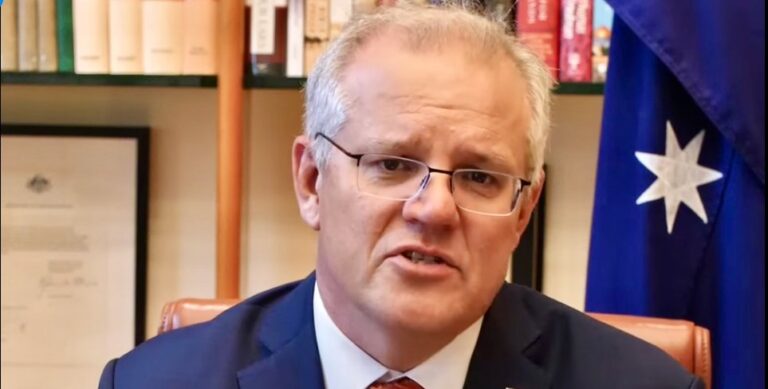
Morrison Government will ease eligibility criteria for organisations to qualify for the JobKeeper

hon scott morrison 1 1

ScoMo: Following the introduction of stage four restrictions in metropolitan Melbourne and stage three restrictions across regional Victoria, the Morrison Government will help more businesses qualify for JobKeeper.

Key adjustments include:

  • A change to the employee reference date – from 3 August 2020 the relevant date of employment for an eligible employee will move from 1 March to 1 July 2020, expanding employee eligibility.
  • A change to the turnover reference period – to be eligible for JobKeeper post 28 September 2020, organisations will only have to demonstrate that their actual turnovers have significantly declined in the previous quarter.


As a result, organisations that are able to demonstrate a significant decline in turnover in the September 2020 quarter will be able to access the JobKeeper extension in the December quarter. An organisation able to demonstrate the requisite decline in turnover in the December 2020 quarter would be able to access the JobKeeper extension in the March 2021 quarter.

The combined effect of the economic deterioration in Victoria which will see more firms needing to rely on JobKeeper and the eligibility changes being made to the program will see the cost of JobKeeper increase by around $15.6 billion in 2020-21.

While these changes will apply nation-wide, it is expected that more than 80 per cent of the increased payments will flow to Victorian businesses and employees.

These changes, combined with a deterioration in the economy as a result of the stricter restrictions imposed in Victoria will see the total cost of the JobKeeper program increase to $101.3 billion.

It is now expected that around 4 million Australians will be benefiting from JobKeeper Payments at the end of the September quarter, falling to around 2.24 million in the December quarter and 1.75 million in the March 2021 quarter. 


Prime Minister Scott Morrison said the Government was doing whatever it took to save lives and save livelihoods.


“Australia is facing a situation that is constantly changing. Our response is to get the right support to all those Australian families, workers and businesses that need us, as these circumstances change,” the Prime Minister said.


“This means more support for more workers and more businesses for longer, as we battle this latest Victorian wave.”


Treasurer Josh Frydenberg said the introduction of stage four restrictions by the Victorian Government will have a severe economic impact on the Victorian and Australian economy.


“Already more than 270,000 businesses covering around 975,000 employees in Victoria are being supported by the Morrison Government’s JobKeeper Payment.”


“To help keep more businesses in business and Australians in jobs through this incredibly challenging period, the Government will ease the eligibility criteria to make it easier for organisations to qualify for the JobKeeper extension from 28 September 2020.”


“These change will add to the $15 billion the Morrison Government has already contributed to the Victorian economy through JobKeeper and small business CashFlow boost payments.”


Every arm of government is working to keep Australians in jobs and businesses in business.


The Morrison Government will continue to do what it takes to cushion the blow and help Australians get to the other side of the coronavirus crisis.


Source: Licensed from the Commonwealth of Australia under a Creative Commons Attribution 4.0 International Licence.


The Commonwealth of Australia does not necessarily endorse the content of this publication.

Trump signs Executive Order, Threat Posed by China WeChat TikTok

Trump Signing

President Donald J Trump: By the authority vested in me as President by the Constitution and the laws of the United States of America, including the International Emergency Economic Powers Act (50 U.S.C. 1701 et seq.) (IEEPA), the National Emergencies Act (50 U.S.C. 1601 et seq.), and section 301 of title 3, United States Code,


I, DONALD J. TRUMP, President of the United States of America, find that additional steps must be taken to deal with the national emergency with respect to the information and communications technology and services supply chain declared in Executive Order 13873 of May 15, 2019 (Securing the Information and Communications Technology and Services Supply Chain).  As I explained in an Executive Order of August 6, 2020 (Addressing the Threat Posed by Tiktok, and Taking Additional Steps to Address the National Emergency With Respect to the Information and Communications Technology and Services Supply Chain), the spread in the United States of mobile applications developed and owned by companies in the People’s Republic of China (China) continues to threaten the national security, foreign policy, and economy of the United States.  To protect our Nation, I took action to address the threat posed by one mobile application, TikTok.  Further action is needed to address a similar threat posed by another mobile application, WeChat.


WeChat, a messaging, social media, and electronic payment application owned by the Chinese company Tencent Holdings Ltd., reportedly has over one billion users worldwide, including users in the United States.  Like TikTok, WeChat automatically captures vast swaths of information from its users.  This data collection threatens to allow the Chinese Communist Party access to Americans’ personal and proprietary information.  In addition, the application captures the personal and proprietary information of Chinese nationals visiting the United States, thereby allowing the Chinese Communist Party a mechanism for keeping tabs on Chinese citizens who may be enjoying the benefits of a free society for the first time in their lives.  For example, in March 2019, a researcher reportedly discovered a Chinese database containing billions of WeChat messages sent from users in not only China but also the United States, Taiwan, South Korea, and Australia.  WeChat, like TikTok, also reportedly censors content that the Chinese Communist Party deems politically sensitive and may also be used for disinformation campaigns that benefit the Chinese Communist Party.  These risks have led other countries, including Australia and India, to begin restricting or banning the use of WeChat.  The United States must take aggressive action against the owner of WeChat to protect our national security.
Accordingly, I hereby order:


Section 1.  (a)  The following actions shall be prohibited beginning 45 days after the date of this order, to the extent permitted under applicable law: any transaction that is related to WeChat by any person, or with respect to any property, subject to the jurisdiction of the United States, with Tencent Holdings Ltd. (a.k.a. Téngxùn Kònggǔ Yǒuxiàn Gōngsī), Shenzhen, China, or any subsidiary of that entity, as identified by the Secretary of Commerce (Secretary) under section 1(c) of this order.


(b)  The prohibition in subsection (a) of this section applies except to the extent provided by statutes, or in regulations, orders, directives, or licenses that may be issued pursuant to this order, and notwithstanding any contract entered into or any license or permit granted before the date of this order.


(c)  45 days after the date of this order, the Secretary shall identify the transactions subject to subsection (a) of this section.


Sec. 2.  (a)  Any transaction by a United States person or within the United States that evades or avoids, has the purpose of evading or avoiding, causes a violation of, or attempts to violate the prohibition set forth in this order is prohibited.


(b)  Any conspiracy formed to violate any of the prohibitions set forth in this order is prohibited.


Sec. 3.  For those persons who might have a constitutional presence in the United States, I find that because of the ability to transfer funds or other assets instantaneously, prior notice to such persons of measures to be taken pursuant to section 1 of this order would render those measures ineffectual.  I therefore determine that for these measures to be effective in addressing the national emergency declared in Executive Order 13873, there need be no prior notice of an identification made pursuant to section 1(c) of this order.


Sec. 4.  For the purposes of this order:


(a)  the term “person” means an individual or entity;


(b)  the term “entity” means a government or instrumentality of such government, partnership, association, trust, joint venture, corporation, group, subgroup, or other organization, including an international organization; and


(c)  the term “United States person” means any United States citizen, permanent resident alien, entity organized under the laws of the United States or any jurisdiction within the United States (including foreign branches), or any person in the United States.


Sec. 5.  The Secretary is hereby authorized to take such actions, including adopting rules and regulations, and to employ all powers granted to me by IEEPA as may be necessary to implement this order.  The Secretary may, consistent with applicable law, redelegate any of these functions within the Department of Commerce.  All departments and agencies of the United States shall take all appropriate measures within their authority to implement this order.


Sec. 6.  General Provisions.  (a)  Nothing in this order shall be construed to impair or otherwise affect:


(i)   the authority granted by law to an executive department, agency, or the head thereof; or
(ii)  the functions of the Director of the Office of Management and Budget relating to budgetary, administrative, or legislative proposals.


(b)  This order shall be implemented consistent with applicable law and subject to the availability of appropriations.


(c)  This order is not intended to, and does not, create any right or benefit, substantive or procedural, enforceable at law or in equity by any party against the United States, its departments, agencies, or entities, its officers, employees, or agents, or any other person.


DONALD J. TRUMP


Attribution: This article royalty-free license WhiteHouse.gov under the Creative Commons Attribution 3.0 License.