Home Blog Page 69

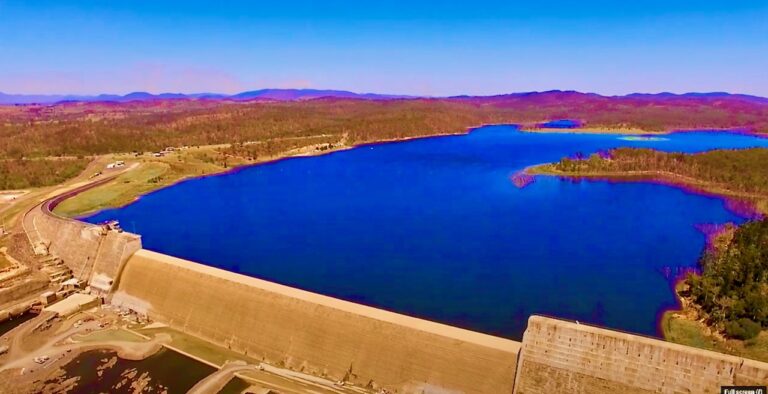
200 Green Jobs environmental projects in Great Barrier Reef catchments

North Queensland 1

Palaszczuk Government today announced that it is injecting $10 million into the economy to deliver jobs and priority environmental projects in Great Barrier Reef catchments.

This funding is on top of the extension of a further $10 million for the Skilling Queenslanders for Work initiative to increase Work Skills Traineeships in construction or conservation and land management.

Minister for Environment and the Great Barrier Reef Leeanne Enoch said the Reef Assist Jobs program will deliver on the ground projects in partnership with local governments, natural resource management bodies, land management and conservation groups.

These projects could include streambank rehabilitation, planting trees, pest and weed control, and landscaping.


“As we face the global impact of COVID-19, our government recognises the potential for environmental projects to assist in kick starting our plan for economic recovery in Queensland,” Minister Enoch said.


“The Palaszczuk Government’s aim is to support jobs and this $10 million Reef Assist program will provide employment and new skill development, helping Queenslanders get back into work. 


“This cash injection will not only support jobs and boost regional economies, it will also deliver positive environmental outcomes.  


“It is estimated this jobs plan will support up to 200 employment opportunities, a great initiative for communities in Northern Queensland and another positive sign that our state is well and truly on the road to recovery post COVID-19.”


Minister Enoch said the Reef Assist program will support a number of Northern Queensland communities to recover from the impacts of COVID-19.


“This is about investing in a land management program which will provide socially and environmentally beneficial work, and support the Palaszczuk Government’s plan for economic recovery.”


Attribution: Minister for Environment and the Great Barrier Reef, Minister for Science and Minister for the Arts
The Honourable Leeanne Enoch


Image by Horst Müller from Pixabay

Pompeo: Five Years of Injustice Following Chinese Communist Party Crackdown

Mike Pompeo TV interview 1

On July 9, five years ago the Chinese Communist Party (CCP) launched a nationwide offensive targeting hundreds of defence lawyers and human rights defenders for detention, interrogation, and politically motivated criminal charges. The “709” crackdown, named for the date it began on July 9, 2015, was designed to intimidate a generation of lawyers and activists from representing or assisting anyone the CCP perceives as a threat to its absolute power. It showed the world what it means to govern via “rule by law,” rather than a system based on the rule of law.

This wave of repression continues, demonstrated by the secret trial and June 17 sentencing of Yu Wensheng for defending victims of the 2015 crackdown. After detaining human rights lawyers like Wang Quanzhang for years and denying them visits from their families and chosen attorneys, the PRC detained those lawyers’ own defence attorneys — such as Yu and Li Yuhan — without due process. PRC authorities continue to keep some human rights lawyers under house arrest (Jiang Tianyong) and have disbarred others (Wang Yu, Tang Jitian, Li Jinxing, and Wen Donghai) even after their release from prison.

The PRC has also targeted peaceful activists, like Xu Zhiyong and Ding Jiaxi, who have worked with human rights lawyers to protect Chinese citizens’ rights and defend against the abuses of government officials.


The United States urges the PRC to honour its international human rights obligations and commitments and domestic legal guarantees protecting human rights and fundamental freedoms in China.


Source. Michael R. Pompeo, Secretary of State

Chairman Dan Victorians living in Melbourne are now recommended to wear face masks.

Dan Andrews 11

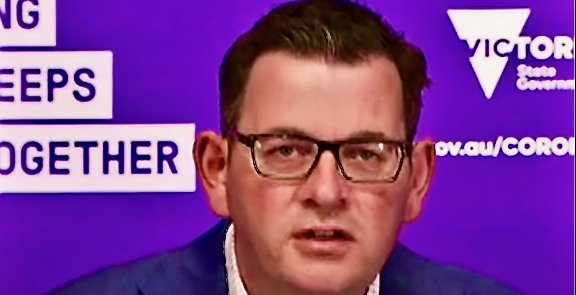
Premier Daniel Andrews Speech: Victorians living in metro Melbourne and Mitchell Shire are now recommended to wear face masks in situations where they are leaving their home and physical distancing is not possible – to help slow the spread of coronavirus in the community.

Premier Daniel Andrews announced the new recommendations from the Chief Health Officer would apply from today, following new evidence from global medical experts and increased community transmission in Victoria.

The Victorian Government will order over two million reusable masks and one million more single-use masks to ensure more Victorians have access to this added protection while also boosting local manufacturing capability.

Studies have recently shown that, even when factoring in imperfections and human error, wearing face masks can reduce transmission of coronavirus by around 60 per cent. Before this study, advice around the effectiveness of face masks in reducing transmission has been contradictory and lacking in evidence.


Victoria’s Chief Health Officer has now updated his advice to recommend  anyone living in metro Melbourne or Mitchell Shire to wear a face covering or cloth mask when leaving home for one of the four permitted reasons – where it is not possible to maintain a distance of at least 1.5 metres from other people.


These recommendations apply to adults over the age of 18, recognising both the lower transmission and disease severity in younger people, but also the difficulty in getting children to wear a face mask properly. The recommendation does not apply to wearing masks in schools and early childhood settings.


Anyone who lives outside metropolitan Melbourne and Mitchell Shire should follow the same advice if they need to enter an area currently under Stage 3 Stay at Home restrictions.


This is a health recommendation only and will not be enforced – people will not be fined for not wearing a face mask.


The order for two million reusable face masks will be placed by the end of July. To bridge the gap while local manufacturing ramps up, a million single-use masks will also be ordered, favouring Victorian manufacturers to provide a much-needed boost for local jobs.


Further work will be undertaken this week to determine the best method for distributing the face masks across Victoria, ensuring those who are most vulnerable are given priority consideration.


Consultation will also occur with union and industry groups about whether the advice around face masks in the workplace needs to also be updated.


Face masks provide an added layer of protection but the best ways to reduce the transmission of coronavirus remain the same – good hand hygiene, cough and sneeze etiquette and keeping a physical distance of 1.5 metres.


Quotes attributable to Premier Daniel Andrews


“The Chief Health Officer has now given us the clear advice that wearing facemasks makes a tangible difference when it comes to reducing the transmission of coronavirus within the community – and that is why we are issuing this new recommendation.”


“Staying at home if you feel unwell is still the best way to slow the spread of coronavirus but wearing a cloth mask provides an additional physical barrier, adding one more layer of protection for you and those around you.”


Quotes attributable to Minister for Health Jenny Mikakos


“We’ve always relied on the advice of experts when it come to this pandemic and that’s what we’re doing now.”


“At this stage the advice only applies to people in the metropolitan Melbourne and Mitchell Shire area where physical distancing is not possible, but wearing a mask is an added protection that anyone can choose to take – no matter where they live.”


Quote attributable to Victoria’s Chief Health Officer Professor Brett Sutton


“With a virus this infectious, every bit helps and the simple action of wearing a facemask will help protect your family, your neighbours and the most vulnerable in our community.”


Source: Premier of Victoria The Hon. Daniel Andrews MP

Trump trade deals, Historic US Economy added 5 Million jobs Month of June shattering all expectations.

President Trump 1 2

President Trump Press Conference:  Please.  Very nice.  Thank you.  Big day.  It’s my pleasure to welcome you all to the beautiful, great White House and to host this magnificent showcase of America’s incredible small businesses.  I just got to witness some beautiful product.

Today, we received outstanding news from all over our country, really.  The United States economy has added almost 5 million new jobs in the month of June.  That’s shattering all expectations and shattering all records — historic records.  History of our country, we’ve never added anywhere near that.

YouTube Link: https://www.youtube.com/watch?v=jeJN9xdrP0Q

And last month, we also broke the record, but now we shattered it.  Much higher than even last month.  This is the largest monthly jobs gain in history.  We added 2.1 million leisure and hospitality jobs, 740,000 retail jobs, 568,000 education jobs and healthcare jobs, 357,000 service jobs — and very importantly to me, because you know what’s happening with manufacturing, where we’re bring it back because we’ve made incredible trade deals — so manufacturing jobs are coming back, and we added 356,000 manufacturing jobs.  Incredible.  Incredible numbers.  All records.

African American workers made historic gains, the likes of which we’ve never had before, with 404,000 new jobs in June.  That’s a record, and that’s the highest number ever.  We had 700,000 new jobs over the last two months for African American workers; that’s the highest ever.  And both — both months are the highest.  We shattered last month’s record.  That was a record, and we shattered it.

Hispanic employment is up by 1.5 million jobs.  Great businessmen and women, and they’re up 1.5 — think of it — million jobs.  Hispanic.

Eighty percent of small businesses are now open.  New business applications have doubled since late March.  America’s economy is coming back much stronger than ever anticipated by most people, almost all people, because these numbers were — even the most optimistic people, these numbers are being doubled and tripled over what they thought would be possible.

We’re grateful to be joined today by Secretary of Commerce Wilbur Ross.  Thank you very much, Wilbur.  Thank you very much.  You’re doing a great job.


Every company here today embodies true American excellence.  Your stunning craftsmanship — I just witnessed some of it; it’s incredible — it’s treasured and prized all over the world.  The product you make is like none other.  And your spirit for America and the greatness of our country is unrivaled.


With us are workers who make decorative American flags from Virginia; fly-fishing reels from Florida; grills from Illinois; pies from North Carolina — they look very good to me; coffee from Oklahoma; ice cream from Maryland; and sunscreen and baseball bats from Texas.  With unmatched skill and devotion, you make the goods and build the products that proudly bear the wonderful phrase, “Made in the USA.”  You’re seeing that more and more: “Made in the USA.”


We’re bringing our jobs back because of trade deals.  We have great trade deals, and jobs are coming back.  And we have a lot of great trade deals right now under negotiation.  We got to get them done as quickly as possible.


The small businesses represented in this room continue a great and noble American heritage.  You’re entrepreneurs, artisans, creators, craftsman who forge your own path, made your own products, and provide good-paying jobs for our citizens.  Incredible jobs, incredible people, and they truly are artisans.  And you’re doing it all with American hands, American heart, and American pride.


Several of these companies are entirely veteran-owned and operated.  Especially as we approach Independence Day, I want to thank the courageous men and women who’ve served their country in uniform.  We vow to honor your sacrifice by forever defending the rights, freedoms, and principles you risk your entire life to defend.


Following the arrival of the plague from China — and that’s what it is; it’s a plague and it should have never happened.  China should have never let that happen, but China did allow it to happen.  We just signed a brand-new trade deal, and the ink wasn’t even dry when this came over.


But we raced into action to save our nation’s small businesses.  We passed over $3 trillion in historic relief measures — $3 trillion; think of that — including over $670 billion for the Paycheck Protection Program, a tremendous success, as you can see by the numbers.


To keep small-business workers on the payroll, I signed a bill providing federally funded paid sick leave and paid family leave for American workers.  Things that have never been done.  We’re allowing businesses to defer paying their income tax.  And we expanded tax refunds very substantially.


Thanks to our efforts and the incredible resilience of our nation’s small businesses — and I really think we can add the foundation that we built.  We built the greatest economy ever built, and that foundation was so strong that, instead of coming weakly back or going in the other direction — because this is coming back, and we haven’t totally succeeded yet; we will soon.  But we haven’t killed all of the virus yet.


And yet, you look at these numbers — and that’s based on a very strong foundation that we built, a foundation like no other; a foundation that, had we not been attacked by this virus, this horrible virus — we were doing things and had things planned that nobody else had ever even thought of: paying off debt; building numbers, the likes of which nobody has seen.  And yet, next year, we’ll be in a position where, I believe, in a certain respect, I think we’ll even be stronger than we would have been because of what we’re doing.


But only that strong foundation allowed us to be up here today talking about these record-setting job numbers and other numbers that we’re producing, because America’s economy is now roaring back to life like nobody has ever seen before.  Nobody has ever seen numbers like this.


In May, retail sales surged by nearly 18 percent.  That’s a record.  We recently saw the best 50-day increase in the history of the stock market.  So we had 50 days — go back a couple of weeks — we had 50 days, the likes of which we’ve never had in the history of the stock market, which to me means jobs.


And it’s lifting up 401(k)s and retirement savings for American workers.  We’re doing numbers like nobody has ever seen before.  Take a look at 401(k)s.  In a pandemic, we’re almost even with where we were before the pandemic started, and nobody would have said that was possible — nobody at all.


We built the greatest economy in the history of the world, and we’re now doing it again.  And I think we’ll do even better the second time than we did the first time, unless somebody comes along and says, “Let’s raise taxes on everybody.”  And they’re raising taxes not only on corporations — they’ll just go to another country, and they’ll do just fine — but they’re raising taxes on people and middle-income people, and they’re losing jobs.


So you can’t allow that to happen.  That will be — all of this incredible job that we’ve done will go down like that.  It will be a terrible, terrible sight.  It might even be a 1929 situation.  So you have a chance to have the greatest numbers in history.  You’re almost there.


We’re almost back to where we were from the standpoint of stock market.  Think of that.  But you’ll have a crash like you’ve never seen before.  If you put the wrong person in office, you’ll see things that you would not have believed are possible.  They want to raise taxes, they want to raise regulations.  You know, a big part of what we’ve done is by cutting regulation.  We’ve cut regulation more than any President in the history of our country, whether they’re there for four years, eight years, or in one case, more than that.  Nobody even came close.  And we’re doing much more.  We have regulation, but it’s proper regulation, not strangulation.


We’re also tapping into the talent, genius, and the drive of our people to kill the virus.  We’re speeding the delivery of new treatments, including anti-viral steroids, convalescent plasma, and other therapies.  We have therapeutics that are really, really looking good, and this includes two drugs that have proven effective: remdesivir and dexamethasone, which is having a tremendous trial.  And we’ll see how that all happens.


But we have three vaccine candidates.  We’ve had many more, but three are really, really looking good, and I think you’re going to have an answer to that very soon.  Three vaccine candidates are now in trial, with three more to start very shortly.  These are all great companies.  They’ve had tremendous success with other problems in the past.


And we’re accelerating production through Operation Warp Speed.  Plus, we have our military ready, so that should we get — whether it’s therapeutic or vaccine — our military is ready, logistically ready.  These are the best in the world to get it out to everybody as soon as we have it.  And we think we’re going to have it soon.


As we prepare to celebrate the Fourth of July, let us renew our devotion to this nation, to its citizens, and the eternal values that define our past and shape our future.


I’m going to Mount Rushmore on July 3rd.  We’re going to have a tremendous evening.  It’s going to be a fireworks display like few people have seen.  It’s going to be very exciting.  It’s going to be beautiful.


They’ve been wanting to do that for years — fireworks.  They used to do it many years ago, and, for some reason, they were unable or unallowed to do it.  They just weren’t allowed to do it.  And I opened it up, and we’re going to have a tremendous July 3rd.  And then we’re coming back here, celebrating the Fourth of July in Washington, D.C.


And I want to also thank all of law enforcement.  The job you’ve done is incredible.  We signed a bill.  If you play with our monuments or our statues, you go to jail for 10 years.  It’s amazing how it all stops so fast.  Stops so fast.  We let the local authorities handle it as long as possible, but ultimately we said, “Let’s step in.”  And we stepped in and it stopped.  Ten years in jail if they do what they were doing.


So we’re very proud of law enforcement.  We want to thank law enforcement.  Really great job.  Our military has been incredible.  Our National Guard has been just incredible all over.


I’m glad to see, in Seattle, they took care of the problem, because as they know, we were going in to take.  We were ready to go in and they knew that too.  And they went in and they did what they had to do.


We’re a nation committed to equal and abundant opportunity for citizens of every race, color, religion, and creed.  The American Dream is the sacred birthright of every American child, and that’s what we have, is we have the American Dream.  And nobody is going to shatter the American Dream — not the anarchists, not the agitators, not the fools, not the looters.  They’re not going to have any impact on the national dream — the national dream like no other.


That’s why we’re here today, to ensure that every citizen can achieve their dream, achieve their destiny, and realize their full and extraordinary potential.  That is how we will renew, rebuild, and restore America.


We’ve done an incredible job in a three-and-a-half-year period, a job like nobody thought would be possible to be done.  And we’re doing it again, and we’re doing it, I believe, bigger and better and stronger than ever before.  You’re going to see that next year.  And unless it’s tampered with, we’re going to have a year next year like no other.  It’ll be a phenomenal year, a successful year.


And we’ll have our best job numbers ever next year.  We’ll come back stronger and more prosperous than ever before.  Next year will be — I think it’ll be one of the — from an economic standpoint, the greatest or one of the greatest economic years we’ve ever had.


So I just want to thank everybody for being here.  I want to thank all of these incredible artisans and business people for showcasing your amazing products.  And I just want to leave you by saying very important words: God bless America.


Thank you all very much.  Thank you.  Thank you very much.  


Source: White House. whiteHouse.gov

President Putin Meeting of leaders of Russia, Iran and Turkey on a Syrian settlement

Vladimir Putin President of Iran Hassan Rouhani and President of Turkey Recep Tayyip Erdogan held a trilateral videoconference 1


Vladimir Putin, President of Iran Hassan Rouhani and President of Turkey Recep Tayyip Erdogan held a trilateral video conference meeting of the heads of state – guarantors of the Astana process for facilitating the Syrian peace settlement.

Following the meeting, the leaders of Russia, Iran and Turkey adopted a joint statement.

The presidents of Russia, Turkey and Iran held their first summit on Syria in Sochi in November 2017. Talks on the Syrian settlement between the leaders of Russia, Turkey and Iran were also held in Ankara (April 2018), Tehran (September 2018), Sochi (February 2019) and Ankara (September 2019).

Speech at the meeting of leaders of Russia, Iran and Turkey on Syrian settlement

President of Russia Vladimir Putin: Colleagues,


Mr Rouhani, Mr Erdogan,


I am also pleased to see all of you today and have a chance to discuss one of the most sensitive issues on the current international agenda.


However, before we start, I would like to express my condolences to the President of Iran over the tragic accident in Tehran. We know that an explosion occurred in one of the outpatient clinic of Tehran. There are casualties and some people were wounded. Please, accept my heartfelt condolences.


Friends, the last time we met as heads of state – guarantors of the Astana process for facilitating the Syrian peace settlement was in Ankara in September 2019. There were plans to meet in Tehran in May but we could not meet for obvious reasons. I appreciate our Iranian colleagues’ initiative to arrange this summit via videoconference.


I agree with Mr Rouhani in his evaluation of the efficiency and relevance of our joint work on Syria. We have managed to achieve a lot by working together. The level of violence in Syria has significantly decreased, and peaceful life is gradually being restored, but the key is that a foundation has been established for a sustainable political and diplomatic settlement based on United Nations Security Council Resolution 2254. As you know, this document contains the fundamental principle – adherence to Syria’s sovereignty, independence, unity and territorial integrity.


One of the main objectives of this videoconference is to jointly analyse the current state of affairs there and to agree on what else could be done to ensure long-term normalisation in the Syrian Arab Republic.


I am referring primarily to continuing the fight against international terrorism. We also need to think about what other measures are necessary to neutralise the terrorist groups that are still active.


The most tense situation remains in the territories outside the Syrian government’s control – in the Idlib de-escalation zone and in the northeast of the country, on the west bank of the Euphrates River where ISIS activities have significantly increased.


Regarding Idlib, we continue to work closely with our Turkish friends to implement the agreements of the Sochi Memorandum of September 17, 2018 and Additional Protocol thereto of March 5, 2020. Apparently, not all the issues have been resolved yet, however, the efforts being taken are yielding certain results. For example, the situation in the de-escalation zone has stabilised considerably since the ceasefire was introduced.


As to the prospects for the political process, we need to promote the inclusive intra-Syrian dialogue within the framework of the Constitutional Committee in Geneva. Proposals were made to support this process, help its participants meet and launch a direct dialogue to start drafting parameters for the future state structure of Syria. It was agreed on at the Congress of the Syrian National Dialogue in Sochi in January 2018, which was made possible, by the way, thanks to the concerted efforts of the Astana process guarantors. Our three nations could also do a lot for the post-conflict settlement in Syria, for the restoration of the economy and social sphere, and for the return of refugees and internally displaced persons. Given the spread of the coronavirus infection, coordination of our efforts on the humanitarian track is becoming increasingly necessary.


The conflict in Syria, the confrontation with the terrorists, has been ongoing for a number of years which naturally affects the country’s economic situation. The sanctions imposed on Syria, which sidestep the UN Security Council and are, in essence, illegitimate and illegal, also have a negative effect. According to the World Food Organisation, over 9 million Syrians, which is a half of the population, need food aid.


Despite that and the UN Secretary-General’s appeal to ease the sanctions under the pandemic, both Washington and Brussels made the decision to extend the restrictions against Damascus. Moreover, new sanctions have been imposed aimed, obviously, at suffocating the Syrian Arab Republic economically. This is why it is so crucial to consider ways to streamline humanitarian aid via our respective channels and support the Syrian people.


Colleagues, a joint statement has been drafted for this meeting which reflects the coordinated approaches of our three nations towards further steps on the Syrian track. In particular, goals have been set to interact on completely eliminating the terrorist groups and on promoting the political process as sustained by the Syrians themselves under UN guidance. The Russian side supports this document which shows the commitments of Russia, Iran and Turkey as the Astana process guarantors to pursue consistent joint work in order to establish a truly lasting peace and stability in Syria. I confirm my readiness to meet in Tehran as soon as conditions allow, and I thank President Rouhani for the invitation.


Thank you very much.


Source: President of Russia Kremlin Website

A new Queensland Border Crossing Declaration Pass available online

Annastacia Palaszczuk 1

The online portal enabling members of the public to apply for the Queensland Border Declaration Pass is now live.

The completed declaration is a requirement for everyone including Queensland residents who are returning to Queensland as of midday on Friday, July 3.

State Disaster Coordinator Deputy Commissioner Steve Gollschewski said previous border entry passes into Queensland would be invalid from midday.

“Each person travelling must have a completed Queensland Border Declaration Pass and those travelling by road need to have one clearly displayed within their vehicle to enable priority passage,” Deputy Commissioner Gollschewski said.

“They must also carry identification which show a residential address.

“The Queensland Border Declaration Pass is a print-at-home document and issued following the completion of an online questionnaire.

“It is everyone’s responsibility to understand and listen to the Queensland public health directions and follow them closely, including those who intend to travel into Queensland from other states.


“Border restrictions apply to all travel to Queensland by air, sea, rail or road.


“Police will conduct random interceptions of those progressing through priority passage to ensure the validity of declarations.”


Anyone coming to Queensland who has been in Victoria or another hotspot within the last 14 days will be required to quarantine in a designated hotel at their own cost. This includes Queenslanders returning home from Victoria or other hotspot areas.


Failure to comply with quarantine directions and border restrictions can result in on-the-spot fines of $1,334 for individuals and $6,672 for corporations.


Providing false information on the declaration or entering Queensland unlawfully could result in a $4,003 fine.


The Queensland Entry Declaration can be accessed at www.qld.gov.au/border-pass and is valid for seven days.


Queensland Border Declaration Pass


In response to the COVID-19 pandemic, entry to Queensland and travel to remote communities is temporarily restricted by the Chief Health Officer under the Border Restrictions Direction (Opens in new window).


You are only allowed to enter Queensland if you are an exempt person or have been granted an exemption from Queensland’s Chief Health Officer AND you have a Queensland Border Declaration Pass.


A separate declaration pass is required for each individual, including children, and all travelers in your party must be eligible to enter Queensland. If an individual seeking to enter Queensland is a child or a person with impaired capacity, a parent or guardian may complete this form on behalf of the person.


Once your Queensland Border Declaration Pass is approved you will need to enter Queensland within 7 days. If you don’t you will need to apply for a new Queensland Border Declaration Pass.


Please note, access to remote communities is currently restricted by the Chief Health Officer. A separate Communities Entry Pass is required for travel to a designated area (remote communities). You will need both a Queensland Entry Pass AND Communities Entry Pass if your travel involves both a border crossing and entry to a designated area.Last updated:3 July 2020


Queensland border restrictions


To slow the spread of the novel coronavirus (COVID-19), the Queensland Government is implementing restricted entry to Queensland from 12:01 am on Saturday, 11 April 2020.


These restrictions provide for the continuation of essential goods and services for Queenslanders.


Source: The State of Queensland (Queensland Police Service) 2019
Queensland Government. a Creative Commons Attribution 4.0 International licence (CC BY 4.0).


PM Morrison' Long-Range Strike Capabilities to Maintain Regional Security


PM Morrison’ Long-Range Strike Capabilities to Maintain Regional Security


Australia will invest in new long-range strike capabilities to maintain regional security and deter or respond to aggression in the Indo-Pacific, as part of the 2020 Defence Strategic Update and Force Structure Plan.


The new investments will be made across the air, maritime and land assets to give the Australian Defence Force more options to protect Australia’s interests.


“The challenges and changing nature in the Indo-Pacific have meant we need a new approach and one that actively seeks to deter actions that are against our interests,” the Prime Minister said.


“These new capabilities will provide a strong credible deterrent in our region that will help provide the stability and security we need.


https://www.facebook.com/scottmorrison4cook/videos/757655718375416/


“We are committed to peace and stability in the region, and an open, inclusive, prosperous and sovereign Indo-Pacific.”


Minister for Defence, Senator the Hon Linda Reynolds CSC, said military capability in our region is modernising rapidly and we need to maintain a regional capability edge.


“It is essential that we have the capabilities that can hold forces and infrastructure at risk from a greater distance, to influence decision-making of those who may seek to threaten our national interests,” Minister Reynolds said.


The Morrison Government’s commitment to this new strategic policy setting is demonstrated with the decision to acquire an advanced maritime strike capability, the AGM-158C Long Range Anti-Ship Missile (LRASM), from the United States Navy (USN), at an estimated cost of around $800 million.


The new missile is a significant upgrade from our current AGM-84 air-launched Harpoon anti-ship missile, which was introduced in the early 1980s, with a range of 124 kilometres. The LRASM has a range in excess of 370 kilometres.


LRASM will initially be used on the F/A-18F Super Hornets and has the flexibility to be integrated onto other Defence aircraft. Training on the weapon system is set to commence in 2021.


LRASM will be another fifth-generation capability added to the Air Force inventory to protect Australia’s maritime region, including our sea lines of communication and helping ensure regional maritime security.


This is the first in a long-term plan to procure advanced longer-range strike weapon systems for our combat aircraft to allow Air Force to operate at greater range and avoid increasingly sophisticated air defences.


To enhance the strike capability of the ADF across all domains, the Government has also put in place plans to invest in:


  • advanced naval strike capabilities, including long-range anti-ship and land strike weapons;
  • the acquisition of long-range rocket artillery and missile systems to give the Army an operational strike capability; and
  • the development, test and evaluation of high-speed long range strike, including hypersonic weapons.


Over the decade to 2029-30, investment in the acquisition of new capability will grow from $14.4 billion (34 per cent of the budget) to $29.2 billion (40 per cent of the budget).


The Government will also consider further force structure adjustments over the medium to longer term, which could involve the introduction of additional, longer-range weapon systems, which will be critical for the ADF to be able to continue to deliver credible deterrent effects.


Boeing Loyal Wingman
The Boeing Loyal Wingman, the first military aircraft to be designed and built-in Australia in more than 50 years, will help protect and support Australia’s most valuable Defence aircraft, and the pilots who fly them. Source PM ScoMo Facebook


Source: Licensed from the Commonwealth of Australia under a Creative Commons Attribution 4.0 International Licence.


The Commonwealth of Australia does not necessarily endorse the content of this publication.


Climate alarmism versus integrity at National Academies of Science

Icean Linear Ice Beg Cityscape 1

National Academies of Science should speak out against climate alarmism, not support it. This is the major message in a recent letter from Professor Guus Berkhout, president of CLINTEL, to the new head of the Royal Netherlands Academy of Arts and Sciences. The integrity of science is at stake.

This letter is a model for how all alarmist National Academies should be addressed. For example, the US National Academy of Sciences (NAS) is painfully alarmist. Even worse, NAS has been joined in promoting alarmism by its two siblings, the National Academies of Engineering and Medicine. The fact that these Academies have become a servant of supranational political organizations such as IPCC shows how serious the crisis in climate science really is.

The Netherlands Academy is called KNAW, from its Dutch name. KNAW was established in 1808 as an advisory body to the government, a task it still performs today. NAS was established by Congress in 1868. Both NAS and KNAW derive their authority from their high profile members, rigorously selected top scientists from a large range of scientific fields. Professor Berkhout is a member of KNAW.

The letter is addressed to Prof. Dr. Ineke Sluiter, President of KNAW. It begins with a clear statement of the issue:

I am addressing you in your capacity as the new President of the KNAW because the climate issue is escalating. The IPCC and the associated activist climate movement have become highly politicised. Sceptical scientists are being silenced. As an IPCC expert reviewer, I critically looked at the latest draft climate report. My conclusion is that there is little evidence of any intent to discover the objective scientific truth.


Though IPCCs doomsday scenarios are far from representative of reality, they play an important role in government climate policy. Only courageous individuals dare to point out that the predictions of the IPCCs computer models of climate have not come to pass, in that contemporary measurements contradict them. IPCCs confidence in its own models does not match the real-world outturn. In the past, scientific societies such as ours would have sounded the alarm. (Emphasis added.)


In your interview with Elsevier Weekblad (6 June 2020) you say: Dutch science should be proud of itself” and, a little later, A hallmark of high-quality research must be a wide variety of viewpoints – fewer dogmas, more viewpoints.” I agree. Unfortunately, your observations do not seem to apply to climate science. There, diversity is suppressed and the Anthropogenic Global Warming (AGW) dogma is promoted. That is why I am writing to you.”


After discussing the well known problems with the IPCC science, Professor Berkhout states his case:


Why do scientific institutions not warn society that all these climate-change doom and gloom scenarios have little or no scientific justification? I know that there are many scientists around the world who doubt or disagree with the IPCCs claims. I also know from my own experience and from correspondence with colleagues that there is much pressure on researchers to conform to what we are told is the climate consensus”. But the history of science shows time and again that new insights do not come from followers but from critical thinkers. For valid new insights, measurements trump models.


The KNAW, as the guardian of science, must surely take action now. The more governments invest in expensive climate policies in the name of climate science, the more difficult it becomes to point out that climate science in its present state falls a long way short of providing any justification for such policies. There are more and more indications that things are not right. If the scientific community waits for the dam to burst, the damage to science will be enormous. Society will then rightly ask itself the question: why were the Academies of Sciences silent? Surely there has been enough warning from scientific critics of the official position?


The KNAW must, of course, stay clear of politics and focus on excellence in finding the truth. But I repeat that the KNAW is also the guardian of science. In climate policy in particular, science is abused on a global scale. How can one plausibly state, on such a highly complex subject as the Earths climate, that the science is settled”? That is not excellence: it is stupidity.”


There is a lot more and the letter ends with a specific proposal from CLINTEL:


I propose to organise an international open blue-team/red-team meeting together with the KNAW, in which both teams can present their scientific views†. These discussions could be the start of a new era in climate science. Audiatur et altera pars.”


The US National Academy of Sciences is a lot worse than KNAW in this regard. Not only does NAS not speak out against the anti-scientific climate movement, it openly supports it. I know there are skeptical members of NAS, probably many. They need to speak out, just as Professor Berkhout has done.


Nothing less than the integrity of science is at stake. Failure to acknowledge the scientific climate change debate is making science look like a political tool. This can only turn out badly for science.


Author


Image by Gerhard G. from Pixabay

Australian $8.3 Million research projects to fight antimicrobial resistance and TB in the Pacific

Minister for Foreign Affairs, Marise Payne

Australia’s commitment to support the health and wellbeing of our Pacific Island neighbours remains steadfast, with four new research projects totalling more than $8.3 million to tackle the threat of drug resistant tuberculosis (DR-TB) and antimicrobial resistance (AMR) in the Pacific region.

DR-TB and AMR are major emerging health threats to Pacific Island countries.

PM Scott Morrison Unlocking thousands of infrastructure jobs in NSW.

PM Morrison and Gladys Berejiklian 1

The Federal and State Liberal and Nationals Governments will support nearly 5,500 jobs across New South Wales through a joint $1 billion investment in shovel-ready infrastructure projects and road safety upgrades.

The funding will be allocated to three key priorities:

  • $240 million to fix 11 congestion hotspots around Sydney, supporting 1,000 direct and indirect jobs;
  • $382 million to help local councils upgrade roads across regional NSW, supporting 3,500 direct and indirect jobs; and
  • $398 million for road safety projects in regional areas, supporting 950 direct and indirect jobs.

Prime Minister Scott Morrison said further investment in infrastructure would play a critical role in the Commonwealth’s JobMaker plan and help the New South Wales economy as it recovers from the COVID-19 pandemic.

“Partnering with state and territory governments to invest in more major infrastructure projects across Australia is a key part of our JobMaker plan to rebuild our economy and create more jobs,” the Prime Minister said.

“This funding injection means we have brought forward or provided additional funding of more than $2.7 billion across New South Wales in the past eight months.

“This package builds on the fast tracking of $570 million for infrastructure in New South Wales which we announced last November, locking in priority upgrades that will bust congestion, increase productivity, improve safety, and boost jobs at a time we need it most.” 

The jointly funded package is supported by investments from the Commonwealth ($451 million) and New South Wales Government ($569 million).

Premier of New South Wales Gladys Berejiklian said the stimulus package would drive thousands of jobs and improve the safety and travel times of journeys in both the city and the regions.

“This stimulus package builds on NSW’s record infrastructure investment of $100 billion over 4 years, including an extra $3 billion to accelerate projects and create jobs,” the Premier said.


“Projects equal jobs and fast-tracking these infrastructure projects are more important than ever as the economy recovers from the pandemic.


“Building infrastructure will be key to our economic recovery which is why we have already accelerated a number of infrastructure projects, creating thousands of jobs.”


Deputy Prime Minister and Minister for Infrastructure, Transport and Regional Development Michael McCormack said the Government had worked closely with State, Territory and Local governments to identify shovel-ready projects to help reignite the economy and get money flowing into jobs and businesses as soon as possible.


“This funding will help turbocharge the NSW Government’s Fixing Local Roads program, jointly funding $382 million of projects on a 50:50 basis on the local roads that communities use every day,” the Deputy Prime Minister said.


“The Fixing Local Roads package will help to repair, maintain or seal priority council roads and see projects start construction in the next 12 months, creating thousands of jobs in the bush.”


NSW Minister for Regional Transport and Roads Paul Toole said the first round of jointly funded projects would deliver more than 258 projects across 83 Local Government Areas.


“This is money for small projects that make a big difference in people’s everyday lives in regional NSW,” Mr Toole said.


“It means communities right across the State will see work starting on the local roads in their area as soon as next month.”


Federal Minister for Population, Cities and Urban Infrastructure Alan Tudge said the funding injection would also deliver shovel-ready, urban projects.


“We’re investing $240 million to jointly fund on a 50:50 basis a Pinch Point Program that will bust congestion for freight and bus services across Sydney’s metropolitan road network,” Mr Tudge said.


“These small-scale road improvements will make all the difference for mums and dads doing the school drop off, and people on their way home from work.


NSW Minister for Transport and Roads Andrew Constance said the program was saving Sydney drivers from millions of hours spent in traffic each year.


“Since coming into government we have completed 217 projects with huge benefits across the Sydney network. These include improving safety while busting congestion,” Mr Constance said.


“We’ve already spent $579 million on the Pinch Points program, but we have seen $1.37 billion in realised benefits. It’s these smaller scale, local projects that really help to deliver those massive time savings for drivers and make our road network more efficient.


The jointly funded package is supported by investments from the Commonwealth ($451 million) and New South Wales Government ($569 million).


Commonwealth funding for the package has been drawn from the recently announced $1.5 billion allocation for priority, shovel-ready projects and targeted road safety works.


The additional NSW funding is sourced from the $3 billion Project Acceleration Fund.


The Commonwealth Government has now committed more than $35.4 billion to transport infrastructure in New South Wales.


NSW Infrastructure Package


Shovel-ready projects 


Project Federal funding Total funding
Pinch Point Program – addressing congestion impacting freight and bus services on the Sydney metropolitan road networkBus Priority Improvements – Macquarie Park – Lane Cove Road and Waterloo Road IntersectionBus Priority Improvements – Macquarie Park – Epping Road and Herring RoadIntersection Improvements – Showground Road and Carrington Road Intersection UpgradesIntersection Improvements – Pacific Highway and Finlay RoadIntersection Improvements – Devlin Street, Blaxland Road and Parkes StreetIntersection Improvements – Parramatta Road and Woodville RoadIntersection Improvements – Georges River Road and Milton StreetIntersection Improvements – King Georges Road and Canterbury RoadInstall Traffic Signals – Wentworth Avenue and Baker StreetCorridor Upgrades – Oxford Street (Bondi Junction)Corridor Optimisation and Cycleway – Centennial Park to Kingsford via Doncaster Avenue $120 million $240 million
Fixing Local Roads – repairing, maintaining or sealing priority council roads $191 million $382 million


Source: Licensed from the Commonwealth of Australia under a Creative Commons Attribution 4.0 International Licence.


The Commonwealth of Australia does not necessarily endorse the content of this publication.