Home Blog Page 70

Dan Andrews; Mandatory Testing For Returned Travellers to Victoria

Premier Daniel Andrews 1

Andrews: Victoria will implement mandatory testing for all returned travellers in hotel quarantine.

Victoria is the only state that has been testing returned travellers twice – on day 3 and day 11 – but from today, the day 11 test will be a mandatory requirement to be eligible for release after 14 days.

Those who refuse to comply with testing will be required to remain in quarantine for a further 10 days – 24 in total – to ensure they pose no risk of introducing coronavirus to the Victorian community.

The Victorian Government signed legal directions last night, which ensures the small number of travellers who are currently in hotel quarantine who have declined to take the test, have now been tested and the processing of results has been prioritised.


Victoria has managed over 19,000 returned travellers through hotel quarantine with less than 1 per cent returning a positive result during their quarantine period.


The Victorian Government’s Suburban Testing Blitz has seen thousands of Victorians in our hotspot suburbs tested for coronavirus this week.


Residents in Keilor Downs, Broadmeadows, Maidstone, Albanvale, Sunshine West, Hallam, Brunswick West, Fawkner, Reservoir and Pakenham have received free testing – with or without symptoms and more than 11,156 samples have been collected since Thursday.


The team of testers have been zeroing in on community transmission with a fleet of mobile testing vans – allowing people to not only get tested in their own community, but in their own street and even at their front door.


Victorian pathologists have been processing up to 22,000 tests a day and with the help of labs in New South Wales, South Australia, Tasmania and Queensland, we’ve increased that capacity to at least 25,000 tests every single day.


From today, in an Australian first we will commence the collection of saliva samples to bring an easier sample collection and testing method to our hotspot suburbs and hotel quarantine.


Australian Defence Force personnel have also landed in Victoria to assist with our testing blitz and the transportation of pathology samples interstate when required. A massive squad of 1000 doorknockers will also continue their outreach, going door to door to ensure locals have the latest health advice.


The Victorian Government is urging locals in these priority areas to get tested – particularly if you have symptoms.


We all have to do our part to keep our families and our communities safe.


Quotes Attributable to Premier Daniel Andrews


“While we’ve got hundreds of testers out in our hotspots, we are also strengthening our hotel quarantine program – as we continue to work hard to slow the spread of coronavirus.”


“If you’re sick, stay home and get tested. We’re making it easier than ever, but we need everyone to do their part.”


Quote Attributable to Minister for Health Jenny Mikakos


“Thank you to all Victorians who have been tested this week, and to all our incredible front-line workers out there working so hard to slow the spread of coronavirus and keep us safe. Together we can overcome this challenge.”

Trump state-of-the-art border wall, illegal crossings down 97 percent.

Trump Build that wall 1

The United States is quickly expanding a state-of-the-art border wall system along the U.S. southern border. The new system is deterring illegal crossings and increasing security, President Trump said.

On June 23, Trump announced the completion of 340 kilometers of new wall and said the U.S. is on pace to complete 724 kilometers by the end of 2020. The wall includes cameras and sensors that allow U.S. Customs and Border Protection to monitor and prevent illegal crossings.

Youtube https://www.youtube.com/watch?v=mXtxbKlOzEI
Trump Build that Wall

“This is the most powerful and comprehensive border wall structure anywhere in the world,” Trump told a gathering in Yuma, Arizona, near the border. “Our border has never been more secure.”

Construction crews are completing an average of 1.5 kilometers of wall per day, said Lieutenant General Todd Semonite, commander of the U.S. Army Corps of Engineers.

Trump said the expanded border wall is helping slow illegal immigration into the United States. He noted that the last two months have seen the lowest number of illegal crossings in years, while illegal crossings from Central America are down 97 percent. Illegal immigration into the United States is down 84 percent from this time last year, he said.

“Nearly 450,000 pounds of drugs have been seized this year, and 2,337 criminal aliens have been apprehended,” Trump added.

In 2019, the U.S. signed Asylum Cooperation Agreements with Honduras, Guatemala and El Salvador to reduce illegal immigration to the United States and promote access to humanitarian protection in the region. The United States also expressed its intention to work with those countries to enhance their capacity to provide international protection to asylum seekers and refugees.


The U.S. State Department in April announced $258 million in aid for the three countries. Most of the money will go to improving each country’s law enforcement sector, which will help reduce crime and improve the economic outlook in those countries.


U.S. Secretary of State Michael R. Pompeo announced June 24 that the U.S. intends to provide an additional $252 million to El Salvador, Guatemala, and Honduras. This additional assistance seeks to make the three countries more secure and prosperous, and further decrease illegal immigration to the United States.


Sources: Transcript the U.S. Department of State. Video: White House

Exploiting Black/White relations to make America red


Exploiting Black/White relations to make America red


These are turbulent times in America. For over 35 years CFACT has been committed to the rights, freedom and advancement of ALL people, everywhere.


Socialists exploiting black tragedy to foist their destructive ideology on an unsuspecting nation is a nightmare none of us deserve.


Black lives are too precious to let this go unchallenged.


On Tuesday, CFACT sponsored an online “Truth Talk.”  Over 400 people registered. This was the latest in CFACT’s series of live stream events in 2020 and featured Stacy Washington from National Center for Public Policy Research’s Project 21 and former CFACT alumnus and small business owner AK Kamara. CFACT’s Christina Norman hosted the event.


https://www.youtube.com/watch?time_continue=168&v=6Z6sXOZPSXo&feature=emb_logo


The subject was the recent race riots and the radical Left’s efforts to exploit them.  You only need to pick up a paper to learn that the Green movement has also gotten in on the act; attempting to link race to climate change to stay relevant.


NASA scientist Dr. Kate Marvel recently linked ‘climate change’ to ‘white supremacy’ saying, “climate justice and racial justice are the same thing, and we’ll never head off climate catastrophe without dismantling white supremacy.”


Teen climate activist Greta Thunberg warned recently of the “Colonial, racist, & patriarchal systems of oppression that have created and fueled” climate change.


CFACT asked our panelists, all members of the minority community, what they think about this kind of rhetoric and the tactics of the Green Left.


Stacey Washington: “That is just garbage… it’s kind of amazing to me Dr. Kate would say that white supremacy has anything to do with climate change…To say that we need to have a one size fits all climate change policy and we need to take the language of the civil rights movement and couch that climate policy within the language of the civil rights movement, use that to bludgeon Americans into accepting a lot of command and control structures, instead of saying what works for these communities here…and how can the government cooperate and/or get out of the way of these communities as they address their energy needs their environmental needs, whatever their needs may be.”


AK, who was a member of CFACT’s delegation to the Rio de Janeiro Earth Summit with CFACT in 2012, recalled the cries for sustainability and redistribution of wealth. He sees racial justice warriors recycling the same spiel.


“They see that this is a hot button thing,” he said, “if they can repackage it, they can reshape the way we are governed.”


Each day brings new hypocrisy from the Left. The conflation of free market principles and racism is a curious notion; one that demands critical examination. CFACT’s panelists were amused at the prospect of the Left learning what a powerful force free markets have exerted to lift people out of poverty.


If the far Left gets its way, we can all look forward to a Socialist dystopia on the model of Venezuela.  Keeping people dependent on big government may make them reliable voters for the Left, but it comes at too high a price to their own well-being.


CFACT applauds our panelists for fearlessly calling out the Left.


Click here to watch the full discussion.


The Left wants us divided, resentful and at each other’s throats.  That’s how they plan to conquer.  Don’t play their game.  There is so much more that unites us.


Let us love our neighbor, stand together for law and order and against injustice, and confound our would-be masters by living together in harmony.


Author


  • RuckerHeadshotCraig Rucker Craig Rucker is a co-founder of CFACT and currently serves as its president. Source CFACT

Wealthy Joyce axes 6,000 Qantas staff, grounds planes for 12 months

0

Allan Joyce Pink 1

CEO Allan Joyce. Today we’re making some very significant – and in some cases, very difficult – announcements about the future of the Qantas Group.

And they are focused on exactly that – making sure the national carrier has a strong future.

Aviation is used to sudden shocks. Qantas has dealt with several just in the past decade, and come through them stronger.

But we’ve never experienced anything like this before. No one has.

Right now, all airlines are in the middle of the biggest crisis our industry has ever faced.

Efforts to contain COVID – which we all agree are so important – have devastated travel demand almost overnight.

Airline revenues have collapsed. Entire fleets are grounded. And the world’s biggest carriers are taking extreme actions just to survive.

The Qantas Group entered this crisis in better shape than most.

We’ve used record profits to strengthen our balance sheet.

We’ve built the leading full service and low fares airlines in our home market.


We’ve carved out a separate earnings stream with Qantas Loyalty.


And this gives us some of the brightest prospects for recovery.


But this crisis has still hit us very hard. And the impact will be felt for a long time – particularly, I’m very sorry to say, the impact on our people.


There are some green shoots domestically. We’re planning to be back to 40 per cent of our pre-crisis domestic flying during July and hopefully more in the months that follow. But we’ll be living with COVID for some time and recent events show we can’t take a low infection rate for granted.


It’s clear that International travel is likely to be stalled for a long time.


IATA – the peak body for airlines – says it will take more than three years for global travel to return to 2019 levels.


That means all airlines – including Qantas – must take action now. We have to position ourselves for several years where revenues will be much lower. And that means becoming a smaller airline in the short term.


THREE YEAR PLAN


Today, we’re announcing a three year plan to guide our recovery and take us through to better days ahead. It’s a plan I’ve agreed to stay on as Group CEO to see through.


The plan has three immediate actions to safeguard the national carrier’s future – and, the majority of jobs it supports.


The first is to rightsize our workforce, fleet and capital spending for a world that has less flying for an extended period.


The second is restructuring to deliver ongoing savings across the Group’s operations in a changed market.


And the third is recapitalising through an equity raise that will strengthen our balance sheet and accelerate our recovery.


IMPACT ON OUR PEOPLE


The actions we must take will have a huge impact on thousands of our people.


This is something that weighs heavily on all of us. But the collapse of billions of dollars in revenue leaves us little choice if we are to save as many jobs as possible, long term.


Many of the 6,000 job losses we’re announcing today are people who have spent decades here. It’s not unusual to have several members of one family working at Qantas and Jetstar.


What makes this even harder is that right before this crisis hit, we were actively recruiting. We were gearing up for Project Sunrise. We were getting ready to buy planes.


Now, we’re facing a sudden reversal of fortune that is no one’s fault – but is very hard to accept.


Across the world, airlines are shrinking by up to 50 per cent.


To avoid anything on this scale, we will be extending the stand down for a large number of our people as we wait for the recovery we know is coming.


Separate to job losses, about 15,000 people will remain stood down for some time – people for whom we have no work now, but will in future.


Around half of those stood down will be back flying domestically – we think – by the end of the year. The remainder – mostly, those supporting international flying – will return more slowly.


Thousands of Qantas and Jetstar people have already found secondary employment during stand down. And the feedback from those employers is incredibly positive.


For many of our people on stand down, JobKeeper has made all the difference. We’re having good discussions with the government about possibly extending Jobkeeper, or some other form of support, for those in the aviation industry who will be stood down for an extended period.


We’re also in dialogue with state and territory governments about their border openings – because once that happens, we can get more of our people back to work.


We will do the best we can to manage the impact on those leaving the Qantas Group, and those on continued stand down. We’ll offer voluntary – rather than compulsory – redundancies as much as possible. We’ll give support for career transition. And for those stood down, we’ll give ongoing access to long service and annual leave, as well as our welfare programs.


We will consult with relevant unions over the coming days and weeks – who are well aware of the challenges facing the industry and, I hope, are ready to work with us.


RECAPITALISATION


As I mentioned, the Qantas Group has extremely bright prospects for recovery.


And the faster we recover, the sooner more of our people can get back to work.


To help with this, we have announced an equity raising for the first time in a decade – which follows a long period of returning significant capital to shareholders.


The proceeds from the raising – up to $1.9 billion – will strengthen our balance sheet and accelerate our recovery.


And once we have recovered, this capital will help us take advantage of opportunities that emerge.


There is a lot of detail on the equity raising, and an update on our financial position, in the materials released to the market today.


RECOVERY AND BEYOND 


This year was supposed to be one of celebration for Qantas. It’s our centenary.


Clearly, it is not turning out as planned.


We draw strength from our long history. We know that – no matter how tough it is in the moment – we’ve always come back from a crisis stronger than before.


And we draw strength from our beginnings. Because Qantas was founded in turbulent times – straight after a world war and a devastating pandemic.


So our centenary year is, perhaps, a new beginning. The start of our ‘next century’.


And while we have to make some very painful decisions, we have to focus on that future.


We know that flying will return. Our people will be back in the skies. No aircraft will sit idle. And new ones will be arriving – including for more ultra long-haul flights.


We’re confident, because we’ve been in tough spots before. In 2013, Qantas faced an uphill battle. The turnaround that followed set us up for years of growth that was only derailed by COVID.


We know this new plan can get us back on track. Back to growth, back to profit and back to pushing boundaries with things like Project Sunrise.


In closing, I want to recognise our people. Their dedication to the national carrier – even during this time of great upheaval and uncertainty – is a big part of what will carry us through.


I want to also recognise our customers. Throughout all the recent turbulence, their support and loyalty has been amazing. From emails I’ve received, through to notes written on napkins to crew on board.


Our commitment to you is unchanged. Millions want to see the people and places they love – and need an airline to take them. Particularly in a country the size of Australia.


We will be smaller for a period of time, but we will still deliver a high level of care, and service and, above all, safety.


We’ll continue to serve regional communities. And support Australian tourism.


As the national carrier, we have a very important job to do. A proud history to uphold. And a bright future to look forward to.


Thank you.


Read Qantas Group media release on post-COVID recovery and equity raising here.


See a timeline of Qantas’ response to the evolving COVID-19 situation here.


Source: The Official News Room of Qantas Airways

Christensen; National Skills Bill Passes, will help prepare our labour market

George Christenson MP 1

Mr George Christensen (Dawson): It’s my pleasure to speak to the National Skills Commissioner Bill 2020. This legislation, these laws, we are about to pass here couldn’t be more timely as we all seek to address the critical challenge that will come about, economically, in this country from the Wuhan coronavirus pandemic. The National Skills Commissioner office to be established will help prepare our labour market, our workers, in this country for recovery. They will be establishing a robust, new, fact-based system that will strengthen our education and training networks.

The varied roles of this commission demonstrate a huge potential for it to quickly become a vital hub in supporting and enhancing the operation and analysis of the workforce we need, which is important for those people entering the workforce—to know where the gaps are, where to get training. Australia’s economic recovery will be very reliant on its workers, working Australians, being skilled, resilient and adaptable. The skills needed for the new economy, for the new Australian society, are likely to evolve, and jobs that will be made as we come out of the crisis may not be the same as the ones that perhaps have been lost.

The government identified, in the recently announced JobMaker plan, that skills and training are a priority. We have outlined a reform agenda that will look at making vocational education and training actually work for Australians once again. It will do so by providing a trusted system of training that can deliver workers with high- quality and relevant skills and supports. It’ll include rapid upskilling. It’ll include reskilling in growth areas. It’ll ensure that a new generation of Australian workers can participate in the economic success of this nation and guarantee the essentials that our nation relies upon.

The commission will do market analysis. It will look for areas in which we are short of workers in Australia, where skills are needed, where training is needed. That’s important, because that information will go from this commission to the National Careers Institute. It will provide young Australians, those who are entering our workforce, with key information—accurate and up to date—on where the jobs are and what skills and qualifications they need to go out and get hold of in order to obtain those jobs of the future.


It will help show that trades and skilled jobs are ones to aspire to as the first and best option, not to be looked down upon as the second-best option, which is a pervasive view that really does need to be knocked completely and utterly on the head. The National Skills Commissioner, established with this legislation, will also have the task of driving down and getting rid of the costs involved in our vocational education training system, and developing and maintaining a set of efficient prices, the best and lowest cost prices on courses that are on offer to Australian workers and budding workers. That will improve transparency, consistency and accessibility and, most importantly, affordability—affordability for workers and affordability for students wanting to get into the workforce.


Currently, around the nation, if you have a look at vocational education and training prices, and the subsidies on offer for vocational education and training, you see this completely patchwork system. It is terrible. We’ve got a difference of nearly $12,000 in subsidies between Western Australia and the eastern seaboard of Queensland for students that are studying a Diploma of Nursing. It’s just absolutely not clear why there is such a differential or why there is such a big difference.


If you were a budding building designer and you wanted to study a Diploma of Building Design, there’s actually a difference of nearly $7,000 between the subsidies available for students studying at TAFE NSW and TAFE Queensland. And, actually, the Queenslander faces the higher cost. It’s very sad, as a Queenslander, to know that the student who wants to go into that job is going to pay more. And it’s not just a little bit more. In New South Wales, a student going into a Diploma of Building Design would pay only $3,600, while in Queensland they would face a cost of $10,455. It’s absolutely ridiculous that we would have two different costs, and I’ve got to say it’s very disheartening to hear that the cost burden on Queenslanders is so much more.


CHAMBER


Wednesday, 10 June 2020 HOUSE OF REPRESENTATIVES 76


We can look into those that are wanting into blinds, awnings and security screens. This is a growth industry, particularly as the new HomeBuilder program rolls out. We’ve got the Certificate III in Blinds, Awnings, Security Screens and Grilles, where they receive a subsidy of only $3,726 in Queensland but a subsidy of $9,630 in New South Wales. There is a complete and utter differential there, with the Queenslander losing out in comparison to what the New South Wales student or apprentice receives. It is completely and utterly crazy that we have a system where there is a difference of that magnitude. So that’s going to be looked at and hopefully fixed up so that we have one single system, with the lowest cost possible for everyone in the nation, including those in Queensland.


One of the big things that this commission is going to do is look at outcomes. We come up with all these different schemes from this place called Canberra. They seem great on paper, but, no matter what it is, the one thing that nearly always goes missing is outcomes—to work out whether these programs are actually working and whether they’re doing the job that we set them out to do. That’s why I’m really very grateful that this part of the puzzle is in here. The commissioner is going to do an analysis of the effectiveness of the VET system and advise on what the return on investment actually is for the government—whether we are getting people into jobs that are needed or whether we just have people going on training merry-go-rounds.

This is going to mean understanding vocational education student outcomes. It’s going to mean understanding whether that apprentice or student actually got a job and what they’re now earning as part of that job, as well as the public benefits of the stronger workforce, particularly in areas that are needed, like health care, aged care and disability care. It’s going to enable governments, once we have this data, to actually look towards where we can target investment—direct investment towards high-quality courses that give students, apprentices and budding jobseekers the best chance of scoring a job in the future and strengthening our nation, strengthening our society and strengthening our economy.

That is all extremely welcome, but I have to say it’s on the back of some very good things that have happened in concert with this pandemic. The $1.3 billion program, the initiative supporting apprentices and trainees, has been most welcome. That support is being provided to small businesses right now to retain their apprentices through a 50 per cent wage subsidy, and that’s going to continue up to 30 September. As at 5 June—so, very recent data —a total of 55,400 apprentices and trainees and 31,500 employers have been assisted through the Supporting Apprentices and Trainees wage subsidy. That’s about $252 million in payments, but it has kept those young apprentices working. It has kept them in their apprenticeship and not just kicked out onto the street because of this pandemic and the economic challenge that has presented many, many businesses. That is something that this government has done and something that should be welcomed by just about everyone in the chamber.

We are the government that actually introduced the Australian apprentice wage subsidy. That created 3,200 new apprentices in rural and regional Australia, even though those on the opposite side called it a ‘political fiasco’. Can I say, just to pre-empt what I know is coming, there will be criticism that regional Australia isn’t mentioned in the bill. Well, the fact is that skills go all around the nation, including in regional Australia, and this national skills commissioner is going to be looking right around the nation, particularly in regions, where we need skills. We are already doing that with programs like the Australian apprentice wage subsidy. I could refer locally to where the commissioner will be able to build upon some of the good work happening.


In Mackay, we have young Indigenous and Torres Strait Islander Australians attending a local business called Global Product Search that has been funded by the Morrison Liberal-National government to the tune of $1.4 million to provide direct training in truck driving for the resources sector. This is a high-paying job and it is one that is very much-needed throughout Central and North Queensland. About 150 people are going through a holistic program that is not just simply learning how to drive a truck; it is learning how to manage the big bucks that you get into if you have never been on them before. It is to learn all of the skills that are needed— interpersonal skills and other skills—in the workplace. For Global Product Search manager Warren McGraw, and the Indigenous people who are rolling out that program, it is to be applauded that we have local businesses upskilling people like this in a direct way, in a holistic way.


In the Whitsundays, we are going to have a big problem with the loss of a lot of staff who have just gone because of the closure in tourism, which is going to continue on for some time. A lot of those people engaged in that industry are pretty much itinerate workers anyway, but we will still need to see a great deal of upskilling after we come out of this pandemic. It has been a pleasure to have led the charge to invest $2.5 million in a new Whitsunday maritime training centre in Airlie Beach that is going to be operating and running quite a number of courses. It is going to be doing more than it has done before. It has got a very small training room at the moment


CHAMBER HOUSE OF REPRESENTATIVES 77


in the sailing club but this investment is going to allow a full-blown college that will provide training for more skippers, more shipping engineers, more crew to work on all of the boats and more tour operator crew and that is going to be a big benefit for local tourism businesses. This will mean more job opportunities in the Whitsundays. There will be 100 jobs created during construction.


In 2019, at a small level, this training college had about 274 enrolments. This college is looking at getting close to 400 enrolments when it actually opens. This is the work that is being done on the ground in places like Airlie Beach, an ideal location for maritime training.


During normal circumstances there are up to 300 skippers working in the Whitsunday tourism industry and that demand is set to increase as we come out of this pandemic. These are the skills that we need to focus on, these are the areas that we have built a very solid base for right across Australia, including regional Australia, and these are areas that the national skills commissioner will be looking at. The commissioner will be ensuring that right across Australia, including regional Australia, it is noted where the skill gaps are, where we need to focus new expenditure, where we need to get students and apprentices to so that they, the workers of the future, have the best opportunity to make the most out of the Australian economy, which, no doubt, is going to power ahead as we come out of this pandemic.


Source Parliament of Australia Website 2020
President Trump Delivers an Outstanding Speech to Young Americans


President Trump Delivers an Outstanding Speech to Young Americans


https://www.youtube.com/watch?v=mnyCIK7ZnYw
President Trump Delivers an Address to Young Americans


Below Trump build that Wall and Security


Trumps Mexican Wall
Trump’s wall reaches 212 Miles


Trump in Roundtable on Border Security | Yuma, AZ


THE PRESIDENT: Well, thank you very much. Great to be here. Beautiful runway. A little warmer than I’m used to, but that’s okay, Doug, right? We have a — I was just given a beautiful picture of the wall. That’s before and after. And that’s quite a difference: one area you walk over, you drive over, you do whatever you want, and other one you say, “Well, I guess we don’t get in.” Here’s another one — just given. That’s great. That’s a different section. Pretty amazing.


They’ve done a great job; we’re up to 212 — more than that now, about 220 — but over 212 miles, and we’ll be very close to 500 miles by the end of the year. And that’s the area that we wanted.


So it’s great and thank you all for being here. Thank you very much. And I’m thrilled to be in Yuma, Arizona. They’ve treated me very nicely in Arizona. So we’re very happy about that, Mr. Governor. Right? To commemorate the completion of more than 200 miles of powerful border wall.


We’re on pace to complete 450 miles by the end of the year, and 500 miles, almost immediately thereafter. We may even have the 500 miles by the end of the year. We’re doing a real job. The Army Corps of Engineers, I want to thank them. They’ve been incredible.


This is the most powerful and comprehensive border wall structure anywhere in the world. It’s got technology that nobody would even believe, between sensors and cameras and everything else.


With us today are Acting Secretary of Homeland Security Chad Wolf, who has done a fantastic job. Thank you, Chad. Commissioner Mark Morgan. Mark, thank you very much. Lieutenant General Todd Semonite, who’s doing a fantastic job at the Army Corps. We have interesting construction talk, don’t we?


LIEUTENANT GENERAL SEMONITE: Yes, sir.


THE PRESIDENT: Really great stuff.


President of the National Border Patrol Council, Brandon Judd. Hello, Brandon. What are you doing sitting back there? I’ve never seen that before. You’re always up here with me. You’re getting low key lately, huh? That’s confidence. That means he’s got a lot of confidence. That’s great. And thank you for everything, Brandon. Say hello to everybody. Great job you do. Appreciate it.


He was a supporter of mine before I ran. He said, “I hope that guy runs.” Right? So I appreciate it very much. We won’t forget it either.


And several other very dedicated and heroic members of law enforcement. I met just a few of them back there and they gave me a beautiful replica of the wall, a little shorter version, but that’s okay. And we want to thank everybody.


We’re also joined by some of my very good friends and people I have great respect for you. You have a great governor in this state. And he’s been a great friend for the state, but he’s been a great friend to our nation and does a — just a great job: Doug Ducey. Thank you very much, Doug.


GOVERNOR DUCEY: Thank you, Mr. President.


THE PRESIDENT: Appreciate it.


GOVERNOR DUCEY: Thank you.


THE PRESIDENT: Talk to you in a little while. Appreciate it.


Senator Martha McSally, who I hear is doing very well. We need you in Washington. Will you please win?


SENATOR MCSALLY: Yes, sir. (Inaudible.)


THE PRESIDENT: Because we need you. The alternative that’s running against you is not the person that we want, where he’s got — he’s got things that we don’t want. So we want you to win this race. It’s very important. And we appreciate all the help that you’ve given us, especially on the border wall. We appreciate it, Martha. Thank you very much.


Representative Debbie Lesko has become a tremendous friend of mine and supporter. And with the impeachment hoax, she was right up front. And it was good for you. You became very famous. I became more famous and you became very, very famous. Right?


REPRESENTATIVE LESKO: Well, you helped me. Thank you.


THE PRESIDENT: Well, it certainly didn’t hurt. She was one of the really great advocates, who’s terrific. We appreciate it, Debbie. Thank you.


Yuma Mayor Douglas Nicholls. And thank you, Douglas, very much for being here.


MAYOR NICHOLLS: Thank you. Welcome back to Yuma.


THE PRESIDENT: Thank you very much, Doug. It’s really an honor.


And Yuma Police Chief, Susan Smith. Thank you, Susan, very much for being here.


So my administration has done more than any administration in history to secure our southern border. Our border has never been more secure. I think Doug can tell you that. Anybody at this table can tell you that. It’s never even been close.


The numbers now, including not only the wall — the wall has helped a lot, where we have that 200 miles — 212 and now 220 — it’s really, essentially, almost, I guess 99.6 or something like that. Maybe somebody can get an extraordinarily long ladder, but once you get up there, it gets very high. And it’s just about unclimbable. So it’s — it’s really great. That’s made a big difference, but we have other things that we’ve done.


During the past two months, we’ve seen the lowest number of illegal border crossings in many years. Illegal immigration is down 84 percent from this time last year. Illegal crossings from Central America are down 97 percent.


Now, the news — I won’t say “fake news”; I want to be nice today. So the news will say “97 percent,” Doug. “That’s not very good.” But 97 percent, I would say, sounds pretty good.


Source: White House. whiteHouse.gov


Shameless Al Gore goes woke

Al Gore Climate Man

Never let a crisis go to waste. As America confronts real issues of race, justice and civil order, global warming campaigners can’t resist shamelessly glomming on.

CFACT’s Marc Morano has detailed coverage at Climate Depot.

Here’s Al Gore:

These issues are inextricably braided together…The one stupid trick that white supremacists have used for 150 years is to accentuate racial division in order to build support among lower-income, majority-white voters for a corporate agenda that actually hurts them. It does this by increasing the amount of pollution in their communities… The training is about a good deal more than simply learning the facts and figures and narratives that make up the slideshow. It will have a deep and sustained emphasis on the nexus between racism and diversity and the climate challenge… I’m optimistic that joining together the climate movement and the racial equality movement will give us strength in numbers that will ultimately lead to success.

Divide and conquer much?

Consider National Review’s John O’Sullivan’s first law:

All organizations that are not actually right-wing will over time become left-wing.”

Here’s the Sierra Club, which could be the poster child for once venerable organizations that have been co-opted by the Left and radicalized:

We will never survive the climate crisis without ending white supremacy… Racism Is Killing the Planet: The ideology of white supremacy leads the way toward disposable people and a disposable natural world… When the United States pours carbon pollution into the air, knowing that people in countries that have contributed much less to the climate crisis will face the worst of the consequences, that is white supremacy… When big polluters try to buy our democracy so they can keep making money by devaluing the lives of people of color, that is white supremacy… When you come to see and understand these intersections between white supremacy and environmental destruction, you’ll find yourself at a crossroads. That crossroads will force you to decide which side you’re on.

Every person on Earth has a right to equal justice under law.

That’s worth fighting for.

Keep your inaccurate climate computer models and inefficient, subsidized, “renewable” energy fortunes, and the energy poverty that flows from them, out of it.

Author


  • RuckerHeadshot Craig Rucker Craig Rucker is a co-founder of CFACT and currently serves as its president. Attribution and Source: CFACT.org


Di Natale welcomes the Victorian Government Medically Supervised Injecting Rooms

0

Richard Di Natale 1

Senator Richard Di Natale (Victoria) (Medically Supervised Injecting Rooms): I wish to inform the chamber that Senator Keneally will also sponsor the motion. I, and also on behalf of Senator Keneally, move:

That the Senate—

(a) welcomes the announcement from the Victorian government that a life-saving medically supervised injecting facility will be opened in the Melbourne CBD; only the second in Victoria and third in Australia;

(b) further welcomes the continuation of the trial of the Medically Supervised Injecting Room (MSIR) in North Richmond for another three years;

(c) notes that the MSIR trial review, released last week, found that:

(i) since its commencement in June 2018, the North Richmond MSIR has been one of the busiest supervised injecting facilities in the world, with 119,223 visits in the first 18 months,

(ii) despite 271 serious overdose incidents, no overdose deaths have occurred in the MSIR, and at least 21 lives have been saved,

(iii) there has been a reduction in local ambulance call-outs due to overdoses, and

(iv) there has been a reduction in reports of public injecting;


(d) acknowledges that the Uniting Medically Supervised Injecting Centre (Uniting MSIC), which opened in Kings Cross, Sydney, in May 2001 has managed 8,500 overdoses since commencement with zero deaths;


(e) notes with concern that in Australia there are more than 2,000 preventable drug overdose deaths per year; (f) recognises that supervised injecting facilities save lives; and
(g) calls on the Government to act to prevent drug overdose deaths by:


(i) supporting the states and territories in the establishment of supervised injecting facilities wherever there is need across Australia,


(ii) expanding access to drug treatment programs across Australia,


(iii) expanding access to needle and syringe programs across the country, including urgent roll out of trials inside prisons, and


(iv) promoting awareness of the life-saving opioid reversal drug naloxone and making it free for all people at risk of experiencing or witnessing an overdose.


Source Parliament of Australia Website 2020

Hanson-Young The PM cutting green tape, cutting environmental protection.

Senator Sara Hanson Young 1


Senator Sarah Hanson-Young
: (Environmental Laws Speech): I move that the Senate take note of the answer given by the Minister for Trade, Tourism and Investment (Senator Birmingham) to a question without notice asked by Senator Hanson-Young today relating to environmental protection.

Of course this government has always had it in for the environment. This government has always wanted to find a way to weaken environmental protections—and we really have to question how much weaker they can get. We have the situation where one million hectares of koala habitat in this country have been destroyed. We have koalas in this country, in some parts, that are endangered. We have mines that are given approval, only then to contaminate water catchment areas. And, of course, we have the devastating and shocking destruction of 46,000- year-old ancient Aboriginal heritage. And this has happened under this government’s watch. This has happened under the laws that are currently in place.

What we’ve seen from the Prime Minister this week, on the subject of my question to Senator Birmingham, is that the Prime Minister wants to weaken these laws even more. He wants to fast-track developments projects and mining operations so that they can get going faster and bypass environmental regulation. The Prime Minister calls it ‘cutting green tape’. Cutting corners is what it is. It’s cutting environmental protection. That the government tries to argue that cutting regulations will somehow not result in weakened laws just beggars belief. No-one believes that. It doesn’t make any sense. The government wants guaranteed approval processes; that’s what it’s after.

We need environmental protections and laws in this country that actually protect the environment. Australia has one of the worst extinction rates in the world for our native animals. We have land clearing that’s continuing at such a rate that our native animals are losing their homes day by day, month by month. In many cases we have Australian wildlife animals that are now so badly endangered they’re on the brink of extinction.

During the summer’s bushfires, Australians were shocked at the destruction of our environment. They grieve for the death of our wildlife. They want the government to do more to protect our favourite places, to protect our forests, to keep our beaches clean, to look after our coastline and to keep our rivers, streams and lakes clean and healthy. They want less pollution. Australians know that too much of our nature has been trashed in the name of profit, and they want a change from business as usual.


This government wants to cut protections to the environment even further. I asked the minister today whether, in cutting these regulations, he could guarantee that no more koala habitat would be destroyed. He couldn’t answer the question. He can’t guarantee it, because this government is about to sign off on a set of rules that allow for more koala habitat to be destroyed, with no checks and balances, or very few. I asked the minister whether he could guarantee that no more ancient sacred sites would be blasted and blown up, as Rio Tinto did only a couple of weeks ago. He couldn’t guarantee that either. Putting in fewer protections, weakening the laws and allowing companies and corporations to cut corners when it comes to the environmental application process are going to push Australia’s nature—our environment and our native animals—to the brink of extinction.


Source Parliament of Australia Website 2020
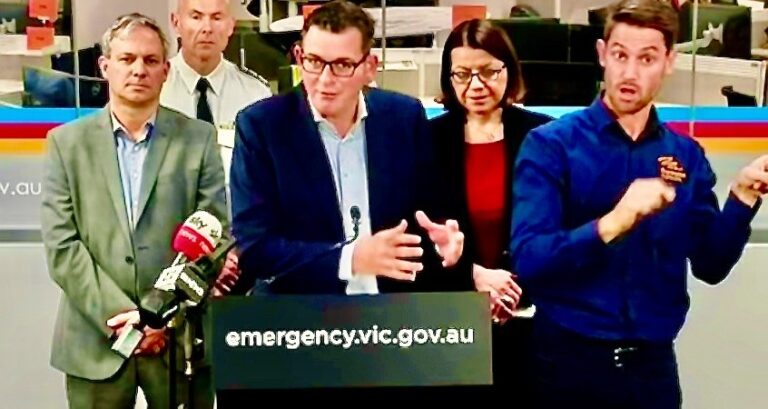
Pauline Hanson One Nation Hemp Bill Passes Parliament

Senator Pauline Hanson 1

Senator HANSON: The Export Control Legislation Amendment (Certification of Narcotic Exports) Bill 17/06/2020 is another example of the commitment One Nation and I made to the Australian people that we would pursue changes in our laws to unwind the stranglehold on the cannabis industry.


Facebook Video https://www.facebook.com/PaulineHansonAu/videos/740344736766047/


I need to pay respect to Senators Cormann and Kitching for their combined efforts to assist me in making this bill pass the parliament. My office reached out to the minister for agriculture, who is also the Deputy Leader of the National Party, David Littleproud. Minister Littleproud originally had no interest in making this bill come before the parliament, even though market standards predict global industry hemp demand is projected to grow from $4.6 billion to $26.6 billion over the next five years. I was listening to Senator Davey’s comment that they’re really interested in growing the agricultural industry in Australia, and again David Littleproud made a comment. The dairy industry is still dying. Over 500 more dairy farmers went last year. So, when it comes to pushing for the agricultural industry, I don’t think Mr Littleproud is up to the job.

Mr Littleproud showed zero interest or foresight into the very real fact that the future hemp industry could very well act as a transition crop for struggling cane farmers in Queensland, including North Queensland, where sugar millers are squeezing them out of the market. When Mr Littleproud refused to deal with this bill in a timely manner, I went to Minister Cormann’s office, and it was he and Senator Kitching—a Labor senator, and I thank her very much—who brought both the Liberal and Labor parties together.

I’ve seen the benefits this crop offers to food, fibre and medicines. I want to acknowledge the countless health- food stores who’ve been pushing the benefits of this crop, but I also want to acknowledge Woolworths, who have recently taken on Australian-made products, including hemp seed and hemp oil. I’m aware of Australian dog food companies who are looking to implement plant based substitutes like hemp, which is high in fibre. I also want to recognise the Lambert Initiative for Cannabinoid Therapeutics, which operates within Sydney university and whose use of cannabis to treat epilepsy will be recognised tonight with a virtual award for their efforts in assisting the many Australians who suffer these debilitating fits. Researcher Dr Lyndsey Anderson, an American attracted to Australia to work at the Lambert initiative, is being internationally recognised for her work.

We have an enormous way to go in making medicinal cannabis more readily available for patients across this country. But today’s passing of this bill is another shuffle in the right direction in assisting the cannabis industry. I will be encouraging farmers nationwide to get on board with the cannabis industry, and I will be ensuring, after the next Queensland election, that One Nation remove the barriers that have been put in the way of growing hemp as a food and fibre product. I not only welcome the passage of this bill but am very pleased to have instigated the change we’re legislating here today.


Source Parliament of Australia Website 2020