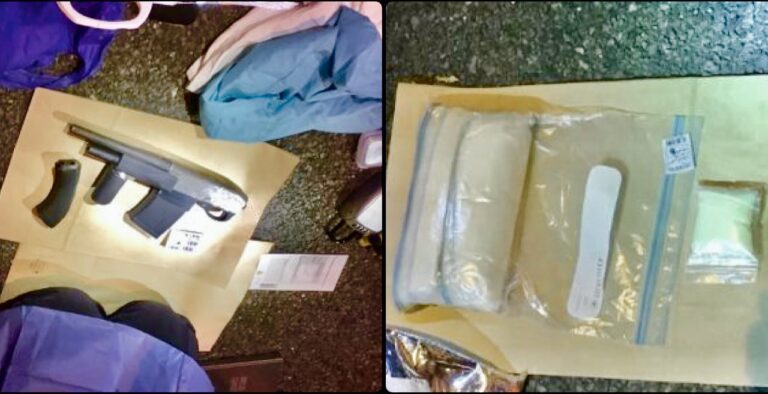
A man and a woman have been charged after a firearm, ammunition and drugs were located in a vehicle at the border checkpoint at Tugun.
It is alleged police intercepted a car around 8.45pm on July 22 and discovered drugs inside the vehicle and a modified pump action shot gun and ammunition in a bag in the boot.
A 24-year-old Waterford man has been charged with one count each of unlawful possession of weapons Category D/H/R weapon, offence in relation to unauthorised and prohibited explosives, bringing stolen goods into Queensland, forgery and unlawful use of a motor vehicle.
He is due to face Southport Magistrates Court on August 19.
A 23-year-old Lismore woman from has been charged with two counts of possessing a dangerous drug (namely amphetamine and cannabis).
She is due to appear in Southport Magistrates Court on August 21.
You can report information about crime anonymously to Crime Stoppers, a registered charity and community volunteer organisation, via crimestoppersqld.com.au 24hrs per day.
Quote this reference number: QP2001519538 within the online suspicious activity form.
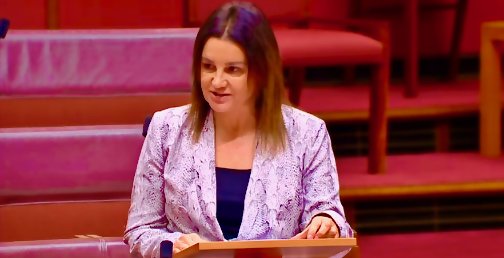
Senator Jacqui Lambi Trade with China Senate Speech 2020: Do you know what the Chinese ambassador did when our government called for an inquiry into the coronavirus? He threatened us. He said that if Australia pushes too hard on this inquiry idea China will stop buying our meat and drinking our wine. He told us that international students would think twice about coming here to study, that the tourists would stop coming. And he knew he could make those sorts of threats. Why? Because he knew our economic dependence on China is like a vein, and if they turn it off the heart of our economy stops beating.
For far too long we’ve let the mantra of free trade blind us to the fact that we are selling our country right from under our very own feet. We’ve fallen into this false sense of security that whenever we need something we’ll always be able to buy it from somewhere else. But our supply chains are so fragile, and this crisis has definitely shown us that those supply chains break. When they break, we are less safe than we thought. We’ve placed all our eggs in one basket—and that basket’s been made in China. Self-sufficiency is never going to be possible in all areas, but it should be in a few critical ones. For the rest, we just need to make sure we’re getting our goods from a diverse range of sellers. When we’re so reliant on a single country to sustain our own living standards, we are vulnerable to diplomatic or economic shocks that we cannot control, shocks that can come just by running the country in a way that’s consistent with our own values.
Here we value the rule of law. We value free and fair elections. We believe in privacy. We believe in the presumption of innocence. We believe in freedom of religion, freedom of speech, freedom of association, freedom of political expression and freedom of thought and movement. This is what we’re proud of, because this is the Australian way. But our way of life is being propped up by a country that is hostile to it. It is a recipe for disaster.
This is the lesson we have to learn from the coronavirus crisis. Our reliance on other countries for our own economic survival has gone way too far. That ideology that sees free trade as being more important than protecting people’s wellbeing and livelihoods—that, too, has gone way too far. Australia has to become self-sufficient again. We have to start making things again, because our complacency is putting our country at risk. But here’s the good news: what we make, we can control. What we make, we know we can rely on.
I have a plan to get us there. There are five things that need to happen before Australia can start making things again. Firstly, Australia’s governments need to get active in supporting industries that are important for our economic health. We need industry policy that puts money into businesses that can increase competition, support local communities and boost new industries. The federal government should remember that supporting Australian industry means helping local communities to thrive. What we get from that isn’t just about jobs; it’s about giving people a sense of self-worth. It gives them something to work towards. It gets them out of bed in the mornings. Now, the government can’t subsidise industry forever, and I’m not saying that we have to be throwing endless amounts of cash at companies that can never turn a profit. What I’m talking about is making finance available to companies that are doing groundbreaking, important and significant work, and providing that support on a competitive basis. This is the government’s job. The fact is that there are some things that are just too important to leave up to the whims of the market.
Secondly, the government should be buying Australian made. Every Australian business that tenders for a government contract should be given preferential consideration relative to foreign alternatives. If that means the government has to pay a little bit more, I’m comfortable with that, and I’m sure millions of other Australians are comfortable with that as well. Paying 10 per cent more to keep jobs and investment in Australia results in all sorts of benefits to companies that support our communities. That little bit extra is a smart investment. It certainly is in my books. It isn’t rocket science. Government spending comes from Australian taxpayers. That money is coming from the people who live here and work here. So why would we send it overseas? If we put that money back into the Australian economy, we will be supporting more jobs here. We will be supporting more businesses to stay open, hire more staff and grow bigger. It’s good for business and it’s good for workers. It’s a win-win for everyone.
Thirdly, we have to restructure our education system. Universities have been propped up by government policies that encourage foreign students to come to Australia to study courses they have no particular interest in because they know that it is a pathway to permanent residency and eventually citizenship. It is the great unspoken truth of our current university business model, and that is the truth. There were nearly 92,000 temporary graduate visa holders in Australia as of June 2019. That’s a 30 per cent increase since July 2018. There is nothing wrong with international students coming here; the concern is that this river of gold has left universities too keen to look the other way and support the interests of their customers instead of the interests of their own customers in their own country.
While universities become more and more dependent on Chinese money, they are inviting the influence of the CCP’s surveillance state into domestic campuses. Australian universities are actively collaborating with Chinese firms that have been implicated in a wide range of human rights abuses in China. Our universities are actively collaborating with firms that are designing surveillance and monitoring systems. Chinese students who protest the actions of the CCP on Australian university campuses have received threatening phone calls to their families warning them to not engage in anti-China rhetoric.
While the universities were raking in all this money, we have had a systematic underinvestment in our TAFE system for years. TAFE is where people go to get the skills they need to make and build things that we need to keep this country running. They are the backbone of many regional communities. But the buildings are crumbling and their equipment is so old it’s from the Cold War era. Somewhere along the way we’ve gotten our priorities mixed up. TAFEs are the canary in the coalmine, showing that something just isn’t right. Backing them is going to be essential if we want to get on the right track. Put them on equal footing. Require skilled apprentices on government projects. We are losing our trades in the name of free trade, and there is nothing free about that, especially for our kids.
Fourthly, we’ve got to renegotiate the crappy deals that both major parties have signed us into in the mistaken belief that all trade is good trade, which is absolute rubbish. For decades successive governments have given away our national sovereignty on the promise that free trade will improve our lives. I don’t think so. We have been told that trade should be our priority and everything else should come second. We have been signed up to trade agreements that allow foreign companies to sue the Australian government if they pass a law that undercuts company profits. That’s what the major parties have done, all in the name of free trade. You in the Liberal Party, you in the Nats, you in the Labor Party—you’ve all done it. You’ve all been signing us up for years. You’ve sold us off, and, even worse, at a bargain price. You didn’t even get us a decent deal. Instead, you allowed those agreements to supersede the laws that we set here in parliament. Laws that protect Australia’s national interests can be undermined by foreign multinationals who only care about protecting their bottom line. That should never be allowed to happen. Those agreements should have been rolled back. I get that it’s hard, but it needs to be done. That’s the sad truth of it.
Lastly, we have to tighten the rules on foreign investment. Our Foreign Investment Review Board acts like a rubber stamp. Everything gets approved; nothing gets knocked back. Take the case of Bellamy’s Organic in my home state. They sell milk formula—national food security, I call it. They had been hamstrung for years because they couldn’t get approval to sell their product in Chinese stores. They put in an application for this approval to the Chinese government in 2017 and they never got it. Instead, our government let the company—an Australian icon—get sold off to a large Chinese business for $1.5 billion. Why can’t we get domestic investment for this stuff? It is our food security. Why isn’t the government stepping in to support these firms? Once we sell off the farm gate we can’t get it back; it’s gone forever. There’s nothing worse than knowing we have lost another.
These are the steps the government should take. But here is the thing: this is not just up to the government. This sort of change doesn’t just come from the top. It’s up to all of us to get Australian industries booming again. The reality is that the public needs to understand that. We can’t go back to business as usual. Those days are over. I know a lot of people out there are doing it tough at the moment. I get that. I know that. But if you have the capacity, if you can, then please support your neighbours and buy Australian made. We all need to pull together and do everything we can to get through this crisis, because when we stand together as a community we can rebuild our country and get to the other side of this. We have to take back the will and take back our economic sovereignty. Australia needs to start making things right again.
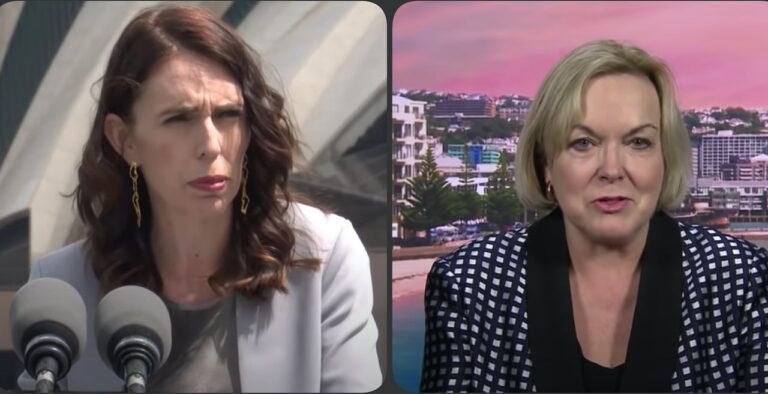
The starting gates in New Zealand’s September 19 election race are finally full. Labour’s prime minister Jacinda Ardern is the bookies’ favourite and the opposition took a long time to settle.
All the same, punters may still want to hedge their bets.
While the National Party’s internal disarray has made it look easy for Ardern, with a tough contender in new opposition leader Judith Collins the race for the prime-ministership could be more gruelling than the earlier odds suggested.
Yes, Ardern is now a globally celebrated figure. Her sheer charisma looked hard to beat even before the last election.
And, given her achievements since, it’s looking harder now. Under Ardern’s watch, the country has eliminated community transmission of COVID-19 – at least for now.
Ardern’s highly visible leadership was reflected in opinion polls from April to June showing Labour over 50%, even as high as 59%.
But out of the ensuing panic in the National ranks has emerged a leader who, while polarising, might also be the party’s best chance of combating “the Jacinda effect”.
An ‘opposition from hell’
National’s problems can be traced back as far as its Pyrrhic victory at the last election. While it gained the most seats of any party, it couldn’t muster a coalition majority. The large caucus promised to be the “opposition from hell” – but ended up an opposition in hell instead.
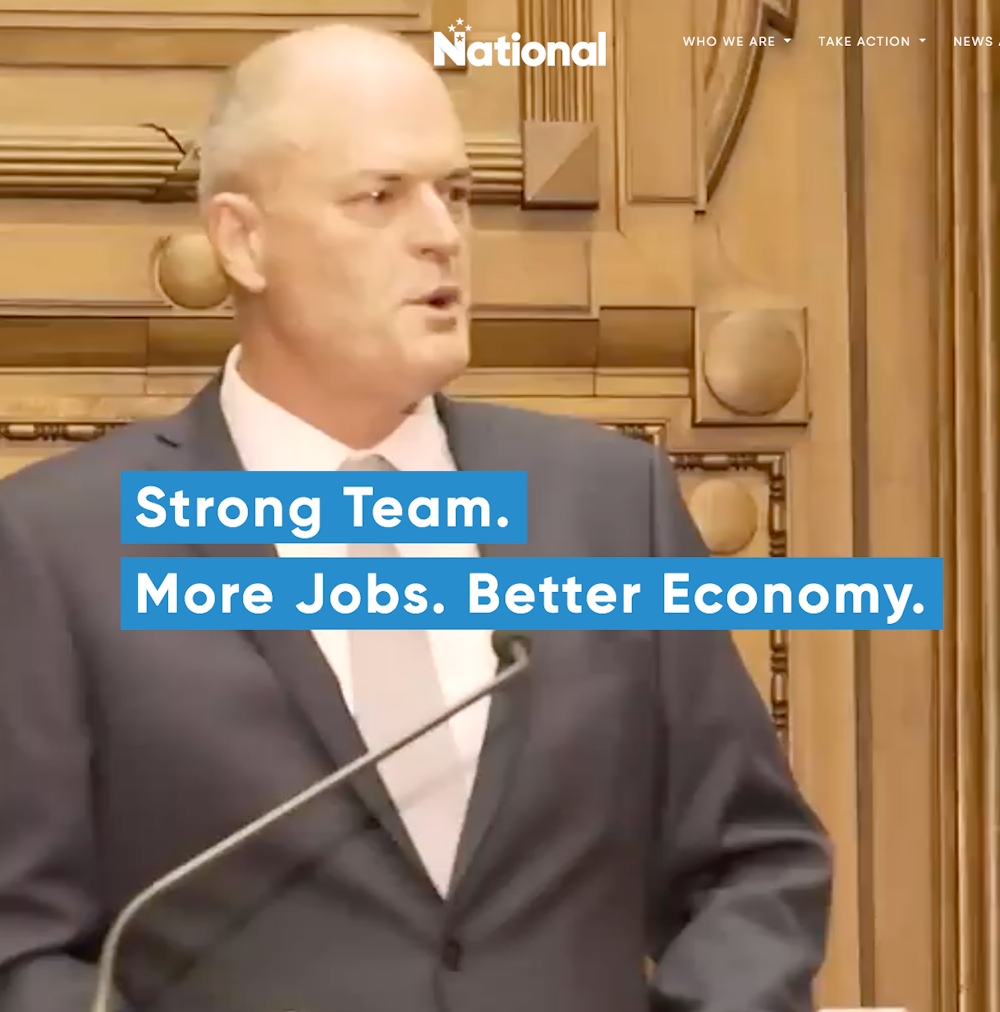
Former opposition leader Todd Muller and the ‘strong team’ election slogan, on the National website the day he resigned. https://www.national.org.nz/
Internal strife intensified as National dropped below 30% in some polls. Fearing for their seats, backbenchers scratched leader Simon Bridges and elevated the inexperienced Todd Muller, who quit just 53 days later after a shocking privacy scandal and a series of embarrassing gaffes.
National looked anything but the “strong team” their advertising wants voters to believe in.
Now desperate, the caucus wasted no time electing long-serving MP Collins as the fourth opposition leader Ardern has now faced. Let’s consider her odds.
Attack versus empathy
At 61, Judith Collins is a seasoned politician. First elected in 2002, she gained ministerial experience in John Key’s National-led government (2008–17).
She earned the nickname “Crusher Collins” when, as minister of police in 2009, she proposed punishing unrepentant boy-racers by destroying their souped-up vehicles in a car-crusher.
She appears to have embraced it, declaring on the day she became leader:
I am hoping that the National Party can crush the other lot when it comes to September 19.
She is strong and combative and unafraid to play attack dog. These may now be positive qualities in a centre-right female leader wanting to differentiate herself from Ardern’s empathy and kindness.
But Collins can be charming, too, though often with an edge. She was quick to compliment Ardern as an accomplished communicator – with a back-hander that “communication is not execution”.
This suggestion that Ardern is all appearance and little substance is part of the well-worn attack line National employs against a government it wants to brand as “failing to deliver”.
Competent but controversial
Collins herself has a track record as a very competent minister. When she took over as minister for accident compensation following major privacy bungles in 2012, for example, the portfolio was quickly out of the headlines and back on track.
National’s contentious election promise to privatise personal injury insurance was quietly abandoned too.
Tainted by “dirty politics” during the Key years, stripped of her ministerial roles over allegations she undermined the then head of the Serious Fraud Office, she was later exonerated and rehabilitated by Key.
Collins is nothing if not a survivor.
The diversity problem
A politician’s past mistakes are rarely forgotten, but National’s core supporters appreciate the no-nonsense certitude Collins displays.
Her voting record on conscience bills reveals she is relatively liberal on social issues, including abortion and same-sex marriage, unlike her immediate predecessor Muller.
While Muller’s front bench was criticised for lacking any Māori MPs, Collins’ team includes two Māori men, ranked fourth and fifth.
But now there are fewer women: only two in the top 10 and six in the top 20. The day after Collins took the reins, two female front-benchers announced their decisions not to seek re-election.
As a conservative party that pitches to older folk, however, National wants to avoid looking “woke”. Collins says she won’t be “distracted” by gender and ethnicity, and will make appointments “utterly on merit”.
But her defensiveness about her own ethnicity has been, well, utterly cringe-worthy. National’s evident discomfort in confronting real-world discrimination and inequality will lose younger voters (and many older ones) to the Greens and Labour.
Who will go the distance?
So, after two leadership changes within two months, and only two months out from the election, Collins needs swiftly to discipline her team and prevent further damage.
She must also present a convincing economic plan at a time when big spending, budget deficits and borrowing for infrastructure are standard fiscal policies whether you’re left, right or centre.
Big asks, but these are extraordinary times and it’s unwise to make predictions. Labour’s rise in the polls was sudden and it could just as quickly fall, especially as economic pain becomes chronic, or if another coronavirus outbreak occurs.
Ardern’s kindness and political capital may sustain Labour through to a win. But Collins’ willpower could yet help National come from behind.
People living in metropolitan Melbourne and Mitchell Shire will now be required to wear a face-covering when leaving home for one of the four reasons, following a concerning increase in coronavirus cases in recent days.
Based on the latest advice from the Chief Health Officer, we’re urging Victorians: just as you remember to take your keys when you leave the house, you need to remember to take something to cover your face – to help keep you and our community safe.
To give people time to purchase or make a face covering, this new rule won’t be enforced until after 11.59pm on Wednesday 22 July – but for those who can, please start wearing yours immediately. The fine for not wearing a face covering will be $200.
There will be some reasons not to wear a face covering. For example, those who have a medical reason, kids under 12 years of age, those who have a professional reason or if it’s just not practical, like when running – however you will still be expected to carry your face covering at all times to wear when you can.
In our schools, that’ll mean teachers don’t have to wear a face covering while teaching – but students attending for VCE, VCAL or for onsite supervision will, while everyone will be expected to wear one on the way to and from school.
Otherwise, if you’re leaving your home for one of the four reasons, you need to cover your face. The Government will work with Victorian industry and unions to provide advice to workplaces in the coming days.
Face coverings in regional Victoria continue to be recommended in situations where maintaining 1.5 metres distance is not possible – however regional Victorians will have to wear a mask when visiting metropolitan Melbourne or Mitchell Shire for one of the permitted reasons.
The State of Emergency will also be extended until 11.59pm on 16 August 2020, allowing for the enforcement of this direction and other vital public health directions from the Chief Health Officer.
While we’ve recently seen a decrease in the number of cases being spread between families, the majority of our outbreaks are now coming from settings where people are working closely together.
To address this increase, an inspection and enforcement blitz will be carried out in workplaces across the state. WorkSafe, Emergency Management Victoria and Victoria Police will focus on at-risk workplaces, including distribution centres, call centres and meat processing centres.
And with a spike in cases in aged care settings, the Victorian Government has been working closely with the Commonwealth on a range of measures, ensuring care workers are equipped to prevent the spread of coronavirus while providing quality care.
As the risk of transmission in aged care and health care settings remains high, from 22 July, visitation will be restricted to those defined as carers only, with a limit of one hour per day. And like previous asymptomatic staff testing blitzes, aged care staff will be able to access free testing, even if they don’t have symptoms.
The Government will work closely with hospitals and care providers in the coming days to ensure these changes are made in a careful and sensitive way to support the needs of patients and residents.
The Victorian Government’s one-off $1500 worker support payment is still available to support Victorian workers, including those in aged care, who have been instructed to stay home because they’ve had a positive test or need to self-isolate as a close contact.
The Government has also been made aware of a number of people deliberately moving their weddings from Melbourne to regional Victoria in order to avoid restrictions. Directions will be updated to send a clear message: we are facing a pandemic and this is not the time for parties – this includes traveling to regional Victoria to attend one.
As always, the Government will continue to monitor data over the next fortnight. Compliance – and the rate of community transmission – will decide what we do next, and whether we move to Stage 4 restrictions.
For information about coronavirus or to find your nearest testing site, visit coronavirus.vic.gov.au or call 1800 675 398.
Quotes attributable to Premier Daniel Andrews
“I understand this is a big shift and that not being able to see each other’s faces might be confronting. But this virus is incredibly infectious – and this is about keeping people safe.”
“By covering our faces, we’re protecting ourselves, our families and every single Victorian. So please – just as you remember your house keys, please remember something to cover your face.”
Quotes attributable to Minister for Health Jenny Mikakos
“We’ve extended the State of Emergency because we know our coronavirus fight is far from over.”
“That includes the tough decision to introduce further visitation restrictions to healthcare and aged care settings. We know this will be difficult for Victorian families, but ultimately this is about keeping the people we love safe.”
Quotes attributable to Chief Health Officer Professor Brett Sutton
“The best way you can help keep community transmission low is by sticking to the coronavirus restrictions, keeping your distance and wearing a face covering whenever you leave home.”
“By covering my face, I’m helping to keep you safe – and by covering your face, you’re helping to keep every Victorian safe.”
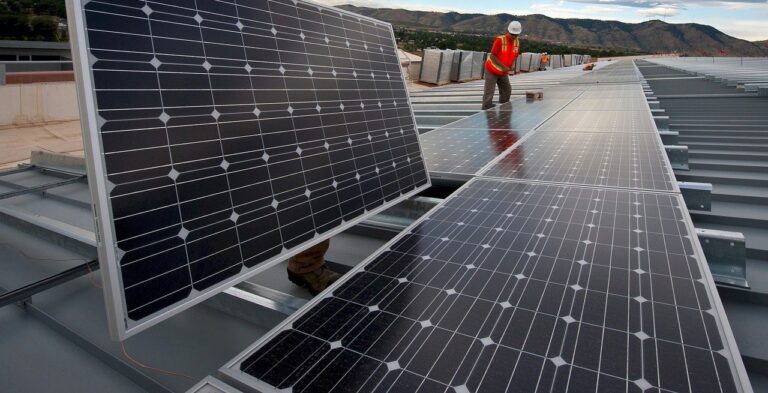
A new $125 million solar farm at Warwick has claimed Queensland another global renewable energy title.
Speaking at the opening of University of Queensland’s Warwick Solar Farm, State Development Minister Kate Jones said the 64 megawatt project meant UQ was the first university in the world to have all of its power come from its own renewable energy asset.
“Queensland is already a world leader in the take-up of household solar rooftops and this is another global energy title,” Ms Jones said.
“The global coronavirus pandemic is impacting economies around the world and Queensland is no different.
“Because Queenslanders have done such a great job fighting coronavirus, we can now focus on delivering Queensland’s plan for economic recovery.
“Backing our renewable energy sector is an important part of that plan – this is about driving down emissions, putting downward pressure on power prices and creating jobs.”
Up to 100 jobs were supported during the 15 months for construction of the solar farm, with six ongoing operation and maintenance jobs supported for the life of the project and a facility manager based at the site full time.
The Warwick Solar Farm will support the research and development of innovative new energy solutions such as emerging battery energy storage and hydrogen conversion technologies.
Energy Minister Dr Anthony Lynham said the solar farm was the latest addition to Queensland’s existing suite of renewable energy generation projects.
“Our renewable energy revolution is rolling out, providing jobs and lower power prices for Queenslanders,” Dr Lynham said.
“Over the past five years under Labor, 39 large-scale renewable energy projects have commenced operations or are financially committed, creating 5700 jobs in construction.
“Queensland now has 6600 MW of large-scale renewable generation either operational or committed.
”We are forecast to reach 20 per cent renewable generation this year and on target to reach our commitment to 50 per cent by 2030.
“Our publicly-owned clean energy generator CleanCo will continue this growth with its remit to bring on an extra 1000 megawatts of clean energy by 2025.”
Prime Minister Scott Morrison Media Release: The Australian economy is fighting back. The jobs of Australians depend on that fight. The incomes of Australians depend on that fight and we are in it and we are making progress. It doesn’t mean we don’t have setbacks. We are currently experiencing some right now. The unemployment figures that were released just within the last hour have been for June. In July, I expect that we will see an impact from what is occurring in Victoria. But what it has demonstrated in June that as Australia has opened up again, as people have gone back into their businesses and opened their doors, as Australians have been endeavouring to live with this virus and to press on, then we’ve seen Australians get back into work and this has been a core objective of our approach over these past many months and it remains the focus of our approach, together with managing the health situation in Victoria and other states as outbreaks and other challenges emerge.
Of particular importance in the figures that we’ve seen today is that of the 210,000 jobs added in June, 60 per cent of the jobs regained were for women and 50 per cent of the jobs regained were for youth. Underemployment has fallen and we’ve seen an improvement in hours. The majority of jobs obviously were in part-time employment, not in full-time employment. That’s to be expected in the economic situation that we’ve seen emerge over these many months. But what I’m encouraged by about that is the flexibility that we’ve seen in the labour force has meant that it’s been able to keep people in jobs, maybe not as many hours as they once had, but they’re still in jobs and even better, the people who are working alongside them are also still in a job because of those flexible arrangements that have been in place for employers to keep more and more people on. Now, these are not ordinary times, still by a long shot and the Government’s responses, both in our thinking and the measures that we’ve delivered, have certainly not been ordinary. We must continue to adopt this approach as we deal with the virus as it impacts us here in Australia as indeed as it impacts around the world. We’ve got to deal with what is in front of us each and every day as we are with the situation in particular in Victoria but as well as in New South Wales, where I’ve been in constant contact with the premiers and health officials in recent days as is our normal practice.
But we’ve also got to plan for the way ahead. We have delivered much needed support over these many months through a raft of programs; JobSeeker, JobKeeper, HomeBuilder, the important programs we put in for the entertainment sector most recently, the supports we’ve provided in the childcare sector, the supports provided with the cash flow assistance to businesses. Right across the board, we have been providing the necessary support that has provided a shock absorber for our economy, for people’s jobs, for people’s incomes, for people’s businesses which has meant that in Australia, while the blow has been harsh, compared to what has been seen in most other developed economies around the world, we’ve been able to mitigate a lot of the blow. But there are still difficult challenges ahead, both on the health front and certainly on an economic front. One of the key challenges we’ve been working through as a Federal Cabinet, our Cabinet, together here with Michaelia Cash, with Senator Cash, but also in the National Cabinet with all the state and territory leaders, has been the need to ensure that as we build back and through the COVID-19 economic recession, that we are not only providing the economic supports for people to get through each day but we’re helping them to make the adjustments for the future. A key part of that will be the training and skills that they will need to re-skill and up-skill and get those initial skills as they are coming out of school to ensure that they can look for and find work both in a COVID and post-COVID economy. Now, we know that there are fewer jobs available for the number of people who are out there and now is not a time to be standing idle. And so what we’re announcing today is ensuring that there will be additional support to ensure that those who are unable to get themselves into a new position, that we are providing the opportunity for them like never before to get greater access to skilling and training in the areas they need to get that training to find those jobs that will be prevalent in the COVID and post-COVID economy.
And so today we are making a very big commitment of some $2 billion in two particular areas to support the upskilling and reskilling of Australians. The first of those is something I’ve flagged when I spoke at the Press Club many weeks ago when I spoke about JobMaker plan. It has many components and one of those was the skills Australians need and I flagged we would be seeking to move towards a new way of working with the states and territories to deliver on the skills that Australians who were looking to get a job and be trained for a job and businesses who are looking for people to do those jobs. The way it’s been done in the past, we don’t believe has been effective. We were prepared and are prepared to invest more but in a better system and what we are announcing today with $500 million for investment this year between now and the end of the financial year, starting at the beginning of September, is to create those places for Australians to get access to that vocational educational training right across the board, but particularly in those skills areas that the National Skills Commissioner has identified where there will be the greatest needs for those skills. It is sad and it is upsetting for many Australians that the industries and the places where they’ve been working, they will find it very difficult to find new employment in those sectors with those skills, potentially for some time. And so we want to ensure they have the opportunity to make decisions so they can take on new skills and be able to find employment in other sectors, potentially, so they can actually move forward with their own lives. Similarly, for businesses in those sectors, they will need skilled staff and those businesses will need to rely on a system delivering greater levels of training.
Now, it’s not just for young people. It’s worth pointing out that half of VET students are aged above 30. Half of those training in vocational education and training are aged over 30 and over 15 per cent are aged over 50. So this program we are announcing today, $500 million from the Commonwealth matched by the states and territories. This will mean training support for whatever stage of the labour market or your life-cycle you are in. You may have been at a job for many years and you are now having to make a change. You may have been running your own business, you may have been a sole trader. You may have been doing something completely different and one of the things I’ve been so encouraged by, despite the difficulty of the times, as I’ve gone around and spoken to people and I’ve heard their stories about the changes they’ve been making and the adjustments they’ve been making, understanding the situation they are in, being honest about the reality of the situation they face and making many difficult decisions about how they are going to make their way forward. Today’s decision, today’s announcement, working with the states and territories, is going to make those decisions that little bit more easier for them, knowing they will be getting the training and skills support that they will need.
Now, the other decision we are making today is to extend the arrangements we have for apprentices and that means we’ve already supported some 80,000 apprentices and small businesses at a cost of some $1.3 billion. We are extending that now to small and medium-sized businesses which means 180,000 apprentices, we believe, will be supported between now and the end of March. Now that provides for a wage subsidy of up to $7,000, half of their wage. That would be extended to small and medium-sized businesses. That will come at a cost between now and the end of March of some $1.5 billion.
We are very determined to look ahead and I would say to Australians, as difficult as these times are, let’s not look down, let’s look up, let’s lift our heads. Today’s employment figures shows there is hope. Today’s employment figures shows that we have done it before and we can do it again. We will continue to apply every resource we have available to ensure we get on top of the health situation with the virus in Victoria and supporting the many needs that are there and across the other states and territories. That is our absolute commitment. But equally, we need to ensure that we don’t allow these setbacks to hold us back. Australians are incredibly resilient and even as we go through these difficult times, let’s lift our heads, let’s keep looking forward. Today’s announcement on these skills supports are about looking forward to the jobs into the future and to ensure Australians can make the choices they need to get into those jobs by getting the training they need right now.
Michaelia?
Senator the Hon. Michaelia Cash, Minister for Employment, Skills, Small And Family Business: Thank you, Prime Minister. Ladies and gentlemen, skills reform, as the Prime Minister has said, is a fundamental priority for the Morrison Government. At the election in May last year we took to the election a comprehensive agenda for skills reform in Australia. That was endorsed by the Australian people since that time I’ve been working cooperatively with my state and territory skills counterparts on a roadmap for reform. Earlier this year, you will be aware that both the state, territory and Commonwealth governments announced $80 million in matched funding for a new skill set in infection disease control. Why? Because we understand that as a result of COVID-19, this is a skill set that is now needed and so that was developed and funded in record time and is now already being rolled out to market. We also announced earlier this year as a result of COVID-19 a $1.3 billion wage subsidy for apprentices and trainees. That was for small businesses with less than 20 employees. As the Prime Minister has said, that is currently supporting around 80,000 apprentices. That means those apprentices, despite the impact of COVID-19, are still in training and still in a job. That is a good thing. And what we are announcing today is a further $2 billion investment in Australians and in their skills and training. $1.5 billion is an extension of the original support for apprentice and trainee wage subsidy. We are now extending that to small and medium businesses, businesses now with up to 200 employees. We now expect that apprentice wage subsidy will support around 180,000 apprentices across Australia. That’s an opportunity for 180,000 apprentices and trainees to remain in their job and in training, which is exactly where we want them to be.
But we are also announcing today a matched funding commitment of $1 billion, $500 million from the Commonwealth and $500 million from the states and territories, to support training in areas of real demand. I am now working constructively, as I have done now since the election, with my state and territory counterparts to put in place bilateral agreements. This funding will support the creation of in excess of 340,000 new training places, and the key to this announcement is that we will work with the National Skills Commission and state and territories to ensure that the training that is being funded is in areas of demand. We want to ensure that Australians, when they put their hands up and say, yes, I want to undertake a vocational education and training qualification, they know they are training for a job. And as part of this reform process, states and territories have agreed to sign on to a new heads of agreement setting out a clear process forward between now and August of next year to completely reform vocational education and training in Australia. You’d be aware that the current funding arrangement is just not getting the outcomes that Australians and employers deserve. Under the agreement that Labor put in place, the Commonwealth merely places $1.5 billion into it each year. There is no line of sight, there is no transparency, there’s no KPIs. There is also no commitment from the states themselves to actually have to put any funding in. So we are now going to work again cooperatively with the states and territories to put in place a new funding agreement that ensures that funding is directly linked to skills, relevance and ultimately jobs. Because that is what we’re all about as a Government. Ensuring that Australians are trained for the jobs of both today and tomorrow.
Prime Minister: Phil?
Journalist: PM, a couple of months ago in this courtyard when we spoke about or you spoke about lifting the economic restrictions in three steps towards mid-July. You said there would be setbacks and mistakes made. At the time, did you anticipate something of the scale of Victoria in terms of the size of the outbreak and the need to reimpose restrictions to the extent they have been reimposed?
Prime Minister: The extent of the outbreak in Victoria is beyond what we would have, hoped would have occurred. I think that’s fairly self-evident. And that is why you have seen the scale of the response from the Commonwealth to support Victoria, and that has resulted now in over 1,000 now, ADF personnel now being rolled out. Which we’ve been speaking to the Victorian government about for some time, and we appreciate them accepting that, and that’s now been put in place. A key part of that task – the thing that the ADF can often bring is when problems moved to a whole new scale, their logistics and management capabilities are very strong, and we’ve got to get on top of the tracing challenge in Victoria and ensuring that we have senior level support out of the ADF to support the Chief Health Officer in Victoria and Deputy Chief Health Officer, who is running that task. I think it is very essential. I made a comment yesterday, I think it was, that it’s important that we get on top of those regional cases as well, particularly while they are still at relatively quite low levels, and I’m keen to see the statistics improve on that front as well. But the Victorian situation is very concerning. But as I think the Chief Health Officer in Victoria was remarking today, they are, I think, hopeful that what we are seeing is those figures starting to level out. I said yesterday that I thought this would still be at a high level for some time, but as the effects of the lockdown I think kick in, then hopefully we will see those new case numbers fall. And so, yes, it is a big setback in Victoria. In New South Wales, I am encouraged by the information and news that I’m getting from the Premier there and from the Health Minister, who has just been in a meeting – I think is still in a meeting – with all the other health ministers around the country right now looking at how they can further support the situation in Victoria. But in New South Wales they have moved incredibly quickly, I think, to do the detective work on what has happened at the Crossroads Hotel, which will always be known both literally and I think figuratively by its name. That demonstrates I think in New South Wales how effectively the states can respond to this, and the best protection against the virus, to live with the virus, to live alongside the virus, and to open up your economy – you don’t protect your economy by continually shutting things down. That’s what you have to do when things get to the point they have in Victoria. But you can continue to move forward in the way that New South Wales is demonstrating by building that capability for tracing, for testing and so on, and that’s been quite effective in this case, and hopefully we will see that situation continue to improve as well. But as we know there are no guarantees. We are always in uncharted waters.
David?
Journalist: The package today offers the wage subsidy for apprentices who are in work today, but it doesn’t have an incentive for employers to take on new apprentices in the months ahead. But are we going to see school leavers who leave who don’t want to go to university who might otherwise be jobless if they didn’t have the chance to take up an apprenticeship? So are you looking at further help for those who are going to be leaving school at the end of this year who will need more options?
Prime Minister: Well, there’s 340,000 training places in this package that runs from September through to the end of June. That doesn’t just support those who have left the workforce through no fault of their own, but that also is supporting school leavers as well at the end of this year. It’s important for people if they want to take on new apprentices that they are able to hold their current apprentices, and that is the most urgent need as we speak right now. But Michaelia, do you want to add to that?
Senator the Hon. Michaelia Cash, Minister for Employment, Skills, Small And Family Business: David,certainly in terms of the types of courses that will be funded, we will be working with the individual states and territories, depending on what their labour market needs are. You may find some states would prefer to fund pre-apprenticeships and short courses, whereas others states I’ve been talking to have said we would like to fund full qualifications. So certainly there is the spread of courses depending on what your particular state or territory has in demand, and in particular, as the Prime Minister has said, for young school leavers at the end of this year, doing a pre-apprenticeship, what a great way, what a great entre into what could potentially be an apprenticeship.
Prime Minister: I can confirm that so far New South Wales, Tasmania and South Australia, Queensland, the Northern Territory and the ACT have all either fully signed up – completed the paperwork – or the pen is heading to the paper as we speak. Victoria, obviously, is dealing with many other issues at the moment, and Dan and I have had quite a few very good discussions about this. In fact, it was Premier Andrews very early on in the piece in the National Cabinet together with myself who was really pushing this as an item that really had to be firm on the National Cabinet’s agenda. So we are having very positive discussions with Victoria, but we appreciate they’ve got some other challenges.
Journalist: What evidence has there been in recent months that apprentices have been laid off? And, PM, what would you say to someone who is approaching the end of school, what sort of job they should be looking for, given what you know about the challenges ahead in the years ahead?
Prime Minister: Michaelia, do you want to cover those?
Senator the Hon. Michaelia Cash, Minister for Employment, Skills, Small And Family Business: In relation to apprentices, the data, the most recent data that the Commonwealth has shows that just under 6 per cent of apprentices – and there are around 260,000 currently in training, apprentices and trainees, in training in Australia – have either been suspended or cancelled. So that’s around 16,000. But that is why the wage subsidy, the support for apprentices and training wage subsidy was so important, because it is currently supporting around 80,000 of those apprentices – bearing in mind some will also be on JobKeeper. But it also shows why the decision, the announcement today to extend the wage subsidy will ensure that up to 180,000 are kept in their job or in training. But it is around 16,000 or just under 6 per cent have been suspended or cancelled.
Prime Minister: 80,000 supported by the programme –
Senator the Hon. Michaelia Cash, Minister for Employment, Skills, Small And Family Business: Absolutely, 8,000 supported by the programme, we also obviously have the rural and regional wage subsidy, that was snapped up overnight when it was announced. That created in excess of 3,300 places. We obviously had the incentive in terms of our election commitment last year to create an additional 80,000 places. So the figures are looking OK.
Prime Minister: JobTrainer works hand in glove with JobKeeper, JobSeeker they all work together to deal with those who are either in a business that is able to keep them connected to that business, to those that have to go onto JobSeeker. This provides both two pathways, one into training through JobTrainer, one into hopefully new employment in those sectors which are in a position to take on new staff. In relation to your second question, my advice to young people is to look forward, not to look back, and that’s what the National Skills Commissioner initiative and the National Careers Institute initiative is all about. These were reforms that came out of the Joyce review that was done before the last election and that we have been implementing since that election and having the National Skills Commissioner legislated and come through the Parliament in our last sitting, what we knew was absent, particularly for young school leavers and those going through career transition over the course of their lives, was the lack of helpful information for them to make the exact decision that you are talking about and too much of our skills identification which has been done both through the migration program and through the employment programs has been looking in the rear vision mirror, and it looks like what has been needed in the past rather than what is needed in the future and so the research and economic work which has been done by Adam Boyton as the Skills Commissioner is to actually give young people the answer to that very question. And there are a whole range of new opportunities. If you are down in South Australia Premier Marshall is building that state and particularly Adelaide as a cybersecurity hub. There’s also the National Space Agency there, and I could talk a lot more about Lot 14 it’s an exciting project. But premiers are pursuing a different focus in each of their states, and the skills that will be identified as part of this process will match that process that the states are doing. But the problem in the past has been that it’s looking too much in the rear vision mirror rather than through the front windscreen. As we come out of this COVID crisis and work through the COVID crisis and the COVID recession we must keep looking forward.
Journalist: Just on the JobTrainer, even prior to the pandemic there was a fairly large decline in the number of businesses taking on apprenticeships and internships. One of the many reasons they gave for that was that there weren’t jobs on the outside of that. Once they finished, there just were not the jobs there and they were concerned that if they took on apprentices there would not be anywhere for them to go once they finish their training. How confident are you that this program will reverse that decline first of all but second of all actually create those jobs on the outset?
Prime Minister: Jobs are created by businesses and an economy that is growing. They are not created by training programs. They are created by businesses opening their doors, employing people and doing better than they are today. Certainly before we went into the COVID crisis and the COVID recession we had seen 1.5 million jobs and more created since we were first elected, and a large number of those jobs were for young people. So we were seeing employment created in our economy. It was one of the biggest successes of the economy at that time. What we’ve seen in today’s job numbers is the ability of the economy to restore those losses. We have seen a restoration of, there’s 210,000 jobs. We’ve returned about a third of the jobs lost by youth by June and around a quarter of the jobs that were lost by women. Now that was after, of those 874,000 jobs that were lost overall. We have seen the biggest return of those jobs in June in those sectors most affected, and you would have seen that in the payroll data that came out earlier in the week, where you saw the strongest surge being back, among young people. Now this something we thought would happen, and I’m very pleased to see that it has happened, but it could just as easily be impacted by more recent events, and we will keep monitoring that closely. But where there is a need to further invest to support young people or people of any age as they are looking to transition as a result of the economic shocks that we’ve experienced in recent months, then as a Government I think we’ve demonstrated time and again that we have been prepared to do what it takes. We have not been locked in thinking of the past or constrained in any way. We are just solving practical problems with practical solutions.
Kath?
Journalist: Prime Minister does, you’ve said that the unemployment numbers or the employment numbers today give cause for hope and just picking up the analysis you’ve just made about the recovery in the jobs market, do they also underscore the importance of having income support that ties workers to jobs in the way that JobKeeper does.
Prime Minister: Income supports I’ve said now for months, they’ve been very necessary over the course of this COVID recession and they will continue to be necessary and I’ve flagged now for months that there would be a further phase of this but it will be targeted it will be demand driven it will go to those most in need and the Treasurer and I will have more to say about that next week. We have been putting further touches on that just over the last few days to ensure that the decisions we’ve made are as timely and targeted as possible. One of the great challenges as we manage through this crisis is there are so many unknowns, there are so many uncertainties and to have a very clear eye view about what the world will look like in a few months from now is not an easy task but we believe we’ve been able to fine tune those decisions well over recent weeks, taking into account the advice that we’ve received from the review and I look forward to making those announcements next week.
Journalist: Victoria’s Chief Health Officer has said that he would love to have a debate about elimination versus suppression. Is that up for debate? What is National Cabinet’s position?
Prime Minister: National Cabinet’s position has always been an aggressive suppression strategy and that remains our view and it’s certainly the view of my Government. I’d refer people to the Deputy Chief Health Officer’s article today which I think sets out the arguments very well. If you’re looking at an eradication strategy, not just the economic impacts, and let’s note that those countries that have pursued that have suffered far greater economic hits than Australia has, so you’re talking about hundreds of thousands of more people unemployed for a start and other businesses closed and livelihoods destroyed and then you got to weigh that up against what it actually achieves. Let’s not forget that in Victoria they had the hardest lockdowns of everybody and theirs is the state that has succumbed to that outbreak and the outbreak was initiated by a failure in hotel quarantine by returning Australians. Now the idea that people wouldn’t be allowed to return to Australia or exporters can’t sell their products overseas or we halt all shipping to Australia, that’s where the risk comes from and the great risk of an eradication strategy is, if you pretend to it, and you are overwhelmed by any confidence that comes for it, all you need is one break and it rushes through your community very quickly because people become even more complacent and so it is a very risky strategy and one that can be very illusory and it’s one that the AHPPC and particularly the Chief Medical Officers both prior, and acting now have been very consistent on and the discussions we have had around the National Cabinet table have been very supportive of that approach and I’ve got to say that the states that have been most supportive of it particularly have been New South Wales and Victoria and so that’s the path we are on. If you get to elimination as a result of this process, well, well and good. If that’s the byproduct, well and good but you can’t mortgage off your economy for what would prove to be a very illusory goal by that process. That is certainly the health advice that I have and it’s certainly also the economic advice I have.
Journalist: …Industrial relations working party meetings, what do you hope comes out of that to add momentum to the jobs recovery and just to clarify, you said before that you expected full-time jobs to go down in June, that doesn’t quite sound right when June was meant to be the month where restrictions were easing people were rehiring, why would full-time jobs go down then?
Prime Minister: Because there are still going to be, I mean we are still living in a COVID economy and what I’m pleased about is when the choices were made about people staying in jobs or there being more full-time jobs, that employers decided for more jobs and what we are seeing is if you like is a sharing of hours across existing employees and there will be many employees who are, who have been on JobKeeper and on JobKeeper, their hours have been able to be reduced as a result of the industrial relations changes that were part of that programme and that as much as anything else, including the income support payments, has kept people in jobs. We’ve got to be very clear about this, if we return to the inflexibility during the course of this crisis of the industrial relations arrangements that existed prior to the introduction of JobKeeper, then Australians will lose their jobs. It will put people on the unemployment queues because businesses will not have the ability to ensure that that work is able to be provided to more Australians to keep them in their jobs. Now we are working constructively to that end and as economies particularly, sorry businesses particularly those who are rebuilding, and they would have seen their turnover improved, they will still, I think, benefit from having those flexible arrangements which will keep more and more people in jobs. There are two parts to what we’ve been doing on income supports, there’s the fiscal side of it, there’s the cheque, but there is also the flexibility that has been provided to employers that has enabled them to keep people in jobs and I think what you’ve seen today in today’s employment numbers is exactly that outcome, it’s the combination. Now, as we know, the effective rate of unemployment is likely to be far higher than what is illustrated here in these numbers and the Treasurer and I and the Employment Minister have not been shy about pointing to that fact, we’re not seeking to understate that. Of course, that is disappointing but another fact that is important in today’s numbers is the lift in the participation rate. That is very welcome. That means that more people went back out there and we want to keep seeing more people going back out there and that’s why it’s important to keep going forward and to not put our heads down and not to adopt a defeatist attitude in relation to the virus. That is not the Australian way and it’s certainly not my Government’s way.
Yep, Rosie.
Journalist: Does Australia back the US in saying China has no legal grounds to its nine-dash line claim in the South China Sea which it’s using to impose its will on the region and what will Australia do to safeguard the rules-based order in the South China Sea and the territorial rights of Southeast Asian nations?
Prime Minister: Australia has played a very constructive role in relation to the South China Sea. We had an observer status when the matter was being considered and we have continued to advocate very strongly for freedom of navigation through those waters and we’ve been very supportive, whether it’s been of Indonesia or I remember standing next to Prime Minister Phuc in Vietnam and commending him on the strong position that he has taken in relation to their interests being compromised in relation to the South China Sea. So look, Australia will continue to adopt a very supportive position of freedom of navigation in the South China Sea. We back that up with our own actions and our own initiatives and our own statements. But we will say it the Australian way and we will say it in the way that’s in our interest to make those statements and will continue to adopt a very consistent position. It is a matter that is frequently raised when we have dialogue with our colleagues, whether it’s been at several East Asia Summits or other opportunities I have in bilaterals with my counterparts in the region. It is an issue of keen interest, and it is one that Australia has taken a keen interest in. But we’ve engaged respectfully and we’ve engaged proactively and we’ve engaged practically.
Journalist: Prime Minister and Minister Cash, WA is struggling with one of the worst unemployment rates around the country at 8.7 per cent, the second highest. It’s a state that contributes a significant amount to the Federal bottom line through resource exports. Why do you think its unemployment rate is so high? Has the state’s border policy contributed to it? And what are you doing to help WA specifically?
Prime Minister: Well, I’m going to defer to my Western Australian colleague first I think, given that question.
Senator the Hon. Michaelia Cash, Minister for Employment, Skills, Small And Family Business: Look, obviously it’s disappointing as a Western Australian Senator that Western Australia’s unemployment figure is so high. And certainly, I think the Federal Government’s been very clear that there are no health reasons to keep the borders closed. However, that is a decision the McGowan Government has made and they are entitled to make that decision. Certainly, in terms of what we’re doing as a Federal Government to assist Western Australia in creating jobs, you only have to look at the infrastructure spend that we are bringing forward. When you spend money on infrastructure, you create jobs, and certainly that is something that we’ve been working very well I would say, Prime Minister, with the McGowan Government to bring forward projects.
Prime Minister: The HomeBuilder program, for example, Western Australia was the first out of the blocks in backing up that program, and the Western Australian construction industry has had some of the more difficult times and that was pre-COVID. And so they are very quick to do that. I welcome the fact that the Western Australian Government is particularly moving on the deregulation agenda on planning and approvals. I also welcome the statements today and the action being taken by the New South Wales Government. At National Cabinet last week the Productivity Commissioner joined us and spoke of the priority of having a flexible arrangement when it comes to deregulation, to aid the recovery and aid the generation of jobs. So every state and territory has its challenges. As you know, I’ve been very consistent in my view when it comes to the Federation and what was agreed over 100 years ago when it came to the free movement of Australians across our nation and where there are needs to take precautions for health reasons and that should be done on health advice. But we’re one country and will succeed by being one country, and that’s the way forward for Australia.
Got time for one more.
Journalist: Can I question about interstate freight…
Prime Minister: Sorry, you might start that again.
Journalist: Sorry, just a question about interstate freight, which is important to our economy. We’ve learned that a truck driver from Melbourne brought the virus to the Crossroads Hotel. Now, truck drivers are exempt from border closures. Should they be subject to a new public health order to stop them from going to pubs and interacting with lots of people?
Prime Minister: Well, look, there’s a couple of issues here. One is how an initial outbreak is first identified and where individuals are appropriately traced on contacts then that is your first defence against the very things that you’re talking about, that people don’t get in the truck in the first place because they’ve been a known contact of someone with a case, then that is your defence against that. And that wouldn’t just apply to truck drivers, it applies to pharmacists, it applies to doctors, to nurses, to police officers, Members of Parliament, everybody. This is why the tracing is so important. And to have the capability not just to make the calls and to trace the calls and but it is also to ensure that the way that workload is managed is appropriately tasking all the resources there to make sure you keep up to date with it. And so the key defence as we move forward is to ensure that you have the testing and the isolation of those cases that are positive and the prompt tracing of all those cases. New South Wales has done incredibly well on that on the Crossroads case in recent days and I think that will have prevented the flow on, potentially, of other cases that could arise in the type of circumstances that you’re talking about. But the industry, I’m sure, will continue to look at that, as will the chief health officers, as will our Chief Medical Officer and if there is a need for any further measures along the lines that you said, I have no doubt that they will make that recommendation to the premiers and I and we would act on their advice, as we have been very consistent in doing all the time.
But for now, we will leave it at that. And for all those young people, for all those older people, for whatever age you are in our workforce, we know that this is one of the hardest times, if not the hardest time, in your life you’ve experienced out there in the labour market. And we want you to know that through JobTrainer, through JobSeeker, through JobKeeper, the Australian Government is right there. We’re there quickly, we’re there with the sort of support that you need to enable you to hopefully get back into a job. But if not, to give you the skills you need to get into that job, that will be there. But most of all, Australia, let’s keep our heads up. Let’s not allow our heads to go down. Let’s keep our heads up. Let’s keep going forward. Thank you all very much.
Source: Licensed from the Commonwealth of Australia under a Creative Commons Attribution 4.0 International Licence.
The Commonwealth of Australia does not necessarily endorse the content of this publication.
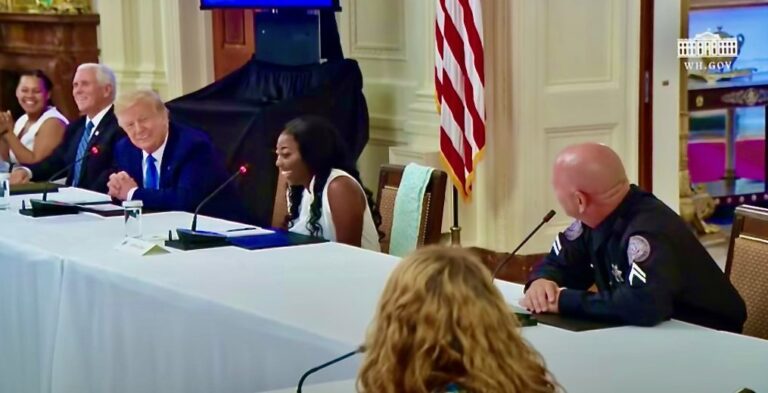
PRESIDENT TRUMP: Great to have you here. Nice group. Some familiar faces. So thank you all very much for being at the White House. Very special house. Very special place. I’m grateful to be joined by citizens whose lives have been saved by law enforcement heroes. And that’s what they are: They’re heroes. And they’re being very unfairly treated over the last long period of time, but over the last few years. It’s terrible what’s happening.
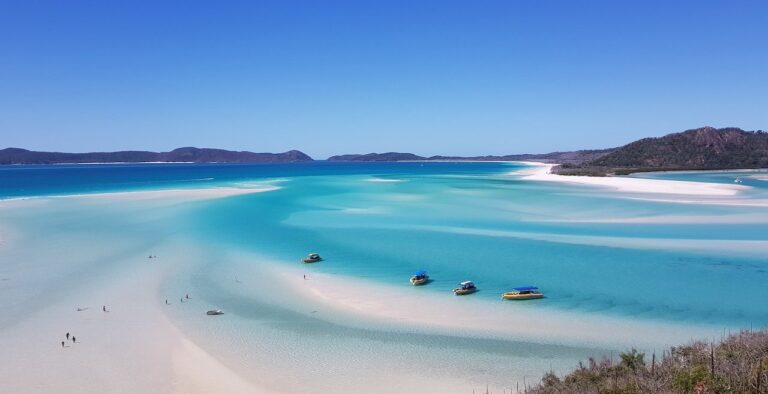
Palaszczuk Government today announced that it is injecting $10 million into the economy to deliver jobs and priority environmental projects in Great Barrier Reef catchments.
This funding is on top of the extension of a further $10 million for the Skilling Queenslanders for Work initiative to increase Work Skills Traineeships in construction or conservation and land management.
Minister for Environment and the Great Barrier Reef Leeanne Enoch said the Reef Assist Jobs program will deliver on the ground projects in partnership with local governments, natural resource management bodies, land management and conservation groups.
These projects could include streambank rehabilitation, planting trees, pest and weed control, and landscaping.
“As we face the global impact of COVID-19, our government recognises the potential for environmental projects to assist in kick starting our plan for economic recovery in Queensland,” Minister Enoch said.
“The Palaszczuk Government’s aim is to support jobs and this $10 million Reef Assist program will provide employment and new skill development, helping Queenslanders get back into work.
“This cash injection will not only support jobs and boost regional economies, it will also deliver positive environmental outcomes.
“It is estimated this jobs plan will support up to 200 employment opportunities, a great initiative for communities in Northern Queensland and another positive sign that our state is well and truly on the road to recovery post COVID-19.”
Minister Enoch said the Reef Assist program will support a number of Northern Queensland communities to recover from the impacts of COVID-19.
“This is about investing in a land management program which will provide socially and environmentally beneficial work, and support the Palaszczuk Government’s plan for economic recovery.”
Attribution: Minister for Environment and the Great Barrier Reef, Minister for Science and Minister for the Arts The Honourable Leeanne Enoch
On July 9, five years ago the Chinese Communist Party (CCP) launched a nationwide offensive targeting hundreds of defence lawyers and human rights defenders for detention, interrogation, and politically motivated criminal charges. The “709” crackdown, named for the date it began on July 9, 2015, was designed to intimidate a generation of lawyers and activists from representing or assisting anyone the CCP perceives as a threat to its absolute power. It showed the world what it means to govern via “rule by law,” rather than a system based on the rule of law.
This wave of repression continues, demonstrated by the secret trial and June 17 sentencing of Yu Wensheng for defending victims of the 2015 crackdown. After detaining human rights lawyers like Wang Quanzhang for years and denying them visits from their families and chosen attorneys, the PRC detained those lawyers’ own defence attorneys — such as Yu and Li Yuhan — without due process. PRC authorities continue to keep some human rights lawyers under house arrest (Jiang Tianyong) and have disbarred others (Wang Yu, Tang Jitian, Li Jinxing, and Wen Donghai) even after their release from prison.
The PRC has also targeted peaceful activists, like Xu Zhiyong and Ding Jiaxi, who have worked with human rights lawyers to protect Chinese citizens’ rights and defend against the abuses of government officials.
The United States urges the PRC to honour its international human rights obligations and commitments and domestic legal guarantees protecting human rights and fundamental freedoms in China.
Speech: Victorians living in metro Melbourne and Mitchell Shire are now recommended to wear face masks in situations where they are leaving their home and physical distancing is not possible – to help slow the spread of coronavirus in the community.
Premier Daniel Andrews announced the new recommendations from the Chief Health Officer would apply from today, following new evidence from global medical experts and increased community transmission in Victoria.
The Victorian Government will order over two million reusable masks and one million more single-use masks to ensure more Victorians have access to this added protection while also boosting local manufacturing capability.
Studies have recently shown that, even when factoring in imperfections and human error, wearing face masks can reduce transmission of coronavirus by around 60 per cent. Before this study, advice around the effectiveness of face masks in reducing transmission has been contradictory and lacking in evidence.
Victoria’s Chief Health Officer has now updated his advice to recommend anyone living in metro Melbourne or Mitchell Shire to wear a face covering or cloth mask when leaving home for one of the four permitted reasons – where it is not possible to maintain a distance of at least 1.5 metres from other people.
These recommendations apply to adults over the age of 18, recognising both the lower transmission and disease severity in younger people, but also the difficulty in getting children to wear a face mask properly. The recommendation does not apply to wearing masks in schools and early childhood settings.
Anyone who lives outside metropolitan Melbourne and Mitchell Shire should follow the same advice if they need to enter an area currently under Stage 3 Stay at Home restrictions.
This is a health recommendation only and will not be enforced – people will not be fined for not wearing a face mask.
The order for two million reusable face masks will be placed by the end of July. To bridge the gap while local manufacturing ramps up, a million single-use masks will also be ordered, favouring Victorian manufacturers to provide a much-needed boost for local jobs.
Further work will be undertaken this week to determine the best method for distributing the face masks across Victoria, ensuring those who are most vulnerable are given priority consideration.
Consultation will also occur with union and industry groups about whether the advice around face masks in the workplace needs to also be updated.
Face masks provide an added layer of protection but the best ways to reduce the transmission of coronavirus remain the same – good hand hygiene, cough and sneeze etiquette and keeping a physical distance of 1.5 metres.
Quotes attributable to Premier Daniel Andrews
“The Chief Health Officer has now given us the clear advice that wearing facemasks makes a tangible difference when it comes to reducing the transmission of coronavirus within the community – and that is why we are issuing this new recommendation.”
“Staying at home if you feel unwell is still the best way to slow the spread of coronavirus but wearing a cloth mask provides an additional physical barrier, adding one more layer of protection for you and those around you.”
Quotes attributable to Minister for Health Jenny Mikakos
“We’ve always relied on the advice of experts when it come to this pandemic and that’s what we’re doing now.”
“At this stage the advice only applies to people in the metropolitan Melbourne and Mitchell Shire area where physical distancing is not possible, but wearing a mask is an added protection that anyone can choose to take – no matter where they live.”
Quote attributable to Victoria’s Chief Health Officer Professor Brett Sutton
“With a virus this infectious, every bit helps and the simple action of wearing a facemask will help protect your family, your neighbours and the most vulnerable in our community.”