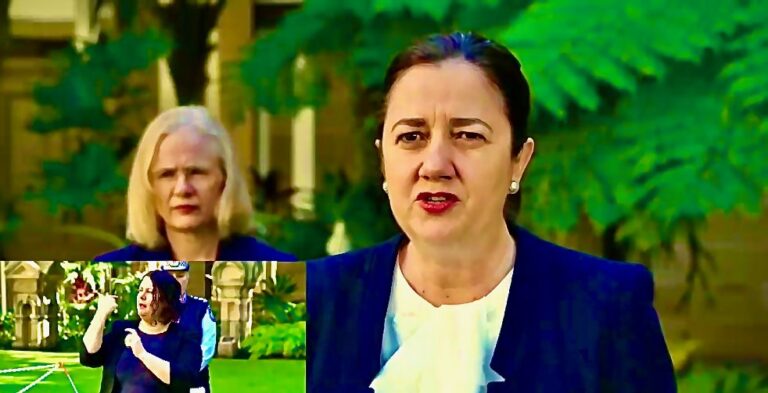
COVID-19 protections for our most vulnerable by requiring more residential aged care facilities to take extra precautions to protect their residents from the virus.
The expanded list of areas (from midday today, 2 August 2020) covers all aged care facilities in the Brisbane City, Ipswich City, Logan City, Redland City, Gold Coast City and Scenic Rim Regional Local Government Areas (LGAs).
Queensland Chief Health Officer Dr Jeannette Young said following the cluster of COVID-19 cases in Brisbane’s south, it was important to protect the community’s most vulnerable.
“COVID-19 is a serious illness for all age groups, however we do know the risks tend to increase among the elderly, particularly those with other serious health conditions,” explained Dr Young.
“These restrictions are an important step in helping Queensland respond effectively to this recent outbreak. We are focused on making these changes early on in our response and across a broad geographical area.
“I want to be very clear – these restrictions on aged care facilities are the most effective way of protecting Queensland’s most vulnerable people.”
Deputy Premier and Health Minister Steven Miles said today’s announcement follows significant outbreaks in aged care facilities in Victoria.
“Currently there are more than 1,000 active cases relating to outbreaks at aged care facilities in Victoria. This is a desperately sad situation, and one in which we must do everything in our power to stop from happening here in Queensland,” he said.
“This is the best way we can protect the lives of Queenslanders, including those who are most at risk of serious illness from COVID-19.”
The restrictions on facilities under the Aged Care Direction (No. 8) in listed LGAs include:
Visitors
No personal visitors (including care and support visitors).
End of life visits will still be allowed.
Anyone entering a facility must wear a single use surgical face mask.
Residents
Cannot leave the residential aged care facility unless they are receiving health care, attending a funeral or for an emergency or for compassionate reasons.
The residential aged care facility or the Chief Health Officer can provide an exemption for leave for compassionate reasons.
Staff:
Residential aged care facility operators must limit staff movements across multiple facilities as much as possible.
Federation Party Northern Territory, Team Central Australia
Photo Federation Party NT
Australian Federation Party NT aims to be a political force in the Northern Territory that will listen to you and represent you and your family
Federation PartyNorthern Territory’s Team for Central Australia is made up of locals who care about their local community.
Domenico PECORARI in Araluen has been selected by the Federation Party as the candidate for the seat of Araluen. Domenico Pecorari is a long-time resident of Araluen, Alice Springs, first coming to town in 1984 during the tourism boom years.
As a professional architect, Domenico has gained keen insights into The Alice’s development and a deep appreciation of town planning issues as they affect the economic prosperity of the town and region. His work experience includes ten years of administering building programs in central Australian aboriginal communities, as well as managing heritage conservation work on many of central Australia’s historic places. He held the NT Government’s Heritage Advisor position for the southern region for twenty years until its dissolution in 2015. He has a significant personal investment in the town’s future through his purchase and on-going restoration of one of the town’s most intact heritage-listed railway cottages, located in Railway Terrace.
Catherine SATOUR in Namatjira Alice Springs local with strong connections to the region, I understand the concerns people have. I have put my hand up to represent you at Territory level and am running in the electorate of Namatjira as there is a genuine desire for better representation and advocacy on the real issues.
The priorities are keeping the Government of the day accountable. Budget repair is crucial over the next four years, especially with the economy hit hard across all sectors from COVID19 and crime prior to the pandemic. Essential Services and Housing is important along with Community Justice and Safety for the region. Economic opportunities are a key factor in rebuilding the region and moving it forward. I joined the Australian Federation Party as it aligned with my values, all Policies for Central Australia are researched and developed by Central Australian Territorians and for Central Australians best interest at heart. It is important that Central Australia is represented and advocated strongly and consistently. I believe I can do that and I have the experience to reflect this.
It would be my privilege to take these concerns of the Namatjira residents directly to Parliament House in Darwin and ensure your voice is heard. Together we can achieve real outcomes so ensure we continue to enjoy the great Central Australian lifestyle. “Like or message Catherine on facebook” Record Label Central Australian Aboriginal Music Association Music Label. Alice Springs Northern Territory Music on Itunes
Marli BANKS in Braitling: Having called Alice Springs home since 2001, Councillor Marli Banks is committed to the Red Centre. Cnr Banks is the Managing Director of Afghan Traders Wholefoods. A self-made entrepreneur, Cnr Banks has grown Afghan Traders into a thriving hub of natural health, producing healthy returns on investment. Across all aspects of business, Cnr Banks brings a skills set with strengths in Operation Management, Finance, Marketing and Business planning. Cnr Banks has had previous experience as Executive Assistant for NGO, and Call Centre Coordinator for an online Sports Betting company. Active in a cross-section of the community Councillor Banks is currently is a member of the Regional Economic Development Committee, Governing Board member and Finance Subcommittee member for a local school. Cnr Banks believes that involvement in the community is the best way to be part of making change. More Like or message Maril on facebook
Ken LECHLEITNER in GwojaKenny Lechleitner is Candidate for the Federation Party for the seat of GWOJA. I want to be your voice to bring your ideas to parliament for inclusive change. Your change starts with your own empowerment in enrolling to vote, without the enrolment you have no voice to start with, so enrol to be part of the new journey in life”
Past: Office of Aboriginal Development / Local Government Community Development Officer, Enrolled at University of South Australian Bachelor of Arts in Aboriginal and Australian Studies full time and part-time – Graduated
Become part of the solution to fix the Territory’s broken political culture. Join the growing number of Territorians that are prepared to stand shoulder to shoulder to remove the divisive political class that turns Territorian against Territorian to achieve their own ends.
Federation Party Northern Territory are offering FREE MEMBERSHIPto anyone, while we register the Party in Every State and Territory Nationally.
Free Offer Extended fora limited time, to achieveParty Registration Australia Wide
Please let your family, friends and associates know about the FREE MEMBERSHIP OFFER currently available.
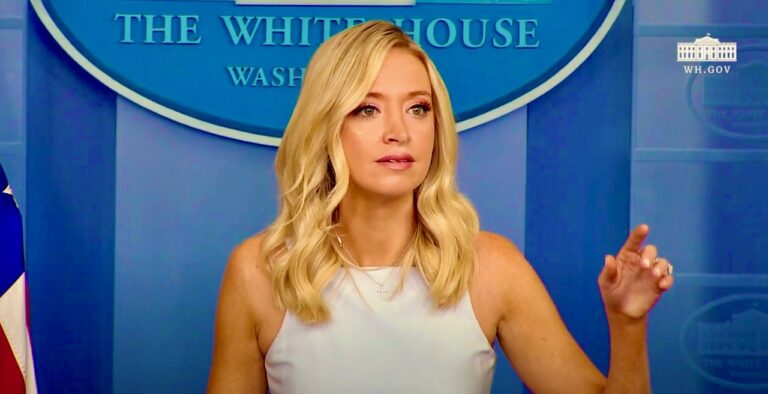
MS. MCENANY: Hello, everyone. The first duty of government is to protect the safety of our citizens. That’s what Attorney General Barr said when he was here at the White House just a few days ago. For 55 days in Portland, Oregon, we’ve seen lawlessness, anarchy, and destruction that threatens peace in our streets and the safety of our fellow American citizens and the safety of our brave law enforcement officers..embed-container { position: relative; padding-bottom: 56.25%; height: 0; overflow: hidden; max-width: 100%; } .embed-container iframe, .embed-container object, .embed-container embed { position: absolute; top: 0; left: 0; width: 100%; height: 100%; }
Yet some Democrats and some in the media continue to ignore reality. As Portland’s — Portland’s Democrat Mayor Ted Wheeler tweeted, quote, “What I saw last night was powerful in many ways. I listened, heard, and stood with [the] protesters. And I saw what it means when the federal government unleashes paramilitary forces against its own people.” That was a quote from the Democrat mayor who quite literally stood in the middle of a riot as violent protestors attacked a federal building. That is appalling, and Mayor Wheeler is clearly failing at his duty to protect his streets and his city there in Portland.
The federal government has a sworn duty to uphold the laws of the United States through field offices and federal facilities across the country. These agents protect and serve the American people. Yet the rhetoric of the left undermines our justice system, with Nancy Pelosi calling them “stormtroopers,” Jim Clyburn calling them the “Gestapo,” and Wheeler using the term “paramilitary forces.”
Under President Trump, violent crime rates in America finally began to fall. Rhetoric like this cannot be allowed to set us back. Augmenting the Federal Protective Service, guarding federal property in Portland, our brave officers have — since — since augmenting them, I should say, our brave officers have faced all of these various things — like rioters barricading officers inside the Hatfield federal courthouse, trapping officers inside. A, quote, “commercial-grade mortar firework” was launched by rioters. A federal agents hand was impaled by planted nails. Another federal agent was shot with a pellet gun, leaving a wound deep to the bone. And tragically, three federal officers were likely left permanently blinded by the rioters using lasers pointed directly at their eyes.
These are not the actions of so-called peaceful protesters, and the Trump administration will not stand by and allow anarchy in our streets. Law and order will prevail.
And I have a short video for you because I want it to be real what is happening right now in Portland. So if we could play that video, that’d be great.
As you can see, that is anything but a peaceful protest. And this President will always stand on the side of law and order.
And with that, I’ll take questions. Yes.
Q Kayleigh, thank you so much. I want to ask you about the convention, and then I have another question on foreign policy.
First of all, has President Trump determined where he’s going to or how he’s going to deliver his speech? He said he was working on that yesterday.
MS. MCENANY: So he hasn’t decided that just yet, but we have a number of really creative, exciting options that he’s looking at. It’s a question more for the RNC. But he’s very excited about the prospect of what will come with the convention.
Q And I want to ask you about something that he tweeted back in April. He said, “Joe Biden wanted the date for the Democrat National Convention moved to a later time period. Now he wants a ‘Virtual’ Convention, one where he doesn’t have to show up. Gee, I wonder why?” Does the President regret that now?
MS. MCENANY: Well, as you know, I can’t respond to Joe Biden. You’d have to ask the campaign about that. But the President — the circumstances changed in Florida, where we intended to have the convention. As the circumstances on the ground changed, the President changed his viewpoint on having the convention in Jacksonville at that particular location.
Q I wanted to ask you about the President’s phone call with Vladimir Putin. Did the President raise the issue of Russian bounties on the lives of American troops during that phone call?
MS. MCENANY: So, as you know, that intelligence is unverified still to this day. There are dissenting opinions within the intel community. I won’t get into the President’s private discussions with a foreign leader. I was not on that call, but that intelligence is still unverified.
But rest assured our President will always stand with our military and protect them against any and every foreign adversary.
Yes.
Q Has he made a determination, Kayleigh, about what happened? He’s been briefed now, right?
MS. MCENANY: (Pointing to a journalist.) Yes.
Q Yes, thank you, Kayleigh.
Q Kayleigh, thank you —
Q Yes, Nancy Pelosi and Mitch McConnell announced that John Lewis –-
MS. MCENANY: I’ll come back to you next. Yes.
Q — will be lying in state at the Capitol on Monday and Tuesday. Does the President plan to go to the Capitol to visit John Lewis on one of those days?
MS. MCENANY: I have no announcements about the President’s upcoming plans. But John Lewis was a civil rights icon; we lowered the flag at the White House here to signify that. So I have no future announcements of the President’s plans, other than to make that one note.
Yes.
Q Thank you, Kayleigh. So the Senate has approved overwhelmingly a bill that would require the renaming of bases that are named after Confederate leaders. How — and how is it that Senator Inhofe assured the President he was going to be able to remove that from legislation that has passed both chambers of Congress?
MS. MCENANY: Yeah, I’ll leave that to Senator Inhofe, as to how that works, legislatively speaking. But the President was assured by Senator Inhofe that that would be changing, and that Republicans stood with the President on this and stood with the rest of America. Fifty-six percent, according to an ABC/Ipsos poll, are opposed to the changing of the U.S. base names.
Kevin.
Q Kayleigh, thanks. Two quick questions. I think you probably hear this often: When can Americans expect some money in their pockets by way of stimulus? What’s the President’s plan to get that money to them as quickly as possible?
And just a question about COVID reporting: Is the White House at all concerned about inaccuracies or inconsistencies with respect to COVID death reporting?
MS. MCENANY: So, first, let me note: When it looks — when we look at numbers, we want the most accurate reporting. And I went through, last week, the CDC numbers. We want to make sure hospitals are truly reporting all of the information they’re getting. One of the systems of data gathering, only 81 percent of hospitals were reporting into. Another HHS system was getting a more full picture of what we’re seeing in hospitals. So we want to ensure all of our information is accurate, and we trust the numbers that we’re getting from HHS and CDC.
And with regard to phase four, those negotiations are ongoing. These are long and extended negotiations. We feel that it’s very important, from the White House, to address unemployment insurance, in particular, and also money for schools and ensuring that the money for schools enables students to make school choices, like actually going to a physically open school. So, right now, that’s where the discussions lie at the moment.
Q One other quick one very quickly: Drug pricing is so critical to America’s seniors. Often, you hear terrible stories, frankly, about people having to ration drugs because of the incredible cost. What exactly, practically, can the American public expect the President to do to lower the cost of prescription drugs?
MS. MCENANY: That’s a great question. The President — today, at 3:00 p.m. — will be talking about drug pricing, and he’ll be announcing some actions he’s taking on that front, so I’ll leave it to him to announce those future actions.
But, you know, in 2018, he released a landmark blueprint to lower prescription drug prices. It’s an issue he has been very passionate about, which is why he signed legislation ending the gag clauses that stop pharmacists from informing patients about lower drug prices. And aver- — average basic premiums for Medicare Part D prescription drug plans have actually fallen by 13.5 percent since 2017.
So he’s done a lot already, but more to come this afternoon, actually.
Kaitlan.
Q I have two questions for you. This morning, Dr. Birx said that it is still an open question how rapidly children under 10 can actually spread COVID-19. But the other day, the President said “they don’t bring it home [very] easily” and “they don’t transmit very easily.” So shouldn’t we figure out which one of those it is before kids go back to school?
MS. MCENANY: So let me give you two answers to this. You know, first, I would point you to CDC guidelines that said, based on current data, the rate of infection among younger schoolchildren and from students to teachers has been low, especially if proper precautions are followed. There have also been few reports of children being the primary source of COVID-19 transmission among family members. That’s where the data currently stands.
But that being said — even if there is transmission and later studies come out, let’s say — we believe that students should be going back to school because the effect on a child — we know, scientifically, they are not affected in the same way as an adult.
Again, I’d point you to CDC guidelines on this that says the best available evidence indicates if children become infected, they are far less likely to suffer severe symptoms. Death rates among school-aged children are much lower than among adults, and far lower than during the H1N1 pandemic, for instance, when schools remained open.
Q Yeah. And Dr. Birx noted that today — unless kids have an underlying condition. But she said they do not know how rapidly they can spread it still for if they’re under 10. And that’s one of the President’s top advisors.
MS. MCENANY: So on the transmission point, I’d point you again to the CDC. But I would also say that it is our firm belief that the — that our schools are essential places of business, if you will; that our teachers are essential personnel. You all here are considered essential workers, which is why you are coming into the briefing room every day during the pandemic. Our meatpackers were meatpacking because they were essential workers. Our doctors were out there treating because they’re essential workers. And we believe our teachers are essential.
Particularly, I pour over the data on — on schools often. And the one thing that really stuck out to me — I read through the entirety of the CDC guidelines — was that — I talk about child abuse often and one in five cases being reported in schools. Well, the CDC guidelines went on to say, there has not just been “a sharp decline in reports of suspected maltreatment, but tragically a notable increase in evidence of child abuse when children are seen for services” during the pandemic.
For example, in Washington, D.C., Child and Family Service Services Agency recorded a 62 percent decrease in child abuse reporting calls between mid-March and April, compared to the same time period in 2019, but saw more severe presentation of child abuse cases in emergency rooms. That’s a tragedy and our schools must reopen.
Yes.
Q Okay. My question was about transmission rates.
But anyway, my second question is also on the President’s call —
MS. MCENANY: And I answered that.
Q — with the Russian President yesterday. Today, the nation’s top counterintelligence official said that Russia is one of three countries that is actively working to interfere in our election. Did the President bring up election interference on the call with the Russian President yesterday?
MS. MCENANY: Again, I wasn’t on the call. But the President —
Q But you get read up on those calls.
MS. MCENANY: I was not on the call. The Pres- —
Q But you get read up on the calls.
MS. MCENANY: The President has taken more actions for election security than his predecessor, who gave a stand down order when he learned about election interference. Susan Rice gave that stand down order. Obama’s intel chief even confirmed that stand down order was given.
By contrast, we’ve given innumer- — a ton of funding to election security. We take our elections seriously —
Q My question is did President Trump bring it —
MS. MCENANY: — and we believe in election integrity.
Justin.
Q My question is did President Trump —
MS. MCENANY: Justin.
Q — bring it up on the call yesterday?
MS. MCENANY: Justin.
Q You’re not answering.
MS. MCENANY: I was not on the call, Kaitlan. Stop filibustering.
Q So yes or no?
MS. MCENANY: Justin.
Let your colleagues ask questions
Q That’s not filibustering. You’re not answering my question.
MS. MCENANY: Justin.
Q Did he bring it up?
MS. MCENANY: Okay, Justin no longer has a question.
Anyone else?
Q Kayleigh —
MS. MCENANY: Okay.
Q Kayleigh, around 20 million Americans —
Q It’s not answering.
Q — are receiving the expanded uninsurance benefits, and some are going to receive the last of those checks tomorrow. Have Senate Republicans in the White House settled on a plan yet to extend UI? If so, can you explain what that plan is? And if not, did you wait too long to try to sort this out?
MS. MCENANY: Those discussions are still ongoing, and I’m not going to get in the middle of the negotiation, other than to say: When I answered Kevin’s question up here, I said that our priority right now is we feel it’s very important to address extending on those unemployment insurances. And how that looks, I’ll leave it to them. But that is — unemployment insurance is a top priority for us right now.
Q And then China ordered the closing of one of our diplomatic facilities there in retaliation for what happened in Texas. We haven’t really heard from the White House, so if you could spell out specifically why you guys decided to close the Houston facility. I know that there’s obviously broad complaints that you’ve raised for weeks with China, but why Houston specifically?
And secondly, if you had a reaction to the steps China took.
MS. MCENANY: Yes, our action to direct the closure of the PRC Consulate General in Houston was taken to protect American — and to protect American intellectual property and Americans’ private information.
For years, the CCP has undertaken a whole-of-society effort to steal American technology and intellectual property for commercial gain, and many of those activities are directed from PRC diplomatic facilities. And we urge the CCP to cease these malign actions rather than engage in tit-for-tat retaliation.
That’s where we stand on that.
Jeff.
Q Kayleigh, the President’s tone on the virus this week seems to have changed. He’s advocated a few different times for Americans to wear masks. He said that the virus would — or the pandemic would get worse before it gets better. He cancelled most of the convention — or certainly the Florida part — yesterday.
All of these things were bad two months ago — even longer than that — and the science on masking has been clear for several months. What changed this week? Why did his tone change?
MS. MCENANY: There has been no change. The President said, on March 31st, before there was even a recommended but not required guidance given by the CDC on mask wearing — the President already said, if you want to wear a mask, wear a mask. It doesn’t harm anyone. And that was before — that was when our scientists even were — some of them were saying don’t wear masks.
So the President has been consistent on this. He wore a mask back at the Ford facility. He carries it around in his pocket. He showed it to you multiple times. He hasn’t changed. In fact — and just speaking on COVID, generally — the way I’ve heard him talk privately in the Oval Office is the way he’s talking out here.
The only thing that’s changed is the President taking dozens and dozens and dozens of your questions each and every day because he felt the best way to get information to the American people was for him to be out here, answering your questions and providing this directly.
Q The other part of the question though wasn’t just about masking — although, I would argue that if you look back and see when he called it “politically correct,” for example, that wasn’t exactly agreeing with the science of wearing masks.
But setting that aside, he —
MS. MCENANY: No, but let’s not set that aside. Because in that incident, when he used the words “politically correct,” it was in reference — I believe you were asking him a question — was it?
Q I was.
MS. MCENANY: And — right. And you were standing outside, and you’d been tested, and you were wearing a mask, and he couldn’t hear your questions, so he asked for you momentarily to pull down the mask. So that was the specific context, and context does matter here.
Q Okay, well, I didn’t mean to engage on that, but I was standing around other reporters and using the same mic that other people were using. That’s why I left my mask on.
MS. MCENANY: Right. Well, he could not hear your question, and he asked for you temporarily to pull it down. Everyone in the press pool is tested, so, scientifically, you were not in a compromising position. But he — he hasn’t changed his tone.
But this President — the reason he wants to bring back these briefings is get information out there like: We’ve done 52.9 million tests nationwide, 187 emergency use authorations [sic] — use auth- — use authorizations, excuse me, for test manufacturing, 20 million swabs per month, used the DPA over 20 times — all of these great successes of this administration, like distributing 31,000 cases of remdesivir, enough to treat nearly 200,000 patients. None of this is getting covered.
And you’ve got the best messenger, the duly elected President of the United States, talking directly to the American people and getting extraordinary ratings as they tune in to get information from their leader.
Q But my question wasn’t —
MS. MCENANY: Yes, Jon.
Q My question wasn’t about —
MS. MCENANY: Jon.
Q — that last piece. I just want to clarify —
Q Thank you, Kayleigh.
Q — one thing, Kayleigh.
MS. MCENANY: Okay, Jon no longer has a question. Anyone else?
Q No, I do, Kayleigh. I do, Kayleigh.
Q I just want to — I just want to clarify —
MS. MCENANY: Jon.
Q I don’t want to talk over, if — let me — if you don’t mind, Jeff, maybe we can come back to you?
Q I would like to finish my question.
Q Yes, well, let me — let me ask my question —
MS. MCENANY: Yeah, but the — when everyone in the front rows get five questions, people in the back row don’t even get the opportunity to ask questions.
Q It’s just that you’re not answering the questions, Kayleigh.
Q Thanks, Kayleigh. I want to ask about the Senate Defense Authorization bill, which passed by a veto-proof majority yesterday; and the House earlier this week also passed their version of the Defense bill also by a veto-proof majority. And both of those bills contain mandates that the Pentagon rename these military bases, which are named in honor of Confederate generals.
I want to ask you: Does the President believe that his position — which we’re all familiar with — it’s helpful in terms of recruitment, specifically for African Americans? Explain how that position will help recruit African Americans in an all-volunteer military force?
MS. MCENANY: The President stands with the American people; 56 percent don’t want to see the bases’ names changed. Where he stands is in a place where — many soldiers who have lost their lives overseas, the last ground that they saw were these bases. And by changing their names, he believes that — that it is not appropriate that those soldiers who lost their lives, to be told that the ground that they left —
Q I’m — I’m familiar with his position; I think you just restated it very well. But I’m asking you, specifically: How is this helpful for an African American which — who wants to volunteer for our all-volunteer military forces to go to a base that’s named for a Confederate general that worked to still put and keep it in place slavery, which impacted their ancestors?
MS. MCENANY: Because the bases are not known for the generals they’re named after. The bases are known for the heroes within it: the great Americans — black, white, Hispanic — of every race who have died on behalf of this great country. And 56 percent of the nation agrees with the President.
Q So it’s your position that —
MS. MCENANY: (Pointing to a journalist.) Yes.
Q — that it won’t impact — it won’t impact then —
MS. MCENANY: (Pointing to a journalist.) Yes.
Q — in any way recruitment, is what your position is?
MS. MCENANY: Next question.
Q Is that a yes or a no?
MS. MCENANY: I already answered that one twice.
Q It’s just a yes or a no.
Q Kayleigh — Kayleigh, I want to circle back to school choice, which you mentioned a few minutes ago. So, that means shifting — the potential for shifting federal funds away from schools that don’t open so that parents can use it — use those funds for homeschooling or for private schooling.
The President vehemently opposes defunding police. Why — why is defunding public schools okay?
MS. MCENANY: So the President has never wanted to take money away from schools, take money away from education. It is about keeping it with the child. The purpose of school funding is to educate a child. The child, if a school is closed, loses the opportunity to receive education and needed social services.
I put up the chart a few weeks ago from McKinsey & Co. that showed that the student most impacted is the low-income student who is in a low-income community and doesn’t have the resources of — as some other students. So that student should not be deprived of an educational opportunity and forever never be able to recover. The deficit that that child has had by being out of school for an entire year or more —
Q The schools in those — in those underserved communities also are the ones that, generally, have terrible ventilation; they need the most money for upgrading. If this money is shifted away from the schools, how will they ever get into a situation where they could, in the case of a pandemic, properly serve their populations?
MS. MCENANY: Well, your question is a bit befuddling because if the problem is ventilation in schools, and the schools close and you’re fixing the ventilation, the student isn’t even in the facility because the school isn’t even open.
The whole point is the student deserves an educational opportunity and a good educational opportunity, which is why the money must follow the student.
And I would also note, in the CDC guidelines, that they said — with regards to food, in particular — that there are 15 million children participating in the School Breakfast Program, 30 million in the School Lunch Program. And they said, quote, “It is difficult to maintain this type of school nutrition program over the long term.” And they were talking about how we’ve managed to get meal servants — meal services throughout the periods of school closures, but they went on to say it’s difficult to maintain this type of program over the long term.
There are severe consequences. I’ve mentioned the child abuse, the loss in education, and also when it comes to nutrition services, as well.
Yes.
Q Kayleigh, the pa- — the payroll tax cut now at the table, is there anything that the White House considers a red line in negotiations with Democrats? And then, also, I have another question.
MS. MCENANY: Yeah, there are — I’m not going to get into red lines. These negotiations are ongoing, and I’m not in the middle of them, so I’ll wait to find out what the conclusions of those negotiations are. But I would just signal what I said at the top of this briefing about unemployment insurance being very important.
Q And then, President Trump called off the convention in Florida, citing safety. Does that give him pause for any of his future upcoming travel, like to Texas next week, which is a hotspot?
MS. MCENANY: We take all necessary precautions, and we protect the President, his staff, and we make sure that we’re following the guidelines in social distancing. And so we don’t have concern about future travel.
Yes.
Q The accusations that China is stealing intellectual property are not new. But why (inaudible) order to shut down the consulate in Houston now, roughly 100 days before the election?
MS. MCENANY: Yeah, I’m not going — I’m not going to give any further information about our intelligence from the briefing podium, other than to note some — what I told Justin earlier on that particular matter.
Yes.
Q Thank you, Kayleigh. On the question of reopening schools: Yesterday, just minutes after the President announced that he was going to cancel the Republican convention events in Jacksonville, he also made the case again for reopening schools. So why is it not safe to hold the Republican convention, but it is safe to reopen schools?
MS. MCENANY: Yeah, the — schools are a different situation, when you have children who, as the CDC guidelines clearly note, are not affected in the same way as adults. We can make certain arrangements like social distancing in schools and follow the CDC guidelines that have been laid out and try to — they’re the best (inaudible) guidelines I referenced. We can get our schools up to the — the best place we can get them in, especially if we’re given additional school funding — the $105 billion that was mentioned that we would — are keen to see in a phase four.
So it’s a different scenario when you have packed adults in the room versus these students that we can make precautions and take measures to protect.
Yes.
Q Thank you Kayleigh. I have a question about COVID, but first I want to ask about the use of federal officers. Does the President believe he has the power to send DHS agents and officers anywhere in the country that he wants to?
MS. MCENANY: The President believes that his authority is in — with regard to DHS, which is distinct from DOJ — there’s Operation LeGend, which is primarily led by DOJ, and that’s just providing extra FBI and ATF and DEA agents to already-existing places. It’s just surging extra personnel in places that are out of control — like Chicago, for instance. Separate and distinct from Portland, which is DHS, and his power pertains to 40 U.S. Code 1315. And I — I read that statute for you in the last briefing, so I won’t bore you with reading it again, but that’s with protecting federal property.
So those are the two lanes that we’ve acted on and look at.
Q But for those DHS — those officers and agents, does he believe he has the power to send them anywhere he wants (inaudible)?
MS. MCENANY: He believes they’re there to protect federal property, so I’ll leave it to you to determine where is federal property.
Q And just — just to follow up on that, I mean, has the President reminded those federal agents and officers that their constitutional obligation to not violate search and seizure rights and not take people into custody without probable cause?
MS. MCENANY: Well, Chad Wolf is leading this operation over at DHS, and he has made clear that his officers are acting within the bounds of the law. Of course, we encourage everyone to act within the bounds of the law and the Constitution.
Yes.
Q The President said he loves the Constitution —
Q Thank you. Thank you, Kayleigh.
Q We haven’t heard him speak about that particular part of the Constitution in this context.
MS. MCENANY: (Pointing to a journalist.) Yes.
Q Yes. Pres- — President Trump has repeatedly said that he wouldn’t watch sports or support sports if players continue to kneel. So why has he agreed to throw out the first pitch at the Yankees game next month if the — considering that baseball players knelt at last night’s games?
MS. MCENANY: Yeah, I’ll leave it to him as to address the Yankees game. And he’s very excited to throw out the first pitch. And I was not a part of the discussions as to how that’s going to work, in terms of the first pitch. I’ve learned about it when you guys did, and he’s very excited to throw it out.
Yes.
MS. MCENANY: Thank you, Kayleigh. Two questions: We understand that the governor of Florida is on campus today. Can you confirm that he will talk about that visit? Will he be meeting with the President?
MS. MCENANY: Yes, Governor DeSantis is here. He’s here to be a part of the drug pricing event, but he will be talking and meeting with the President further to discuss COVID and other matters.
Q I have a question about building —
Q But, Kayleigh, will they be discussing the convention? I — I had two questions, if you mi- — if I may ask a second one.
MS. MCENANY: Sure. This is why I like to save time for you guys in the back.
Q I appreciate it.
MS. MCENANY: I don’t often get to. Yeah.
Q Yes. Do you have any guidance on when the President will be signing that immigration order that he’s been talking about?
MS. MCENANY: Yeah.
Q — on DACA?
MS. MCENANY: Yeah, so no guidance, other than to say I’ve — I laid out that he would have a merit-based EO. And he really would like a legislative fix for DACA, and would like Democrats to come to the table. But no guidance on timing just yet.
Chanel.
Q Thank you, Kayleigh. On federal law enforcement efforts, mainly Operation LeGend, we’re talking about funding for a lot of these programs. Anytime we’re talking about federal anything, we should be talking about the money behind it.
So with Operation LeGend, it appears to be filling a law and order void in majority-Democrat cities. So given this fact, in terms of the funding, would the citizen of, say, Springfield, Missouri, be called to pay for the security and the federal protections of the incompetence of Chicago, Illinois? Is that something that has been discussed, as far as funding for Operation LeGend?
MS. MCENANY: I’m not aware of that being discussed, in particular. I think where the President’s head is at right now is — you know, you look across the country, and it is Democrat streets where you’re seeing a lot of this lawlessness.
In Minneapolis, murders have spiked 94 percent; Philadelphia, murders have spiked 27 percent. Over a year ago, New York City, 277 percent increase in shootings. Over a year ago, Chicago — the most egregious — 414 people killed, 50 percent increase over a year ago.
We saw with — under President Obama, violent crime started to tick up. Started to come down under this President. He restored law and order. And then this Defund the Police movement has been an absolute travesty, and it’s why you have 67 percent of black Americans who worry that the criticism of police will cause police to pull back.
So this President is looking at this in a saving-lives lens. “I want to save lives. I’ll put federal money in,” as he did. Fin- — financial assistance was announced with AG Barr, and also additional manpower. He’s very keen on — on seeing the violence in our streets end. He wants to protect the people of this country when derelict Democrat mayors and governors do not. And he’s also appla- — appalled by cancel culture, and cancel culture specifically as it pertains to cops.
We saw, a few weeks ago, that “PAW Patrol,” a cartoon show about cops, was canceled. The show “Cops” was cancelled. “Live PD” was cancelled. Lego halted the sales of their “Lego City Police Station.” It’s really unfortunate because I stand with — and the President stands with — the 63 percent of Americans who think police officers are one of the most important jobs in this country. That’s 63 percent.
And with that I — Karoline Leavitt, one of our great assistant press secretaries, today went to great pains to make contact with the Southold Police Department in Suffolk County. We saw a very touching video that we loved, and she got the approval of the police department and the parent to show this video. Because I think this is emblematic of where America stands with regard to our police.
So if you wouldn’t mind playing that video, that’d be great.
(A video clip is played.)
MS. MCENANY: Thank you to our heroic police department around the country. America stands with you.
Queensland has today declared the greater Sydney area a COVID-19 hotspot, following increasing cases across the NSW capital.
Today, 34 (31 new plus three previously declared) local government areas have been declared hotspots by the Chief Health Officer Dr Jeannette Young, meaning as of 1am Saturday August 1, people who have been there within the last 14 days will be turned away at our border unless they are residents.
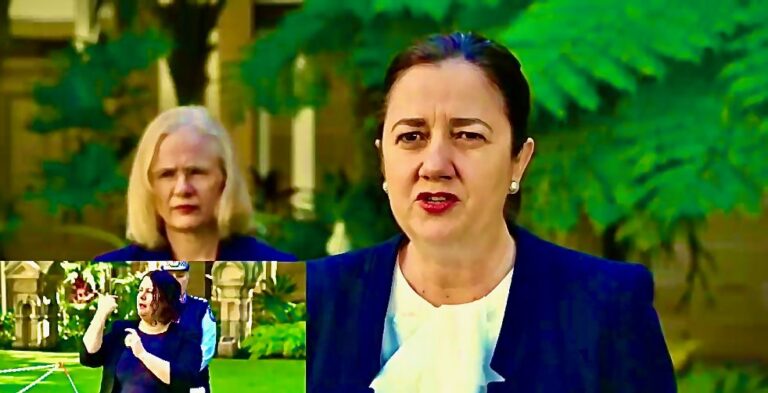
Premier Annastacia Palaszczuk said community transmission had increased.
“We have seen more cases of community transmission spreading across a wider area of Sydney,” The Premier said.
“This includes into areas frequented by tourists, travellers and large numbers of Sydney locals.
“Throughout this pandemic we have acted quickly to put the health of Queenslanders first.
“And that’s what we’re doing here.”
Deputy Premier and Health Minister Steven Miles said that since the weekend, cases of community transmission had arisen in Potts Point, the local government area that included Kings Cross.
“While overall case numbers in NSW have remained reasonably stable – between 10 to 20 a day – there are more cases, across more areas with an unknown source of infection.
“As of Friday, if you come from Sydney or anywhere in Victoria, you will be turned away at the border or be required to quarantine if you’re a Queensland resident.”
Dr Young recommended any Queenslanders currently in these hotspots to make their way home before 1am Saturday.
“If you are in Sydney please take this opportunity to come home to the safety of Queensland,” Dr Young said.
“If an area where you are staying or visiting is suddenly declared a hotspot while you are there, once you return to Queensland, you will have to quarantine for two weeks in a hotel at your own expense,” she said.
The only exception to this is people who are needed in Queensland for essential purposes and Queensland residents – these people can enter the state but will be required to quarantine in government provided accommodation at their expense.
“Our job is to protect Queenslanders and, given the situation in Sydney and in Victoria, we need to implement tough measures.”
The fees for two weeks of accommodation, meals and room cleaning are: $2,800 for one adult; $3,710 for two adults in the same room; and $4,620 for two adults and two children in the same room.
Dr Young encouraged all Queenslanders to remember hygiene basics, stay home if they were unwell and to come forward and get tested if they had any symptoms.
ENDS
Media contact – Amy Hunter 0423 651 484
NSW declared hotspots as at 1am August 1, 2020. This includes LGAs already declared.
Bayside
Blacktown City
Blue Mountains City
Burwood
Camden
Campbelltown City
Canada Bay City
Canterbury-Bankstown
Central Coast
Cumberland
Fairfield City
Georges River
Hawkesbury City
Hornsby Shire
Hunter’s Hill Municipality
Inner West
Ku-ring-gai
Lane Cove Municipality
Liverpool City
Mosman Municipality
North Sydney
Northern Beaches
Parramatta City
Penrith City
Randwick City
Ryde City
Strathfield Municipality
Sutherland Shire
Sydney City
The Hills Shire
Waverley
Willoughby City
Wollondilly Shire
Woollahra City
Source: Premier and Minister for Trade The Honourable Annastacia Palaszczuk
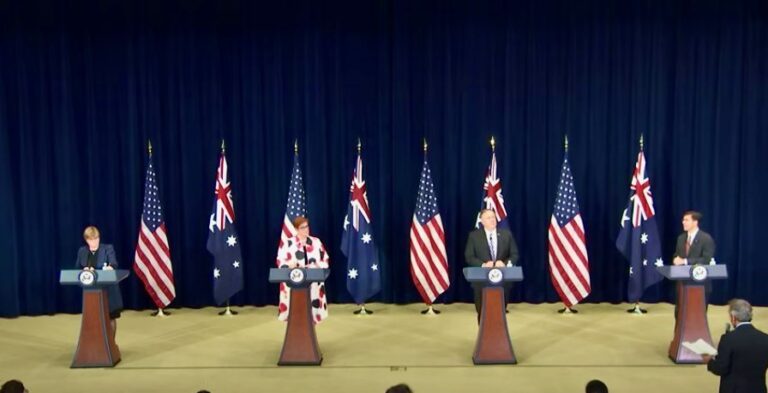
We have had a lively and productive set of conversations this morning and last night as well. I’ll get to that in just a bit.
First, though, I want to personally thank Ministers Payne and Reynolds for traveling all this way, halfway around the world, to be with us today. That is a tough trip in ordinary times.
Link: https://www.youtube.com/watch?v=EVhjI_d29Kk
And your entire delegation will be quarantining when you get back. Not many partners will do that for us, and so thank you to each of you and your teams for being with us here in person. It was very important that we all be together to have this important conversation.
Before she left Australia, Minister Payne called this year’s AUSMIN meetings, quote, the “most significant,” end of quote, in her time “for Australia’s short, medium, and long-term interests.” The same could be said for our side as well.
Our two great democracies face immediate crises like the COVID-19 pandemic and longer-term challenges like the Chinese Communist Party’s ambitions. We need to deal with each of these challenges simultaneously.
We are lucky to count Australia as a close partner throughout all of this. When I was in Sydney last August, I recall naming our relationship as the “Unbreakable Alliance.” It’s even more true today.
We started this morning by talking at length about the Chinese Communist Party’s malign activity in the Indo-Pacific region, and indeed all around the world.
The United States commends the Morrison government for standing up for democratic values and the rule of law, despite intense, continued, coercive pressure from the Chinese Communist Party to bow to Beijing’s wishes.
It is unacceptable for Beijing to use exports or student fees as a cudgel against Australia. We stand with our Australian friends.
We also discussed the COVID-19 pandemic. The United States commends Australia for publicly condemning China’s disinformation campaign and insisting on an independent review into this virus’s origin.
I also want to applaud your efforts to include Taiwan in the World Health Assembly, so that the world might benefit from that vigorous democracy’s wisdom in dealing with the outbreak.
We look forward to working together on our nations’ ongoing economic recovery from this entirely preventable pandemic. Today we reaffirmed our collective commitment to strengthening supply chains, so that they are resilient against future pandemics, CCP retaliation, and the use of forced labor.
Turning to Hong Kong, our nations have both denounced the CCP’s violation of its own treaty promises and the crushing of the Hong Kong’s people’s freedoms.
The U.S. applauds Australia’s decisive response to suspend its extradition agreement and extend visas for residents of Hong Kong in Australia.
We also addressed the CCP’s attempts to dominate the technology space. We, in fact, spent a great deal of time on this issue. Australia was ahead of us in awakening to the threat of untrusted vendors like Huawei and ZTE. We look forward to nations becoming “Clean Countries” together.
And finally, we’ll keep working with our Australian partners to reassert the rule of law in the South China Sea, which the United States and Australia have both underscored in recent, important statements. I’ll let Secretary Esper address more about our military cooperation both there and elsewhere.
Ministers, as I said just last week at the Nixon Library, the burden Australia has undertaken to uphold democratic values is not yours to bear alone.
The United States knows the threats that you and the rest of the free world face. And the United States stands with you in our unbreakable alliance.
Thank you, again, for being here today.
Minister Payne.
FOREIGN MINISTER PAYNE: Thank you very much, Mike. And to our secretary colleagues, Mike Pompeo and Mark Esper, it is a great pleasure to be here today. Both Minister Linda Reynolds and I are very pleased that AUSMIN was able to take place in person today. We know that we’re living a very constrained set of circumstances, so we particularly appreciate the effort made by the United States to host us here by the teams who have put together an AUSMIN in these constrained circumstances.
And I want to thank all of those involved. I want to thank Ambassador Arthur Sinodinos and his team, acknowledge Ambassador A.B. Culvahouse, who’s also made the trip from Canberra, and our Secretaries Frances Adamson and Greg Moriarty, and the Chief of the Australian Defense Force General Angus Campbell.
This year marks 80 years of diplomatic relations between Australia and the United States. This is the 30th AUSMIN talks and indeed as Mike referred to it is my fifth in two incarnations at least. It’s hard to believe that it’s a year since we were in Sydney, because so much has happened in the last 12 months. And I want to particularly convey my condolences, my sympathies to those amongst the American people who have lost loved ones, particularly during the COVID-19 pandemic. These are difficult times for all of us.
As both Secretary Pompeo and I have said at various times, Australia and the United States’ strong and enduring relationship is built on our shared values. It’s built on our resolute belief in the rule of law, a respect for human rights, our promotion of gender equality, our protection of freedoms of religion and belief. It’s built on the fact that we are both strong, liberal democracies that cherish freedom of expression and diversity of opinion. And it’s built on our confidence in making decisions in our interests.
At AUSMIN today we discussed and reached agreement on a wide range of issues. We agreed it’s essential that the alliance remains well-positioned to respond to both the immediate impacts of COVID-19 as well as the longer-term economic and security challenges that have emerged, not just in the past six months but in recent years.
Australia and the United States are deeply committed to strengthening health security efforts in the Indo-Pacific to help states combat COVID-19 and to prevent the emergence of future pandemics.
So I’m pleased that as part of our talks today we have agreed to expand cooperation under our Health Security Partnership to explore opportunities to prevent and respond – to detect and respond to infectious disease threats, including ensuring access to vital vaccines.
COVID-19 has, without doubt, exacerbated the security challenges in our region. Some countries are using the pandemic to undermine liberal democracy. The role of multilateral institutions is more important now than ever in supporting our values and our strategic objectives as the world responds to the health and economic challenges of COVID-19.
We’re therefore pleased also to be able to announce a new working group between Australia’s Department of Foreign Affairs and Trade and the United States Department of State to monitor and respond to harmful disinformation.
The rules-based global order is a constant, notwithstanding or perhaps even more so given the impact of the pandemic. We reiterated our commitment to holding states to account when they breach international norms and laws, as we have done and will continue to do so in relation to China’s erosion of freedoms in Hong Kong.
We also recognize the importance of international leadership and cooperation, which for both of us involves helping other countries through the COVID-19 crisis. We will step up and ensure that we support our mates further afield.
That means working together to strengthen the capacity of states in our region to recover economically from COVID-19, including by supporting infrastructure development. Our work together, for example, along with the Government of Palau and other partners, including Japan on the Palau marine cable to provide fast and affordable internet to our Pacific neighbor is a really good example of this, and I’m glad we’ve been able to progress our discussions on these today.
We will use the Australian-U.S. alliance as the basis to deepen our friendship with others. We already do. We’ll work more closely with existing partnerships such as the Five Eyes, the ASEAN, the Quad, the Trilateral Infrastructure Partnership, the East Asia Summit. And as we have through COVID-19, we will build new groupings, cementing friendships, improving our security through a network of nations that share our vision of an open, prosperous, and secure Indo-Pacific.
I am very proud to be here this week. I’m very proud that the enduring Australia-U.S. alliance will be at the very heart of this vision. Mike, thank you and Mark again for your hospitality.
SECRETARY ESPER: Well, thank you Minister Payne and Minister Reynolds, Maurice, Linda, for coming all this way to be here in person, particularly in the time of COVID. Your presence reflects the strength of the U.S.-Australian alliance and signifies our ever-increasing convergence on the most important strategic issues of our time.
The United States and Australia share a deep and enduring bond, united by common values and forged through decades of shared sacrifice, having fought shoulder-to-shoulder in every major conflict since World War I. Today our alliance remains strong and resilient and is vital to stability, to security, and prosperity around the globe and in the United States’ priority theater, the Indo-Pacific. Together we share a common vision for a free and open Indo-Pacific where all nations, big and small, can enjoy the benefits of sovereignty; where free, fair, and reciprocal trade are the norm; where states adhere to international rules and norms; and where international disputes are resolved peacefully.
Today we discussed a range of issues regarding the future of the region, including the impact of the global pandemic as well as the security situation in the South China Sea specifically and the Indo-Pacific more generally. We appreciate Australia’s significant contributions to COVID-19 response efforts, and we spoke in detail about the Chinese Communist Party’s destabilizing activities and the fact that Beijing is increasingly resorting to coercion and intimidation to advance its strategic objectives at the expense of other nations.
The United States seeks a constructive, results-oriented relationship with the PRC, but we will stand firm in upholding the international rules-based order. And we applaud Australia for pushing back against the CCP’s brazen economic threats and coercive behavior and increasing risk of retaliation.
We also discussed the PRC’s less conspicuous means of extending its influence through state-sponsored tech dominance. And we commend Australia for its decision to reject Huawei and ZTE in its 5G network, thus protecting the integrity of our intelligence cooperation and the many other aspects of our defense relationship.
In this regard, I want to thank Australia for its continued support of the Marine Rotational Force at Darwin. Our significant presence there enables excellent combined training between the U.S. and Australian troops, and this year’s rotation is an important example of how we can meet our strategic interests as an alliance while adapting to health concerns posed by the coronavirus. We owe it to our partners to make sure that we deploy responsible – responsibly, as I assured Minister Reynolds of our preventative measures.
Additionally, last week, five Australian warships joined the USS Ronald Reagan carrier strike group and a Japanese destroyer in conducting a trilateral naval exercise in the Philippine Sea ahead of the upcoming RIMPAC exercise in Hawaii. These exercises not only bolster interoperability, but also send a clear signal to Beijing that we will fly, we will sail, and we will operate wherever international law allows and defend the rights of our allies and partners to do the same.
Amid these challenging and uncertain times, the U.S.-Australia alliance remains a powerful force for stability and prosperity in our region and the world, and we thank you once again, Minister Payne and Minister Reynolds, for your participation here today. Thank you.
DEFENSE MINISTER REYNOLDS: Well, thank you very much, Secretary Esper, to Mark, and to both of you, Mike. Thank you very much for your hospitality and also for the very productive discussions that we’ve had today. I’m delighted that we’re able to come here in person, because there really is no substitute for face-to-face meetings that we’ve had here today.
Since its beginning, AUSMIN has steered our alliance through a rapidly changing world, from the Cold War to confronting extremism and most recently focusing the alliance activities in the Indo-Pacific. But today, we are both experiencing a profound change in the geopolitical framework that underpins our security but also our prosperity. So now more than ever, we must put a premium on ensuring the alliance continues to serve both our nations’ interests.
And today we have done just that, focusing to ensure our alliance cooperation is best placed to respond to our shared challenges. We have a great and ambitious set of defense outcomes, ones that advance our cooperation in support of our shared vision, a vision for a region that is secure, that is open, and is also prosperous.
Secretary Esper and I signed a statement of principles on alliance defense cooperation and on force posture priorities in the Indo-Pacific. This builds on our successful force posture cooperation over the past 10 years, and it will drive the next decade of our defense cooperation in the Indo-Pacific. It will also strengthen our shared ability to contribute to regional security and to deter malign behavior in our region.
We intend to establish a U.S.-funded, commercially operated strategic military fuel reserve in Darwin. We agreed to further deepen our defense science technology and also our industrial cooperation. This includes hypersonics, electronic warfare, and space-based capabilities. This will ensure the alliance maintains its capability edge in a rapidly modernizing environment. Further reducing barriers to industrial base integration will also strengthen our interoperability and also our shared resilience.
When we released Australia’s defense strategic update earlier this month, my prime minister noted that we now face a world that is poorer, that is more dangerous, and that is more disorderly. The Australian Government’s $270 billion investment in defense capability over the next decade will build capability, resilience, and further agility for the Australian Defense Forces. It will also allow Australia to make its strongest contribution to our shared alliance security interests right across the Indo-Pacific.
And today, we reaffirmed the importance of working with partners to strengthen sovereignty and also resilience to coercion. Our alliance is in great shape, but we cannot ever take it for granted. And this is why the substantial outcomes and agreements we have reached today are so important for us both.
Thank you.
MR BROWN: Okay. For our first question, let’s go to Nick Schifrin from PBS Newshour.
QUESTION: Thank you very much. Mr. Secretary, Minister Payne, if I could ask you both about China and Mr. Secretary a more local question.
Mr. Secretary, after your alliance of democracies speech, you received some criticism by some people who called it unworkable especially for European allies, as the Trump administration pursues a confrontational trade policy on Europe and doesn’t criticize other autocrats, including Viktor Orban. How do you work through that?
And Minister Payne, another aspect of that speech was the admonition to help the Chinese people change the Chinese Government. Do you think that is possible and/or wise?
Mr. Secretary, if I could quickly, more locally —
SECRETARY POMPEO: You want three questions?
QUESTION: If —
SECRETARY POMPEO: Yeah, good try.
QUESTION: Just quickly —
SECRETARY POMPEO: Let me just take your first question to me and then Minister Payne can take the second one. No, it’s completely workable. As I said in that same set of remarks, this isn’t about picking America versus China. This is about choosing freedom and democracy against tyranny and authoritarian regime, and I am confident that the democracies, our transatlantic alliance – all of those great nations know precisely which side of that debate they want to be on. They know where their peoples’ interests lie. They lie with freedom and democracy and continued economic prosperity for their people. That doesn’t come from partnering with or working with authoritarian regimes that threaten them, but rather working with countries like Australia and America that value freedom and human rights in the same way that they do.
You made a comment about the fact that we have not been consistent on human rights. I have a fundamentally different view of that. We have been intensely focused on making sure that we stand for the very value set that the United States and Australia alongside of us care so deeply about. I gave a set of remarks in Philadelphia now a couple weeks back that talked about this and put it in sharp focus and talked about the unalienable rights that matter so much to the world, and we’ll defend them everywhere. And I’m confident that our partners all across Europe and, frankly, democratic friends all across the world, whether that’s in India or Japan or South Korea – our Australian partners are here today – understand that the challenge of our times is to make sure that those nations that do value freedom and do want economic prosperity based on the rule of law will join together to deliver that for our people.
Last thing: You asked a second question to her. I’m going to take a swing because you mischaracterized again what I said. Go back and look what I said. We need to make sure we’re talking to everyone all across the world. The Chinese, when they come here, they talk to Democrats, right – they go to Capitol Hill and lobby Democrats on Capitol Hill. American diplomats ought to have that same opportunity so that we can speak to all people that are part of the People’s Republic of China. It seems only appropriate that we do that. It seems quite necessary. Indeed, I would think that the government in Beijing would want that. We encourage there to be freedom of speech, openness, the capacity to work with elements inside the United States that don’t always agree with the administration. That’s how democracies – that’s how economic growth takes place. Those kinds of things are the right thing to do, and we’re aiming through our diplomatic efforts to make sure that there’s every opportunity for people all across the world to speak to all of the various views that are contained inside of the People’s Republic of China.
FOREIGN MINISTER PAYNE: Thanks very much, Mike, and rather than I think make individual comments on the Secretary’s speech – Secretary’s speeches are his own; Australia’s positions are our own. And we operate, as you would expect, on the basis of our shared values, actually, which are reflected in both the approach of the United States and the approach of Australia. But most importantly from our perspective, we make our own decisions, our own judgments in the Australian national interest and about upholding our security, our prosperity, and our values. So we deal with China in the same way. We have a strong economic engagement, other engagement, and it works in the interests of both countries.
That said, of course, we don’t agree on everything. We are very different countries. We are very different systems, and it’s the points on which we disagree that we should be able to articulate in a mature and sensible way and advance, as I said, our interests and our values. As my prime minister put it recently, the relationship that we have with China is important, and we have no intention of injuring it, but nor do we intend to do things that are contrary to our interests, and that is the premise from which we begin.
MR BROWN: Next, can we go to Sarah Blake from Newscorp?
QUESTION: Thank you. I have a question for both Secretary Pompeo and for Minister Payne. Secretary Pompeo, there are currently dozens of Australian citizens in Syria who are the wives and children of captured Islamic State fighters. Do you think that Australia should bring these people home? And if so, why, and if so, why not? You know what I mean.
SECRETARY POMPEO: If you have a question for Minister Payne, you can go ahead and put that —
QUESTION: Minister Payne, did the question of the ISIS wives and children arise in your talks with Secretary Pompeo, and will Australia bring these people home? And if so, why or why not?
SECRETARY POMPEO: Maybe I’ll let you go first since this is the same question and they’re Australian people about which we speak.
FOREIGN MINISTER PAYNE: Well, we’ve broadly discussed a number of issues relating to counterterrorism more broadly. And in relation to Syria, it’s important to note that Australia has repatriated some orphans from Syria. But these are pretty complex challenges, and I don’t think that should be underestimated.
The priority of the Australian Government is the protection of Australia and the Australian community. We’re a good international citizen. We don’t shy away from our responsibilities, and those also of course include our responsibilities to citizens at home, to our diplomats and officials who would be required to travel into what are very dangerous situations. And as the government has repeatedly said – the prime minister, the minister for home affairs, and I have repeatedly said – we will not put Australian lives at risk to try and to extract people.
It’s important to note I think that COVID-19 has further complicated this picture extensively. We have seen closed borders, significant travel restrictions, significant international travel bans put in place, including of course in Australia itself. Movement in Syria and in the region is now more complex than ever. And at home, we see our states and territories very stretched, as an understatement in some cases, because of the impact of COVID-19 infections.
So any assessment of the sorts of resources that would be needed to reintegrate, to monitor, to secure, to deradicalize people who are brought home are under significantly more pressure than they usually would be. And we will not put our communities at home at risk, nor our officials abroad, to extract people from Syria under current conditions. We will always take a case-by-case approach to returns of individuals, but at this point in time it’s an extremely complex situation, and that remains the government’s position.
SECRETARY POMPEO: And we’ve made very clear our expectation is that the places that these fighters are being detained may not be sustainable and that we need to work with each host country to bring those people back and bring them to justice back in their home. We think that’s important. We’ve been consistent with that all across all the nations that have fighters that are there inside of Syria.
MR BROWN: Third question. We’ll go to Katie Bo Williams from Defense One.
QUESTION: Thank you all for doing this. First to Secretary Esper: Did the U.S. and Australia discuss deploying either additional U.S. troops or intermediate-range missiles on Australian soil? And can you give us any details on the outcome of those conversations? And secondly, can you tell us what are your concerns about military-style uniforms being worn by federal officers conducting civilian law enforcement in Portland?
And then to Minister Reynolds: During your meetings this week, did the U.S. side press you to conduct freedom of navigation operations closer to the disputed island chains in the South China Sea than Australia has previously been willing? And do you plan on honoring that request, and if so, what has changed Australia’s calculation?
SECRETARY ESPER: So I’ll go first, and I’ll take your first question since it involves our Australian partners who have traveled 22 hours to be here today and face a 14-day quarantine on the back end. Let me just say we had a very wide-ranging discussion about the capabilities that the United States possesses and the capabilities that Australia possesses, and our desire to advance them, whether they are hypersonics or any other type of capability. And I think it’s important as we think forward about how do we deter bad behavior in the Indo-Pacific and how we defend the international rules-based order – in this case specifically with regard to China.
I would like also to take this moment to commend Australia. They recently announced a bold new defense strategy that is far-reaching, and I think really puts them at the forefront as a really extremely capable partner to the United States and a very capable partner in terms of defending that international rules-based order. And that will involve the full suite of capabilities and strategies we intend to roll out together in the years ahead.
DEFENSE MINISTER REYNOLDS: Well, thank you very much, Mark. And Katie, in relation to transiting through the region, and also freedom of navigation and overflight, as you would expect it was a subject of discussion. For those of you who know, Australia has a long history of transiting through the region – unilaterally, bilaterally – with regional friends, and also multilaterally. For example, the ADF Joint Task Group recently transited through the South China Sea on its way to RIMPAC, and as the Secretary observed, we did a trilateral transit through the Philippine Sea. Our approach remains consistent, and we will continue to transit through the region in accordance with international law.
MR BROWN: Okay. Last question to Amelia Adams with Nine Network.
QUESTION: Secretary Pompeo, if I could start with you, there’s a lot of concern in Australia about the growing rift between your administration and China. As you know, Australia is very dependent on China. Should Australians be concerned about the long-term consequences of the breakdown in relations between your two countries for our regional security?
And perhaps, Minister Payne, if you could talk to the same question after the Secretary.
SECRETARY POMPEO: This isn’t about a breakdown in relations between the United States and China. This is about unlawful misconduct by the Chinese Communist Party, coercive behavior, that frankly most Western nations have permitted to go on for far too long. President Trump made very clear as far back as his campaign that we were no longer going to permit that to happen. We were going to rebalance the relationship with the objective of getting a much more fair, reciprocal relationship between the United States and China.
We’ve done it on multiple fronts. We’ve seen it very publicly on trade. We’ve seen it – the things we’ve done to make sure that we have a safe and secure infrastructure. The Australians have been fantastic at making sure that Australians’ information, their private information, didn’t end up in the hands of the Chinese Communist Party.
So every nation and its people needs to be aware of the threat that is posed by the Chinese Communist Party to them, and I am confident that the Australian Government, just like the American Government, will act in ways that preserve their sovereignty and secure freedoms for their own people.
FOREIGN MINISTER PAYNE: Amelia, I think in part I answered the question in response to the question from our first representative this afternoon, but from Australia’s perspective, let me reiterate that we make our own decisions. We do that based on our values – many of which are shared values, overwhelmingly – but most importantly, in Australia’s national interest.
We do often hold common positions with the United States because we do share so many of those fundamental values, and we both want the same kind of region: We want it to be secure, we want it to be stable, we want it to be free, we want it to be prosperous. And what this meeting is all about, what AUSMIN is all about – and has been, in fact, for its 30 iterations – is the alignment of the broad perspectives of Australia and the United States on global and regional issues. That includes our discussions in relation to China. It includes our discussions in relation to COVID-19 response and recovery.
We have, I think, a demonstrable track record of making decisions based on our own interests. The number of those have been mentioned today in terms of protecting Australia and Australians in the interests of national security, whether they are around countering foreign interference, whether they are ensuring that our 5G network is protected from high-risk vendors, whether they are about the sorts of initiatives that we’ve taken more recently around our foreign investment rules.
We don’t agree on everything, though, and that’s part of a respectful relationship. It’s part of a relationship that has endured over a hundred years of mateship, to re-coin that phrase, and will endure, I am absolutely confident, based on our fundamental shared values, for centuries into the future.
: Thank you very much. Today my administration has taken a momentous step toward achieving American pharmaceutical independence — a very, very big, big step — a focus of our campaign to bring America’s critical supply chains and medical manufacturing back to the USA. We’ve been working on this for a long time.
This is a core of our strategy to protect our people from the horrible China virus. It should have never happened. It should have never been here. They should have stopped it.
In the decades before I took office, foreign nations were allowed to freely plunder our factories and loot our industries, take our business out of the United States. Millions of jobs were vacuumed out — just taken out so easily. Our politicians let that happen. And our communities were stripped and shipped, in many cases, to China and all over the world — countries all over the world.
Nearly four years ago, we launched a bold effort to revitalize American manufacturing, enact fair trade deals, and bring our industries back home where they belong. When the China virus landed on our shores, it became clearer than ever before that restoring American manufacturing is a core matter of national security. We must never be reliant on a foreign nation for America’s medical or other needs, and that includes many other needs.
I just want to say that Pfizer just announced, a little while ago, that they’re combining phase two and phase three trials, and the vaccine looks like it’s really heading in a very rapid direction, in a very positive direction. First time that’s happened. And they’re many months ahead of any other trial. There’s never been anything like it. So it’s the fastest ever, and to me, it’s very exciting.
Today, I’m proud to announce one of the most important deals in the history of U.S. pharmaceutical industries. My administration has reached a historic agreement with a great American company — you remember this company; it’s called — from the good, old camera age, the old days — to begin producing critical pharmaceutical ingredients. It’s called Kodak. And it’s going to be right here in America.
So I want to congratulate the people in Kodak. They’ve been working very hard. Members of my administration are present in Rochester right now — Rochester, New York — a good place. And they’re trying to finalize this groundbreaking deal, and they will be announcing this deal.
I want to thank Governor Andrew Cuomo and his representatives. We’ve worked really well together on this deal. It’s a big deal. It’s going to be a great deal and a great deal for New York and a great deal for Kodak.
Ninety percent of all prescriptions written in the United States are for generic drugs. We have approved more generic drugs than any other administration, by far. Generic drugs can be just as good as the brand names, but cost much less.
Yet, in less than 10 percent of the active pharmaceutical ingredients needed to make these drugs — they’re currently manufactured in America — more than 50 percent, however, are made in India and China. And you’ll be seeing — a lot of things have happened. It’s been happening, but it’s happening at a more rapid pace right now.
With this new agreement, my administration is using the Defense Production Act to provide a $765 million loan to support the launch of Kodak Pharmaceuticals. It’s a great name, when you think of it. Such a great name. It was one of the great brands in the world. Then people went digital, and Kodak didn’t follow. But now, under very extraordinary leadership, they are following and they’re doing something that’s a different field, and it’s a field that they’ve really hired some of the best people in the world to be taking care of that company and watching that company — watching over it. But it’s a breakthrough in bringing pharmaceutical manufacturing back to the United States.
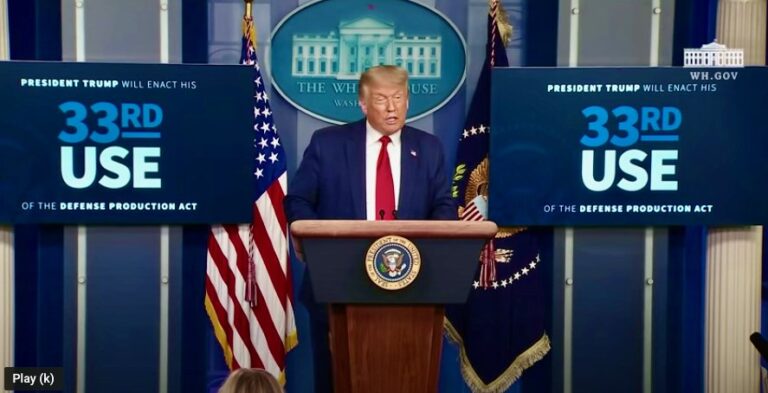
Under this contract, our 33rd use of the Defense Production Act — remember when you were saying I didn’t use it enough, I didn’t use it enough? And now you heard it’s the 33rd use. We don’t talk about it all the time; we used it, and we used it as a little bit of a threat, frankly, with certain companies that weren’t doing as we were asking them to do, and it came through as both a threat and a usage. But this is our 33rd use of the Defense Production Act.
Kodak will now produce generic active pharmaceutical ingredients, which is a big deal. Using advanced manufacturing techniques, Kodak will also make the key starting materials that are the building blocks for many drugs in a manner that is both cost-competitive and environmentally safe. We’ll be competitive with almost all countries, and soon with all countries.
Once this new division is fully operational, in addition to all of the other plants that we’ve opened with other companies throughout the United States recently, it will produce as much as 25 percent of all active ingredients needed to make generic drugs in the USA. That’s a big number: 25 percent.
This agreement will directly create 360 new jobs at Kodak’s factory in Rochester; that’s just in the initial phase. And in Minneapolis, a place I have gotten to know very well and it’s a great place — and I’m very happy that we’re able to help them with the problems that they’ve had recently. And the National Guard — I want to thank the National Guard, both state and beyond. I want to thank them for the incredible job. They went in and they did some beautiful job. They cleaned it up. You didn’t hear about the problems anymore.
And indirectly, I want to create — we created thousands more jobs all across our pharmaceutical supply chains. We have now been building a very big pharmaceutical supply chain — not only coming out of China, coming out of other countries also. I want to thank Peter Navarro, Adam Boehler, and Admiral Polowczyk for their tremendous work to make this deal possible.
Today’s action is our latest step to build the greatest medical arsenal in history. We’ll be able to do that.
Through the Defense Production Act and other authorities, we have invested more than $3 billion in our nation’s industrial base. We’ve contracted with companies such as Ford, General Motors, Philips, and General Electric to produce more than 200,000 ventilators by the end of this year — nearly seven times more than we would ever do in a typical year.
We’ve contracted with Honeywell, 3M, O&M, Halyard, Moldex, and Lidl to increase U.S. production of N95 masks. And we’ve brought it from less than 40 million a month to over 100 million a month by August, and we’ll have 160 million in a very short while — 160 million a month. That’s many times what we used to do. If you go back two years ago, it’s many, many times.
We’re increasing domestic production of gloves by 1,000 percent. It’s 1,000 percent. We will be manufacturing 450 million gloves annually by next year.
We’re finalizing contracts with our textile industry to make gowns in America with American fabric, which makes a lot of our businesses happy that produce the fabric. We have 13 million reusable gowns in the Stockpile, and we’ll continue to grow that number to 72 million this fall, which is a rapid escalation indeed.
We made major investments in new rapid point-of-care tests. So we have — there’s nothing like the rapid point, where you get your answer in 5 minutes to 15 minutes to maybe 20, 25 minutes at the max. And we’re already at about a 50 percent level, and we’re bringing it up very substantially from there.
We’re growing domestic production from less than 250,000 test kits per month in May to 8 million test kits per month. There is nothing like this that has ever taken place anywhere in the world or close.
Through our partnership with Puritan Manufacturing and the state of Maine — a great state — we’ve increased production of test swabs from 30 million per month in June to 56 million per month now. As you remember, I went to Maine; I went to the plant where they do this. It was incredible. It was a great experience. And we’ll produce over 100 million swabs per month by January.
We’ve dramatically ramped up production of materials needed for a vaccine and are on track to rapidly produce 100 million doses as soon as a vaccine is approved, which could be very, very soon, and 500 million doses shortly thereafter. So we’ll have 500 million doses. And, logistically, we’re using our military, our great military — a group of people; their whole life is based around logistics and bringing things to and from locations — and they’ll be able to take care of this locationally and bringing it where it has to go very, very quickly. They’re all mobilized. It’s been fully set up.
A very, very talented general is in charge. And when we have that vaccine, it will be discharged and taken care of. It’ll be a very — a very rapid process all over the country. And perhaps we’ll be supplying a lot of the vaccine to other parts of the world, like we do with ventilators and other things that we, all of a sudden, have become very good at making.
When the China virus struck our nation, we mobilized the entire government and the private sector to acquire, source, and deliver lifesaving supplies. HHS, FEMA, and the private sector combined have coordinated the delivery of more than 196 million N95 respirators, 815 million surgical masks, 20 million gloves, 34 million face shields, and 354 million gowns. That’s a lot of gowns.
Last week, FEMA completed a second shipment of personal protective equipment to over 15,000 nursing homes in the United States. Our big focus has been on nursing homes and senior citizens. As you know, that’s where we want to take care — we have to take care of the most vulnerable, especially if they have a medical difficulty, a medical problem — in particular, heart or diabetes. Which provided a total of 1.2 million pairs of protective eyewear, 14 million mask — masks, 66 million pairs of gloves, and 13 million gowns.
We have replenished the long-neglected National Stockpile. In January, the Stockpile had 17.9 million N95 masks. Today, the stockpile has over 50 million N95 masks, and we’ll be doubling that in a very short period of time and then doubling that number.
We’ve shipped more than 14,000 ventilators to areas of need across the country, and we have more than 75,000 available to deploy. Not a single American who has needed a ventilator has been denied a ventilator. And if you remember, early on when we were first hit with the virus, ventilators were very hard to come by, and now we’re the largest maker anywhere in the world, by far. And not only are we fully supplied and stocked, but we’re helping other nations, because ventilators are hard to build and hard to get.
This is just the beginning. In the coming months, we will continue the largest onshoring campaign in American history. We will bring back our jobs, and we will make America the world’s premier medical manufacturer and supplier. That’s what’s happening already. It’s been happening now for quite some time.
We’re seeing improvements across the major metro areas and most hotspots. You can look at large portions of our country; it’s — it’s corona-free. But we are watching very carefully California, Arizona, Texas, and most of Florida. It’s starting to head down in the right direction, and I think you’ll see it rapidly head down very soon. But if you look, California, Arizona, Texas, and, for the most part, most of Florida, it’s starting to head down.
In the wake of the recent mass gatherings Americans have witnessed in the streets of Portland and Seattle, we are also tracking a significant rise in cases in both metropolitan areas because of what’s been going on.
And we, as you know, have done a excellent job of watching over Portland and watching our courthouse where they wanted to burn it down. They’re anarchists. Nothing short of anarchists, agitators. And we have protected it very powerfully. And if we didn’t go there, I will tell you, you wouldn’t have a courthouse. You’d have a — you’d have a billion-dollar burned-out building.
We’re also working aggressively to combat the virus and Native American and Alaska Native communities. Under the CARES Act, we provided $8 billion to address the coronavirus in tribal communities, and we’ve worked very hard with tribal communities. They’re very vulnerable to this horrible plague. It’s the largest investment in Indian Country in U.S. history. There’s never been an investment that big in Indian Country.
We need every American to help protect our fellow citizens and prevent the spread of the disease. It’s critical that younger Americans remember that even though they are at lower risk — and, in fact, some are in — some age groups are at an extraordinary low risk themselves — they can unknowingly spread the virus to others who are at higher risk.
I ask all Americans, regardless of background or age, to practice social distancing — which people have gotten very used to, but we have to keep doing it; remain vigilant about hygiene; avoid indoor gatherings and large gatherings, but especially indoor, especially where you have crowded bars; and that you wear a mask whenever appropriate.
Through the genius of our scientists, the devotion of our doctors, the skill of our workers, and the dedication of our people, we will achieve victory over the virus and emerge stronger than ever before.
We’re looking at a very powerful year next year, economically. The job numbers are looking outstanding, to put it mildly; set records. The numbers on retail — retail sales — came in two weeks ago at the highest number in the history of our country. So we look like we’re heading to some very, very good economic times; that means jobs, that means stock market.
The stock market is already doing very well. It’s getting to a point very close to where it was when we had this — when we were hit with the — the plague. So I just want to thank everybody for being here.
Steve, please. Go ahead.
Q Can you clarify your acceptance speech for the Republican nomination? Are you physically going to be in Charlotte or will you give the speech here or somewhere else?
THE PRESIDENT: We’ll be doing a speech on Thursday — the main speech, the primary speech. Charlotte — they will be doing — nominating on Monday. That’s a different — that’s a different period, a different thing happening, but they’ll be doing nominations on Monday. I speak on Thursday. Okay?
Q From where?
THE PRESIDENT: We’ll go — we’ll be announcing it soon. We’ll be announcing it soon.
Q So you could be going to Charlotte?
THE PRESIDENT: Anybody have any ideas? We’ll be announcing it very soon.
Q Mr. President —
THE PRESIDENT: Yeah, please, go ahead.
Q Mr. President, the negotiations are ongoing right now for the next relief measures. Republicans — Senate Republicans have put forth their plan. Do you support what Senate Republicans have put forward? And are there certain aspects that they’ve put forward that you don’t support?
THE PRESIDENT: Yeah, there are actually, and we’ll be talking about it. There are, you know, also things that I very much support, but we’ll be negotiating. It’s sort of semi-irrelevant because the Democrats come with their needs and asks, and the Republicans go with theirs. So we’ll be discussing it with Mitch and all of the other people involved. Kevin has been very active, as you know — all of the people involved. Steve Mnuchin has done a great job, keeps everybody together, both Democrat and Republican.
And we’ll see. We want to do what’s best for the people. I want to do what’s best for the people. I want to do what’s best for the economy because that means jobs and lots of good things. All right?
Q What do you think of what Senate Republicans put forward, sir? What do you make of what Senate Republicans put forward?
Q Mr. President, two questions quickly. First, can you clarify your position on the efficacy of hydroxychloroquine after you retweeted a video making claims that it is effective?
THE PRESIDENT: Well, that was — I wasn’t making claims. The — it’s recommendations of many other peoples and — people, including doctors. Many doctors think it is extremely successful — the hydroxychloroquine — coupled with the zinc and perhaps the azithromycin. But many doctors think it’s extremely good, and some people don’t. Some people — I think it’s become very political.
I happen to believe in it. I would take it. As you know, I took it for a 14-day period, and I’m here. Right? I’m here. I happen to think it’s — it works in the early stages. I think frontline medical people believe that too — some, many. And so we’ll take a look at it.
But the one thing we know: It’s been out for a long time, that particular formula, and that’s what — essentially, what it is, the pill. And it’s been for malaria, lupus, and other things.
It — it’s safe. It doesn’t cause problems. I had no problem. I had absolutely no problem, felt no different. Didn’t feel good, bad, or indifferent. I — and I tested, as you know. It didn’t — it didn’t get me, and it’s not going to hopefully hurt anybody.
So, we know from that standpoint — because it’s been so many years, from a safety standpoint, it’s safe. I happen to think, based on what I’ve read — I’ve read a lot about hydroxy. I happen to think that it has an impact, especially at the early years. There were some very good tests at Ford, and the doctor from Yale came up with a very, very strong testament to it. There was a group of doctors yesterday, a large group that were put on the Internet, and for some reason, the Internet wanted to take them down and took them off. I guess Twitter took them off and I think Facebook took them off. I don’t know why. I think they’re very respected doctors.
There was a — a woman who was spectacular in her statements about it, that she’s had tremendous success with it. And they took her —
Q (Inaudible.)
THE PRESIDENT: — they took her voice off. I don’t know why they took her off, but they took her off. Maybe they had a good reason, maybe they didn’t. I don’t know.
I can only say that, from my standpoint, and based on a lot of reading and a lot of knowledge about it, I think it could have a very positive impact in the early stages. And I don’t think you lose anything by doing it other than, politically, it doesn’t seem to be too popular. You know why? Because I recommend it. When I recommend something, they like to say, “Don’t use it.”
John, please.
Q On that note, Mr. President, last night, in tweets that were deleted by Twitter, you said that Dr. Fauci misled the country about hydroxychloroquine. How so?
THE PRESIDENT: No, not at all. I think — I don’t even know what his stance is on it. I — I was just — you know, he was at the — he was at the task force meeting a little while ago.
I have a very good relationship with Dr. Fauci. You know, it’s sort of interesting — we’ve listened to Dr. Fauci. I haven’t always agreed with him, and it’s, I think, pretty standard. That’s okay. He did not want us to ban our — this — this — put up the ban to China, when China was heavily infected — very badly, Wuhan. He didn’t want to do that, and I did and other things. And he told me I was right, and he told me I saved tens of thousands of lives, which was generous, but it’s — you know, I think it’s fact that I banned — I did the ban on Europe. But I get along with him very well and I agree with a lot of what he’s said.
So — you know, it’s interesting: He’s got a very good approval rating, and I like that. It’s good. Because remember, he’s working for this administration. He’s working with us, John. We could have gotten other people. We could have gotten somebody else. It didn’t have to be Dr. Fauci. He’s working with our administration. And, for the most part, we’ve done pretty much what he and others — Dr. Birx and others, who are terrific — recommended.
And he’s got this high approval rating, so why don’t I have a high approval rating with respect — and the administration, with respect to the virus? We should have a very high, because what we’ve done in terms of — we’re just reading off about the masks and the gowns and the ventilators and numbers that nobody has seen, and the testing at 55 million tests; we tested more than anybody in the world. I have a graph that I’d love to show you — perhaps you’ve seen it — where we’re up here and the rest of the world is down at a level that’s just a tiny fraction of what we’ve done, in terms of testing.
So it sort of is curious: A man works for us — with us, very closely, Dr. Fauci, and Dr. Birx also highly thought of. And yet, they’re highly thought of, but nobody likes me. It can only be my personality. That’s all.
Go ahead.
Q Can I just ask you also: DHS announced today that it is going to undertake a thorough review of the DACA program to decide whether to continue it, and if not, how to disband it. You had mentioned, after the Supreme Court ruling about DACA, that you were thinking about a path to citizenship for DACA recipients. Are you still thinking about that?
THE PRESIDENT: We’re going to work with a lot of people on DACA, and we’re also working on an immigration bill, a merit-based system, which is what I’ve wanted for a long time.
That decision was an interesting decision because it gave the President, as a President, more power than many people thought the President had. So the President is now, which happens to be me, in a position where I can do an immigration bill and a healthcare bill and some other bills. And you’ve seen some of them come along.
We’re going to do tremendous — we just signed it three days ago — we’re doing tremendous prescription drug price reductions. Tremendous. It could be over 50 percent — whether it’s favored nations clauses or anything else. I mean, it’s tremendous numbers we’re talking about.
You know, you go to some countries and they’ll sell, like, a pill for 10 cents, and in the United States, it costs two dollars. And it’s the same basic factory. It’s the same everything. The United States bears the cost of all of these low prices that you see all over the world where people go to Canada to buy a prescription drug from the United States. Not going to happen with me. It’s not going to happen with me.
So, John, I think one of the exciting things — got very little coverage, and that’s okay, but the people understand it — I think we will be reducing prescription drug prices by massive amounts, numbers that have never been done before.
Other thing: In 51 years, we got — as you know, last year, drug prices came down. First time in 51 years that they came down. Now, with what I signed last week, I think that drug prices can come down by numbers like 50 percent and even greater, in certain instances.
Q But if I can come back to where I originally started, are you still considering a path to citizenship for current DACA recipients?
THE PRESIDENT: We are going to make DACA happy and the DACA people and representatives happy, and we’re also going to end up with a fantastic merit-based immigration system.
Please.
Q Yeah. On the drug pricing, you had said that pharmaceutical representatives would be here today for a meeting to talk about bringing drug prices down or to negotiate. That meeting was cancelled. Why?
THE PRESIDENT: I didn’t know a meeting was cancel- — oh, a meeting with the drug —
Q You said there would be a meeting today with drug companies.
THE PRESIDENT: Well, I said there would be a meeting — yeah, a meeting sometime this week. Yeah. They want to meet. I mean, I don’t know that it was cancelled. They want to meet. I thought the meeting was actually scheduled for tomorrow.
Q We will see, I guess.
THE PRESIDENT: I thought — I thought the meeting was scheduled tomorrow. Sorry about the dates. But, you know, I see how upset you are by it.
Q On the FBI headquarters, sir —
THE PRESIDENT: Go ahead. Please. Bloomberg.
Q On the FBI headquarters —
THE PRESIDENT: Bloomberg. Mr. Bloomberg. You look like Mr. Bloomberg. Go ahead.
Q Thank you, Mr. President. Do you support —
THE PRESIDENT: I think you look much better, actually.
Q — a temporary extension of supplemental unemployment aid if the deal that they’re hashing out in Congress isn’t completed by the end of this week? Those benefits are set to run out.
THE PRESIDENT: We’ll do something. We’re going to take care of the people. Yeah. It’s a good question. We’re going to take care of the people.
Q Mr. President, the woman that you said is a great doctor in that video that you retweeted last night said masks don’t work and there is a cure for COVID-19, both of which health experts say is not true. She’s also made videos saying that doctors make medicine using DNA from aliens, and that they’re trying to create a vaccine to make you immune from becoming religious.
THE PRESIDENT: Well, maybe it’s a saying, maybe it’s not.
Q So what’s the logic in retweeting that?
THE PRESIDENT: But I can — I can tell you this: She was on air, along with many other doctors. They were big fans of hydroxychloroquine, and I thought she was very impressive in the sense that, from where she came —
Q It’s misinformation.
THE PRESIDENT: — I don’t know which country she comes from, but she said that she’s had tremendous success with hundreds of different patients. And I thought her voice was an important voice, but I know nothing about her.
Q But she said masks don’t work. And last week, you said masks —
Yeah, go ahead. Paula.
Q Last week —
THE PRESIDENT: Go ahead.
Q Well, real quick. Last week, you said masks —
THE PRESIDENT: Okay. Thank you very much, everybody. Thank you.
A mid-tier explorer will start hunting in and around Cunnamulla in the state’s south-west for potential new resources projects and the jobs that go with them.
Mines Minister Dr Anthony Lynham said the Earth Ray Exploration was among 24 explorers sharing the first $4 million instalment of a $10 million-plus State Government booster pack announced last month to supercharge exploration and to drive future resources jobs.
“Queensland has managed the health response to COVID-19 well, and now we are rolling out our economic strategy for recovery,” he said.
“Central to that recovery and jobs is our resources sector, a traditional strength of Queensland’s economy.
“The resources sector industry has fared better than others throughout the COVID-19 pandemic and these grants will help to future-proof regional economies as the state continues its economic road to recovery.
“Exploration is essential for Queensland to keep up with the soaring global demand for tech minerals and these grants are in place to put Queensland’s industry on the front foot.
“Demand for the next generation of minerals is being driven by new technologies such as electric vehicles and renewable energy products, computers, smartphones and products for the medical, defence and scientific research sectors – and Queensland is the place to get them.”
“These are genuine regional exploration projects bringing regional jobs, with explorers looking for minerals including copper, cobalt, silver and gold as well as a plethora of rare earth minerals,” Dr Lynham said.
“As the ‘green economy’ grows, so will the demand for minerals such as cobalt, nickel, indium and many others needed to manufacture renewable technology.
Phil Andrews of Earth Ray Exploration said that without the funding contribution the project would have been unlikely to proceed due to the extreme greenfields nature of the Southern Thomson area.
“This area has some historical gold workings dating back to the late 1800s. However it has sat unexplored due to the perception of the Eromanga Cover Sequence being too thick for mineral exploration.” Mr Andrews said.
“New geophysical data acquired over the last few years has highlighted anomalies with less than 300m of cover which makes it very viable for mineral exploration.
“The drilling of these anomalies will help us confirm the potential for economic mineralisation of copper, gold, lead, zinc, silver and cobalt.”
For the full list of 25 projects across Queensland visit dnrme.qld.gov.au
Attribution: Minister for Natural Resources, Mines and Energy The Honourable Dr Anthony Lynham
The Supreme Commander-in-Chief has reviewed the Main Naval Parade in St Petersburg on Russia Navy Day
The President made the rounds of the waters of the Neva River on a presidential cutter and saluted the crews of the Aleksandr Obukhov lead minesweeper, the Serpukhov small-size missile ship, the corvette Boyky, the frigate Admiral of the Fleet Kasatonov and the submarine Sankt Peterburg.
The Supreme Commander-in-Chief from a cutter reviewed fleet formations, lined up for the parade in the Kronstadt roadstead.
The parade formation included, in particular, the Nakhimovets anti-saboteur patrol ship, the Ivan Pasko landing boat equipped with the small boat Peter the Great on board and honourary guards wearing uniforms from the period of Peter the Great. Closing out the formation were the Alexey Barinov and D-178 landing boats equipped with Katyusha rocket launchers and a T-34 tank aboard, along with the Dimitrovgrad missile boat, and the Mytishchi, Sovetsk, and Veliky Ustyug small missile ships.
Taking part in the parade from the air above St Petersburg were Mi-8 helicopters, Ka-29 naval assault transport helicopters, Ka-27M anti-submarine helicopters, Be-12 and Be-200 amphibious aircraft, Il-38 maritime patrol and anti-submarine warfare aircraft, in addition to Su-30SM, Su-33, MiG-29K fighters, Su-27 fighters and Su-24M tactical bombers.
Earlier, on a boat with Defence Minister Sergei Shoigu, Commander-in-Chief of the Russian Navy Nikolai Evmenov and Commander of the Forces of the Western Military District Alexander Zhuravlev Vladimir Putin made the rounds of the parade line of military ships in the Gulf of Finland and the Kronstadt Yard.
Both ships and submarines took part in the parade in Kronstadt, and included, among others, the Vice-Admiral Kulakov destroyer, the Minsk, Pyotr Morgunov, and the Korolyov large landing ships, the Stoyky corvette, the Orel nuclear-powered cruise missile submarine, the Admiral Vladimirsky oceanographic research vessel and the Vasily Bykov patrol ship.
In all, sailors from the Baltic, Northern, Pacific, Black Sea Fleets and the Caspian Flotilla took part in the Main Naval Parade, in addition to more than 40 aircraft and helicopters of maritime aviation, more than 4,000 service members, and 46 ships, boats and submarines.
The President personally congratulated each crew on Russia Navy Day.
Speech at the Main Naval Parade
President of Russia Vladimir Putin: Comrades sailors andcaptains, midshipmen and officers, admirals and generals,
Dear veterans, Citizens of Russia,
I would like to congratulate you on Navy Day, a day commemorating Russia’s heroic Navy and its unfading glory.
For more than three centuries, the Navy has been guarding the sovereignty of Russia and firmly standing up for its interests.
Today we salute the guardians of maritime frontiers of the Fatherland, the brave heroes at sea – all those whose lives are forever tied to surface and submarine forces, maritime aviation, as well as fearless marines and all those who serve in coastal defence forces, who ensure the combat readiness of our Navy’s units, and, of course, all those who design and build new marine facilities.
Military ships sailing under the legendary St Andrew’s flag and all the Navy’s personnel accomplish the most difficult of objectives with honour. The unique sea-faring soul of each sailor and officer is reflected in their impeccable service to our people and the Fatherland.
We are proud of the outstanding military victories of our great compatriots and their accomplishments, which include the discovery of Antarctica by Russian sailors. This year we will celebrate the 200th anniversary of this globally important event.
Today we pay respect and give recognition to heroes of the Great Patriotic War, to all the generations of fleet commanders and sailors, shipbuilders and pioneers. Thanks to their steadfastness, talent and devotion to the Fatherland, Russia has forever achieved the glory of being a great maritime power. And this historical continuity is indissoluble.
The Russian Navy is made up of ships equipped with high-precision weapons, strategic submarine cruisers and multi-purpose submarines, the newest airplanes and other aircraft, and with unique types of arms and specialized equipment.
The technological level of our Navy’s equipment is constantly growing. This year it will take on forty new vessels and ships of different classes, and just a few days ago, Russia’s three leading shipyards laid the keels of another six open sea vessels.
The Navy’s unique advantages and an increase in its military capabilities will be achieved through the broad implementation of state-of-the-art digital technologies and hypersonic attack systems, the likes of which know no analogues in the world, in addition to unmanned submersible vehicles, all owing to very efficiently utilized defence resources.
And, of course, it is the people who have been the main force of the nation’s Navy.
Not all are cut out for serving in the Navy. One chooses this line of work, answering the call of the heart and with the understanding that such a choice requires courage, discipline, an iron will and the ability to live and work within a close-knit team, and maintain loyalty to traditions, the laws of the Navy’s indestructible brotherhood, which serves to unite sailors from the Baltic, Northern, Pacific, Black Sea fleets and the Caspian Flotilla.
Today, in a unified formation, we are witnessing together both ships from the past and our newest vessels, including our most modern ships, all under the control of brilliant crews for whom loyalty to duty, adherence to maritime foundations and treasuring the memory of their ancestors are sacred vows, just like their love for the sea, their families and for their Fatherland.
I know this for certain: these sailors’ successors – their grandchildren and great-grandchildren, descendants of victorious sailors will never let the Fatherland down, and will be loyal to the covenants of the decorated Pavel Nakhimov, a great Russian admiral, that a sailor must think, first and foremost, about the glory of Russia and the national fleet.
Congratulations. Long live the Navy! Hooray!
Source: Transcript and Images from President of Russia Kremlin Website
Vladimir Putin attends keel-laying ceremony for the Navy’s new warships
Together with Zaliv Director General Igor Obrubov, the President installed a keel board for the Ivan Rogov general purpose assault ship.
Deputy Prime Minister Yury Borisov, Deputy Defence Minister Alexei Krivoruchko, Commander-in-Chief of the Navy Nikolai Yevmenov likewise did the same for the ship Mitrofan Moskalenko.
The head of state watched, via videoconference, the keel-laying event for the Voronezh and Vladivostok nuclear submarines in Severodvinsk, as well as the Admiral Yumashev and Admiral Spiridonov frigates in St Petersburg. General Director of PO Sevmash Mikhail Budnichenko and Minister of Industry and Trade Denis Manturov delivered reports.
Following the ceremony, Vladimir Putin spoke with the shipyard workers.
Remarks at the keel-laying ceremony for new warships
President of Russia Vladimir Putin: Good afternoon, friends.
Comrades,
I would like to congratulate you and your colleagues from St Petersburg and Severodvinsk on this grand event, a very important and significant step in the development of the Navy.
Today, the keel-laying of six new open-ocean vessels is in process at three leading shipyards in Russia simultaneously. Here in Kerch, we have two general purpose assault ships, at Severnaya Verf in St Petersburg, two frigates, and at Sevmash in Severodvinsk, two nuclear cruiser submarines.
Traditionally, the new generation assault ships and frigates will bear the names of our illustrious military leaders and naval commanders who have done a lot to strengthen the Russian Navy. I am referring to the Ivan Rogov, Mitrofan Moskalenko, Admiral Yumashev and Admiral Spiridonov. The two nuclear submarines have been named after two cities of military glory, Voronezh and Vladivostok.
The new ships will have advanced weapons, controls and communication systems. They will significantly strengthen the combat potential of the Navy and enhance its strategic capabilities.
The Navy has always reliably defended Russia’s borders. Today, it continues to play a critically important role in ensuring Russia’s security, dependably defends our national interests, and helps maintain a strategic balance and stability worldwide.
About 60 Russian ships and support vessels are patrolling the World Ocean’s key areas with almost half of them patrolling remote sea areas. Long sea voyages and the show of the Russian flag have been held on an ongoing basis lately.
Russia has one of the world’s longest coastlines and access to three oceans, so we will continue to focus on a modern and combat-ready Navy, and to build ships fitted out with advanced weapons and equipment.
I would like to note that the Navy has received over 200 ships, motor boats and vessels of various classes over the past eight years. It is important to continue to consistently implement the State Armament Programme to make sure that the share of modern ships in the Navy exceeds 70 percent by 2027.
This is a major assignment for the Russian shipbuilders. The industry’s enterprises already have orders for years to come. We must make the most of your strong scientific, industrial and human potential to create advanced ships of all types.
Please accept my heartfelt thanks to you and your colleagues for your honest work. We are proud of the professionalism and skills of the people who are building our Navy in Kerch, Severodvinsk, St Petersburg, Kaliningrad, Bolshoi Kamen, Vladivostok, Nizhny Novgorod, Zelenodolsk and Astrakhan, as well as other enterprises.
Thanks to you – shipbuilders and Navy sailors ̶ our country is among the world’s leading maritime powers, and Russian ships are effectively dealing with a wide variety of assignments. This is the way it should be and will always be.
I am confident that your work teams will complete the assignments with high quality and on time.
I wish you every success, and I also wish dignified service for the benefit of Russia to the future crews of the ships that you are starting to build.
Vladimir Putin: Colleagues,
Once again, I congratulate you on today’s keel-laying ceremony and wish you every success.
Source: Transcript and Images from President of Russia Kremlin Website
The Victorian Government has sought assistance from the ADF of more than 1400 members to support our state-led operations in both enforcing the border around Melbourne and Mitchell Shire and other critical tasks in the response to the global pandemic.
As part of the ADF’s support for the DHHS Case and Contact Management program, they will be supporting authorised officers (AOs) from the department to follow up positive cases who cannot be contacted by phone or who are refusing to cooperate.
Under new arrangements implemented this week, if a person cannot be contacted after two calls within a two hour window or if they refuse to participate in a contact tracing interview, ADF personnel accompanied by an authorised officer will visit the address on the same day.
If the person is not home when the ADF and the AO attend the property, an investigation is undertaken to determine the reason for absence and to ensure the home address is correct. If someone is found to be violating the Chief Health Officer direction to isolate, they will be issued with a fine by the AO.
Since Wednesday, 65 properties have already been visited as part of this program, and from today we will have 23 teams up and running and out on the ground.
Meanwhile, Victoria Police has undertaken 5,345 spot checks in the past 24 hours at homes, businesses and non-essential services across the state, and issued 101 fines as part of Operation Sentinel.
More than two million face masks will be distributable to vulnerable Victorians and frontline workers as the Government continues to ramp up enforcement efforts to slow the spread of coronavirus.
It is now mandatory for people living in metropolitan Melbourne and Mitchell Shire to wear a face covering when leaving home for one of the four allowable reasons.
Victoria Police has begun enforcing the Chief Health Officer direction that requires people living in metropolitan Melbourne and Mitchell Shire to wear a face covering when leaving home for one of the four approved reasons.
As part of daily patrols, police will issue on-the-spot fines of $200 to those not wearing a face covering without a legitimate reason. Police will exercise discretion as always, but particularly over the first seven days, as Victorians make this adjustment.
The Victorian Government is working with local manufacturers and suppliers to ensure that Victoria has a strong ongoing supply of single-use and reusable face masks.
There will be 1.7 million free reusable face masks made available to vulnerable Victorians, including 1.1 million for people living with chronic conditions, including immunosuppression issues and heart and lung disease.
Other vulnerable Victorians who will be offered reusable masks include people living in public housing and crisis accommodation, people living with a disability, individuals using family violence services and indigenous Victorians.
The first lot of reusable masks will begin to be distributed within the next week. To help bridge any gaps, single-use masks will also be made available immediately. People receiving these disposable masks in the short term will still be eligible to receive reusable masks once they are available. Scarfs and bandanas are also acceptable, as some protection is better than none.
The Government is working with local councils, hospitals and community health services, community pharmacies, participating GPs, Aboriginal community groups and other service providers to distribute the free face masks.
Some 370,000 reusable masks will also be made available to human service support workers delivering face-to-face services to vulnerable Victorians.
“We thank all Victorians who are following the rules – our hardworking healthcare workers, Police and Defence Force personnel are working around the clock to fight this virus and keep you and your family safe.”
“Not everyone will be able to access reusable masks – particularly the most vulnerable in our community. We’re making sure there is both a ready supply and means of distribution to get these masks where they are needed most.”
Quote attributable to Minister for Police and Emergency Services Lisa Neville
“The majority of Victorians are doing the right thing – but for those who continue to deliberately and blatantly disregard the Chief Health Officer directions – Victoria Police will catch you and you will be fined.”