Home Blog Page 79

Victoria Government Supporting Victoria’s Muslim Community During Ramadan

-

Victoria Government Supporting Victoria’s Muslim Community During Ramadan
The Victorian Government is helping Victoria’s Muslim community find new ways to celebrate Ramadan, with many of the traditional services and customs ruled out this year due to coronavirus measures.

Minister for Multicultural Affairs Ros Spence today announced that a grassroots video campaign will be developed to share the experience of Ramadan and $25,000 provided to the Bachar Houli Foundation to mentor up to 30 young Muslim Victorians.

The Foundation, headed by AFL premiership player Bachar Houli, was launched in 2013 and runs an acclaimed leadership program supporting young Muslims and providing links to traineeships and employment.

With Ramadan starting this evening and ending on 23 May, the Government is investing a further $15,000 to help mosques get IT-ready so they can hold digital services and to reach out to their communities during the month-long observance.

The Islamic Council of Victoria will also receive $20,000 to continue their work providing halal food packs to families in need.

The initiatives are about getting behind the Muslim community at a challenging time and ensuring they are supported to celebrate Ramadan – one of the most significant events on the Muslim calendar.

Islam is the fourth most commonly practiced religion in Victoria, with almost 200,000 Muslim Victorians.

Each year, Muslim communities across the world observe the holy month of Ramadan followed by celebrating Eid-al-Fitr, an important time of prayer, reflection and community solidarity.

Quotes attributable to Minister for Multicultural Affairs Ros Spence

“Like so many things, celebrating Ramadan will look very different this year because of coronavirus.”

“A lot of Victorians have made sacrifices throughout this pandemic – and I know many in the Muslim community will be hurting at not being able to attend nightly prayers or get together with family.”

“While we can’t gather together in person this year, we can still show our support for Muslim Victorians by helping continue the great work of the Islamic Council of Victoria and the Bachar Houli Foundation.”
Source: Minister for Multicultural Affairs

Trump negotiating with the Democrats to get workers and small businesses taken care of

-

Trump negotiating with the Democrats to get workers and small businesses taken care of
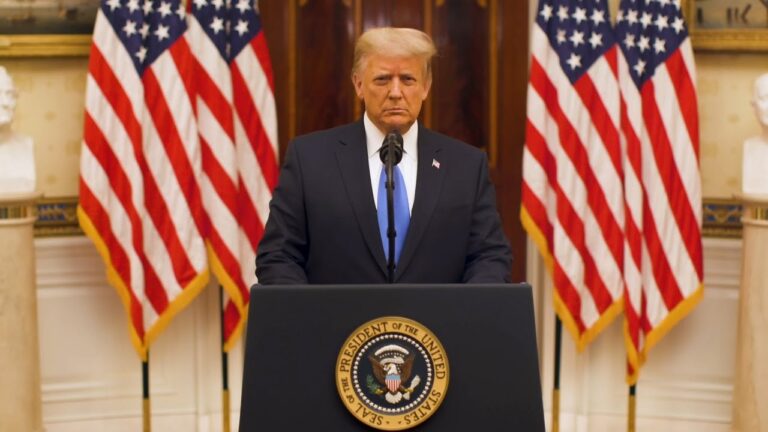
THE PRESIDENT: Thank you very much. I’d like to begin by saying that we’re continuing to negotiate with the Democrats to get our great workers and small businesses all over the country taken care of. I think we — we’re getting close to a deal. It could happen. It could happen. A lot of good work has been going on, and we could have an answer tomorrow. And we’re going to see what — what exactly does take place.


Watch on Youtube https://www.youtube.com/watch?v=_wSUNJnsq50

We’re also looking at helping our hospitals and our rural hospitals, who have been hurt very badly. The rural hospitals, for a long time, have not been treated properly. We’re looking to help them, and beyond. So we’re looking at hospitals also, as part of the package. And we’ll see how that all comes out.

But a lot of good things are happening. Some very good negotiations. I just got off the phone with the Secretary of the Treasury, and we have some very good negotiations going on right now. And I think you could have a nice answer tomorrow, but we’ll see.

America continues to make steady progress in our war against the virus. As of today, we’ve tested 4.18 million Americans. That’s a record anywhere in the world. The United States has now conducted more total tests than all of the following nations combined: France, the United Kingdom, South Korea, Japan, Singapore, India, Austria, Australia, Sweden, and Canada.

And our testing is expanding very rapidly by millions and millions of people. So we’ve — we’ve done more testing than all of these countries combined: France, United Kingdom, South Korea, Japan, Singapore, India, Austria, and Australia, Sweden, and Canada. That’s something. Right?

We’re doing a great job. We’re — we are. This team is an incredible team, and that includes Army Corps of Engineers, a lot of our military people, our admirals, our generals. Got one of our great admirals here, who’s done an incredible job. You haven’t slept too much in the last two months either. Look at him. (Laughs.)

ADMIRAL GIROIR: No, sir.

THE PRESIDENT: That’s — somebody said to me, “President, you look tired.” I said, “I should be tired.” We should all be tired. But we have to win, right?

ADMIRAL GIROIR: Yes, sir.

THE PRESIDENT: Tomorrow, the President — the Vice President will lead a call with our nation’s governors from FEMA headquarters, Mike —

THE VICE PRESIDENT: Yes, sir.

THE PRESIDENT: — to review what more they can do and do together to develop locally tailored testing strategies. Working very hard with governors now on testing. We want to help them out.

Before the call, we’ll send them a full list of all of the large laboratory machines in the states. They have a lot of machinery in the states that some aren’t that aware of, but they’re there, and they’re really high-quality machines, by the way. And the potential capacity of those machines, if they’re fully utilized — a couple of them didn’t know that they could be utilized in a different manner. They’re only up to 10 percent, and they can go 90 percent more.

Many governors are still relying on their state laboratories rather than the full and much larger capacity that is available to them. As an example, commercial laboratories, such as Quest and LabCorp — these are massive laboratories that can handle a lot more than they’re being sent. A few days ago, it was at 30 percent. They’re only at 30 percent capacity now. I don’t know — probably the same, but they have a lot of capacity.

In addition, academic laboratories, big research labs — there’s tremendous capacity out there. And some of them want the fast — you know, the instant Abbott machine, which just came about due to the research during this little short period of time. And it’s very quick, but these labs can do them very quickly also, and they’re — they’re massive. They can handle much more — much more than the machine, the small machine, can handle.

We continue to procure millions of swabs, test collectors. I have something here. Just happen to have it. It’s a swab. It looks innocent. Not very complicated. Anybody like to see what it looks like? Should I open it? Does everybody?
Source: WhiteHouse.gov Website under the Creative Commons Attribution 3.0 License.

Putin, I extend greetings to all Christians on the day of Christ’s Resurrection

-

Vladimir Putin greeted Orthodox Christians and all citizens of Russia celebrating Easter Sunday.
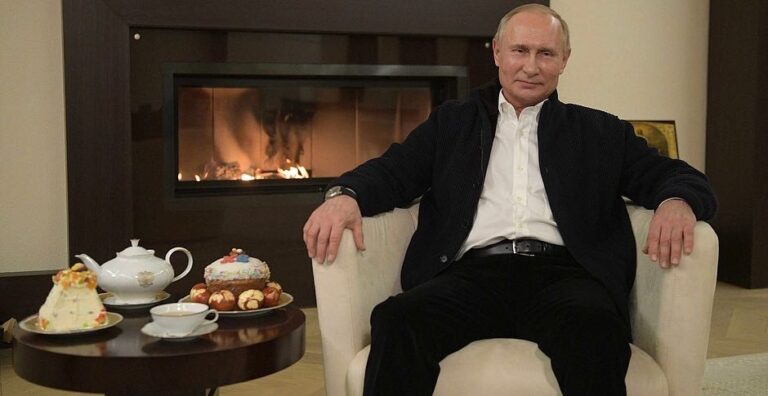
With great sincerity, I extend greetings to all Christians on the day of Christ’s Resurrection, the great holiday of Easter.

I know that members of all religious denominations and followers of all traditional religions in Russia will join me in these greetings.

This year celebrations are being held under mandated restrictions. They are necessary to fight the spread of the coronavirus infection, a disease that is by now known throughout the world.

By joining efforts, together we are overcoming challenges as they emerge. And as I have repeatedly said, we have everything we need for this – a healthy and strong economy, scientific capabilities, the necessary material base and highly professional healthcare.

We are carefully monitoring the experience of foreign countries and are engaged in active cooperation with our foreign friends and colleagues. We are aware of what is going on and see the risks, and we know what needs to be done under any circumstance we might face. We are doing what is required, and in a pre-emptive manner.

True, all these steps to protect people’s lives and health and support the economy require vast additional resources and funds. We have them. And we are making use of them – thriftily, and selectively and with the main priority of helping people and families who have found themselves in a difficult situation.

Authorities on all levels are functioning in a streamlined, orderly manner and recognize the responsibility before them. The situation is under total control. Our society as a whole becomes united when confronted with a common threat.

I would like to again thank those who responded to the call of their hearts and lent a helping hand to their neighbors, to those who need it most. Thank you to all of you again. There is no doubt that we will overcome all the trials we are facing.

And today’s spiritual and joyous event and centuries-long Easter traditions will also provide the support each of us needs, while also strengthening our hope and faith. Because Easter and the Resurrection of Christ are tokens of the triumph of life over all its adversaries. It is a symbol of purification, revival and the continuity of life.

As the saying goes, God helps those who help themselves That is what we do. But on this brilliant holiday of Christ’s

Resurrection I feel the need to say – With God’s help, everything will be fine.

Happy Easter. Be happy and healthy.
Source: President of Russia Vladimir Putin Website

Queensland Government delivers $4 billion support for health, jobs and business

-

Queensland Government delivers $4 billion support for health, jobs and business
Emergency measures to support Queenslanders, the business community and the industries which will deliver the State back to economic prosperity have been passed by Parliament.

Deputy Premier and Treasurer Jackie Trad said the Appropriation (COVID-19) Bill 2020 provides additional funding of more than $4 billion over two years to protect Queensland during the coronavirus pandemic.

“The COVID-19 crisis is causing unprecedented economic and fiscal challenges all over the world,” Ms Trad said.

“It is affecting governments, industry, business, households and individuals.

“To protect jobs and safeguard our economy, the Palaszczuk Government has announced a $4 billion economic relief package, the biggest stimulus package assembled by any State or territory.

“In addition to this, the Government is providing assistance to support businesses, industry, and the arts sector.

“The Government is also delivering housing services to vulnerable Queenslanders to prevent homelessness.”

Our focus is to:

Protect traditionally strong industries that are continuing to operate
Preserve industries that have been shut down so they can bounce back
Invest in public services to support the immediate needs of the community
Plan now for our economic recovery
Ms Trad said the Bill provides additional appropriation for expenditure on COVID-19 related relief measures that have been announced previously by the Government.

These economic relief measures include:

$1.2 billion to expand fever clinics, emergency department capacity, acute care services and regional aeromedical services for remote communities
$300 million in cost-of-living relief for households, including a $200 credit for all 2.1 million households to offset the cost of water and electricity
$2.5 billion for business including payroll tax relief, relief for businesses renting government premises, a worker displacement program to help unemployed people get jobs in sectors facing shortages, electricity bill rebates for all Queensland small and medium-sized businesses that consume less than 100,000-kilowatt hours, liquor licensing fee waiver, and assistance to support large businesses to scale up when economic activity improves.
In addition, the Government is also providing:

A $500 million Jobs Support Loan facility, interest-free for the first 12 months, to support businesses to keep Queenslanders in work, with loans of up to $250,000
$400 million in land tax relief for property owners, that must be passed on to tenants
An initial $27.25 million package to assist local government, business and industry with resilience and recovery strategies, targeted financial support and counselling
A $24.7 million housing and homelessness plan to deliver accommodation for vulnerable Queenslanders needing to self-isolate, funding for homelessness providers, and enhancements to the Home Assist Secure program.
“This Bill provides the Government with the supply certainty needed to ensure that funding is available to support Queenslanders through the COVID-19 crisis,” Ms Trad said.

“It ensures that we can support our most vulnerable through this difficult time and help us prepare for the future and assist with recovery following COVID-19.”
Source: Deputy Premier, Treasurer and Minister for Aboriginal and Torres Strait Islander Partnerships
The Honourable Jackie Trad

WHO Coronavirus disease 2019 (COVID-19) Latest Results


WHO Coronavirus disease 2019 (COVID-19) Latest Results


Yemen reported its first case of COVID-19 in the past 24 hours.
• WHO has developed the following definition for reporting COVID deaths: a
COVID-19 death is defined for surveillance purposes as a death resulting from
a clinically compatible illness in a probable or confirmed COVID-19 case, unless
there is a clear alternative cause of death that cannot be related to COVID
disease (e.g., trauma). There should be no period of complete recovery
between the illness and death.


https://www.youtube.com/watch?v=AyV0F9kViRA&t=177s


WHO Director-General Dr. Tedros, in a press conference held yesterday,
highlighted the issue of planning the transition out of stay-at-home
restrictions: “WHO wants to see restrictions lifted as much as anyone. At the
same time, lifting restrictions too quickly could lead to a deadly resurgence.”
For more information, please see here.
• WHO has updated its Q&A page on COVID-19 to provide information of how
the virus spreads and how it is affecting people worldwide. For more details,
please see here.
• To date, there are a limited number of publications and national situation
reports that provide information on the number of healthcare worker (HCW)
infections. Understanding infection in HCWs is critical to informing the
specific infection prevention and control measures needed to protect HCWs
from infection. For more details, please see ‘Subject in Focus’ below.


-


Healthcare workers (HCWs) play an essential role at the front lines, providing care for patients. In the context of
COVID-19 and during routine health services, they provide critical care to patients and ensure that infection
prevention and control (IPC) measures are implemented and adhered to in healthcare facilities in order to limit
healthcare-associated infections.
As of 8 April 2020, 22 073 cases of COVID-19 among HCWs from 52 countries had been reported to WHO. However,
at the present time, there is no systematic reporting of HCW COVID-19 infections to WHO and therefore this number
probably under-represents the true number of COVID-19 HCW infections globally.
To date, there are a limited number of publications and national situation reports that provide information on the
number of HCW infections. For example, a publication from China CDC on 44 672 confirmed cases as of 17 February
2020 indicated 1688 (3.8%) infections were among HCWs, including five deaths.1
In Italy, a situation report from 10
April 2020 reported 15 314 infections among HCW, representing 11% of all infections at that time.2
Further
publications have described the epidemiological and clinical characteristics of infections among HCWs.
3-7 While many
infections are indicated as mild, severe outcomes, including deaths, among HCWs have also been reported.
Understanding infection in HCWs is critical to informing the specific IPC measures needed to protect HCWs from
infection. A limited number of publications have identified risk factors for infection among HCWs. Preliminary results
suggest HCWs are being infected both in the workplace and in the community, most often through infected family
members.8
In healthcare settings, factors associated with HCW infection have included: late recognition or suspicion
of COVID-19 in patients, working in a higher-risk department, longer duty hours, sub-optimal adherence to IPC
measures such as hand hygiene practices, and lack of or improper use of personal protective equipment (PPE).9-10
Other factors have also been documented, such as inadequate or insufficient IPC training for respiratory pathogens,
including the COVID-19 virus, as well as long exposure in areas in healthcare facilities where large numbers of COVID19 patients were being cared for.
To prevent infection in healthcare settings, WHO recommends the use of contact and droplet precautions by HCWs
caring for patients with COVID-19.11 WHO also recommends that airborne precautions be applied in settings in which
procedures and support treatments that generate aerosols are performed.11 In this context, the correct use of PPE is
critical, in particular wearing appropriate PPE for the clinical setting, paying special attention to procedures to put on
and remove PPE correctly, and adhering to hand hygiene and other IPC measures. When these precautions are
applied correctly and consistently, alongside standard precautions and administrative, engineering and
environmental controls, the risk for HCW infections is substantially reduced or avoided altogether.
WHO has also developed a risk assessment tool for exposed HCWs in a healthcare facility12 and a seroepidemiological protocol to determine risk factors for infection among HCW,13 and is finalizing an in- depth
epidemiological surveillance tool for HCW infections. A number of countries are currently using these tools and
protocols, and this information will be essential to understand the extent of infection among HCWs, the extent of
transmission within healthcare facilities and the best approaches to protect HCWs against infection.
Finally, as HCWs caring for patients with COVID-19 are subject to long working hours, fatigue, occupational burn-out,
stigma, physical and psychological violence, and back injury from patient handling, it is important that efforts be
made to maintain the physical and mental health of HCWs and the quality of care. Therefore, WHO recommends
that IPC measures be complemented by occupational safety and health measures, psycho-social support, adequate
staffing levels, and clinical rotation, to reduce the risk of burn-out, for safe and healthy working environments and to
respect the rights of health workers to decent working condition


Source: World Health Organization (WHO)


Coronavirus, Greens Larissa Waters we must leave no one behind in this crisis

-

Senator Larissa Waters (Queensland—Leader of the Australian Greens in the Senate) (8 April 2020) Coronavirus Economic Response Package (Payments and Benefits) Bill 2020,


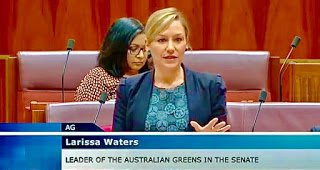
Senator Waters: I rise to speak to the package of coronavirus bills that have come before us today. This is not an easy time for anyone. I’d again like to acknowledge and commend the immense efforts of our nurses, our doctors, our paramedics, our cleaners, our pharmacists, our aged-care workers and our supermarket staff—all of those who are helping us get through this most challenging time. We recognise the immense risk that healthcare workers, in particular, are taking to save others, and we will be pushing to make sure that they’ve got the personal protective equipment and the ICU beds that they need to tackle this crisis. We’ll be proposing changes to allow healthcare workers to access workers compensation if they test positive for coronavirus, without having to prove that they contracted it at work.


Our hearts go out to all those who have lost loved ones, to people who have the virus and to those who have family members or friends who are unwell. To families and friends who are separated by isolation and those who are struggling without the social interactions that usually sustain them—again, we are thinking of you and we are you. In these uncertain times, the financial difficulties and anxiety continue to put a strain on support services. So I’d like to acknowledge the social workers, the mental health support teams, the frontline domestic and family violence workers, the child support agencies and others who are working tirelessly to keep people safe in this pressure-cooker environment. Experience in other countries shows that these services, sadly, can expect to be stretched for many months to come. And whilst I welcome the announcements made to date for increased family violence crisis accommodation, support for referral services and a funding reprieve for the crucial WESNET safe phones program, it’s still not enough to meet increased demand and keep everybody safe from family and domestic violence. I urge the government to provide the significant extra funding that’s needed to allow frontline family violence services to actually keep up with demand and make sure no-one is turned away.


The Greens also acknowledge teachers, who’ve borne the brunt of policy uncertainty for weeks and who’ll spend their Easter break working on ways to deliver classes remotely in term 2, often whilst homeschooling their own children at the same time. We acknowledge the early childhood education workers, who have been at the forefront of our collective response to this pandemic.


This crisis has highlighted the essential link between accessible and free child care and workforce participation, and the Greens will push for child care to remain free once this pandemic has concluded. But we also recognise that the risks to those workers are immense, and we will continue to insist that early childhood teachers have options to protect their health and have access to appropriate personal protective equipment.


The Greens would also like to acknowledge the millions of parents who are struggling to work from home whilst homeschooling their kids and mediating between warring siblings trapped indoors, caring for elderly relatives and negotiating changes to shared care arrangements whilst maintaining their own mental health.


As the Greens spokesperson on women and a proud feminist, I would also like to reiterate my colleague Senator Faruqi’s observation at the last parliamentary sitting that this is also a gendered crisis. Women are disproportionately represented in the frontline roles needed to respond to this crisis. Eighty per cent of our healthcare workers are women, 70 per cent of pathology services are provided by women, and the majority of teachers, carers, cleaners and social service providers are women.


Women are disproportionately represented in the short-term casual roles that are currently ineligible for the JobKeeper support, especially those in the hospitality, healthcare and retail sectors. They are also disproportionately at risk of domestic and family violence whilst in isolation with an abusive partner, and women will, sadly, also bear a disproportionate load of the caring required to see us through this crisis.


We will be proposing amendments today that address some of those issues, but as a society we have a lot to do to address this gender imbalance in the future. After a summer of bushfires and now a pandemic, it’s clearer than ever that Australians are all in this together, and we need to support each other.


CHAMBER


Wednesday, 8 April 2020 THE SENATE 38


On transparency, I want to touch on the importance of democratic institutions in a crisis. Some decisions need to be made efficiently, and decisive actions need to be taken in an emergency, but the scale of this crisis and the response that’s required means we need more transparency and not less. We need more oversight and more debate to make sure that we’re making public health decisions that are informed by the best expert health advice and to make sure that we’re targeting funds to those who need them the most. This can make sure we come out the other side of this crisis in the strongest, fairest and most equitable and sustainable position possible.


The Greens support the oversight committee that was established earlier today, although we are disappointed that our amendments, which would have allowed the Prime Minister and ministers in the other place to be called, were not supported. But we also believe that parliament should continue to sit during this crisis, and we’ve called on the government to find ways to make that happen.


Critically, given the limited oversight that’s available outside of parliament, we must make sure that any regulatory actions enabled by these bills are strictly confined, and I’ll be moving an amendment to restrict the rule-making powers given to relevant ministers.


The country’s response to this crisis will be judged on how well we managed the health risks but also on how well we helped those who needed help to survive in this difficult period. Whilst we welcome the increase in Newstart, now called jobseeker allowance—something which my colleague Senator Siewert has been championing for 10 years and which we probably wouldn’t have seen happen without the efforts of her and the sector—we will be fighting to make that increase permanent once this pandemic is over.


From the outset of this pandemic, we have said that a wage subsidy was the most equitable way to offer security to the people who are most affected, and we’re pleased that the government has finally come around and supported this intent behind the JobKeeper scheme. But we are concerned that those schemes still fail to cover a number of critical and vulnerable sectors of our society: casual workers, migrant workers and international students, and people receiving the disability support payment and the carer payment. So my colleagues and I will be proposing a number of amendments to plug those holes in the safety net and make sure that no-one is left behind.


On casual workers, every job that we’re able to keep through this crisis is a job we don’t have to re-create when we get through the other side. When large-scale events were first being shut down, the arts and hospitality industries were the first to ring the alarm bells. They warned that this crisis wouldn’t put just their jobs in jeopardy but would risk the stability of their entire industry. Festivals, concerts, music halls and theatre productions have been shut for weeks. These closures have pushed arts workers to the brink, but, despite being some of the worst off, they’re getting nothing from today’s package.


We’ve heard from a flood of people that have been working in the service industry for years but have been shut out of the support because they’ve recently moved jobs. By limiting the jobseeker and JobKeeper payments to people who’ve worked for their current employer for more than a year, the government has shown they don’t understand the modern workforce. If they’d spoken to young people or people who work in hospitality or arts or the tourism industry, they’d know that many industries rely on seasonal and irregular work. Bartenders, tour guides and even teachers are now expected to move through several workplaces and are just as important to the success of a workplace whether they’ve been there for two months or two years. The arts, hospitality and tourism sectors have high levels of seasonal unemployment, and this package has done nothing for them. My colleague will be moving an amendment to address that and we hope to receive support, although sadly we are not expecting that to occur. Last time we were here, the government made a mistake by refusing to accept the Greens amendments to include wage and job guarantees in their stimulus legislation. We acknowledge that they have now redressed that, but today they are making a mistake by leaving over one million casual workers behind.


On temporary visas, over a million people have chosen to make Australia home, helping make our country stronger by contributing their skills and paying taxes here. They’ve been contributing like any other person here, but, when they’ve needed help, this government has turned its back on them. Many work in sectors that are essential to our survival during this time: health, aged and disability care, agriculture and child care.


The government has made changes to visa arrangements in order to gather a workforce to help our farmers, acknowledging that these visa holders fill a critical workforce gap. Despite this, the government refuses to extend eligibility for JobKeeper to them. Many of these folk are also ineligible for Medicare, and that is a very scary thought during a global pandemic. How does the government think these people will get by? They aren’t eligible for any support for being out of work, they can’t get any support to stay in work, they’ve got bills piling up and,


CHAMBER


Wednesday, 8 April 2020 THE SENATE 39


with international flights being cancelled across the board, many will find it difficult or impossible to go back home. This isn’t just a betrayal of the workers who put their faith in Australia; it’s a betrayal of the businesses that choose to employ them. If an employer has chosen to employ migrant workers, today the government is punishing them for that decision. This will particularly harm the service and hospitality industries.


Universities have also been left out in the cold. Many universities these days rely on a casualised workforce. They are trying their best to get through this crisis but they’ve been hit for years by declining government funding. They’ve had their enrolment numbers hit hard through bans on international travel and they’re now being told by the government that their employees aren’t worth keeping on. What an insult. Universities are incredibly important and should be protected. They taught the scientists who are working around the clock to find a vaccine and save people’s lives. And they’re not only places of learning but also play a massive role in our communities. Think of the important community radio stations that are run out of universities, of the fact-checking units that keep us all accountable, and the contributions that they make to local business and community programs. These institutions will provide vital recovery opportunities from this crisis. We’re going to need highly skilled workers to pull us out of this recession, and without universities we’re going to find it a lot tougher to find them.


Under the JobKeeper scheme, charities are only eligible for the subsidy if they estimate that their turnover has fallen by 15 per cent relative to a comparable period. And while this helps some charities, those that rely on large government grants won’t be able to demonstrate the 15 per cent decline in revenue if tied grants are included. That’s why my colleague will be moving an amendment to address that.


Now, on to disability support payments and carers. The COVID-19 supplement has been a welcome relief for many recipients of income support, but two key groups continue to miss out—carers and those on disability support pensions—and yet the living costs that they face are higher in these self-isolation days. Instead of the extra $550 a fortnight that has allowed so many Australians to be pulled from poverty, many carers and DSP recipients are still living with the threat of eviction, hunger and worrying about keeping the lights on. The Minister for Families and Social Services was given extraordinary powers in the last sitting of parliament to extend the supplement to other categories of income support recipients. With the stroke of a pen she could help DSP recipients and carers survive this crisis, and the Greens urge her to do just that.


On renters, housing is a human right. Keeping a roof over people’s heads during this crisis is surely the most fundamental thing that we could do. The government can’t tell people to stay at home, but it looks the other way when this crisis puts people in a financial situation so tenuous that they don’t know if they can pay the rent. The Greens have heard from so many people who’ve been threatened with eviction by their landlord in the same week that they’ve also lost their job. We’ve also heard stories of landlords who’ve reduced or waived rents, and we commend that, but leaving it to the goodwill of individual landlords is not enough. National cabinet met yesterday and again failed to come up with a national plan to support tenants. We’ve had broad aspirational statements but no legislation from this government. We need a solution. Our Greens’ colleagues in several state parliaments have secured temporary bans on eviction to give tenants security during this crisis. That’s fantastic, but we need a national eviction ban and we need rent holidays for tenants who are struggling to meet payments during this crisis.


This crisis has highlighted the extent to which Australia’s safety net has been picked away at for 30 years. We’ve decimated the public health system and the social security system, we’ve become over-reliant on so-called corporate responsibility, and we’ve hollowed out the manufacturing sector. That means we weren’t as well set up to face this crisis as we could and should have been. In just a few short weeks we’ve seen the beginnings of a stimulus that could set us up for better things and play to our collective strengths. We’ve seen the importance of a strong social safety net, and it’s my hope that the structures that we are rapidly rebuilding in this crisis will be retained. It’s a chance to think how we want this country to go forward, and hope to dream for a better future. We are all in this together, so let’s not leave anyone behind.


I will be moving the Australian Greens second reading amendment on sheet 8950, which has been circulated in the chamber in my name. This amendment would ensure that all casuals, people on temporary visas, those in the gig economy and those in universities and charities can fully access JobKeeper. I want to flag that we’ve heard some statements by the government that they won’t be countenancing any amendments. Well, shame on them. That is the job of this parliament: to scrutinise this legislation, to seek to improve it, to make sure that no-one is left behind. That is precisely what the Greens’ amendments will be doing today, and we urge folk in the chamber to give them serious consideration and to act on them—if not today, then at least to use those discretionary powers which various ministers have been granted under these laws to close those gaps, to genuinely not leave anyone behind. If we are indeed all in this together, then that’s the least we can do. Source Parliament of Australia Website

Labor supports ScoMo $1,500 fortnight to six million eligible workers

-

We gather again today in unusual circumstances, during extreme times to consider extraordinary responses to the twin crises our nation faces – to our nation’s health and to our economy. What we do today is what Governments have always done in such circumstances, when our nation is under threat that previous generations of Australians have done before us.


Today we act to protect our nation’s sovereignty. When Australian lives and livelihoods are threatened, when they are under attack, our nation’s sovereignty is put at risk and we must respond. As a Government, as a Parliament, as a nation, together.


Nurses, teachers, drivers – cleaners, doctors, police, and paramedics – factory workers, engineers, bankers – grocers, miners and farmers –  pastors, priests and imams – politicians, union officials, even lawyers – mums, dads, grandparents, kids, families. All of us.


Our sovereignty is measured in our capacity and freedom to live our lives as we choose in a free, open and democratic society. We are not a coerced society. We act through our agreement and our willful support of the national interest, through our many institutions, including this Parliament and the many others around this country. And we will not surrender this.


Our sovereignty is enabled by having a vibrant market economy that underpins our standard of living that gives all Australians the opportunity to fulfil their potential. To have a go and to get a go. And we will not surrender this. Our sovereignty is demonstrated by the quality of life we afford Australians, with world-class health, education, disability, aged care, and a social safety net that guarantees the essentials that Australians rely on.


We will not surrender this.


And above all, our sovereignty is sustained by what we believe as Australians, what we value, and hold most dear, our principles, our way of doing things. We will never surrender this. So make no mistake, today is not about ideologies. We checked those at the door.


Today is about defending and protecting Australia’s national sovereignty. It will be a fight. It will be a fight we will win. But it won’t be a fight without costs, or without loss.


Protecting our sovereignty has always come at a great cost, regardless of what form that threat takes. And today will be no different.


So today, we will agree to pay that price, through the important measures we will legislate today. But today, as a Government, I want to commit to all Australians as Prime Minister, that once we have overcome these threats – and we will – we will rebuild and restore whatever the battle takes from us.


As a nation we are working together nationally, especially through the National Cabinet. And I wish to again place on record my thanks to all of our Premiers and Chief Ministers. We have come together to lead together in a new way through these crises.


I thank all my Ministers, who I lead together with the Deputy Prime Minister and the Treasurer, and we are all together ably advised by our experts and officials in the Australian public service, and I particularly want to acknowledge Professor Brendan Murphy and his team.


I thank all of my colleagues on the Government benches for their input and leadership in their communities, as I do all members of this House and the other place. I thank the Opposition leader and his parliamentary team and all of his staff.


And I extend my thanks to businesses large and small, to unions, to the banks, to the media, to the not for profits, welfare and charitable organisations, indigenous leaders, and churches and other faith groups for their prayers, support and the many efforts they are making.


Together, we have now established the key baseline supports and protections that have bought us much needed time in this crisis, to get us through in these place. And I will speak of those actions today. But there is a long way to go in this fight.


This has been our road in. We will now lead the country on the road through. And then the road out and beyond.


Mr Speaker it’s been 16 days since the House last met. As of this morning, 5,956 Australians have contracted the coronavirus. Thankfully, thankfully 2,547 have recovered. 294 are hospitalised. 92 in intensive care and 36 are on respirators. Sadly, there have been almost 50 deaths in Australia. Tens of thousands more have died across the world.


One of those was the Member for Cooper’s father-in-law. On behalf of the Government, and the Parliament, I extend our deepest sympathies to the Member for Cooper and her family – as they are with all who have lost loved ones, both in recent times here and overseas and are fearful of that event occurring in the future. And as a nation we especially send our best wishes to our good friend Prime Minister of the United Kingdom Boris Johnson. Get well soon Boris, we need you.


When the House last met, new cases were growing at more than 20 per cent a day. In recent days, it has averaged two percent a day. This is very encouraging.  We are flattening the curve. We are buying ourselves precious time in this fight.


And I want to thank the overwhelming majority of Australians for doing the right thing, you are saving lives, you are saving livelihoods. But we have to keep up our efforts. Progress can be easily undone as we have seen in other places around the world.


We are only days away from Easter. The time that should give us great hope. And the message is clear though. Stay home. Don’t travel. Don’t go away. We can’t let up now.


Mr Speaker, as I’ve said many times, we are facing twin crises. A health crisis and an economic one. And we must deal with them simultaneously – and in real time and so often they work against each other. But that is the balance we must achieve.


Since the Parliament last met, we have taken many action on many fronts.


People coming back from overseas now have to self-isolate for 14 days in a designated facility. The National Cabinet has further tightened restrictions on public gatherings. And these are taking some time to get used to. We’ve expanded the coronavirus testing criteria to include people with fever or acute respiratory infection under key categories.


Australians should be proud, very proud, that we have one of the most comprehensive testing regimes in the world. We have one of the highest rates of testing in the world.


Today some 313,000 tests for the virus have been conducted across Australia – this is more than double the number since we last met and I commend the Minister for Health on his efforts in this respect. Since the Parliament last met, we have strengthened the preparedness of our hospitals and are working with the states to triple our ICU capacity.


We’ve changed medical indemnity rules to encourage retired health workers to return to practice. We’re supporting up to 20,000 registered nurses to get online training to better prepare them to deliver care in high dependency and intensive care units. We have finalised an historic partnership with private hospitals – ensuring that over 30,000 hospital beds and 105,000 skilled workers are mobilised to work in conjunction with the public hospital sector. 


The Government will guarantee the viability of all 657 private and not-for-profit hospitals across Australia through these challenging times. Because we need them. To preserve critical resources, we’ve acted to suspend all non-urgent elective surgery. Of course, we know many Australians still need to see their doctor during this time, and they should, and to get the medicines they depend on for their health.


So we’ve expanded Medicare-subsidised telehealth services. And we’ve given extra incentives for GPs and other health practitioners so that their practices can stay open for face-to-face services where needed. We know Indigenous Australians are at great risk from COVID-19 and we are making $123 million available for targeted measures to assist Indigenous communities and businesses. 


We are supporting those Australians with a disability through the efforts of the National Disability Insurance Scheme.


We’ve taken action against those who would seek to profiteer from this health crisis. By buying goods like face masks, hand sanitisers and medicines and re-selling them at big mark-ups, or exporting them in bulk overseas. It’s not on. These products should be for Australians, first and foremost. We have invested an initial $74 million for mental health support. 


And to counter the greater risk from domestic violence, we have committed an additional $150 million to support Australians experiencing domestic, family and sexual violence.


And while we have continued to build our National Medical Stockpile. All this time, over 30 million masks have arrived over recent days, with great help from groups like the Minderoo Foundation, with more than 500 million masks on order, and domestic production also underway. 


Mr Speaker, our Government has moved decisively to address the economic storm that also confronts us. This is the greatest economic crisis to afflict the world in many generations.


We have responded with the biggest economic lifeline in Australia’s history that we will consider today.  And I want to thank the treasurer for his leadership as these measures have been brought together. Working together, I should say also, with the treasurers of the states and territories on so many other measures.


So far, more than 200,000 additional JobSeeker claims have been finalised over the past few weeks. With the COVID-19 supplement doubling our safety net support. Thousands of extra workers have been recruited to ensure we can move through the claims still outstanding as quickly as possible.


Today, we will put before the Parliament our JobKeeper package. JobKeeper will keep Australians in jobs and it will keep the businesses that employ them in business, both now and into the future. The $130 billion economic life-line will provide payments of $1,500 per fortnight to an estimated six million eligible workers through their employer.


As of yesterday afternoon over 700,000 businesses have registered for this support, and this number continues to grow. It is the equivalent, this payment, of around 70 per cent of the national median wage. For workers in accommodation, hospitality and retail services, some of the most affected by this economic crisis, it equates to a full median replacement wage.


We also have extended the partner pay income test for those on JobSeeker. The partner test is being changed from about $48,000 to just over $79,000. As well, we want those working with children – and particularly our essential workers – to have confidence in their child care arrangements.


The Government is providing business continuity payments to support child care services to stay open. This means around one million Australian families will be able to receive free child care. The investment complements the more than $1 billion the Government expects the sector to receive through the JobKeeper payment. Managing our workforce is a critical part of keeping the economy going. So we have announced changes to temporary visa holders – including for international students, temporary skilled visa holders, and working holiday makers. 


We are also relaxing the visa conditions for our Seasonal Worker Programme and the Pacific Labour Scheme so that participants can stay for up to one more year. This is essential for our agricultural sector, who for the first time in a long time are seeing rain.


These extensions are subject, of course though, to labour market testing, allowing local job seekers, Australians, the opportunity to work. The Government knows that many Australian businesses are under pressure – and we won’t allow a fire sale of Australian businesses to foreign interests. The Treasurer has announced temporary changes to the foreign investment review framework to protect Australia’s national interest. This means all proposed foreign investments will now require approval, regardless of the value or nature of the foreign investor.


With businesses and families under stress, the National Cabinet has agreed to a moratorium on evictions over the next six months for commercial and residential tenancies in financial distress.


Yesterday, the National Cabinet agreed that states and territories would implement, legislate and mandate, a mandatory Code of Conduct for commercial tenancies. The Code sets out the good faith leasing principles for these tenancies. It means that businesses will be able to emerge on the other side and start trading again, not weighed down by disabling debts that would otherwise keep their doors closed forever.


We are all in this together. I know that some families coming into this health and economic crisis were already doing it tough. That’s why we are providing an additional $200 million to help vulnerable Australians pay bills, food, clothing and petrol. Additionally, we are providing almost $60 million to assist older Australians with food and other essential items.


To mobilise the full resources and talent of the private sector behind this national mission, we have established the National COVID-19 Coordination Commission under the leadership of Nev Power and I thank all of those commissioners for their service.


This is about government and the private sector working together to solve problems for our nation. All the measures I have detailed today are measures that we have announced since we last met over the past 16 days.


Mr Speaker, we have a long way to go. Through the actions we have taken to date, we have bought valuable time, to chart a way out over the next 6 months. 


But there are no guarantees, and it could well take far longer. Our country will look different on the other side. But Australians will always be Australians.


We have now navigated the road in and we now can see some encouraging signs.


We do stand in a place, today, far better than most nations around the world, because of the efforts of all Australians. Flattening the curve. Buying more time. Time other countries haven’t had and we’ve seen the devastating effects on those nations and their people.


Preparing our health system for the challenges to come.


Putting in place the big economic lifeline and buffers for Australians in this, their toughest ever year in 2020.


We are charting the road through. We are all in. Our institutions are strong. Our people are strong. Australia is strong and will continue to be strong. 


We will respond to this challenge, and we are up to the fight. We will pay the price needed to protect our sovereignty, and we will chart our way out. 


We will get through this, together, Australia.


Source: Licensed from the Commonwealth of Australia under a Creative Commons Attribution 4.0 International Licence.


The Commonwealth of Australia does not necessarily endorse the content of this publication.

Roberts COVID-19 has exposed Decline In Productive Capacity Exposed

-

Senator Malcolm Roberts (Queensland) (Senate Speech Ministerial Statement 8/4/20): I seek to make a statement in response to the minister’s statement. We acknowledge that there is no manual for dealing with this virus and we empathise with the government’s challenge. That is, though, all the more reason for the government to openly share data, future projections and information with the people. As pressures mount regarding personal security, as well as emotionally and financially, on people across our nation, any shortage of data is being seen as an absence of trust by the government in the people, and that, in turn, will make it difficult for Australians to trust the government and the parliament. Government honesty and trust in the people will be met with trust from the people.


At this time, One Nation would also like to thank everyone who is caring for us and keeping us safe, including healthcare workers, police, defence and emergency workers, and everyone serving others, including those helping to supply and feed us, teach our children, generate electricity, collect garbage, clean, supply water and much more. They are people who are keeping services working for us all.


COVID-19 has exposed as severely lacking in our current economic and industrial structures the productive capacity and economic resilience that were once part of Australian culture and history. We need to take this opportunity to take stock and then rebuild our society on the values, systems and cultures that ensure a return to personal enterprise, instead of the creeping dead hand and suffocating blanket of a large and ever-growing central government. History shows that the secret of human happiness and human progress is nothing new and has been discovered, lost and rediscovered for millennia—and, more recently, lost in our country. We need to bring back Australia’s economic sovereignty, productive capacity and economic resilience, based on restoring personal enterprise and compliance with a constitution that enshrines competitive federalism and individual liberty. We all need, as representatives of the people and servants to the people, to ensure that the people’s government is held accountable for what it does and does not do during this emergency.


We are giving the government a blank cheque, and rightly so, because there are many uncertainties in this. There is such a complex system that we are already trying to amend. But ministers have the power to make these changes through regulations, and that is given to ensure that cracks in the legislation are closed quickly to ensure people are covered fairly right across our country. It is a blank cheque, but we must do our job as senators to make sure that we review that and the progress of it. What many Australians, looking beyond our health and financial safety, want is to make sure that we leave COVID-19 behind us, and that we are left with better freedoms and liberties and a stronger, freer economy than before.


Source Parliament of Australia Website

WHO 1 million confirmed cases of COVID-19 reported including 50,000 deaths.

-

WHO: Good morning, good afternoon and good evening.

As Tarik said, we’re delighted to be joined today by Kristalina Georgieva, the Managing-Director of the International Monetary Fund. Welcome, my sister.


Kristalina will say more in a few minutes about the economic impact of the pandemic and what the IMF is doing to support countries and the global economy.  


More than 1 million confirmed cases of COVID-19 have now been reported to WHO, including more than 50,000 deaths.


But we know that this is much more than a health crisis. We are all aware of the profound social and economic consequences of the pandemic.


The restrictions many countries have put in place to protect health are taking a heavy toll on the income of individuals and families, and the economies of communities and nations. 


We are in a shared struggle to protect both lives and livelihoods.


In the short term, countries can ease the burden on their populations through social welfare programs to ensure people have food and other life essentials. 


For some countries, debt relief is essential to enable them to take care of their people and avoid economic collapse. This is an area of cooperation between WHO, the IMF and the World Bank. 


But ultimately, the best way for countries to end restrictions and ease their economic effects is to attack the virus, with the aggressive and comprehensive package of measures that we have spoken about many times before: find, test, isolate and treat every case, and trace every contact. 


If countries rush to lift restrictions too quickly, the virus could resurge and the economic impact could be even more severe and prolonged.


Financing the health response is therefore an essential investment not just in saving lives, but in the longer-term social and economic recovery.


There are three main areas for countries to focus on.


First, we call on all countries to ensure core public health measures are fully funded, including case-finding, testing, contact tracing, collecting data, and communication and information campaigns.  


Second, we also call on countries and partners to strengthen the foundations of health systems. That means health workers must be paid their salaries, and health facilities need a reliable supply of funding to purchase essential medical supplies.


Third, we call on all countries to remove financial barriers to care. 


If people delay or forego care because they can’t afford it, they not only harm themselves, they make the pandemic harder to control and put society at risk.


Several countries are suspending user fees and providing free testing and care for COVID-19, regardless of a person’s insurance, citizenship, or residence status. 


We encourage these measures. This is in an unprecedented crisis, which demands an unprecedented response. 


Suspending user fees should be supported with measures to compensate providers for the loss of revenues. 


Governments should also consider using cash transfers to the most vulnerable households to overcome barriers to access.  


This may be particularly important for refugees, internally displaced persons, migrants and the homeless.


===


The pandemic is also having an effect on the fight against other diseases, like polio.


As you know, in recent years we have driven polio to the brink of eradication. This has been a massive global effort, started by Rotary, supported by many other partners, and led by thousands of health workers, vaccinating children in some very difficult and dangerous areas. 


Many of those health workers are now supporting the COVID-19 response.


They are tracing contacts, finding cases and providing public health information to communities. 


To reduce the risk of increasing transmission of COVID-19, the polio oversight board has made the hard decision to suspend house-to-house vaccination campaigns, knowing that this may lead to an increase in polio cases. 


To reduce this risk, we will support countries to maintain essential immunization for all vaccine preventable diseases.


WHO has published guidance for countries on how to maintain essential health services even while responding to this crisis.


The Global Polio Eradication Initiative is working to ensure that once it is safe to do so, countries can be supported to rapidly restart polio vaccination campaigns. 


While all our energy may be focused on COVID-19 now, our commitment to eradicating polio is unshakeable.


Sadly, there are reports from some countries of an increase in domestic violence since the COVID-19 outbreak began.


As people are asked to stay at home, the risk of intimate partner violence is likely to increase. 


Women in abusive relationships are more likely to be exposed to violence, as are their children, as family members spend more time in close contact, and families cope with additional stress and potential economic or job losses.


Women may have less contact with family and friends who may provide support and protection from violence.


We call on countries to include services for addressing domestic violence as an essential service that must continue during the COVID-19 response.


If you are experiencing or at risk of domestic violence, speak to supportive family and friends, seek support from a hotline, or seek out local services for survivors. 


Make a plan to protect yourself and your children any way you can. This could include having a neighbour, friend, relative, or shelter identified to go to should you need to leave the house immediately.


There is never any excuse for violence. We abhor all violence of all forms, at all times. 


Finally, the global response to COVID-19 would not be possible without the generosity of countries and partners.


Two months ago, WHO issued its Strategic Preparedness and Response Plan, with an initial ask of US$675 million to support the response.


I’m delighted to say that almost US$690 million has now been pledged or received. Of this amount, US$300 million has been given to support WHO’s work, and the rest has been given on a bilateral basis, or to other organizations involved in the response. 


I’d like to thank the State of Kuwait, which today is becoming one of the largest donors, with a total of US$60 million.


WHO’s Solidarity Response Fund has now raised more than US$127 million from more than 219,000 individuals and organizations. I’d like to thank Tencent for its contribution of US$10 million. 


I’m also pleased to announce that I have invited Unicef to join the Solidarity Response Fund. Unicef has extensive experience both in fundraising and in implementing programmes, and our partnership will help us to work together closely to save lives. Thank you so much, my sister Henrietta, for accepting my invitation.


We still have a long way to go in this fight. WHO is working every day with all countries and partners to save lives, and to mitigate the social and economic impact of the pandemic.


The IMF is a key partner, and I’d now like to hand the floor to my sister Kristalina to make a few remarks. Thank you so much for joining us Kristalina.


The WHO Headquarters: World Health Organization [2020]. Licence:  CC BY-NC-SA 3.0 IGO.

Coronavirus is there a link to New World Order totalitarian world government

Coronavirus is there a link to New World Order totalitarian world government

So many conspiracy theories around at the moment because of the Corona Beer Virus, I thought I would check if it’s true or False. Below is some of the information I dug up. Down the Bottom, On the Australian Greens Website, the Dream of a Global Governance. Hate to think what that is and how it Could be Archived

The New World Order or NWO is claimed to be an emerging clandestine totalitarian world government by various conspiracy theories.

-
Offbeat travel writer Dixe Wills nails down the essence of every single country on the planet. Say goodbye to sleepless nights fretting over the average number of puls to the Afghani, or wondering what’s in Bhutan today and whether it will still be fresh by the time you get it home. With a handy grading system to reveal who are the globe’s real top nations and which ones are letting the side down on a monumental scale, it’s no wonder that experts are declaring New World Order the most important book to be written in the last 500 years

The common theme in conspiracy theories about a New World Order is that a secretive power elite with a globalist agenda is conspiring to eventually rule the world through an authoritarian world government—which will replace sovereign nation-states—and all-encompassing propaganda whose ideology hails the establishment of the New World Order as the culmination of history’s progress. Many influential historical and contemporary figures have therefore been alleged to be part of a cabal that operates through many front organizations to orchestrate significant political and financial events, ranging from causing systemic crises to pushing through controversial policies, at both national and international levels, as steps in an ongoing plot to achieve world domination.

Before the early 1990s, New World Order conspiracism was limited to two American countercultures, primarily the militantly anti-government right and secondarily that part of fundamentalist Christianity concerned with the end-time emergence of the Antichrist. Sceptics, such as Michael Barkun and Chip Berlet, observed that right-wing populist conspiracy theories about a New World Order had not only been embraced by many seekers of stigmatized knowledge but had seeped into popular culture, thereby inaugurating a period during the late 20th and early 21st centuries in the United States where people are actively preparing for apocalyptic millenarian scenarios. Those political scientists are concerned that mass hysteria over New World Order conspiracy theories could eventually have devastating effects on American political life, ranging from escalating lone-wolf terrorism to the rise to power of authoritarian ultranationalist demagogues.

Conspiracy theorists believe that the New World Order will also be implemented through the use of human population control in order to more easily monitor and control the movement of individuals. The means range from stopping the growth of human societies through reproductive health and family planning programs, which promote abstinencecontraception and abortion, or intentionally reducing the bulk of the world population through genocides by mongering unnecessary wars, through plagues by engineering emergent viruses and tainting vaccines, and through environmental disasters by controlling the weather (HAARPchemtrails), etc. Conspiracy theorists argue that globalists plotting on behalf of a New World Order are neo-Malthusians who engage in overpopulation and climate change alarmism in order to create public support for coercive population control and ultimately world government. Agenda 21 is condemned as “reconcentrating” people into urban areas and depopulating rural ones, even generating a dystopian novel by Glenn Beck where single-family homes are a distant memory.

-
From the award-winning, internationally bestselling author of A Short History of Progress comes another fascinating, eccentric and essential book.
The USA is now the world’s lone superpower, whose deeds could make or break this century. For better and worse, America has Americanised the world. How did a marginal frontier society, in a mere two centuries, become the de facto ruler of the world? Why do America’s great achievements in democracy, prosperity and civil rights now seem threatened by forces within itself?

Sceptics argue that fears of population control can be traced back to the traumatic legacy of the eugenics movement’s “war against the weak” in the United States during the first decades of the 20th century but also the Second Red Scare in the U.S. during the late 1940s and 1950s, and to a lesser extent in the 1960s, when activists on the far right of American politics routinely opposed public health programs, notably water fluoridation, mass vaccination and mental health services, by asserting they were all part of a far-reaching plot to impose a socialist or communist regime. Their views were influenced by opposition to a number of major social and political changes that had happened in recent years: the growth of internationalism, particularly the United Nations and its programs; the introduction of social welfare provisions, particularly the various programs established by the New Deal; and government efforts to reduce inequalities in the social structure of the U.S. Opposition towards mass vaccinations, in particular, got significant attention in the late 2010s, so much so the World Health Organization listed vaccine hesitancy as one of the top ten global health threats of 2019. By this time, people that refused or refused to allow their children to be vaccinated were known colloquially as “anti-vaxxers”, though citing the New World Order conspiracy theory or resistance to a perceived population control agenda as a reason to refuse vaccination were few and far between. Wikipedia

The Australian Greens believe that:

  1. Global governance processes must be reinvigorated to advance global peace and security, justice, human rights, poverty alleviation, health and environmental sustainability. Because there is no one system of global governance.
  2. Major structural reform is needed to provide stronger, more effective and more representative multilateral institutions.
  3. The leading role of the United Nations in the maintenance of international peace and security must be recognised and respected by all countries.
  4. The international financial institutions that govern aid, development, trade and transnational financial movements must contribute to global economic justice. Read More

Wondering if all this is a link to the Corona- Virus, Well I would not have a Clue but I do know Alex Jones Info Wars who was removed by facebook and YouTube on the same day last year has been preaching and preparing US Citizens for a Globalist take-over for a Decade. Alex has been calling on Americans to Arm up, Buy up his special foods and Vitamins to last years and Warns not to take any Force Vaccinations.

Image by CounterDarkness from Pixabay