Home Blog Page 78

Trump, Our country is not supposed to be it’s not built to shut down.

Trump, Our country is not supposed to be it’s not built to shut down.

President Trump, Vice President Pence, and Members of the Coronavirus Task Force

Q    In the next hour, joining us to talk about all of that, President Trump.  And still with us, Vice President Mike Pence; the White House Coronavirus Response Coordinator, Dr. Deborah Birx; and the Surgeon General, Dr. Jerome Adams.  And welcome and thank you for being here.

THE PRESIDENT:  Thank you, Bill.

Q    Unusual circumstances, where you’re trying to communicate with the American people and we’re trying to maybe bring the American people a little closer to you and get some answers.

THE PRESIDENT:  Well, that’s true.

Q    To you, Mr. President, when was the moment that you thought, “We got to move on this”?

THE PRESIDENT:  Well, I think when I started seeing and reading about China, and seeing what was going on in China — Wuhan, specifically.  It seemed to come mostly out of there — that area, the province.

And when I saw that, and I saw the kind of death they were, you know, talking about on television, in the papers, and I started reading a lot about it.  And, really, when I had to make a decision: Do I stop people from China and specifically that area — but from China — to come into the country?  And everybody was against it.  Almost everybody, I would say, was just absolutely against it.  We’ve never done it before.  We never made a decision like that.

Q    Did somebody come to you with a bit of information, a piece of data?  Was it a world leader?  Was it a member of your own team?  What was it?

THE PRESIDENT:  No.  No.  It was instinct.  No.  We had a large group of people right behind me in the Oval Office.  And I made it — I consulted with Mike.  But we made a decision.  I made a decision to close off to China.  That was weeks early. And, honestly, I took a lot of heat.  Sleepy Joe Biden said it’s xenophobic.  I don’t know if he knows what that means, but that’s okay.  He said it’s racist, what I did.

Thousands and thousands of more people — probably tens of thousands would be dead right now if I didn’t make that decision.  And I must say, doctors — nobody wanted to make that decision at the time.  It was very, very early.  Call it luck or call it talent; it doesn’t matter.  We made a great decision.
I took a lot of heat from China.  They weren’t happy with it.  Now they understand it, and they’ve really — you know, we’re doing just fine.  But they were not happy with it.

Q    We’re bringing it to —

THE PRESIDENT:  I took a lot of heat from a lot of people.

Q    Bringing the conversation to present day, in the past day and a half you got a lot tension for this: a tweet that, I think, went out late at night.  You said, “We cannot let the cure be worse than the problem itself.”

THE PRESIDENT:  I really didn’t get —

Q    So you start to look at this 15-day period, which will come to us —

THE PRESIDENT:  Sure.

Q    Day 15 is next Monday.  Today, arguably, day 9.  What are you trying to gauge, as to how you can open the country back up again?

THE PRESIDENT:  Yeah.  When you say I took a lot of heat for that essentially, I really didn’t.  I mean, a lot of people agree with me.  Our country is not supposed to be — you know, it’s not — it’s not built to shut down.  Our people are full of vim and vigor and energy.  They don’t want to be locked into a house or an apartment or some space.  They — it’s not for our country.  We’re not — we’re not built that way.

And I said, you know, I don’t want the cure to be worse than the problem itself — the problem being, obviously, the problem.  And you know, you can destroy a country this way, by closing it down, where it literally goes from being the most prosperous — I mean, we had the best economy in the history of our country three weeks ago.  And then all of a sudden, we’re supposed to shut it down.  And then we’re supposed to pay people not to go to work.  We never had that.  We used to pay people to go to work when we had — when we had a problem.

Q    Right.  But this is a government order to go and ahead stay home.  It’s tricky though when you try and turn the faucet back on.

THE PRESIDENT:  Oh, it’s very tricky.

Q    New York could be different from Utah.

THE PRESIDENT:  It is.  It is.

Q    Louisiana could be different from Arizona.  So how do you go about making that decision here?

THE PRESIDENT:  Well, you have to make the decision.  Look, we lose thousands — I brought some numbers here.  We lose thousands and thousands of people a year to the flu.  We don’t turn the country off — I mean, every year.
Now, when I heard the number — you know we average 37,000 people a year.  Can you believe that?  And actually, this year we’re having a bad flu season.  But we lose thousands of people a year to the flu.  We never turn the country off.  We lose much more than that to automobile accidents.  We didn’t call up the automobile companies and say, “Stop making cars.  We don’t want any cars anymore.”  We have to get back to work.

Now, with all of that being said, it’s incredible what the American people have done and — and, honestly, the American people have learned.  We’ve all learned together, between the shaking of the hands and the washing of the hands.  Well, I used to wash my hands, and I always wash my hands a lot.  I never was a big believer in shaking hands.  Once I became a politician, you shake hands and you get a little bit used to it.  Like, immediately, when I see you, I sort of apologize that I’m not shaking your hand, if you don’t mind.

Q    Well, we exchanged air elbows, which is — seems to be the thing —

THE PRESIDENT:  Yeah.  I don’t even like to do — I never like to see that actually, but —

Q    Yeah, right now on Capitol Hill, you — you’ve got members of the Senate debating a $2 trillion bill.

THE PRESIDENT:  Yeah, more than that.

Q    I mean, did you think that it — it blows away the ability for us to imagine that they could pass legislation in excess of $2 trillion.  Now, who knows what’s behind the curtain there?  Who knows what is stacked into $2 trillion?

THE PRESIDENT:  You’re —

Q    How much concern do you have —

THE PRESIDENT:  Well, we canceled the deal last night —

Q    — that you could be facing criticism that President Obama faced in — in 2009, about sweetheart deals for certain companies as Democrats would argue?

THE PRESIDENT:  Sure.  I canceled the deal last night.  I said, “I’m not going to say that deal.”  Because Nancy Pelosi came in and put a lot of things in the deal that had nothing to do with the workers, that had to do with an agenda that they’ve been trying to get passed for 10 years.

And I came in — I told Mike, I told a lot of people, “There’s no way I’m signing that deal.”  I was getting calls from John Kennedy, from Ben Sasse, from many, many people — Lindsey.  I was getting calls from a lot of different people, saying this deal — Tom Cotton — this deal is terrible, what they’ve done.

They took a deal — you know, we almost had a deal, the day before.  And it was between Schumer and Mitch.  And it was really a good, solid deal.  All of a sudden, they start throwing all of the little Green New Deal stuff in, right?  And — the boardrooms, what they look like.  And, “We want green energy.  We want all this stuff.  Let’s stop drilling oil.”

They had things in there that were terrible.  Windmills all over the place and all sorts of credits for windmills.  They kill the birds and ruin the real estate, right?  A lot of problems.  I mean, a lot of problems.  And I said, “I’m not signing this deal.”

Q    But $2 trillion dollars, it’s —

THE PRESIDENT:  Now they’ve renegotiated it.

Q    It’s hard to avoid some of those trapdoors, you could argue.

THE PRESIDENT:  Yeah, but we have great things for not only companies — forget the companies.  The companies are nothing other than they are an employer of thousands and thousands of people.  And they pay them very well.  We want to protect our workers.  I want to protect our workers.  Workers first.

But you have to protect companies like Boeing.  They had a real bad year — let’s face it — with the problems, and they were in trouble before this.  And then, all of a sudden, this happened.  We can’t lose a Boeing and we can’t lose some of these companies.  And companies — frankly, Bill — that were solid as — like, AAA companies.  Because of what’s happened over the last couple of weeks, they go from AAA to being, like, they could use a hand.

Q    Tough time.

THE PRESIDENT:   We can’t — right.  We can’t lose those companies.  If we lose those companies, we’re talking about hundreds of thousands of jobs.  Millions of jobs.  The faster we go back, the better it’s going to be.  We have a pent-up energy that’s going to be unbelievable.  We’re going to bring it back fast; I really believe that.

Q    I’ve got a lot more questions.  And my — so does my colleague, Harris Faulkner.  I’ll allow her to rejoin the conversation now.

THE PRESIDENT:  She’s great.

Q    Harris?

THE PRESIDENT:  Do I have an earplug here?

Q   I’ll help you out with that.

THE PRESIDENT:  If I could do that —

Q    Go ahead, Harris.  I’ll — I’ll relay and translate.

THE PRESIDENT:  Okay.

Q    Hello, Mr. President.  So good to see you today.  This will be a little bit to relay.  I understand you guys are going back and forth on the economy and employers, but more than 66 percent of people are employed by small businesses.  The VP talked a little bit about this.  We hear you dropping big companies’ names.  The question here is, how do you shore up both as you look forward?

Q    The question is a good one.  And it’s pointed — you’re talking about Boeing, and yet you’ve got — what? — two thirds of American businesses are small businesses.

THE PRESIDENT:  Right.

Q    And you think about what they’re trying to do, in terms of adjusting to this new reality that’s been thrown on them.  What will you do for small business?

THE PRESIDENT:  Okay, well, first of all, I have to say that Harris is one of my favorite people.  And I didn’t hear a word she said, and I was hoping it wasn’t too devastating a question.  But she is a fantastic person, I have to say that, okay?  Now, that I’ve said it, because I can’t hear Harris —

But, no, the bill is very much focused on the small-business person.  It’s very much focused on small companies, including restaurants and all sorts of small companies.

And what people don’t realize — you know, you’re talking about these massive — we have the greatest companies in the world.  You talk — you add them all up and the small businesses are just about equal in size to these massive companies, of which we have many also.

It’s the engine of our country: small business.  This bill is absolutely aimed at the small business and the worker, and the workers of those small businesses.  And the owners — the owners are going to need help.  They’re going to need some loans.  They’re going to need things.  And we’re going to be able to take care of them because we don’t want those small businesses to go out of business, nor do we want the big businesses to go out of business.

Q    When they said, “Mr. President, we got to shut this down,” how hard did you push back?

THE PRESIDENT:  Well, I’ll tell you, I never heard of such a thing.  We’ve had flus where we lose 36,000.  We’ve lost as many, I guess, as 78,000 people in one year.  And they came in and they said to me, “Sir, we’re going to have to close the country.”  I said, “What are you talking about?”  “Well, we have a virus.  It’s coming in.”

And I knew that, and I made the early decision with China.  So, I already — already closed it off to China, and that was a long time before they came in.  But they came in — experts — and they said, “We’re going to have to close the country.”  I said, “We’ve never closed the country before.  This has never happened before.  You’re going to — you’re saying…”  I said, “Are you — are you serious about this? We are going to take this country that’s fully employed, where we have 160 million people working, and you’re telling me we have to close it and people are going to go out of business and they’re going to go bankrupt and they’re not going to have jobs?  What are we talking about here?”

This — don’t forget, this has never been done.  We’ve had flus before.  We’ve had viruses before.  So this is something new.  And this is why I say we have to — I gave it two weeks and — you know, I guess, by Monday or Tuesday, it’s about two weeks.  And we’ll assess at that time and we’ll give it some more time if we need a little more time.  But we have to open this country up.

Q    But when they came to you and had that conversation with you, how long did it take you to accept that new reality?

THE PRESIDENT:  Well, I — look, I accept things.  I understand things very quickly.  I mean, I — I understood exactly what they were saying, but we can socially distance ourselves and go to work.  And you’ll have to work a little bit harder and you can clean your hands five times more than you’re used to.  You don’t have to shake hands anymore with people.  That might be something good coming out of this.  Although I must tell you, as a politician, it’s a lot warmer when you walk into a crowd and you’re shaking a lot of people’s hands.  You love those people.

Q    I’d agree with you on that.

THE PRESIDENT:  They love me and I love them, you know.  But — but it is a little bit colder.  But you won’t be shaking hands for at least a while and things will happen.  But we have to put the country to work.

Look, you’re going to lose a number of people to the flu, but you’re going to lose more people by putting a country into a massive recession or depression.  You’re going to lose people.  You’re going to have suicides by the thousands.  You’re going to have all sorts of things happen.  You’re going to have instability.  You can’t just come in and say, “Let’s close up the United States of America.”  The biggest — the most successful country in the world by far.

You know, when I came in, when I was elected — and you knew this number — China was going to overtake us in the year 2019.  Wasn’t even close.  We went way up, and they didn’t.  We’ve done great.  They pay us a fortune in tariffs and everything else.  And yet, we have a good relationship with them.  We just signed a trade deal.  But we’re the number one in the world by far.

And now a few people walk into the Oval Office and say, “Sir, we have to close up the country.”  I said, “What are you…”  I said, “What are you talking about?”

Q    And that — and that, Mr. President, must have been a very difficult thing to accept.

THE PRESIDENT:  One of the most difficult decisions I’ve ever made, because I knew that, when you do it, as soon as you do it, you’re going to drop — I mean, they’re talking about 20 or 25 points of GDP.  Nobody’s ever heard of 25 points.  If we went down a point, that’s a big deal.  Now, all of a sudden, you’re basically turning off the country.  I said, “This has never been done before.  What are you talking about?”

But we understand it; you have hotspots.  But we’ve had hotspots before.  We’ve had horrible flus.  I mean, think of it: We average 36,000 people.  Death.  Death.  I’m not talking about cases, I’m talking about death — 36,000 deaths a year.  People die — thirty-six [thousand] — from the flu.  But we’ve never closed down the country for the flu.  So you say to yourself, “What is this all about?”

Now —

Q    How did you —

THE PRESIDENT:  It’s never been done.

Q    How did you process that?

THE PRESIDENT:  Not good.  I wasn’t happy about it.  And I also knew that I had to do it beca- —

Look, with Turkey — I give this as an example — and Syria, I said, “Sign a deal with the Kurds.  Make peace.”  Erdogan, he didn’t want to.  He’s a — he’s a man who loves Turkey.  And I have a very good relation- — I said, “Sign a deal.”  He didn’t really want to, the Kurds didn’t really want to, and it went on — you know, the so-called Safe Zone, the — recently, a few months ago.

I said, “Sign a deal.  Do me a favor: Sign a deal.  Get it done.”  They didn’t really want to.  All of a sudden, they start fighting — fighting, fighting, fighting.  And it vicious.  And other countries got involved.  Now I say, “Let’s sign a deal.”  They said, “Okay.  We’ll sign a deal.”  We needed a period because I don’t think — if I would have not done it, we would have been unbelievably criticized for not doing it.  But it’s never been done before.

Q    One more —

THE PRESIDENT:  Bill, somehow the word got out that this is the thing we’re supposed to be doing.  Now, we’ve had some really bad epidemics and other things — I mean, we’re calling this a “pandemic,” but we’ve had bad epidemics.  I’m sure they could have been called pandemics.  But we never did a thing like this before.  But I had to do it.  It’s been very painful for our country and very destabilizing for our country, and we have to go back to work, much sooner than people thought.  And people can go back to work and they can also practice good judgment.

Q    One last question then we’ll get back to our viewers here, too.  A month ago, the CDC had an initial test that failed.  At that moment in late February, you said, “It’s perfect.”  And it wasn’t perfect.  So what happened there in the early stages —

THE PRESIDENT:  Well, what I was said was —

Q    — in late February?

THE PRESIDENT:  What I said was perfect was my conversation with the head of the Ukraine.  That’s what I really said is perfect, okay?  That was another whole scandal, nonsense — a total, you know, witch hunt.

But this one is a much different thing.  We had other administrations — not just the last one — they built up a platform.  They built up a test.  But the test was no good.  It didn’t handle large numbers of people.  It was okay for a very small group, but not for a large group.  So we had to break it down —

Q    So then, did the CDC screw up or did you screw up?  Or —

THE PRESIDENT:  No, I — we did not screw up —

Q    Or where did this go wrong?

THE PRESIDENT:  — and I don’t think CDC screwed up either.  They had a test that would have worked for a small group of people — in other words, for a normal problem.  I don’t think anybody could have — in all fairness to CDC — and this is a big government agency and there are very good people in there.  But nobody ever expected a thing like this.  Nobody would say that millions and millions of people would have been tested.

So what we did is we broke that egg, we broke that system, and we’ve created a new system that now we’re doing unbelievably big numbers and it’s set for the future, should we ever need it again.  I hope we don’t need it again.

Q    Thank you for your time.  We’re going to bring the others in, as well, in a moment.

THE PRESIDENT:  Thank you.  Good.

Q    Thank you for being patient.  We will get to you.  We have so many questions, not only from our network, but from millions of people all across the country.

So, your questions in a moment here as we continue live in the Rose Garden at the White House with the President and his task force in Washington.

(Commercial break begins.)

(Commercial break ends.)

Q    Welcome back to our Fox News Virtual Town Hall with President Trump and his Coronavirus Task Force.  Excited to finally get to be able to talk one on one with him now.  We got our tech problems worked out.

I want to first ask you, Mr. President, about the idea of the political division that’s going on on Capitol Hill.  You’re talking about these bills — this phase one, two, and three of the stimulus bill — like they’re going to fix so much with the economy, and people are literally fighting like cats.  I mean, what can you do to bring them together?

THE PRESIDENT:  Well, I think they’re actually coming together.  We had a bill that — it was done the other night and then, all of a sudden, somebody else injected herself in and all of — we didn’t have a — we didn’t have anything that was even remotely signable.

But now I hear, just from a few minutes ago, that they’re doing well.  And it’s for the workers, it’s for the people of the country.  And I hear they’re doing pretty well, so we’ll see how it comes out.  But it should have been — well, it’s like — I watched Governor Cuomo, and he was very nice.  We’re building them hospitals.  We’re building them medical centers.  And he was complaining about — we’re doing probably more — definitely more for — than anybody else.

And he was talking about the ventilators, but he should have ordered the ventilators.  And he had a choice; he had a chance.  Because right here — I just got this out — that he refused to order 15,000 ventilators.  I’ll show this to Bill, but — take a look at that, Bill.  What does that say?

Q    Is this social distancing here?  (Laughs.)

Q    Go ahead and read it to us.

THE PRESIDENT:  This says that New York Governor Cuomo rejected buying recommended 16,000 ventilators in 2015 for the pandemic — for a pandemic; established death panels and a lotteries instead.

So he had a chance to buy, in 2015, 16,000 ventilators at a very low price and he turned it down.  I’m not blaming him or anything else, but he shouldn’t be talking about us.  He’s supposed to be buying his own ventilators.  We’re going to help.

But, you know, if you think about — if you think about Governor Cuomo, we’re building him four hospitals.  We’re building him four medical centers.  We’re working very, very hard for the people of New York.  We’re working along with him, and then I watch him on the show, complaining.  And he had 16,000 ventilators that he could have had at a great price and he didn’t buy them.

Q    Yeah.  And I hear you going back and forth.  And Governor Cuomo has talked, in recent days, that you regularly talk and have a good relationship.  And so, we will follow the news as you’re bringing it to us there — right there in the Rose Garden.

I want to get to a viewer because the people’s voice is so huge right now and always, Mr President.  Joyce submitted a question from Facebook about the stimulus checks.  Let’s watch and I want to get your reaction.

VIEWER:  I am fortunate; I can continue to work.  I can telecommute.  There are people who are losing jobs.  They’re losing an entire income for a household.  And rather than receive a check, I would just like to pay it forward and have the government pass mine on to someone else.

THE PRESIDENT:  Wow, is that great?  Well, you obviously come from West Virginia and I love that state.  And thank you very much, Joyce.  I’ll tell you what: That’s great.  I wish we had more people like Joyce, I will tell you.

But, you know, it’s going to be a substantial amount of money — around $3,000 for a family of four and — assuming it all gets done, assuming we can get the Democrats to sign it.  But it’ll be great.

But, Joyce, I think that’s such a nice gesture.  Really, I appreciate it.  Thank you.

Q    Well, and you just said, right when you and I began talking a few minutes ago, that, you know, almost in breaking-news fashion, it looks like the juggernaut might be moving on Capitol Hill to try to push towards that stimulus bill.

THE PRESIDENT:  Yeah.

Q    So, we’ll be watching for that.

You know, Mr. President, I’m watching the Dow as you have been talking — and, formerly, the Vice President.  It’s up by more than 1,500 points.  What do you watch for each day?  I mean, are you keeping your eye on that?  Is it — is companies calling you — small and large?  Like, what is your barometer that, “Okay —

THE PRESIDENT:  Yeah.

Q    — things are in trouble or things are doing better”?

THE PRESIDENT:  Well, I think the Dow was helped by the fact that they — you know, there were theories that we were going to stay out for four or five months, and you can’t do that, as a count- — you’d destroy our country if you need a thing like that.

And we’re going to be opening relatively soon.  And we are — our time comes up on Monday or Tuesday, our — you know, the allotted two weeks, but we’ll stay a little bit longer than that.  But we want to get open very soon.  I think that was a big reason it’s gone up.

I also think that the fact that the Senate and the House, I — we seem to be getting along as much as you can get along.  We seem to be getting along now on a — on a bill.  I think that maybe had even less of an impact than the fact that we’re opening up this incredible country — because we have to do that.  I’d love to have an open by Easter.  Okay?

Q    Oh, wow.  Okay.

THE PRESIDENT:  I would to have it open by Easter.  I will — I will tell you that right now.  I would love to have that — it’s such an important day for other reasons, but I’ll make it an important day for this too.  I would love to have the country opened up and just raring to go by Easter.

Q    That’s April 12th.  So we will watch and see what happens.

THE PRESIDENT:  Good.

Q    I’m going to toss it back to my cohort, Bill.

Q    Thank you, Harris.  That would be a great American resurrection — (laughs) — two and a half-plus weeks from now.

THE PRESIDENT:  (Laughs.)  That’s very good.

Q    So, Dr. Birx, a series of questions on the medical front here.  I want to go to Allison from Indiana — appropriately so, Mr.  Vice President — who has a question, by way of Facebook, about possible mutation.  Watch.

Q    My question is this: If you were to get the coronavirus, can it mutate and can you get it again?

Q    Dr. Birx?

DR. BIRX:  So, that’s a great question and a very smart question.  Because it’s an RNA virus, it can mutate and it constantly mutates.  But what has been pretty good about the coronaviruses in general is they keep their structural pieces very similar.  What do I mean by that?  There’s certain — the outer coat, the envelope, and the inside part of the virus has stayed very constant.  It’s even very similar to SARs, which we haven’t seen since 2003.

And so, we — what has been picked for sites, both for the vaccine and for monoclonal antibodies, are very much those constant sites.  And we believe that anybody who becomes positive and makes effective antibody — because there are some people who can’t make as good of antibody as others — but if you make effective antibody, you shouldn’t get re-infected.

Q    The way it was described to me — and correct the medical positioning of this question — but the virus is trying to figure out a way to survive.  And that’s where it moves around and it mutates.

Now, in Singapore, there was a headline earlier today suggesting a possible second wave in that island nation.  How do you — how do you gauge that at this point?

DR. BIRX:  Well, remember, in Singapore, they took the President’s guidelines and the executed them very early because they could see China next door.  And so, they saw those and they implemented those guidelines.  So, very few people became infected in Singapore.

Because so few people have been infected, you don’t have what they called “herd immunity.”  And so, until we get through this current pandemic, this — if it has seasonality, which we hope and believe it could — if it gets through this current season, it will be in everybody’s best interest to do as the President has recommended — our work on additional vaccines, our work on additional therapeutics, in really getting to both pre- and post-prophylaxis so that the healthcare providers can get — get a shot, potentially, that will protect them.  We would call it “pre-exposure prophylaxis.”

All of those things are being worked on to prepare us for the next season.  We’re — so, we’re focused today on what we need today and to go — get through this current epidemic.  And then we’re also getting prepared in case it comes back in the fall, or in case it comes back in the fall of 2021, when we’d have a vaccine.

Q    I’m going to bring the Surgeon General on this.  And to both of you, I’ve been listening to you very carefully for weeks now.  And what you’ve said is, we want to be the model of South Korea.  Well, South Korea has “flattened the curve,” to borrow a phrase, and their death rate is about 1.2 percent.  This morning, here in the U.S., our death rate was right around that same mark: 1.3 percent.

To the Surgeon General, what does that tell you?  Or how much do you consider the death rate here at home when we try and make decisions for ourselves?

SURGEON GENERAL ADAMS:  Well, thank you for that, Bill.  I think there are a couple of important things for the American people to remember.  The first one is that, when you look at the data here in the United States, of all the people who we’ve tested so far, only about 90 percent of those — well, 90 percent of those folks do not have the coronavirus; they test negative.  So, most people, even when they have cold and flu symptoms, do not have coronavirus.  Number one.

Number two, 98, 99 percent of people are recovering.  So people need to understand that, yes, some people will get coronavirus in many communities across America, but that most of them will recover.  That — that’s very important for people to understand.

And beyond that, we’re trying to help people understand the importance of stopping the spread.  And the President — when he, nine days ago, listened to his health — his health providers — his health — his health consultants, he said, “What do we need to do right now?”  And we said, “We need to lean into this next two weeks to stop the spread and then we need to reassess.”

And one thing I can tell you for certain is that I’ve been on the task force for three weeks, and the President listens to Tony Fauci.  He listens to Dr. Birx.  He listens when I or Dr. Carson or Dr. Hahn or Dr. Redfield speak up.  And he also listens to the governors.  And so we will assess at the end of the 14 days and we’ll figure out the most appropriate thing to do.  And based on my experience in the task force so far, the President will make an appropriate decision based on all the data.

Q    Thank you for that answer.  Is everything cool with you and Dr. Fauci?  He was not there —

THE PRESIDENT:  Oh, absolutely.

Q    He wasn’t there last night for —

THE PRESIDENT:  No.

Q    — the briefing.  He’s not here today.

THE PRESIDENT:  Because he has other things to do.  No, we get along very well.

Q    Your relationship is good.

THE PRESIDENT:  I think it’s been very good.  You would have heard about it if it wasn’t.  I mean, it — every time he does — he’s not at a meeting — and sometimes other people, too — they said, “Why isn’t Dr. Birx at a meeting?  Is there a problem?”  And I said, “Deborah, could you please come to the meeting?  Do you mind?  Because…”  (Laughter.)

No, they — they — you know, I have — I respect all of these people.  These are great people.  And Deborah is extraordinary and Tony is extraordinary.  I get along with all of them.  But if there’s — you know, they have other things to do.

And, yesterday, we weren’t really talking about what he’s an expert on.  We were talking about other things — a lot of other things.  And, you know, they — I don’t think they should be at every press conference.

Q    So, you’re good?  That’s the point.

THE PRESIDENT:  Yeah, we’re fine.  We’re fine.

Q    Dr. Birx, early on, you said the massive amount of testing in South Korea — 96 percent, to the Surgeon General’s point — 96 percent came back negative.  I think that’s an important point to convey again to the American people.

Noah from Maryland has a question now.  His question is about healthcare workers on the frontlines of this pandemic here.

VIEWER:  Now, my mother is a nurse.  She works in the healthcare field.  What do you and your team plan to do to help healthcare workers that are putting themselves at risk every single day as a result of the coronavirus?

Q    Excellent question.  Dr. Birx, do you want to take that?

DR. BIRX:  Yeah that’s — I love that question because my mother is a nurse.  She’s 91 now, so she’s not practicing.  But I think we have to remember: In a majority of hospitals, in a majority of places, it is the nurses that are on the frontlines.  They’re the ones working every moment with the patients to ensure that they do well.  They’re the ones at the bedside.  They’re the ones providing comfort.  They’re the ones providing the medical interventions.  And they are our first priority.  It is why we worked so hard to get the protective — personal protective equipment out there.

But I think what we didn’t often talk about is, we’re really — with the changing guidelines for testing, that is going to free up all of that personal and protective devices that were being utilized for testing back into the hospitals and the clinics for our nurses and doctors.  And that’s going to make millions of more masks and PPE, as we call it, available to the hospital workers who need it the most because now people can self-test.

SURGEON GENERAL ADAMS:  And, Bill, can I jump in on that really quickly?  I want people to know that I’m a still-practicing anesthesiologist at Walter Reed.  The Vice President and I, we first met during Ebola.  And I went into the hospital.  I put on PPE.  I know how scary it is, even when you have the proper equipment, to deal with an infectious disease.  And I’m getting texts, phone calls, messages from people all across the country.

And I want healthcare workers of America to know: We are fighting for you each and every day to make sure you get what you need from the stockpile, to make sure you get what you need from manufacturers across America, to make sure you’re getting decreased demand — which is why we put out our new guidelines on elective surgeries.  Because it’s not just about increasing the supply; we aren’t going to supply our way out of this problem, as important as supply is.  We need to also lower demand by decreasing unnecessary usage of PPE.

And a game changer that just came out, just this week, was the new FDA self-swabs.  And the Vice President and the President have talked about that.  That will utilize less PPE.  So, we’re working on making sure supply gets where it needs to, and FEMA is doing a great job of that, but lowering demand —

Q    How can — but how can someone watching this right now acquire a self-test?

SURGEON GENERAL ADAMS:  Well, right now, the FDA is making that more available.  We’ve seen testing increase in real numbers.  When you look at last week, from Monday to Friday, the amount of testing increased tenfold.  So we’re seeing testing increase.  The concern is that it’s actually using up more PPE, which is why we want to prioritize testing for the people who are most in need — the healthcare workers, the people who are vulnerable — and why we’re pushing.  The FDA has lowered barriers like none other to make sure we can get these new testing modalities available that use less PPE and do more tests.

Q    Thank you for that.  Back to Harris now, with another question.  Harris.

Q    All right, actually, you know what?  I want to stay on this home-testing kit topic for just a second with Dr. Birx.  You know, the home test, who — is there a place where people check a box and say I’m positive or not?  How are you going to keep up with people who test themselves?  And you need that information, Dr. Birx, to know where the clusters are in the country.  That’s part of why you would do it.

THE VICE PRESIDENT:  It’s not a home test.

DR. BIRX:  Great.  So it’s not a home test; it’s a self-test.  So what do I mean by that?  I mean, the individual can drive up, receive the items — because, again, we still want to just test people with fever and symptoms that really need to be tested.  They can self-swab the front of their nose, put it in the container, then the person can collect it with gloves — gloves alone — with the biohazard bag and get it in.

I just want to speak to the Americans for just a second though.  We have to ensure that we still are testing, even though, probably by today, we will have done more tests than South Korea did in eight weeks in the last eight days.

In the last eight days, we’ve done more testing than South Korea.  But we did that because we transformed the testing process, as the President spoke to.  But we don’t want people, who are just worried, to go get tested.  If you don’t have a persistent fever, if you don’t have a cough, if you’re not in the risk group, if you’re not a nurse or doctor, we really want the testing and the drive-through testing, and the testing that is provided in the cities, to be very much still focused on the people who need it.

Q    Got it.

DR. BIRX:  Because there’s only so much even those high-throughput machines are doing.  They’re doing about 50-, 60-, 70,000 tests a day now.  They could get potentially to 150,000 a day, but we want to make sure we’re testing in the areas that really have the problems.

Q    All right, and knowing the difference between the home and —

THE VICE PRESIDENT:  Yeah, Bill, it’s one of the things — just to amplify that point, if I may.

Q    Go right ahead.

THE VICE PRESIDENT:  Yeah, thanks, Harris.  You know, American people are asking all the time — the President and I hear all the time and see it — is what can they do to make a difference.  And in addition to the “15 Days to Slow the Spread,” the American people can take Dr. Birx’s advice.

It’s that old proverb that “It’s not the healthy who need a doctor, but the sick.”  And one of the ways that you can help is by recognizing that we want to focus testing on people that have symptoms.  Although, according to the test now, as the Surgeon General said, 90 percent of the people that have been tested for the coronavirus don’t have it.  Okay?  That number — we’ve tested more than 320,000 people.  And that’s an encouraging number, I would expect.

But for any American out there that just may be concerned but not be symptomatic: One of the ways you can make sure that testing is available for people that have symptoms — and, just as importantly, for our healthcare workers that we want to make sure have all the protective equipment that they need — you can recognize that if you don’t have symptoms, don’t do a test.

THE PRESIDENT:  Harris, one thing I might add —

Q    Thank you both for taking that.  Bill.

THE PRESIDENT:  Harris, one thing I might add that, to me, is so important: Again, we took something that was broken and we made it the model.  And I didn’t even know — I just heard the number for the first time from Deborah — that in a short period of time, we’ve done more testing than South Korea.

Now, you’re not going to read that in the newspapers because they don’t like to write things like that.  But I’d love you to say that one more time because that — that’s a big number.  We’ve done more than South Korea in a short period of time.  We’re doing more now than South Korea, by a lot.

THE VICE PRESIDENT:  (Inaudible) eight weeks.

THE PRESIDENT:  What was that number?

DR. BIRX:  So, we’re believing that there are probably around 2,009 — 2,900 — 2,000 — 29,000 —

SURGEON GENERAL ADAMS:  290,000.

DR. BIRX:  290,000 tests.

SURGEON GENERAL ADAMS:  290,000.  Almost 300,000.

DR. BIRX:  And now we’re way over 300,000.  But we achieved that over the last seven to eight days.  We have to do more.  We understand that, but we want —

THE VICE PRESIDENT:  They did that over eight weeks.

DR. BIRX:  Over about eight weeks.

THE PRESIDENT:  We’re going up — we’re going up — proportionately, we’re going up very, very rapidly.  Every day, we’re going up higher.

Q    What was our negative test rate at the moment?  It’s — is it 90 percent?

DR. BIRX:  I’m glad you asked.

Q    Or is it higher?

DR. BIRX:  So I really am glad you asked, because this gets into “Where is the virus now and where is it expanding?”  And so, across the country, our test rates are still way under 10 percent, except for one place: New York City, metro New York, New Jersey, close to New York City.  Those rates are coming in in the 28 percent range.  Right now, New York, the case attack rate — what we’re talking about, the number of people who are getting infected — is four to five times any other place in the country.

Q    Why is that?  Density of population?

DR. BIRX:  I think part of it is density; part of it is the spread that may have happened on metal surfaces, like in the subway and people that were in the subway.  Part of it may be a large number of people came back after Christmas, from Asia, that didn’t get caught up in the closure.

THE PRESIDENT:  Do you blame the governor for that?

DR. BIRX:  And part of that could be the Europeans who have come back subsequently.  And there’s a — I mean, it’s a big area of world trade and global transit, so I think the virus probably was quietly expanding, because until it gets into an older population, you don’t really see it in the same way.

Q    Thank you for that.  And we’ll get to all of you again in a moment here.  Going to get a quick break here.  More of your questions from across America here at the White House, in the Rose Garden, after this.

(Commercial break begins.)

(Commercial break ends.)

Q    Welcome back to our Fox News Virtual Town Hall with President Trump and members of his task force.  We are in the Rose Garden, here at the White House, and it’s a real honor to be sitting here with you all.

THE PRESIDENT:  Thank you.

Q    And I hope, together, we can kill the virus and give a lot of people hope about getting back to their regular lives.

THE PRESIDENT:  It’s true.

Q    You said something 20 minutes ago that I’m sure a lot of people were pretty keen on.  You said that we would — I’m paraphrasing now — you would like to be back to normal by Easter Sunday.

THE PRESIDENT:  Yes.

Q    That’s 19 days from now.

THE PRESIDENT:  It’s okay.

Q    Is that true?  Is that possible?  Or is that false hope?

THE PRESIDENT:  I think it’s possible.  Why isn’t it?  I mean, we’ve never closed the country before, and we’ve had some pretty bad flus and we’ve had some pretty bad viruses.  And I think it’s absolutely possible.

Now, people are going to have to practice all of the social distancing, and don’t shake hands, and wash your hands, and all of the things that we’re doing now.  But we have to get our country back to work.  Our country wants to be back at work.  That was not a controversial thing I said the other day.  Our country wants to go back to work.

And, again, the cure — it’s like this cure is worse than the problem.  Again, people — many people — in my opinion, more people are going to die if we allow this to continue.  We have to go back to work.  Our people want to go back to work.

Q    But you have said consistently is, the first order of business is to kill the virus.  So when you look at the data from around the world and across our country, how do you determine that 19 days from now it might be safe?  Because there are millions of people watching this now who have their family fortune on the line.

THE PRESIDENT:  Yeah.  Well, they have their family fortune on the line the other way, too.  They’re going to lose their jobs, maybe never to get them back.  They’re going to lose their businesses, never to get them back.
We want to start up as soon as we can because we’re going to have a very quick comeback if we do that.  If we delay this thing out, you’re going to lose more people than you’re losing with the — with the situation as we know it.

So I think it’s very important for our country to go back. And I’ve had many, many people — you know, when you said it was a little bit controversial, not to most people.  Most people think I’m right about it.

Now, whether we’re locked in a room, or whether we’re in our office and practicing all of the things that we’re supposed to be practicing — staying away from each other, you know, et cetera, not shaking hands, washing your hands all of the time.  But our country has to get back to work.  Otherwise — otherwise, it’s going to be very hard to start it up again.  We can’t lose the advantage that we have.

Q    What we’re trying to figure out in this whole scenario here is how deadly the virus is.  And, so far, it is highly contagious but not very deadly.  We can agree on that based on the data, correct?

DR. BIRX:  Yes.  I mean, yes.

Q    So when you take the answer of Easter Sunday, do you see that as realistic?  Do you see that as possible?

DR. BIRX:  So my job — and I think what’s really important is a lot of what we’ve done is we’ve tackled this epidemic the way people said we should have tackled flu in 1918.  And they compared St. Louis, who took this kind of approach, to Philadelphia.

What we’re trying to do now is use 21st century solutions and trying to get data down to the most granular level so we understand what’s happening at the area of the spread.

So even today there are counties throughout the United States that don’t have their first case.  So our job is to make sure they never have their first case and ensure that our efforts are focused on where the virus is expanding.  That can be done today because we have that level of granularity.  So that’s what the President has asked us to put together: to use these two weeks to get all the data from around the country and all the data from around the globe, and really understand what’s working.

And it’s really important that the Americans know — I know the Vice President covered this very clearly in the first hour — but every American needs to continue the President’s guidelines for these next — these next six days or seven days.  We have to have them following those guidelines.

Q    I see the Surgeon General shaking his head in agreement too.

THE PRESIDENT:  Bill, excuse me, just one second.  You can’t compare this to 1918 where close to 100 million people died.  That was a flu, which — a little different.  But that was a flu where if you got it you had a 50/50 chance, or very close, of dying.

I think we’re substantially under 1 percent because the people that get better are not reporting.  So we only know people that go to doctors and go to hospitals, and we’re taking that.  And we’re still a little bit above 1 percent.  When you add all of the people — the millions of people that have it, that get better, we’re substantially less than 1 percent.

And when they came to my office — don’t forget, they were saying 3 percent, 4 percent, 5 percent — this is a very big difference.  No, we have to put our country back to work.

Q    We have a few minutes left, and I want to bring in our panel of experts too.  Dr. Mehmet Oz is with us.  Dr. Marc Siegel and Dr. Nicole Saphier.  I want to give you guys a round of questions quickly here, with Dr. Oz.

Why don’t we start with Dr. Siegel this time around?   Go ahead, Marc.

DR. SIEGEL:  Mr. President, with the deaths going over 600 today, I want to say that fear — the fear that’s coming out of this disturbs me the most.  And fear divides.  You need unification and unified leadership to fight the fear.

THE PRESIDENT:  Right.

DR. SIEGEL:  So I was really encouraged to see you reaching out to governors — Governor Cuomo, Governor Newsom — making liaisons that weren’t there before.  Do you think that that kind of movement, where you’re the leader and other people work with you, will help us to isolate the virus in the epicenters where they are — to separate out those epicenters, to test the people in those centers, and to thereby squash the virus?

THE PRESIDENT:  I do.  I think, Doctor, it’s a very good thing.  And Governor Newsom and I have been getting along really great.  We’re sending the ship — the great hospital ship, as you know.

And we are doing very well with, I think, almost all of the governors.  For the most part, it really has become something.  It’s — it’s — we’re dealing almost every day.  We’re speaking to each other, whether it’s conference calls.  Usually we’ll have 50 governors on the call at the same time.

No, I think we’re doing very well.  But, you know, it’s a two-way street.  They have to treat us well also.  They can’t say, “Oh gee, we should get this, we should get that.”   We’re doing a great job, like in New York, where we’re building, as I said, four hospitals, four medic- — we’re literally building hospitals and medical centers.  And then I hear that, you know, there’s a problem with ventilators.  Well, we sent them ventilators.  And they could have had 15- or 16,000; all they had to do is order them two years ago.  But they decided not to do it.  They can’t blame us for that.

Q    Dr. Oz is up next.  Go ahead, Doctor.

DR. OZ:  President Trump, a good surgeon knows, after the surgery, when his patient can be discharged.  And these 15 days are like a big operation on America.

THE PRESIDENT:  Yeah.

DR. OZ:  But a great surgeon knows when there’s a complication after discharge.  So if we can meet the goal of fixing America and getting it back on his feet by Easter, I’d love to know exactly how you know that it’s safe from a medical perspective.  What’s going to indicate that we might have to pull back a tiny bit in case we have a relapse?

THE PRESIDENT:  Well, I think, Doctor, a thing like that could happen.  But I really believe that we can do much of what we’re doing and we can do it from a work environment, instead of a — an environment where everybody is locked up and everybody is saying, “Oh, the business is gone.  The business is gone and everybody is suffering depression.”  You know better than anybody about depression.  I’ve watched when you talk about depression.  And that causes death and it causes a lot of problems.

And, you know, these are people.  They want to save their business.  They don’t want to be locked up in some room or some apartment or house, and in the meantime, their restaurants close, their businesses close.  They want to be saving their business.

And I — I believe very strongly, you’re going to lose far more people by going that way than you are if we kept this thing going.  I could keep them out.  I mean, I’m sure that we have doctors that would say, “Let’s keep it closed for two years.”  Okay?  “Let’s close it up for two years.”  No, we’ve got to get it open.  Our people want it open, and that’s the way this country was built.

Q    Dr. Nicole Saphier now.  Doctor, go ahead with your question.

DR. SAPHIER:  Thank you.  And, President Trump, I do believe, as a nation, that we are beholden to you for your decisive swift action in the beginning with the travel ban.  I do think that we would have been in a much different, worse situation had that not happened.

THE PRESIDENT:  Thank you.

DR. SAPHIER:  However, we still did have a lag in the testing, which, of course, did not have anything to do with you.

But my question is for Dr. Birx and the task force.  As we still see across the nation that some people are not able to get tests — I have colleagues that still can’t test some of their patients — is there a plan to fast track or even parallel track rapid ELISA serological testing to try and get this out there so that we can mobilize more PPE and more hospital beds by doing more testing and being able to isolate those people quickly?

DR. BIRX:  Yeah, that’s a very good question.  So, right now, the tests that we have are all based on the RNA of the virus.  And so we’re utilizing the platforms, and thank goodness we’re utilizing the platforms that were developed, really, to work and support HIV-positive clients.

So this is the machines that have been used to detect their viral load for the last more than a decade in the United States.  Those machines right now are being utilized for this test in a high-throughput way.  We’ve asked developers to work on a point-of-care fingerprint test that could be used for antibody and antigen, but the antibody tests will only tell you if you have been infected.  Even if we can get IgM, it will be part of the early and — probably recovery phase.  And then, we’re working with companies to work on getting RNA tests that are point of care.

So these are really critical test that people are working on right now.  But, in the meantime, we’re using what we have today to ensure that we can get more testing done.

And I just wanted to say: I want to thank the American people and physicians who have let us prioritize — remember, we didn’t have this platform until eight days ago.  We’ve done all of these diagnoses for inpatients, primarily, so that they can get on the appropriate therapy.  And we prioritize our testing to hospital patients.  We will, over the next few weeks, be able to make more tests available to the actual American public with symptoms and to the doctors’ offices as you’ve requested.

THE PRESIDENT:  And, Nicole, it’s important to remember we’ve done more tests in eight days than South Korea has done in eight weeks.  And our tests are better; they’re highly sophisticated.  And, frankly, I took one.  It’s not the most pleasant thing in the world, I will tell you that.  We’re going to have a much simpler test very soon.  But we have a really good test, and we’ve done more in eight days, nobody know — I just heard this number a few minutes ago.  I learned it from being on your show, actually.  Pretty impressive.

Q    I think the way you described it was: up the nasal passage, and took a right hand —

THE PRESIDENT:  Yes.  And you hang a right.

Q    Hang a right at the eye.

THE PRESIDENT:  Hang a right under the eye.

Q    To all of you: Stand by.  We’ve got a few more moments left here.  But as our virtual town hall continues, to all the doctors — Nicole Saphier, Mehmet Oz, and Marc Siegel — we very much rely on you on a day-to-day basis.  So thank you for being a part of this today.

(Commercial break begins.)

(Commercial break ends.)

Q    Back here in the Rose Garden at the White House, I’m Bill Hemmer with my colleague Harris Faulkner.  I have about 90 seconds left.  And just with the panel here — the President, the Vice President, Dr. Birx, and the Surgeon General — thank you again for your time.  I see this as a public service, but also as a way to try and figure out what the facts are, and that’s the reason we came here.

But you were just saying again, Mr. Vice President, during the commercial, the way you can achieve your objective is how?

THE VICE PRESIDENT:  Well, the President made it clear yesterday that we — we want to open up the country as soon as we can.  But the key is that more Americans — and tens of millions are, Bill — but more Americans have put into practice the President’s coronavirus guidelines —

Q    Just read those off —

THE VICE PRESIDENT:  — “15 Days to Slow the Spread” —

Q    — because it’s hard to see.

THE VICE PRESIDENT:  — the sooner we’ll be able to open up.

Q    What is it?  “Wash your hands.  If you’re sick, stay home”?

THE VICE PRESIDENT:  Well, it’s personal hygiene.  It’s — it’s if you’re sick, stay home.  If someone in your house has the virus, stay home.  But it’s also avoiding groups of more than 10.  Avoiding unnecessary travel.  Don’t eat in restaurants during this period of time.  Use the drive-through.  These are all the principles that every American can do.

Now, there are going to be Americans that that have different guidance from their state and local officials that are more stringent.  We defer to that.  We respect that.  But the more Americans that do this, the sooner that we’ll be able, as the President said, to get back to work.

Q    We have to be a patient nation if you’re going to ask them to do that, as you well know.

Mr. President, thank you for your time.

THE PRESIDENT:  Thank you very much.  Thank you.

Q    And I’ll see a bit later on “Bill Hemmer Reports” at 3 o’clock Eastern Time.
And to Mr. Vice President Mike Pence, thank you.  Dr. Birx, terrific work, and the Surgeon General, thank you for sharing your knowledge with us today.

END

ScoMo Coronavirus $189 billion is being injected into the economy by all arms of Government

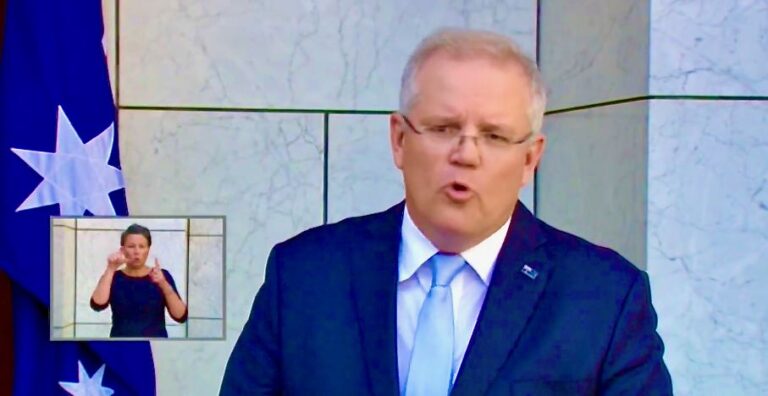
PM Scott Morrison 10
The Commonwealth Government has today released the second stage of its economic plan to cushion the economic impact of the coronavirus and help build a bridge to recovery.


A total of $189 billion is being injected into the economy by all arms of Government in order to keep Australians in work and businesses in the business.


This includes $17.6 billion for the Government’s first economic stimulus package, $90 billion from the RBA and $15 billion from the Government to deliver easier access to finance, and $66.1 billion in today’s economic support package.


Our economic support package includes:


  • Support for households including casuals, sole-traders, retirees and those on income support

  • Assistance for businesses to keep people in a job

  • Regulatory protection and financial support for businesses to stay in business


The Prime Minister Scott Morrison said the Government was acting to cushion the blow from the coronavirus for businesses and households to help them get through to the other side of the crisis.


“We want to help businesses keep going as best they can and for as long as they can, or to pause instead of winding up their business. We want to ensure that when this crisis has passed Australian businesses can bounce back,” the Prime Minister said.


“Our focus is on cushioning the blow and providing hope to every Australian that we will get through this and come out the other side together.


“We know this will be temporary.  That’s why all our actions are geared towards building a bridge, keeping more people in work, enhancing the safety net for those that aren’t and keeping businesses alive so they can get to the other side and stand up their workforce as quickly as possible.


“We know Australia’s more than 3 million small and medium businesses are the engine room of our economy. When they hurt, we all hurt.


“The next few months are going to be a difficult journey but we all have a role to play to adapt to the changes we’re facing, to cushion the impact of what is happening and to pull together so we can bounce back when we get to the other side.”


The Treasurer Josh Frydenberg said the $189 billion economic support package was the equivalent of 9.7 per cent of GDP.


“The Government is taking unprecedented action to strengthen the safety net available to Australians that are stood down or lose their jobs and increasing support for small businesses that do it tough over the next six months.


“These measures build significantly on what we have already announced.


“These extraordinary times demand extraordinary measures.”


Support for workers and households


Coronavirus supplement


The Government is temporarily expanding eligibility to income support payments and establishing a new, time-limited Coronavirus supplement to be paid at a rate of $550 per fortnight.  This will be paid to both existing and new recipients of the JobSeeker Payment, Youth Allowance jobseeker, Parenting Payment, Farm Household Allowance and Special Benefit.


The Coronavirus supplement will be paid for the next 6 months. Eligible income support recipients will receive the full amount of the $550 Coronavirus supplement on top of their payment each fortnight.


This measure is estimated to cost $14.1 billion over the forward estimates period.


An increase of up to 5,000 staff for Services Australia will assist to support the delivery of new Government measures.


Payments to support households


In addition to the $750 stimulus payment announced on 12 March 2020, the Government will provide a further $750 payment to social security and veteran income support recipients and eligible concession card holders, except for those who are receiving an income support payment that is eligible to receive the Coronavirus supplement.


This second payment will be made automatically from 13 July 2020 to around 5 million social security, veteran and other income support recipients and eligible concession cardholders. Around half of those that benefit are pensioners.


The first payment will be made from 31 March 2020 to people who will have been on one of the eligible payments any time between 12 March 2020 and 13 April 2020.


This measure is estimated to cost $4 billion over the forward estimates period.


Early release of superannuation


The Government will allow individuals in financial stress as a result of the Coronavirus to access up to $10,000 of their superannuation in 2019-20 and a further $10,000 in 2020-21.


Eligible individuals will be able to apply online through myGov for access of up to $10,000 of their superannuation before 1 July 2020. They will also be able to access up to a further $10,000 from 1 July 2020 for another three months. They will not need to pay tax on amounts released and the money they withdraw will not affect Centrelink or Veterans’ Affairs payments.


This measure is estimated to cost $1.2 billion over the forward estimates period.


Temporarily reduce superannuation minimum drawdown rates


The Government is temporarily reducing superannuation minimum drawdown requirements for account based pensions and similar products by 50 per cent for 2019-20 and 2020-21. This measure will benefit retirees by providing them with more flexibility as to how they manage their superannuation assets.


Reducing social security deeming rates


On top of the deeming rate changes made at the time of the first package, the Government is reducing the deeming rates by a further 0.25 percentage points to reflect the latest rate reductions by the RBA.


As of 1 May 2020, the lower deeming rate will be 0.25 per cent and the upper deeming rate will be 2.25 per cent.


The change will benefit around 900,000 income support recipients, including Age Pensioners.


This measure is estimated to cost $876 million over the forward estimates period.


Assistance to business to keep people in a job


  • Boosting Cash Flow for Employers


The Government is providing up to $100,000 to eligible small and medium sized businesses, and not‑for-profits (including charities) that employ people, with a minimum payment of $20,000.  These payments will help businesses’ and not-for-profits’ cash flow so they can keep operating, pay their rent, electricity and other bills and retain staff.


Under the enhanced scheme from the first package, employers will receive a payment equal to 100 per cent of their salary and wages withheld (up from 50 per cent), with the maximum payment being increased from $25,000 to $50,000. In addition, the minimum payment is being increased from $2,000 to $10,000. The payment will be available from 28 April 2020.


By linking the payments to business to staff wage tax withholdings, businesses will be incentivised to hold on to more of their workers.


The payments are tax free, there will be no new forms and payments will flow automatically through the ATO.


This measure will benefit around 690,000 businesses employing around 7.8 million people, and around 30,000 NFPs (including charities).


Small and medium business entities with aggregated annual turnover under $50 million and that employ workers are eligible. NFPs entities, including charities, with aggregated annual turnover under $50 million and that employ workers will now also be eligible. This will support employment at a time where NFPs are facing increasing demand for services.


An additional payment is also being made from 28 July 2020. Eligible entities will receive an additional payment equal to the total of all of the Boosting Cash Flow for Employers payments received.


This measure is estimated to cost $31.9 billion over the forward estimates period, including the value of the measure announced in the first package.


Regulatory protection and financial support for businesses to stay in business


Coronavirus SME Guarantee Scheme


The Government will establish the Coronavirus SME Guarantee Scheme which will support small and medium enterprises (SMEs) to get access to working capital to help them get them through the impact of the coronavirus. 


Under the Scheme, the Government will guarantee 50 per cent of new loans issued by eligible lenders to SMEs.


The Government’s support will enhance lenders’ willingness and ability to provide credit to SMEs with the Scheme able to support $40 billion of lending to SMEs. 


The Scheme will complement the announcement the Government has made to cut red-tape to allow SMEs to get access to credit faster. It also complements announcements made by Australian banks to support small businesses with their existing loans.


This builds on the investment the Government is making to enable smaller lenders to continue supporting Australian consumers and small businesses, through providing the AOFM an investment capacity of $15 billion to invest in wholesale funding markets used by small authorised deposit-taking institutions (ADI) and non-ADI lenders.


It further supports the Reserve Bank of Australia’s announcement of a $90 billion term funding facility for ns ADIs, that will reduce the cost of lending, with particular incentives to lend to small and medium enterprises.


The measures the Government is announcing today, along with the previous announcements, will deliver a total of $125 billion to support Australians get through the impact of the coronavirus.


The Government will guarantee up to $20 billion to support $40 billion in SME loans.


Providing temporary relief for financially distressed businesses


The Government is temporarily increasing the threshold at which creditors can issue a statutory demand on a company and the time companies have to respond to statutory demands they receive. The package also includes temporary relief for directors from any personal liability for trading while insolvent.  The Corporations Act 2001 will be amended to provide temporary and targeted relief for companies to deal with unforeseen events that arise as a result of the Coronavirus.


  • This builds on the support for business and business investment provided in our first economic support package, which included:

  • increasing the instant asset write off

  • backing business investment by providing accelerated depreciation deductions

  • supporting apprentices and trainees

  • targeted support for Coronavirus-affected regions and communities


Support for the aviation industry


As previously announced, the Government is also providing up to $715 million in support for Australian airlines and airports, which will ensure that our aviation sector receives timely cash flow support through an unprecedented period of disruption to international and domestic air travel.


While these are challenging times, Australians can rest assured that the Commonwealth Government will do all that is necessary to support them and build a bridge to ensure that all Australians can get to the other side of this crisis.


Source: Licensed from the Commonwealth of Australia under a  Creative Commons Attribution 4.0 International Licence.


The Commonwealth of Australia does not necessarily endorse the content of this publication.

Coronavirus ScoMo’ Stop hoarding. I can’t be more blunt about it.

PM Scott Morrison 1 1

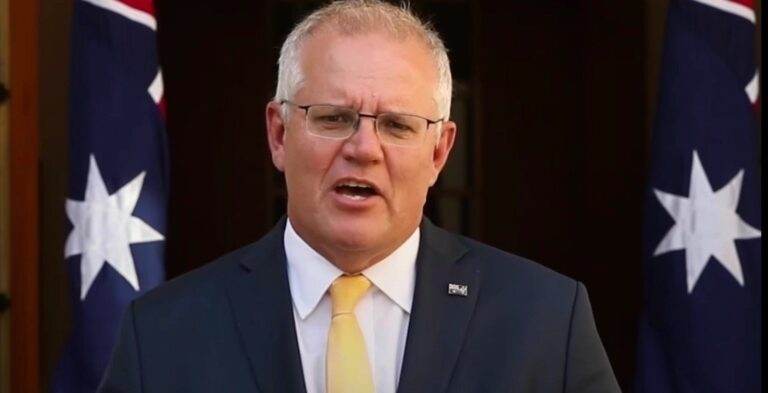
PRIME MINISTER: Good morning everyone. Life is changing in Australia, as it is changing all around the world. Life is going to continue to change as we deal with the global coronavirus. This is a once in a hundred-year type event, we haven’t seen this sort of thing in Australia since the end of the First World War.

But together we are, of course, up to this challenge. All Australians, governments, health workers, teachers, nurses, journalists, broadcasters, mums, dads, kids, grandparents, aged care workers. We’re all up to this. We’re all able to deal with this, but we just need to continue to keep our heads, focusing on the right information, making good decisions, helping and supporting each other each and every day to make the changes that are very necessary as we deal with this very real situation.

We are going to keep Australia running. We are going to keep Australia functioning. It won’t look like it normally does but it is very important that we continue to put in place measures that are scalable and sustainable. There is no two-week answer to what we’re confronting. There is no short-term quick fix to how this is dealt within Australia. The idea that you can just turn everything off for two weeks and then just turn it all back on again and it all goes away, that is not the evidence. That is not the facts. That is not the information and it’s not our way through this. And it’s not what you see in the measures that we’ve already announced and the measures that we will continue to announce.

They need to be scalable and they need to be sustainable. As I said on the weekend, we are looking at a situation of at least six months for how we deal with this. It could be much longer than that. It could be shorter. That’s unlikely, given the way we’re seeing events unfold. So what we’re doing you’ve got to be able to keep doing and you’ve got to be able to sustain that. And that has to be something that is achievable for all Australians, so we can keep our country running in the best possible way in the interest of all Australians.

We also need to continue to work together and I want to thank again in particular the State and Territory Premiers and Chief Ministers – I’ll come to their decisions in a moment. But the cooperation, the collaboration, the support, the candidness and the way people are working together in a true spirit of national unity is exactly – exactly – what you would hope to be seeing from all of your national and state and territory leaders. And I thank them very much for their support and their leadership as we work through these difficult decisions and as we seek to relay them to the Australian people in the most simple way that we possibly can.


We are taking action across a broad range of issues. Obviously, the first of those is the health response, which is comprehensive, and every resource that is necessary to support that health resource at a Commonwealth, State and Territory level is being provided and I think Australians can be very confident about that and we’re continuing to coordinate the deployment of that resource. That includes into aged care facilities and other areas where health services are being provided.


But we’re also dealing very seriously with the very significant economic impacts. And as the measures that are put in place, as the protections are put in place to protect people’s health, they obviously have, in some cases, quite severe economic implications as Australians sadly are already experiencing, particularly in areas that are in the most hit sectors, in the travel, the tourism sector, the aviation sector, places like this, the external sector which has been feeling it first because they were the first to impact from the travel bans and the shut down of global movements. But that is spreading more broadly across the economy. In essential and critical services is another area where the national coordinating mechanism, what’s that? That is the Department of Home Affairs working with the states and territories, working across everything from supply chains into supermarkets, to ensure the continued support of telecommunications and essential services and energy and fuel supplies and all of these issues. My ministers have been working on those issues for days, working with the sectors to ensure we’re on top of all of those issues and the reports there, so far, are encouraging.


And thirdly, in workforce management. This is critical. Wherever possible, we need to keep Australians working. Working on the essential services and the economy that Australians need to get through this. And this is a critical – a critical – issue in ensuring Australia can keep functioning and importantly keep delivering the important services that are necessary, which at the end of the day mean that we can support the most vulnerable in our community who are at most risk from the effects of the coronavirus.


Now, as you’ve heard me say many times and you’ve heard Dr. Murphy say on many occasions, for most people, those of us who are blessed with good health and are in good condition, then this is a mild condition. For the more vulnerable, for the elderly, for those who have other health challenges, this is a far more serious condition for them. And so it is important that we who are healthy, those of us who will contract this and experience a mild illness, that we do what we can to limit the spread to ensure that those who are more vulnerable are not affected. If we slow the spread then we do save lives, and that is very much the strategy the governments of Australia are following as we move through this crisis.


Now, the National Security Committee met yesterday, before the National Cabinet. They made a number of decisions, one of those has been enacted this morning by the Governor-General, and that is that a human biosecurity emergency was declared under the Biosecurity Act by the Governor-General, and that regards the recognition of the threat, the coronavirus, and the need for the Federal Government to take actions under the Health Minister and myself as Prime Minister in relation to limiting that spread. Now, I don’t want people to be alarmed about this. This is what these measures in the Biosecurity Act are for. You have already seen, as I said on Sunday, that states and territories have been enacting the similar powers that they have under their various public health legislation to put similar arrangements in place. All of those arrangements are now in place in the states and territories and we have rounded that out this morning by ensuring that those measures are now in place and approved by the Governor-General.


Secondly, we are upgrading the travel ban on Australians to level four for the entire world. That is the first time that has ever happened in Australia’s history. The travel advice to every Australian is do not travel abroad. Do not go overseas. That is a very clear instruction. For those of you who are thinking of going overseas in the school holidays, don’t. Don’t go overseas. The biggest risk we’ve had and the biggest incidence of cases which we’ve had, which Dr. Murphy can go into, has been from Australians returning from overseas. From many countries that you wouldn’t have expected that to be a source. And so it is very important that Australians do not travel abroad at this time. And that is an indefinite ban, but as you are seeing from other countries around the world, they’re putting similar restrictions on entry, just as Australia has on others coming into Australia, and you would expect that to be in place now and that’s the stage we’ve reached.


Thirdly, yesterday, and you would have seen this announced last night, we put in place waivers of a series of aviation-related charges and they’ll be waived out over the next six months from the 1st of April with a rebate on those that have been paid back from the 1st of February. This will provide much-needed support for our aviation sector who has been the hardest hit from these arrangements, as you’ve seen from the various announcements from our major airlines, but don’t forget the smaller regional airlines as well. They’re also hit by this. So things like regional security fees in regional airports on those regional airlines, they are being waived as well. They don’t necessarily change the world for those airlines, but they do provide some support at a very difficult time for those airlines who are dealing with issues of staffing in their organisations and how they’re supporting those staff at this time.


We have also made a decision yesterday to lift the restriction on work constraints on student nurses who are in Australia. That’s some 20,000 international student nurses who are in Australia, have been in Australia for some time. We’re not importing the nurses into Australia, that would obviously be against the travel advice and bans that already have been in place for some time. But those 20,000 student nurses that we have in Australia, they’re going to be available to help and support the health effort right across the country, as directed by our health officials and they can be engaged for that purpose.


Now, the National Cabinet met last night, as I said, til quite late in the evening, it was a late night here and for them around the country. They received advice from the AHPPC and they’ve made the following decisions and there will be further decisions to come at the next meeting of the National Cabinet, which is on Friday. The decisions they have made is to put a ban on gatherings, for non-essential gatherings, a ban on non-essential gatherings, of persons of 100 or greater. So a ban on non-essential gatherings of persons 100 and greater in indoor areas. So in outdoor areas, it’s 500. Indoor areas, it’s 100. And that is effective now, as of today, and those arrangements in terms of the legal enforcement of those measures are being put in place by the states and territories.


Now, fair question is, well, what is an essential gathering? So as to define what is a non-essential gathering. Well, there is a baseline that has been established amongst the National Cabinet, which reflected in a lot of the legislation that was put in in relation to the outdoor ban. And that’s an airport, public transportation, which includes public transportation facilities such as stations, platform, stops, trains, trams, buses, etc. These are essential. Medical and health service facilities, emergency service facilities, disability or aged care facilities – I’ll be coming to aged care and the constraints we’re putting on aged care shortly. Correctional facilities, youth justice centres or other places of custody, courts or tribunals, Parliaments, food markets, supermarket, grocery store, retail store, shopping centre that is necessary for the normal business of those premises, office buildings, factories, construction sites, mining sites necessary for their normal operation.


Now, particularly when we’re talking about workplaces, I want to commend the employers of Australia, whether they’re in the offices of our capital cities or elsewhere, who are already putting in place quite sensible rostering arrangements in their workplaces, as indeed public service employers are doing as well, and I’m quite sure that amongst the media you’re doing similar things, which is sensible. That does two things. It ensures social distancing practices are being followed in the workplace, but equally it is changing the strain and providing for greater social distancing on essential travel, particularly in public transport and things of that nature. This also relates to schools, universities, education facilities and child care facilities, hotels and motels and other accommodation facilities, which can include things like mining camps and other places where people are transiting. So, in the Bourke Street Mall, Federation Square, Martin Place, those types of places. They are essential places, where there are essential gatherings. Non-essential is everything else. States and territories have the ability to add to those lists as they see fit based on the advice, and we’re obviously seeking to coordinate that.


I apologise for the length that I’ve got to go through here, but there’s a lot of things that were decided and it’s important that we convey that information. Further measures on gatherings indoor of less than 100 people are being worked on by the states and territories in terms of their practical implication. I want to commend the Premiers and Chief Ministers for this. We together want to be very sure that when we say there will be a limitation, then we need to be able to explain it to ensure that the rules are very clear for people to follow. We can put in place a rule for 100 indoors. It’s fairly straightforward. We can also put in place a rule for 500 people outdoors, that can be followed. But the other issue that we need to follow is the principle of social distancing, whatever gathering you’re in. As you can see, Dr. Murphy and I are practicing social distancing right now. I’d suggest the rest of you might want to think about that as well. It’s important that we try and observe those social distancing practices, which is a metre and a half apart, wherever that is practicable to ensure that we can contain and limit the spread of the virus. So those principles are very important.


On travel, what we have agreed is that the advice is that air travel, domestic air travel, is low risk. We have, as Dr. Murphy will be able to I’m sure tell you, we have not seen a lot of evidence of people contracting this virus on aircraft. It’s when they’ve arrived, or where they brought it from. And so the issue is not people, necessarily, being on planes as a great risk. The issue is people moving around the country. Now, to that end, states and territories working together with their health advisors, there are parts of this country that it would not be wise for people to visit. Just as it is important for people not to be visiting aged care facilities in large numbers, it is also important that they’re not visiting remote indigenous communities or remote parts of the country. And there are other parts of the country that are similarly sensitive. Now, we are working on a list of those areas that can be declared with the states and territories, and that will be driven by the states and territories because they have the best information on what the sensitivities are. So it’s not about going on a plane or not going on a plane. It’s about where you are going to. And there’ll be further advice and there’ll be further information on that that will be provided in the days ahead as those issues are finalised. But in places like the Northern Territory, Minister Gunner, the Chief Minister, there is already taking action on those issues appropriately and I commend him for doing that.


In relation to schools. Schools… so on public transport, I should say, that remains essential travel but social distancing should be sought to be practiced wherever possible, and that also means that the states are already putting in place proper hygiene processes in terms of cleaning of public transport. If you’re getting in a cab or in an Uber, sit in the backseat, don’t sit in the front seat. These are just sensible things that people should be following and Dr. Murphy can talk more to those or if you have any further questions on that.


The health advice is that schools should remain open. That is the health advice. Interestingly, this is also what Singapore has done. Singapore has been one of the more successful countries. In Singapore, the schools are open. In Singapore, they’ve been quite effective in managing and limiting the transmission of this virus in that country. The health advice here, supported by all the Premiers, all the Chief Ministers and my Government is that schools should remain open.


Now, there are a number of reasons for this, and Dr. Murphy will particularly go into this. The first one is that the virus operates very differently amongst younger people. It has a different manifestation amongst younger people and that presents a very different health challenge to the broader population. And so in terms of the health and welfare of our children, many of us here are parents and obviously we are concerned about the health of our kids. And the health advice that I’m happy to follow for my kids, for Jenny and my kids, is the same health advice I am asking all other parents around the country to follow. We all love our kids and there’s nothing we wouldn’t do for them. And I’m telling you that, as a father, I’m happy for my kids to go to school. There’s only one reason your kids shouldn’t be going to school and that is if they are unwell. And as parents you are in the best position to know if your children are unwell. Don’t leave it to the teacher to work that out when they arrive, or the school administrator, or whoever is on drop off. Make sure if your child is unwell, that you are taking action to keep your child out of school. That’s your responsibility. Schools will obviously try and operate to their best ability to limit children who may come who are unwell, but let’s not forget our responsibility as parents in this process. And Brendan can say more about that.


So, that’s the health issue. There are also, please know this, whatever we do, we’ve got to do for at least six months. Six months. So that means the disruption that would occur from the closure of schools around this country, make no mistake, would be severe. What do I mean by severe? Tens of thousands of jobs could be lost, if not more. The impact on the availability of health workers? A 30 per cent impact on the availability of health workers is our advice. That will put people’s lives at risk. So let’s keep our heads as parents when it comes to this. Let’s do the right thing by the country and by each other and follow the proper advice. There is a national public interest here in keeping schools open, and our advice is that is not being done at the detriment of the health of any child. If that was different then obviously, and if that became different, then Premiers and Chief Ministers and I would certainly come to a different view. But right now that is the advice and we need to ensure that when we’re putting these scalable and sustainable measures in place that we are doing things that improve the situation, not worsen the situation and lessen our capacity to deal with this.


Now, aged care. Some very sensible recommendations, and I know these will be difficult. Having been through this experience in my own family recently, I know this could be very difficult for families. The following visitors and staff, including visiting workers, should not be permitted, will not be permitted to enter an aged care facility:


  • Obviously, those who’ve returned from overseas in the last 14 days.

  • Those have been in contact with a confirmed case of COVID-19 in the last 14 days.

  • Those with fever or symptoms or acute respiratory infection symptoms.

  • Those who have not been vaccinated against influenza after the first of May.


The facility must also implement the following measures for restricting visits and visitors to reduce the risk of transmission to residents:


  • Limiting visits to a short duration.

  • Limiting visits to a maximum of two visitors at one time per day. These may be immediate social supports, family members, close friends or professional service or advocacy workers.

  • Visits should be conducted in a residents room, outdoors or in a specific area designated by the facility rather than communal areas where the risk of transmission to other residents is greater.

  • There should be no large group visits or gatherings, including social activities or entertainment, to be permitted at this time.

  • No school groups of any size should be allowed to visit aged care facilities.

  • Visitors should also be encouraged, as all Australians are, to practice social distancing where possible, including maintaining the distance of one and a half metres.

  • Children aged 16 years or less should be visiting only by exception, as they generally, it says they, kids won’t necessarily follow the hygiene measures all the time like adults will.


Any parent will understand that, but also children can be asymptomatic and so they may be no knowledge of whether the child has been exposed to the virus or has the virus or not. And so that is just a sensible thing, it’s about protecting the residents at the end of the day.


Now, in cases of end of life, I know that people will want to see their elderly parents or relatives or others. I totally understand that. And aged care facilities will have the discretion to put in very strict arrangements to enable people to visit their loved ones if that’s the situation that that resident finds themselves in. Those rules will have to be done on a facility by facility basis and obviously it needs to conform with the general principles around social distancing and the other measures that I’ve outlined. But in those cases we all know how distressing that can be and so the aged care facilities will be asked to put in place sensible arrangements to facilitate those types of visits on a compassionate basis.


ANZAC Day. It was a busy night, as you can see. ANZAC Day, well, this has largely already been determined by RSLs around the country, but ANZAC Day events and ceremonies should be cancelled due to the high proportion of older Australians who attend such events. But there will be a televised national event here in Canberra, at the War Memorial. States and territories may also do one without public gatherings as well, which can also be available for broadcast, and that will enable people to be able to join those services at least remotely on what is one of the most important days, if not the most important day of the year, for Australians as we honour those. And it will be quite a solemn day because the last time, as I said, we’re in a situation like this, it’s after our diggers returned from World War One.


Now, on bulk purchasing of supplies. Stop hoarding. I can’t be more blunt about it. Stop it. It’s not sensible, it’s not helpful and I’ve got to say it’s been one of the most disappointing things I’ve seen in Australian behaviour in response to this crisis. That is not who we are as a people. It is not necessary. It is not something that people should be doing. What it does is it is distracting attention and efforts that need to be going into other measures to be focusing on how we maintain supply chains into these shopping centres. There is no reason for people to be hoarding supplies in fear of a lockdown or anything like this. As I’ve said, we’re putting in place scalable and sustainable measures. I’ll read you specifically what the AHPPC has said to ensure that there is absolutely no confusion. “The AHPPC advises against the bulk purchase of foods, medicines and other goods. We discourage the panic purchase of food and other supplies.”


I am seeking Australia’s common sense cooperation with these very clear advisory positions. Stop doing it. It’s ridiculous. It’s un-Australian, and it must stop. And I would ask people to do the right thing by each other in getting a handle on these sorts of practices.


Also, do not abuse staff. We’re all in this together. People are doing their jobs. They’re doing their best. Whether they’re at a testing clinic this morning, whether they’re in a shopping center, whether they’re at a bank, whether they’re at a train station, everybody is doing their best. So, let’s just support each other in the work that they are doing. And I encourage you please, if you see someone who’s doing that, just call it out and ask them to just refrain from doing that. That’s the right thing to do.


Now, moving on to the other matters that I had to raise today, then I’ll throw to Brendan. The Government is considering, quite extensively, further economic measures that will deal with the strength and the strengthening of our safety net and cushioning the even greater impact of the coronavirus on the Australian economy, particularly on small businesses and individuals. Last week, we focused very much on the stimulus-type activity. Encouraging investment, encouraging demand into the economy, providing support to small business. The measures that we are focusing on now are of a different nature. They are focused more on the cushioning impact of the safety net for individuals and on small businesses. The Reserve Bank has been involved in our discussions on those issues. They’ll obviously make those decisions independently as is appropriate, but we are putting in place further measures and we will announce them once they’ve been properly designed, and they can be properly implemented. We are not delaying, we are moving with great haste on this. But we’re doing it carefully to ensure we get the design of those measures right so they can be implemented as quickly as possible and provide that support.


On the health side of things, 80,000 tests have now been completed, and we’ve been able to source additional supplies of tests, testing kits, which is very welcome and further supplies are being secured, and that includes having domestic solutions to the supply issues that relates to the testing equipment. The same is true for personal protective equipment, and that does include and I want to thank those in the Defence Forces, they have also been very helpful with supply chains and logistics and other measures that we’re working on now. As we found during the bushfires, they are an amazing group of people who are able to come up with some incredibly innovative solutions and they have been worked on particularly when it comes to supply chain measures around personal protective equipment. All of that means though that while, yes, we may have been able to successfully secure additional supplies, when it comes to medical supplies, when it comes to personal protective equipment, when it comes to testing, it’s important to follow the rules around these. These are critical resources, they shouldn’t be used where it’s unnecessary to use them, and I would encourage people to continue to follow those practices.


Finally, you’ll be pleased to know, there’s a lot of misinformation out there. There’s a lot of ridiculous stuff circulating on text messages and the internet about lockdowns and all of this and sadly, there’s even been cases of wilful fraud and misrepresentation and fraudulent preparation of documents, even recordings, alleging to represent Cabinet meetings and things of this nature. Don’t believe it, it’s rubbish. Go to health.gov.au. Go to the relevant state health websites to get your information on what’s happening. Avoid all that nonsense that you’re seeing on social media. There are a million experts, it seems, but the experts that the Government is relying on, one of the most important is standing next to me here and now, all of the state Premiers and Chief Ministers and myself are working with those experts, whether it’s in supply chains, whether it’s in workforce management, whether it’s in health, whether it’s in power or telecommunications, they’re the people we’re getting our information from. We’ll continue to update you as regularly as is possible with clear decisions on what we’re doing, but on the misinformation – just ignore it. If you hear it from me, if you hear it from a Premier, if you hear it from Dr. Murphy, if you hear it from those official sources and websites, that’s the information you should follow. If you’re hearing it from someone just saying whatever pops into their head or whatever their opinion is on a particular topic – opinions are interesting but everybody has them. Facts are important. Information is what we need to make proper decisions on and you need to make property decisions on, and that’s why we’ll give you the information as best we can and as regularly as we can. I thank you for your patience and I’ll now pass over to Dr. Murphy.


DR. BRENDAN MURPHY, CHIEF MEDICAL OFFICER: Thanks, Prime Minister. So there are now about 454 cases of COVID-19 in Australia and we do, we have increasing numbers each day. But it is important to remember that the majority of cases in Australia, majority of new cases, are still imported cases or direct contacts of imported cases. And our focus for those is still the same. We are getting on top of them, identifying them, isolating them, contact tracing, that remains a very, very important part of our response across every state and territory.


But we know that there is community transmission. It is low level at the moment and we know that the way to control community transmission is social distancing. The AHPPC meant for two days this week, and like the Prime Minister said, we have a unanimity of opinion across this country. Every state and territory Chief Health Officer, plus our invited experts, plus our advisory technical committees are united on our approach.


Social distancing is really important to prevent delay transmission in the community of this virus over coming months. But be clear, a short term 2-4 week shutdown of society is not recommended by any of our experts. It does not achieve anything. We have to be in this for the long haul. As the Prime Minister said, it could be six months, more, that we have to practice these new ways of interacting. So therefore our measures have to be sustainable. There is no way that we can lock down society, make everyone stay home, and then in a month’s time undo that because the virus will just flare up again without any real long-term benefit. So we have to have sustainable measures, but they have to be serious measures. They have to be effective and that’s why we’ve put in a range of measures that the Prime Minister has outlined with more information to come later.


But the first thing I would say is that it is every individual Australian’s responsibility to practice good social distancing. Keep away from each other where possible, practice really good hand hygiene, wash your hands with soap and water at every opportunity you get, if you’ve been on public transport, if you’ve been touching things that in a common area, if before and after going to the toilet, if you’ve been having a meal. Social distancing and hand hygiene is really, really important. But we also have to do things at a societal level, and that’s why we’ve put in those recommendations that governments have accepted to restrict non-essential gatherings. We know that the actual numbers of infected people in our society is very low now, but if you get a lot of people together in close contact that’s the way you can spread the virus. So we need to avoid those large gatherings and limit them, but we also have to keep society functioning. So we are very focused on these measures being sustainable and allowing us to keep going as a nation whilst this virus is with us.


I’d like to specifically address schools. In China, only 2.4 per cent of the cases reported in Hubei province were in people under 19. Children have very, very few instances of clinical disease and even if they do, of even more severe disease. This is quite different to influenza and other respiratory viruses which have quite severe disease sometimes in children. We know that if, even in influenza, school closures are a controversial issue. We believe very strongly that it’s in the best interest of our children and the nation at this time to keep schools open. There may be occasions when there’s a big outbreak in a community that some local school closures might be necessary, but at this time across the community our view is that schools should stay open.


Now, there obviously are measures that we can take to reduce potential transmission in schools. It’s interesting in China that, again, most of the children who are infected were reported as having picked up the virus from adults in their household. But we don’t know whether children may be a vector of asymptomatic or transmission with low levels of symptoms. So we need to make sure that our schools are made as safe as possible. We need to make sure that no sick child goes to school. We need to make sure that no sick teacher goes to school. We need to try and avoid large assemblies and other gatherings at schools. We know also that it’s not really possible for children in a classroom to keep 1.5 metres apart from each other and we know that we’ve got to be practical about that. But schools should practice very good hand hygiene too. Very hard to do in the school, but we can trust our teachers to do it. Children should be washing their hands regularly, particularly when they’re eating, and particularly when they’re touching common areas. So it’ll be hard for schools, but it would be much, much, much harder for society if our schools were closed. We want our children to be looked after in schools, if they were at home, we know that they probably wouldn’t stay at home, they would probably congregate anyway and if transmission were occurring it would happen, or they may be looked after by vulnerable elderly relatives who are the people we are worried about.


As the Prime Minister has said, most people with this virus have a mild disease. The people we worried most about our elderly. That’s why we’ve taken these measures in relation to restricting visits to aged care. But there’s no sense in completely locking down aged care. Again, things you could do for a month and then stop would have no long-term benefit. We’ve got to protect our elderly for the long haul, for six months, and you cannot completely deny access to an elderly person in a residential facility to their closest next of kin, but we’ve got to make sure that those interactions are safe, very limited, and again with good social distancing. 


So my final message is every citizen now has to think about every interaction they have with another person during the day. Normal handshaking, no more hugging, no more – except in your family, you can do that in your family, because you’re already close to your family – no more scant attention to hand hygiene, wash your hands all the time, use hand sanitiser, and just practice sensible practices. And also, as the Prime Minister has said, we are in a situation now where there are mainly important cases, small numbers, there is no need for us to be in a state of heightened anxiety, but we do need to be prepared, and we all need to practice this social distancing. Thank you.


Source: Licensed from the Commonwealth of Australia under a Creative Commons Attribution 4.0 International Licence.


The Commonwealth of Australia does not necessarily endorse the content of this publication.

World Health Organisation Critical point in the global response to COVID-19

0

World Health Organisation Critical point in the global response to COVID-19

GENEVA and Washington, D.C. – A new coronavirus disease (COVID-19) Solidarity Response Fund will raise money from a wide range of donors to support the work of the World Health Organization (WHO) and partners to help countries respond to the COVID-19 pandemic. The fund, the first-of-its-kind, enables private individuals, corporations and institutions anywhere in the world to come together to directly contribute to global response efforts, and has been created by the United Nations Foundation and the Swiss Philanthropy Foundation, together with WHO.

“We are at a critical point in the global response to COVID-19 – we need everyone to get involved in this massive effort to keep the world safe,” said Dr. Tedros Adhanom Ghebreyesus, WHO Director-General. “We are immensely grateful to the UN Foundation and the Swiss Philanthropy Foundation for coming forward to help us set up this fund. A lot of people and institutions have been saying they want to contribute to the fight against the novel coronavirus. Now they can.”

The fund launches with major support already lined up, including from Facebook and Google who have instituted a matching scheme for funds raised through their platforms, while individual donors are also supporting the fund through www.COVID19ResponseFund.org.

“We can’t ignore the fact that this is a truly global problem – one that requires truly global solutions,” said Elizabeth Cousens, UN Foundation President and CEO. “The case for global cooperation could not be clearer – communities everywhere are affected, and people want to contribute. This new fund will create space for people everywhere, together, to fight this virus.”

Funds will go towards actions outlined in the COVID-19 Strategic Preparedness and Response Plan to enable all countries – particularly those most vulnerable and at-risk, and with the weakest health systems – to prepare for and respond to the COVID-19 crisis including rapidly detecting cases, stopping transmission of the virus, and caring for those affected.

WHO and its partners are seeking financing for protective equipment for frontline health workers; to equip diagnostic laboratories; improve surveillance and data collection; establish and maintain intensive care units; strengthen supply chains; accelerate research and development of vaccines and therapeutics, and take other critical steps to scale up the public health response to the pandemic.

The COVID-19 Solidarity Response Fund is hosted by two foundations, the UN Foundation (registered in the United States) and the Swiss Philanthropy Foundation (registered in Switzerland). Both foundations have established relationships with the World Health Organization, allowing for efficient transfer of financial resources to enable COVID-19 response efforts.

Coronavirus disease (COVID-19) advice for the public

Stay aware of the latest information on the COVID-19 outbreak, available on the WHO website and through your national and local public health authority. COVID-19 is still affecting mostly people in China with some outbreaks in other countries. Most people who become infected experience mild illness and recover, but it can be more severe for others. Take care of your health and protect others by doing the following:

Wash your hands frequently

Regularly and thoroughly clean your hands with an alcohol-based hand rub or wash them with soap and water.

Why? Washing your hands with soap and water or using alcohol-based hand rub kills viruses that may be on your hands.

Maintain social distancing

Maintain at least 1 metre (3 feet) distance between yourself and anyone who is coughing or sneezing.

Why? When someone coughs or sneezes they spray small liquid droplets from their nose or mouth which may contain virus. If you are too close, you can breathe in the droplets, including the COVID-19 virus if the person coughing has the disease.

Avoid touching eyes, nose and mouth

Why? Hands touch many surfaces and can pick up viruses. Once contaminated, hands can transfer the virus to your eyes, nose or mouth. From there, the virus can enter your body and can make you sick.

Practice respiratory hygiene

Make sure you, and the people around you, follow good respiratory hygiene. This means covering your mouth and nose with your bent elbow or tissue when you cough or sneeze. Then dispose of the used tissue immediately.

Why? Droplets spread the virus. By following good respiratory hygiene you protect the people around you from viruses such as cold, flu and COVID-19.

If you have fever, cough and difficulty breathing, seek medical care early

Stay home if you feel unwell. If you have a fever, cough and difficulty breathing, seek medical attention and call in advance. Follow the directions of your local health authority.

Why? National and local authorities will have the most up to date information on the situation in your area. Calling in advance will allow your health care provider to quickly direct you to the right health facility. This will also protect you and help prevent spread of viruses and other infections.

Stay informed and follow advice given by your healthcare provider

Stay informed on the latest developments about COVID-19. Follow advice given by your healthcare provider, your national and local public health authority or your employer on how to protect yourself and others from COVID-19.

Why? National and local authorities will have the most up to date information on whether COVID-19 is spreading in your area. They are best placed to advise on what people in your area should be doing to protect themselves.


Protection measures for persons who are in or have recently visited (past 14 days) areas where COVID-19 is spreading

  • Follow the guidance outlined above.

  • Stay at home if you begin to feel unwell, even with mild symptoms such as headache and slight runny nose, until you recover. Why? Avoiding contact with others and visits to medical facilities will allow these facilities to operate more effectively and help protect you and others from possible COVID-19 and other viruses.

  • If you develop fever, cough and difficulty breathing, seek medical advice promptly as this may be due to a respiratory infection or other serious condition. Call in advance and tell your provider of any recent travel or contact with travellers. Why? Calling in advance will allow your health care provider to quickly direct you to the right health facility. This will also help to prevent the possible spread of COVID-19 and other viruses.

Coronavirus disease (COVID-19) advice for the public: Myth busters

COVID-19 virus can be transmitted in areas with hot and humid climates

From the evidence so far, the COVID-19 virus can be transmitted in ALL AREAS, including areas with hot and humid weather. Regardless of climate, adopt protective measures if you live in, or travel to an area reporting COVID-19. The best way to protect yourself against COVID-19 is by frequently cleaning your hands. By doing this you eliminate viruses that may be on your hands and avoid infection that could occur by then touching your eyes, mouth, and nose.

World Health Organisation Please Donate

Australia must prepare for the social and psychological impacts of a coronavirus lockdown

0

‘Cabin fever’: Australia must prepare for the social and psychological impacts of a coronavirus lockdown

file 20200313 90637 wfxrz2.jpg?ixlib=rb 1.1

Article as Jennifer Boddy, Griffith University; Amy Young, Griffith University, and Patrick O’Leary, Griffith University THE CONVERSATION

As the COVID-19 outbreak intensifies, we’re seeing mass isolation in virus epicentres, with about 500 million people in China “under varying degrees of quarantine”, and all of Italy in lockdown.

In Australia, self-isolation is being advised for those who have been in close contact with a confirmed coronavirus case, or have travelled from a country with a large number of cases.

People under isolation, which is different from social distancing, must avoid public places, gatherings and visitors, and wear a surgical mask if leaving their home. For many, this means being confined at home except for essential trips for supplies and appointments.


Read more:
Compulsory isolation in the fight against coronavirus: a clash of human rights and public health


But what are the psychological impacts, and consequent social impacts, of this? Reports from China suggest isolation has led to neglect of vulnerable people, babies being abandoned, and increased domestic violence, fear and anxiety.

‘Cabin fever’ creeps in

In a recent review of literature, published in the Lancet in light of the COVID-19 outbreak, authors reported that being required to isolate often resulted in symptoms of traumatic stress, confusion and anger. These effects are worse among people who are isolated for a long time, fearful of infection, have limited supplies, receive inadequate information, or are experiencing financial loss or stigma.

Many in isolation experience a sense of “cabin fever”. This often involves feeling dissatisfied, restless, irritable and bored when confined.

For people who are feeling well, being isolated may initially provide a novel respite from daily responsibilities. However, this can quickly become stressful and anxiety-provoking.

As COVID-19 spreads in Australia, we can expect to see more people requiring isolation.

Abuse of alcohol, and others

Images from Wuhan, China, are providing a snapshot of the social disharmony that can emerge from forced isolation.

One retired police officer, Wan Fei, allegedly told Sixth Tone domestic violence reports had nearly doubled since China’s cities went into lockdown. He claimed as of late February, the police station in Jingzhou’s Jianli County had received 162 reports of domestic violence for that month, more than triple the number reported in February last year.

One of this article’s authors (Patrick), has had correspondence with colleagues in Hubei, who have also reported increased household tension among isolated families. Anecdotally, idle time has led to more alcohol consumption, and domestic and family violence has become more prevalent.

Simultaneously, many Chinese social services, including community centres and social work agencies, closed when quarantine restrictions were imposed. Many social workers and helping professions have since started offering services online.

Past research suggests stress during times of disaster leads to increased rates of domestic violence. In interviews with 30 women following the 2009 Black Saturday bushfires, more than half reported experiencing violence after the disaster. Of these women, most had not experienced any form of violence prior to the disaster.


Read more:
Coronavirus is stressful. Here are some ways to cope with the anxiety


Stress can also place people, particularly those who are disadvantaged, at risk of mental illness and addictions.

What can Australia expect?

As the crisis deepens in Australia, we may have to face similar challenges. One viral video of aggressive shoppers, seemingly fighting over toilet paper, has already highlighted the psychosocial impacts of the coronavirus.

One version of this video has been viewed more than five million times on Twitter.

Attention to personal and community hygiene may exacerbate people’s existing anxieties, potentially heightening phobias and clinical conditions such as obsessive compulsive disorder, and fuelling racist behaviour.

People approaching retirement may become unsure of their prospects for safety and prosperity. And casual employees may face sudden income insecurity. Workplace closures, like those seen in Australia during the 2009 H1N1 (swine flu) outbreak, could also adversely affect household functioning and finances.

Emotionally, people may experience stress due to the uncertainty of where the virus may spread, and the welfare of family members.

What we can do

Individually, we can all take action to avoid or reduce the potential emotional, psychological and social impacts of COVID-19. Workplace contingency management plans should factor in psychological support for staff, allowing employees to work from home if possible.


Read more:
Working at home to avoid coronavirus? This tech lets you (almost) replicate the office


Access to accurate and realistic information about the pandemic could help avoid fearmongering and hysteria. Our fears, doubts, frustrations and disappointments will likely be shared by others, so we should relay reputable information to family, friends and colleagues.

Online sites such as Skype and Facebook can help us stay connected. Many are using these tools to make light of an otherwise difficult situation, including people in China tuning into online dance raves via TikTok.

What our leaders can do

Politically, we need to invest in social support services such as online counselling and telephone support lines. These could assist isolated people and help build community cohesion and resilience. Recently in China, and during the 2014-2016 spread of Ebola in Senegal, psychological support hotlines were established for such purposes.

Australia’s federal government has begun to evaluate and respond to financial costs borne by households. As the crisis unfolds, there will a need to compensate people for income losses associated with isolation.

When quarantine is necessary, it should be for the minimal amount of time and no longer than 14 days, given the likelihood that symptoms will show in this time. People quarantined should be provided with clear information about why they are being isolated and what they should do moving forward.

All of us, regardless of national borders or political worldviews, are facing the incursion of COVID-19. Instead of allowing the virus to bring out the worst in us, let’s try to build a sense of solidarity across our communities.

Learning from experiences in other countries, and similar past events, could help alleviate potential negative psychological and social impacts.The Conversation

Jennifer Boddy, Associate Professor and Deputy Head of School (Learning and Teaching), Griffith University; Amy Young, Associate Lecturer, School of Human Services and Social Work, Griffith University, and Patrick O’Leary, Professor of Social Work, Griffith University

This article is republished from The Conversation under a Creative Commons license. Read the original article.

PM Morrison one-off $750 payments to more than 6 million Australians

PM Scott Morrison 1 1

PM ScoMo The Hon. Scott Morrison MP: Tonight I want to talk to you about the global coronavirus, what it means for you and your family and what the Government is doing to see Australia through. This virus began in China and has now reached some 114 countries. More than 124,000 have contracted the virus, including 140 here in Australia. The medical experts tell us that for most Australians in good health, who contract the virus, they will experience mild illness. That said, this virus is also highly transmissible and for those Australians whose health is more vulnerable, especially the elderly, the risk is more severe.

While this is a global health crisis, there are very real and significant economic impacts. For all of these reasons, we have been taking the Coronavirus very seriously. I want to assure you and your family tonight that while Australia, cannot and is not immune from this virus, we are well prepared and are well equipped to deal with it, and we do have a clear plan to see Australia through. Our plan has three goals.


  1. Protect Australians’ health

  2. Secure Australians’ jobs and livelihoods, and

  3. Set Australia up to bounce back stronger when the crisis is over.


Firstly, to protect Australians, we were one of the first countries to recognise the seriousness of the coronavirus.


  • We quickly established travel bans from the most affected countries, and scaled up screening on our borders.

  • We evacuated Australians from virus hotspots and set up quarantine facilities

  • And we have funded a $2.4 billion national health response plan to

    • set up more than 100 pop up clinics

    • and to provide support for aged care

    • Increase funding to Public hospitals, and

    • boost our National Medical Stockpile of essential medicines and masks.


Secondly, to keep Australians in jobs and businesses in business we have today announced a $17.6 billion economic stimulus plan:


  • we’re subsidising half the wages of 117,000 apprentices in small businesses

  • providing one-off $750 payments to more than 6 million Australians to spend in our economy now. Almost two and half million pensioners will receive this support.

  • there’s direct cash support of up to $25,000 for small and medium sized business that employ over seven million Australians, to boost their cash flow

  • And we’re backing businesses to keep investing by increasing tax incentives to help them buy new equipment now.


And thirdly, once the virus has run its course, we are making sure Australia can bounce back strongly. For the most affected regions and industries, like tourism and Upper North Queensland, there is a special $1 billion fund to support targeted local recovery plans. And as our economy bounces back, which it will, so will our Budget, because we have not loaded up spending  off into the future. We can take this action now because we have worked hard to bring the budget back into balance, to maintain our AAA credit rating and work with State Governments to provide a world-class health system.

Now I know, many Australians are anxious about this and we still have a long way to go. But be assured we are taking action and we have a clear plan.

The months ahead will present many challenges, and we will respond to them. We will continue to keep you updated and take decisions based on the best possible medical advice. And if you have questions please visit health.gov.au or talk to your local GP.

We’ll get through this together Australia. We all have a role to play. Employers, nurses, doctors, teachers, scientists, friends, family and neighbours. I know we’ll all do our bit.

Thank you for listening tonight and good night Australia.

Source: Licensed from the Commonwealth of Australia under a Creative Commons Attribution 4.0 International Licence.


The Commonwealth of Australia does not necessarily endorse the content of this publication.

WHO; Shortage oF protective equipment endangering health workers worldwide

COVID 19 1 1

The World Health Organization has warned that severe and mounting disruption to the global supply of personal protective equipment (PPE) – caused by rising demand, panic buying, hoarding and misuse – is putting lives at risk from the new coronavirus and other infectious diseases.


Healthcare workers rely on personal protective equipment to protect themselves and their patients from being infected and infecting others.


But shortages are leaving doctors, nurses and other frontline workers dangerously ill-equipped to care for COVID-19 patients, due to limited access to supplies such as gloves, medical masks, respirators, goggles, face shields, gowns, and aprons.


“Without secure supply chains, the risk to healthcare workers around the world is real. Industry and governments must act quickly to boost supply, ease export restrictions and put measures in place to stop speculation and hoarding. We can’t stop COVID-19 without protecting health workers first,” said WHO Director-General Dr Tedros Adhanom Ghebreyesus.


Since the start of the COVID-19 outbreak, prices have surged. Surgical masks have seen a sixfold increase, N95 respirators have trebled and gowns have doubled.


Supplies can take months to deliver and market manipulation is widespread, with stocks frequently sold to the highest bidder.


WHO has so far shipped nearly half a million sets of personal protective equipment to 47 countries,* but supplies are rapidly depleting.


Based on WHO modelling, an estimated 89 million medical masks are required for the COVID-19 response each month. For examination gloves, that figure goes up to 76 million, while international demand for goggles stands at 1.6 million per month. 


Recent WHO guidance calls for the rational and appropriate use of PPE in healthcare settings, and the effective management of supply chains.


WHO is working with governments, industry and the Pandemic Supply Chain Network to boost production and secure allocations for critically affected and at-risk countries.


To meet rising global demand, WHO estimates that the industry must increase manufacturing by 40 per cent.


Governments should develop incentives for the industry to ramp up production. This includes easing restrictions on the export and distribution of personal protective equipment and other medical supplies. 


Every day, WHO is providing guidance, supporting secure supply chains, and delivering critical equipment to countries in need.  

Trump and Pence Participate in Coronavirus Briefing with Health Insurers

Trump and Pence Participate in Coronavirus Briefing with Health Insurers

THE PRESIDENT:  Thank you very much.  We just attended a very important task force meeting on the virus that everybody is talking about all over the world.  No matter where you go, that’s what’s on people’s minds.  And we are going to take care of, and have been taking care of, the American public and the American economy.

We are going to be asking tomorrow — we’re seeing the Senate.  We’re going to be meeting with House Republicans — Mitch McConnell, everybody — and discussing a possible payroll tax cut or relief, substantial relief — very substantial relief.  That’s a big — that’s a big number.

We’re also going to be talking about hourly wage earners getting help so that they can be in a position where they’re not going to ever miss a paycheck.  We’re going to be working with companies and small companies, large companies — a lot of companies — so that they don’t get penalized for something that’s not their fault.  It’s not their fault, it’s not our country’s fault.

This was something that we were thrown into and we’re going to handle it, and we have been handling it very well.  The big decision was early when we shut down our borders.  We’re the first ones ever to do that.  We’ve never done that in our country before.  Or we’d have a situation that would be a lot more dire.

Also, we’re going to be seeing Small Business Administration and creating loans for small businesses.  We’re also working with the industries, including the airline industry, the cruise ship industry — which, obviously, will be hit.  We’re working with them very, very strongly.  We want them to travel.  We want people to travel to certain locations and not to other locations at this moment.  And hopefully that will straighten out sooner rather than later.  But we’re working with the industries, and in particular those two industries.

We’re also talking to the hotel industry.  And some places, actually, will do well, and some places probably won’t do well at all.  But we’re working also with the hotel industry.

But the main thing is that we’re taking care of the American public, and we will be taking care of the American public.

And I really appreciate the professionals behind me and the professionals actually behind them, in a different room.  We have a tremendous team, and it’s headed up by our great Vice President, Mike Pence.  And I want to thank Mike because he’s been working 24 hours a day, just about.  He has been working very, very hard, very diligently, and very professionally.  And I want to thank him, and I want to thank the team.  And I’ll have Mike say a few words.

Thank you very much.  Thank you.  Mike?  Please.

THE VICE PRESIDENT:  Thank you, Mr. President.  We just completed the day’s meeting of the White House Coronavirus Task Force.  We had the opportunity to brief the President today on a broad range of issues.

And once again, because of the unprecedented action that President Trump took in January — suspending all travel from China; establishing travel advisories for portions of South Korea and Italy; establishing screening of all direct flights, all passengers from all airports from Italy and South Korea — we have — we have bought a considerable amount of time, according to all the health experts, to deal with the coronavirus here in the United States.

In fact, as I stand before you today, the risk of contracting the coronavirus to the American public remains low, and the risk of serious disease among the American public also remains low.

With that being said, the President did deploy not just a whole-of-government approach, but also a whole-of-America approach.  And last week, at the President’s direction, we met with leaders in industries, from nursing homes to airlines, pharmaceutical companies, commercial labs, and it’s had great, great impact.

Pharmaceutical companies are already working, literally around the clock, on the development of therapeutics; that will be medicines that can bring relief to people that contract the coronavirus.  And I know how pleased the President was to learn that the commercial labs in this country, led by companies like LabCorp and Quest, have already brought a test forward and are taking that to market effective today.

This week, at the President’s direction, we’ll be meeting with hospital CEOs, health insurance CEOs, and all — building on top of what the President will be announcing tomorrow with regard to economic relief for working Americans.

We also met today in a conference call with 47 of America’s governors.  We were able to brief them on the latest — the progress that we’ve made.  We were able to confirm with them that testing is now available in all state labs in every state in the country.  Over a million tests have been distributed.  Before the end of this week, another 4 million tests will be distributed.  But as I said before, with the deployment of the commercial labs, we literally — we literally are going to see a dramatic increase in the available — availability of testing, and that’s all a direct result of the President’s leadership.

Today, in a few moments, we will — we will outline community guidance that Dr. Birx and Dr. Fauci will be publishing.  At President’s direction, we’re going to be providing guidance about how to keep your home safe, how to keep your business safe, how to keep safe and healthy at your school.  And we’ll be publishing that information and speaking about that.

A brief word about the Grand Princess: The Grand Princess has docked this afternoon in Oakland, California, at a commercial dock.  Twenty-five children, we were happy to learn through the screening over the last two days — the 25 children on the ship are all healthy.  Of the people that have contracted the coronavirus — 21 in all — they’re being dealt with in proper isolation.

Working with health authorities in California, we hope before the end of today to begin to disembark California residents to Travis Air Force Base in Miramar.  We’ve made arrangements with Canada and the UK to take their passengers back.  They’ll be transported directly to the tarmac, charter flights home.

And tomorrow, the remaining passengers will be transported, again, through very, very carefully controlled environments — buses out to the tarmac and flown to military bases in Georgia and Texas.

All the passengers will be tested, isolated as appropriate, quarantined as appropriate.  And I want to express appreciation to the Governor of California and his administration, the Governor of Georgia, the Governor of Texas, for their strong cooperation with us in resolving the issues around the Grand Princess.

It has been a — it has been a partnership which the President directed us from the very beginning.  And the process that Bob Kadlec will detail, and any questions in a few moments, continues to work and move forward.

The remaining people on the ship — the crew itself will push off from the dock, and they will be quarantined and observed and treated shipboard.  But the President made the priority to get — to get the Americans ashore, and we’re in the process of doing that, as well as returning the foreign nationals.

Let me just say one other point: As the President has spoken today to congressional leadership, one of the things that I informed the President that I’ve been hearing from governors is the concern about hourly wage earners in this country feeling that they had to go to work, even if they were ill.  And the President has tasked this economic team, and is working already with leaders in the Congress, to make sure that anyone is not — feels that they’re at risk of losing their job or losing a paycheck because they may contract the coronavirus.

When we tell people, “If you’re sick, stay home,” the President has tasked the team with developing economic policies that will make it very, very clear that we’re going to stand by those hardworking Americans, stand by those businesses large and small, and make it possible for us, as the President said from the very beginning, to put the health of America first.

We’ll be available to take any questions on any of these topics, but, Mr. President, I didn’t know if you wanted to speak a few more, in closing.

THE PRESIDENT:  Well, I think what we will be doing is having a news conference tomorrow to talk about various things that we’re doing economically — there’ll be very major — including, obviously, the payroll tax cut.

And so we’ll be meeting again tomorrow afternoon.  We’ll be coming back from the Senate, and we have a lot of very important meetings set up.  And we’ll have a press conference sometime after that, and we’ll explain what we’re doing on an economic standpoint and from an economic standpoint.  But they will be very — very dramatic.  And we have a great economy, we have a very strong economy, but this came — this blindsided the world.  And I think we’ve handled it very, very well.  I think they’ve done a great job.  The people behind me have done a great job.

So I will be here tomorrow afternoon to let you know about some of the economic steps we’re taking, which will be major.  Thank you very much.

Scott Morrison’s coronavirus COVID-10 crisis stimulus package

PM Scott Morrison’s

PRIME MINISTER: Good morning, everyone. I said yesterday, in 2020 is one focus: the health and wellbeing of Australians, their livelihoods, their jobs and ensuring that Australia bounces back better on the other side. That’s our focus. That’s what the Government is intently been working on. From the outset, back in January, we moved to get ahead. We’ve been working hard to stay ahead, and it’s important that we keep our heads as well when it comes to how we’re addressing these issues.

Bandt’ The PM needs to take climate science as seriously as the coronavirus science

Solar Farm 1

Mr Adam Bandt House of Representatives on Item STATEMENTS BY MEMBERS – Climate Change(Melbourne—Leader of the Australian Greens): The Prime Minister needs to take climate science as seriously as he’s taking the coronavirus science. Our summers are now twice as long as our winters in Australia. The climate crisis is hitting us now. It’s devastating Australia and it’s devastating the economy. 


We’re experiencing towering infernos, raging floods, record heat waves and toxic air pollution. People have died, livestock have died, crops have been wiped out and entire towns have been pushed to the limit. This is happening at one degree of global warming, and today in estimates the Bureau of Meteorology have confirmed that we are on track to closer to four degrees of global warming under this Prime Minister in Australia. When experts advised him on the coronavirus, the Prime Minister swung into action immediately and came up with an urgent plan but, when experts advise the Prime Minister on the climate crisis, he not only does nothing but knowingly makes the problem worse. The Prime Minister had treated the coronavirus the same way he’s treating the climate crisis, we’d all be infected by now.

It’s time to understand that this is an urgent problem and we need climate action now—not in 2050, not in 2040, but right now. It is only going to get worse. What Australia has experienced this summer will pale in comparison to what is to come. The Prime Minister is putting Australian lives at risk. We need to start responding to the climate crisis the same way we are responding to the coronavirus, the way countries responded in World War II when there was the threat of invasion. The climate crisis needs a whole-of-government, whole-of-parliament and whole-of-society effort.