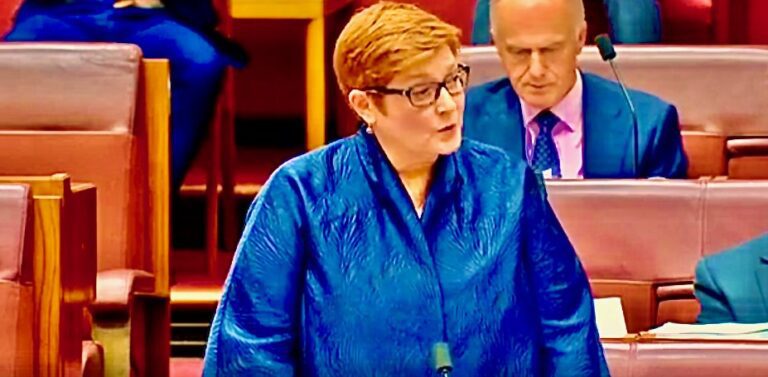
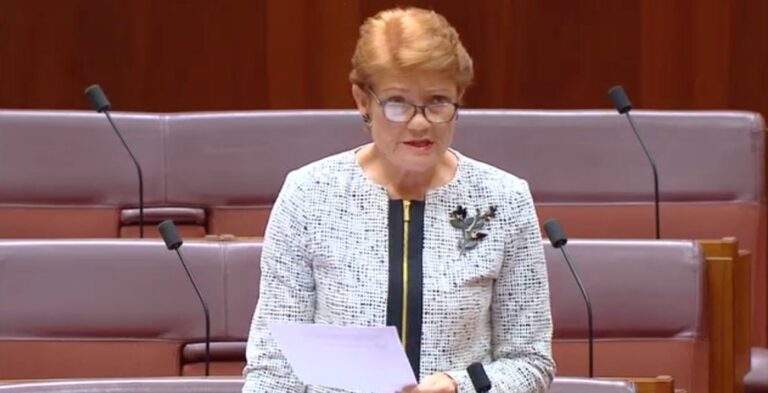
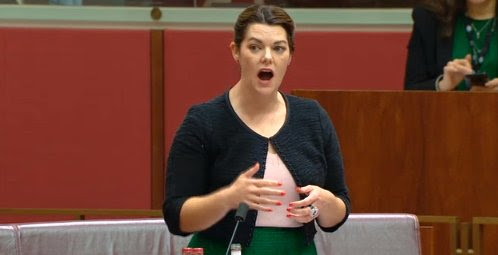
Senator Malcolm Roberts (Queensland) (Senate Speech Ministerial Statement 8/4/20): I seek to make a statement in response to the minister’s statement. We acknowledge that there is no manual for dealing with this virus and we empathise with the government’s challenge. That is, though, all the more reason for the government to openly share data, future projections and information with the people. As pressures mount regarding personal security, as well as emotionally and financially, on people across our nation, any shortage of data is being seen as an absence of trust by the government in the people, and that, in turn, will make it difficult for Australians to trust the government and the parliament. Government honesty and trust in the people will be met with trust from the people.
At this time, One Nation would also like to thank everyone who is caring for us and keeping us safe, including healthcare workers, police, defence and emergency workers, and everyone serving others, including those helping to supply and feed us, teach our children, generate electricity, collect garbage, clean, supply water and much more. They are people who are keeping services working for us all.
COVID-19 has exposed as severely lacking in our current economic and industrial structures the productive capacity and economic resilience that were once part of Australian culture and history. We need to take this opportunity to take stock and then rebuild our society on the values, systems and cultures that ensure a return to personal enterprise, instead of the creeping dead hand and suffocating blanket of a large and ever-growing central government. History shows that the secret of human happiness and human progress is nothing new and has been discovered, lost and rediscovered for millennia—and, more recently, lost in our country. We need to bring back Australia’s economic sovereignty, productive capacity and economic resilience, based on restoring personal enterprise and compliance with a constitution that enshrines competitive federalism and individual liberty. We all need, as representatives of the people and servants to the people, to ensure that the people’s government is held accountable for what it does and does not do during this emergency.
We are giving the government a blank cheque, and rightly so, because there are many uncertainties in this. There is such a complex system that we are already trying to amend. But ministers have the power to make these changes through regulations, and that is given to ensure that cracks in the legislation are closed quickly to ensure people are covered fairly right across our country. It is a blank cheque, but we must do our job as senators to make sure that we review that and the progress of it. What many Australians, looking beyond our health and financial safety, want is to make sure that we leave COVID-19 behind us, and that we are left with better freedoms and liberties and a stronger, freer economy than before.
WHO: Good morning, good afternoon and good evening.
As Tarik said, we’re delighted to be joined today by Kristalina Georgieva, the Managing-Director of the International Monetary Fund. Welcome, my sister.
Kristalina will say more in a few minutes about the economic impact of the pandemic and what the IMF is doing to support countries and the global economy.
More than 1 million confirmed cases of COVID-19 have now been reported to WHO, including more than 50,000 deaths.
But we know that this is much more than a health crisis. We are all aware of the profound social and economic consequences of the pandemic.
The restrictions many countries have put in place to protect health are taking a heavy toll on the income of individuals and families, and the economies of communities and nations.
We are in a shared struggle to protect both lives and livelihoods.
In the short term, countries can ease the burden on their populations through social welfare programs to ensure people have food and other life essentials.
For some countries, debt relief is essential to enable them to take care of their people and avoid economic collapse. This is an area of cooperation between WHO, the IMF and the World Bank.
But ultimately, the best way for countries to end restrictions and ease their economic effects is to attack the virus, with the aggressive and comprehensive package of measures that we have spoken about many times before: find, test, isolate and treat every case, and trace every contact.
If countries rush to lift restrictions too quickly, the virus could resurge and the economic impact could be even more severe and prolonged.
Financing the health response is therefore an essential investment not just in saving lives, but in the longer-term social and economic recovery.
There are three main areas for countries to focus on.
First, we call on all countries to ensure core public health measures are fully funded, including case-finding, testing, contact tracing, collecting data, and communication and information campaigns.
Second, we also call on countries and partners to strengthen the foundations of health systems. That means health workers must be paid their salaries, and health facilities need a reliable supply of funding to purchase essential medical supplies.
Third, we call on all countries to remove financial barriers to care.
If people delay or forego care because they can’t afford it, they not only harm themselves, they make the pandemic harder to control and put society at risk.
Several countries are suspending user fees and providing free testing and care for COVID-19, regardless of a person’s insurance, citizenship, or residence status.
We encourage these measures. This is in an unprecedented crisis, which demands an unprecedented response.
Suspending user fees should be supported with measures to compensate providers for the loss of revenues.
Governments should also consider using cash transfers to the most vulnerable households to overcome barriers to access.
This may be particularly important for refugees, internally displaced persons, migrants and the homeless.
===
The pandemic is also having an effect on the fight against other diseases, like polio.
As you know, in recent years we have driven polio to the brink of eradication. This has been a massive global effort, started by Rotary, supported by many other partners, and led by thousands of health workers, vaccinating children in some very difficult and dangerous areas.
Many of those health workers are now supporting the COVID-19 response.
They are tracing contacts, finding cases and providing public health information to communities.
To reduce the risk of increasing transmission of COVID-19, the polio oversight board has made the hard decision to suspend house-to-house vaccination campaigns, knowing that this may lead to an increase in polio cases.
To reduce this risk, we will support countries to maintain essential immunization for all vaccine preventable diseases.
WHO has published guidance for countries on how to maintain essential health services even while responding to this crisis.
The Global Polio Eradication Initiative is working to ensure that once it is safe to do so, countries can be supported to rapidly restart polio vaccination campaigns.
While all our energy may be focused on COVID-19 now, our commitment to eradicating polio is unshakeable.
Sadly, there are reports from some countries of an increase in domestic violence since the COVID-19 outbreak began.
As people are asked to stay at home, the risk of intimate partner violence is likely to increase.
Women in abusive relationships are more likely to be exposed to violence, as are their children, as family members spend more time in close contact, and families cope with additional stress and potential economic or job losses.
Women may have less contact with family and friends who may provide support and protection from violence.
We call on countries to include services for addressing domestic violence as an essential service that must continue during the COVID-19 response.
If you are experiencing or at risk of domestic violence, speak to supportive family and friends, seek support from a hotline, or seek out local services for survivors.
Make a plan to protect yourself and your children any way you can. This could include having a neighbour, friend, relative, or shelter identified to go to should you need to leave the house immediately.
There is never any excuse for violence. We abhor all violence of all forms, at all times.
Finally, the global response to COVID-19 would not be possible without the generosity of countries and partners.
Two months ago, WHO issued its Strategic Preparedness and Response Plan, with an initial ask of US$675 million to support the response.
I’m delighted to say that almost US$690 million has now been pledged or received. Of this amount, US$300 million has been given to support WHO’s work, and the rest has been given on a bilateral basis, or to other organizations involved in the response.
I’d like to thank the State of Kuwait, which today is becoming one of the largest donors, with a total of US$60 million.
WHO’s Solidarity Response Fund has now raised more than US$127 million from more than 219,000 individuals and organizations. I’d like to thank Tencent for its contribution of US$10 million.
I’m also pleased to announce that I have invited Unicef to join the Solidarity Response Fund. Unicef has extensive experience both in fundraising and in implementing programmes, and our partnership will help us to work together closely to save lives. Thank you so much, my sister Henrietta, for accepting my invitation.
We still have a long way to go in this fight. WHO is working every day with all countries and partners to save lives, and to mitigate the social and economic impact of the pandemic.
The IMF is a key partner, and I’d now like to hand the floor to my sister Kristalina to make a few remarks. Thank you so much for joining us Kristalina.
Coronavirus is there a link to New World Order totalitarian world government
So many conspiracy theories around at the moment because of the Corona Beer Virus, I thought I would check if it’s true or False. Below is some of the information I dug up. Down the Bottom, On the Australian Greens Website, the Dream of a Global Governance. Hate to think what that is and how it Could be Archived
The New World Order or NWO is claimed to be an emerging clandestine totalitarianworld government by various conspiracy theories.
Offbeat travel writer Dixe Wills nails down the essence of every single country on the planet. Say goodbye to sleepless nights fretting over the average number of puls to the Afghani, or wondering what’s in Bhutan today and whether it will still be fresh by the time you get it home. With a handy grading system to reveal who are the globe’s real top nations and which ones are letting the side down on a monumental scale, it’s no wonder that experts are declaring New World Order the most important book to be written in the last 500 years
The common theme in conspiracy theories about a New World Order is that a secretivepower elite with a globalist agenda is conspiring to eventually rule the world through an authoritarian world government—which will replace sovereignnation-states—and all-encompassing propaganda whose ideology hails the establishment of the New World Order as the culmination of history’s progress. Many influential historical and contemporary figures have therefore been alleged to be part of a cabal that operates through many front organizations to orchestrate significant political and financial events, ranging from causing systemic crises to pushing through controversial policies, at both national and international levels, as steps in an ongoing plot to achieve world domination.
Before the early 1990s, New World Order conspiracism was limited to two American countercultures, primarily the militantly anti-government right and secondarily that part of fundamentalist Christianity concerned with the end-time emergence of the Antichrist. Sceptics, such as Michael Barkun and Chip Berlet, observed that right-wing populist conspiracy theories about a New World Order had not only been embraced by many seekers of stigmatized knowledge but had seeped into popular culture, thereby inaugurating a period during the late 20th and early 21st centuries in the United States where people are actively preparing for apocalypticmillenarian scenarios. Those political scientists are concerned that mass hysteria over New World Order conspiracy theories could eventually have devastating effects on American political life, ranging from escalating lone-wolf terrorism to the rise to power of authoritarian ultranationalist demagogues.
Conspiracy theorists believe that the New World Order will also be implemented through the use of human population control in order to more easily monitor and control the movement of individuals. The means range from stopping the growth of human societies through reproductive health and family planning programs, which promote abstinence, contraception and abortion, or intentionally reducing the bulk of the world population through genocides by mongering unnecessary wars, through plagues by engineering emergent viruses and taintingvaccines, and through environmental disasters by controlling the weather (HAARP, chemtrails), etc. Conspiracy theorists argue that globalists plotting on behalf of a New World Order are neo-Malthusians who engage in overpopulation and climate change alarmism in order to create public support for coercive population control and ultimately world government. Agenda 21 is condemned as “reconcentrating” people into urban areas and depopulating rural ones, even generating a dystopian novel by Glenn Beck where single-family homes are a distant memory.
From the award-winning, internationally bestselling author of A Short History of Progress comes another fascinating, eccentric and essential book. The USA is now the world’s lone superpower, whose deeds could make or break this century. For better and worse, America has Americanised the world. How did a marginal frontier society, in a mere two centuries, become the de facto ruler of the world? Why do America’s great achievements in democracy, prosperity and civil rights now seem threatened by forces within itself?
Sceptics argue that fears of population control can be traced back to the traumatic legacy of the eugenics movement’s “war against the weak” in the United States during the first decades of the 20th century but also the Second Red Scare in the U.S. during the late 1940s and 1950s, and to a lesser extent in the 1960s, when activists on the far right of American politics routinely opposed public health programs, notably water fluoridation, mass vaccination and mental health services, by asserting they were all part of a far-reaching plot to impose a socialist or communist regime. Their views were influenced by opposition to a number of major social and political changes that had happened in recent years: the growth of internationalism, particularly the United Nations and its programs; the introduction of social welfare provisions, particularly the various programs established by the New Deal; and government efforts to reduce inequalities in the social structure of the U.S. Opposition towards mass vaccinations, in particular, got significant attention in the late 2010s, so much so the World Health Organization listed vaccine hesitancy as one of the top ten global health threats of 2019. By this time, people that refused or refused to allow their children to be vaccinated were known colloquially as “anti-vaxxers”, though citing the New World Order conspiracy theory or resistance to a perceived population control agenda as a reason to refuse vaccination were few and far between. Wikipedia
The Australian Greens believe that:
Global governance processes must be reinvigorated to advance global peace and security, justice, human rights, poverty alleviation, health and environmental sustainability. Because there is no one system of global governance.
Major structural reform is needed to provide stronger, more effective and more representative multilateral institutions.
The leading role of the United Nations in the maintenance of international peace and security must be recognised and respected by all countries.
The international financial institutions that govern aid, development, trade and transnational financial movements must contribute to global economic justice. Read More
Wondering if all this is a link to the Corona- Virus, Well I would not have a Clue but I do know Alex Jones Info Wars who was removed by facebook and YouTube on the same day last year has been preaching and preparing US Citizens for a Globalist take-over for a Decade. Alex has been calling on Americans to Arm up, Buy up his special foods and Vitamins to last years and Warns not to take any Force Vaccinations.
The Department of Foreign Affairs and Trade is in direct contact with 10 cruise ships with around 600 Australian passengers on board. This has reduced from 38 affected cruise ships with over 5,500 Australians just two weeks ago.
This is a result of co-operation with cruise lines and host countries. We appreciate this co-operative effort and acknowledge the patience of many passengers as these complex arrangements are determined.
Yesterday, about 800 Australians disembarked the Vasco Da Gama in Fremantle. In the days ahead, we are working to see more Australians disembark cruise ships at ports around the world.
In most cases, disembarkation cannot occur unless passengers have onward flight arrangements and are able to travel directly to the airport via a so-called sanitary corridor, put in place by host countries.
Therefore, arrangements of disembarkation and onward travel have required consistent and careful advocacy by the Australian Government, and co-operation with cruise line operators and host countries.
We welcome cruise operators’ constructive efforts to organise charter flights for many passengers.
Our consular officials in Canberra and diplomatic missions around the world have also regularly updated and advised affected Australians on cruise ships about the evolving situation, through email and various social media channels. We are providing consular assistance as necessary.
DFAT continues to work closely with cruise line operators and international authorities to resolve the remaining cases. We realise this is a stressful time for the affected Australians and their families.
In some cases, Australians disembarking cruise ships may be subject to local quarantine restrictions. As a result, it may be necessary for some to remain where they are overseas and, as far as practicable, remain safe and comfortable, including by following directions of local authorities.
Australia’s consular officers are doing all they can to support Australians overseas at this difficult time. The health and safety of Australians both at home and abroad is the Government’s top priority.
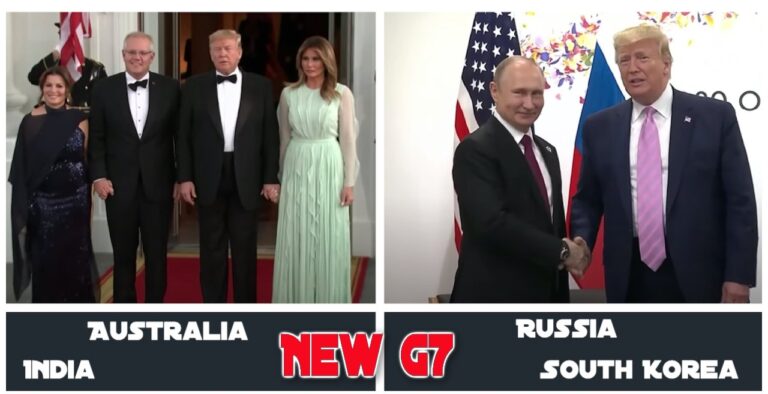
Vladimir Putin had a conversation with US President Donald Trump
Telephone conversation with US President Donald Trump
Vladimir Putin and President of the United States of America Donald Trump had a lengthy conversation during a call initiated by the US.
The two presidents expressed serious concern over the scale of the spread of the coronavirus in the world and informed each other about measures taken in Russia and the United States to counter this threat. Opportunities for closer cooperation between the two countries on this problem were discussed.
They also exchanged views on the current state of the global oil market and agreed that Russian and American energy ministers should hold consultations on this topic.
Certain bilateral issues were also addressed.
Vladimir Putin and Donald Trump agreed to maintain personal contact.
Queensland border restrictions will be tightened across the state from Friday to prevent the spread of COVID-19.
Anyone who is not a Queensland resident or considered exempt from the restrictions will not be able to enter Queensland from 12.01 am Friday, April 3, 2020.
And it’s important to note that people with an exemption must have a border pass prior to crossing the border.
If they don’t have a border pass then they will be turned around
Freight transport services are exempt and will be allowed through without a border pass permit.
The restrictions will replace the current arrangements which enable people to cross the border provided they self-quarantine for 14 days.
Additional barriers will be erected in the streets of Coolangatta to further enforce border controls.
Police Minister Mark Ryan said strengthening border crossings and reducing the number of people travelling to Queensland would assist in minimising the spread of the virus.
“Now is not the time to be travelling interstate unnecessarily,” Minister Ryan said.
“Unless you are a Queensland resident or have an exemption such as you work here or are required to travel for medical reasons, or are involved in freight transportation, you will be turned away.
“We are giving people plenty of warning about the stronger border controls that are being put in place.
“We are doing this in the interests of community safety.”
Since Queensland implemented border restrictions on Wednesday, 25 March, 19,760 vehicles have been intercepted and police have issued 1,451 quarantine orders to people crossing the border.
Commissioner Katarina Carroll said police were appreciative of the cooperation shown by the majority of motorists during the border crossing process.
“We know the border controls have caused some delays on the roads, however, we are very grateful for the majority of drivers who have been cooperative and followed police directions,” Commissioner Carroll said.
“The stronger measures will reduce the need for police to conduct follow-up quarantine checks for those who are directed to self-isolate when crossing the border.
“Importantly, penalties may apply to any non-Queensland resident without an exemption who enters the state.”
ScoMO: The Morrison Government will provide a historic wage subsidy to around 6 million workers who will receive a flat payment of $1,500 per fortnight through their employer, before tax.
The $130 billion JobKeeper payment will help keep Australians in jobs as tackle the significant economic impact from the coronavirus.
The payment will be open to eligible businesses that receive a significant financial hit caused by the coronavirus.
The payment will provide the equivalent of around 70 per cent of the national median wage.
For workers in the accommodation, hospitality and retail sectors it will equate to a full median replacement wage.
The payment will ensure eligible employers and employees stay connected while some businesses move into hibernation.
Prime Minister Scott Morrison said the JobKeeper payment would bring the Government’s total economic support for the economy to $320 billion or 16.4 per cent of GDP.
“We will give millions of eligible businesses and their workers a lifeline to not only get through this crisis, but bounce back together on the other side,” the Prime Minister said.
“This is about keeping the connection between the employer and the employee and keeping people in their jobs even though the business they work for may go into hibernation and close down for six months.
“When the economy comes back, these businesses will be able to start again and their workforce will be ready to go because they will remain attached to the business through our JobKeeper payment.”
Treasurer Josh Frydenberg said the country was about to go through one of the toughest times in its history.
“Businesses will close and people will lose their jobs. That is why we have doubled the welfare safety net,” the Treasurer said.
“However, today we are going even further. Australians know that their government has their back.
“That is why we are delivering an historic $130 billion JobKeeper payment to support businesses and to help Australians in a job.
“This will keep Australian workers connected with their employer and provide hope and more certainty during these difficult and challenging times.”
JobKeeper Payment
The JobKeeper Payment is a subsidy to businesses, which will keep more Australians in jobs through the course of the coronavirus outbreak.
The payment will be paid to employers, for up to six months, for each eligible employee that was on their books on 1 March 2020 and is retained or continues to be engaged by that employer.
Where a business has stood down employees since 1 March, the payment will help them maintain connection with their employees.
Employers will receive a payment of $1,500 per fortnight per eligible employee. Every eligible employee must receive at least $1,500 per fortnight from this business, before tax.
The program will commence today, 30 March 2020, with the first payments to be received by eligible businesses in the first week of May as monthly arrears from the Australian Taxation Office. Eligible businesses can begin distributing the JobKeeper payment immediately and will be reimbursed from the first week of May.
The Government will provide updates on further business cashflow support in coming days.
Eligible employers will be those with annual turnover of less than $1 billion who self-assess that have a reduction in revenue of 30 per cent or more, since 1 March 2020 over a minimum one-month period.
Employers with an annual turnover of $1 billion or more would be required to demonstrate a reduction in revenue of 50 per cent or more to be eligible. Businesses subject to the Major Bank Levy will not be eligible.
Eligible employers include businesses structured through companies, partnerships, trusts and sole traders. Not for profit entities, including charities, will also be eligible.
Full time and part time employees, including stood down employees, would be eligible to receive the JobKeeper Payment. Where a casual employee has been with their employer for at least the previous 12 months they will also be eligible for the Payment. An employee will only be eligible to receive this payment from one employer.
Eligible employees include Australian residents, New Zealand citizens in Australia who hold a subclass 444 special category visa, and migrants who are eligible for JobSeeker Payment or Youth Allowance (Other).
Self-employed individuals are also eligible to receive the JobKeeper Payment.
Eligible businesses can apply for the payment online and are able to register their interest via ato.gov.au
Income support partner pay income test
Over the next six months the Government is temporarily expanding access to income support payments and establishing a Coronavirus Supplement of $550 per fortnight.
JobSeeker Payment is subject to a partner income test, and today the Government is temporarily relaxing the partner income test to ensure that an eligible person can receive the JobSeeker Payment, and associated Coronavirus Supplement, providing their partner earns less than $3,068 per fortnight, around $79,762 per annum.
The personal income test for individuals on JobSeeker Payment will still apply.
Every arm of government and industry is working to keep Australians in jobs and businesses in business, and to build a bridge to recovery on the other side.
The Government will continue to do what it takes to ensure that Australia bounces back stronger.
The Commonwealth’s preference is that you attribute this publication (and any material sourced from it) using the following wording:
Source: Licensed from the Commonwealth of Australia under a Creative Commons Attribution 4.0 International Licence.
The Commonwealth’s preference is that you attribute this publication (and any material sourced from it) using the following wording:
Trump’ Navy 70,000-ton Hospital Ship USNS will embark for New York City
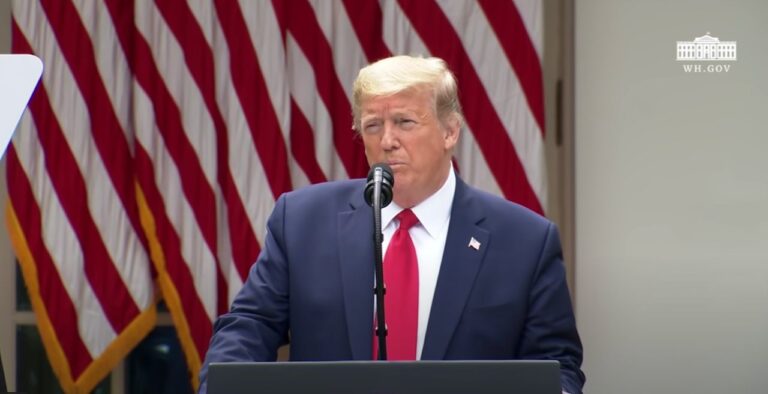
THE PRESIDENT: Thank you very much, Mark. And you’re doing a fantastic job, and our country appreciates it very much.
And thank you, everybody, for being here. Today, I’m deeply honoured to be at Naval Station Norfolk — the largest naval base anywhere in the world, and the home to the most powerful fleet that has ever sailed the seas. I just passed some of the most beautiful and, frankly, the most highly lethal ships that I have ever seen in my life, and there are a lot of them. And they’re in better shape now than they have been for many, many decades, with what we’re doing.
We’re grateful to be joined by Commander of the U.S. Fleet Forces, Admiral Christopher Grady, and Commander of the U.S. Second Fleet, Vice Admiral Woody Lewis. Thank you both for being here. We appreciate it very much.
As we gather today, our country is at war with an invisible enemy. We are marshalling the full power of the American nation — economic, scientific, medical, and military — to vanquish the virus. And we will do that.
Today, I’m here to express my profound gratitude to the dedicated service members who will soon be on the frontlines of this fight. In a few moments, the crew of the Navy Hospital Ship USNS Comfort — which is really something — will embark for New York City, where they will join the ranks of tens of thousands of amazing doctors, nurses, and medical professionals who are battling to save American lives.
This great ship behind me is a 70,000-ton message of hope and solidarity to the incredible people of New York — a place I know very well, a place I love. We’re here for you, we’re fighting for you, and we are with you all the way, and we always will be. You have the unwavering support of the entire nation, the entire government, and the entire American people.
After being rushed out of maintenance with historic speed — it was supposed to be here for four weeks, and they did it in four days — the Comfort will arrive at Pier 90 in Manhattan on Monday, three weeks ahead of schedule. Its crew will begin treating patients on Tuesday. It will be met in New York Harbor by Governor Cuomo, who I just spoke with; he’s very excited — and they need the help.
The skilled sailors and civilian mariners aboard this ship will provide a critical surge capacity for the New York metropolitan area. Their mission will be to care for New Yorkers who do not have the virus but who require urgent care. In other words, they’ll be using this — people will be coming out of hospitals who don’t have the virus, and they’ll be on the ship where they have great operating rooms and great facilities. And the places inbound, on land, will be where people that have the virus will be. So the people with the virus will not be on a ship. The ship will be used for people having operations and other things other than that.
By serving these emergency patients away from the hospitals, beds will be opened up all over the city for those who are infected. This ship can handle a lot of people, so it will open capacity all over the city. And it will be ready to address any life-threatening medical emergency. It is stocked. It’s stocked to the brim with equipment and medicines and everything you can think of. Importantly, by treating non-infected patients remotely on the ship, it will help to halt, very strongly, the transmission of the virus.
The Comfort’s sister ship on the West Coast, the USNS Mercy, arrived ahead of schedule, substantially, in port yesterday. Governor Gavin Newsom was very thankful for it. They’re working very hard in California. It’s performing a similar mission for the people of Los Angeles and the people of California.
As the USNS Comfort gets underway, it is fully loaded with 12 operating rooms — and they are fully equipped — 1,000 hospital beds, a medical laboratory, a pharmacy, an optometry lab, digital radiology, a CAT scan, two oxygen-producing plants, and a helicopter deck, which will be used very actively.
It also bears our military’s greatest weapon of all: a crew of nearly 1,200 outstanding members of the United States Navy. And I thank them very much. Among the sailors departing today are some of the finest doctors, nurses, technicians, orderlies, and medical staff anywhere in the world. These are true professionals. And no one performs better under pressure when lives are on the line. These are incredible people.
We will stop at nothing to protect the health of New Yorkers and the health of the people of our country in their hour of need. I also want to remind everyone about the CDC’s latest guidance: If you are from the New York metropolitan area and you travel elsewhere, we need you to self-quarantine for 14 days to help us contain the spread of the virus.
And I am now considering — we’ll make a decision very quickly, very shortly — a quarantine, because it’s such a hot area, of New York, New Jersey, and Connecticut. We’ll be announcing that, one way or the other, fairly soon. This does not apply to people such as truckers from outside the New York area who are making deliveries or simply transiting through. It won’t affect trade in any way.
The Army Corps of Engineers and FEMA are racing to build temporary hospitals — which are now completed, by the way, in record time — four hospitals, four medical centers. And in speaking with the governor this morning, we’re giving them an additional four large tents, which they need very badly. And the emergency medical stations in New York are top of the line. You have them in not only New York, but in California and Illinois. We’ll be adding some to other states also.
I’ve empowered our nation’s governors with the resources to call up the National Guard and authorized the activation of Ready Reserves. Two big words: Ready Reserves. FEMA has shipped or delivered 11.6 million N95 respirators, 26 million surgical masks, 5.2 million face shields — and a lot are being made of all of the things I just named right now; we have millions and millions of new medical items being made as we speak, and purchased — 4.3 million surgical gowns, 22 million gloves, and 8,100 ventilators.
We have moved rapidly to mobilize every instrument of American power. This week, I invoked the Defense Production Act to compel General Motors to carry out federal contracts for ventilators. And I think they’re going to do a great job; I have to say that.
We’re also working with the major ventilator companies in the United States — all big-name companies, all companies that do ventilators, so they won’t need extra time, and they’re gearing up and they’ll be working 24 hours around the clock, and they have been; they’ve been doing a fantastic job — to accomplish a historic ramp-up, and a ramp-up in the kind of numbers that we’re talking about.
And if we make too many, that’s going to be okay, because I spoke with the Prime Minister of the UK yesterday, Boris Johnson. He tested, as you know, positive. And before I even was able to get a word out of him, he said — I said, “How are you doing?” He said, “We need ventilators.” The UK needs ventilators. A lot of countries need ventilators badly. It’s a tough thing to make. It’s a very complicated and expensive piece of equipment. I would say more so than a car. You’re talking about expensive, complicated equipment. So I hope we, soon, will have enough that we can help other countries with ventilators. A lot of countries need them.
In the next 100 days, America will make or acquire three times more ventilators than we do in an entire year. We are so geared up. At Boeing, Ford, Honeywell, 3M, Hanes, and other great American companies, factory floors and manufacturing lines are being converted to produce the respirators, protective masks, face shields, and other vital equipment. And those companies have been amazing. And Boeing is giving us their cargo-moving planes. They’re the biggest cargo movers anywhere in the world, and we’re going to be using them to ship certain types of equipment to various states.
Hundreds of millions of Americans are also making tremendous sacrifices on the home front. In a historic drive to support our great workers and businesses, I signed into law the single-largest economic relief package in American history. You saw that yesterday.
The $2.2 trillion — and think of that: $2.2 trillion, but it goes to $6.2 trillion, depending on what we decide. This legislation delivers job retention loans for small businesses to help them keep workers on payroll, expanded unemployment benefits, and direct cash payments to American citizens. And these are very substantial payments. A family of four will be getting approximately $3,400.
This legislation also provides massive increases in funding for hospitals who need it, for Disaster Relief Fund, and critical life-saving medical supplies. We’re spending a tremendous amount of money on medical supplies. We’re trying to get it to the point needed directly, as opposed to our supply lines, so it can go directly to where they need it without having to go through a long process. I don’t want to say “bureaucratic,” but we have not — this group of people has worked so incredibly hard, and the energy and the speed with which they’re delivering everything has been really admired by everybody. Everybody is talking about it — the job they’re doing.
My administration has also taken action to dispend [sic] — and suspend federal student loan payments. So we’re suspending — and that means suspending, in every sense of the word — student loan payments so that the students that are not able to take advantage of what’s going on, obviously — for obvious reasons — they will be — the payment suspended.
We’ve temporarily stopped federal evictions and foreclosures. We’ve postponed Tax Day until July, which is a big thing; first time that’s happened. And waived regulations to speed new treatments to the market. And we have new treatments coming on rapidly. We’re doing very well, we think, with the vaccines, and we’re doing very, very well with, hopefully, or potentially, cures. We’re looking at a lot of different alternatives, a lot of different medicines. That would be game-changer.
The battle in which we’re now engaged has inflicted many hardships on our nation and our families — tremendous hardship on some families — and much death. Much death. But through it all, the world has witnessed the unyielding resolve of our incredible American people. We are not only a country of vast resources; we’re a nation of colossal strength, towering spirit, soaring patriotism, and exceptional character. And you’re showing it to the entire world.
At this moment, there are 151 countries throughout the world that are under attack by this horrible, invisible enemy. One hundred and fifty-one countries. And we’re in touch with a lot of them. Our professionals are the best in the world. But who would ever think 151 countries are under attack?
We are one family, bound together by love and loyalty — the eternal traits so perfectly embodied by the extraordinary men and women aboard this ship, and the men and women at this beautiful, scenic, but really tough base. This base is something. Thank you very much. This base is something very, very special.
With the courage of our doctors and nurses, with the skill of our scientists and innovators, with the determination of the American people, and with the grace of God, we will win this war and we will win this war quickly with as little death as possible.
And when we achieve our victory — this victory, your victory — we will emerge stronger and more united than ever before. We are going to be at a level of preparedness in case something like this should ever happen again — and, God willing, it won’t. But we are prepared. What we’ve done in building systems, we’re now the number one tester anywhere in the world, by far. We’re testing more in one day than other countries are testing in weeks, in months.
We’ve learned a lot. And I cannot be more thankful to the American people. And I can say this, and I can say this from the bottom of my heart: I am very proud to be your President.
Thank you very much, and God bless you all. Thank you. Thank you very much.
Mr Bob Katter (Member for Kennedy): I rise to speak on this matter of public importance. I do not share the views of my crossbench colleagues. I greatly respect them and I greatly respect their honourable beliefs but I do not agree with them. We are talking about Julian Assange. He, in fact, comes very much from my homeland, and I would have natural prejudices for him. But we have a country that is a dictatorship called China. It has made no secret of ambitions that go well beyond its own borders. Its power is enormous.
I share my crossbench colleagues’ view that this country is no longer being run by this country; this country is being run by the corporates. I think all of us on the crossbenches would share that view, which is not held by either side of this parliament. The corporates are running this country. Most of the corporates happen to be Chinese, and if you think they’re running those corporations in the interests of Australia then you would be very much misguided. Then again, when a supposed Australian company is paying its CEO $25 million a year and he seems to have an influence of extraordinary power in this country, then I would say that democracy really is becoming close to a mockery.
Let me just say that the important decisions made in this country are made not by the people in this parliament but by corporations. They decide whether a big building is going to be built or whether it’s not going to be built. They will decide whether a mine is going to open or whether it’s not going to open. They will decide whether they employ people on an industrial award or on some other arrangement. They will decide all of that and that is their power. You free marketeers have given them that power. You free marketeers have enabled them to buy the Australian economy. I mean, how much of the electricity industry do they own? How much of Australian water do they own? How many of the Australian airports do they own? How many of the Australian seaports do they own? Then ask: how much of Australia do we own?
I was just talking to a very good friend of my wife about the six million acres of all the station properties surrounding us at the time. I asked: ‘How much is owned by Australians?’ She said, ‘About two million.’ I will be giving the details of that in this parliament very shortly. That is a random sample. I spoke to someone who happens to be a distant relative of mine—a First Australian at the top of Western Australia. I said, ‘How much of Western Australia is owned by foreigners?’ and she said, ‘Ask how much of Western Australia is owned by Australians. That would be the more relevant point!’ She said, ‘Outside of my people—we still have reservation areas that we’re not allowed to do anything with; we can’t break a twig on them or take a cup of water out of the river. We still own that area, but take the national parks out and most of the rest is owned by foreigners.
You people have sold your country. It’s owned by somebody else. The people who own it have the say, not you. So, in a very profound sense—in a more profound sense than the Julian Assange argument or arguments over boat people—democracy does not rule this country. Once upon a time, we were able to make laws which pinned these people down so that they could not indulge in harmful behaviour to Australia. Whether it’s in an environmental area or whether it’s in an industrial award area, they could not act outside of the parameters of this place. When you signed the free trade agreement, you agreed that we could not change the goalposts; we could not change the rules. You gave your sovereignty to the corporations.
I come from a mining area. There were four great mining companies in this country. There was Rio Tinto Australia, which they claimed was Australian—I would doubt that, but, anyway, they claimed that it was. MIM most certainly was Australian owned, BHP most certainly was Australian owned, and Western Mining was most certainly Australian owned. They are now all incontrovertibly foreign-owned, and they account for nearly 80 per cent of our mineral production. So you gave the whole lot away
WHO’ Pandemic continues to take a massive toll on health and so many parts of life.
Good morning, good afternoon and good evening, wherever you are.
The pandemic continues to take a massive toll not just on health, but on so many parts of life. esterday, the Government of Japan and the International Olympic Committee took a difficult but wise decision to postpone this year’s Olympic and Paralympic Games.
I thank Prime Minister Abe and the members of the IOC for making this sacrifice to protect the health of athletes, spectators and officials.
We look forward to next year’s Olympics and Paralympics, which we hope will be an even bigger and better celebration of our shared humanity – and I look forward to joining.
We have overcome many pandemics and crises before. We will overcome this one too.
The question is how large a price we will pay.
Already we have lost more than 16,000 lives. We know we will lose more – how many more will be determined by the decisions we make and the actions we take now.
To slow the spread of COVID-19, many countries have introduced unprecedented measures, at significant social and economic cost – closing schools and businesses, cancelling sporting events and asking people to stay home and stay safe.
We understand that these countries are now trying to assess when and how they will be able to ease these measures.
The answer depends on what countries do while these population-wide measures are in place.
Asking people to stay at home and shutting down population movement is buying time and reducing the pressure on health systems.
But on their own, these measures will not extinguish epidemics.
The point of these actions is to enable the more precise and targeted measures that are needed to stop transmission and save lives.
We call on all countries who have introduced so-called “lockdown” measures to use this time to attack the virus.
You have created a second window of opportunity. The question is, how will you use it?
There are six key actions that we recommend.
First, expand, train and deploy your health care and public health workforce;
Second, implement a system to find every suspected case at community level;
Third, ramp up the production, capacity and availability of testing;
Fourth, identify, adapt and equip facilities you will use to treat and isolate patients;
Fifth, develop a clear plan and process to quarantine contacts;
And sixth, refocus the whole of government on suppressing and controlling COVID-19.
These measures are the best way to suppress and stop transmission, so that when restrictions are lifted, the virus doesn’t resurge.
The last thing any country needs is to open schools and businesses, only to be forced to close them again because of a resurgence.
Aggressive measures to find, isolate, test, treat and trace are not only the best and fastest way out of extreme social and economic restrictions – they’re also the best way to prevent them.
More than 150 countries and territories still have fewer than 100 cases.
By taking the same aggressive actions now, these countries have the chance to prevent community transmission and avoid some of the more severe social and economic costs seen in other countries.
This is especially relevant for many vulnerable countries whose health systems may collapse under the weight of the numbers of patients we’ve seen in some countries with community transmission.
Today I joined United Nations Secretary-General Antonio Guterres, Under-Secretary General for UNOCHA Mark Lowcock and UNICEF Executive Director Henrietta Fore to launch the Global Humanitarian appeal, to support the most fragile countries who have already suffered years of acute humanitarian crises.
This is much more than a health crisis, and we’re committed to working as one UN to protect the world’s most vulnerable people from the virus, and its consequences.
We also welcome the Secretary-General’s call for a global ceasefire. We are all facing a common threat, and the only way to defeat it is by coming together as one humanity, because we’re one human race.
We’re grateful to the more than 200,000 individuals and organizations who have contributed to the COVID-19 Solidarity Response Fund. Since we launched it less than two weeks ago, the fund has raised more than US$95 million. I would like to offer my deep thanks to GSK for its generous contribution of US$10 million today.
Although we are especially concerned about vulnerable countries, all countries have vulnerable populations, including older people.
Older people carry the collective wisdom of our societies. They are valued and valuable members of our families and communities.
But they are at higher risk of the more serious complications of COVID-19.
We are listening to older people and those who work with and for them, to identify how best we can support them.
We need to work together to protect older people from the virus, and to ensure their needs are being met – for food, fuel, prescription medication and human interaction.
Physical distance doesn’t mean social distance.
We all need to check in regularly on older parents, neighbours, friends or relatives who live alone or in care homes in whatever way is possible, so they know how much they are loved and valued.
All of these things are important at any time, but they are even more important during a crisis.
Finally, the COVID-19 pandemic has highlighted the need for compelling and creative communications about public health.
Last year, WHO announced our first Health for All Film Festival. The volume, quality and diversity of entries far surpassed our expectations.
We received more than 1,300 entries from 110 countries, and today we are announcing a short list of 45 excellent short films about vital health topics.
We are also announcing a distinguished panel of jurors who will judge the short list, with the winners to be announced in May.
We will be showing all the short-listed films in the coming weeks on our website and social media channels.
In these difficult times, film and other media are a powerful way not only of communicating important health messages, but of administering one of the most powerful medicines – hope.
I thank you.
Elbows:
“Cover your nose and mouth with a bent elbow or tissue when you sneeze or cough,” says Carli Lloyd two-time FIFA Women’s World Cup winner from the United States. “Dispose of tissue immediately and wash your hands.”
Droplets spread the coronavirus. By following respiratory hygiene, you protect the people around you from contracting viruses, such as cold, flu and coronavirus.