Home Blog Page 9

New Era of Prosperity: Trump’s Visionary Address at the WEF Davos 2026

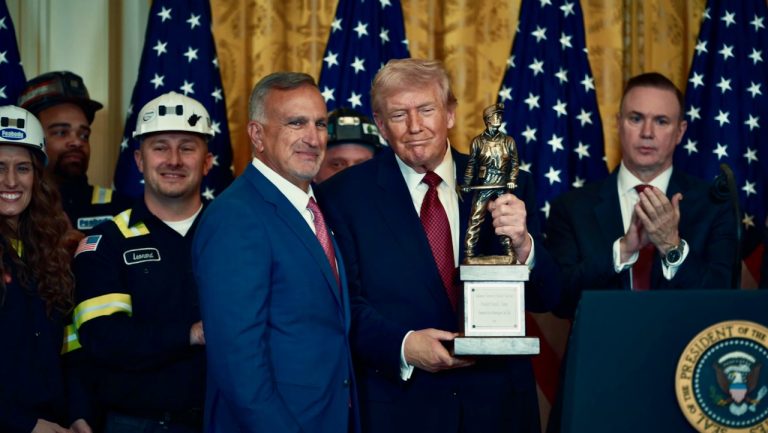
The eyes of the world were on Switzerland this week as President Donald Trump delivered a powerful and optimistic special address to the World Economic Forum in Davos. Stepping onto the global stage, the President laid out a bold vision for 2026, centering on American strength as the primary engine for global growth

President Trump highlighted the “fastest and most dramatic economic turnaround” in history. With core inflation dropping to 1.6% and the stock market reaching a staggering 52 all-time highs since the election, the message was clear: America is back and stronger than ever.

Key highlights from the economic agenda included:

  • Cutting the Red Tape: A record-breaking 129 regulations removed for every one new regulation added, freeing businesses to innovate

Government Efficiency: The removal of over 270,000 bureaucrats from federal payrolls, the largest reduction since WWII, returning talent to the private sector

Investment in Growth: 100% expensing and bonus depreciation are bringing manufacturing back to American soil, with domestic steel production surging

Strategic Leadership and Global Security

A major focus of the address was the President’s innovative approach to security. By proposing a framework for the acquisition of Greenland, President Trump is looking decades ahead to secure the northern frontier of the Western Hemisphere.

In a move that reassured markets and allies alike, he clarified that this transition would be handled through “immediate negotiations” rather than force, even dropping previously scheduled tariffs to foster a spirit of dialogue. This “tough love” approach seeks to unify Western civilisation against modern challenges while ensuring that NATO remains a robust and fairly funded alliance

Energy Independence and the Future

The President also reaffirmed his commitment to affordable, reliable energy. By prioritising traditional energy sources and nuclear power over ineffective subsidies, the administration is ensuring that the “pinnacle of human achievement” continues to be fueled by common-sense solutions rather than bureaucratic overreach.

President Trump concluded with a reminder that when America prospers, the world prospers. The message from Davos was one of confidence: through deregulation, secure borders, and strategic deals, the “Spirit of Dialogue” is being replaced by a Spirit of Action.

The End of Gunpowder: Inside the Navy’s Mach 7 Electromagnetic Railgun

The U.S. military is developing a weapon that ditches gunpowder entirely in favor of raw electricity. The Electromagnetic (EM) Railgun is not science fiction; it is a physics-breaking reality designed to make current defensive systems obsolete.

Here is the truth about the weapon that redefines “firepower.”

How It Works: Pure Electricity

A traditional gun uses expanding gas from an explosion to push a bullet. A railgun uses the Lorentz Force

Massive electrical currents are dumped into two parallel rails.

A conductive metal slider (holding the projectile) sits between them.

The magnetic fields created by the current accelerate the slider down the tracks instantly.

It is not a “gun” in the traditional sense; it is an electromagnetic launcher.

The Specs: Mach 7 and 32 Megajoules

The numbers behind this weapon are staggering.

  • Speed: The projectile leaves the barrel at Mach 7—that is over 5,000 miles per hour. It flies so fast it burns the air around it into plasma.
  • Energy: It delivers 32 megajoules of energy at launch. For perspective, one megajoule is roughly the energy of a 1-ton vehicle moving at 100 mph. The railgun delivers 32 times that force instantly.
  • Range: It can strike targets over 100 nautical miles away, keeping the ship safely out of range of most enemy counter-fire.

The “Kinetic Kill”: Why It Doesn’t Need Explosives

The most revolutionary part of the railgun is the ammunition. The projectile has no warhead. It does not explode on impact.

At 5,000 mph, you don’t need explosives. The sheer impact speed delivers a “kinetic kill.” Hitting a target with a solid metal slug moving that fast delivers the destructive force of a meteor strike, vaporizing metal and concrete upon contact.

The Strategic Advantage

Why spend billions developing this?

  • Deep Magazines: Ships can carry thousands of inert metal slugs instead of hundreds of dangerous explosive shells.
  • Safety: It removes volatile gunpowder magazines from the ship’s hull, making the vessel harder to destroy.
  • Cost Per Shot: A railgun slug costs roughly $25,000. A tactical missile with similar range costs upwards of $1.5 million.

HISTORIC SHIFT: One Nation Surges to Second Place as Majors Crumble in Newspoll Shock

The latest survey reveals a massive 7 per cent surge for the right-wing populist party, catapulting their primary support to 22 per cent. This historic rise places them ahead of the Liberal-National Coalition, which has slumped to a record low of 21 per cent, while Labor holds a diminished lead at 32 per cent

Pollsters and analysts are calling it “The Great Switch”—a chaotic realignment of the Australian electorate where voters are abandoning both traditional major parties in almost equal numbers.

The data paints a picture of a restless electorate punishing the establishment.

This marks the first time in Newspoll history that a minor party has polled higher than one of the two major parties that have governed Australia since World War II.

“We are witnessing a structural break in Australian politics,” said lead analyst George Hasanakos. “Typically, minor parties peel votes from one side of the spectrum. What makes this result unique is that One Nation is taking equally from Labor’s working-class base and the Coalition’s conservative heartland. It is a dual rebellion.”

The 7-point jump appears to be driven by a perfect storm of voter dissatisfaction. With the cost-of-living crisis biting hard and concerns over social cohesion dominating recent headlines following the tragic events in Bondi earlier this month, voters appear to be seeking a “break glass” option.

For the Opposition Leader, falling to third place behind a minor party is a catastrophic blow, signaling that the Coalition is bleeding its primary constituency faster than it can replace them. Meanwhile, the Government is not immune; despite retaining the lead, Labor’s 4-point drop suggests that the “safe pair of hands” narrative is no longer resonating with struggling households.

Political insiders are describing the phenomenon as “The Great Switch”—a direct transfer of trust from the establishment to the insurgent fringe.

“This isn’t just a protest vote anymore; it’s a parking maneuver,” said one Labor strategist, speaking on condition of anonymity. “People aren’t just flirting with One Nation to send a message; they are parking their vote there because they feel the majors have stopped listening.”

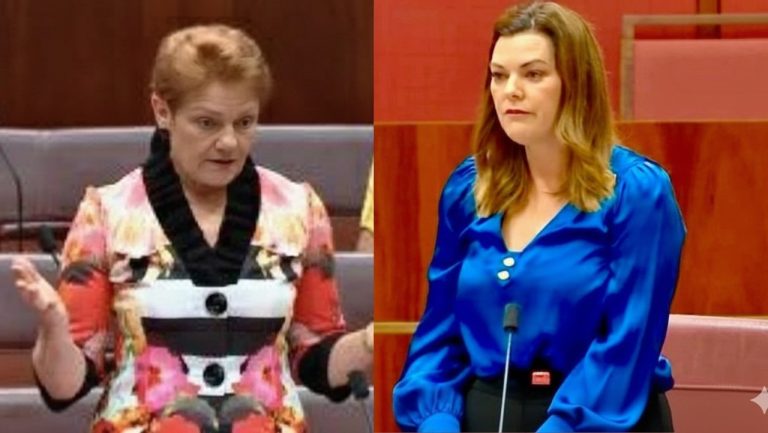
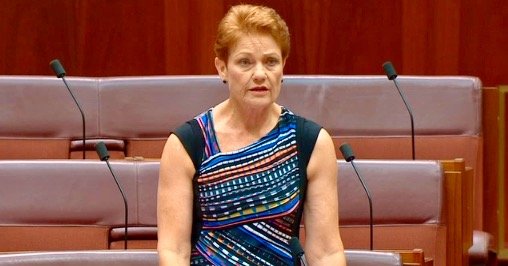
Senator Pauline Hanson, emboldened by the results, claimed the poll as vindication. “Australians have had a gutful of the twins—Labor and Liberal,” she said in a statement this morning. “They are finally waking up to the fact that they don’t have to choose between Coke and Pepsi. We are the real opposition now.”

While the next election is still distant, these numbers, if sustained, would make the formation of a majority government mathematically impossible for either major party. It raises the spectre of a chaotic hung parliament where One Nation could wield unprecedented balance-of-power influence—or potentially even threaten the Opposition’s status as the alternative government.

For now, the political class in Canberra is left scrambling to understand how the comfortable two-party system they knew has, seemingly overnight, been turned on its head.

Hate Speech Crackdown Sparks Free Speech Frenzy

🚨
306 words
  • Key points:
  • New offence for promoting racial hatred or superiority (up to 5 years prison)
  • Aggravated penalties for “hate preachers” inciting violence
  • Powers to ban hate organisations
  • Defence clause for direct quotes from religious texts
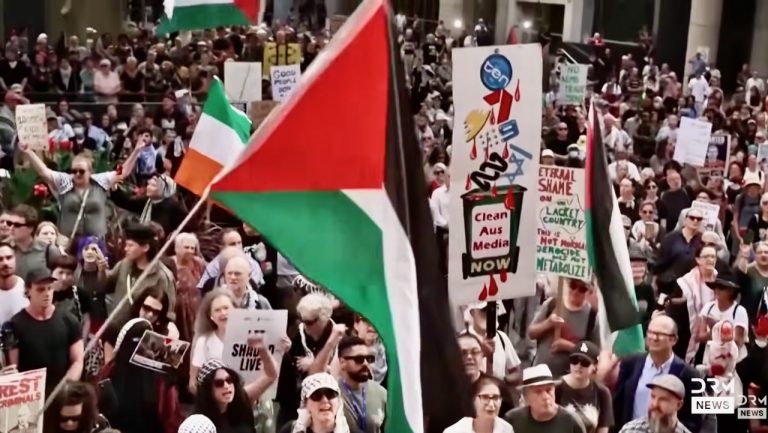
Protests and a convoy to Canberra are planned in response to the proposed hate speech laws. The convoy, organised by groups like Reignite Democracy Australia, aims to highlight concerns that the laws will suppress free speech and protect extremists 

The Australian government has fast-tracked the legislation, citing the need to address rising antisemitism and extremism following the Bondi Beach terror attack. However, critics argue the laws could stifle legitimate free speech and disproportionately target certain groups.

The parliament is set to debate the Combatting Antisemitism, Hate and Extremism Bill, which introduces tougher penalties for hate crimes and new offences for inciting racial hatred. The bill’s fate remains uncertain, with cross-bench support potentially pivotal

Far-Left Protest with Mental Health Behaviours caused by Mainstream Media Brainwashing and Paid Protestors by Secret Society

Alleged Tobacco Kingpin Kazem ‘Kaz’ Hamad Arrested in Iraq: A Major Blow to Australia’s Underworld?

Since his deportation, Australian authorities — including the Australian Federal Police (AFP) — have alleged that Hamad continued to direct operations from abroad. He is described as a central figure in Melbourne’s so-called “tobacco wars,” a brutal turf battle over the multibillion-dollar black market for illegal cigarettes. Police link him to:

  • Dozens — potentially hundreds — of firebombings targeting rival tobacco shops and businesses.
  • Extortion schemes, including the infamous “Kaz tax” imposed on operators.
  • Links to serious violence, including the murder of rivals and other gangland incidents.

More controversially, Hamad has been publicly named by AFP Commissioner Krissy Barrett as a national security threat, with suspicions of involvement in the December 2024 firebombing of the Adass Israel synagogue in Melbourne — an attack allegedly carried out in coordination with Iranian interests.

The Arrest: Details and International Cooperation According to statements from Iraq’s National Center for International Judicial Cooperation, Hamad (full name: Kadhim Malik Hamad Rabah al-Hajami) was detained in a coordinated operation involving the country’s General Directorate of Narcotics and Psychotropic Substances Affairs. Iraqi authorities described him as “one of the most dangerous wanted men in the world,” accusing him of importing large quantities of drugs into both Iraq and Australia, as well as heroin smuggling.The arrest reportedly came in response to an official request from Australian law enforcement, though Iraqi officials emphasized it stemmed from their own independent investigation. The AFP has welcomed the development but has not confirmed active extradition proceedings, with sources suggesting challenges due to Iraq’s political and judicial landscape.

The underworld reaction has been swift and speculative. Some sources describe the arrest as “unreal,” with whispers that Hamad’s empire could crumble without his direct oversight. Others question whether his loyal network of family and associates — many sharing Iraqi heritage — will maintain control over the lucrative illegal cigarette market, where products can be sold at half the price of legitimate brands while yielding massive profits.Key uncertainties remain:

  • Will Australia successfully extradite Hamad, or will he face prosecution in Iraq?
  • How will this impact ongoing firebombings and violence in Victoria and beyond?
  • Could this mark the beginning of the end for the “tobacco wars,” or is the black market too entrenched to collapse?

For now, Hamad’s arrest represents a major win for law enforcement on both sides of the globe. Whether it truly dismantles his alleged transnational crime enterprise — or simply shifts power to new players — only time will tell.This story continues to develop rapidly. Stay tuned for updates as more details emerge from Australian and Iraqi authorities.

543 words
2–3 minutes

TRUMP’ NO MORE SELLING OUT AMERICAN JOBS, BORDERS, MONEY & SOVEREIGNTY TO ONE-WORLD LUNATICS!

MEMORANDUM FOR THE HEADS OF EXECUTIVE DEPARTMENTS AND AGENCIES

By the authority vested in me as President by the Constitution and the laws of the United States of America, I hereby direct:

Section 1.  Purpose.  (a)  On February 4, 2025, I issued Executive Order 14199 (Withdrawing the United States from and Ending Funding to Certain United Nations Organizations and Reviewing United States Support to All International Organizations).  That Executive Order directed the Secretary of State, in consultation with the United States Representative to the United Nations, to conduct a review of all international intergovernmental organizations of which the United States is a member and provides any type of funding or other support, and all conventions and treaties to which the United States is a party, to determine which organizations, conventions, and treaties are contrary to the interests of the United States.  The Secretary of State has reported his findings as required by Executive Order 14199.

(b)  I have considered the Secretary of State’s report and, after deliberating with my Cabinet, have determined that it is contrary to the interests of the United States to remain a member of, participate in, or otherwise provide support to the organizations listed in section 2 of this memorandum. 

(c)  Consistent with Executive Order 14199 and pursuant to the authority vested in me as President by the Constitution and the laws of the United States of America, I hereby direct all executive departments and agencies (agencies) to take immediate steps to effectuate the withdrawal of the United States from the organizations listed in section 2 of this memorandum as soon as possible.  For United Nations entities, withdrawal means ceasing participation in or funding to those entities to the extent permitted by law.

(d)  My review of further findings of the Secretary of State remains ongoing.

Sec. 2.  Organizations from Which the United States Shall Withdraw.  (a)  Non-United Nations Organizations:

(i)       24/7 Carbon-Free Energy Compact;

(ii)      Colombo Plan Council;

(iii)     Commission for Environmental Cooperation;

(iv)      Education Cannot Wait;

(v)       European Centre of Excellence for Countering

Hybrid Threats;

(vi)      Forum of European National Highway Research Laboratories;

(vii)     Freedom Online Coalition;

(viii)    Global Community Engagement and Resilience Fund;

(ix)      Global Counterterrorism Forum;

(x)       Global Forum on Cyber Expertise;

(xi)      Global Forum on Migration and Development;

(xii)     Inter-American Institute for Global Change Research;

(xiii)    Intergovernmental Forum on Mining, Minerals, Metals, and Sustainable Development;

(xiv)     Intergovernmental Panel on Climate Change;

(xv)      Intergovernmental Science-Policy Platform on Biodiversity and Ecosystem Services;

(xvi)     International Centre for the Study of the Preservation and Restoration of Cultural Property;

(xvii)    International Cotton Advisory Committee;

(xviii)   International Development Law Organization;

(xix)     International Energy Forum;

(xx)      International Federation of Arts Councils and Culture Agencies;

(xxi)     International Institute for Democracy and Electoral Assistance;

(xxii)    International Institute for Justice and the Rule of Law;

(xxiii)   International Lead and Zinc Study Group;

(xxiv)    International Renewable Energy Agency;

(xxv)     International Solar Alliance;

(xxvi)    International Tropical Timber Organization;

(xxvii)   International Union for Conservation of Nature;

(xxviii)  Pan American Institute of Geography and History;

(xxix)    Partnership for Atlantic Cooperation;

(xxx)     Regional Cooperation Agreement on Combatting Piracy and Armed Robbery against Ships in Asia;

(xxxi)    Regional Cooperation Council;

(xxxii)   Renewable Energy Policy Network for the 21st Century;

(xxxiii)  Science and Technology Center in Ukraine;

(xxxiv)   Secretariat of the Pacific Regional Environment Programme; and

(xxxv)    Venice Commission of the Council of Europe.

(b)  United Nations (UN) Organizations:

(i)       Department of Economic and Social Affairs;

(ii)      UN Economic and Social Council (ECOSOC) — Economic Commission for Africa;

(iii)     ECOSOC — Economic Commission for Latin America and the Caribbean;

(iv)      ECOSOC — Economic and Social Commission for Asia and the Pacific;

(v)       ECOSOC — Economic and Social Commission for Western Asia;

(vi)      International Law Commission;

(vii)     International Residual Mechanism for Criminal Tribunals;

(viii)    International Trade Centre;

(ix)      Office of the Special Adviser on Africa;

(x)       Office of the Special Representative of the Secretary General for Children in Armed Conflict;

(xi)      Office of the Special Representative of the Secretary-General on Sexual Violence in Conflict;

(xii)     Office of the Special Representative of the Secretary-General on Violence Against Children;

(xiii)    Peacebuilding Commission;

(xiv)     Peacebuilding Fund;

(xv)      Permanent Forum on People of African Descent;

(xvi)     UN Alliance of Civilizations;

(xvii)    UN Collaborative Programme on Reducing Emissions from Deforestation and Forest Degradation in Developing Countries;

(xviii)   UN Conference on Trade and Development;

(xix)     UN Democracy Fund;

(xx)      UN Energy;

(xxi)     UN Entity for Gender Equality and the Empowerment of Women;

(xxii)    UN Framework Convention on Climate Change;

(xxiii)   UN Human Settlements Programme;

(xxiv)    UN Institute for Training and Research;

(xxv)     UN Oceans;

(xxvi)    UN Population Fund;

(xxvii)   UN Register of Conventional Arms;

(xxviii)  UN System Chief Executives Board for Coordination;

(xxix)    UN System Staff College;

(xxx)     UN Water; and

(xxxi)    UN University.

Sec. 3.  Implementation Guidance.  The Secretary of State shall provide additional guidance as needed to agencies when implementing this memorandum.

Sec. 4.  General Provisions.  (a)  Nothing in this memorandum shall be construed to impair or otherwise affect:

(i)   the authority granted by law to an executive department or agency, or the head thereof; or

(ii)  the functions of the Director of the Office of Management and Budget relating to budgetary, administrative, or legislative proposals.

(b)  This memorandum shall be implemented consistent with applicable law and subject to the availability of appropriations.

(c)  This memorandum is not intended to, and does not, create any right or benefit, substantive or procedural, enforceable at law or in equity by any party against the United States, its departments, agencies, or entities, its officers, employees, or agents, or any other person.

(d)  The Secretary of State is authorized and directed to publish this memorandum in the Federal Register.

                              DONALD J. TRUMP

The NDIS Under Fire: Cracking Down on organised criminal syndicates

Operation Scope Allegation
Operation Banksia $40 Million Organized crime syndicate claiming for services while participants were actually in jail.
Operation Howell $7 Million Western Sydney network submitting hundreds of false claims.
Operation Daewoo $1.2 Million Adelaide-based syndicate allegedly stealing directly from participant plans.

 Examining Albanese’s Handling of the Bondi Beach Terror Attack: Facts, Criticisms, and Context


The tragic events of December 14, 2025, at Bondi Beach have left Australia reeling. What began as a joyful Hanukkah festival turned into the nation’s deadliest terror attack in modern history, with two gunmen killing 15 people and wounding 40 others in an assault described by authorities as motivated by antisemitism and linked to Islamist extremism.  Prime Minister Anthony Albanese swiftly condemned the attack as an “act of pure evil” and a “targeted, antisemitic terrorist attack,” emphasising national unity and announcing measures like stricter gun laws and hate crime reforms.  Yet, his response has sparked intense debate on social media and beyond, with critics accusing him of downplaying Islamist elements, overemphasising “far-right” threats, enabling antisemitic sentiments through past policies, and dodging accountability by rejecting a royal commission. Let’s break this down factually, drawing on available evidence, to separate rhetoric from reality.

The Attack and Albanese’s Initial Response


However, some have pointed out that Albanese’s language focused heavily on “antisemitism” without explicitly using terms like “Islamist terror” in key statements. For instance, in a December 22 press conference, he described the attackers as “terrorists” but pivoted to broader discussions of extremism, including far-right groups. Critics, including media outlets, argue this avoidance echoes a pattern where he warns of “far-right” dangers while being reticent on “Islamic extremism.” Social media users have echoed this, with posts labelling his approach as “gaslighting” and distracting from the attack’s ideological roots. 


One of the most contentious aspects is Albanese’s references to far-right extremism in the attack’s aftermath. In speeches and policy announcements, he has grouped Islamist and far-right threats together, proposing changes to hate group listings that target both, such as Hizb ut-Tahrir and the National Socialist Network. This isn’t new; earlier in 2025, he warned about the rise of populism and far-right movements globally, citing examples like Nigel Farage’s Reform Party in the UK. 


Detractors claim there’s “no evidence” of a far-right problem in Australia comparable to Islamist threats, and that the term is weaponised to smear conservatives. On X (formerly Twitter), users have vented frustration, calling it a diversion tactic—especially after an unrelated incident where Albanese claimed a “far-right tradie” threatened him, which some dismissed as exaggerated. Others argue his focus ignores warnings about rising antisemitism from pro-Palestine rallies.  However, official reports do highlight far-right extremism as a growing concern, with ASIO noting it alongside other ideologies. The question is balance: Has Albanese’s emphasis annoyed Australians by seeming partisan, or is it a legitimate call for comprehensive security reforms?

Anti-Israel Policies and Rising Antisemitism

Critics link the attack to what they see as the government’s lax stance on anti-Israel protests. A flashpoint is the 2023 Sydney Opera House incident, where a pro-Palestine rally featured flares, chants of “gas the Jews,” and police investigations into antisemitic behaviour—all while the landmark was lit in Israeli colors to honour victims of the October 7 Hamas attacks.  Albanese’s government has been accused of doing “nothing” to curb such events, allowing hatred to fester.


More recently, Israeli Prime Minister Benjamin Netanyahu directly blamed Albanese for the Bondi attack, claiming Australia’s recognition of Palestine and failure to stem antisemitism contributed. Albanese rejected this, but social media has amplified images of him at pro-Palestine events, including one with flags of terror groups like Hamas and Hezbollah—though the timing and context remain debated. A timeline of Albanese’s stance shows he attended anti-Israel protests in his youth but has since condemned Hamas and supported Israel’s right to defend itself. Still, reports note a surge in antisemitic attacks amid Middle East tensions, with some attributing it to unchecked protests.


Perhaps the sharpest criticism is Albanese’s refusal to call a royal commission into the attack and broader antisemitism. Instead, he opted for an independent review led by former ASIO chief Dennis Richardson, focusing on whether security agencies could have averted the tragedy.  He argues a full royal commission would take years, “platform worst voices,” and isn’t in the “national interest.” 


Victims’ families have slammed this as “empty words” and insufficient, demanding a more comprehensive inquiry.  Opposition figures, including Julie Bishop and Queensland Attorney-General Deb Frecklington, echo calls for a royal commission, arguing the review is a “conflict of interest” limited to agencies, not societal or governmental factors.  On X, users speculate Albanese has “something to hide,” linking it to his policies on migration and protests.  Proponents of the review counter that it’s faster and more targeted, avoiding the politicisation of past inquiries.

A Balanced Perspective

Albanese’s leadership in this crisis has united many in grief but divided others on execution. His push for gun control and hate reforms addresses immediate needs, but criticisms of selective language and policy blind spots hold weight based on evidence of rising antisemitism and perceived imbalances in threat assessments. Social media amplifies annoyance, with terms like “far right” seen as a catch-all for dissent, potentially alienating conservatives. Yet, dismissing all far-right concerns ignores official intelligence.

Ultimately, transparency is key. A royal commission could provide the thorough examination victims deserve, but only if it avoids becoming a political circus. As Australia heals, the focus should remain on preventing future attacks through evidence-based policies, not partisan finger-pointing. What do you think—does Albanese’s approach strike the right balance, or is more accountability needed?

Britain faces a heightened risk of Islamist terrorism as security officials warn of a resurgent (ISIS) threat

Britain on Edge: Imminent Islamist Attack Looms as ISIS Threat Resurges London, December 28, 2025 – Britain faces a heightened risk of Islamist terrorism as security officials warn of a resurgent Islamic State (ISIS) threat,

 following the conviction of two men for plotting what police described as potentially “the deadliest terrorist attack in UK history.”Walid Saadaoui, 38, and Amar Hussein, 52, were found guilty on December 23 at Preston Crown Court of preparing acts of terrorism. 

The pair, inspired by ISIS, planned a gun rampage targeting the Jewish community in northwest England, aiming to acquire assault rifles similar to those used in the 2015 Paris Bataclan massacre that killed 130 people. Saadaoui’s brother, Bilel, 36, was convicted of failing to disclose information about the plot.Assistant Chief Constable Robert Potts of Counter-Terrorism Policing Northwest called the foiled plan “one of the most significant plot disruptions in recent years,” noting that its execution could have had “catastrophic” consequences with hundreds potentially killed.The convictions come amid broader concerns about ISIS’s revival. 

Although the group lost its territorial caliphate in 2019, experts say it is reorganising, using online propaganda to radicalize individuals. MI5 Director General Ken McCallum has highlighted a “worsening threat from al-Qaeda and in particular Islamic State,” with the UK seeing signs of escalating jihadist activity.

The UK’s terrorism threat level remains SUBSTANTIAL, meaning an attack is likely, as set by the Joint Terrorism Analysis Centre (JTAC). Islamist extremism accounts for about 75% of MI5’s counter-terrorism caseload, with lone actors or small groups often self-radicalised online posing the primary risk.This plot follows other recent incidents, including an October 2025 attack on a Manchester synagogue that killed two people, treated as terrorism motivated by Islamic extremism.

 Globally, a deadly shooting at a Hanukkah event in Sydney’s Bondi Beach earlier this month, which ISIS praised, has further raised alarms.Security Minister Dan Jarvis condemned antisemitic terrorism, stating: “A terrorist attack upon our Jewish friends and neighbours is an attack on us all.” Counter Terrorism Policing has urged public vigilance, especially during the holiday season.While no specific imminent attack has been publicly confirmed beyond ongoing threats, intelligence sources emphasise the unpredictable nature of lone-wolf assaults. Since 2017, MI5 and police have disrupted over 40 late-stage plots, underscoring the persistent danger.Jewish community leaders have praised the police and undercover operations that prevented the Manchester plot, but expressed ongoing fears for safety amid rising antisemitism.As 2025 draws to a close, Britain remains alert, with experts predicting the Islamist threat will endure for years due to online radicalisation and global instability. The public is reminded to report suspicious activity to authorities.

Wake Up, Britain: The Islamist Storm is Upon Us – Imminent Attack Looms! Dear readers, if you’re reading this from the comfort of your home in London, Manchester, or any corner of our once-peaceful isles, I urge you to sit up and pay attention. The shadows of terror are lengthening, and the warnings are screaming from every intelligence corner. Britain is on the brink of what could be one of the most devastating Islamist attacks in our history – and it’s not a matter of if, but when. 

Recent events paint a chilling picture: foiled plots that could have slaughtered hundreds, synagogue attacks, and now, dire alerts from MI6-trained experts that an assault is imminent. Our government under Keir Starmer seems asleep at the wheel, prioritising politics over protection. This isn’t scaremongering; this is a wake-up call before it’s too late.Let’s start with the cold, hard facts. Just days ago, on December 23, 2025, two men – Walid Saadaoui and Amar Hussein – were convicted of plotting an Islamic State-inspired gun rampage targeting the Jewish community in northwest England. 

 Prosecutors described it as potentially “one of, if not the, deadliest terrorist attack in UK history.” 

 These jihadists were stockpiling assault rifles akin to those used in the 2015 Paris Bataclan massacre, which claimed 130 lives. Imagine that horror unfolding in Manchester or Liverpool – crowds mowed down in cold blood, families shattered, our streets turned into war zones. And this isn’t isolated; it’s part of a sinister resurgence of ISIS, harnessing AI and online influencers to radicalise sleeper cells right here on British soil. 

But wait, it gets worse. Earlier this month, on December 4, a terrorist struck at the Heaton Park Hebrew Congregation Synagogue in Manchester, leading to the arrest and charging of a suspect in what authorities have confirmed as a terrorist incident. 

 This wasn’t a random act; it’s a pattern. The December Monthly Terrorism Update from Pool Reinsurance highlights multiple attacks on behalf of Islamic State in the UK this year alone, including this synagogue horror. 

 And let’s not forget the global context – the recent mass shooting at a Hanukkah celebration on Sydney’s Bondi Beach, killing 15, which ISIS hailed as a “source of pride.” 

 European security officials are sounding the alarm: ISIS and al-Qaeda are exporting violence, radicalising lone wolves online to strike at any moment. 

Now, the most terrifying revelation comes from a live broadcast that’s exploding across social media: an MI6-trained spy has directly warned Prime Minister Starmer of an imminent Islamist attack on British soil. 

youtube.com

 In a chilling session, the expert details how our porous borders, online radicalisation, and government inaction are fuelling this powder keg. Posts on X (formerly Twitter) are flooding in, with users from all walks of life sharing the video and expressing outrage. 

 One user likened it to Iran’s 1979 Islamic regime takeover, warning that Britain could face mass executions if we don’t act now. 

 Another blasts Starmer’s Labour government for putting citizens at risk through misguided policies. 

MI5’s own assessments confirm this nightmare. Islamist terrorism remains the UK’s most significant threat by volume, with lone actors self-radicalizing online to carry out low-tech but deadly assaults. 

mi5.gov.uk

 Director General Ken McCallum has thwarted 19 late-stage plots since 2020, but the flood continues. 

 Forecasts for 2025 predict a surge in such threats, fuelled by political polarisation and regional tensions like the ongoing Middle East conflicts. 

 We’re not talking about distant hypotheticals – this is happening now, in our cities, targeting our communities.Britain, we’ve been here before: 7/7 bombings, Manchester Arena, London Bridge. Each time, we mourn, we vow “never again,” yet here we are, teetering on the edge once more. The Islamist threat has evolved – from organised groups to hybrid lone wolves inspired by Daesh and al-Qaeda. 

protectuk.police.uk +1

 Our intelligence services are stretched thin, and with 75% of MI5’s caseload tied to Islamic extremism, the writing is on the wall. 

en.wikipedia.org

What can we do? Demand action from Starmer: tighten borders, crack down on online radicalisation, and prioritise British safety over political correctness. If we ignore these warnings, the next attack won’t be foiled – it will be front-page devastation. Share this post, contact your MP, stay vigilant. The storm is coming; will we let it engulf us? Stay safe, stay alert.

Bondi Massacre: Survivors Plead for Return to Icon as Legal and Political Battles Intensify

One week after the deadliest mass shooting in modern Australian history, Bondi Beach remains a landscape defined by paradox: the glistening Pacific surf provides a cruel backdrop to a community struggling with what health experts are calling “collective grief.”

As the National Day of Reflection concluded late Monday, the focus has shifted from mourning to the complex legal and political fallout of the Hanukkah massacre. Today, businesses along Campbell Parade are issuing a desperate plea for the public to return, even as the nation grapples with the shocking details of the attack revealed in newly unsealed court documents.

The Investigation: A “Manifesto of Hate”

New court filings released this morning have painted a chilling picture of the planning behind the attack. Naveed Akram, 24, who was transferred from a hospital to a high-security prison yesterday, is alleged to have worked alongside his father, Sajid, to conduct weeks of “reconnaissance” on the Jewish community event.


Police allege the pair utilised improvised explosives, including pipe bombs filled with steel ball bearings and a “tennis ball bomb,” which were tossed into the crowd at Archer Park before they opened fire. Perhaps most distressing is the discovery of a “video manifesto” allegedly created by the shooters, which suggests the attack was inspired by extremist ideologies.

 A Political Powder Keg

In Canberra, the tragedy has shattered any semblance of bipartisan unity. Prime Minister Anthony Albanese, who led a tearful vigil at the beach over the weekend, is facing intense pressure to launch a federal Royal Commission.

While the PM has offered a formal apology to the Jewish community, stating such an atrocity “should never have happened on our watch,” he has so far resisted calls for a federal inquiry, opting instead for a review of intelligence agencies. This has drawn sharp criticism from the Opposition, with Deputy Liberal Leader Sussan Ley launching a scathing attack on the government’s “failure to protect its citizens,” a move that has triggered its own secondary wave of political backlash.

The Legislative Response: Gun Laws and Protest Bans

The Bondi tragedy is already fundamentally reshaping Australian law. Today, the following developments are dominating the legal landscape:

* **National Gun Buyback:** The government has officially announced the largest gun buyback program in 30 years, targeting specific semi-automatic models and high-capacity magazines.

* **Protest Crackdowns:** NSW Premier Chris Minns is defending controversial new anti-protest laws designed to prevent “incitements of hate.” However, civil liberties groups have already announced they will challenge these laws in the Supreme Court, arguing they infringe on free speech.

* **Visa Cancellations:** New regulations are being fast-tracked to allow the immediate cancellation of visas for non-citizens found to be “preaching or inciting religious or racial hatred.”

“We Need You Back”

Despite the heavy police presence and the lingering trauma, Bondi’s local business owners are urging Australians not to abandon the iconic suburb.

“The flowers have been cleared, but the fear remains,” said one local cafe owner. “We are a resilient community, but we can’t recover in a ghost town. We need people to come back, to sit in our shops, and to show that this kind of hate doesn’t win.”

As the investigation into Naveed Akram continues, twelve victims remain in hospital, with three still in critical condition. For many Australians, this Christmas will be marked not by celebration, but by a sober reflection on a nation changed forever.