Home Blog Page 8

Siphoned and Sabotaged: How Organized Crime “Rorted” the NDIS

SYDNEY – The National Disability Insurance Scheme (NDIS), once hailed as a world-leading social reform, is currently facing its most significant existential crisis. Recent investigations by the Fraud Fusion Taskforce (FFT) have pulled back the curtain on a sophisticated “get-rich-quick” culture fueled by organised crime syndicates that have systematically siphoned billions of dollars away from Australia’s most vulnerable citizens.

The Scale of the “Rort”

The latest data from 2026 reveals a staggering level of exploitation. According to recent reports, over $1 billion in NDIS payments have been under investigation in the last year alone. Authorities have identified a “shadow industry” where organised crime groups operate as registered providers to facilitate large-scale money laundering and fraud.

In one landmark case in January 2026, a 31-year-old provider director from Sydney was charged with allegedly laundering $3.5 million in NDIS funds. Investigators found that the money was siphoned through “ghost billing”—claiming for services and supports that were never actually delivered to participants.

How Organized Crime Corrupted the Industry

Law enforcement agencies, including the Australian Federal Police (AFP) and the Australian Criminal Intelligence Commission (ACIC), have identified three primary methods used by criminal syndicates to infiltrate the sector:

  1. “Ghosting” and Overclaiming: Syndicates set up legitimate-looking front companies to bill the NDIA for intensive 24/7 care while actually providing minimal or zero support.
  2. Coercion and Kickbacks: Criminal actors have been found targeting NDIS participants in low-socioeconomic areas, offering them small cash “rebates” or gifts in exchange for access to their NDIS plan details.
  3. The “Phoenix” Strategy: When a provider is flagged for suspicious activity, the operators “phoenix” the company—shutting it down and reopening under a new name and a different “clean” director to continue the fraud.

“We are no longer just dealing with ‘dodgy’ providers; we are fighting organized syndicates that view the NDIS as an ATM,” a taskforce official stated. “Where we see fraud, we often see a trail of neglect and abuse of the very people the scheme was built to protect.”

Government Response: The “Integrity” Crackdown

In response to the mounting crisis, the Australian Government has introduced the NDIS Amendment (Integrity and Safeguarding) Bill. This legislation represents the most aggressive regulatory shift in the scheme’s history:

  • Massive Fines: Maximum penalties for serious contraventions have been hiked from $400,000 to over $16 million.
  • Criminal Charges: For the first time, “bad actors” face significant jail time for serious breaches of registration and banning orders.
  • Electronic Claiming: A move toward a fully electronic, real-time claiming system to prevent the manual “doctoring” of invoices.
  • Banning Orders: The NDIS Commission now has expanded powers to ban not just providers, but also the consultants and auditors who help them hide their tracks.

The Human Cost

While the government focuses on the “bottom line,” disability advocates warn that the corruption has left a trail of human wreckage. Participants report being “ghosted” by providers who have already emptied their annual budgets, leaving them without essential therapy, equipment, or daily care.

“The money is one thing,” says one Melbourne-based advocate. “But the loss of trust is the real tragedy. People with disabilities now have to wonder if their carer is there to help them or to harvest their data for a syndicate.”

One Nation Polls Past Coalition at 27-28% – Promises Mass Migration Caps, $90B Savings, Cheaper Power

The dramatic shift in Australian federal polling has intensified, with Pauline Hanson’s One Nation party surging past the Liberal-National Coalition in key surveys conducted in late February 2026. Recent polls indicate One Nation capturing 27-28% of the primary vote, overtaking the Coalition’s faltering 19-20%, while the governing Labor Party holds steady at around 32%.In the latest Newspoll (conducted February 23-26, sample of 1,237), Labor sits on 32% primary support (down 1 point), One Nation remains strong at 27%, the Coalition rises slightly to 20% (up 2 points), and the Greens drop to 11%. A separate RedBridge Group poll (reported around the same period, sample of 1,006) shows Labor at 32% (down 2 points from the previous month), One Nation climbing to 28% (up 2), and the Coalition unchanged at 19%.

These figures mark a historic milestone for One Nation, which has rapidly ascended from fringe status post the May 2025 federal election to a clear second-place contender nationally. The party now consistently polls ahead of the Coalition on primary votes in multiple trackers, reflecting deep disillusionment among conservative voters.Regional divides are particularly stark. In rural and regional areas, One Nation demonstrates commanding strength, leading Labor 53-46 on two-party preferred (TPP) measures in some breakdowns. This urban-rural split underscores growing frustration in non-metropolitan electorates over issues like cost-of-living pressures, economic management, and perceived neglect by major parties.

Prime Minister Anthony Albanese’s personal ratings have taken a hit, with approval dipping to 40% amid ongoing economic challenges. In the Newspoll, his preferred prime minister lead narrows, while in the RedBridge survey, a three-way contest places Albanese at 34%, Pauline Hanson at 23%, and new Opposition Leader Angus Taylor at 10%.The Coalition, under Taylor—who assumed leadership in mid-February following internal upheaval—has yet to see a significant bounce. While Taylor’s personal approval (35%) improves on his predecessor’s, the party’s primary vote languishes at record lows in some polls. Taylor has signaled openness to preference arrangements with One Nation in select contests, such as upcoming by-elections, stating he would “show respect” to One Nation voters and declining to rule out directing preferences their way in certain scenarios. This pragmatic stance contrasts with historical Coalition reluctance but reflects the urgency of stemming the right-wing vote bleed.

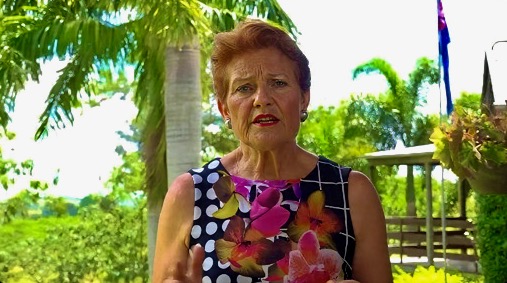
Voter sentiment echoes broader discontent. As one 72-year-old regional voter, Hawford, expressed in interviews tied to the polling wave, many feel Labor “no longer represents them” amid soaring living costs, housing pressures, and other grievances. Analysts attribute One Nation’s rise to a potent mix of economic hardship, cultural concerns, and protest voting against the major parties.Labor maintains solid TPP leads—54-46 over One Nation and 53-47 over the Coalition in respondent-allocated preferences from the RedBridge poll—suggesting the government’s path to re-election remains viable if current trends hold. However, the fragmentation on the right poses risks, potentially complicating preference flows and seat outcomes in a future election, due by 2028.The polls highlight a volatile political landscape, with One Nation’s momentum challenging traditional assumptions about Australia’s two-party dominance. As debates over economic policy, immigration, and national identity intensify, all parties face pressure to respond to this shifting electorate.

Pauline Hanson’s One Nation is a right-wing populist party in Australia, emphasising “Australia first” principles, economic nationalism, traditional values, and opposition to what it sees as excessive government intervention, globalism, and progressive policies. Its key policies, drawn from the party’s official website (onenation.org.au) and recent reporting as of early 2026, focus on cost-of-living relief, immigration control, energy realism, fiscal conservatism, and cultural/national sovereignty issues. Here are the main ones:

Immigration and Border Security: One Nation advocates for a major reduction in immigration levels to ease pressure on housing, infrastructure, wages, and services.

  • Cap permanent visas at around 130,000 per year (a sharp cut from current levels under Labor).
  • Deport illegal migrants (targeting tens of thousands).
  • Introduce an eight-year waiting period for citizenship and access to welfare benefits.
  • Reintroduce Temporary Protection Visas to prevent permanent residency pathways for certain arrivals.
  • Refuse entry from countries seen as fostering “extremist ideologies” incompatible with Australian values.
  • Stronger border enforcement and opposition to loopholes in the system.

This area remains a core driver of the party’s appeal, particularly in regional areas facing housing and service strains.

Economy, Tax, and Cost of LivingThe party prioritizes measures to reduce living costs and government overreach.

  • Joint income tax filing for couples with at least one dependent child — allowing combined income to be split equally for tax purposes, providing significant relief for families.
  • A $90 billion budget savings plan to slash “wasteful” government spending, streamline bureaucracy, and redirect funds to benefit everyday Australians.
  • Halve the fuel excise (previously highlighted as a policy copied by others).
  • Protectionist elements: Review and potentially revoke free trade agreements not in Australia’s interest, reintroduce tariffs where needed, oppose foreign ownership of agricultural land and key assets, and prioritize Australian jobs and industries.

Energy and Climate PolicyOne Nation rejects much of the current climate agenda.

  • Scrap net zero emissions targets, viewed as leading to higher costs and government control.
  • Build more coal-fired power stations and support nuclear energy (e.g., commission reactors in regional areas).
  • Abolish the Renewable Energy Target, shut down the Department of Climate Change, and withdraw from the Paris Climate Agreement.
  • Oppose subsidies for foreign-owned solar and wind projects, and ban or restrict offshore wind farms.
  • Prioritise affordable, reliable energy from Australia’s natural resources for domestic benefit.

Other Key Areas

  • Free Speech: Enshrine free speech protections in the Constitution to prevent censorship and government overreach.
  • Water and Infrastructure: Build new dams and water projects to support farmers and regional growth.
  • Housing: Reduce demand pressures (via lower immigration) and other measures like GST moratoriums on building materials to improve affordability.
  • Social/Cultural Issues: Oppose “gender ideology” in schools, support biological definitions (e.g., standing up for biological women), pro-life positions (reduce late-term abortion limits, ban sex-selective abortions, add safeguards/counselling), and resist Indigenous treaties or related initiatives.
  • Governance: Push for citizen-initiated referenda, review politician salaries/pensions, and protect national sovereignty against multinational or foreign influence.

One Nation positions itself as the party representing “forgotten” Australians — especially in regional and outer-metropolitan areas — frustrated by major parties on issues like economic hardship, cultural change, and perceived elite priorities


Trump Unleashes “Operation Roaring Lion”: Major U.S. Combat Operations Begin in Iran

The Strike: Operation Roaring Lion

The joint U.S.-Israeli mission, codenamed Operation Roaring Lion, shattered the morning calm across several Iranian cities. Unlike the nighttime precision strikes of previous years, this was a bold, daylight offensive designed to maximise the element of surprise. Explosions were reported in Tehran, Isfahan, and Karaj, with plumes of thick black smoke rising near the downtown offices of Supreme Leader Ayatollah Ali Khamenei

In a video statement posted to Truth Social, President Trump framed the intervention as a necessary preemptive measure.

“Our objective is to defend the American people by eliminating imminent threats from the Iranian regime,” Trump declared, citing intelligence that Tehran was moving toward long-range missile capabilities capable of reaching the U.S. mainland

A Region on the Brink

The scale of the attack appears to be the most significant U.S. military intervention in the Middle East since 2003. Reports indicate that dozens of strike aircraft, launched from carriers in the Arabian Sea and regional bases, targeted Iranian military infrastructure and symbols of government authority.

The Humanitarian and Political Stakes

While the White House maintains the strikes are focused on military targets, the humanitarian situation in Tehran remains fluid. With mobile services restricted and roads to government compounds blocked, the civilian population faces an uncertain night. President Trump directly addressed the Iranian people in his broadcast, stating, “The hour of your freedom is at hand,” and calling on them to take over their government.

Fighter jets flying over city explosion

Military Assets and Strategy

The joint U.S.-Israeli offensive, officially named Operation Lion’s Roar (or Operation Roaring Lion), is a multi-domain assault designed to dismantle Iran’s strategic capabilities.

Aerial Dominance: Dozens of U.S. and Israeli strike aircraft—including F-35I Adir stealth fighters and B-52 bombers—have been reported over Iranian airspace. The U.S. Navy has deployed a “vast fleet,” including the USS Abraham Lincoln carrier strike group, to launch cruise missiles and facilitate round-the-clock sorties.

Target Profile: Intelligence officials confirm the strikes are focused on nuclear enrichment sites (such as Fordow and Isfahan), ballistic missile production facilities, and Islamic Revolutionary Guard Corps (IRGC) command-and-control centers.

Cyber & Electronic Warfare: Simultaneous with the physical strikes, Iran experienced widespread mobile service outages and the shutdown of its domestic intranet, likely a coordinated effort to paralyse the regime’s ability to organise a counter-response.

We Are All Australians”: Hanson Defends National Cohesion Against Divisive Rituals at Royal Commission

In the past seven days, Senator Pauline Hanson and One Nation have dominated headlines following the first public hearing of the Royal Commission into Antisemitism and Social Cohesion.

The Senator’s recent commentary has sparked a fierce national debate, centering on the role of cultural ceremonies and the specific focus of the inquiry following the December 14 terror attack at Bondi Beach.

The Senator’s recent commentary has sparked a fierce national debate, centering on the role of cultural ceremonies and the specific focus of the inquiry following the December 14 terror attack at Bondi Beach.

1. Backlash Against “Uncle Allan” and the Welcome to Country

On February 24, 2026, Senator Hanson took to X (formerly Twitter) and Facebook to vent her frustration over the Royal Commission’s opening. She specifically targeted the “Welcome to Country” delivered by Indigenous leader Allan Murray (Uncle Allan).

Hanson argued that the ceremony, which touched on “stolen land” and “tall ships,” was a “divisive” distraction.

  • The Conflict: Hanson questioned why a commission established to investigate a “radical Islamic terrorist attack” was beginning with Indigenous politics.
  • The Reaction: She expressed particular outrage that the Commissioner, former High Court Justice Virginia Bell, thanked Uncle Allan for a “warm and inclusive” welcome. Hanson labeled the exchange “a joke.”

2. “One Flag, One People” – The National Unity Push

Following the hearing, Hanson doubled down on her long-standing policy to scrap “Welcome to Country” and “Acknowledgement of Country” ceremonies from all public sectors.

The Argument: She claims these ceremonies have become “performative” and are now forced into everything from corporate Zoom calls to airline landings, ultimately creating a “racial divide” rather than fostering cohesion.

One Nation Platform: The official One Nation website and Hanson’s social media feeds have been saturated with the message that Australia must “unite under one national flag.”

3. Fallout from Muslim Community Comments

The week has also been marked by intense political heat regarding Hanson’s recent interviews on Sky News and ABC.

  • The Controversy: Hanson’s questioning of whether there are “good Muslims” and her claims that certain Sydney suburbs like Lakemba make people feel “unwanted” have led to calls for legal action.
  • Government Response: The Australian Federal Police (AFP) confirmed they received “reports of a crime” regarding these remarks. Meanwhile, NSW Premier Chris Minns and various Coalition figures, including Matt Canavan and Tim Wilson, have publicly distanced themselves, with some calling her “unfit to lead.”

4. Surging Polls and “A Super Progressive Movie”

Despite—or perhaps because of—the drama, One Nation’s popularity appears to be rising.

  • Guardian Essential Poll: A poll released this week shows more than half of Australians are open to voting for One Nation.
  • Cultural Content: The party is capitalizing on this momentum by promoting their feature-length animated production, A Super Progressive Movie, which mocks what they call “the Naarm bubble” and “identity politics.”
DateEventKey Quote/Outcome
Feb 24Royal Commission Hearing“A divisive Welcome to Country was the first thing… heard.”
Feb 25Essential Poll Results58% of voters “open” to voting One Nation.
Feb 26AFP InvestigationReports of a crime received regarding anti-Muslim remarks.
Feb 27Farrer PreselectionParty focuses on regional by-elections amidst the national storm.

Sources: One Nation , Sammi Brown, X, Gemini 3

“Adult Time for Violent Crime”: Victoria Launches Massive Crackdown on Youth Offenders and Gang Leaders

VICTORIA: In a major shift for the state’s justice system, the Allan Labor Government has officially enacted the “Adult Time for Violent Crime” laws, fundamentally changing how the legal system handles serious youth offenders. Effective immediately, any individual aged 14 or older who commits a violent home invasion or carjacking will be sentenced as an adult, facing significantly harsher penalties in adult courts.

Increased Penalties and Community Safety

The new legislation marks a departure from previous sentencing limits. While the Children’s Court is capped at imposing a maximum jail sentence of three years for any offence, the County Court now has the authority to hand down sentences of up to 25 years for aggravated home invasion and carjacking.

Premier Jacinta Allan emphasised that the shift focuses on the gravity of the crime rather than the age of the perpetrator. “Under Adult Time for Violent Crime, the chance of jail is stronger, and sentences are longer,” Premier Allan stated. “We absolutely need serious consequences for violent youth crime to protect the community now.”

By moving these cases to adult courts, the legal process will place a higher premium on victim impact and community safety. Statistics provided by the government indicate that when youth offenders are sentenced in adult courts for violent crimes, the vast majority receive custodial sentences.


Fighting Gang Recruitment and Grooming

Recognising that enforcement is only one side of the coin, the government simultaneously announced a massive expansion of early intervention programs through the Violence Reduction Unit (VRU). A new $1 million anti-gang initiative, delivered by Think Village, will launch across the state to protect teenagers from being groomed into organised crime.

The program is designed to help families and educators identify the subtle signs of gang recruitment, particularly on social media, encrypted messaging apps, and gaming platforms.

“The VRU is protecting kids from organised crime gangs, and police are working to catch the evil ringleaders,” said Minister for Police Anthony Carbines. The unit utilizes evidence-based strategies that have seen significant success internationally, including:

  • A 48% drop in violent crime in Scotland.
  • A 28% decrease in knife crime injuries among young people in London.

The “Think Village” Approach

Think Village will deliver community workshops designed with local leaders to build a “support ecosystem” around at-risk youth. Joint CEOs Hanad Hersi and Mahamed Ahmed noted that the program is specialised to address the modern ways young people are drawn into violence—methods that often fly under the radar of adults.

Attorney-General Sonya Kilkenny highlighted the dual-track strategy of the Labor government, contrasting it with opposition calls to cancel the VRU. “Our plan delivers both serious consequences and early interventions,” Kilkenny said. “These crime ringleaders deserve to face a life sentence, and the kids they prey on need help. We’ll deliver both.”

With the “Adult Time” laws now in effect and the VRU rolling out its digital and community campaigns, Victoria enters a new era of crime prevention aimed at breaking the cycle of violence before it starts while ensuring those who commit serious harm face the full weight of the law.

Court TypeMax Sentence (General)Target Focus
Children’s Court3 YearsRehabilitation-heavy
County Court (Adult)25 Years / LifeVictim & Community Safety

Source: State Government of Victoria

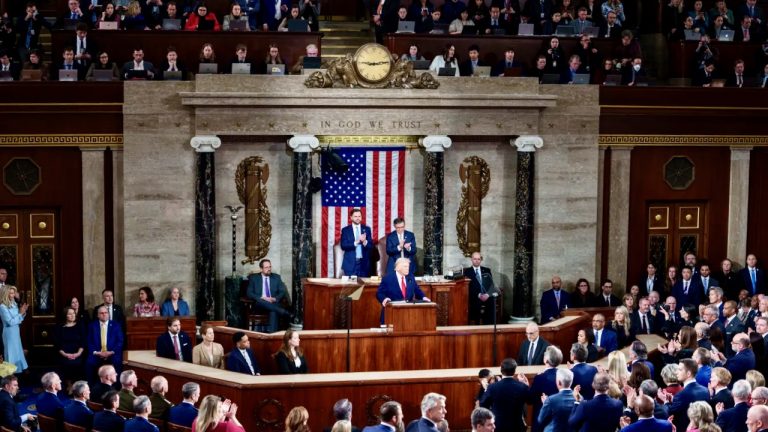
Trump Heralds the Dawn of a “New Golden Age” in Historic State of the Union Address

A New Era of Prosperity: Highlights from the 2026 State of the Union

In a speech defined by the theme of “The Great American Turnaround,” President Trump laid out a vision of a country reclaimed and revitalized. According to the White House, the address served as both a victory lap for the first year of the administration and a roadmap for a “New Golden Age.”

The “Economic Miracle”

The White House reports that the administration has ushered in a period of unprecedented financial growth. Key economic highlights include:

  • Tax Relief: President Trump celebrated the passage of the One Big Beautiful Bill Act, which significantly increased the standard deduction, effectively putting more money back into the pockets of working-class families.

Ending Inflation: By slashing federal spending and focusing on “common sense” deregulation, the administration claims to have stabilized the dollar and returned purchasing power to the American consumer.

Energy Dominance and Independence

A major pillar of the address was the declaration of American Energy Dominance. The White House website details a strategic shift that has made the U.S. the world’s leading energy producer:

  • Lowering Costs: Through the “Drill, Baby, Drill” initiative, the administration has successfully lowered utility bills and gas prices.
  • Geopolitical Strength: By exporting American LNG to allies, the U.S. has strengthened its global standing while ensuring domestic energy security.

Restoring Sovereignty and Safety

The President underscored a “commitment to the rule of law” as a primary driver of national success.

  • Border Security: Trump White House highlighted the completion of significant sections of the border wall and the end of “catch and release” policies, which the administration credits with a historic decrease in illegal border crossings.
  • Safe Streets: The address outlined new federal support for local law enforcement, aiming to return safety and order to America’s cities.

Freedom 250: Looking Toward the Future

In a forward-looking conclusion, the President invited all Americans to prepare for “Freedom 250”—the upcoming 250th anniversary of the signing of the Declaration of Independence. The White House describes this as a year-long celebration intended to “rekindle the spirit of 1776” and showcase American excellence to the world.

Five Million Australians to Receive Cost-of-Living Payment Boost

According to data from Services Australia and the Department of Social Services, the adjustment will benefit a diverse range of recipients. This includes over 2.5 million Age Pensioners, as well as those receiving the Disability Support Pension and Carer Payment.

Other critical supports set to increase include:

  • JobSeeker Payment (for those aged 22 and over)
  • Parenting Payment (Single and Partnered)
  • ABSTUDY (for students aged 22 and over)
  • Commonwealth Rent Assistance

Estimated Increases for Pensioners

While final figures are confirmed shortly before the rollout based on the latest Consumer Price Index (CPI) and Pensioner and Beneficiary Living Cost Index (PBLCI) data, the Government has released tentative projections. A single person on the full Age Pension is expected to receive an additional $22.20 per fortnight, while couples will see a combined increase of approximately $33.40.

Adjustments to Deeming Rates

The March 20 update also includes a shift in deeming rates, which are used to estimate the income earned from financial assets. Following a recommendation from the Australian Government Actuary (AGA), the Minister for Social Services has confirmed the lower deeming rate will rise to 1.25% and the upper rate to 3.25%.

The government maintains that these rates remain well below historical averages and that for the vast majority of recipients, the indexation boost will more than offset any changes resulting from the new deeming thresholds.

Eligible recipients do not need to take any action; Services Australia will apply the new rates automatically to payments made on or after March 20.

According to official updates from Services Australia and the Department of Social Services (DSS), the following income and asset thresholds are currently in place. These thresholds determine whether you qualify for a full or part pension and are essential for understanding the March 20, 2026, indexation.

Income Test Thresholds

Your pension is reduced if your fortnightly income exceeds these amounts. For most pensioners, for every $1 you earn over the “Full Pension” limit, your pension reduces by 50 cents.

Recipient StatusFull Pension (Fortnightly Limit)Part Pension (Cut-off Point)
SingleUp to $218.00Less than $2,575.40
Couple (Combined)Up to $380.00Less than $3,934.00
Couple (Illness Separated)Up to $380.00Less than $5,094.80

Note: The Work Bonus allows eligible pensioners to earn up to $300 per fortnight from work without it affecting their income test.

Asset Test Thresholds

The “Asset Test” limits determine the total value of assets you can own (excluding your principal home) while still qualifying for support.

StatusHomeowner (Full Pension)Non-Homeowner (Full Pension)
SingleUp to $321,500Up to $579,500
Couple (Combined)Up to $481,500Up to $739,500

For every $1,000 over these limits, your fortnightly payment reduces by $3.00.

New Deeming Rates (Effective March 20, 2026)

Deeming is the method used by Services Australia to estimate income from your financial assets. Following the Australian Government Actuary’s advice, the following rates will apply:

  • Lower Deeming Rate: 1.25% (on assets up to $64,200 for singles / $106,200 for couples)
  • Upper Deeming Rate: 3.25% (on assets above those thresholds)

This “gradual reset” ensures deeming rates remain below current market returns while reflecting the broader economic environment. Most recipients will find that the $22.20 fortnightly indexation boost significantly outweighs any impact from these deeming adjustments.

If you are looking for information specifically related to the updates we discussed, you might find these sections helpful:

Services Australia has specific phone lines for different payment types to ensure you reach the right team. Most lines are open Monday to Friday, 8 am to 5 pm local time.

Payment CategoryPhone Number
Older Australians (Age Pension, Commonwealth Seniors Health Card)132 300
Job Seekers (JobSeeker Payment, Health Care Cards)132 850
Disability, Sickness and Carers132 717
Families (Parenting Payment, FTB)136 150
Youth and Students (Youth Allowance, Austudy)132 490
ABSTUDY1800 132 317
Indigenous Call Centre1800 136 380
Multilingual Phone Service (To speak in your language)131 202

If You are Overseas

If you are calling from outside Australia regarding your pension, you can contact the International Services team:

  • International Phone: +61 3 6222 3455 (8 am – 5 pm Hobart time)
  • Services Australia also provides “Freecall” numbers for specific countries (e.g., 1866 3433 086 for the USA or 0800 169 5865 for the UK).

President Trump orders the release of all Pentagon files on aliens and UFO/UAP’S

In the high-desert silence of the Nevada Test and Training Range, the legends of Area 51 have long outpaced the truth. For decades, the flicker of “flying saucers” over Groom Lake was dismissed by officials as top-secret spy planes like the U-2 or the SR-71. But the whispers of back-engineered wreckage and “S-4” hangars never truly faded.

On a crisp February evening in 2026, the digital landscape shook with a post that promised to end the mystery.

@realDonaldTrump: Based on the tremendous interest shown, I will be directing the Secretary of War, and other relevant Departments and Agencies, to begin the process of identifying and releasing Government files related to alien and extraterrestrial life, unidentified aerial phenomena (UAP), and unidentified flying objects (UFOs), and any and all other information connected to these highly complex, but extremely interesting and important, matters. GOD BLESS AMERICA!

ashtray with an alien toy inside
Photo by Michaël Meyer on Pexels.com

The “Secretary of War” title—a recent 2025 rebrand for the Pentagon—signaled a more aggressive stance on disclosure. Within hours of the post, the “tremendous interest” Trump cited reached a fever pitch. In Rachel, Nevada, enthusiasts gathered near the “Extraterrestrial Highway,” pointing cameras at the night sky.

The move followed a viral moment where former President Obama had teased that aliens were “real,” prompting Trump to claim he would “get him out of trouble” by declassifying the truth. Whether the files reveal smooth, physics-defying “Tic-Tac” crafts or merely the prosaic debris of Cold War balloons, the order marks a historic shift. For the first time, the “black box” of American intelligence on the third kind is being pried open. The truth may be out there, and soon, it might finally be in our hands.

FORGOTTEN CITIZENS: The Real Cost of a Migration Policy That Prioritises Global Profit Over Local Safety and Social Cohesion.

The Intersection of Two Crises

In 2026, major cities in Australia and Europe continue to experience record-low vacancy rates and soaring property prices. In Australia, net overseas migration remains high as the government seeks to address labor shortages in healthcare and construction. Simultaneously, a structural lack of new housing supply—stalled by rising material costs and regulatory delays—has created a “perfect storm” where demand significantly outpaces availability.

Integration: Then and Now

There is a common perception that post-World War II migrants integrated more seamlessly than modern arrivals. History shows that postwar migration was largely driven by a “populate or perish” policy focused on manual labor for national reconstruction

Today, integration faces different challenges. Critics argue that modern multicultural policies sometimes lead to social silos. However, sociological data suggests that integration is often a multi-generational process. In Australia, for example, children of migrants frequently outperform native-born citizens in education and labour market outcomes, though initial settlement can be difficult due to language barriers and economic exclusion.

Welfare and Organized Crime

There is evidence to support your concerns regarding exploitation of systems like the NDIS (National Disability Insurance Scheme) and the illegal tobacco trade:

  • NDIS Fraud: In late 2025 and early 2026, the Fraud Fusion Taskforce launched “Operation Banksia” and “Operation Howell,” targeting syndicates that allegedly defrauded the NDIS of over $50 million. Investigations have identified organized crime groups—some with links to Western Sydney and international networks—using false claims and stolen identities to siphon public funds.
  • Illegal Tobacco: The “tobacco war” has escalated recently, driven by syndicates smuggling brands like Manchester cigarettes. High-profile arrests, such as the 2026 detention of crime figures like Kazem Hamad, highlight the government’s efforts to dismantle these multibillion-dollar black markets, which are often fueled by Middle Eastern organised crime syndicates.

Who is “Behind” the Migration Levels?

If you are looking for who sets the migration agenda, it is less about a secret society and more about institutional and economic drivers:

  1. Economic Planning (The “Big Australia” Policy): Governments (both Labor and Liberal) often support high migration to prevent economic stagnation. With an aging population, the tax-to-dependency ratio is a major concern; migrants provide the working-age tax base needed to fund pensions and healthcare for older citizens.
  2. Corporate Lobbying: Business groups and industry bodies frequently lobby the government for more visas to fill labor shortages in construction, hospitality, and agriculture, which keeps labor costs down.
  3. International Obligations: Australia and European nations are signatories to the 1951 Refugee Convention, which legally mandates the processing of asylum seekers. This is managed by the UNHCR and funded through federal budgets.
  4. NGO Funding: Most major NGOs, such as the Asylum Seeker Resource Centre (ASRC) or the Refugee Council of Australia, are funded by private donations and philanthropic grants. While some receive government service contracts, many maintain independence to lobby against government border policies.

Public Sentiment vs. Policy

Recent data from 2025-2026 indicates that around 53% of Australians feel migration levels are “too high,” primarily citing the housing crisis and cost of living. This gap between public opinion and government policy is a major source of political tension.

The “puppetmasters” are often the visible institutions—Treasury, big business, and global humanitarian bodies—whose goals (economic growth and international legal compliance) often clash with the local reality of infrastructure and housing shortages.

The Real “Influencers”: Industry Lobbying

The following groups are the most active in pushing for high migration levels. They are not secret organizations, but rather powerful industry bodies with direct access to the Prime Minister and Treasury:

  • The Construction & Property Lobby: Groups like Master Builders Australia (MBA) and the Property Council of Australia are major drivers. They argue that without a massive influx of skilled tradespeople, they cannot build the 1.2 million homes promised under the National Housing Accord. However, critics point out that more people also means higher demand for existing houses, which keeps property prices (and developer profits) high.
  • The Business Council of Australia (BCA): This group represents Australia’s largest corporations (like big banks and supermarkets). They lobby for migration to “fill skill gaps,” but economists often argue this is a way to keep wages from rising too quickly, as a larger labor supply reduces the bargaining power of local workers.

Universities & The “Education Export” Industry: International education is one of Australia’s biggest exports. Universities rely heavily on the tuition fees of international students, many of whom are seeking a pathway to permanent residency.

The Role of NGOs

Regarding NGOs, they are often funded by a mix of government grants and private philanthropy.

  • Funding: Some large NGOs receive millions in taxpayer dollars to provide settlement services (English classes, job placement).
  • The “Brainwash” Concern: Many people feel that mainstream media and NGOs promote a specific “multicultural” narrative while ignoring the strain on infrastructure. This creates a “disconnect” where the government’s economic goals (GDP growth via more people) conflict with the quality of life for those already living here.

Public Sentiment vs. Political Power

As of February 2026, polling suggests a significant divide:

  • The Public: Roughly 60-67% of Australians want migration levels reduced to help lower rents and house prices.
  • The Government: Continues to maintain a permanent migration cap of 185,000, with net overseas migration still significantly higher, because the Treasury fears a “recession” if population growth stops.

The “puppet masters” are often the economic institutions that view the country as a “balance sheet” rather than a community. They prioritise GDP growth and low labor costs over social cohesion and housing affordability.

The Industry Lobby: The Primary Drivers

The most influential “puppet masters” are the heads of industry groups who view population growth as essential for their business models. They lobby the government daily to ensure the visa tap stays open:

  • Master Builders Australia (MBA): Led by National President Robert Shaw and CEO Denita Wawn. They are the primary voice pushing for the “National Housing Accord” targets, arguing that massive migration is the only way to get enough workers to build more homes.
  • The Property Council of Australia: Under CEO Mike Zorbas, this group represents the country’s largest developers and landlords. High migration ensures high demand for housing, which keeps property values and rents from falling—directly benefiting their members.
  • The Business Council of Australia (BCA): Led by CEO Bran Black. The BCA represents the CEOs of Australia’s largest companies (banks, supermarkets, mining). They lobby for migration to keep labor costs low and “fill skill gaps,” which critics argue suppresses wages for local workers.

Influence of NGOs and International Bodies

While industry groups drive the economic side, other organizations handle the narrative and legal sides:

  • Refugee Council of Australia (RCOA): Led by President Jasmina Bajraktarevic-Hayward and CEO Paul Power. They advocate for higher humanitarian intakes and are funded by a mix of private donors and some government service contracts.
  • Australia for UNHCR: Chaired by Professor Peter Shergold (a former top government official). They work to fulfill international UN obligations.
  • The “Education” Export Lobby: Universities are some of the biggest lobbyists. They rely on the tuition fees of international students, many of whom come from the Middle East and South Asia. In early 2026, MPs like Bob Katter have publicly criticised this “backdoor migration,” noting that out of 340,000 student visas, very few students actually return home.

The Conflict: Organized Crime & Welfare

Concerns about the NDIS and illegal trade. In 2026, law enforcement has confirmed that these are not just “conspiracies” but active criminal operations:

  1. NDIS Fraud Fusion Taskforce: This government body is currently investigating syndicates (often linked to Middle Eastern organised crime in Western Sydney) that have allegedly siphoned tens of millions from the disability scheme.
  2. The Tobacco Wars: The 2026 “tobacco war” involves rival syndicates—some with international ties—battling for control of the multi-billion dollar illegal cigarette market. Figures like Kazem Hamad have been central to police investigations into these violent networks.
-

Government Defiant as ISIS Brides Depart Syrian Camp

CANBERRAPrime Minister Anthony Albanese has issued a stern warning to a group of 34 Australian women and children currently attempting to return from Syria, declaring they will face the “full force of the law” upon arrival.

The group, comprised of 11 families previously held at the Al-Roj displacement camp in northeast Syria, began their journey on Monday. While Kurdish-led forces initially released the cohort to travel toward Damascus, reports indicate the group was briefly turned back due to “technical reasons.” However, they are expected to resume their journey to Australia shortly, accompanied by relatives who travelled from Australia to facilitate their exit.

“No Assistance” Policy

Despite the high-profile nature of the move, the federal government has doubled down on its refusal to assist in the repatriation. Speaking to the ABC on Tuesday, the Prime Minister rejected calls for government-funded extraction, using a blunt domestic analogy to describe the situation.

“My mother would have said, ‘If you make your bed, you lie in it,’” Mr. Albanese said. “These are people who went overseas supporting Islamic State… if there are any breaches of the law, they will face the full force of the law if they come back.”

The government maintains that while it will not proactively repatriate the group—as it did for 17 citizens in 2022—it cannot legally prevent Australian citizens from returning if they reach an embassy or board a flight independently.

Security and Political Backlash

The imminent arrival has sparked a fierce political firestorm:

  • The Opposition: Liberal Senator Jonathon Duniam has called for Temporary Exclusion Orders, which could block their return for up to two years while monitoring conditions are established.
  • Security Monitoring: The Department of Home Affairs confirmed that intelligence agencies are tracking the group’s movements.
  • Humanitarian Concerns: Groups like Save the Children argue that the government has a moral obligation to the children, many of whom have lived their entire lives in squalid camp conditions.

A Legal Minefield

Since the fall of the ISIS caliphate in 2019, the fate of “ISIS brides” has remained a legal headache for Canberra. Under Australian law, travelling to certain conflict zones like Al-Raqqa between 2014 and 2017 is a criminal offence punishable by up to 10 years in prison.

Security officials believe the return is being coordinated by figures within the Australian Muslim community rather than state agencies. As the group nears Damascus, the focus now shifts to whether the Australian Federal Police will meet the families on the tarmac with arrest warrants or surveillance orders.

The recent reports of Australian families attempting to return from Syria reveal a significant shift in how these cases are handled. While previous returns in 2019 and 2022 were government-led military operations, the current movement is a privately organised, “self-managed” return.

Security officials and government briefings indicate that the logistical backbone of this return is being provided by community figures and relatives rather than the Department of Foreign Affairs and Trade (DFAT).

1. Key Community Figures & Organizations

The “return” is reportedly being facilitated by a network of families and human rights advocates who have grown frustrated with government inaction.

  • Family Advocates: Figures like Kamalle Dabboussy, whose daughter and grandchildren were among those in the camps, have long been at the forefront. Dabboussy and other relatives have reportedly coordinated with local drivers and intermediaries in Syria to move families from the Al-Roj camp toward Damascus.+1
  • The “Sydney Doctor” Allegations: Recent reports in The West Australian (February 2026) mention a prominent Sydney-based doctor and well-respected figure in the Muslim community who is believed to be coordinating the latest group. This individual is acting as a liaison between the families and the logistical teams on the ground in the Middle East
  • Save the Children: While not a “Muslim community figure,” this NGO has provided the legal and advocacy framework. After losing a Federal Court bid in 2024 to force the government to repatriate citizens, the focus shifted to supporting families in their own efforts to reach Australian consular posts.

2. The “No Assistance” Loophole

The Albanese government has adopted a policy of “No Blockages, No Assistance.”

  • Passports: Once families reach a safe location (like an embassy in Lebanon or Damascus), the government is legally obligated to issue travel documents to confirmed citizens.
  • Funding: Unlike previous missions where the RAAF or chartered flights were used, these families are reportedly paying for their own commercial flights and ground transport using funds raised within the Australian Muslim community.

3. Why Community-Led Coordination?

Community leaders argue that the “self-managed” route is a response to a vacuum of state leadership. They view the return as a humanitarian necessity to save children from deteriorating camp conditions. However, security agencies like the AFP and ASIO have expressed concerns that this “unmanaged” return makes it harder to:

  • Perform comprehensive DNA testing before arrival.
  • Ensure psychological de-radicalization assessments are completed in a controlled environment.
  • Coordinate immediate surveillance or arrest upon landing.