
Home Blog Page 7

Breaking Into the Nest Egg: Rules for Early superannuation Release

CANBERRA — As economic pressures continue to impact households nationwide, Services Australia has issued a critical reminder to citizens regarding the early release of superannuation. While superannuation is fundamentally preserved to support Australians in retirement, the government has detailed the strict legislative pathways available for those experiencing severe financial hardship.

However, officials are emphasizing a crucial distinction: Services Australia does not approve or deny these requests. Instead, the power sits entirely with individual superannuation funds, which must assess applications against rigid legislative frameworks.

The Legislative Gatekeepers

Early access to retirement savings is tightly controlled under the Superannuation Industry (Supervision) Regulations 1994. These regulations ensure that super remains protected, allowing withdrawals only as a last resort.

When an individual applies for an early release due to severe financial hardship, their super fund trustee acts as the decision-maker. The fund must independently assess whether the applicant genuinely cannot meet reasonable and immediate family living expenses.

Note from Services Australia: “We don’t decide if you can access your super early or if you’re in severe financial hardship. Decisions aren’t made under the Social Security Act, which means Services Australia cannot review or overturn a decision made by your super fund.”


Eligibility Criteria: The Two Pathways

To qualify for a financial hardship release, applicants must satisfy specific conditions governed by their age and history with government income support

CriteriaCategory 1: Under Preservation Age (Plus 39 Weeks)Category 2: Over Preservation Age (Plus 39 Weeks)
Income Support RequirementMust have received eligible Commonwealth income support payments continuously for the last 26 weeks.Must have received eligible Commonwealth income support payments for a cumulative total of 39 weeks since reaching preservation age.
Employment StatusN/A (Focus is placed on immediate deficiency of living expenses).Must be currently unemployed or working fewer than 10 hours per week.
Withdrawal LimitsRestricted to a single withdrawal per 12-month period. Minimum of $1,000 and maximum of $10,000 (gross).No maximum cap enforced by legislation; dependent on the fund’s specific rules.

The Application Process: How Services Australia Assists

While Services Australia does not manage the funds, they provide the necessary bridge of evidence between the citizen and the super provider.

To apply, individuals must contact their superannuation fund directly. The fund will require proof of income support. Services Australia assists by:

  • Providing a Q230 Financial Hardship letter confirming the duration of the applicant’s Centrelink or Department of Veterans’ Affairs (DVA) payments.
  • Utilizing Centrelink Confirmation eServices (CCeS), which allows participating super funds to check an applicant’s income support status online securely, bypassing the need for physical paperwork.

The Hidden Costs of Early Withdrawal

Financial experts and regulatory bodies urge Australians to consider the long-term consequences before dipping into their retirement pool. Beyond diminishing the compound interest that fuels a comfortable retirement, early super withdrawals come with immediate financial implications:

  • Tax Drags: For individuals under the age of 60, early release payments are generally taxed as a lump sum, often attracting a tax rate of approximately 22%.
  • Loss of Asset Protection: Superannuation balances are uniquely protected from creditors and bankruptcy. Once those funds are transferred into a personal bank account, that legal protection disappears.
  • Payment Impacts: Receiving a lump sum may alter an individual’s asset or income tests, potentially fluctuating other Centrelink or DVA benefits.

Australians finding themselves in severe distress are encouraged to seek free, confidential advice from the National Debt Helpline (1800 007 007) to explore alternative financial assistance options before making a final decision regarding their super.

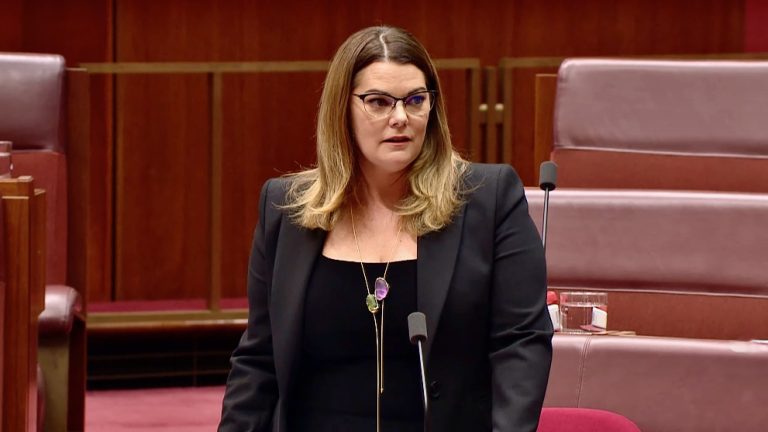
Hanson-Young Hammers “Heartless” Tree Cull: A Betrayal of Habitat and Households

A political firestorm has erupted in the heart of South Australia as chainsaws began the systematic removal of 585 mature trees across the Adelaide parklands. Leading the charge against the project is Federal Greens Senator Sarah Hanson-Young, who has branded the $45 million price tag a “betrayal” of both the environment and struggling taxpayers.

The clearing, which local authorities claim is necessary for urban infrastructure, has reignited a fierce national debate: How can we protect the “lungs of our cities” while balancing the aggressive push for new development and renewable energy?

The Immediate Loss: “Gone for Generations”

The 585 trees slated for destruction include centuries-old gums and “significant” habitat trees that serve as high-density housing for local birdlife and marsupials. Senator Hanson-Young did not mince words as the first limbs fell:

“Once these trees are gone, they’re gone for generations,” the Senator warned. “We are watching the heart of our city being ripped out. To spend taxpayer money to destroy nature in a cost-of-living crisis is a fiscal and environmental disaster.”

The Million Dollar Question: The Senator argued that this funding is being siphoned away from South Australians who are currently choosing between groceries and electricity bills.

Proposed Use of $MillionsImpact on South Australians
Current PlanDestruction of 585 habitat trees and parkland.
Green AlternativeDirect energy bill relief for thousands of households.
Social AlternativeMajor injection into emergency food relief and school lunch programs.

The Koala Conflict: Wind Farms vs. Wildlife

While the Adelaide parklands are the current flashpoint, the Senator is facing increasing pressure regarding the “green-on-green” conflict happening in Australia’s rural forests. Critics and community members have pointed to the hypocrisy of clearing native forests—and critical koala habitat—to make way for massive wind farm precincts.

Senator Hanson-Young acknowledges the tension, pushing the “Right Project, Wrong Place” framework. Her stance focuses on three key pillars:

  • The “Climate Trigger”: The Senator is fighting to reform the EPBC Act (Australia’s national environment law). She argues that a “Climate Trigger” would legally force the government to reject any project—including a wind farm—if it results in the destruction of critical habitat for endangered species like the koala.

Ending the Logging Loophole: She contends that native forest logging remains the primary threat, as it is a subsidized industry designed for destruction, whereas renewable energy is an “essential transition” that must be steered toward already-cleared land.

No More “Get Out of Jail Free” Offsets: The Greens have slammed the current system where developers can chop down a 200-year-old koala home and simply promise to plant a sapling elsewhere. “A koala can’t live in a promise for thirty years,” the Senator noted during a recent inquiry.

The Drama at the Frontline

As protests grow, the narrative has shifted from a local planning dispute to a national drama. For the residents of Adelaide, the loss is immediate and visceral. For the Senator, it is a battle for the soul of the Greens’ policy: ensuring that the race to “Save the Planet” doesn’t involve destroying the very wildlife and nature that make the planet worth saving.

The State Government maintains the clearing is essential for the city’s growth, but as the $45 million bill continues to climb alongside the cost of rent and power, the political canopy above the current administration is looking increasingly thin.

FARUQI’S FURY: The Greenie Defies the Chamber as the Budget “Betrayal” Ignites a Senate Firestorm!

Based on the latest records from the Parliament of Australia (Hansard and official Senate proceedings) as of May 13, 2026, the most recent story surrounding Senator Mehreen Faruqi involves her sharp critique of the newly released 2026-27 Federal Budget and her continued defiance regarding Australia’s foreign policy in the Middle East.

1. The Budget “Betrayal” (May 13, 2026)

Following the delivery of the Federal Budget, Senator Faruqi, in her capacity as the Greens’ Deputy Leader and spokesperson for Anti-Racism and Higher Education, issued a scathing response. Speaking from the Senate, she characterized the budget as a “betrayal” of students and communities of colour.

The Senator specifically highlighted:

  • The National Anti-Racism Framework: Faruqi criticized the Labor government for failing to fund the framework, which she noted had been “sitting on shelves for 18 months.” She argued that refusing to invest in this framework during a time of rising hate and violence shows the government is “all talk and no action.”
  • Education Fees: She condemned the decision not to scrap the “Job-Ready Graduates” (JRG) fee hikes, which she argued continue to burden students with ballooning debts.
  • Priorities: In a recurring theme of her recent speeches, she compared the “billions for war and fossil fuel subsidies” against what she described as “scraps” for renters and students, and a $37 billion cut to the NDIS.

2. “Imperial Warmongers” Speech (May 2026)

In the days leading up to the budget, the Senate witnessed a fiery exchange where Senator Faruqi accused the Prime Minister and Foreign Minister Penny Wong of being “imperial warmongers.”

Citing recent military escalations in Iran and Lebanon, Faruqi used her time in the Senate to argue that Australia’s support for U.S. and Israeli military actions was “illegal, plain and simple.” During these sessions, she was repeatedly called to order by the President of the Senate for her language, particularly after she accused the Foreign Minister of “cheerleading” a bombing campaign that had claimed thousands of civilian lives.

3. The Letter on Systemic Racism

Earlier in the current sitting period, Senator Faruqi joined Senators Lidia Thorpe and Fatima Payman in a historic joint letter to the President of the Senate. The “story” of this letter has dominated recent parliamentary safety discussions. The trio demanded a “moment of reckoning” for the Senate, documenting:

  • A pattern of “overt and insidious” racism within the chamber.
  • The use of standing orders to “silence” women of colour when they call out racist behavior.
  • A request for mandatory anti-racism and cultural safety training for all parliamentarians.

4. Background: The Censure and Re-election

The latest tension follows a tumultuous year for the Senator, who was re-elected in 2025. In late 2025, she faced a significant disciplinary motion in the Senate after she held up a protest sign reading Gaza is starving. Words won’t feed them. Sanction Israel” during the Governor-General’s speech at the opening of the 48th Parliament. While the government moved to censure her for “unparliamentary conduct,” Faruqi has since used every Senate session to double down on her calls for sanctions, framing her actions as a necessary “truth-telling” mission.

ISIS Brides Face Melbourne Court Over Alleged Crimes Against Humanity

Two Victorian ISIS Brides women who travelled to Syria over a decade ago are facing the full weight of Australian law today, charged with harrowing Crimes Against Humanity offences involving the enslavement of a woman.

The women, aged 53 and 31, were intercepted by the Victoria Joint Counter Terrorism Team (JCTT) at Melbourne International Airport yesterday immediately upon their return to Australia. They are expected to appear in the Melbourne Magistrates Court today, 8 May 2026.

The Allegations: US$10,000 for a Human Life

Federal authorities will allege a chilling narrative of domestic enslavement during the height of the Syrian conflict.

The 53-Year-Old Woman

It is alleged she travelled to Syria in 2014 with her husband and children. Police claim she was complicit in the purchase of a female slave for US$10,000 and knowingly kept the victim within her household. Charges include:

  • Crimes Against Humanity – Enslavement
  • Possession, Use, and Purchase of a slave

The 31-Year-Old Woman

Also alleged to have travelled to Syria in 2014, she is charged with keeping a female slave in the home. Charges include:

  • Crimes Against Humanity – Enslavement
  • Use of a slave

Note: Each of these offences carries a maximum penalty of 25 years’ imprisonment.

From Al Roj to the Dock

The arrests mark a significant milestone in Operation Kurrajong, a long-term investigative effort targeting Australians who joined ISIS conflict zones. The women were previously detained by Kurdish forces in March 2019 and spent years in the Al Roj Internally Displaced Persons (IDP) camp before their arrival in Melbourne yesterday.

AFP Assistant Commissioner Stephen Nutt emphasised that the investigation remains active and methodical.

“Australian JCTTs methodically investigated all Australians who travelled to declared conflict areas and will ensure those who are alleged to have committed a criminal offence are put before the courts,” Assistant Commissioner Nutt said.

Community Safety & Support

Victoria Police Assistant Commissioner Martin O’Brien reassured the public that community safety remains the priority, stating that anyone returning from conflict areas who has committed serious crimes “will be held to account.”

The Victoria JCTT—a powerhouse unit comprising the AFP, Victoria Police, and ASIO—continues to monitor the situation.

Resources

If this story has caused distress, or if you have information regarding suspicious activity, please use the following contacts:

  • National Security Hotline: 1800 123 400
  • Crime Stoppers: 1800 333 000
  • Lifeline (Support): 13 11 14

NordVPN: Secure Your Private Data and Bypass Strict Government Geo-Blocks

The aroma of over-roasted espresso beans filled “The Caffeine Patch,” a trendy bistro where the Wi-Fi was free and the privacy was non-existent. Elias sat in the corner, his laptop glowing. To the average observer, he was just another freelancer sipping a lukewarm oat milk latte. To the guy sitting three tables away with a compact “pineapple” device in his backpack, Elias was a goldmine of unencrypted packets.

Elias clicked a button. A small, blue shield icon on his taskbar pulsed.

“Not today, script kiddie,” Elias muttered.

With a single click, his connection hopped from the café’s sketchy router to a secure server in Reykjavik. To the neighborhood hacker, Elias’s digital footprint didn’t just vanish; it turned into a 256-bit encrypted wall of gibberish.

Elias wasn’t just hiding; he was traveling. While his body was in a rainy suburb, his IP address was currently enjoying the crisp air of Iceland. He opened a streaming app—one that usually told him his favorite show was “unavailable in your region”—and hit play. The NordVPN NordLynx protocol kicked in, delivering the 4K stream without a single stutter.

The hacker sighed, packed his gear, and left. Elias took a sip of his latte. It was still lukewarm, but at least his bank credentials weren’t.

What is NordVPN? (The Technical Expansion)

While the story above highlights the “cool” factor, NordVPN is a comprehensive security suite designed to protect your digital identity. In a world where data is the new oil, NordVPN acts as a personal refinery and vault.

Core Features That Matter

-

  • Next-Generation Encryption: Uses AES with 256-bit keys, the same standard recommended by the NSA for protecting Top Secret information.
  • Threat Protection Pro: This isn’t just about hiding your IP. It blocks intrusive ads, stops web trackers, and scans files for malware before you even download them.
  • NordLynx Protocol: Built around WireGuard®, this is NordVPN’s “secret sauce.” It provides high-speed connections that don’t sacrifice security, making it ideal for gaming and streaming.
  • Double VPN: For those who need extra layers (journalists, activists, or the extra-cautious), this routes your traffic through two separate servers, encrypting your data twice.

Why Use a VPN in 2026?

The digital landscape has evolved. It’s no longer just about avoiding hackers at a café; it’s about reclaiming your digital sovereignty.

FeatureBenefit
Kill SwitchAutomatically cuts your internet if the VPN drops, preventing accidental data leaks.
MeshnetAllows you to create your own private network to share files or play LAN games with friends securely.
Dark Web MonitorScans the underbelly of the internet and alerts you if your email or passwords show up in a data breach.
No-Logs PolicyIndependently audited to ensure they don’t track, collect, or share your private data.

Pro Tip: If you’re traveling, use the Obfuscated Servers feature. This masks your VPN traffic to look like regular internet traffic, which is essential for bypassing heavy censorship or restrictive firewalls.

The Bottom Line

NordVPN has shifted from being a niche tool for tech enthusiasts to a household essential. Whether you are trying to bypass geo-blocking to watch international sports, securing your remote work connection, or simply tired of targeted ads following you across the web, it provides a “digital invisibility cloak” that is remarkably easy to use.

-

Saylor’s Strategy Inc. shifts ‘Never Sell’ stance; markets react to potential dividend sales

In the glass-walled boardrooms of Tysons Corner, Virginia, the atmosphere in early May 2026 was less “to the moon” and more “steady the ship.” For years, Michael Saylor’s mantra was a rhythmic drumbeat of “never sell,” a digital-age vow of poverty where Bitcoin was the only true asset and selling was a sin of the weak-handed.

But on May 5, 2026, the drumbeat skipped a beat.

The Story: The Great Inoculation

The quarterly earnings call for Strategy Inc. (formerly MicroStrategy) felt different. The company had just posted a staggering $12.5 billion net loss for the first quarter, a paper wound inflicted by a 24% slump in Bitcoin’s price from its late-2025 highs. To the critics, it was the “I told you so” moment of the century. To the “HODLers,” it was just another Tuesday.

Then Saylor spoke. He didn’t just announce a purchase; he proposed a sale.

He called it an “inoculation.” Like a controlled dose of a virus used to build immunity, Saylor suggested that selling a fraction of Strategy’s 818,334 BTC would prove to a panicked market that the firm could move $100 million or $1 billion without the sky falling. It wasn’t a surrender; it was a flex.

By selling specifically to fund a dividend for the company’s new STRC (Stretch) preferred shares, Saylor was transforming Bitcoin from a “buried treasure” into a “working engine.” The “never sell” era hadn’t ended—it had evolved into the “sell to survive and thrive” era.

Expanding on the Strategy Shift

The transition from a pure “HODL” treasury to an active “Bitcoin Treasury Company” involves three critical pillars that explain why the “never sell” approach is being softened.

1. The “Inoculation” Theory

Saylor’s pivot is largely psychological. For five years, the market has lived in fear of a “forced liquidation” of MicroStrategy’s holdings. By choosing to sell a small amount voluntarily to fund dividends, Strategy is attempting to:

  • Normalize Liquidity: Proving that the company can exit positions without crashing the spot price.
  • Demonstrate Solvency: Showing that even with a $12.5 billion paper loss, the firm has the operational “pipes” to move capital to shareholders.

2. The STRC (Stretch) Financial Machine

The real engine behind this shift is STRC, the firm’s Bitcoin-backed perpetual preferred stock.

  • The Goal: Strategy has moved from being a software company with Bitcoin to a financing vehicle.
  • The Dividend: STRC offers an annualized dividend (currently around 11–12%). To pay this in a bear market without relying solely on software revenue, the firm must leverage its Bitcoin.
  • The Arbitrage: By issuing shares when the stock trades at a premium to its Bitcoin holdings, they can “print” more Bitcoin per share, creating a “BTC Yield” that keeps investors coming back even when the price is flat

3. The 42/42 Plan and the Credit Cannibal

Saylor’s 2026 vision is no longer just about owning Bitcoin; it’s about Digital Credit.

  • He argues that the $300 trillion global credit market is the next frontier.
  • By using Bitcoin as the ultimate collateral, Strategy aims to issue “digital bonds” and preferred equity that offer higher reliability than traditional fiat-based credit.
  • The “never sell” approach was the Accumulation Phase. The “sell to fund dividends” approach is the Institutionalization Phase, where Bitcoin becomes the reserve for a new global bank.
Metric (as of May 6, 2026)Value
Total BTC Holdings818,334 BTC
Average Cost Basis~$75,537
Q1 2026 Net Loss$12.54 Billion
STRC Market Cap~$8.5 Billion

The Reality Check

Don’t let the “sale” talk fool you into thinking Saylor has gone “bearish.” Even as he discusses selling to “inoculate” the market, Strategy has acquired over 145,000 BTC in 2026 alone.

He isn’t abandoning the ship; he’s finally putting the ship to work. In the 2026 landscape, Bitcoin is no longer just a digital gold bar to be locked in a vault—it’s the fuel for a massive, high-yield financial machine that occasionally needs to let off a little steam to keep the turbines turning.

AFP Police Smash NDIS Fraud Syndicate: Millions in Gold, Silver, and Cash Seized in Dramatic ‘Operation Benz’ Raids

BRISBANE, Australia — A major joint-agency crackdown on disability insurance fraud has seen millions of dollars in cash, gold, and silver seized across Queensland, as investigators dismantle a syndicate allegedly targeting the National Disability Insurance Scheme (NDIS).

The Australian Government Fraud Fusion Taskforce (FFT), in collaboration with the Queensland Crime and Corruption Commission (QCCC), executed five search warrants this month across Brisbane, Cairns, and Far North Queensland as part of Operation Benz.

The Seizure: Gold, Silver, and Crypto

During the April raids, investigators uncovered a haul of alleged proceeds of crime, including:

  • $94,000 in cold hard cash.
  • $82,000 in gold and silver sovereign coins.
  • A cryptocurrency wallet, along with various electronic devices and cloud data now undergoing forensic analysis.

This activity follows a massive restraint action by the QCCC, which has frozen approximately $5.02 million in gold, silver, and funds linked to the syndicate.

he Alleged Scheme: An “Inside Job”

The investigation was sparked in October 2025 when the National Disability Insurance Agency (NDIA) flagged suspicious claims.

The syndicate’s operation was reportedly brazen: an NDIS participant allegedly established an illegitimate provider business. Under the guise of this company, the participant is accused of submitting claims for support services that were never actually delivered.

“The NDIS exists to support Australians with significant and permanent disability… every action we take is about protecting the NDIS for those who rely on it today and for future generations,” an NDIA spokesperson said.

A “Hostile Environment” for Fraudsters

While no charges have been laid yet, officials made it clear that the focus is on stripping criminals of their incentive.

AFP Acting Commander Timothy Underhill emphasized the commitment to creating a “hostile environment” for those seeking to exploit the community. “Agencies across the Commonwealth are working together to… stop criminal groups and individuals who seek to defraud services vulnerable members of the community rely on,” he stated.

Sharon Loder, Head of Crime at the QCCC, noted that the recovery of these assets is vital to ensure that “serious crime doesn’t pay” and that public money is restored to essential services.

About the Fraud Fusion Taskforce (FFT)

The FFT is a high-level multi-agency powerhouse consisting of 24 agencies, including:

  • NDIA and Services Australia (Co-leads)
  • Australian Federal Police (AFP)
  • Australian Taxation Office (ATO)
  • NDIS Quality and Safeguards Commission

The taskforce warns that its monitoring and payment controls are being strengthened daily to detect and disrupt similar criminal behavior.


Have Information? If you suspect NDIS fraud, you can report it via:

The 20K-Body Truth: Inside the Marathon Putin-Trump Call to Stop the Bleeding in the Brink of War

In a significant diplomatic exchange that signals a shifting tide in global relations, President Vladimir Putin and President Donald Trump engaged in a comprehensive telephone conversation on Monday. The call, which lasted over an hour and a half, was described by officials as “frank, businesslike,” and notably “friendly”—a marked departure from the icy rhetoric of previous years.


Solidarity After the Washington Hilton Incident

The conversation opened on a personal note. President Putin expressed his direct sympathy regarding the April 25 assassination attempt against President Trump at the Washington Hilton.

“Politically motivated violence is unacceptable in any form,” Putin reportedly stressed, condemning the attack while expressing relief that the President, the First Lady, and their entourage remained unharmed thanks to the swift action of the Secret Service.

The leaders also touched upon the First Lady’s birthday on April 26. Putin took the opportunity to praise her humanitarian efforts, specifically her role in facilitating the reunification of Russian and Ukrainian children with their families, a rare point of cooperation in the ongoing conflict.

The Iranian Tightrope: Ceasefires and Warnings

A significant portion of the 90-minute dialogue focused on the volatile situation in the Persian Gulf. Putin voiced strong support for Trump’s recent decision to extend the ceasefire for Iran, viewing it as a vital window for stabilization.

However, the Russian leader issued a sobering warning regarding any potential escalation:

  • Military Risks: Putin pointed out that a resumption of military action by the U.S. or Israel would have “extremely adverse consequences” for the global community.
  • Red Lines: He explicitly stated that a ground operation on Iranian territory would be “unacceptable and dangerous.”
  • Diplomatic Path: Russia reaffirmed its commitment to proposals regarding the Iranian nuclear program, promising continued contact with leaders in Israel, the Gulf, and the U.S. negotiating team.

Ukraine: Strategic Shifts and the “Victory Day” Initiative

The most anticipated part of the call centered on the conflict in Ukraine. President Trump expressed optimism, stating he believes an agreement to end the conflict is close and that his representatives are maintaining active channels with both Moscow and Kyiv.

The Battlefield Reality

In response to Trump’s inquiries, Putin provided a detailed update on the “line of contact”:

  • Strategic Initiative: Putin asserted that Russian forces currently hold the initiative and are successfully pushing back opposing forces.
  • Humanitarian Toll: In a stark revelation, Putin noted that since the start of 2025, Russia has returned over 20,000 bodies of fallen Ukrainian servicemen, while Ukraine has returned approximately 500 Russian servicemen.

Criticism of the “Zelensky Regime”

Both leaders reportedly shared similar views on the current leadership in Kyiv. Putin characterized the Zelensky administration’s tactics as “overtly terrorist,” citing strikes on civilian facilities. He maintained that while Russia’s “special military operation” goals will be met, a negotiated settlement remains the preferred path—provided Kyiv responds “constructively” to existing proposals.

A Shared Holiday Ceasefire

In a move of symbolic importance, Trump praised Russia’s recent Easter ceasefire. Building on this momentum, Putin announced Russia’s readiness to declare a ceasefire for the May 9 Victory Day celebrations. Trump “actively supported” the initiative, highlighting the shared history of the two nations’ victory over Nazism in World War II.

Economic Ambitions and Future Contacts

Looking beyond the battlefield, the presidents discussed the “great potential” for economic and energy cooperation. Substantive discussions are reportedly already underway regarding several large-scale economic projects.

The call concluded on a “warm note,” with both leaders agreeing to maintain regular contact through their respective aides and directly. As the world watches, this 90-minute window suggests that while the complexities of 2026 remain, the dialogue between the White House and the Kremlin has entered a new, more communicative phase.

https://youtu.be/g2ylFWOMSCw

Oscar’s Inclusion Era: Hollywood’s Diversity Data Tells a Mixed Story

LOS ANGELES — It has been two years since the Academy of Motion Picture Arts and Sciences officially pulled the lever on its “Representation and Inclusion Standards.” As of May 2026, the ripples of these mandates—originally announced to take full effect for the 96th Oscars in 2024—have fundamentally reshaped how films are cast, crewed, and marketed.

While the “Best Picture” trophy remains the ultimate goal, the path to eligibility now requires a rigorous statistical audit. To qualify, a film must meet at least two of the four established standards.

Standard A: The Battle for On-Screen Real Estate

The most visible changes have occurred under Standard A, which focuses on representation in front of the camera. To pass this hurdle, a film must ensure at least one lead or significant supporting actor is from an underrepresented racial or ethnic group, or that 30% of the ensemble represents marginalized identities (women, LGBTQ+, people with disabilities, or ethnic minorities).

According to recent industry reports, the results have been a tug-of-war between gender and race:

Gender Parity Reached: In a historic shift, 54% of the top-grossing films in 2024 featured a female-identified lead or co-lead, up significantly from just 30% in 2023.

BIPOC Lead Decline: Conversely, representation for racial and ethnic leads saw a downturn. Only 25% of top 100 films featured a lead from an underrepresented racial group in late 2024, a drop from 37% the previous year.

The Ineligibility Gap: The barriers are real. In the 2025 Oscar cycle, roughly 36% of feature films (116 out of 323) that qualified for general categories were deemed ineligible for Best Picture consideration, largely due to failing these new benchmarks or theatrical run requirements.

CategoryLead Actor RepresentationTotal Actor Representation
BIPOC25.2%~44%
Women47.6% (Theatrical)~50%
Disability8.7%7.5%
LGBTQ+21.8% (Inclusive films)~4% (Total screen time)

2. How the Rules Differ Internationally

Other countries have their own versions of these rules, but they are often tied to government funding rather than just awards.

RegionPrimary FocusMandatory for Awards?
United Kingdom (BAFTA)Uses BFI Diversity Standards. They were the first to do this and actually inspired the Oscars.Yes. Films must meet BFI standards to be eligible for major BAFTA categories.
European Union (EU)Focus is on Gender Parity and “Cultural Diversity” through the Eurimages fund.No. Most EU awards (like the Césars in France) don’t have a “checklist” for eligibility yet, but you won’t get government money to make the film unless you show diversity.
Australia (AACTA)Focus on “Gender Matters” initiatives.No. Currently focused on voluntary targets and funding incentives rather than strict disqualification from awards.
CanadaFocus on Canadian Content (CanCon) and citizenship.Yes. Recent 2026 rules actually restricted eligibility to Canadian citizens to protect local talent.

3. Debunking the Specific Myths

  • “Must have gay scenes”: False. The rules mention “LGBTQ+” as one of many categories for representation (which could mean a background actor, a producer, or a marketing executive), but they never mandate specific plot points or romantic scenes.
  • “Must be Black and White”: False. The Academy’s list of underrepresented groups is very broad. It includes Asians, Hispanics/Latinos, Indigenous people, Middle Easterners, and Pacific Islanders. Furthermore, women and people with disabilities count toward the 30% diversity threshold, meaning a film could meet the “Diversity” quota with a cast that is entirely of one race.
  • “It ruins historical accuracy”: The Academy explicitly stated that films with “historical or technical justifications” for their casting (like a movie about Viking history) can simply meet Standards B, C, or D instead of changing their on-screen cast.

Why does this matter?

The goal of these rules is to ensure that the business of Hollywood—who gets hired, who gets trained, and who gets promoted—is more inclusive. For most major studios (like Disney, Warner Bros., or Netflix), they already meet these standards through their HR and marketing departments alone, so the “on-screen” look of their movies hasn’t actually been forced to change by the Academy.

Google Core Update SEO: Dynamic Search and AI

As of May 1, 2026, the biggest story in the SEO landscape is the aftermath of the March 2026 Core Update, which officially finished its rollout in early April but continues to cause significant “dynamic” volatility across local search results.

Here is the breakdown of what’s happening in Google search right now:

1. The Rise of “Dynamic Search”

Australian SEO experts are reporting that we have entered an era of Dynamic Search. Unlike the static rankings of the past, Google’s AI-driven systems are now recalibrating results in real-time. It is becoming common for a US or Australian-based business to see their site move between #1 and #5 in a single day as Google “tests” content against different user intents.

2. AI Overviews & The “Information Gain” Filter

The integration of AI Overviews (formerly SGE) at the top of world SERPs is the dominant technical shift. Google is now heavily penalising “rehashed” content. To rank underneath the AI summary, sites must provide Information Gain—unique data, first-hand job photos, or expert insights that the AI cannot simply scrape from other generic websites.

3. Local SEO: The $4.2 Billion Benchmark

New industry data released this week shows that Local SEO now generates $4.2 billion AUD in annual revenue for Australian SMEs. With 78% of local searches happening on mobile, Google is tightening the screws on Google Business Profiles (GBP).

  • The Big News: Google is reportedly “shadow-benching” businesses with inconsistent NAP (Name, Address, Phone) data across Australian directories, making data integrity more important than backlink volume.

4. E-E-A-T-G: The “Genuine” Factor

A new acronym is circulating in the Australian marketing community: E-E-A-T-G.

-

In practice, this means the algorithm is now better at detecting “robotic” AI text. Sites using raw, unedited AI content are seeing traffic drops of up to 40%, while those with human-led, emotionally resonant copy are being rewarded.

Google has doubled down on the “G” for Genuine user experience. -

What should you do?

If you’re managing a site in Australia today, the consensus is to stop chasing “ghost” rankings (single-day fluctuations) and focus on Share of Voice. Ensure your Google Business Profile is 100% complete and that your content provides a “next step” for the user that an AI summary cannot fulfill.

-

Are you seeing a specific drop in traffic for a certain keyword, or are you just looking to stay ahead of these algorithm shifts?

To stay ahead of the May 2026 shifts in the Australian search landscape, you need to pivot from “ranking for keywords” to “optimizing for mentions.”

The current meta is GEO (Generative Engine Optimization). In Australia, where 68% of local searches now trigger AI Overviews, the goal is to become the source that the AI cites.

Here is your proactive roadmap for the remainder of 2026:

1. Optimize for the “Information Gain” Score

Google’s 2026 ranking systems now explicitly filter for Information Gain. If your article says the same thing as the top five results, the AI will summarize those and ignore you.

  • The Play: Add a “Data & Insights” or “Case Study” section to every high-value page.
  • Why: AI cannot replicate first-hand Australian market data or specific project photos. Providing unique data points makes you an essential citation for the AI Overview.

2. Implement the E-E-A-T-G Framework

The “G” stands for Genuine. Google is aggressively targeting “Gray AI” content—text that is technically correct but lacks human soul.

  • Action: Update your Author Entity Schema. Use ProfilePage schema to link your authors to their LinkedIn, industry awards, and speaking engagements.
  • Local Edge: Mention specific Australian regulations, local suburbs, or seasonal events (e.g., “how this product handles a Queensland summer”) to prove local expertise that global AI models often miss.

3. The “Zero-Click” Content Pivot

With zero-click searches hitting nearly 70% for informational queries, you must change how you measure success.

  • The Play: Stop gatekeeping simple answers. Put the direct answer to the user’s “prompt” at the very top of your page in a clear, bulleted format.
  • The Logic: If you provide the best summary, Google is more likely to feature your brand name and link in the AI Overview box. Even if they don’t click, your Brand Recall increases.

4. Technical “Velocity” Audit

In 2026, Core Web Vitals have been updated to include heavier weighting on Interaction to Next Paint (INP).

  • Check: Is your site responding instantly on mobile? With 78% of Australian searches on mobile, a laggy interface is now a “death signal” for rankings.
  • Tool: Use Google Search Console to monitor your “Merchant Listings” and “Product Snippets” daily, as these are the only areas currently safe from heavy AI disruption.

5. Build “Entity Consistency”

Google’s “Synthesizer” (the AI model building the search results) looks for consistency across the web to verify facts.

  • Action: Ensure your business details (NAP: Name, Address, Phone) are identical across the Big Three Australian directories: Yellow Pages, True Local, and Yelp, plus your own website.
  • Why: Discrepancies in 2026 lead to a “Trust Drop,” which can cause your business to disappear from the Local Map Pack overnight.

Pro Tip: Watch the “Trending Now” dashboard in Google Trends specifically for Australia. The most successful SEO teams in 2026 are using “Velocity SEO”—creating content for breakout topics the week they trend, rather than competing for high-difficulty evergreen terms.

1. Beware the “High-Score Trap”

Technical perfection (100/100) doesn’t protect you from the March/April 2026 Core Update recalibrations. Google is currently deprioritizing “technically perfect” sites that lack Information Gain.

  • The Risk: If your content is a perfect technical version of what everyone else is saying, Google’s new AI Mode will simply summarize your site and keep the user on the search page (Zero-Click).
  • The Fix: Inject “Human-Only” data—original case studies, unique Australian pricing, or photos of your local team. These are elements AI cannot “hallucinate” or replicate.

2. The “AI Mode” Side Panel (New for April 2026)

As of late last month, Google introduced a feature where clicking a link opens the site in a side panel while keeping the AI chat active.

  • Your Strategy: Ensure your above-the-fold content is incredibly concise. Users are now viewing your site in a narrower “split-screen” view. If they have to scroll through a giant hero image to find the answer, they will close your panel and go back to the AI.

3. Move from “Keywords” to “Entities”

If you are ranking #1 for a specific term like “Best Solar Panels Sydney,” you are vulnerable. Google is shifting toward Entity-based search.

  • The Play: Don’t just rank for the term; make sure your brand is mentioned in other authoritative Australian places (like Choice, SolarQuotes, or local news).
  • Why: Google’s AI uses these external mentions to verify that you are a “Genuine” entity. If your site is a “100” but no one else mentions you, your rankings might prove “brittle” in the next update.

4. Optimize for “Ask Maps”

If you are a local business, the biggest news is the rollout of “Ask Maps” in Australia. Users are now asking Gemini, “Where can I get a coffee near me that has outdoor seating and is quiet?”

  • The Play: Update your Google Business Profile with “vibe-based” keywords. Traditional SEO doesn’t cover “quiet” or “good for meetings,” but the new AI-integrated Maps does.