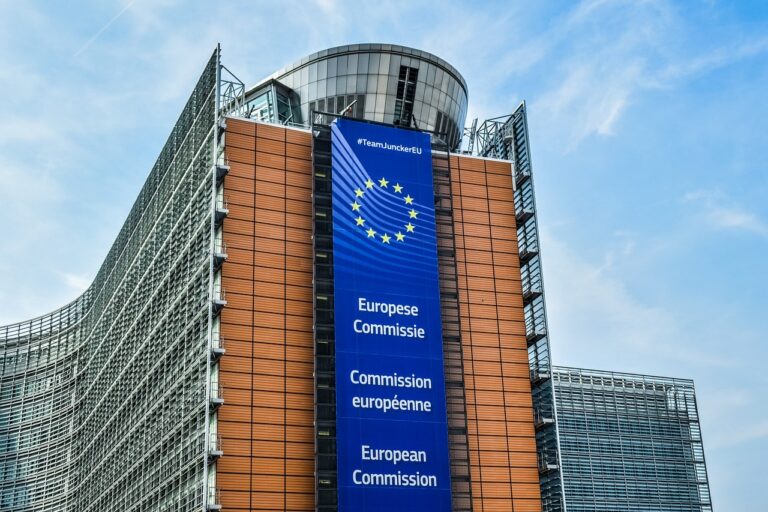
The European Union prosecutor’s office has launched an investigation into the bloc’s procurement of billions of Covid-19 vaccine doses, amid allegations of corruption and secret backroom dealings from several members of the EU parliament.
EU officials announced the probe in a brief statement on Friday, confirming an “ongoing investigation into the acquisition of Covid-19 vaccines in the European Union.” They added that the case follows “extremely high public interest” around the issue, though declined to share any other details.
While prosecutors were tight-lipped about the exact nature of the probe, the announcement follows allegations from MEPs that European Commission President Ursula von der Leyen conducted vaccine negotiations with Pfizer CEO Albert Bourla in secret. Despite requests from journalists, lawmakers and an EU watchdog, von der Leyen’s office has failed to produce personal text messages sent to Bourla during talks for nearly 2 billion vaccine doses, prompting accusations of corruption.
Croatian MEP Mislav Kolakusic noted the new investigation later on Friday, saying the decision was made thanks to pressure from lawmakers. Though he was unable to shed additional light on the probe, Kolakusic has been highly critical of the EU’s vaccine procurement process, claiming deals for billions of doses were marred by “corruption” and secrecy.
Last month, the European Court of Auditors said it had asked the commission to provide information on “preliminary negotiations” for the EU’s largest Pfizer purchase – including “scientific experts consulted and advice received, timing of the talks, records of the discussions, and details of the agreed terms and conditions” – but added that “none was forthcoming.” The European Commission still has yet to make the information public, fueling corruption allegations from MEPs. Source: RT
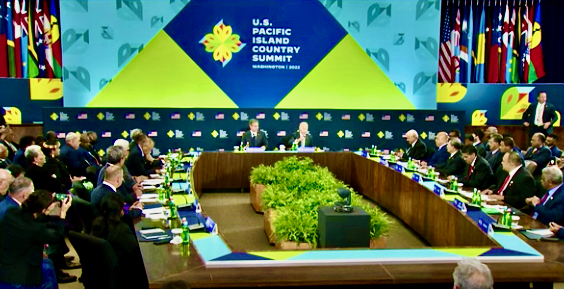
White House Press Release: We—the governments of Cook Islands, Federated States of Micronesia, Fiji, French Polynesia, Nauru, New Caledonia, Palau, Papua New Guinea, Republic of the Marshall Islands, Samoa, Solomon Islands, Tonga, Tuvalu, Vanuatu, and the United States of America—meet on the occasion of the first-ever U.S.- Pacific Islands Summit, held at the White House in Washington, D.C. from 28-29 September 2022. Forged by shared history, sacrifice, and values, our partnership has contributed to prosperity, peace, and security in the Pacific Islands, the United States, and the world for generations. Today, in the face of a worsening climate crisis and an increasingly complex geopolitical environment, we recommit ourselves to working together in genuine partnership to address the mounting challenges of our time.
First, we resolve to strengthening our partnership.
We share a vision for a resilient Pacific region of peace, harmony, security, social inclusion, and prosperity, where individuals can reach their potential, the environment can thrive, and democracy will be able to flourish. The Pacific Islands vision is reflected in its guiding documents which include the 2050 Strategy for the Blue Pacific Continent, a vision that the United States strongly supports. Achieving our shared vision requires a sustained partnership that is rooted in mutual respect, transparency, and accountability. This long-term partnership will require greater capacity; Pacific leaders welcome the United States’ commitment to enhance its engagement, including by expanding its diplomatic presence, the ties between our peoples, and U.S. development cooperation across the region.
We place the highest priority on the resolution of unresolved issues and the timely and successful completion of negotiations relating to the Compacts of Free Association between the United States and the Federated States of Micronesia, the Republic of the Marshall Islands, and the Republic of Palau—one of the cornerstones of U.S.-Pacific cooperation for nearly four decades. The United States recognizes that new resources must be part of any successful negotiation. The United States will amplify its efforts as a Dialogue Partner in the Pacific Islands Forum and will work with partners in consultation with the Pacific to deliver results for the region efficiently, effectively, and transparently.
Second, we commit to bolstering Pacific regionalism.
The Pacific Islands region is stronger united. We acknowledge the important role played by the Pacific Islands Forum in this regard.
Together we commit to bolstering Pacific regionalism, elevating and strengthening Pacific voices in international fora, and enhancing U.S. engagement with relevant Pacific regional organizations, including the Pacific Islands Forum and the Council of Regional Organizations of the Pacific agencies. We will seek greater connectivity between these organizations and other partners who share Pacific objectives and values.
We recognize the central role of the international system, particularly the United Nations, in addressing transnational challenges. Crises will continue to affect our global community in the future. We therefore recognize the urgency of strengthening the global governance architecture to make it fit for purpose and to ensure effective and timely responses to such crises, taking into account the special circumstances of small island developing states (SIDS).
Third, we are committed to tackling the climate crisis together as a priority.
We take the climate crisis as the highest priority of our partnership, for it remains the single greatest existential threat to the livelihoods, security, traditional and customary practices, and wellbeing of people in the Pacific region, including as reflected in the Boe Declaration on Regional Security.
We are united in our commitment to implement the Paris Agreement and we are committed to work together to advance progress at COP27 and beyond. We urge all countries – especially major emitters – whose 2030 nationally determined contributions targets are not yet aligned with the Paris temperature goal to increase their ambition and align such targets with a 1.5 °C pathway before COP27. We urge all developed countries to deliver on their commitment to the goal of mobilizing $100 billion annually through 2025 to support developing countries, in the context of meaningful mitigation actions and transparency on implementation. We urge all countries to reduce collective anthropogenic methane emissions at least 30 per cent by 2030 from 2020 levels.
We recognize the importance of international collaboration and accelerated action especially within this decade on aviation and shipping emissions, to help put both sectors on a pathway aligned with keeping a 1.5 °C limit to temperature rise within reach.
As we combat the climate crisis, we will also work together to enhance the Pacific Islands’ climate resilience; increase their access to climate finance; cooperate to support the Pacific Islands to adapt to the impacts of climate change, from rising sea levels to more frequent flooding, cyclones and typhoons, drought and extreme weather events that contribute to the heightened risk of water, energy; and food and health insecurity. We are further committed to working together and with other countries and stakeholders to scale up finance and support related to averting, minimizing and addressing loss and damage, in particular for vulnerable developing countries.
Fourth, we are committed to enhancing our cooperation to advance economic growth and sustainable development in the Pacific.
We commit to linking our economies more closely for the benefit of all our peoples.
We also seek to forge links within the region, supporting infrastructure, transportation connectivity, cybersecurity capacities, and digital infrastructure in the Pacific.
We will be expanding our cooperation to enhance the development of the sustainable blue economy, including small- and medium-sized enterprises, labor, forestry, fisheries, agriculture, trade, tourism, and addressing supply chains issues and food security.
We recognize that the COVID-19 pandemic has wreaked havoc on Pacific economies. Economic recovery will be a top priority requiring finance not only for rebuilding purposes but to meet the commitments we made in the 2030 Agenda for Sustainable Development and the Sustainable Development Goals. To this end, we support the work of the UN Panel on Multidimensional Vulnerability Index (MVI) for Small Island Developing States and look forward to their recommendations. We encourage relevant international institutions to consider incorporating the MVI into their assessment processes where appropriate.
We further acknowledge the urgent and immediate need for assistance with vulnerability to debt, post-COVID-19.
Fifth, we are committed to supporting each other to better prepare and respond to natural disasters.
The Pacific region continues to bear the brunt of extreme natural disasters from dangerous high tides, tsunamis, ashfalls and volcanic eruptions, earthquakes, and increasing frequency of severe cyclones, hurricanes, and droughts. The increasing occurrence of these natural disasters poses existential threats to Pacific SIDS and require protracted periods of recovery, putting further pressure on limited fiscal spending space. To this end, urgent actions and long-term planning are required to increase the capacity of Pacific SIDS to predict and cope with these disasters and to implement adaptation, disaster risk reduction, and resilience strategies. The recent events in Tonga, Solomon Islands, Vanuatu, and Kiribati in recent years clearly demonstrate the devastation of natural disasters in the region.
Sixth, we resolve to protect the Blue Pacific and enhance the laws that govern it.
Together we will strengthen our cooperation on maritime security, maritime conservation, and the sustainable use of the Pacific Ocean based on the rule of law.
We acknowledge the threats posed by climate change-related sea-level rise to regional security, peace, prosperity, and development. It is essential that maritime zones and the rights and entitlements that flow from them must be maintained without reduction, notwithstanding any physical changes connected to climate change-related sea-level rise, recognizing that SIDS and other coastal States have planned their development in reliance on their rights to such maritime zones. We will continue to cooperate on fisheries-related economic development and oceans resilience through the Multilateral Treaty on Fisheries between the Pacific Islands States and the Government of the United States of America and its related Economic Assistance Agreement, while also forging new ties to improve maritime domain awareness, search and rescue, and maritime security; to curb the scourge of marine debris and plastic pollution; and to combat illegal, unreported, and unregulated fishing—a threat to the Pacific environment and livelihoods.
We will build partner capacity and capability to ensure rapid response to contingencies and emerging threats, including maritime security and safety.
Together we will find solutions to the major challenges facing the Ocean including through our commitment to conserve and protect 30% of the Ocean by 2030. We further commit to concluding very soon negotiations on the Post-2020 Global Biodiversity Framework under the Convention on Biological Diversity and a robust international legally binding instrument under the United Nations Convention on the Law of the Sea on the conservation and sustainable use of marine biological diversity of areas beyond national jurisdiction. We renew our commitment to implementing Sustainable Development Goal 14 of the 2030 Agenda for Sustainable Development including its targets through genuine and durable partnerships, in a manner that fully addresses the special circumstances of SIDS.
We reaffirm the legal rights and obligations that apply with respect to all states under international law as reflected in UNCLOS.
Seventh, we resolve to maintain peace and security across the Blue Pacific Continent.
The Blue Pacific Continent has been a place of peace for nearly eight decades. We seek to ensure it remains so. In promoting peace and security, we recognize the importance of international law as reflected in UNCLOS, including on freedom of navigation and overflight. We will oppose all efforts to undermine the territorial integrity and sovereignty of any country, large or small. We condemn all wars of aggression, including Russia’s brutal war against Ukraine.
We reaffirm our respect for the ability of nations to make sovereign decisions in the best interests of their people. The Pacific Islands note the United States’ commitment to enhance and deepen its security cooperation in the region. All of us in the Pacific region and the global economy benefit from peace and stability.
Eighth, we commit to continuing our cooperation in addressing COVID-19 concerns and other health-related issues.
We will continue to respond to the COVID-19 pandemic and other infectious-disease threats while strengthening regional and national health systems and capabilities, and strengthening the capability to prevent, detect, and respond to infectious disease threats, including through relevant regional organizations; and increase our collective commitments towards adequate, stronger, and sustainable global financing for future pandemic prevention, preparedness, and response.
Non-communicable disease is a top health priority for the Pacific Islands. We recognize the importance of addressing this issue given its impact on the health of our populations and the economic prosperity of our nations.
Ninth, we commit to expanding opportunities for all our peoples.
Our deepest ties are between our peoples. We will strengthen connections between the United States and Pacific Islands through support for education, training, youth development, and exchange opportunities. We will identify priority areas for strengthening people-to-people ties and ways to address them.
We will redouble our commitment to gender equity and equality, including the elimination of gender-based violence, both online and offline, taking full account of the 2012 Pacific Leaders Gender Equality Declaration. Together we will continue to strengthen democratic institutions across the Pacific, including through support for accountability, transparency, anti-corruption, civil society, human rights, and an independent and free media environment.
We acknowledge the critical role of the diaspora in the sustainable development of Pacific Islands and commit to strengthen links between the diaspora and local communities. We encourage expanding opportunities for diaspora investments.
We recognize the power of sports in bringing people together and commit to support the development of sports in the Pacific region. Expanding sports ties between our countries and peoples will lead to greater understanding of one another’s societies and build support for areas like health and youth development. We also recognize the positive influence of coaching and the structures which support sport.
Tenth, we reaffirm our commitment to comprehensively address the legacies of conflict and the promotion of nuclear nonproliferation.
World War II ended nearly 80 years ago, but its scars remain in the Pacific. We, too, acknowledge the nuclear legacy of the Cold War. The United States remains committed to addressing the Republic of the Marshall Islands’ ongoing environmental, public health concerns, and other welfare concerns.
The United States is committed to the safe removal and disposal of unexploded ordnance, and hereby acknowledges the concerns of Pacific Island States regarding other remnants of World War II. We are united in our support for the nuclear nonproliferation regime, including the South Pacific Nuclear Free Zone Treaty and the Nuclear Non-Proliferation Treaty; as well as the important role of the International Atomic Energy Agency.
Eleventh, way forward and future implementation of the Partnership.
This joint vision will guide us as we enter the most consequential period in the history of our partnership. Its implementation will proceed in accordance with, and be guided by, the principles it sets out: mutual respect, transparency, and accountability. To that end, our political leaders, as appropriate, and our officials will meet regularly, bilaterally and collectively, to ensure our partnership continues to deliver practical results for our people and the world. We welcome cooperation with all partners, in the region and beyond, who share in the objectives and values stated hereto. This statement is made in the respect of the competences of the signatories and of the respective governments.
Prime Minister Mark Brown of Cook Islands
Prime Minister Josaia Voreqe Bainimarama of the Republic of Fiji
President David W. Panuelo of the Federated States of Micronesia
President Edouard Fritch of the Government of French Polynesia
Charge d’Affaires Josie-Ann Dongobir of the Republic of Nauru
President Louis Mapou of the Government of New Caledonia
President Surangel S. Whipps, Jr. of the Republic of Palau
Prime Minister James Marape of the Independent State of Papua New Guinea
President David Kabua of the Republic of the Marshall Islands
Prime Minister Fiamē Naomi Mata’afa of the Independent State of Samoa
Prime Minister Manasseh Sogavare of Solomon Islands
Prime Minister Siaosi ‘Ofakivahafolau Sovaleni of the Kingdom of Tonga
Prime Minister Kausea Natano of Tuvalu
President Joseph R. Biden, Jr. of the United States of America
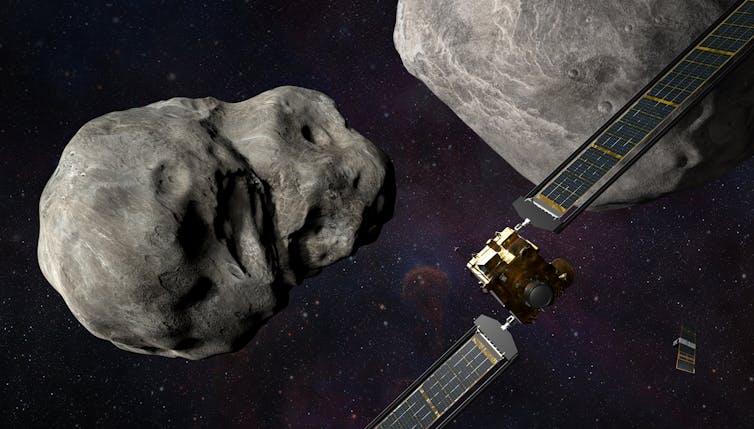
Illustration of DART before impact. NASA/Johns Hopkins APL/Steve Gribben
On September 26 at 11.15pm UTC, NASA’s DART mission (Double Asteroid Redirection Test) will be the first to deliberately and measurably change the motion of a significant body in our Solar System. In other words, it will smash into an asteroid.
The mission will provide the first test of a technique that could be used in the future – to redirect any asteroids we detect on a collision course with Earth.
A binary pair of space rocks
DART was launched on November 24, 2021, its destination a pair of asteroids in orbit around each other, 11 million kilometres from Earth.
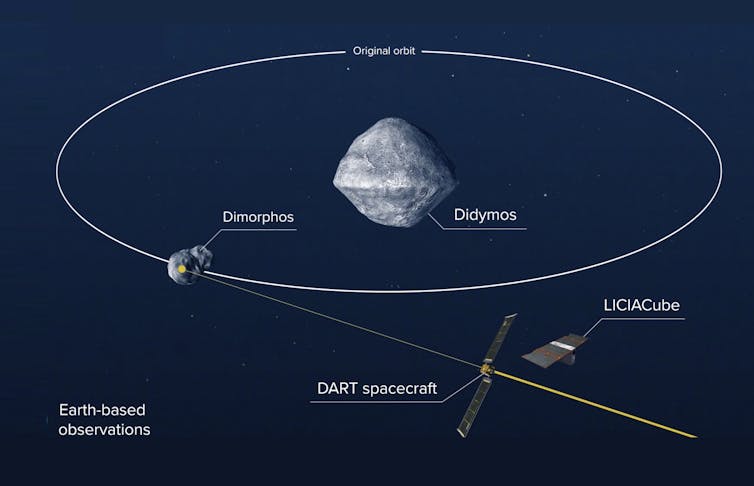
The larger asteroid in the pair is called Didymos and is 780 metres in diameter. The smaller asteroid, just 160 metres wide, is called Dimorphos. The two orbit each other at a distance of 1.18 kilometres, and one orbit takes close to 12 hours.
DART is expected to alter the orbit of the smaller asteroid. NASA/Johns Hopkins APL
These asteroids pose no risk to Earth and have been chosen as the target for DART partly due to that fact. But also, importantly, because the asteroids form a binary pair, it will be possible for astronomers on Earth to assess the results of the impact.
As the asteroids orbit each other, the sunlight reflected off them increases and decreases, varying systematically over the 12-hour cycle of the orbit. Astronomers using powerful telescopes from Earth can monitor this variation and see how it changes, from before to after the collision.
The physics is simple, the mission is not
The physics sounds simple, and it is. Hit one thing with another thing to change its motion. But the mission execution is very complicated. When DART reaches the asteroids, it will be 11 million kilometres from Earth after a 10 month journey. The spacecraft has to use autonomous targeting, using images of the asteroids it acquires as it approaches.
DART needs to recognise the asteroids by itself, automatically lock onto Dimorphos, and adjust its trajectory to hit it. This is all while moving at a speed of nearly 24,000 kilometres per hour!
The results of the impact, while reasonably straightforward to measure, are difficult to predict. The size, shape, and composition of Dimorphos, and exactly where DART hits and how hard, will affect the outcome.
All these factors are uncertain to some degree. Comprehensive computer simulations of the impact have been undertaken, and the comparisons of the simulations, predictions, and measured results will be the main outcomes of the DART mission.
As well as the measurements from telescopes on Earth, an up-close view of the impact itself will be possible, from an Italian Space Agency CubeSat (a small type of satellite) called LICIACube that was deployed from a spring-loaded box aboard the craft on 11 September. LICIACube will follow along and photograph the collision and its aftermath.
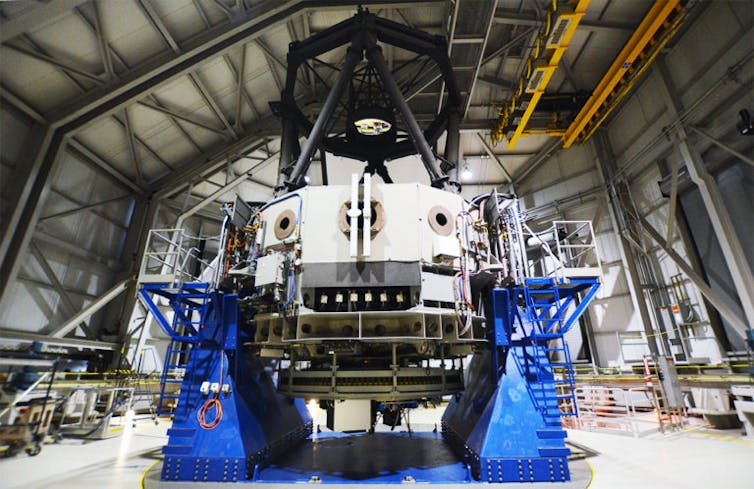
The Lowell Discovery Telescope, located in northern Arizona, one of the facilities that will measure the impact of the DART collision. Lowell Observatory
The results will tell us a lot about the nature of asteroids and our ability to change their motions. In the future, this knowledge could be used to plan planetary defence missions that seek to redirect asteroids deemed to be a threat to the Earth.
What is the level of threat?
An asteroid as small as 25 metres in diameter could produce injuries from an airburst explosion if it hit the atmosphere over a populated area. It is estimated that 5 million such objects exist in our Solar System and that we have discovered approximately 0.4% of them. Such a hit is estimated to occur once every 100 years. While quite frequent, the overall risk is low and the impact risk is relatively low too.
However, it is predicted there are 25,000 objects in the Solar System the size of Dimorphos, 39% of which are known, that hit Earth every 20,000 years. Such an object would cause mass casualties if it hit a populated area.
Asteroid statistics and the threats posed by asteroids of different sizes. NASA
Asteroids that could challenge the existence of human civilisation are in the 1 km plus size category, of which there are less than a thousand in the Solar System; they might hit Earth only every 500,000 years. We have already found 95% of these objects.
So, potential asteroid collisions with Earth range from the frequent but benign to the very rare but catastrophic. The DART tests are being undertaken in a very relevant and interesting size range for asteroids: those greater than 100 metres.
If DART is successful, it may set the scene for future missions that target asteroids, to nudge them out of the way of collisions with Earth. When an asteroid is a long way from Earth, only a small nudge is required to get it out of our way, so the earlier we can identify asteroids that are a potential threat, the better.
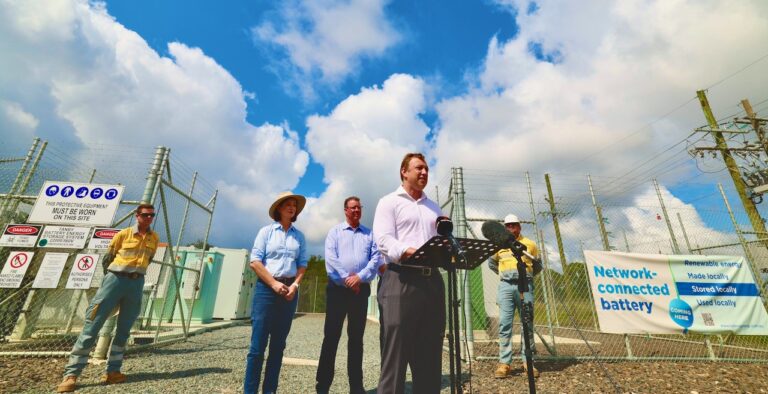
Central Queensland is stepping up in Queensland’s renewable energy revolution with cheap, clean energy now being exported via a new grid-connected battery at Tanby, south of Yeppoon.
Deputy Premier and State Development Minister Steven Miles said the $8 million battery was an important and innovative addition to the electricity grid in Central Queensland, providing a better service for residents.
“We know there’s been a huge uptake in rooftop solar energy in Yeppoon and Rockhampton and this investment will drive even more,” Mr Miles said.
“It means renewable energy made during Central Queensland’s many sunny days can be stored to use during peak demand periods in the evening.
“It will help deliver cheaper, cleaner energy for homes and businesses, and capacity for even more renewables in Central Queensland.”
Assistant Minister to the Premier for Veterans’ Affairs, Trade and COVID Economic Recovery Bart Mellish said it was exciting to see the Tanby battery now operational.
“As Queensland progresses toward its renewable energy target, batteries, firming and other storage options will become increasingly important,” Mr Mellish said.
“Large-scale batteries like the one at Yeppoon allow us to capture the cheap and clean energy generated by Queenslanders, particularly rooftop solar, and best use it to drive down power bills and ease the cost of living.”
“Projects like this also help create good jobs for people in Central Queensland and provide better services too.”
Member for Keppel Brittany Lauga said Queensland has the highest rate of household rooftop solar installations in Australia, with 1 in 3 homes using solar.
“Regional Queensland is already playing an enormous role in capturing the State’s solar potential, so it’s now time to supercharge our local energy security and affordability with these network-connected batteries,” Ms Lauga said.
“Collectively, the energy produced by Queensland rooftops is already the largest renewable generator in the state, with our world record amounts of rooftop solar.”
Member for Rockhampton Barry O’Rourke said Queensland’s proud mining heritage would continue to grow as we meet the increased demand for critical minerals, batteries and components both here and abroad.
“Queensland is home to vast amounts of nickel, cobalt, vanadium and zinc, and it’s our workforce that will make the most of the opportunity to refine, manufacture and export what the world needs to power its clean energy future,” Mr O’Rourke said.
“I’m particularly excited that the forum members get to be part of this momentous occasion, unlocking an investment in good clean energy jobs, better grid services, and a great lifestyle in regional Queensland.”
Members of the Central Queensland Regional Community Forum had the chance to take a look at the Tanby battery today.
Attribution: Deputy Premier, Minister for State Development, Infrastructure, Local Government and Planning and Minister Assisting the Premier on Olympics Infrastructure
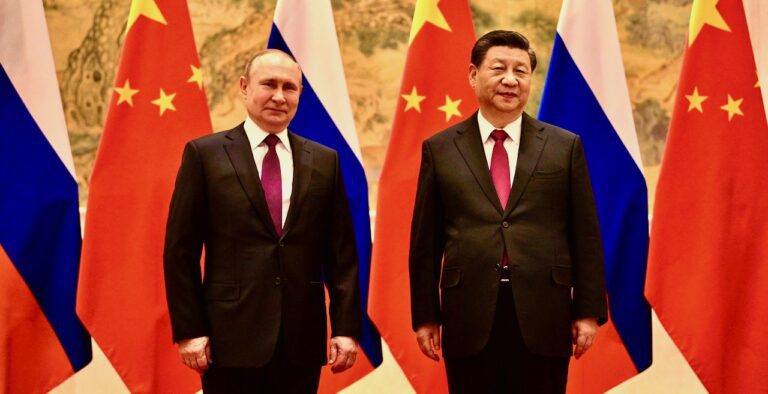
Vladimir Putin and President of the People’s Republic of China Xi Jinping held bilateral talks on the sidelines of the SCO Summit in Samarkand.
President of Russia Vladimir Putin: Comrade Xi Jinping, my dear friend,
Chinese colleagues,
It is a pleasure to welcome you at the meeting.
I would like to note that the President and I met in Beijing during the Olympic Games six months ago, and many events have happened since then. The world is rapidly changing but there is one thing that remains unchanged. I am referring to the friendship between China and Russia, and, in the full sense of the term, to our good relations of strategic, comprehensive partnership. And we continue strengthening these relations.
Ahead of the 20th Congress of the Communist Party of China, scheduled for October of this year, I would like to wish you, Comrade President, further success in implementing the large-scale plan for the dynamic development of the Chinese nation.
The Russian-Chinese interstate interaction can be regarded as a model. The foreign policy tandem of Moscow and Beijing plays a key role in ensuring global and regional stability. Together, we support building a just, democratic and multipolar world order based on international rules and the central role of the United Nations, not on certain rules that someone has invented and is attempting to impose on others without even explaining what it is all about.
In general, I must say that the attempts to create a unipolar world have acquired in recent times an absolutely ugly configuration and they are absolutely unacceptable for the overwhelming majority of states on this planet.
We appreciate our Chinese friends’ balanced position in connection with the Ukraine crisis. We understand your questions and your concerns in this regard. During today’s meeting we will certainly explain in detail our position on this issue, although we have spoken about this before now.
For our part, we have firmly, in practice, abided by the One China principle. We condemn provocations staged by the United States and its satellites in the Strait of Taiwan. We discussed this with Speaker of Parliament, Chairman [of the Standing Committee of the National People’s Congress] Li Zhanshu in Vladivostok a short while ago.
Multifaceted ties between our countries are expanding. Last year, trade grew by 35 percent to over $140 billion. In the first seven months of this year, our trade increased by another 25 percent. I am convinced that by the end of the year we will reach new record high levels, and in the near term, as agreed, we will bring our annual trade to $200 billion or more.
Tomorrow, we will take part in a meeting of the SCO Heads of State Council. Notably, after a three-year hiatus caused by the pandemic, it will be held in person, which is particularly important at this point, since our goal is to ensure an all-round strengthening of the SCO as a platform for constructive and productive interaction.
The SCO includes countries with different cultural and civilisational traditions, foreign policy goals and national development models. However, building our work on the principles of equality and mutual benefit, respecting each other’s sovereignty, and refraining from interfering in internal affairs made it possible for us to make this organisation an effective mechanism for multilateral cooperation.
It is the world’s largest regional organisation that covers a vast geographical area and represents about half of the planet’s population.
I am confident that today’s meeting will provide an additional boost to deepening the Russian-Chinese strategic partnership both bilaterally and internationally.
Thank you.
President of China Xi Jinping: Mr President, my dear old friend,
I am happy to see you again.
In February, we took pleasure in the joint celebration of the beginning of spring and the opening of the Winter Olympics, as well as our discussion of the ambitious plans to expand Cino-Russian relations.
Amid the pandemic, we continue to maintain effective strategic contacts, in particular, by way of telephone calls.
In the face of ongoing formidable global changes that have never been seen in history, we are ready to work with our Russian colleagues to set an example of what a responsible global power is and assume leadership in order to bring the rapidly changing world onto a path of sustainable and positive development.
I would like to take this opportunity and say that I am prepared to exchange views with you on the bilateral agenda, as well as on international and regional issues of mutual interest.
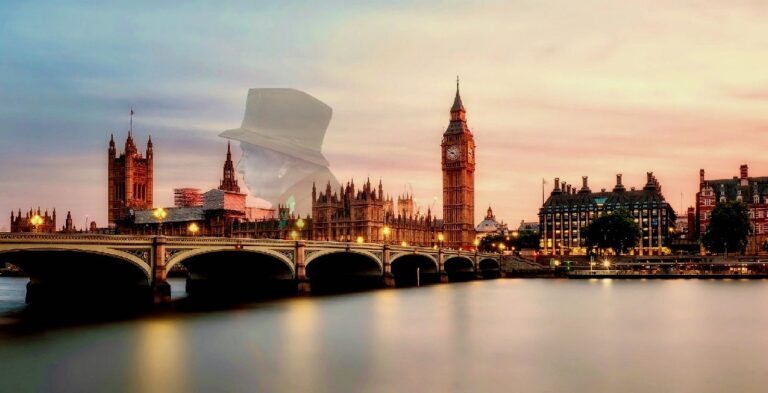
Operation London Bridge (also known by its code phrase “London Bridge is down“) is the funeral plan for Queen Elizabeth II. The plan includes the announcement of her death, the period of official mourning, and the details of her state funeral. The plan was created as early as the 1960s and revised many times in the years before her death in 2022.
The phrase “London Bridge is down” would be used to communicate the death of the Queen to the prime minister of the United Kingdom and key personnel, setting the plan into motion. Bodies involved in preparing the plan included various government departments, the Church of England, Metropolitan Police Service, the British Armed Forces, the media, the Royal Parks, London boroughs, the Greater London Authority and Transport for London. Some critical decisions relating to the plan were made by the Queen herself, while some were left to be determined by her successor. Reporting on the preparations, The Guardian described them as “planned to the minute” with “arcane and highly specific” details.
Several other plans were also created to support the implementation of Operation London Bridge, such as Operation Unicorn, the plan that details what would happen if the Queen were to die in Scotland. Running concurrently with Operation London Bridge are operations concerning King Charles III‘s accession to the throne and his coronation. Several Commonwealth realms developed their own plans for how to react to the death of the Queen.
Funerals and coronations of members of the Royal Family are typically organised by the Earl Marshal and the officers in the College of Arms. Preparations for Elizabeth II’s death and funeral have also been made by the Cabinet Office.
Pre-determined phrases have typically been used as “codenames” for plans relating to the death and funeral of a royal family member. Initially, codenames were used by key officials in an effort to prevent Buckingham Palace switchboard operators from learning of the death prior to a public announcement.When King George VI died in 1952, key government officials were informed with the phrase “Hyde Park Corner.”
Several codenamed funeral plans for royal family members in the late-20th and early-21st centuries have used the names of prominent bridges in the United Kingdom. Operation Tay Bridge was the phrase used for the death and funeral plans of Queen Elizabeth The Queen Mother, which was rehearsed for 22 years before its eventual use in 2002.The funeral of Diana, Princess of Wales, was also modelled after Operation Tay Bridge. As of March 2017, the phrase Operation Forth Bridge referred to the death and funeral of Prince Philip, Duke of Edinburgh, who died in 2021, while Operation Menai Bridge referred to the funeral plan for King Charles III.All coded operations for members of the royal family, including the plan for Elizabeth II, form a part of Operation Lion, an overarching plan for any royal death.
Australian Code
Preparations have been made in Australia for the death of the Queen, with statements having been already drafted for the prime minister and governor-general of Australia.
The prime minister was informed of the Queen’s death approximately an hour prior to its formal announcement. The prime minister wears a black tie immediately after its announcement, with the staff of recent past prime ministers having carried a black tie in preparation for the news. The prime minister and governor-general returned to Canberra to make their statements before departing for London with the Royal Australian Air Force.If not scheduled to sit, the Parliament was recalled to meet to pass a condolence motion.Plans have the governor-general issuing the Australian proclamation for the accession of King Charles III and his Australian titles at an appropriate ceremony.
A flag notice was issued instructing flags to fly at half-mast immediately for the next ten days, except on the day the accession of Charles III is proclaimed. Australia will observe a national day of commemoration, which may be declared a public holiday.A state funeral and special Anglican service will be held. The Australian Defence Force organised several gun salutes coinciding with events in London and participated in ceremonies in the United Kingdom.
The Australian High Commissioner to the United Kingdom observed the Accession Council. In addition, Australian members of the Privy Council of the United Kingdom are entitled to sit on the Accession Council. As reported by The Australian in 2022, four official Australian state guests are expected to attend the funeral in London, with an additional 12 Australians also being invited. Wikipedia
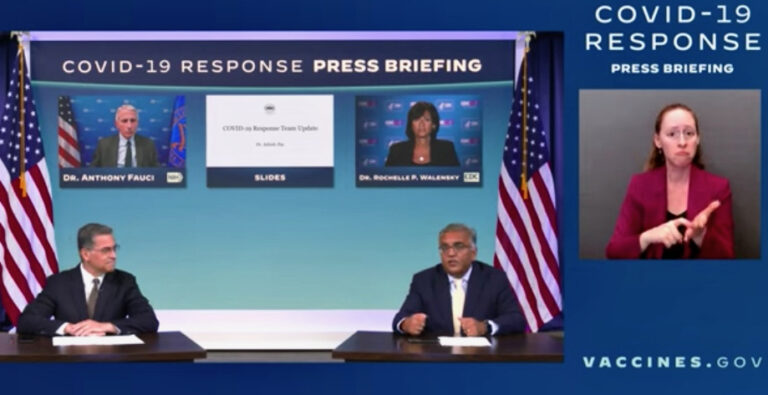
White House COVID-19 Response Team and Public Health Officials
Biden on FDA and CDC Authorizing Updated COVID-19 Vaccines
This week, we begin a new phase in our COVID-19 response. We are launching a new vaccine – our first in almost two years – with a new approach. For Americans, that means one COVID-19 shot, once a year, each fall. Starting this week, at tens of thousands of convenient pharmacies, doctor’s offices, community health centres, and other places, Americans aged 12 and older can go get this new fall COVID-19 vaccine. The new vaccines provide the strongest protection from the new Omicron strain of the COVID virus, which did not exist when the original vaccine was developed. As the virus continues to change, we will now be able to update our vaccines annually to target the dominant variant. Just like your annual flu shot, you should get it sometime between Labor Day and Halloween. It’s safe, it’s easy to get, and it’s free. Go to Vaccines.gov to find a location near your home or work. It’s simple, and it’s easy to understand: If you are vaccinated and 12 and older, get the new COVID-19 shot this fall. This once-a-year shot can reduce your risk of getting COVID-19, reduce your chance of spreading it to others, and dramatically reduce your risk of severe COVID-19. Winter is not that far away. In the past two years, we have seen COVID-19 cases and deaths soar. It does not have to be that way this year. If you are 12 and older, go get your new COVID-19 shot this fall.
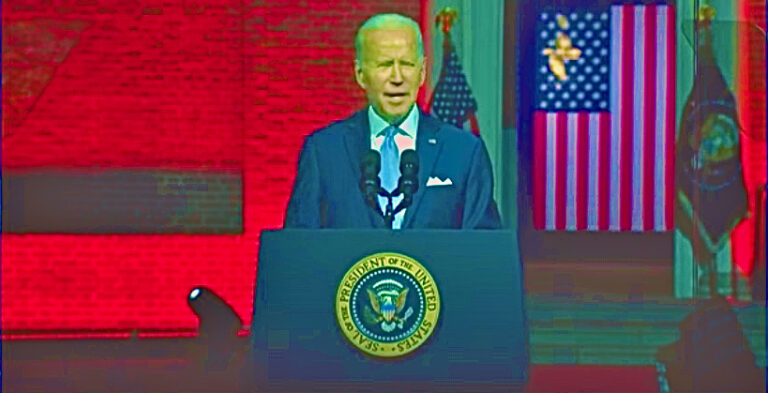
Joe Biden’s speech is similar to the Deployables speech by Hilary Clinton, The speech is a shocker from a Joe who normally hasn’t a clue what day it is and no doubt will stir up the MAGNA movement and hurt him in the Mid-terms.
Biden’s speech in full: My fellow Americans, please, if you have a seat, take it. I speak to you tonight from sacred ground in America: Independence Hall in Philadelphia, Pennsylvania.
This is where America made its Declaration of Independence to the world more than two centuries ago with an idea, unique among nations, that in America, we’re all created equal.
This is where the United States Constitution was written and debated.
This is where we set in motion the most extraordinary experiment of self-government the world has ever known with three simple words: “We, the People.” “We, the People.”
These two documents and the ideas they embody — equality and democracy — are the rock upon which this nation is built. They are how we became the greatest nation on Earth. They are why, for more than two centuries, America has been a beacon to the world.
But as I stand here tonight, equality and democracy are under assault. We do ourselves no favour to pretend otherwise.
So tonight, I have come this place where it all began to speak as plainly as I can to the nation about the threats we face, about the power we have in our own hands to meet these threats, and about the incredible future that lies in front of us if only we choose it.
We must never forget: We, the people, are the true heirs of the American experiment that began more than two centuries ago.
We, the people, have burning inside each of us the flame of liberty that was lit here at Independence Hall — a flame that lit our way through abolition, the Civil War, Suffrage, the Great Depression, world wars, Civil Rights.
That sacred flame still burns now in our time as we build an America that is more prosperous, free, and just.
That is the work of my presidency, a mission I believe in with my whole soul.
But first, we must be honest with each other and with ourselves.
Too much of what’s happening in our country today is not normal.
Donald Trump and the MAGA Republicans represent extremism that threatens the very foundations of our republic.
Now, I want to be very clear — (applause) — very clear up front: Not every Republican, not even the majority of Republicans, are MAGA Republicans. Not every Republican embraces their extreme ideology.
I know because I’ve been able to work with these mainstream Republicans.
But there is no question that the Republican Party today is dominated, driven, and intimidated by Donald Trump and the MAGA Republicans, and that is a threat to this country.
These are hard things.
But I’m an American President — not the President of red America or blue America, but of all America.
And I believe it is my duty — my duty to level with you, to tell the truth no matter how difficult, no matter how painful.
And here, in my view, is what is true: MAGA Republicans do not respect the Constitution. They do not believe in the rule of law. They do not recognize the will of the people.
They refuse to accept the results of a free election. And they’re working right now, as I speak, in state after state to give power to decide elections in America to partisans and cronies, empowering election deniers to undermine democracy itself.
MAGA forces are determined to take this country backwards — backwards to an America where there is no right to choose, no right to privacy, no right to contraception, no right to marry who you love.
They promote authoritarian leaders, and they fan the flames of political violence that are a threat to our personal rights, to the pursuit of justice, to the rule of law, to the very soul of this country.
They look at the mob that stormed the United States Capitol on January 6th — brutally attacking law enforcement — not as insurrectionists who placed a dagger to the throat of our democracy, but they look at them as patriots.
And they see their MAGA failure to stop a peaceful transfer of power after the 2020 election as preparation for the 2022 and 2024 elections.
They tried everything last time to nullify the votes of 81 million people. This time, they’re determined to succeed in thwarting the will of the people.
That’s why respected conservatives, like Federal Circuit Court Judge Michael Luttig, has called Trump and the extreme MAGA Republicans, quote, a “clear and present danger” to our democracy.
But while the threat to American democracy is real, I want to say as clearly as we can: We are not powerless in the face of these threats. We are not bystanders in this ongoing attack on democracy.
There are far more Americans — far more Americans from every — from every background and belief who reject the extreme MAGA ideology than those that accept it. (Applause.)
And, folks, it is within our power, it’s in our hands — yours and mine — to stop the assault on American democracy.
I believe America is at an inflection point — one of those moments that determine the shape of everything that’s to come after.
And now America must choose: to move forward or to move backwards? To build the future or obsess about the past? To be a nation of hope and unity and optimism, or a nation of fear, division, and of darkness?
MAGA Republicans have made their choice. They embrace anger. They thrive on chaos. They live not in the light of truth but in the shadow of lies.
But together — together, we can choose a different path. We can choose a better path. Forward, to the future. A future of possibility. A future to build and dream and hope.
And we’re on that path, moving ahead.
I know this nation. I know you, the American people. I know your courage. I know your hearts. And I know our history.
This is a nation that honors our Constitution. We do not reject it. (Applause.)
This is a nation that believes in the rule of law. We do not repudiate it. (Applause.)
This is a nation that respects free and fair elections. We honour the will of the people. We do not deny it. (Applause.)
And this is a nation that rejects violence as a political tool. We do not encourage violence.
We are still an America that believes in honesty and decency and respect for others, patriotism, liberty, justice for all, hope, possibilities.
We are still, at our core, a democracy. (Applause.)
And yet history tells us that blind loyalty to a single leader and a willingness to engage in political violence is fatal to democracy.
For a long time, we’ve told ourselves that American democracy is guaranteed, but it’s not.
We have to defend it, protect it, stand up for it — each and every one of us.
That’s why tonight I’m asking our nation to come together, unite behind the single purpose of defending our democracy regardless of your ideology. (Applause.)
We’re all called, by duty and conscience, to confront extremists who will put their own pursuit of power above all else.
Democrats, independents, mainstream Republicans: We must be stronger, more determined, and more committed to saving American democracy than MAGA Republicans are to — to destroying American democracy.
We, the people, will not let anyone or anything tear us apart. Today, there are dangers around us we cannot allow to prevail. We hear — you’ve heard it — more and more talk about violence as an acceptable political tool in this country. It’s not. It can never be an acceptable tool.
So I want to say this plain and simple: There is no place for political violence in America. Period. None. Ever. (Applause.)
We saw law enforcement brutally attacked on January the 6th. We’ve seen election officials, poll workers — many of them volunteers of both parties — subjected to intimidation and death threats. And — can you believe it? — FBI agents just doing their job as directed, facing threats to their own lives from their own fellow citizens.
On top of that, there are public figures — today, yesterday, and the day before — predicting and all but calling for mass violence and rioting in the streets.
This is inflammatory. It’s dangerous. It’s against the rule of law. And we, the people, must say: This is not who we are. (Applause.)
Ladies and gentlemen, we can’t be pro-ex- — pro-ex- — pro-insurrectionist and pro-American. They’re incompatible. (Applause.)
We can’t allow violence to be normalized in this country. It’s wrong. We each have to reject political violence with — with all the moral clarity and conviction this nation can muster. Now.
We can’t let the integrity of our elections be undermined, for that is a path to chaos.
Look, I know poli- — politics can be fierce and mean and nasty in America. I get it. I believe in the give-and-take of politics, in disagreement and debate and dissent.
We’re a big, complicated country. But democracy endures only if we, the people, respect the guardrails of the republic. Only if we, the people, accept the results of free and fair elections. (Applause.) Only if we, the people, see politics not as total war but mediation of our differences.
Democracy cannot survive when one side believes there are only two outcomes to an election: either they win or they were cheated. And that’s where MAGA Republicans are today. (Applause.)
They don’t understand what every patriotic American knows: You can’t love your country only when you win. (Applause.) It’s fundamental.
American democracy only works only if we choose to respect the rule of law and the institutions that were set up in this chamber behind me, only if we respect our legitimate political differences.
I will not stand by and watch — I will not — the will of the American people be overturned by wild conspiracy theories and baseless, evidence-free claims of fraud.
I will not stand by and watch elections in this country stolen by people who simply refuse to accept that they lost. (Applause.)
I will not stand by and watch the most fundamental freedom in this country — the freedom to vote and have your vote counted — and — be taken from you and the American people. (Applause.)
Look, as your President, I will defend our democracy with every fiber of my being, and I’m asking every American to join me. (Applause.)
(A protestor disruption can be heard.)
Throughout our history, America has often made the greatest progress coming out of some of our darkest moments like you’re hearing in that bullhorn.
I believe we can and we must do that again, and we are.
MAGA Republicans look at America and see carnage and darkness and despair. They spread fear and lies –- lies told for profit and power.
But I see a very different America — an America with an unlimited future, an America that is about to take off. I hope you see it as well. Just look around.
I believed we could lift America from the depths of COVID, so we passed the largest economic recovery package since Franklin Delano Roosevelt. And today, America’s economy is faster, stronger than any other advanced nation in the world. (Applause.) We have more to go.
I believed we could build a better America, so we passed the biggest infrastructure investment since President Dwight D. Eisenhower. And we’ve now embarked on a decade of rebuilding
the nation’s roads, bridges, highways, ports, water systems, high-speed Internet, railroads. (Applause.)
I believed we could make America safer, so we passed the most significant gun safety law since President Clinton. (Applause.)
I believed we could go from being the highest cost of prescriptions in the world to making prescription drugs and healthcare more affordable, so we passed the most significant healthcare reforms since President Obama signed the Affordable Care Act. (Applause.)
And I believed we could create — we could create a clean energy future and save the planet, so we passed the most important climate initiative ever, ever, ever. (Applause.)
The cynics and the critics tell us nothing can get done, but they are wrong. There is not a single thing America cannot do — not a single thing beyond our capacity if we do it together.
It’s never easy. But we’re proving that in America, no matter how long the road, progress does come. (Applause.)
Look, I know the last year — few years have been tough. But today, COVID no longer controls our lives. More Americans are working than ever. Businesses are growing. Our schools are open. Millions of Americans have been lifted out of poverty. Millions of veterans once exposed to toxic burn pits will now get what they deserve for their families and the compa- — compensation. (Applause.)
American manufacturing has come alive across the Heartland, and the future will be made in America — (applause) — no matter what the white supremacists and the extremists say.
I made a bet on you, the American people, and that bet is paying off. Proving that from darkness — the darkness of Charlottesville, of COVID, of gun violence, of insurrection — we can see the light. Light is now visible. (Applause.)
Light that will guide us forward not only in words, but in actions — actions for you, for your children, for your grandchildren, for America.
Even in this moment, with all the challenges we face, I give you my word as a Biden: I’ve never been more optimistic about America’s future. Not because of me, but because of who you are.
We’re going to end cancer as we know it. Mark my words. (Applause.)
We are going to create millions of new jobs in a clean energy economy.
We’re going to think big. We’re going to make the 21st century another American century because the world needs us to. (Applause.)
That’s where we need to focus our energy — not in the past, not on divisive culture wars, not on the politics of grievance, but on a future we can build together.
The MAGA Republicans believe that for them to succeed, everyone else has to fail. They believe America — not like I believe about America.
I believe America is big enough for all of us to succeed, and that is the nation we’re building: a nation where no one is left behind.
I ran for President because I believed we were in a battle for the soul of this nation. I still believe that to be true. I believe the soul is the breath, the life, and the essence of who we are. The soul is what makes us “us.”
The soul of America is defined by the sacred proposition that all are created equal in the image of God. That all are entitled to be treated with decency, dignity, and respect. That all deserve justice and a shot at lives of prosperity and consequence. And that democracy — democracy must be defended, for democracy makes all these things possible. (Applause.) Folks, and it’s up to us.
Democracy begins and will be preserved in we, the people’s, habits of heart, in our character: optimism that is tested
yet endures, courage that digs deep when we need it, empathy that fuels democracy, the willingness to see each other not as enemies but as fellow Americans.
Look, our democracy is imperfect. It always has been.
Notwithstanding those folks you hear on the other side there. They’re entitled to be outrageous. This is a democracy. But history and common sense — (applause) — good manners is nothing they’ve ever suffered from.
But history and common sense tell us that opportunity, liberty, and justice for all are most likely to come to pass in a democracy.
We have never fully realized the aspirations of our founding, but every generation has opened those doors a little wider to include more people who have been excluded before.
My fellow Americans, America is an idea — the most powerful idea in the history of the world. And it beats in the hearts of the people of this country. It beats in all of our hearts. It unites America. It is the American creed.
The idea that America guarantees that everyone be treated with dignity. It gives hate no safe harbor. It installs in everyone the belief that no matter where you start in life, there’s nothing you can’t achieve.
That’s who we are. That’s what we stand for. That’s what we believe. And that is precisely what we are doing: opening doors, creating new possibilities, focusing on the future. And we’re only just beginning. (Applause.)
Our task is to make our nation free and fair, just and strong, noble and whole.
And this work is the work of democracy — the work of this generation. It is the work of our time, for all time.
We can’t afford to have — leave anyone on the sidelines. We need everyone to do their part. So speak up. Speak out. Get engaged. Vote, vote, vote. (Applause.)
And if we all do our duty — if we do our duty in 2022 and beyond, then ages still to come will say we — all of us here — we kept the faith. We preserved democracy. (Applause.) We heeded our wor- — we — we heeded not our worst instincts but our better angels. And we proved that, for all its imperfections, America is still the beacon to the world, an ideal to be realized, a promise to be kept.
There is nothing more important, nothing more sacred, nothing more American. That’s our soul. That’s who we truly are. And that’s who must — we must always be.
And I have no doubt — none –– that this is who we will be and that we’ll come together as a nation. That we’ll secure our democracy. That for the next 200 years, we’ll have what we had the past 200 years: the greatest nation on the face of the Earth.
We just need to remember who we are. We are the United States of America. The United States of America. (Applause.)
And may God protect our nation. And may God protect all those who stand watch over our democracy. God bless you all. (Applause.) Democracy. Thank you. (Applause.)
The Serbian authorities on Monday received an official request from a civil society group to cancel the ‘EuroPride’ LGBT event scheduled for mid-September, on security grounds.
The petition came a day after tens of thousands of people marched through Belgrade carrying Orthodox Christian symbols and signs, such as ones saying “Hands off our children.”
The march was reportedly blessed by a bishop, Nikanor of Banat, who was recorded last week as saying he would cast a curse on anyone involved in the pride event.
According to the NGO ‘Upright Serbia’, which filed the petition, the pride parade scheduled for September 17 endangers public morality and elevates the risk of violence, property destruction, and large-scale disorder. The Belgrade authorities have not yet commented on the request.
EuroPride 2022 is scheduled to run September 12-18 and is expected to attract tens of thousands of LGBT activists from all over Europe, ending with a walk from the Serbian parliament to the Kalemegdan fortress overlooking the Danube.
On Sunday, however, tens of thousands of Belgrade residents marched the opposite way, in an Orthodox procession intended to show their opposition to the event. Chanting “Hands off our children!” and “No to occupation,” the marchers sang Orthodox hymns and patriotic songs, while carrying crosses, icons, and flags. Source: RT.com