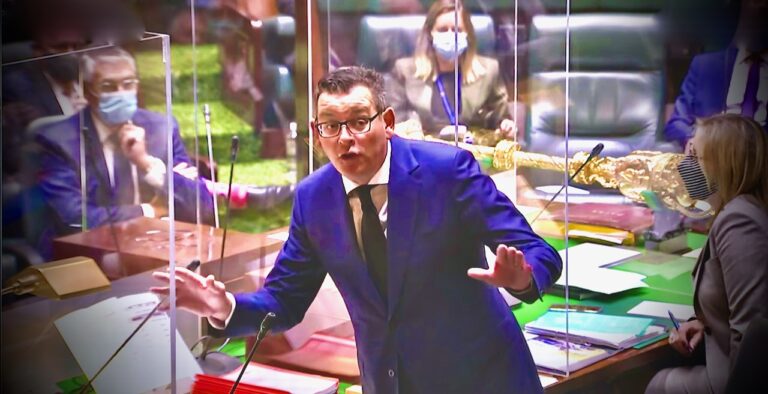
The names of 12 new schools set to open their doors next year have been revealed after being put to a community vote, with many names taken from local Aboriginal language for flora and fauna.
Minister for Education Natalie Hutchins today announced the names of the new schools the Andrews Labor Government will open in some of the state’s biggest growth areas from Day 1, Term 1, 2023.
The preferred names were chosen following a community consultation process that saw almost 5000 submissions made – with the final school names (and their interim names) chosen as:
Barrawang Primary School – from the Woi-wurrung word of the Wurundjeri people meaning ‘magpie’ (interim Wollert West Primary School)
Kurrun Primary School – from the Bunurong word meaning ‘wattle’ (interim Officer Rix Road Primary School)
Nearnung Primary School – from the Bunurong word meaning ‘black cockatoo’ (interim Tarneit Missen House Primary School)
Wayi School – a Woi-wurrung word of the Wurundjeri people meaning ‘us’ (interim Mount Ridley Special School)
Ngarri Primary School – from the Wadawurrung word meaning ‘sheoak’ (interim Holyoake Parade Primary School)
Donnybrook Primary School (interim Hayes Hill Primary School)
Lollypop Creek Primary School
Mickleham Secondary College (interim Merrifield West Secondary School)
Quarters Primary School (interim Camms Road Primary School)
Tarneit Primary School (interim Riverdale East Primary School)
Thornhill Park Primary School (interim Rockbank Murray Road Primary School)
Wollert Secondary College (interim Wollert East Secondary School)
In addition to the brand-new schools, North Melbourne Primary School’s new campus – to accommodate its growing student population – will be named Molesworth Street campus.
Since being elected in 2014, the Labor Government has invested $12.8 billion in building new schools and more than 1,850 school upgrades, creating around 17,400 jobs in construction and associated industries.
Work is now well ahead of schedule on the plan to deliver 100 new schools between 2019 and 2026, with 75 new schools opening between 2019 and 2024.
Quotes attributable to Minister for Education Natalie Hutchins
“It’s exciting to be one step closer to these new schools opening their gates to thousands of new students in our fastest-growing areas, as part of our promise to open 100 new schools across Victoria by 2026.”
“It’s so important for families and young people to feel connected to their local schools, and we’re thrilled the community has had their say on these names that really reflect the areas’ culture, history and environment.”
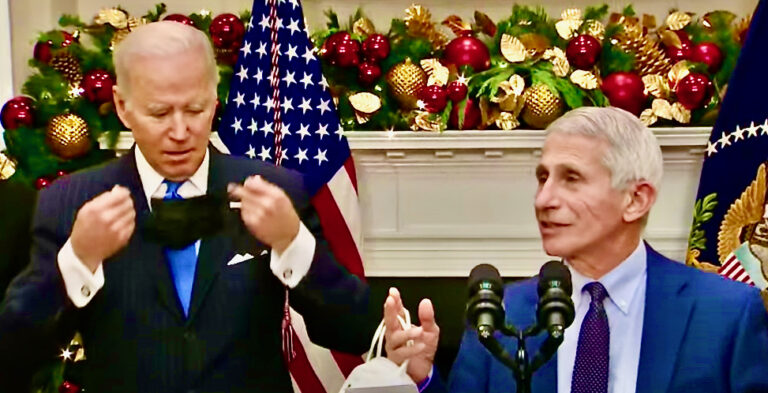
Statement from President Joe Biden on the announcement of Dr. Anthony Fauci’s Departure from NIAID
During my time as Vice President, I worked closely with Dr. Anthony Fauci on the United States’ response to Zika and Ebola. I came to know him as a dedicated public servant, and a steady hand with wisdom and insight honed over decades at the forefront of some of our most dangerous and challenging public health crises. When it came time to build a team to lead our COVID-19 response – in fact, in one of my first calls as President-elect – I immediately asked Dr. Fauci to extend his service as my Chief Medical Advisor to deal with the COVID-19 crisis our nation faced. In that role, I’ve been able to call him at any hour of the day for his advice as we’ve tackled this once-in-a-generation pandemic. His commitment to the work is unwavering, and he does it with an unparalleled spirit, energy, and scientific integrity.
Dr. Fauci has served under seven Republican and Democratic Presidents during his career, beginning with Ronald Reagan. He was awarded the Presidential Medal of Freedom in 2008 under President George W. Bush. For almost four decades, he has served as Director of the National Institute of Allergy and Infectious Diseases, helping our country navigate health crises ranging from HIV/AIDS to COVID-19. Because of Dr. Fauci’s many contributions to public health, lives here in the United States and around the world have been saved. As he leaves his position in the U.S. Government, I know the American people and the entire world will continue to benefit from Dr. Fauci’s expertise in whatever he does next. Whether you’ve met him personally or not, he has touched all Americans’ lives with his work. I extend my deepest thanks for his public service. The United States of America is stronger, more resilient, and healthier because of him.
No, not again! A third straight La Niña is likely – here’s how you and your family can prepare
Hearts sank along the Australian east coast this week when the Bureau of Meteorology announced a third consecutive La Niña was likely this year. La Niña weather events typically deliver above-average rainfall in spring and summer.
But the last two La Niñas mean our catchments are already full. Dams are at capacity, soils are saturated and rivers are high. In some cases, there’s nowhere for the rains to go except over land.
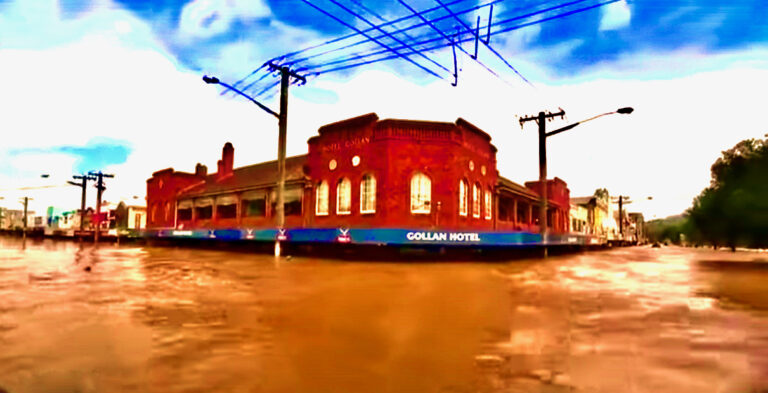
Over the past 18 months, many communities have been hit by floods – some more than once. For these residents, the prospect of a third La Niña will be extremely concerning. And some people who’ve never experienced floods may now be at risk.
Our current research project is examining the experiences of flood-hit communities in New South Wales and Queensland – and our interviews have already yielded useful insights. So let’s take a look at what we should be thinking about now as another wet summer looms.
Water isn’t always fun
Floods are among the deadliest natural hazards in Australia. Yet in Australian culture, water often equates to fun. From a young age we’re taught to swim, enjoy and “master” the dangers that water poses.
So during floods we often see risky behaviours such as driving and playing in dangerous water.
Recent floods, however, brought home the reality of the threat. Few could forget images of frightened families being winched off roofs by helicopter, water rushing from spilling dams and everyday people rescuing their neighbours.
The NSW government on Wednesday released an independent report into this year’s floods. It examined flooding from February to April and again in July – mostly around the Northern Rivers, Sydney’s Hawkesbury-Nepean and the central to north coasts.
The report contained troubling statistics, including:
nine people tragically died
7,700 people sought emergency accommodation
14,600 homes were damaged
5,300 homes were left uninhabitable.
Releasing the report, NSW Premier Dominic Perrottet said up to 40,000 Western Sydney residents risked flood evacuation by 2040, if flood conditions similar to those in July were repeated and no mitigation action was taken.
The inquiry revealed a central theme: the need for a renewed and stronger emphasis on sustained disaster preparedness. Otherwise, as the report noted, the emergency response becomes harder:
Preparedness is discussed in relation to emergency management and our natural and built environment. But an important component of preparedness is at a personal or family level. Failure to prepare at this level makes preparations at other levels more difficult and expensive.
Failing to prepare for floods can make the emergency response harder.
‘Don’t worry. Your house won’t get wet’
Our current research is examining the experiences of those affected by this year’s floods to gather insights on preparedness and response. Participants can take part in an interview, a survey or both.
Our interviews are already providing useful insights. They include the possibility that prior experience of flood, and the well-meaning reassurances of others, can hinder preparations. As one respondent said:
the house, having been built on a mound, has never been flooded and that’s why my neighbour said, ‘Don’t worry. Your house won’t get wet. It’s never got wet in 70 years’. But this was unprecedented.
With another wet summer likely, interviewees are starting to see major flooding as a “new normal” rather than a once-in-a-lifetime experience. This is causing them to question the future of their communities. As another respondent told us:
that’s the part that I’m struggling with now is that it feels like it’s unviable to live here because there’s no security, and when you take away people’s security, your life tends to unravel.
We hope our research will influence policy and practice on flood preparation, community engagement and risk messaging, and shed light on more permanent changes required.
The authors hope their work will influence policy and practice on flood preparation.
Be prepared
So what should you do if flooding is forecast and you need to evacuate? Here’s what experts recommend:
identify the safest route to your nearest safe location and leave well before roads flood
move vehicles, valuables, outdoor equipment, garbage and poisons to higher locations
enact safety plans for pets and other animals
take medications and identification with you
tell friends, family and neighbours of your plans
know where to go for information. Monitor alerts and stay aware of changing situations
keep your mobile phone charged and have at least half a tank of fuel in your vehicle
turn off electricity, gas, and water at the mains before you leave.
Of course, flood preparation should not be left until the last minute. Now is a good time to think about what might happen in the months ahead. Things you can do now include:
clean up outside and inside, move or secure items that could float or create a hazard
move valued possession to higher places in your home
pack an emergency bag and keep it at the ready
consider which friends or family you might stay with if needed.
For further advice, head to the website of your state’s emergency service agencies.
Thinking long-term
Climate change will exacerbate floods and other natural hazards. Communities must be supported to prepare as best they can.
More permanent measures are also needed, such as land buybacks to move people out of flood-prone areas. And importantly, planning systems must ensure we don’t keep building on floodplains.
Our approach to disaster readiness will continue to change. Already, experts are providing advice on matters such as emotional preparedness and recovery in the aftermath.
One thing is clear: in the face of the increasing disaster threat, temporary and seasonal preparations are no longer enough.
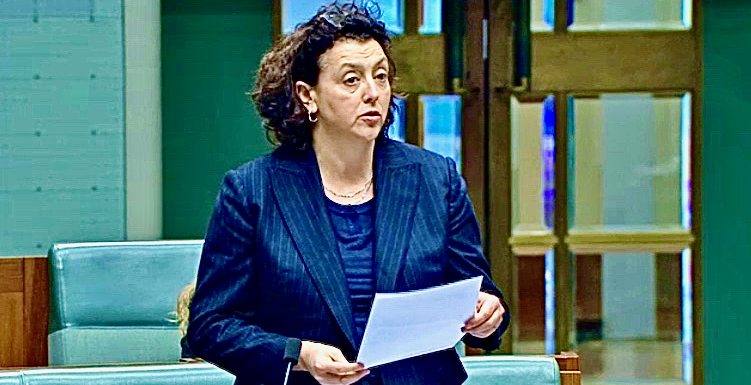
Monique Ryan MP (Kooyong) House of Representatives Matter of Public Importance “Immigration Detention Speech
I’d like to acknowledge not only the very thoughtful contributions of the
government members here today, which I think have been really helpful but also members of the Asylum Seeker
Resource Centre who’ve joined us to listen to us talking about this really important issue.
Firstly, may I note, as the member for Wentworth did, that in early 2019, this parliament achieved something
remarkable and historic. Representatives from across the political spectrum voted together, with some of them
courageously crossing the floor, to pass Dr Kerryn Phelps’s medevac bill to create a pathway for critically
sick people held in offshore detention to be evacuated to Australia for urgent medical treatment. A majority of
members of this House agreed then that giving medical care to people in Australia’s care should not be subjected
to political interference and that the provision of that treatment should be determined by doctors. I am a doctor,
and I believe the experts who have provided evidence to this parliament on behalf of refugees and asylum
seekers when they say that no one is well after 10 years in offshore detention. The previous coalition government
repealed the medevac law as soon as it could. I speak on behalf of the electorate of Kooyong today in support of
immediately ending the indefinite detention of refugees. This parliament has an opportunity to end the suffering
of the hundreds of people still stranded on Nauru and in Papua New Guinea once and for all.
A recent study into psychological distress in Australian onshore and offshore immigration detention centres
found that detaining a person onshore for more than three months resulted in great psychological stress. Those
detained offshore showed even greater psychological distress on all time frames. The MSF report Indefinite
despairin 2018 showed that, out of 208 refugees and asylum seekers assessed, 62 per cent had moderate or
severe depression, 25 per cent had anxiety disorders, 18 per cent had post-traumatic stress disorder and another
22 per cent had depression, complex trauma or trauma withdrawal syndrome.
In the last decade, 46 people have died in Australian detention centres. Assessments of the causes of these tragic
deaths cite lack of access to medical care, including mental health care, as a core contributing factor, as well as
deplorable living and hygiene conditions and psychological and physical abuse. Twelve people have died while
detained in Australian offshore detention centres. Many of these people are losing their lives to easily treatable
disorders such as sepsis.
Australia’s immigration detention regime causes severe and widespread mental and physical health impacts on
people seeking refuge or asylum in this country. I appeal to other doctors in this chamber to join Dr Sophie Scamps
and me in our calls to bring the people detained offshore here to Australia, to safety. I urge the government and
every member of this chamber to end the financial and moral black hole of offshore detention.embed-container { position: relative; padding-bottom: 56.25%; height: 0; overflow: hidden; max-width: 100%; } .embed-container iframe, .embed-container object, .embed-container embed { position: absolute; top: 0; left: 0; width: 100%; height: 100%; }
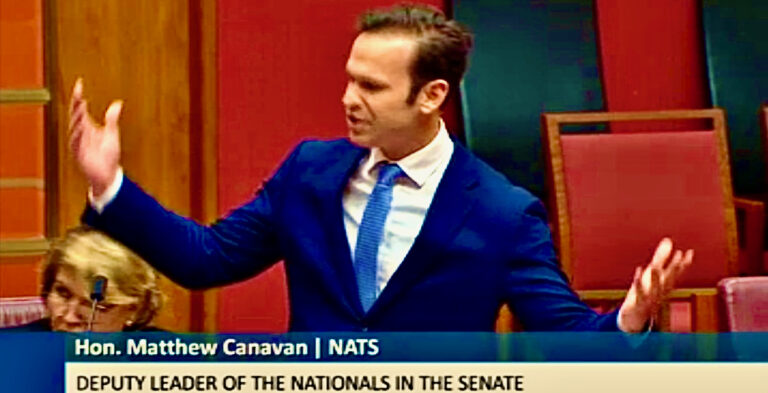
Senator Mathew Canavan (Queensland—Deputy Leader of the Nationals in the Senate): I must give it to the newly elected Labor government: they are already smashing records. Yesterday they broke a major election promise in just their first day at work here in parliament. That must be some kind of record!
At the election, the Labor Party promised—I’m quoting from their own policy—to ‘cut power bills for families and businesses by $275 a year for homes by 2025 compared to today.’ Yesterday, in the Governor-General’s address, there was not a mention of the $275 saving at all; instead, there was just a vague commitment to ‘help save families hundreds of dollars on their electricity bills’. Where has the $275 gone now? Australians are asking the newly elected Labor government: ‘Where is our $275 that you promised?’
This is a massive broken promise that will hurt Australian families already struggling with crushing increases in the cost of living. Since the election, wholesale power prices have increased by more than four times. Soon, every time you go and get a snack from the fridge, you’ll be shocked by how big that bill stuck to the fridge with a magnet is. Electricity bills are going up because we have invested too much in unreliable renewable energy. Australia leads the world in investment in renewable energy. Just the other week, our energy regulator, the Australian Energy Market Operator, revealed that Australia has built four to five times more solar and wind energy per person than Europe, the US, Japan or China. The Labor Party’s response is: ‘Let’s do more! Let’s ignore the higher consequences of this record of shame.’ They want to increase our renewable energy from just 25 per cent today to 82 per cent in just eight years’ time. How is that going to work when the sun sets? We’re in a world where the renewable energy investments must continue until morale improves.
We are a country blessed with energy resources—with coal, gas and uranium. It is a national disgrace and embarrassment that we export our resources to other nations while our old go cold in winter. It is time to put Australians first.
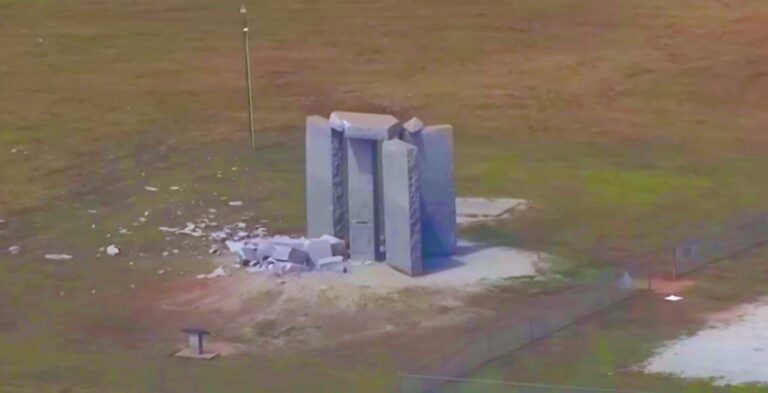
The Georgia Guidestones was a granite monument that stood in Elbert County, Georgia, United States from 1980 to 2022. It was 19 feet 3 inches (5.87 m) tall and made from six granite slabs weighing a total of 237,746 pounds (107,840 kg).The structure was sometimes referred to as an “American Stonehenge“.The creators of the monument believed that there was going to be an upcoming social, nuclear, or economic calamity and wanted the monument to serve as a guide for humanity afterward.
Though initially gaining little controversy, they became subject to conspiracy theories alleging a connection to satanism.On the morning of July 6, 2022, the guidestones were heavily damaged in a bombing. and were dismantled later the same day..embed-container { position: relative; padding-bottom: 56.25%; height: 0; overflow: hidden; max-width: 100%; } .embed-container iframe, .embed-container object, .embed-container embed { position: absolute; top: 0; left: 0; width: 100%; height: 100%; }
The Georgia Guidestones inscription read:
Maintain humanity under 500,000,000 in perpetual balance with nature.
Guide reproduction wisely – improving fitness and diversity.
Unite humanity with a living new language.
Rule passion – faith – tradition – and all things with tempered reason.
Protect people and nations with fair laws and just courts.
Let all nations rule internally resolving external disputes in a world court.
Avoid petty laws and useless officials.
Balance personal rights with social duties.
Prize truth – beauty – love – seeking harmony with the infinite.
Be not a cancer on the Earth – Leave room for nature – Leave room
Vladimir Putin gave a video address to greet the participants of a plenary session of the 10th St Petersburg International Legal Forum. This year’s plenary session was themed Law in a Multipolar World. The video address was recorded during the President’s recent visit to St Petersburg.
Reserve Bank of Australia:At its meeting today, the Board decided to increase the cash rate target by 50 basis points to 1.35 per cent. It also increased the interest rate on Exchange Settlement balances by 50 basis points to 1.25 per cent.
Global inflation is high. It is being boosted by COVID-related disruptions to supply chains, the war in Ukraine and strong demand which is putting pressure on productive capacity. Monetary policy globally is responding to this higher inflation, although it will be some time yet before inflation returns to target in most countries.
Inflation in Australia is also high, but not as high as it is in many other countries. Global factors account for much of the increase in inflation in Australia, but domestic factors are also playing a role. Strong demand, a tight labour market and capacity constraints in some sectors are contributing to the upward pressure on prices. The floods are also affecting some prices.
Inflation is forecast to peak later this year and then decline back towards the 2–3 per cent range next year. As global supply-side problems continue to ease and commodity prices stabilise, even if at a high level, inflation is expected to moderate. Higher interest rates will also help establish a more sustainable balance between the demand for and the supply of goods and services. Medium-term inflation expectations remain well anchored and it is important that this remains the case. A full set of updated forecasts will be published next month following the release of the June quarter CPI.
The Australian economy remains resilient and the labour market is tighter than it has been for some time. The unemployment rate was steady at 3.9 per cent in May, the lowest rate in almost 50 years. Underemployment has also fallen significantly. Job vacancies and job ads are both at very high levels and a further decline in unemployment and underemployment is expected over the months ahead. The Bank’s business liaison program and business surveys continue to point to a lift in wages growth from the low rates of recent years as firms compete for staff in the tight labour market.
One source of ongoing uncertainty about the economic outlook is the behaviour of household spending. The recent spending data have been positive, although household budgets are under pressure from higher prices and higher interest rates. Housing prices have also declined in some markets over recent months after the large increases of recent years. The household saving rate remains higher than it was before the pandemic and many households have built up large financial buffers and are benefiting from stronger income growth. The Board will be paying close attention to these various influences on household spending as it assesses the appropriate setting of monetary policy.
The Board will also be paying close attention to the global outlook, which remains clouded by the war in Ukraine and its effect on the prices for energy and agricultural commodities. Real household incomes are under pressure in many economies and financial conditions are tightening, as central banks increase interest rates. There are also ongoing uncertainties related to COVID, especially in China.
Today’s increase in interest rates is a further step in the withdrawal of the extraordinary monetary support that was put in place to help insure the Australian economy against the worst possible effects of the pandemic. The resilience of the economy and the higher inflation mean that this extraordinary support is no longer needed. The Board expects to take further steps in the process of normalising monetary conditions in Australia over the months ahead. The size and timing of future interest rate increases will be guided by the incoming data and the Board’s assessment of the outlook for inflation and the labour market. The Board is committed to doing what is necessary to ensure that inflation in Australia returns to target over time.
Above Media release: Statement by Philip Lowe, Governor: Monetary Policy Decision
As part of Victoria’s continued response to the coronavirus pandemic and as we continue to manage the challenges winter presents, I have extended the pandemic declaration to apply to the State of Victoria from 11.59pm Tuesday 12 July for three months.
The pandemic declaration gives the Minister for Health the authority to make pandemic orders she considers reasonably necessary to protect public health after considering the Chief Health Officer’s advice and other relevant factors, including social and economic factors.
Recently, a number of modest and sensible changes to pandemic orders were made to allow Victorians to live safely with COVID-19 while reducing transmission and hospitalisations.
This extended declaration will enable those key settings to remain in place over winter, protecting Victorians and our health system.
The declaration was made under section 165AE of the Public Health and Wellbeing Act 2008 after consultation with, and consideration of advice from, the Minister for Health and Acting Chief Health Officer.
In making the declaration, I am satisfied on reasonable grounds that there continues to be a serious risk to public health throughout Victoria due to the coronavirus disease which requires continued public health and other protective measures to reduce the risk of transmission and hospitalisation.
There are 94.6 per cent of Victorians over 12 years who have received two vaccine doses against coronavirus and over 68.4 per cent of Victorians over 16 years who have received a third dose.
This most recent extension will expire at 11.59pm, 12 October 2022 and subsequent extensions can last for up to three months.
I have also requested that the Minister for Health and the Chief Health Officer provide further advice by the end of winter as to whether there continues to be, at that time, a serious risk to public health arising from COVID-19.
The extended declaration underpins the continuation of the Independent Pandemic Management Advisory Committee of experts and community representatives who advise on pandemic response and management.
The Statement of Reasons, and the advice of the Acting CHO and the Minister for Health, will be tabled in Parliament.



![Mike Lindell movie [S]eleciton Code !](https://blowthetruth.com/wp-content/uploads/2022/08/Selection20Code-768x432.jpg "Mike Lindell movie [S]eleciton Code !")