Home Blog Page 33

Want to delete your social media, but can’t bring yourself to do it? Here are some ways to take that step

0

AVvXsEh3naFOwp7EKnVCkhPjjTbCk6fvhhjeaQhgTjBJWptsvew1yGWHfFFQP4RCq5nr1rin V cs5 MOJvm zKGZJHz1j4aWi cgVERC3lNTS Zl KKWF0 WvEIxt4pfbmykWkW SRxBbfsmzUlDKAe6AiTrusIysZ78PByiUpHkZinNe51L8oLT9ywfi8=w320 h213
Image by Gerd Altmann from Pixabay 

For more than a decade we’ve been deeply immersed in a love affair with social media. And the thought of ending things can be painful. But like any relationship, if social media is no longer making you happy – and if curating your online persona is exhausting instead of fun – it might be time to say goodbye.

Late last year, Meta (previously Facebook) came under intense scrutiny after leaked documents revealed the company was fully aware of the negative impact its products, Instagram in particular, can have on users’ mental health.

Meta went straight into damage control. But it seemed no one was particularly surprised by the news – not even teenage girls, who Meta identified as most at risk. Was the leak just confirming what we already suspected: that social media has the potential to be much more harmful than helpful?

How did our once carefree relationship with social media turn sour? And perhaps most importantly, can (or should) it be salvaged?

Spotting the red flags

Relationship counsellors will often ask troubled couples to think about what made them happy in their relationship. Social media, for all it’s annoying peccadilloes, does have some redeeming features.

Throughout the pandemic, the ability to stay connected to people we can’t see in person has become incredibly valuable. Social media can also help people find their tribe, particularly if the people in their offline world don’t share their values and beliefs.

AVvXsEi0EDD2vyhVzOFx5EvQwRVpNHt9GvOqvCIsxvpPnN2gWAM7ygNREAEh5Hsrb rXW7aWpjL99JF1Yu4lgrAwJrdr5RGOab jt8AzvDbMkpGg0fVjjyLtRG7zuDNUcdbfWfkaKoVcvFySfC1OxX0iQcGS9BbvmKeBM6F1PcIoCYdrx LdrlbpQWUO2 io=s320
Image by Gerd Altmann from Pixabay 

With so many social platforms available – and millions (or even billions) plugged in – our FOMO can takeover.

But if you can’t go a day without trawling through the sites, feeling compelled to “like” or be “liked”, your relationship is in trouble.

Though far from settled, the bulk of screen time research focuses on the detrimental effects of excessive or problematic screen use on well-being and mental health. A 2021 meta-analysis of 55 studies, with a combined sample size of 80,533 people, found a positive (albeit small) association between depressive symptoms and social media use.

An important finding was that negative consequences were more likely to come from how social media use made participants feel, rather than how long they used it.

Information overload

In trying to understand why social media can leave us feeling less than content, we can’t look past the effect of the 24/7 news (and fake news) stream on our collective psyche.

A 2021 Deloitte survey of Australians found 79% thought fake news was a problem, and only 18% felt information obtained via social media was trustworthy. Having to navigate content that deliberately aims to perpetuate fear and dissent only adds to people’s cognitive and emotional burden.

But here’s the rub. It seems while we’re generally concerned about technology having a negative impact on our well-being, this doesn’t translate to behaviour change on an individual level.

My own research published last year found more than two-thirds of survey participants believed excessive smartphone use can negatively impact well-being, yet individual usage was still very high, averaging 184 minutes per day. There was no relationship between the belief and the behaviour.

What leads to this apparent cognitive-behavioural dissonance? The results of a long-term study by University of Amsterdam researchers might provide a clue. They found living in a “permanently online” world leads to decreased self-control over social media use and, subsequently, lower well-being.

In other words, we know what we’re doing might be bad for us, but we do it anyway.

Simple steps you can take

How do you know when it’s time to reevaluate your relationship with social media? There’s one deceptively simple question to ask yourself: how does it make you feel?

Think about how you feel before, during and after you use social media. If you feel like you’re wasting large chunks of your day, your week (or, dare I say, your life) on social media – that’s a clue. If you feel negative emotions such as sadness, anxiety, guilt or fear, you have your answer.

But if divorcing social media abruptly feels like a step too far, what else can you do to slowly break away, or potentially salvage the relationship?

1. Start with a trial separation

A “soft delete” lets you see how you’ll feel without your social media before committing to a hard delete. Let friends and family know you’re taking a break, remove the apps from your devices, and set yourself a goal of maybe one or two weeks where you don’t access the account/s. If the world is still turning at the end of this trial, keep going! Once you no longer feel the pull of social media, you’ll be ready to hit delete.

2. Reduce the number of platforms you engage with

If you have Facebook, Instagram, Twitter, TikTok, YouTube, Snapchat, WhatsApp, Tumblr, Pinterest and Reddit on your phone, tablet and computer, you’re probably past saturation point and into drowning territory. Pick one or two apps that genuinely serve a meaningful purpose for you, and ditch the rest. Gen X’ers find it hard to say goodbye to Facebook, but Gen Zers in the US have largely bid it farewell. If they can do it, so can you!

3. If steps 1 and 2 are still too much, try to reduce your time spent on social media

First and foremost, turn off all your notifications (yes, all of them). If you’re conditioned to respond to every “bing”, you’ll find it almost impossible to stop. Set aside sometime each day and do all your social media catching up or browsing. Set an alarm for your predetermined time allocation, and when it sounds, put the phone down until the same time tomorrow.

None of this will be easy, and walking away from social media might hurt at first. But if the relationship has become uncomfortable, or even abusive, it’s time to take a stand. And who knows what untold happiness you might find, beyond the four walls of your screen?The Conversation


Failing to disconnect from social media can end up hurting more the alternative.

Sharon Horwood, Senior lecturer in Psychology, Deakin University

This article is republished from The Conversation under a Creative Commons license. Read the original article.

Queensland E-Scooter reforms: speeds slashed, $137 fines

AVvXsEh6MiHCtPn9 H M1Vm1l5GAXNn0FmFQoxq2apKaXyiUgv3iHQpwWlOV8YOT9nLLGs2VSu33gnrJrGrlGE2JasoM4U7V LSNYejXNADbLG3yqukqkgVviRU3UzXdA7inqj6hKmtkpomTUMyE fg8DIUbRQsd2dM7fC15DPmC6 b9s00Kt SWrNpqJBwu=w320 h164

Roads and footpaths will be safer for Queensland commuters as the Palaszczuk Government rolls out new measures to better regulate e-scooters.

Transport and Main Roads Minister Mark Bailey said stronger laws like lower speeds on footpaths, mandated safety measures, a safety education campaign and clearer signage and markings would be part of a suite of new actions to help ensure e-scooter riders, cyclists, motorists and pedestrians can safely share spaces.

“The rising popularity of e-scooters is a clear sign they aren’t going to disappear,” the Minister said.

“We know that people are going to keep using them so the key is making sure that shared spaces like footpaths and bike-lanes are as safe as they can be.

“That’s why I joined industry and user groups, disability advocates, health, police and government experts late last year to understand what needs to be done to make e-scooters and their use safer for people riding them and those they ride near.”

Immediate action will include the rollout of a proactive safety campaign focussing on the correct way to wear a helmet, how to ride safely, how to overtake pedestrians safely and how to park to keep the footpath clear for people with disabilities.

Mr Bailey said the reforms would see speed limits slashed on footpaths to 12 kilometres an hour.

“We are seeing far too many injuries in e-scooter users that are the result of speeding and many pedestrians feeling unsafe on footpaths,” he said.

“Our footpaths are there for everyone so e-scooter riders will need to slow down on footpaths to 12 km/h in future.

“We’ll also be allowing e-scooters on segregated bikeways, like the Veloway and bikeways such as the Ipswich Motorway & Gateway Arterial North as we examine further their use in relation to on-road bike lanes.

“For e-scooters to use footpaths less, they need more safe routes to use as an alternative.

“We’ll examine further whether on-road bike lanes are appropriate with all stakeholders, with extensive consultation with local government associations and councils to come.”

The State Government will also work with Brisbane City Council and other LGAs on making sure signs and markings make it clear where e-scooters can and can’t be ridden and where they can and can’t be parked.

Tougher laws to give police better tools to enforce speed limits and drink riding will also be further explored to crack down on rogue e-scooter riders endangering others.

Police Minister Mark Ryan said the Queensland Police Service would be part of a new Personal Mobility Device Safety Reference Group.

“We know many people do the right thing and our officers do a great job at policing dangerous behaviour already,” the Minister said.

“But with new rules and regulations we will be better equipped to keep the public safe.”

Mr Bailey said more information on the safety reforms would be made available in the coming months, as engagement with industry and stakeholders progressed.

“I look forward to seeing the work we can do in this space, and the benefits the reforms can have in community moving forward,” he said.

“I expect our Personal Mobility Action Plan outlining these, and a number of other initiatives around e-scooters, will be available shortly.”

More information on the current road rules for personal mobility devices can be found on the Queensland Government website.

Fast Fact – E-Scooter Reforms

  • Slashing footpath speed limits in half, to 12km/h
  • Proactive safety campaign to inform users of road rules, parking and their responsibilities
  • Partner with industry for a new e-scooter users guide at point of sale (privately owned e-scooters)
  • Mandate warning devices (such as a bell)
  • Establish an e-scooter parking working group to create clear rules for e-scooter parking to keep footpaths clear for pedestrians and people with disabilities 
  • Allowing e-scooters on segregated bikeways, including the Veloway
  • Examine further e-scooter use on shared bikeways and on road bike lanes, pending further stakeholder and local government consultation
  • Improved data recording and injury reporting
  • Improved signage and markings 
  • Road rule amendments
  • Creation of high-risk e-scooter offences, including drink and drug driving penalties, through legislative reforms
  • Cracking down on dangerous and irresponsible e-scooter behaviour such as speeding through tougher enforcement and appropriate penalties 

Penalties for non-compliance

If you get caught not complying with these rules you will be fined at least $137.

Source: Queensland Government

AVvXsEg5mZttapc9X2Qds4 2btR WBVmmkP4uj7kLUjumANrz7Tnms JCE8vMUp yoSzKfrHlvDCmE5etruwqHISnhBngOswMLGufWON0GkOoO fWJ5EHmBcPlAvddUu6i9XQ6R1J3utTRLZY5vtp FurEvgylOYcjfbca4BfErHBq8IJCkN8Dh7qBYWOYHZ=s320

Queensland Police, Speeding motorists put on notice

0

AVvXsEgSDq8ZofioNJVYyyfmTbPj2vCmQalKB cJH24DjPtpFPFC8V1O2qjPL18XcbRiBfHBdHTSeIk9H6auWN0PTjBHgi 8dsl5YUGiJQAN7zhYg1OH7lg1WYDIYoUNIV4 qpUBED8y96IA9 epSLhBDv4URUhG2j0be2seQ91mXmOrptvwrOlXOCIV24bv=s320


Speeding motorists are being put on notice as police ramp up efforts to stop the rising trauma on Queensland roads.

Twenty lives have already been lost on Queensland roads in February while 600 people have been injured in traffic crashes.

Queensland’s Lives Lost toll stands at 40, which is 3 more than at the same time last year and more than double that at the same time in 2020 (18).

Acting Chief Superintendent Ray Rohweder said speed continued to be a contributing factor in the majority of serious crashes.

“Already this year we have seen a lot of trauma, a lot of shattered families and a lot of preventable tragedies on our roads,” Acting Chief Superintendent Rohweder said.

“In many of these incidents, excessive speed has been the main cause of the crash.”

He said police had ramped up enforcement activity, conducting operations across the state.

“Our officers are seeing extremely dangerous risk-taking behaviour on our roads, particularly when it comes to speeding.

“Some of the worst offenders are doing double the speed limit which is idiotic and reckless and will not be tolerated.

“We are conducting localised traffic operations across Queensland and will continue to do all we can to make our roads safer.

“Police will continue to target dangerous road users so motorists doing the wrong thing should expect us anywhere, anytime.”

Enforcement activity in the first half of February (Feb 1 to 17) includes:
• 7,700 speeding fines issued by police
• 55,000 RBTs & RDTs conducted
• 722 drink drivers detected
• 586 positive drug-drivers detected
• 15,875 traffic infringement notices

Police intercept speeding drivers


.embed-container { position: relative; padding-bottom: 56.25%; height: 0; overflow: hidden; max-width: 100%; } .embed-container iframe, .embed-container object, .embed-container embed { position: absolute; top: 0; left: 0; width: 100%; height: 100%; }

(CC) The State of Queensland (Queensland Police Service) 2022

Queensland Government

Multicultural Victorians invited to photography competition

AVvXsEiVyBtpyEdmYB5gGGlqTMA1dTXg0C dMyk3evWXN6tq 5hbz4o SUWqaqvWaVEfcYD6TlX G1s6kxPukCBAnB uWqjyKigAYp6zvOtS7iXtY8l6s5p 1okR6EzFWhGZ3fYb3runDMBJpBJqzeZ APGsIuLZf52HfceskIHAX4EalzDqh J7TpEDHvqP=w320 h164
Image by Afik Eleck from Pixabay 

Telling The Stories Of Multicultural Victorians

Victorians from multicultural communities are invited to enter a new photography competition and tell their story.

The first of its kind, Capturing Culture: A Focus on Multicultural Victoria is open to anyone in Victoria with a multicultural background. 

In addition to the $9,000 in prizes on offer, entrants have the opportunity to contribute to the visual record of a unique time in our history.

Shortlisted entries will culminate in an exhibition of 24 artworks in June 2022. Winning entries will be announced at the exhibition.

Submissions will be scored by a panel of judges across six categories: people’s choice, days of significance and cultural celebrations, portraiture, daily life and family, community resilience and the Minister’s choice.

Applications are open until Sunday 17 April.

For more information or to submit your entry, visit multiculturalcommission.vic.gov.au/capturing-culture.

Quotes attributable to Minister for Multicultural Affairs Ros Spence

“This is a great opportunity for Victorians from multicultural backgrounds to share their experiences from their own perspective.”

“The exhibition gives us the chance to recognise the vital contribution Victoria’s multicultural communities have made to our State – and their incredible resilience through the pandemic.”

Quotes attributable to Victorian Multicultural Commission Chairperson Viv Nguyen AM

In addition to the VMC’s 2022 Multicultural Film Festival, we are excited to expand our showcase of talented multicultural art practitioners in Victoria through the launch of this competition.”

“Photography is a powerful medium to capture those fleeting moments that unite communities – the fleeting glances between loved ones, the sadness, the humour, the joy.”

Source: Premier of Victoria

Andrews Government funding boast to LGBTIQ and gender diverse Victorians

AVvXsEi9ZErDyAE TmKHDgPy y2uGo9IdZO8PMVpkBrg sG2R3prVPkindOQYTJ2n0lPr5T17lxeuVDwzc0z28YPYo8l19mF2ALB67BxOQawp5BlXWDxSPFRyqlR0Jt1Y1ySYtLpB0PJ0VxR04Iv73L C 4 trAyZ svRxw 4YNDYj60bzap SR EGPhZm =w320 h164


The Andrews Labor Government is standing with young queer, transgender and gender diverse Victorians and their families, with a fast-tracked funding boost to give them better access to vital health and support services.

The recent unnecessary, hurtful public debate around legal protections for young LGBTIQ+ Australians has had a significant impact on their wellbeing and that of their families and loved ones.

Young same-sex attracted people are already five times more likely to attempt suicide – and young transgender Australians are 15 times more likely. That’s why the Labor Government is stepping in to provide support where the Commonwealth has failed and subjected these communities to weeks of harmful and divisive rhetoric.

Responding to any additional demand and making sure young LGBTIQ+ people know that in Victoria equality is not negotiable, the Government will deliver a $200,000 package for local organisations that provide crucial support to the LGBTIQ+ community.

The investment will consist of $150,000 for the broader LGBTIQ+ community – with $50,000 each to Switchboard Victoria, Thorne Harbour Health and Drummond Street, and a further $50,000 dedicated to boosting support for trans and gender diverse Victorians, split between Transcend and Parents of Gender Diverse Children.

This extra support will make sure these organisations can manage any increased demand for their services including counselling and family therapy, referrals and peer supports to ensure LGBTIQ+ young people, their families and carers get the support and guidance they need, as soon as they need it.

In addition to this package, an extra $15,000 will support Transcend to deliver a social media campaign providing positive messages to trans and gender diverse young people, their families, allies and wider community.

The funding announcement coincides with today’s inaugural Melbourne Pride Street party – celebrating Victoria’s vibrant, diverse queer community, and follows the Labor Government’s release of the first whole-of-government LGBTIQ+ Strategy, which sets out a 10-year plan to improve outcomes for the community across the state.

The Victorian Budget 2021/22 has invested $26.2 million to make mental health and wellbeing services more accessible to diverse communities – including $7 million to expand Rainbow Door.

Quote attributable to Premier Daniel Andrews

“It’s pretty simple. All people, whether gay or straight or transgender, deserve support and protection. That is our record – and the Commonwealth government ought to be ashamed.”

Quote attributable to Minister for Mental Health James Merlino

“The debate this week in Canberra has put our young LGBTIQ+ communities at risk. We’re sending queer and gender diverse Victorians a message that in this state, you are loved, supported and welcome to be exactly who you are.”

Quote attributable to Minister for Equality Martin Foley

“In Victoria, equality is not negotiable – and we are proud to be supporting a campaign to make sure that if any member of our LGBTIQ+ community needs support, we have their back.


Attribution: Media Release unedited Victoria Government

Convoy to Canberra, Albanese tells 100,000 Australians to Go Home

0

AVvXsEiguxKUkkSTt NNJ2dx mG4ebuUApegvnPBBw g6YoEmJw GaTDfs4rTkLkPvwkhn1fTLXS DLQqhzMPN G4IwWHvv4aQ2aia hn7J7DrptH4A53PYkll9X61juUgvX0vYLrEmEf8ybI6v7m uDIdcDs2FlqCVFXdmZEwHosrEyQsvygN7vA3 0hSZb=w320 h164


The Political leaders and Media want to downplay there were 100,000 people in Canberra today, I promise you they would be very worried about the turnout especially people who have travelled so far to get to stinking Parliament House that’s full of Rats.

We are lucky that Federal Labor Party was not in charge of the Pandemic, We would have had Force Vaccinations.


Journalist Question to Albanese referring to the large Convoy Rally in Canberra, Um thousands have a Mask outside parliament again today protesting you guys mandate. Are you worried?

Anthony Albanese: says Go home, Go Home Don’t engage in the sort of Behaviour that we’ve seen. Um, my understanding is during the recent period in Canberra there have been people intimidated for wanting to get Vaccinated, uh there’s been behaviour and blocking of people movement it doesn’t advance any cause. It doesn’t assist the sort of nonsense that we’ve seen of people dressed up in military camouflage walking around can if you think that’s a way that you win support for your view in Australia I think you are very wrong I think these people need to just go home and think about the facts which are out there and the facts are that you are more like to avoid getting COVID if you’re fully vaccinated. The fact is you do get COVID you’re far less likely to have acute health concerns if you’re fully vaccinated and you’re far less like to suffer death if you’re vaccinated at a time when our nurses our healthcare professionals working their guts out under extraordinary pressure in our Hospitals but a particular shout out to those in our age care facilities have some respect for the people who have been working beyond and reasonable criteria working extend hours under extraordinary pressure to keep their fellow Australians safe and look after them go home

.embed-container { position: relative; padding-bottom: 56.25%; height: 0; overflow: hidden; max-width: 100%; } .embed-container iframe, .embed-container object, .embed-container embed { position: absolute; top: 0; left: 0; width: 100%; height: 100%; }

ATAGI advice on defining ‘up-to-date’ status for COVID-19 vaccination

National Cabinet noted that the Australian Technical Advisory Group on Immunisation (ATAGI) has updated their clinical advice to include that all individuals aged 16 years and over are recommended to receive a COVID-19 vaccine booster dose to maintain an ‘up-to-date’ status.

Consistent with current arrangements this booster dose is recommended from 3 months after the last primary dose and will now be recommended to be administered within 6 months of completing the primary schedule. Boosters are not recommended for children aged 5-15 years of age and ATAGI will continue to review the evidence on the need for a booster dose in this age cohort.

ATAGI has advised that a booster can be given safely and effectively at any time after 6 months to become ‘up-to-date’ in the event that the booster had not been received earlier.

In its advice ATAGI acknowledges that this change in definition of up-to-date status for COVID-19 vaccines may impact the status of an individual’s COVID-19 immunisation certificate, and sufficient time should be provided to support implementation of changes. ATAGI has recommended they be made effective by the end of March 2022.

National Cabinet noted ATAGI’s advice that these ‘up-to-date’ requirements be applicable for domestic situations and policy settings and noted the Commonwealth Government’s decision that the existing arrangements and definition of ‘fully vaccinated’ for the purposes of overseas travel and arrival into Australia will continue to be that individuals must have received a complete two dose primary course of a Therapeutic Goods Administration (TGA) approved or recognised vaccine to be considered ‘fully vaccinated’. People entering Australia will not be required to have had a booster dose of a COVID-19 vaccine.

Morrison’s religious discrimination package couldn’t fly on a wing and a prayer


AVvXsEi eqQ2EBiidWhlN5aTgV3fQu3ZSo0QktQcIidhvcwierdIzjrRT1ib4m6Ybr5fZFvtTyo1RfABYCmPDxlw Mr d 21tkpBDYmoNKKNrFtzhZLHiSiXQLeA414XKRiXZPp63TPpQe98w 7NBmJFQGi vfoVW xGND Mg3eRPu5GzauDkkNlNfvmjrTI=w320 h164
House of Representatives
Grattan on Friday: Morrison’s religious discrimination package couldn’t fly on a wing and a prayer

AVvXsEjS5h1O5FHpJmLGQC1KAt78ic6eyRgm rq7S7CsNWz0ORMrHtaem5mMOWAviudaNOzvaZHUR4vYxAyt3jd3lG xca1xm8AI7qQNzXvFb hiTeYVvoU7Oy1gF1vA rlnBZfdNb BrlHue7xQqmKYHB9O0VGMXpC F2sEd1aLbgtTXEkwCqIito7niBBG=w200 h31

Scott Morrison made three foolish and arrogant assumptions this week when he embarked on trying to push his controversial religious discrimination legislation through parliament.

As a result, he failed in the mission and emerged from Wednesday’s all-night sitting with his authority diminished. With time almost out before the election, this legislation, which he claimed was “very important”, has reached a dead end.

First, Morrison thought he could tactically outplay Anthony Albanese, wedging Labor on an electorally sensitive issue. This smacked of hubris – it is safer to think your opponent just might be smarter than you are.

Second, he underestimated the spine of the moderates in his own party. He was not properly tapped into his backbench, especially those in the leafy suburbs who are under pressure from independent candidates. The moderates have been acquiring a louder voice recently, which became obvious in last year’s climate change debate.

Third, Morrison believed he could rush a complex issue – which he’s had years to deal with – in the high-pressured dying days of the electoral term. The “I am PM – therefore I can” principle doesn’t always work in a close parliament.

This has been another political shambles for Morrison, already beset by bad polling, a crisis in aged care, and leaked texts.

NSW Premier Dominic Perrottet – incidentally, a dedicated Catholic – had some prescient words on Wednesday as the federal government prepared for votes on the religious discrimination and associated legislation.

“I’ve made it very clear that I don’t believe legislation in this space is necessary and I think it can end up creating more problems than it solves,” Perrottet said.

As well as arguing it is needed, Morrison said he was committed to the legislation because he promised it before the last election.

In reality, he has been substantially driven by a quest to keep or win faith-based conservative voters, particularly in ethnic areas in western Sydney. Some Coalition sources believe these votes were an essential component in his 2019 victory.

Albanese desperately requires these votes too – Labor identified after the 2019 election that it had a problem with them – and he certainly can’t afford to lose those already in the ALP’s camp.

So although many in Labor and its base didn’t want a bar of the religious discrimination legislation – Bill Shorten told Parliament “We will rue the day if this legislation passes the Senate” – the opposition leader wrangled a divided frontbench and caucus into supporting it, while pressing amendments.

The government’s package included an amendment to the Sex Discrimination Act to prevent gay students being expelled from religious schools.

But that was narrower than an earlier undertaking Morrison gave and it didn’t cover transgender students. The government said it wanted a report from the Law Reform Commission before acting on them, because of what it insisted were the complexities of religious schools dealing with trans students.

The exclusion of transgender children turned out to be a serious flaw in the eyes of some in Liberal ranks.

The moderates asserted themselves, in negotiations on the package before the parliamentary debate, and in the chamber. They were driven by principle but also by their own political imperatives.

Some moderate critics of the bill share Perrottet’s view about the unwisdom of stirring up the religious discrimination issue. They were even more exercised about transgender students being left in limbo.

Morrison twisted arms and gave some sops to try to corral his followers.
Perhaps he thought when push came to shove, his authority would get him through.

It didn’t. Two Liberal defectors, Bridget Archer and Trent Zimmerman, raised their heads in votes on the main bill, although it eventually passed the House of Representatives unamended.

It was a much worse story for the government on the bill to amend the Sex Discrimination Act. Three more Liberal rebels – Katie Allen, Fiona Martin and Dave Sharma – joined Archer and Zimmerman. The five supported a successful amendment for all students – including transgender – to be protected.

Morrison was left flummoxed and no doubt furious. The government was uncertain how votes would go if the legislation went immediately to the Senate. For hours on Thursday it mulled over its next step.

It was consulting stakeholders, according to Assistant Minister to the Attorney-General Amanda Stoker. And counting its numbers, obviously, in this hostile chamber. One of its senators, Andrew Bragg, would have crossed the floor. But in fact, non-government Senate leaders had already decided late Wednesday there wouldn’t be enough time to deal with the legislation on Thursday.

Meanwhile the Australian Christian Lobby declared the government should withdraw the package, saying: “Taking away protections for Christian schools is a price too high to pay for the passage of the Religious Discrimination Bill.”

After a few hours the government shelved the package, and lashed out. Attorney-General Michaelia Cash argued in a letter to her Labor counterpart, Mark Dreyfus, and crossbencher Rebekha Sharkie, who moved the successful amendment, that the change could in fact allow – rather than prohibit – discrimination in religious schools.

The government said this was based on advice from the government solicitor, although the letter did not reference the advice.

Sharkie was unimpressed, describing Cash’s letter as a “ruse”. “Let’s see what’s behind it,” she said, challenging Cash to table the legal advice.

Sharkie smells the same game as the government played years ago when the crossbench rolled it to pass the Medevac law to facilitate the transfer of offshore asylum seekers and refugees to Australia for treatment.

The consensus is the religious discrimination package won’t get through this term. There are only a couple of Senate sitting days left (in budget week), the government doesn’t have the numbers, and the political caravan will have moved on.

As for now, Morrison might argue he tried but was thwarted by Labor. But that can be countered with a question and a proposition.

The question is: “Why did you leave it so late?” The proposition is that, regardless of the legal argy-bargy, when you are promoting anti-discrimination it is difficult to complain you have been stymied by the House of Representatives insisting on removing discrimination against trans kids.

This botched bid to legislate against religious discrimination has been a textbook example of poor policymaking. And that’s leaving aside the problematic nature of the case for the policy in the first place.The Conversation

Michelle Grattan, Professorial Fellow, University of Canberra

This article is republished from The Conversation under a Creative Commons license. Read the original article.

QLD Government to Invest in Queensland Airports to secure more flights

AVvXsEjba2r7wUrAau0di7V DpLWw Cfb gk2wAMLxXvl2t Yuw1CyQes94gzlEcv6kBOsUsdxKe4MU ympVTO61TPNYrWyvDwogyR6Zfeydk1VIvRkSfqtMu8GRmejLpVJxTSe i7xO7 FbSYP5491YSuov3MhVokdTbb0YVm4s23a8Gu6x4Bs GQhia1s =w320 h164
Virgin Gold Coast Airport
Photo Blow the Truth


The Palaszczuk Government is joining forces with Sunshine Coast Airport and other international airports across Queensland to invest $200 million in the state’s international reopening.

The nation-leading agreement sees the government partnering with Sunshine Coast, Gold Coast, Brisbane and Cairns Airports to attract more overseas flights to Queensland.

Queensland Treasurer and Minister for Trade and Investment Cameron Dick said this was another crucial part of Queensland’s COVID-19 Economic Recovery Plan.

“More flights. More tourists. More tourism dollars. More jobs. That’s what today’s announcement means for regions like the Sunshine Coast,” Mr Dick said.

“This partnership will see our government working with Queensland’s major airports to secure more flights and new overseas routes so we can continue building back better.

“Best of all, our investment is going to safeguard employment across the aviation and tourism sectors.

“It will benefit our airline workers, airport staff, tourism operators, accommodation providers and small businesses.

“This partnership has been made possible through the support of our airports like the Sunshine Coast, and I thank them for working collaboratively with us,” he said.

“For the Sunshine Coast, the New Zealand market holds huge potential, and we want to welcome more of our Kiwi friends to this region.

“Combined with our ‘Days Like This’ tourism campaign announced earlier this week, this $200 million aviation funding boost will ensure brighter days are ahead for the Sunshine State.

“Queensland is a welcoming state, and we want to welcome more international tourists from every corner of the globe.”

The investment is split between government and the private sector, with $100 million through the Palaszczuk Government’s Attracting Aviation Investment Fund and $100 million from Queensland’s major airports and regional tourism organisations.

It’s expected to deliver more than 5.3 million airline seats per year, generating almost $4 billion.

Sunshine Coast Airport CEO Andrew Brodie thanked the Queensland Government, saying the announcement is great news for Sunshine Coast Airport and the region more broadly.

“Investment by the Queensland Government in our airport will create jobs for generations to come and provide a much-needed boost to our tourism industry as a result of increased visitation,” Mr Brodie said.

“Direct international aviation connections allow our region to capitalise on business and tourism opportunities.

“We know international visitors stay longer and spend more, and share their experiences with friends and family, which is key to repeat visitation.”

Member for Caloundra Jason Hunt called the announcement “terrific for the region”.

“The tourism sector is such a big part of the Sunshine Coast economy, and we’re committed to its growth and success,” Mr Hunt said.

“This investment will lead to increased employment opportunities, which will have a positive ripple effect through our communities up and down the coast.”

Member for Nicklin Rob Skelton said the news is not only a boon for tourism but it’s also great for the many New Zealanders and citizens of other nations who live and work in the region.

“I can see huge potential for our agriculture sector, helping to attract workers who will contribute to our economy by supporting farmers and businesses because they will be here long term,” Mr Skelton said.

“It’s an air bridge to New Zealand, the Pacific and Asia. It’s an exciting time for connecting our region to the world.”

Sunshine Coast Council Mayor Mark Jamieson welcomed the commitment by the Queensland Government to support growth in international flights into the Sunshine Coast Airport, with its new international runway delivered as part of council’s $334 million Airport Expansion Project.

“Coupled with our direct international gateway, this fund will enable the Sunshine Coast to grow its international visitor market and showcase our spectacular region to a global audience in the 10 years leading up to the Brisbane 2032 Olympic and Paralympic Games,” Mayor Jamieson said.

“More importantly, however, growing our international visitor markets means jobs for our residents and new supply chain opportunities for our local businesses.”

Visit Sunshine Coast CEO Matt Stoeckel said international markets are critical for the Sunshine Coast as visitors stay longer and spend more in the region.

“Prior to COVID-19, international travellers represented more than 11 per cent of our market and contributed $285 million to the economy,” Mr Stoeckel said.

“We believe we have the potential to strongly rebuild these markets, with our nature-based tourism offering being what international travellers are likely to be seeking for their next holiday.”

The Palaszczuk Government has invested more than $1 billion to help tourism and hospitality operators through the pandemic.

This includes $10 million in the 2021-22 budget to kickstart domestic aviation connectivity to Australia’s favourite Queensland holiday experiences.

Source: Queensland Government

Secretary Antony J. Blinken Remarks to the Press Australia

0


AVvXsEgYyjXTipP7pSIl0Xy9WSxRR6y1rk4EEDyyyEoVv5ER29JVV2rbYNMGb 3oeTyKDA hvL jfnb2YeUDuyu GiD4b9SIgu3WykXmfodvYBcIDa6W yb8n7dXYWNGkditnxyzKyXTcGxLlQorOYG7EK5XyqdB6HBnhzwlEVb8cQc GqCvHqol1 sIiZ8=w320 h164
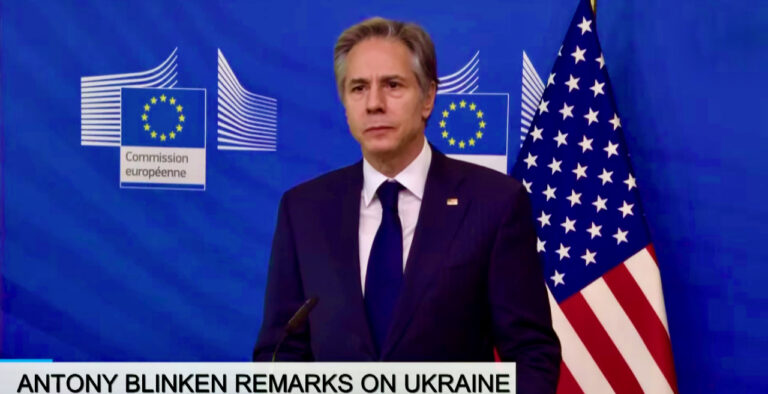
Secretary of state Antony J. Blinken

SECRETARY BLINKEN:  There is obviously a tremendous amount of focus on what’s happening in Europe, in particular Russia’s ongoing buildup of forces near Ukraine.  And that remains front and center in what we’re doing and indeed what I continue to do even as we’re heading to Australia.

I’ve been on the phone during a chunk of this trip talking to various counterparts with some focus on Russia-Ukraine.  I spent some time talking to the National Security Advisor Jake Sullivan as well.  And this is part of, as we’ve tabulated, with foreign counterparts something like 200-plus engagements just in recent weeks – phone calls, video conferences, in-person meetings, where we have been working to coordinate all of our partners in standing up to this Russian aggression directed toward Ukraine.

And as you all know, we have been engaged in a two-track strategy where we have, on the one hand, been pursuing diplomacy, by far the preferable course, the responsible course, but at the same time building up strong deterrence to dissuade Russia from taking aggressive action.

Having said that, the world is a big place.  Our interests are global, and you all know very well the focus that we have put on the Asia-Pacific and Indo-Pacific region.  And we ended last year with a trip that some of you were on, and we have a sustained focus on this, and that’s why we’re heading to Australia.

We’ll be first and foremost meeting with the Quad countries – Australia, Japan, India, the United States – following up on the leader level summit, the first ever that the President had, and pursuing the work that I think is vital to the interests of Americans but also people throughout the region and around the world.  The Quad is becoming a powerful mechanism for delivering, helping to vaccinate a big part of the world and getting a lot of vaccines out there, strengthening maritime security to push back against aggression and coercion in the Indo-Pacific region, working together on emerging technologies and making sure that they can be used in positive ways not negative ways, and an increasingly broad and deep agenda.

At the same time, it’s an opportunity to meet with our Australian partners, meetings as well with Japanese and Indian counterparts – all critical partners both in terms of the Quad but also individually.

And one of the other reasons I want to emphasize the work that we’re doing with the Quad is it’s very representative of what we’re doing in different ways around the world, which is building, energizing, driving different coalitions of countries focused on sometimes overlapping issues.  We’re doing that with established institutions like NATO or in Asia like ASEAN with our traditional alliances, but also with new groupings and coalitions of countries that can focus the strengths of different partners on issues that really, really matter, whether it’s climate, whether it’s COVID, whether it’s emerging technologies.  The Quad’s one of the best examples of that.

I’ll also have a chance in Australia to spend some time with some incredible technologists at the University of Melbourne, students as well.  Parenthetically, my late stepfather went to the University of Melbourne, so this will be a little bit of a homecoming in that sense, too.

And then after Australia we’re off, as you know, to Fiji.  This is, I am told, the first time in nearly 40 years that a secretary of state has visited Fiji.  There’s a very good reason for that:  we’re a Pacific nation.  The Pacific part of the Indo-Pacific Strategy is vitally important, and in the category of 90 percent of life is showing up or showing up; but more than showing up, I think you’ll see some very concrete things come out of the visit to Fiji.  I’m not going to get ahead of myself, but we’ll have a few things to talk about when we get there.  So I’m very much looking forward to that.

And then finally, of course, we end up in Hawaii, and there Japanese and Korean counterparts will come together.  We’ve been spending a lot of time – Deputy Secretary Sherman and myself – on trilateral collaboration among the United States, Japan, and Republic of Korea.  This is another opportunity to drive that forward.  There is a very broad common agenda that we have, of course, starting with challenges posed by the DPRK but going well beyond that.  This is an important moment to keep driving that forward.

We’ll also have a chance to spend time with our INDOPACOM commander, Admiral Aquilino, to talk about the work that we’re doing throughout the Indo-Pacific to advance stability, to advance security.

So we’re covering quite literally as well as figuratively a lot of territory.  I’m looking forward also to seeing some of our State Department colleagues who have a hardship assignment in Honolulu when we end the trip.  So that’s what we’re doing.  There’s a lot that’s going to be said at each stop.  We’ll have a chance to talk about specific issues that we’re focused on.

Meanwhile – the last thing I’ll say – even as we’re doing this we will be on the phones, on the video conference with other countries and counterparts, back in Washington, given everything that’s going on in Europe.  And I expect, for example, to be speaking to French, Germans, British colleagues in the coming days, among many others.  So I wanted to leave it at that.

Attribution: U.S. State Department

Putin held talks in Beijing with China Xi Jinping.

AVvXsEi0BG4owYAzoNHnEvkQAUxusuNL6nQBk4DnQo4QpgBEnSnUmj6E0mX g13Gtce2LufX2EhE5Qbwarw134PsStm4fALC3HgnZwt KKSmssU1KerePomLFvXOEDyWmRKx6M6EZ6Om1eA0l kBY6EbJCcyoE07B3sKmo30XXIDhK f78RXuYaS0NDQ z2K=w320 h164
Vladimir Putin held talks in Beijing with President of the People’s Republic of China Xi Jinping.


The talks focused on the bilateral agenda and trade and economic cooperation. The President of China mentioned the intention to increase bilateral trade to US$250 billion. The President of Russia spoke about promoting the use of national currencies in mutual settlements, which the Chinese side supported. They also discussed bilateral military-technical cooperation, mutual recognition of coronavirus vaccines and the opening of border
s depending on the epidemiological situation.

During the working lunch, the two leaders discussed the international situation and regional issues, in particular, the circumstances surrounding the security guarantees proposed by the Russian Federation. Xi Jinping thanked Vladimir Putin for his wholehearted support of the One China principle.

A joint Russia-China statement and a package of documents have been adopted within the framework of the visit.

AVvXsEjewV0U0bXyBzFrx7NB0KUeajhHpD e0rdeVIIlHg8p22pBL4hA3KeATjE
Russian-Chinese talks.


They include an intergovernmental agreement on cooperation in anti-monopoly legislation and competitive policy and several other interdepartmental documents, such as the agreement on cooperation in ensuring compatibility and interoperability of GLONASS and BeiDou navigation satellite systems in terms of the system time scales; a joint statement on the completion of a roadmap for high-quality development of Russian-Chinese trade in goods and services; and a plan of consultations between the foreign ministries of Russia and China in 2022. In addition to that, the sides have signed a memorandum of understanding between the Russian Economic Development Ministry and the Chinese Ministry of Commerce to promote investment cooperation in sustainable (green) development, and a joint statement between the relevant ministries on holding the Russian and Chinese years of cooperation in physical education and sports in 2022–2023.

The commercial contracts signed are related to the purchase and sale of natural gas via the Far Eastern route, and the purchase and sale of crude oil for delivery to oil refineries in Western China. Other documents signed include a memorandum of understanding on cooperation in the field of low carbon development between Rosneft and China National Petroleum Corporation (CNPC), and an agreement on cooperation in the field of information development and digitalisation between Rosneft and Huawei Technologies for the period to 2027.

Beginning of Russian-Chinese talks

President of the People’s Republic of China Xi Jinping (retranslated): We regard this as a very good sign in China: the opening ceremony of the Olympic Games, the beginning of the Spring Festival [according to the Lunar calendar], and today’s meeting with you. We are confident that this personal meeting will add more energy and vigour to relations between our countries.

The coronavirus pandemic is spreading around the world extremely quickly. The world has entered a new phase of shocks and changes. Humankind is facing numerous challenges and crises. In this situation, our countries remain committed to their initial goal, working tirelessly to ensure the sustainable development of our relations and to protect their fundamental interests. Our political and strategic trust is growing stronger.

Our mutual trade exceeded US$140 billion last year, thereby reaching a new historic high. Our countries are actively contributing to the reform of the global governance system.

We are working together to promote a truly multilateral world order. Efforts to uphold the real democratic spirit are a reliable foundation for rallying the world towards overcoming crises and protecting equality.

We will keep moving towards this, and we will continue working together with you to map out plans for the further development of Chinese-Russian relations in a new historical period, trying to transform mutual trust between our countries into practical cooperation to the benefit of our peoples.

Thank you.

President of Russia Vladimir Putin: Mr President, my dear friend,

First of all, I would like to thank you for inviting me to the opening ceremony of the Olympic Games. We know from our own experience that it takes hard work. I am sure that our Chinese friends have organised everything brilliantly, just as always when it comes to major events.

Attending the Olympics opening ceremonies has become a tradition. We attended the opening ceremony of the 2008 Summer Olympics held in China, and you attended the opening ceremony of the 2014 Winter Games in Sochi. Just as agreed, we have now come to Beijing for the opening of the Winter Olympic Games.

I am confident that our athletes, both Chinese and Russian athletes, will perform befittingly. The whole world will be watching the sports developments.

Regarding our bilateral relations, they are, indeed, developing steadily in the spirit of friendship and strategic partnership. They have acquired a truly unprecedented nature and are an example of worthy relations that help both parties to develop and, at the same time, support each other in their development.

As you have already noted, our bilateral trade has reached US$140 billion. We are moving steadily towards our goal, namely, reaching US$200 billion in mutual trade. I am confident that we will certainly attain this level.

Unfortunately, it has been impossible to hold offline meetings over the past two years. Nevertheless, you and I have always been in touch, we have attended videoconferences and spoken with each other by telephone. But, most importantly, we supported the efforts of our teams in virtually all spheres. I am talking about foreign ministries and joint work at international venues. This concerns the most diverse economic aspects, including high-tech and the “green” agenda during the conversion to new power sources.

Nor do we forget about traditional areas. In the run-up to our current meeting, our oil workers have drafted good new solutions regarding hydrocarbon deliveries to the People’s Republic of China. We have made another step forwards in the gas sector. I am referring to the new contract to deliver ten billion cubic metres of gas from Russia’s Far East to China every year. I repeat, we are making headway in high-tech fields.

The agenda is quite packed. Of course, we are taking advantage of the Russian delegation’s current visit. Despite the pandemic-related restrictions, the Russian delegation looks quite large. We will work actively on all aspects. Although we know from our own experience how busy you and your colleagues will be during the Olympic Games opening ceremony, I hope that we will find a few minutes to discuss our bilateral relations.

Thank you very much.