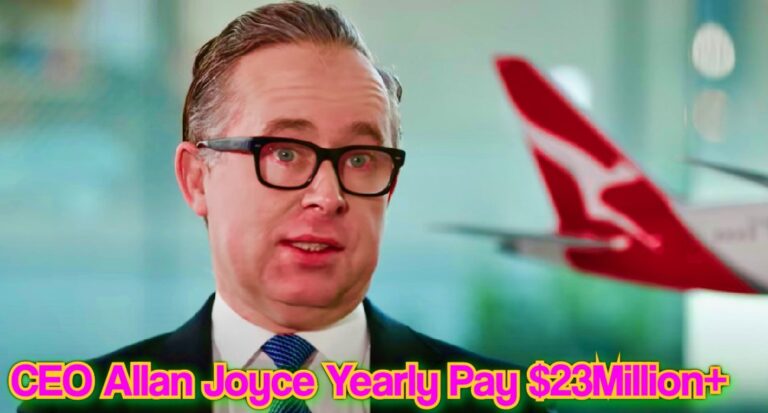
CEO Allan Joyce. Today we’re making some very significant – and in some cases, very difficult – announcements about the future of the Qantas Group.
And they are focused on exactly that – making sure the national carrier has a strong future.
Aviation is used to sudden shocks. Qantas has dealt with several just in the past decade, and come through them stronger.
But we’ve never experienced anything like this before. No one has.
Right now, all airlines are in the middle of the biggest crisis our industry has ever faced.
Efforts to contain COVID – which we all agree are so important – have devastated travel demand almost overnight.
Airline revenues have collapsed. Entire fleets are grounded. And the world’s biggest carriers are taking extreme actions just to survive.
The Qantas Group entered this crisis in better shape than most.
We’ve used record profits to strengthen our balance sheet.
We’ve built the leading full service and low fares airlines in our home market.
We’ve carved out a separate earnings stream with Qantas Loyalty.
And this gives us some of the brightest prospects for recovery.
But this crisis has still hit us very hard. And the impact will be felt for a long time – particularly, I’m very sorry to say, the impact on our people.
There are some green shoots domestically. We’re planning to be back to 40 per cent of our pre-crisis domestic flying during July and hopefully more in the months that follow. But we’ll be living with COVID for some time and recent events show we can’t take a low infection rate for granted.
It’s clear that International travel is likely to be stalled for a long time.
IATA – the peak body for airlines – says it will take more than three years for global travel to return to 2019 levels.
That means all airlines – including Qantas – must take action now. We have to position ourselves for several years where revenues will be much lower. And that means becoming a smaller airline in the short term.
THREE YEAR PLAN
Today, we’re announcing a three year plan to guide our recovery and take us through to better days ahead. It’s a plan I’ve agreed to stay on as Group CEO to see through.
The plan has three immediate actions to safeguard the national carrier’s future – and, the majority of jobs it supports.
The first is to rightsize our workforce, fleet and capital spending for a world that has less flying for an extended period.
The second is restructuring to deliver ongoing savings across the Group’s operations in a changed market.
And the third is recapitalising through an equity raise that will strengthen our balance sheet and accelerate our recovery.
IMPACT ON OUR PEOPLE
The actions we must take will have a huge impact on thousands of our people.
This is something that weighs heavily on all of us. But the collapse of billions of dollars in revenue leaves us little choice if we are to save as many jobs as possible, long term.
Many of the 6,000 job losses we’re announcing today are people who have spent decades here. It’s not unusual to have several members of one family working at Qantas and Jetstar.
What makes this even harder is that right before this crisis hit, we were actively recruiting. We were gearing up for Project Sunrise. We were getting ready to buy planes.
Now, we’re facing a sudden reversal of fortune that is no one’s fault – but is very hard to accept.
Across the world, airlines are shrinking by up to 50 per cent.
To avoid anything on this scale, we will be extending the stand down for a large number of our people as we wait for the recovery we know is coming.
Separate to job losses, about 15,000 people will remain stood down for some time – people for whom we have no work now, but will in future.
Around half of those stood down will be back flying domestically – we think – by the end of the year. The remainder – mostly, those supporting international flying – will return more slowly.
Thousands of Qantas and Jetstar people have already found secondary employment during stand down. And the feedback from those employers is incredibly positive.
For many of our people on stand down, JobKeeper has made all the difference. We’re having good discussions with the government about possibly extending Jobkeeper, or some other form of support, for those in the aviation industry who will be stood down for an extended period.
We’re also in dialogue with state and territory governments about their border openings – because once that happens, we can get more of our people back to work.
We will do the best we can to manage the impact on those leaving the Qantas Group, and those on continued stand down. We’ll offer voluntary – rather than compulsory – redundancies as much as possible. We’ll give support for career transition. And for those stood down, we’ll give ongoing access to long service and annual leave, as well as our welfare programs.
We will consult with relevant unions over the coming days and weeks – who are well aware of the challenges facing the industry and, I hope, are ready to work with us.
RECAPITALISATION
As I mentioned, the Qantas Group has extremely bright prospects for recovery.
And the faster we recover, the sooner more of our people can get back to work.
To help with this, we have announced an equity raising for the first time in a decade – which follows a long period of returning significant capital to shareholders.
The proceeds from the raising – up to $1.9 billion – will strengthen our balance sheet and accelerate our recovery.
And once we have recovered, this capital will help us take advantage of opportunities that emerge.
There is a lot of detail on the equity raising, and an update on our financial position, in the materials released to the market today.
RECOVERY AND BEYOND
This year was supposed to be one of celebration for Qantas. It’s our centenary.
Clearly, it is not turning out as planned.
We draw strength from our long history. We know that – no matter how tough it is in the moment – we’ve always come back from a crisis stronger than before.
And we draw strength from our beginnings. Because Qantas was founded in turbulent times – straight after a world war and a devastating pandemic.
So our centenary year is, perhaps, a new beginning. The start of our ‘next century’.
And while we have to make some very painful decisions, we have to focus on that future.
We know that flying will return. Our people will be back in the skies. No aircraft will sit idle. And new ones will be arriving – including for more ultra long-haul flights.
We’re confident, because we’ve been in tough spots before. In 2013, Qantas faced an uphill battle. The turnaround that followed set us up for years of growth that was only derailed by COVID.
We know this new plan can get us back on track. Back to growth, back to profit and back to pushing boundaries with things like Project Sunrise.
In closing, I want to recognise our people. Their dedication to the national carrier – even during this time of great upheaval and uncertainty – is a big part of what will carry us through.
I want to also recognise our customers. Throughout all the recent turbulence, their support and loyalty has been amazing. From emails I’ve received, through to notes written on napkins to crew on board.
Our commitment to you is unchanged. Millions want to see the people and places they love – and need an airline to take them. Particularly in a country the size of Australia.
We will be smaller for a period of time, but we will still deliver a high level of care, and service and, above all, safety.
We’ll continue to serve regional communities. And support Australian tourism.
As the national carrier, we have a very important job to do. A proud history to uphold. And a bright future to look forward to.
Thank you.
Read Qantas Group media release on post-COVID recovery and equity raising here.
See a timeline of Qantas’ response to the evolving COVID-19 situation here.
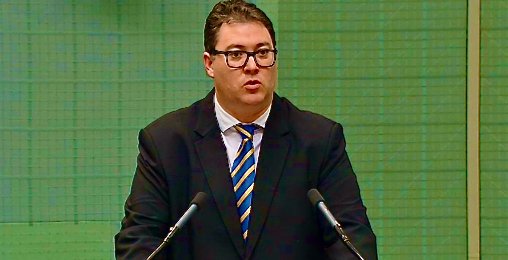
r George Christensen (Dawson): It’s my pleasure to speak to the National Skills Commissioner Bill 2020. This legislation, these laws, we are about to pass here couldn’t be more timely as we all seek to address the critical challenge that will come about, economically, in this country from the Wuhan coronavirus pandemic. The National Skills Commissioner office to be established will help prepare our labour market, our workers, in this country for recovery. They will be establishing a robust, new, fact-based system that will strengthen our education and training networks.
The varied roles of this commission demonstrate a huge potential for it to quickly become a vital hub in supporting and enhancing the operation and analysis of the workforce we need, which is important for those people entering the workforce—to know where the gaps are, where to get training. Australia’s economic recovery will be very reliant on its workers, working Australians, being skilled, resilient and adaptable. The skills needed for the new economy, for the new Australian society, are likely to evolve, and jobs that will be made as we come out of the crisis may not be the same as the ones that perhaps have been lost.
The government identified, in the recently announced JobMaker plan, that skills and training are a priority. We have outlined a reform agenda that will look at making vocational education and training actually work for Australians once again. It will do so by providing a trusted system of training that can deliver workers with high- quality and relevant skills and supports. It’ll include rapid upskilling. It’ll include reskilling in growth areas. It’ll ensure that a new generation of Australian workers can participate in the economic success of this nation and guarantee the essentials that our nation relies upon.
The commission will do market analysis. It will look for areas in which we are short of workers in Australia, where skills are needed, where training is needed. That’s important, because that information will go from this commission to the National Careers Institute. It will provide young Australians, those who are entering our workforce, with key information—accurate and up to date—on where the jobs are and what skills and qualifications they need to go out and get hold of in order to obtain those jobs of the future.
It will help show that trades and skilled jobs are ones to aspire to as the first and best option, not to be looked down upon as the second-best option, which is a pervasive view that really does need to be knocked completely and utterly on the head. The National Skills Commissioner, established with this legislation, will also have the task of driving down and getting rid of the costs involved in our vocational education training system, and developing and maintaining a set of efficient prices, the best and lowest cost prices on courses that are on offer to Australian workers and budding workers. That will improve transparency, consistency and accessibility and, most importantly, affordability—affordability for workers and affordability for students wanting to get into the workforce.
Currently, around the nation, if you have a look at vocational education and training prices, and the subsidies on offer for vocational education and training, you see this completely patchwork system. It is terrible. We’ve got a difference of nearly $12,000 in subsidies between Western Australia and the eastern seaboard of Queensland for students that are studying a Diploma of Nursing. It’s just absolutely not clear why there is such a differential or why there is such a big difference.
If you were a budding building designer and you wanted to study a Diploma of Building Design, there’s actually a difference of nearly $7,000 between the subsidies available for students studying at TAFE NSW and TAFE Queensland. And, actually, the Queenslander faces the higher cost. It’s very sad, as a Queenslander, to know that the student who wants to go into that job is going to pay more. And it’s not just a little bit more. In New South Wales, a student going into a Diploma of Building Design would pay only $3,600, while in Queensland they would face a cost of $10,455. It’s absolutely ridiculous that we would have two different costs, and I’ve got to say it’s very disheartening to hear that the cost burden on Queenslanders is so much more.
CHAMBER
Wednesday, 10 June 2020 HOUSE OF REPRESENTATIVES 76
We can look into those that are wanting into blinds, awnings and security screens. This is a growth industry, particularly as the new HomeBuilder program rolls out. We’ve got the Certificate III in Blinds, Awnings, Security Screens and Grilles, where they receive a subsidy of only $3,726 in Queensland but a subsidy of $9,630 in New South Wales. There is a complete and utter differential there, with the Queenslander losing out in comparison to what the New South Wales student or apprentice receives. It is completely and utterly crazy that we have a system where there is a difference of that magnitude. So that’s going to be looked at and hopefully fixed up so that we have one single system, with the lowest cost possible for everyone in the nation, including those in Queensland.
One of the big things that this commission is going to do is look at outcomes. We come up with all these different schemes from this place called Canberra. They seem great on paper, but, no matter what it is, the one thing that nearly always goes missing is outcomes—to work out whether these programs are actually working and whether they’re doing the job that we set them out to do. That’s why I’m really very grateful that this part of the puzzle is in here. The commissioner is going to do an analysis of the effectiveness of the VET system and advise on what the return on investment actually is for the government—whether we are getting people into jobs that are needed or whether we just have people going on training merry-go-rounds.
This is going to mean understanding vocational education student outcomes. It’s going to mean understanding whether that apprentice or student actually got a job and what they’re now earning as part of that job, as well as the public benefits of the stronger workforce, particularly in areas that are needed, like health care, aged care and disability care. It’s going to enable governments, once we have this data, to actually look towards where we can target investment—direct investment towards high-quality courses that give students, apprentices and budding jobseekers the best chance of scoring a job in the future and strengthening our nation, strengthening our society and strengthening our economy.
That is all extremely welcome, but I have to say it’s on the back of some very good things that have happened in concert with this pandemic. The $1.3 billion program, the initiative supporting apprentices and trainees, has been most welcome. That support is being provided to small businesses right now to retain their apprentices through a 50 per cent wage subsidy, and that’s going to continue up to 30 September. As at 5 June—so, very recent data —a total of 55,400 apprentices and trainees and 31,500 employers have been assisted through the Supporting Apprentices and Trainees wage subsidy. That’s about $252 million in payments, but it has kept those young apprentices working. It has kept them in their apprenticeship and not just kicked out onto the street because of this pandemic and the economic challenge that has presented many, many businesses. That is something that this government has done and something that should be welcomed by just about everyone in the chamber.
We are the government that actually introduced the Australian apprentice wage subsidy. That created 3,200 new apprentices in rural and regional Australia, even though those on the opposite side called it a ‘political fiasco’. Can I say, just to pre-empt what I know is coming, there will be criticism that regional Australia isn’t mentioned in the bill. Well, the fact is that skills go all around the nation, including in regional Australia, and this national skills commissioner is going to be looking right around the nation, particularly in regions, where we need skills. We are already doing that with programs like the Australian apprentice wage subsidy. I could refer locally to where the commissioner will be able to build upon some of the good work happening.
In Mackay, we have young Indigenous and Torres Strait Islander Australians attending a local business called Global Product Search that has been funded by the Morrison Liberal-National government to the tune of $1.4 million to provide direct training in truck driving for the resources sector. This is a high-paying job and it is one that is very much-needed throughout Central and North Queensland. About 150 people are going through a holistic program that is not just simply learning how to drive a truck; it is learning how to manage the big bucks that you get into if you have never been on them before. It is to learn all of the skills that are needed— interpersonal skills and other skills—in the workplace. For Global Product Search manager Warren McGraw, and the Indigenous people who are rolling out that program, it is to be applauded that we have local businesses upskilling people like this in a direct way, in a holistic way.
In the Whitsundays, we are going to have a big problem with the loss of a lot of staff who have just gone because of the closure in tourism, which is going to continue on for some time. A lot of those people engaged in that industry are pretty much itinerate workers anyway, but we will still need to see a great deal of upskilling after we come out of this pandemic. It has been a pleasure to have led the charge to invest $2.5 million in a new Whitsunday maritime training centre in Airlie Beach that is going to be operating and running quite a number of courses. It is going to be doing more than it has done before. It has got a very small training room at the moment
CHAMBER HOUSE OF REPRESENTATIVES 77
in the sailing club but this investment is going to allow a full-blown college that will provide training for more skippers, more shipping engineers, more crew to work on all of the boats and more tour operator crew and that is going to be a big benefit for local tourism businesses. This will mean more job opportunities in the Whitsundays. There will be 100 jobs created during construction.
In 2019, at a small level, this training college had about 274 enrolments. This college is looking at getting close to 400 enrolments when it actually opens. This is the work that is being done on the ground in places like Airlie Beach, an ideal location for maritime training.
During normal circumstances there are up to 300 skippers working in the Whitsunday tourism industry and that demand is set to increase as we come out of this pandemic. These are the skills that we need to focus on, these are the areas that we have built a very solid base for right across Australia, including regional Australia, and these are areas that the national skills commissioner will be looking at. The commissioner will be ensuring that right across Australia, including regional Australia, it is noted where the skill gaps are, where we need to focus new expenditure, where we need to get students and apprentices to so that they, the workers of the future, have the best opportunity to make the most out of the Australian economy, which, no doubt, is going to power ahead as we come out of this pandemic.
President Trump Delivers an Outstanding Speech to Young Americans
https://www.youtube.com/watch?v=mnyCIK7ZnYw
President Trump Delivers an Address to Young Americans
Below Trump build that Wall and Security
Trump’s wall reaches 212 Miles
Trump in Roundtable on Border Security | Yuma, AZ
THE PRESIDENT: Well, thank you very much. Great to be here. Beautiful runway. A little warmer than I’m used to, but that’s okay, Doug, right? We have a — I was just given a beautiful picture of the wall. That’s before and after. And that’s quite a difference: one area you walk over, you drive over, you do whatever you want, and other one you say, “Well, I guess we don’t get in.” Here’s another one — just given. That’s great. That’s a different section. Pretty amazing.
They’ve done a great job; we’re up to 212 — more than that now, about 220 — but over 212 miles, and we’ll be very close to 500 miles by the end of the year. And that’s the area that we wanted.
So it’s great and thank you all for being here. Thank you very much. And I’m thrilled to be in Yuma, Arizona. They’ve treated me very nicely in Arizona. So we’re very happy about that, Mr. Governor. Right? To commemorate the completion of more than 200 miles of powerful border wall.
We’re on pace to complete 450 miles by the end of the year, and 500 miles, almost immediately thereafter. We may even have the 500 miles by the end of the year. We’re doing a real job. The Army Corps of Engineers, I want to thank them. They’ve been incredible.
This is the most powerful and comprehensive border wall structure anywhere in the world. It’s got technology that nobody would even believe, between sensors and cameras and everything else.
With us today are Acting Secretary of Homeland Security Chad Wolf, who has done a fantastic job. Thank you, Chad. Commissioner Mark Morgan. Mark, thank you very much. Lieutenant General Todd Semonite, who’s doing a fantastic job at the Army Corps. We have interesting construction talk, don’t we?
LIEUTENANT GENERAL SEMONITE: Yes, sir.
THE PRESIDENT: Really great stuff.
President of the National Border Patrol Council, Brandon Judd. Hello, Brandon. What are you doing sitting back there? I’ve never seen that before. You’re always up here with me. You’re getting low key lately, huh? That’s confidence. That means he’s got a lot of confidence. That’s great. And thank you for everything, Brandon. Say hello to everybody. Great job you do. Appreciate it.
He was a supporter of mine before I ran. He said, “I hope that guy runs.” Right? So I appreciate it very much. We won’t forget it either.
And several other very dedicated and heroic members of law enforcement. I met just a few of them back there and they gave me a beautiful replica of the wall, a little shorter version, but that’s okay. And we want to thank everybody.
We’re also joined by some of my very good friends and people I have great respect for you. You have a great governor in this state. And he’s been a great friend for the state, but he’s been a great friend to our nation and does a — just a great job: Doug Ducey. Thank you very much, Doug.
GOVERNOR DUCEY: Thank you, Mr. President.
THE PRESIDENT: Appreciate it.
GOVERNOR DUCEY: Thank you.
THE PRESIDENT: Talk to you in a little while. Appreciate it.
Senator Martha McSally, who I hear is doing very well. We need you in Washington. Will you please win?
SENATOR MCSALLY: Yes, sir. (Inaudible.)
THE PRESIDENT: Because we need you. The alternative that’s running against you is not the person that we want, where he’s got — he’s got things that we don’t want. So we want you to win this race. It’s very important. And we appreciate all the help that you’ve given us, especially on the border wall. We appreciate it, Martha. Thank you very much.
Representative Debbie Lesko has become a tremendous friend of mine and supporter. And with the impeachment hoax, she was right up front. And it was good for you. You became very famous. I became more famous and you became very, very famous. Right?
REPRESENTATIVE LESKO: Well, you helped me. Thank you.
THE PRESIDENT: Well, it certainly didn’t hurt. She was one of the really great advocates, who’s terrific. We appreciate it, Debbie. Thank you.
Yuma Mayor Douglas Nicholls. And thank you, Douglas, very much for being here.
MAYOR NICHOLLS: Thank you. Welcome back to Yuma.
THE PRESIDENT: Thank you very much, Doug. It’s really an honor.
And Yuma Police Chief, Susan Smith. Thank you, Susan, very much for being here.
So my administration has done more than any administration in history to secure our southern border. Our border has never been more secure. I think Doug can tell you that. Anybody at this table can tell you that. It’s never even been close.
The numbers now, including not only the wall — the wall has helped a lot, where we have that 200 miles — 212 and now 220 — it’s really, essentially, almost, I guess 99.6 or something like that. Maybe somebody can get an extraordinarily long ladder, but once you get up there, it gets very high. And it’s just about unclimbable. So it’s — it’s really great. That’s made a big difference, but we have other things that we’ve done.
During the past two months, we’ve seen the lowest number of illegal border crossings in many years. Illegal immigration is down 84 percent from this time last year. Illegal crossings from Central America are down 97 percent.
Now, the news — I won’t say “fake news”; I want to be nice today. So the news will say “97 percent,” Doug. “That’s not very good.” But 97 percent, I would say, sounds pretty good.
Never let a crisis go to waste. As America confronts real issues of race, justice and civil order, global warming campaigners can’t resist shamelessly glomming on.
These issues are inextricably braided together…The one stupid trick that white supremacists have used for 150 years is to accentuate racial division in order to build support among lower-income, majority-white voters for a corporate agenda that actually hurts them. It does this by increasing the amount of pollution in their communities… The training is about a good deal more than simply learning the facts and figures and narratives that make up the slideshow. It will have a deep and sustained emphasis on the nexus between racism and diversity and the climate challenge… I’m optimistic that joining together the climate movement and the racial equality movement will give us strength in numbers that will ultimately lead to success.
Divide and conquer much?
Consider National Review’s John O’Sullivan’s first law:
All organizations that are not actually right-wing will over time become left-wing.”
Here’s the Sierra Club, which could be the poster child for once venerable organizations that have been co-opted by the Left and radicalized:
We will never survive the climate crisis without ending white supremacy… Racism Is Killing the Planet: The ideology of white supremacy leads the way toward disposable people and a disposable natural world… When the United States pours carbon pollution into the air, knowing that people in countries that have contributed much less to the climate crisis will face the worst of the consequences, that is white supremacy… When big polluters try to buy our democracy so they can keep making money by devaluing the lives of people of color, that is white supremacy… When you come to see and understand these intersections between white supremacy and environmental destruction, you’ll find yourself at a crossroads. That crossroads will force you to decide which side you’re on.
Every person on Earth has a right to equal justice under law.
That’s worth fighting for.
Keep your inaccurate climate computer models and inefficient, subsidized, “renewable” energy fortunes, and the energy poverty that flows from them, out of it.
Author
Craig Rucker Craig Rucker is a co-founder of CFACT and currently serves as its president. Attribution and Source: CFACT.org
(Victoria) (Medically Supervised Injecting Rooms): I wish to inform the chamber that Senator Keneally will also sponsor the motion. I, and also on behalf of Senator Keneally, move:
That the Senate—
(a) welcomes the announcement from the Victorian government that a life-saving medically supervised injecting facility will be opened in the Melbourne CBD; only the second in Victoria and third in Australia;
(b) further welcomes the continuation of the trial of the Medically Supervised Injecting Room (MSIR) in North Richmond for another three years;
(c) notes that the MSIR trial review, released last week, found that:
(i) since its commencement in June 2018, the North Richmond MSIR has been one of the busiest supervised injecting facilities in the world, with 119,223 visits in the first 18 months,
(ii) despite 271 serious overdose incidents, no overdose deaths have occurred in the MSIR, and at least 21 lives have been saved,
(iii) there has been a reduction in local ambulance call-outs due to overdoses, and
(iv) there has been a reduction in reports of public injecting;
(d) acknowledges that the Uniting Medically Supervised Injecting Centre (Uniting MSIC), which opened in Kings Cross, Sydney, in May 2001 has managed 8,500 overdoses since commencement with zero deaths;
(e) notes with concern that in Australia there are more than 2,000 preventable drug overdose deaths per year; (f) recognises that supervised injecting facilities save lives; and (g) calls on the Government to act to prevent drug overdose deaths by:
(i) supporting the states and territories in the establishment of supervised injecting facilities wherever there is need across Australia,
(ii) expanding access to drug treatment programs across Australia,
(iii) expanding access to needle and syringe programs across the country, including urgent roll out of trials inside prisons, and
(iv) promoting awareness of the life-saving opioid reversal drug naloxone and making it free for all people at risk of experiencing or witnessing an overdose.
Senator Sarah Hanson-Young: (Environmental Laws Speech): I move that the Senate take note of the answer given by the Minister for Trade, Tourism and Investment (Senator Birmingham) to a question without notice asked by Senator Hanson-Young today relating to environmental protection.
Of course this government has always had it in for the environment. This government has always wanted to find a way to weaken environmental protections—and we really have to question how much weaker they can get. We have the situation where one million hectares of koala habitat in this country have been destroyed. We have koalas in this country, in some parts, that are endangered. We have mines that are given approval, only then to contaminate water catchment areas. And, of course, we have the devastating and shocking destruction of 46,000- year-old ancient Aboriginal heritage. And this has happened under this government’s watch. This has happened under the laws that are currently in place.
What we’ve seen from the Prime Minister this week, on the subject of my question to Senator Birmingham, is that the Prime Minister wants to weaken these laws even more. He wants to fast-track developments projects and mining operations so that they can get going faster and bypass environmental regulation. The Prime Minister calls it ‘cutting green tape’. Cutting corners is what it is. It’s cutting environmental protection. That the government tries to argue that cutting regulations will somehow not result in weakened laws just beggars belief. No-one believes that. It doesn’t make any sense. The government wants guaranteed approval processes; that’s what it’s after.
We need environmental protections and laws in this country that actually protect the environment. Australia has one of the worst extinction rates in the world for our native animals. We have land clearing that’s continuing at such a rate that our native animals are losing their homes day by day, month by month. In many cases we have Australian wildlife animals that are now so badly endangered they’re on the brink of extinction.
During the summer’s bushfires, Australians were shocked at the destruction of our environment. They grieve for the death of our wildlife. They want the government to do more to protect our favourite places, to protect our forests, to keep our beaches clean, to look after our coastline and to keep our rivers, streams and lakes clean and healthy. They want less pollution. Australians know that too much of our nature has been trashed in the name of profit, and they want a change from business as usual.
This government wants to cut protections to the environment even further. I asked the minister today whether, in cutting these regulations, he could guarantee that no more koala habitat would be destroyed. He couldn’t answer the question. He can’t guarantee it, because this government is about to sign off on a set of rules that allow for more koala habitat to be destroyed, with no checks and balances, or very few. I asked the minister whether he could guarantee that no more ancient sacred sites would be blasted and blown up, as Rio Tinto did only a couple of weeks ago. He couldn’t guarantee that either. Putting in fewer protections, weakening the laws and allowing companies and corporations to cut corners when it comes to the environmental application process are going to push Australia’s nature—our environment and our native animals—to the brink of extinction.
Senator HANSON: The Export Control Legislation Amendment (Certification of Narcotic Exports) Bill 17/06/2020 is another example of the commitment One Nation and I made to the Australian people that we would pursue changes in our laws to unwind the stranglehold on the cannabis industry.
Facebook Video https://www.facebook.com/PaulineHansonAu/videos/740344736766047/
I need to pay respect to Senators Cormann and Kitching for their combined efforts to assist me in making this bill pass the parliament. My office reached out to the minister for agriculture, who is also the Deputy Leader of the National Party, David Littleproud. Minister Littleproud originally had no interest in making this bill come before the parliament, even though market standards predict global industry hemp demand is projected to grow from $4.6 billion to $26.6 billion over the next five years. I was listening to Senator Davey’s comment that they’re really interested in growing the agricultural industry in Australia, and again David Littleproud made a comment. The dairy industry is still dying. Over 500 more dairy farmers went last year. So, when it comes to pushing for the agricultural industry, I don’t think Mr Littleproud is up to the job.
Mr Littleproud showed zero interest or foresight into the very real fact that the future hemp industry could very well act as a transition crop for struggling cane farmers in Queensland, including North Queensland, where sugar millers are squeezing them out of the market. When Mr Littleproud refused to deal with this bill in a timely manner, I went to Minister Cormann’s office, and it was he and Senator Kitching—a Labor senator, and I thank her very much—who brought both the Liberal and Labor parties together.
I’ve seen the benefits this crop offers to food, fibre and medicines. I want to acknowledge the countless health- food stores who’ve been pushing the benefits of this crop, but I also want to acknowledge Woolworths, who have recently taken on Australian-made products, including hemp seed and hemp oil. I’m aware of Australian dog food companies who are looking to implement plant based substitutes like hemp, which is high in fibre. I also want to recognise the Lambert Initiative for Cannabinoid Therapeutics, which operates within Sydney university and whose use of cannabis to treat epilepsy will be recognised tonight with a virtual award for their efforts in assisting the many Australians who suffer these debilitating fits. Researcher Dr Lyndsey Anderson, an American attracted to Australia to work at the Lambert initiative, is being internationally recognised for her work.
We have an enormous way to go in making medicinal cannabis more readily available for patients across this country. But today’s passing of this bill is another shuffle in the right direction in assisting the cannabis industry. I will be encouraging farmers nationwide to get on board with the cannabis industry, and I will be ensuring, after the next Queensland election, that One Nation remove the barriers that have been put in the way of growing hemp as a food and fibre product. I not only welcome the passage of this bill but am very pleased to have instigated the change we’re legislating here today.
The Victorian Government is supporting and empowering young African Victorians so they can achieve their potential at school and beyond. Minister for Multicultural Affairs Ros Spence today announced $3 million to support better educational outcomes for African Victorian school students across the state as part of the Government’s Victorian African Communities Action Plan. It also includes $240,000 to advance the next generation of African Victorian leaders, by improving their board and governance skills through Australian Institute of Company Director courses.
The education program includes funding for 12 community organisations to work in partnership with schools to deliver homework clubs, after school and parent engagement activities to help students make the most out of their schooling years. School Community Liaison Officers will act as conduits to support positive learning outcomes in eight host schools and up to 23 surrounding schools across Melbourne that have a high proportion of students with African heritage. The officers will respond and build awareness of African Victorian student needs, ensure parents are included in school processes and improve student engagement and wellbeing. The new initiatives were designed and delivered in partnership with the Victorian African Communities Action Plan Implementation Committee, which comprises a diverse group of African Victorian community leaders.
To learn more about the initiatives at: vic.gov.au/empowering-african-communities-victoria. Quotes attributable to Minister for Multicultural Affairs Ros Spence “We want every Victorian to reach for and achieve their full potential – we’ll be a stronger Victoria because of it.” “I am so proud of our partnership with African communities under the Victorian African Communities Action Plan and our work so far – this is making a real difference in the lives of so many young people.” Quote attributable to Minister for Education James Merlino “We’re working closely with Victoria’s African communities to make sure they have what they need so their children can thrive.” Quote attributable to Implementation Committee Deputy Chair Elleni Bereded-Samuel “A huge amount of cooperation, thought and effort has gone into this plan and it just demonstrates how committed the community is to deliver better outcomes for the next generation.” Quote attributable to Implementation Committee Deputy Chair Ahmed Hassan “Full credit to everyone in the community who has worked on this – hand in hand with government – to create meaningful and impactful change.
Source: Minister for Multicultural Affairs Ros Spence
The U.S. Department of State announced rewards up to $10 million each for information leading to the arrest and/or conviction of Seuxis Hernandez-Solarte, aka “Jesus Santrich,” and Luciano Marin Arango, aka “Ivan Marquez.” Both are former senior leaders of the FARC who dropped out of the peace process and have a long history of involvement in drug trafficking activities, which resulted in their criminal indictments.
The United States values its partnership with Colombia. We will continue the strong U.S.-Colombian law enforcement information sharing and capacity building efforts which are essential to disrupting and dismantling transnational criminal organizations operating in the region. We also share Colombia’s concern that the Maduro regime is providing support to illegal armed groups from Colombia.
These rewards are offered under the Department of State’s Narcotics Rewards Program (NRP). More than 75 major narcotics traffickers have been brought to justice under the NRP since it began in 1986. The Department has paid more than $130 million in rewards for information leading to those apprehensions.
The Bureau of International Narcotics and Law Enforcement Affairs manages the NRP in close coordination with the Drug Enforcement Administration (DEA), the Federal Bureau of Investigation (FBI), the U.S. Immigration and Customs Enforcement/Homeland Security Investigations (ICE/HSI), and other U.S. government agencies. These actions demonstrate the Department’s commitment to supporting law enforcement efforts and a whole of government approach to combatting drug trafficking and transnational organized crime.
Seuxis Pausias Hernández Solarte, aka Jesús Santrich (born 31 July 1967) is a former guerrilla leader of Revolutionary Armed Forces of Colombia–People’s Army (FARC–EP). He is a member of the Chamber of Representatives of Colombia since June 2019 and was the FARC’s delegate in the Colombian peace process in Havana. He was a member of a Communist youth organisation as a teenager and studied Social Sciences at the University of Atlántico. He is wanted by US Government on allegations of drug trafficking, carried out six months after the peace process.
Luciano Marín Arango, aka “Iván Márquez”(born 1955 in Florencia, Caquetá) is a Colombian guerrilla leader, member of the Revolutionary Armed Forces of Colombia (FARC), part of its secretariat higher command and advisor to the Northwestern and Caribbean blocs. He was part of the FARC negotiators that concluded a peace agreement with the Colombian president Juan Manuel Santos. On 29 August 2019, Márquez abandoned the peace process and announced a renewed armed conflict with the Colombian government.
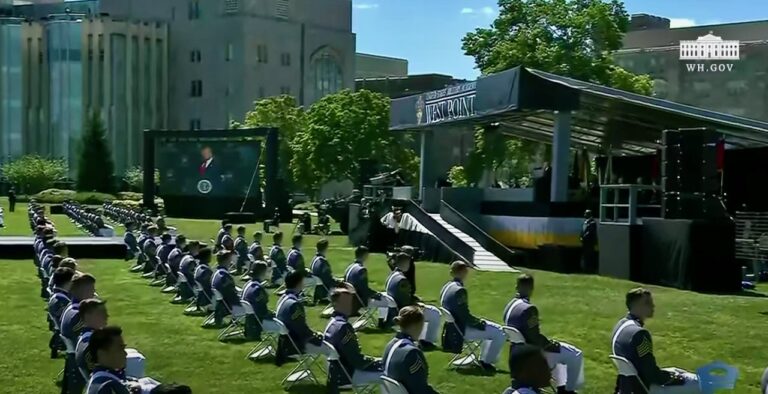
THE PRESIDENT: Thank you, General, and hello cadets. On behalf of our entire nation, let me say congratulations to the incredible West Point Class of 2020. Congratulations. Everyone have a good time, enjoy yourselves, because we are here to celebrate your achievements, and great achievements they are. Let us also recognize your remarkable Superintendent, General Darryl Williams, for his outstanding stewardship. General, thank you very much. Great job. Thank you.
Few words in the English language and few places in history have commanded as much awe and admiration as West Point. This premier military academy produces only the best of the best, the strongest of the strong, and the bravest of the brave. West Point is a universal symbol of American gallantry, loyalty, devotion, discipline, and great skill. There is no place on Earth I would rather be than right here with all of you. It’s a great honor.
Across this hallowed plain have passed many of the greatest and most fearsome soldiers that ever lived. They were heroes who drove thundering columns of Sherman tanks into the heart of a wicked empire. They were legends who unleashed the fury of American artillery upon our enemies on remote islands and distant shores. They were titans who strode through cannon blast and cavalry charge, and stared down our foes through gray clouds of smoke and shrapnel. They were the Army Rangers who led the way up jagged cliffs, the Airborne soldiers who rained down justice in the dark of night, the infantry whose very sight meant liberation was near, and the mighty forces who sent tyrants, terrorists, and sadistic monsters running scared through the gates of hell. No evil force on Earth can match the noble power and righteous glory of the American warrior.
I have no doubt that the young men and women before me today will add your names to this eternal chronicle of American heroes. You will go forth from this place adored by your countrymen, dreaded by your enemies, and respected by all throughout the world. Someday, generations of future West Point cadets will study your legacy. They will know your deeds, they will celebrate your triumphs, and they will proudly follow your example.
To the 1,107 who today become the newest officers in the most exceptional Army ever to take the field of battle, I am here to offer America’s salute. Thank you for answering your nation’s call.
On this special occasion, we are delighted to be joined by Congressman Steve Womack, Secretary of the Army Ryan McCarthy, Assistant Secretary Casey Wardynski, and Army Chief of Staff General James McConville, an old grad from the class of 1981.
Let’s also express our appreciation to General Curtis Buzzard, General Cindy Jebb, and all of the wonderful instructors, coaches, and faculty members who are continuing West Point’s two-century tradition of unrivaled excellence.
To all of the parents, grandparents, and family members watching this ceremony from your beautiful home: Even though you could not be here today, we know this day could never have happened without you. Your love and sacrifice have given America these phenomenal men and women. Cadets, please join me in sending your parents and families the heartfelt thanks that they so richly deserved. They’re all watching right now. Please. (Applause.) Thank you very much.
The depth and breadth of the U.S. Military’s contributions to our society are an everlasting inspiration to us all. I want to take this opportunity to thank all members of America’s Armed Forces in every branch — active duty, National Guard, and reserve — who stepped forward to help battle the invisible enemy — the new virus that came to our shores from a distant land called China. We will vanquish the virus. We will extinguish this plague.
I also want to thank the men and women of our National Guard who respond with precision to so many recent challenges, from hurricanes and natural disasters, to ensuring peace, safety, and the constitutional rule of law on our streets. We thank every citizen who wears a uniform in selfless service to our nation.
The members of this class have come from every state in our union. You have come from the farms and the cities, from states big and small, and from every race, religion, color, and creed. But when you entered these grounds, you became part of one team, one family, proudly serving one great American nation. You became brothers and sisters pledging allegiance to the same timeless principles, joined together in a common mission to protect our country, to defend our people, and to carry on the traditions of freedom, equality, and liberty that so many gave their lives to secure. You exemplify the power of shared national purpose to transcend all differences and achieve true unity. Today, you graduate as one class, and you embody one noble creed: Duty, Honor, Country.
Every graduate on this field could have gone to virtually any top-ranked university that you wanted. You chose to devote your life to the defense of America. You came to West Point because you know the truth: America is the greatest country in human history, and the United States Military is the greatest force for peace and justice the world has ever known.
The survival of America and the endurance of civilization itself depends on the men and women just like each of you. It depends on people who love their country with all their heart and energy and soul. It depends on citizens who build, sustain, nurture, and defend institutions like this one; that is how societies are made and how progress is advanced. What has historically made America unique is the durability of its institutions against the passions and prejudices of the moment. When times are turbulent, when the road is rough, what matters most is that which is permanent, timeless, enduring, and eternal.
It was on this soil that American patriots held the most vital fortress in our war for independence. It was this school that gave us the men who fought and won a bloody war to extinguish the evil of slavery within one lifetime of our founding. It was the graduates of West Point — towering figures like McArthur, Patton, Eisenhower, and Bradley — who led America to victory over the sinister Nazis and imperial fascists 75 years ago. It was under the leadership of West Point graduates like the legendary General Matthew Ridgway that the Army was at the forefront of ending the terrible injustice of segregation. It was Army strength that held the line against the brutal opposition and oppression from Communism. And it has been thanks to patriots like you that America has climbed to new heights of human achievement and national endeavor.
This is your history. This is the legacy that each of you inherits. It is the legacy purchased with American blood at the crest of Little Round Top, on the crimson beaches of Normandy, in the freezing mud of Bastogne, and the dense jungles of Vietnam. It is the legacy of courageous, selfless, faithful patriots who fought for every inch of dirt with every ounce of strength and every last scrap of heart and drive and grit they had.
And they did it because they believed in the undying principles of our founding. They did it because they cherished their homes, their faith, their family, and their flag. And they did it because when they came to this school, they were taught to hold fast to their love of our country; to cherish our heritage, learn from it, and build upon it. That is what young Americans are taught here at West Point. That is the legacy that you carry forward as second lieutenants in the United States Army, and you must never forget it.
Through four long years, you have honed your skills, trained your mind and body, overcome every obstacle, and earned your place of pride in the Long Gray Line. You made it through the rigors of R-Day and Beast, the intensity of CLDT, and weeks of training in the blistering heat. You have pushed yourselves far beyond every limit imaginable.
Some of you have even pushed the limits a bit too much. So for any cadets who have not finished walking off their hours, as Commander-in-Chief, I hereby absolve all cadets on restriction for minor conduct offenses, and that is effective immediately. Congratulations. (Applause.) That’s a nice one, isn’t it? Don’t you feel better now? (Laughter.)
Surviving the 47-month experience is never easy, but only the class of 2020 can say it survived 48 months. And when it comes to bragging rights, no one can boast louder than the class that brought Navy’s 14-year football winning streak to a screeching halt. You did that. I happened to be there. (Applause.) I happened to be there. That’s right. That was a big day. I was there. You beat Navy and brought the Commander-in-Chief’s Trophy back to West Point for two straight years. So we say, “Go, Army, go.”
This graduating class secured more than 1,000 victories for the Black Knights, including three bowl victories, 13 NCAA team appearances, and a Women’s Rugby Championship with the help of somebody that I just met: 2019 MVP, Sam Sullivan. Fantastic job. Thank you. A fantastic job. (Applause.) Five cadets won national boxing championships, and Adaya Queen brought home two. Brendan Brown earned the title of Powerlifting National Champion.
In academics, 38 cadets have earned fellowships to continue their studies, including First Captain Dane Van de Wall, who received one of the most prestigious awards in academia: the Rhodes Scholarship. Congratulations, Dane. It’s a great achievement. Thank you. Congratulations. (Applause.) Great achievement.
But no one modeled the values of the soldier-scholar quite like Lindy Mooradian. Lindy earned both the highest overall class standing and the highest physical program score. She has published scientific research in a prominent journal and set five new records on the athletic track. Lindy, incredible job. Where is Lindy? Where is Lindy? (Applause.) For somebody that did so well, they didn’t give you a very good seat, Lindy. (Laughter.) We have to talk about that. Congratulations.
Right now, America needs a class of cadets that lives by your motto: “With Vision, We Lead.” We need you to carry on the spirit of the great General Ulysses S. Grant. Soon after assuming overall command, following three years of Union setbacks, General Grant encountered someone heading north to Washington during the Battle of the Wilderness: “If you see the President,” Grant said, “tell him from me that whatever happens, there will [never] be no turning back.”
We need you to be as visionary as Patton, who as a young man in 1917, became the first soldier assigned to the Army Tank Corps. One month into the job, he saw the future, writing, “If resistance is broken, and the line pierced, the tank must and will assume the role of pursuit cavalry and ride the enemy to death.” Under Patton’s leadership, that’s exactly what they did.
We need you to be as bold and determined as the immortal General Douglas MacArthur, who knew that the American soldier never, ever quits. After leaving the Philippines for Australia at a low point of the Pacific War in 1942, MacArthur famously vowed, “I shall return.” For two years, he then took great strategic risks and placed himself often in personal danger. On October 20th, 1944, McArthur stepped off a landing boat, strode through knee-high water, and proclaimed, “People of the Philippines: I have returned. By the grace of Almighty God, our forces stand again on Philippine soil.” He then called upon the islands’ brave people to rise up and join the fight. America’s momentum was unstoppable.
These great leaders were not afraid of what others might say about them. They didn’t care. They knew their duty was to protect their country. They knew the Army exists to preserve the republic and the strong foundations upon which it stands: family, God, country, liberty, and justice. They were true, tough American patriots. That is what our country needs, especially in these times, and that is what you are.
Each of you begins your career in the Army at a crucial moment in American history. We are restoring the fundamental principles that the job of the American soldier is not to rebuild foreign nations, but defend — and defend strongly –our nation from foreign enemies. We are ending the era of endless wars. In its place is a renewed, clear-eyed focus on defending America’s vital interests. It is not the duty of U.S. troops to solve ancient conflicts in faraway lands that many people have never even heard of. We are not the policemen of the world.
But let our enemies be on notice: If our people are threatened, we will never, ever hesitate to act. And when we fight, from now on, we will fight only to win. As MacArthur said: “In war, there is no substitute for victory.”
To ensure you have the very best equipment and technology available, my administration has embarked on a colossal rebuilding of the American Armed Forces, a record like no other. After years of devastating budget cuts and a military that was totally depleted from these endless wars, we have invested over 2 trillion — trillion; that’s with a “T” — dollars in the most powerful fighting force, by far, on the planet Earth. We are building new ships, bombers, jet fighters, and helicopters by the hundreds; new tanks, military satellites, rockets, and missiles; even a hypersonic missile that goes 17 times faster than the fastest missile currently available in the world and can hit a target 1,000 miles away within 14 inches from center point.
For the first time in 70 years, we established a new branch of the United States military: the Space Force. It’s a big deal.
In recent years, America’s warriors have made clear to all the high cost of threatening the American people. The savage ISIS caliphate has been 100 percent destroyed under the Trump administration, and its barbaric leader, al-Baghdadi, is gone, killed, over. And the world’s number-one terrorist, Qasem Soleimani, is likewise dead.
As Commander-in-Chief, I never forget for one instant the immense sacrifices we ask of those who wear this nation’s uniform. Already, you have known the crushing pain of losing a brother in arms. Today, we remember an extraordinary cadet who made the supreme sacrifice in an accident last year: C.J. Morgan. We are deeply moved to be joined by his father, Christopher Morgan. And C.J. was something very special. Christopher is a Secret Service Agent. A tough guy. Great guy. Great son, who is looking down right now. Christopher, I want you to know that we will carry C.J.’s blessed memory in our hearts forever. Thank you very much. (Applause.) Thank you.
Tomorrow, America will celebrate a very important anniversary: the 245th birthday of the United States Army. Unrelated, going to be my birthday also. (Laughter.) I don’t know if that happened by accident. Did that happen by accident, please? But it’s a great day because of that Army birthday.
And as you know, the Army’s first Commander-in-Chief, General George Washington, called the fort that stood on this majestic point “the most important post in America.” Its strategic location on the Hudson River was vital to our war for independence. If British ships gained control of this river, they would have divided our young nation in two. So American soldiers stretched a massive metal chain across the waters of the Hudson, from West Point all the way to Constitution Island. I saw a piece of that chain. It’s incredible. No enemy ship even dared try to cross. Every link in that great chain was formed from over 100 pounds of pure American iron, mined from American soil, and made with American pride. Together, those links formed an unbreakable line of defense.
Standing here before you more than two centuries later, it is clearer than ever that General Washington’s words still hold true. West Point is still the indispensable post for America, the vital ground that must not lose. And the survival of our nation still depends on a great chain reaching out from this place — one made not of iron, but of flesh and blood, of memory and spirit, of sheer faith and unyielding courage.
Today, each of you becomes another link in that unbroken chain, forged in the crucible known as the United States Military Academy, the greatest on Earth. It has given you soldiers that you can rely on to your right and to your left. And now we are entrusting you with the most noble task any warrior has ever had the privilege to carry out: the task of preserving American liberty.
As long as you remain loyal, faithful, and true, then our enemies don’t even stand a chance, our rights will never be stolen, our freedoms will never be trampled, our destiny will never be denied, and the United States of America will never be defeated. With the grace of God and the heroes of West Point, America will always prevail. Nothing will stand in your way, nothing will slow you down, and nothing will stop the West Point Class of 2020 from achieving a true and lasting victory.
God bless you. God bless the United States Army. And God bless America. Congratulations. Thank you very much. Thank you.
Source: WhiteHouse.gov under the Creative Commons Attribution 3.0 License.